No. MUS2026-077Southeast Asia
Tojo lelempali leaf bullroarer
Indonesia · Tojo coast, Central Sulawesi · Southeast Asia
Function not recorded
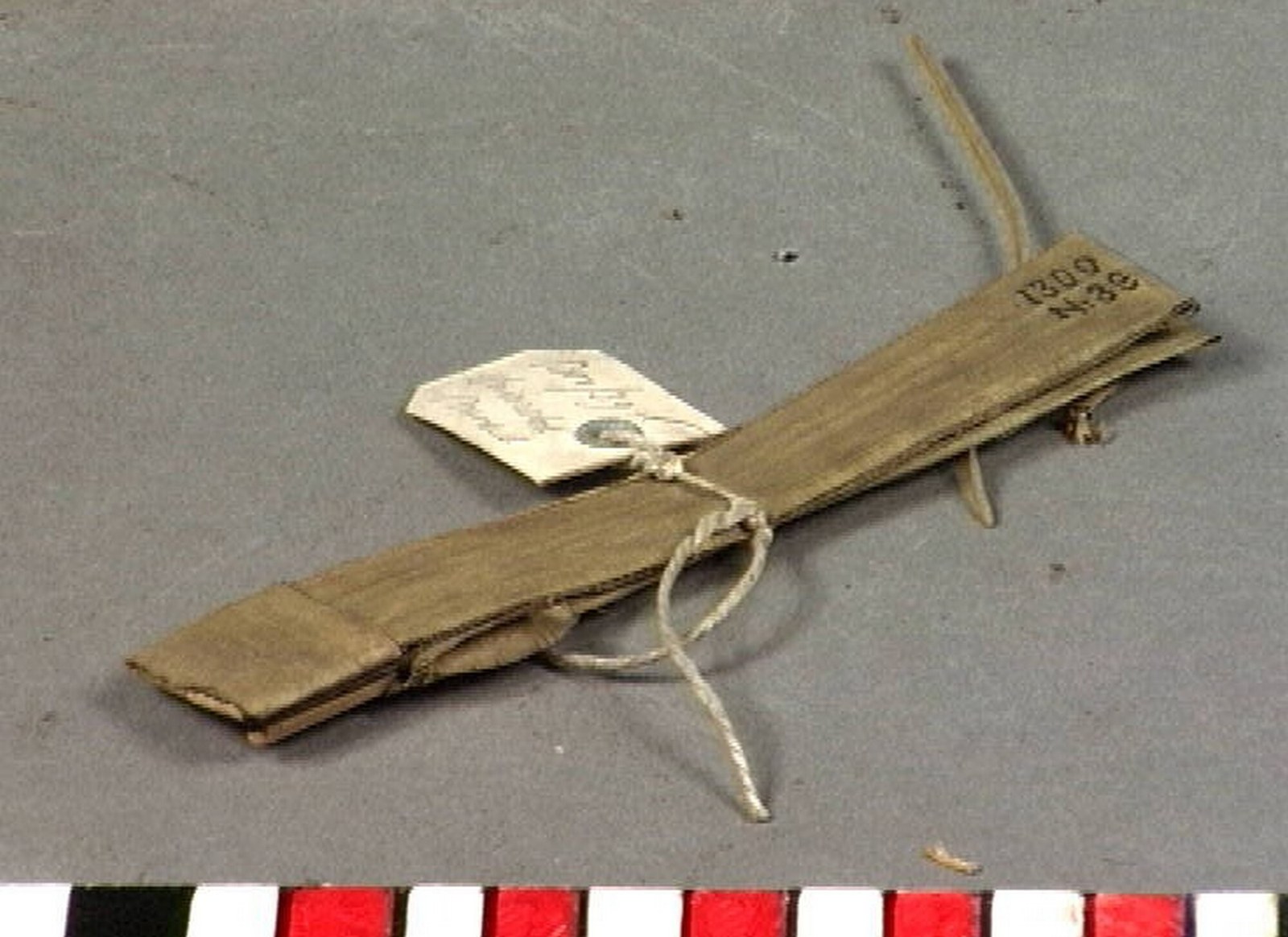
lelempali
Source term: Schwirrholz
lelempali = Tojo name in Juynboll’s catalogue.
The Tojo lelempali was built to live fast: a fresh fig leaf folded into a narrow blade, stiffened with a curved piece of leaf-rib and sent whirring on a plant fibre. At only 12.5 centimetres long, it worked only while the leaf stayed green; once dry, Kruyt reported, it fell silent.
Schwirrholz (lelempali), bestehend aus einem Stückchen Blatt der Ficus Livingstonia, rechteckig gefaltet
Bullroarer (lelempali), made from a small piece of Ficus livingstonia leaf, folded into a rectangle.
Juynboll, Catalogus ... Celebes (1927), p. 55, acc. 1300/39
Particulars
- Object
- Fresh folded Ficus livingstonia leaf, 12.5 × 2 cm, with a curved leaf-rib attachment and plant-fibre cord.
- Function
- Whirring leaf instrument; social use not recorded. It sounded only while the leaf remained fresh.
Source
W. R. Juynboll, Catalogus van 's Rijks Ethnographisch Museum: Celebes (1927), p. 55, accession 1300/39, citing Kruyt
Nearby in the atlas
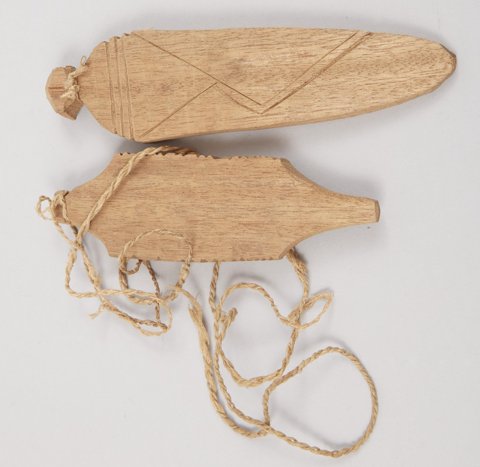 Pagai's paired bullroarersIndonesia · Pagai Islands, Mentawai Islands · Function not recorded
 Orang Darat kitiran, cord intactIndonesia · Manggar, Belitung (Billiton), Bangka–Belitung · Function not recorded
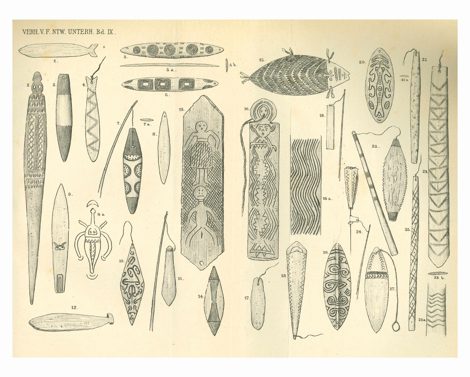 Sundanese (kekinciran)Indonesia · Sundanese districts, West Java · Function not recorded
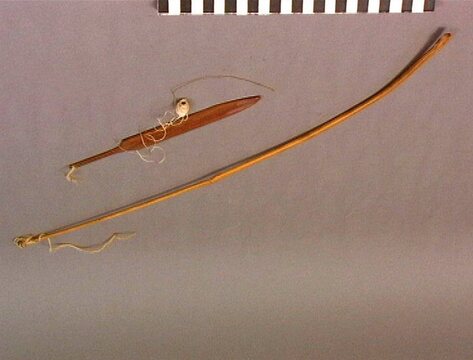 Ternate bubuwasIndonesia · Ternate, North Moluccas · Function not recorded
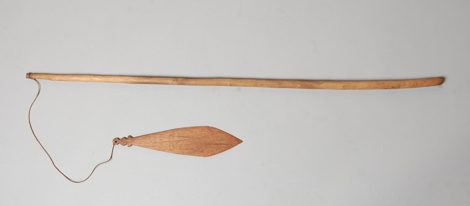 Ambon snorhout playIndonesia · Ambon, Maluku (Moluccas) · Play / practical
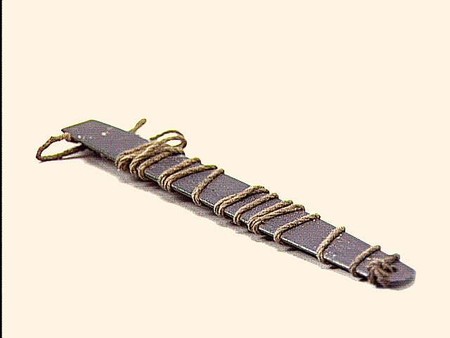 Alor bamboo humming toyIndonesia · Alor Island, Alor Regency, East Nusa Tenggara (Lesser Sunda Islands) · Play / practical