No. MUS2026-109
Pagai's paired bullroarers
Indonesia · Pagai Islands, Mentawai Islands · Southeast Asia
Function not recorded
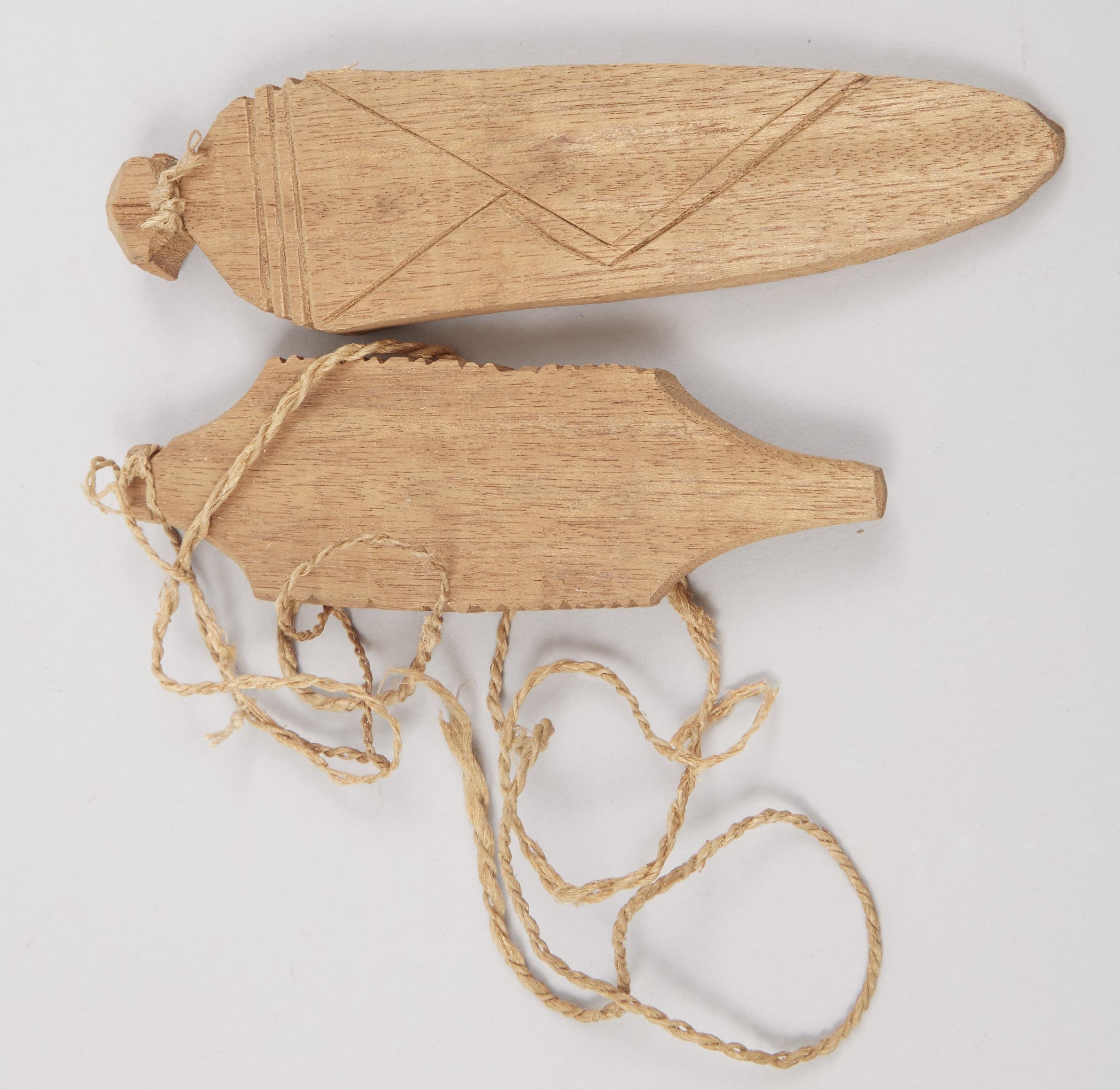
Source term: bull-roarer
On Pagai, wandering souls had to be called home for the punen. After the invocation, drummers decked the gong with flowers, parents and children crowned themselves too, and when the priest struck the gong everyone filed into the uma. These two bullroarers came from the same islands in 1903; what they were swung for went unrecorded.
Particulars
- Object
- Two bullroarer specimens from the Pagai Islands, Smithsonian NMNH E221881-0.
- Function
- Not recorded.
Sources
- Smithsonian National Museum of Natural History, Department of Anthropology, E221881-0 (two specimens), Pagai Islands, Mentawai; gift of William L. Abbott, accessioned 1903. View
- E. M. Loeb, “Mentawei Religious Cult,” University of California Publications in American Archaeology and Ethnology 25(2) (1929), pp. 203–204, 207–208. View · archived