The Seven Sisters and the First Mystery · I of VII
The Seven Sisters and the Voice in the Dark
Australia · New Guinea · Northwest Amazonia · Greece · southern Africa · the Hopi world · central Mexico
The cleanest way to see the old initiation complex is to look up. The Pleiades gather as a tight female band. Orion rises after them as the male pursuer. The dark cleft in the Milky Way becomes board, serpent, swallowing passage, or forbidden gap. Down on the ground, boys are removed from women, terrified, cut, painted, swallowed, renamed, and returned, and a hidden instrument roars from behind the screen to give the ancestors a voice. Australia says it most bluntly. New Guinea keeps the cult-house and the swallowing machine. Amazonia builds the Pleiades and Orion into the ancestral body. Greece keeps the same structure in a broken but legible mystery language.
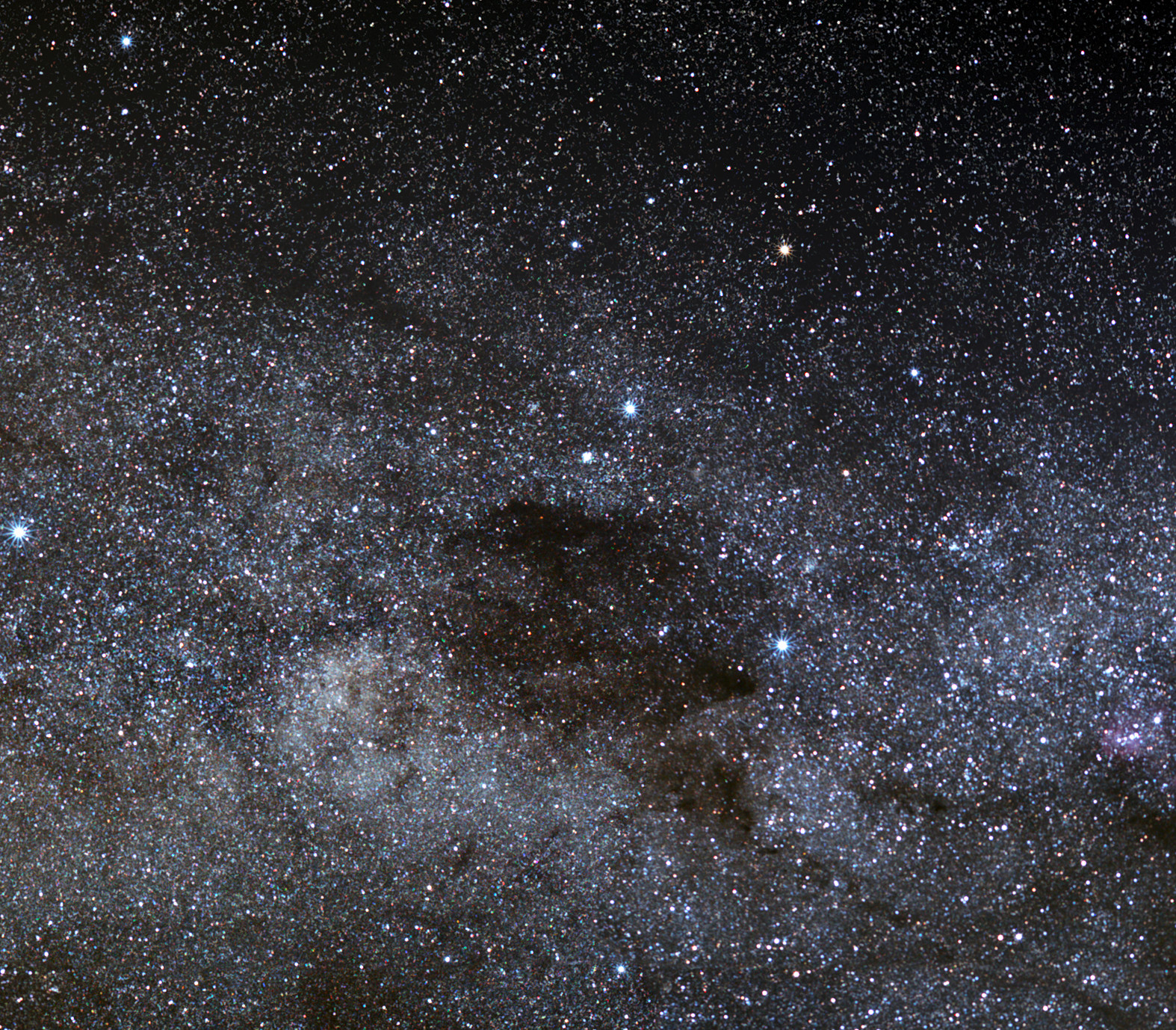
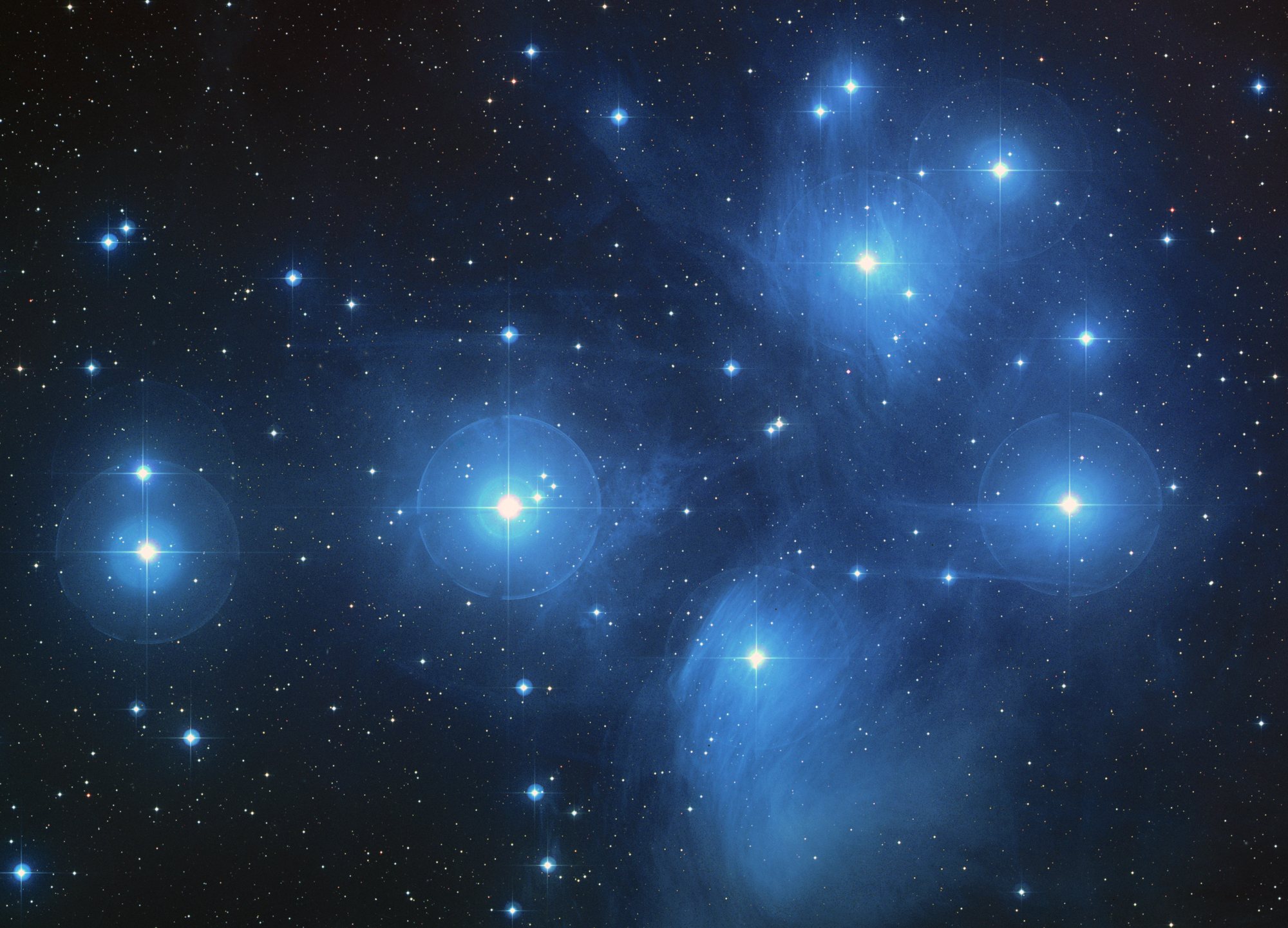
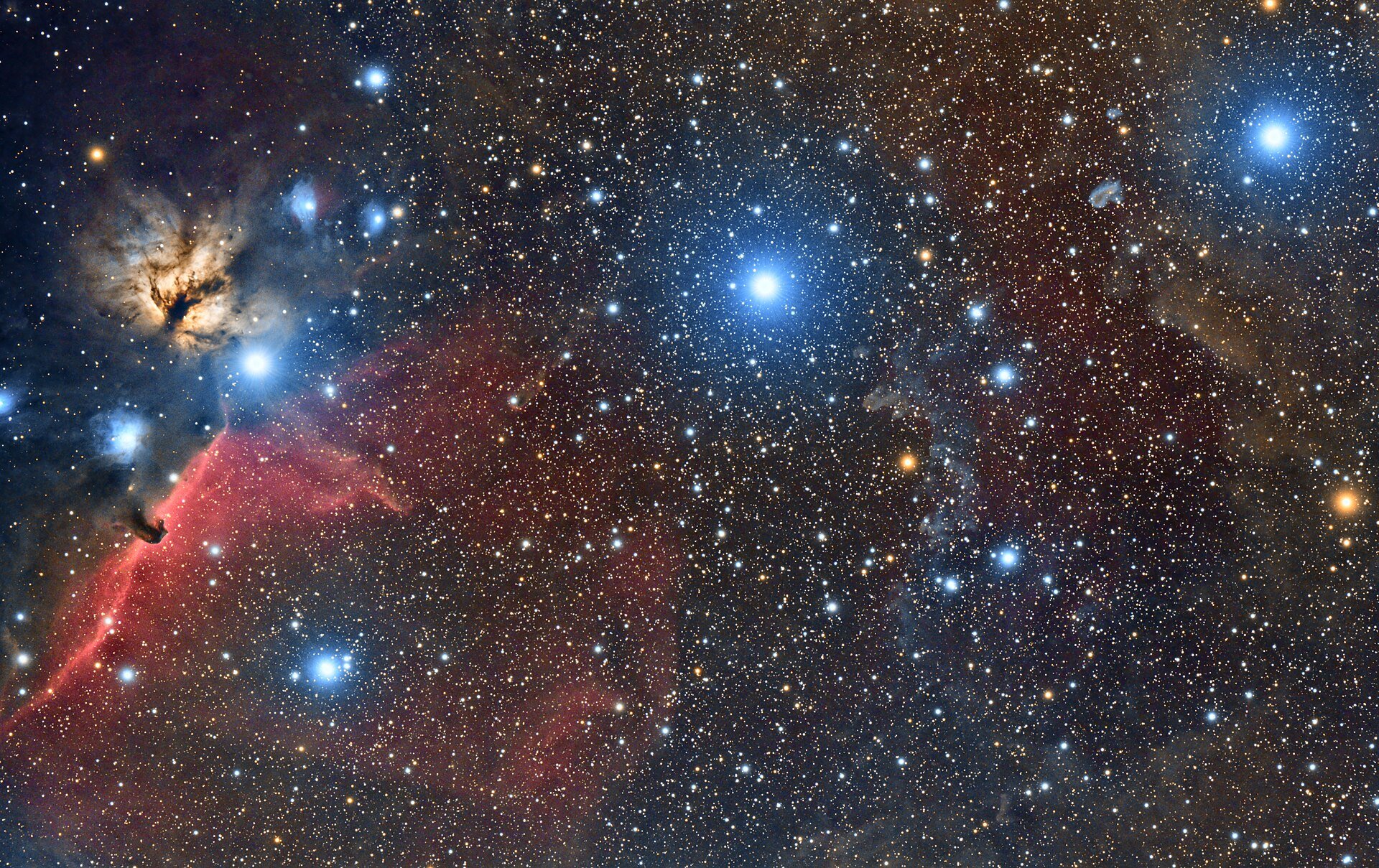
The Seven Sisters and the bullroarer belong to one ancient initiation complex: the Pleiades are the celestial novice-band, Orion is the pursuing male power, and the hidden roar gives transformation a voice on earth.
In brief
- Australia gives the full celestial lock: the Pleiades are women or girls, Orion is the pursuer, and the dark Milky Way can become the sacred board, the bullroarer, or the board’s shadow in explicitly restricted ritual contexts.
- From the Arrernte to Ooldea, the Kimberley, Broome, Eucla, and Arnhem Land, the star stories sit inside initiation: subincision, the summons to ceremony, the Wawilak and Djanggawul cycles, and the ancestral voice.
- New Guinea keeps the same machinery in heavier ceremonial form: Nggwal, sosom, balum, sacred flutes, and swallowing monsters all work the same transition from boyhood into dangerous manhood.
- In northwest Amazonia, the Pleiades and Orion become parts of the ancestral body, while palm-wood flutes and trumpets voice the beings whose house remakes boys.
- Greece preserves the western extension of the same package: the daughters of Atlas overhead, Orion after them, Dionysus below, the serpent across the initiate, and the rhombos inside the mysteries.
Australia writes the rite into the sky
Across mainland Australia the Pleiades are women, girls, or sisters, and Orion is the man who follows them. At Ooldea, on the edge of the Nullarbor, Daisy Bates heard the story of Nyeeruna the hunter chasing the Yugarilya sisters across the sky, and the men who told it tied it to their own initiation, which ended in subincision. There is no choice to make between sky-lore and cult. The stars are on the men’s ground.
Among the Arrernte the Pleiades are the tracks of a band of girls, and their rising with the frost is the season of the boys’ circumcision. The cluster is the novice-band itself, lifted. Its smallness, tightness, and brightness fit the part exactly: not one woman, not a crowd, but a cohort at the threshold between childhood and sexuality.
In the Kimberley the bullroarer itself goes into the sky. The Wolmeri told Phyllis Kaberry that the Pleiades are women pursued by Eaglehawk, who is the Southern Cross. Their Lunga neighbours told her that Orion’s Belt is the stick Banaga threw after his bullroarer when it broke from its string and flew up; the instrument lodged in the Coalsack, and women are not supposed to know it is there. Pursued women in one story, a runaway sacred voice in the next, and a man throwing in both.
Bates heard the same sky up and down the west. At Broome, Billingee told her the beering, the Pleiades, are “our sisters,” and the dark spot in the Milky Way is Kalleegooroo, a sacred carved board. On the initiation ground the Broome men swung the kalligooroo, the voice of the spirit Nalja, a word “never spoken in the hearing of women or children or the uninitiated.” The board in the sky and the roarer on the initiation ground are one word. At Beagle Bay, just up the coast, men told Bates that the dark place had once been a road to the sky country until “some women on the way lighted a fire and burned the road, which was really a sacred wooden emblem.” At Eucla she was given the Pleiades as women or mothers, Orion as the fathers, and the dark patch as the shadow of the yinma, the sacred long board. At Weld Range the board appears again. Women, fathers, and the hidden board hang in one sky from the Kimberley to the Nullarbor.
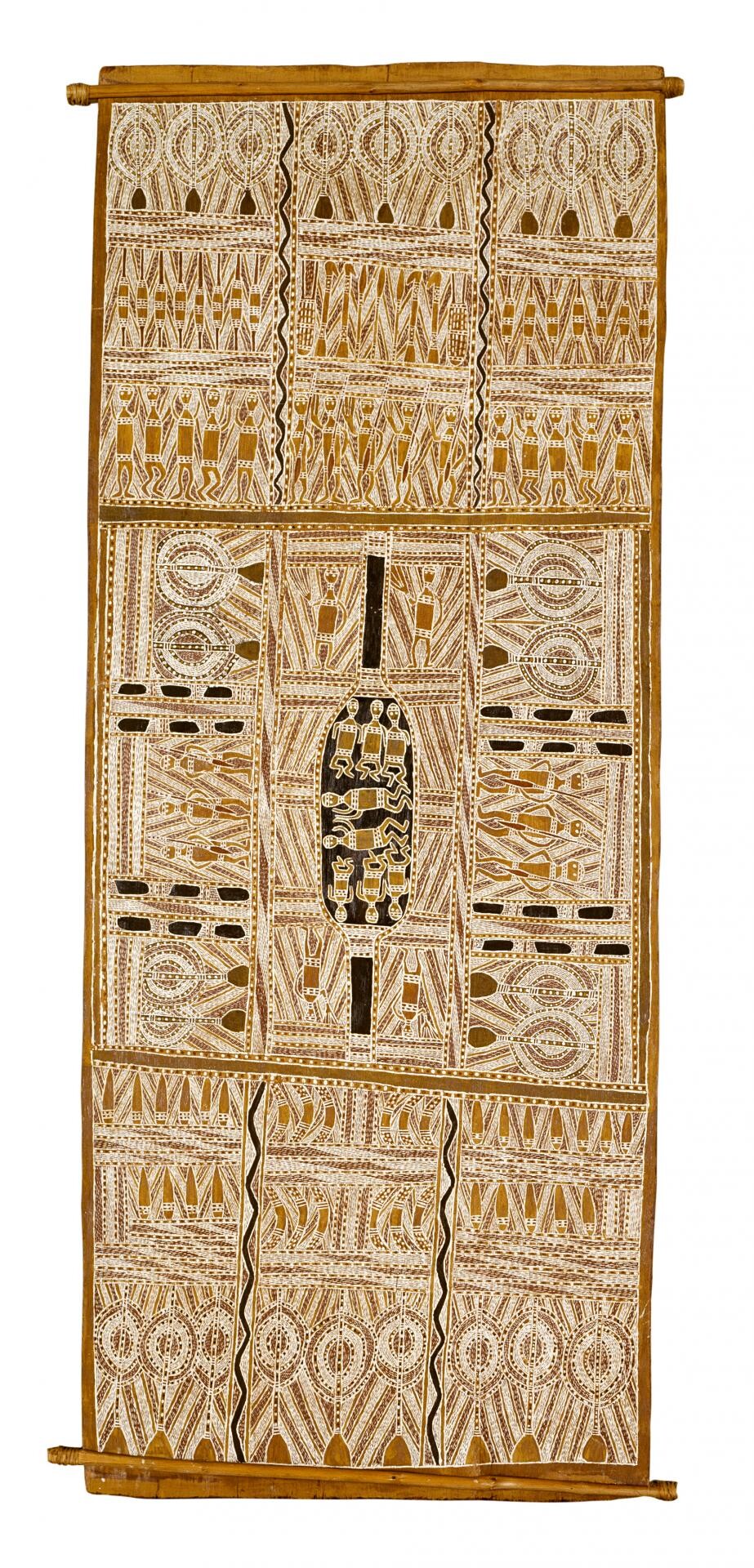
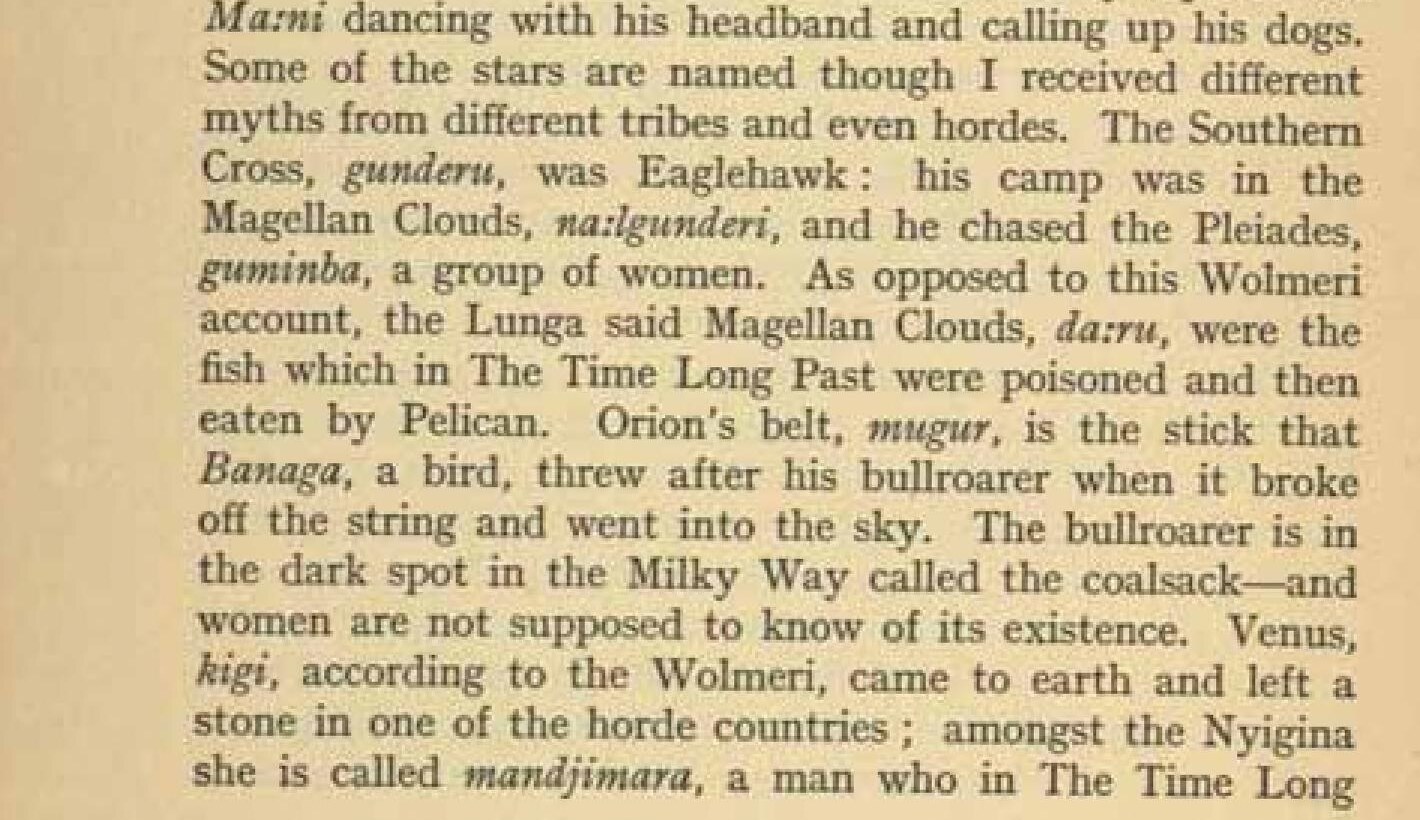
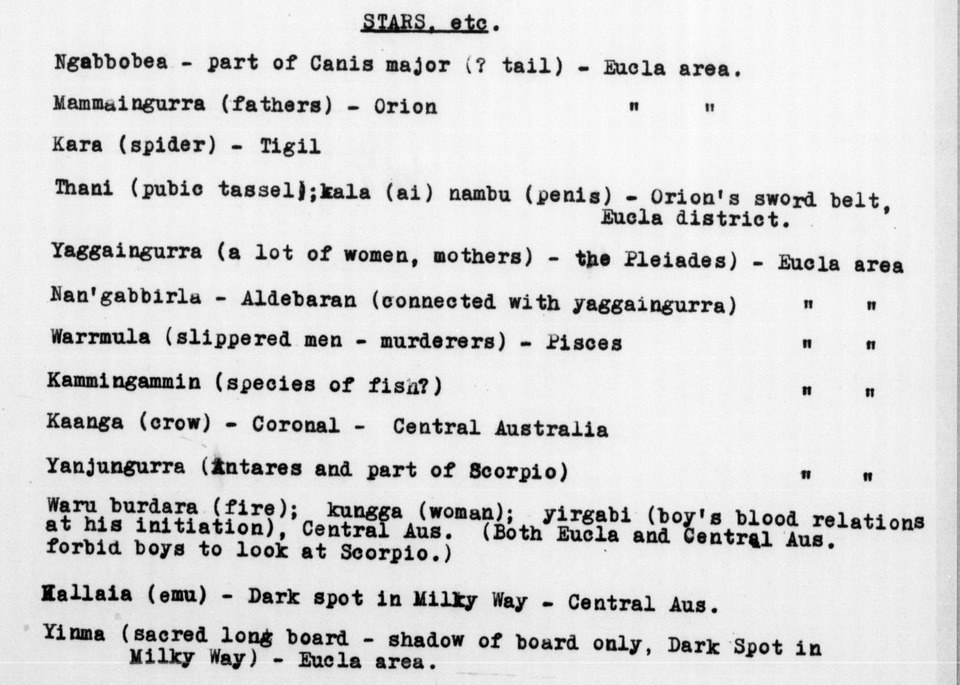
In Arnhem Land the Wawilak and Djanggawul sisters bring the law, carry the sacred property, and meet the great serpent whose body and voice are the bullroarer. Female founders, serpent, voice, and rite are one institution, and the people who kept it understood it that way.
Australia is where the premise stops needing apology. The Seven Sisters are inside initiation country. Orion is the male pressure set against them. The sacred board is in the sky. The hidden sound is restricted.
Five parts, one rite
The complex travels because its logic is modular. Local groups can rename the actors, alter the instrument, or move emphasis from sky to hut to serpent without losing the machinery. The stable pattern is fivefold. First comes the female band: sisters, mothers, girls, ancestral women, or the memory of their prior ownership. Second comes the male pursuer or claimant: Orion, old men, a devouring giant, a serpent, or the male collective itself. Third comes the act of removal: pursuit, capture, seclusion, swallowing, enclosure in the men’s house, or a ritual death. Fourth comes bodily change: cutting, bleeding, vomiting, painting, renaming, instruction, or symbolic dismemberment. Fifth comes the hidden voice: the bullroarer, flute, trumpet, drum, slit-gong, or other non-ordinary sound that makes the ancestors present.
Not every case has a flat board on a cord. Some do. Some have boards and flutes together. Some keep the instrument only as a word in a mythic list. That is what a spread cult looks like. The invariant is not the wood. It is the hidden voice in the middle of a dangerous transformation.
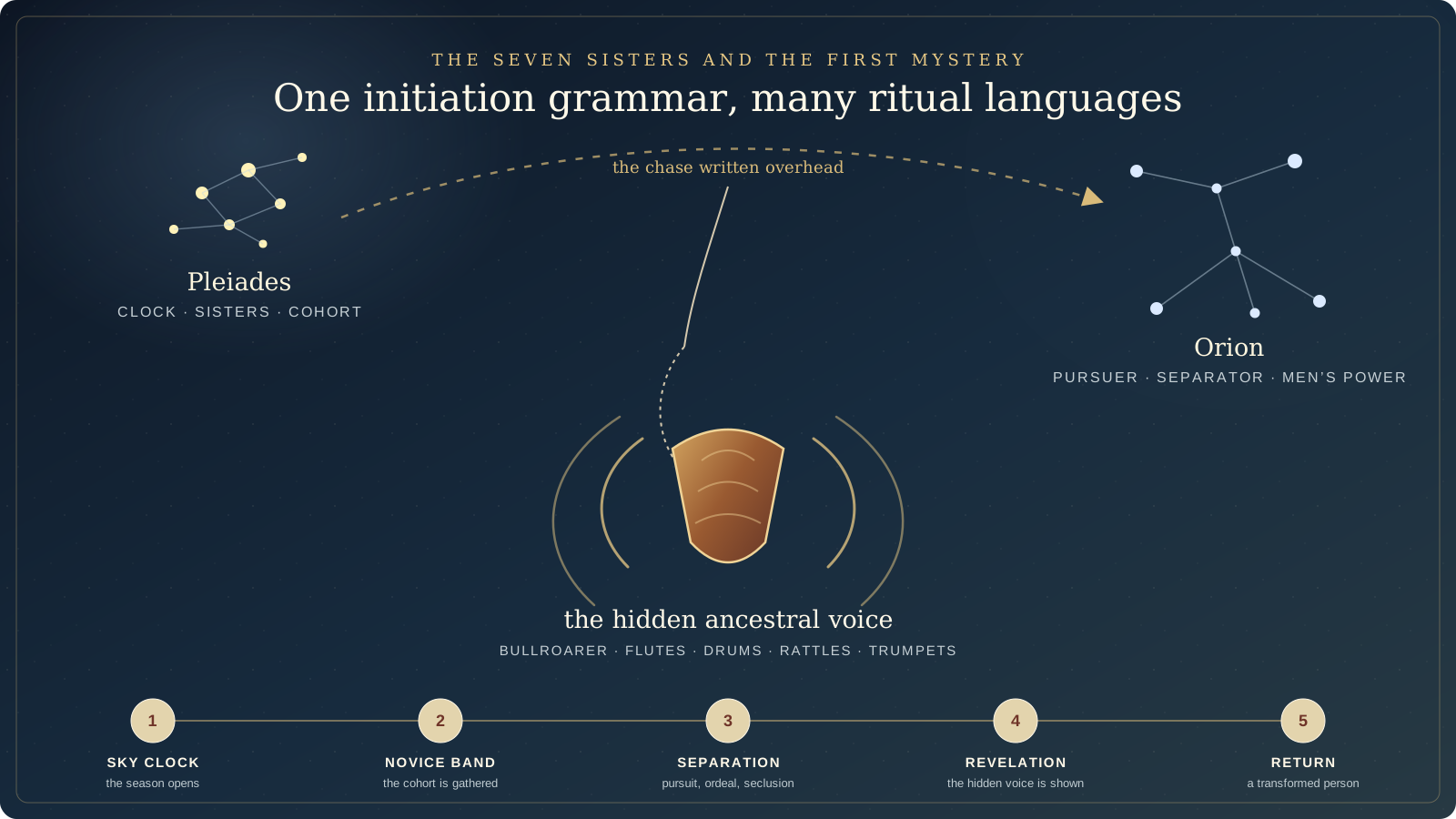
The Australian sky compresses this grammar into a single celestial tableau, which is why it is so precious. The same sequence that takes days or months on the ground becomes one glance overhead: girls gathered, male force advancing, dark passage waiting, voice concealed inside the blackness. The rest of the comparative field can then be read not as a hundred unrelated curiosities but as regional elaborations of the same rite.
Sahul keeps the same rite north of Australia
The complex does not stop at the coastline. The Arafura Sea is younger than the cult. Put Australia and New Guinea back together as Sahul and the Australian sky faces straight into the densest belt of hidden-voice initiation on earth. Names, objects, and cult functions moved across the old continent: Nggwal in the Sepik, Djanggawul in Arnhem Land, Manggawila at Port Keats, sosom in the south, and a whole ladder of voice-rites running east and west.
Women possess an earlier sacred power; men seize or inherit it; the voice goes into hiding; boys are remade inside controlled terror. New Guinea says it as clearly as Australia, sometimes more clearly. Ilahita remembers that a woman made the first bullroarer, the board named Mimi’unemb, before men killed her and took the sound. Arnhem Land remembers the Djanggawul sisters bringing the law over the sea. The Murinbata told Stanner that the Manggawila bullroarer rite had come to them from elsewhere. These are not motif-handbook resemblances. They are the cults’ own accounts of how they travelled.
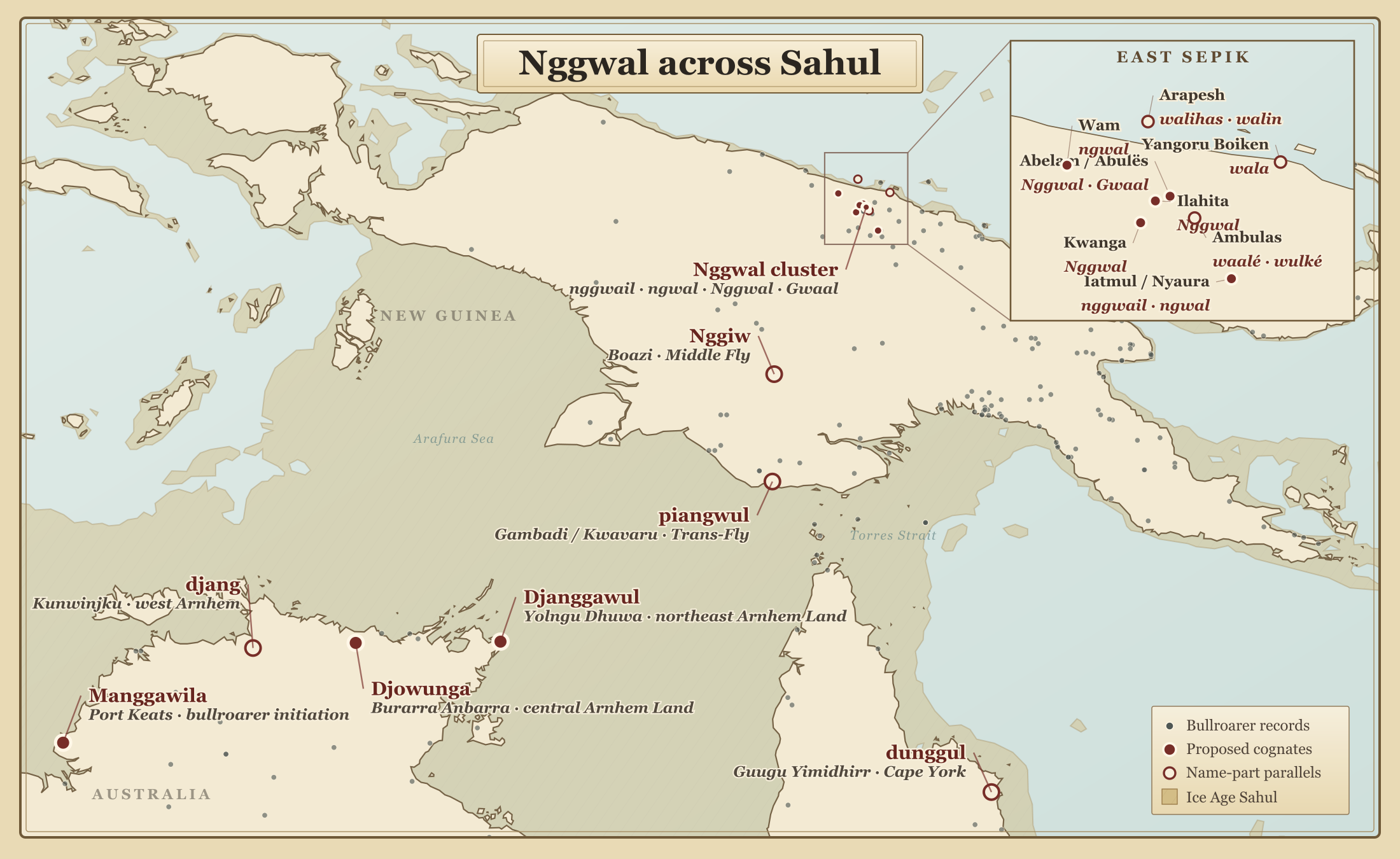
In Australia the stars stay vivid. In New Guinea the cult-house dominates. The two halves interlock because each keeps what the other let fade.
New Guinea keeps the swallowing house and the hidden voice
New Guinea preserves the initiation machine in a state of ceremonial overdevelopment. The voice is a monster. The monster is a house. The house swallows boys. The boys die, or are said to die, and come back changed. In the Purari Delta the bullroarer is the voice of the kaiaimunu, the wicker monster kept at the back of the men’s house. The sound is spirit speech, women are excluded, and the novice passes into a devouring being.
On the Huon Gulf the same identity is balum. Among the Marind it is sosom. Among the Baruya of the eastern Highlands sacred flutes and the bullroarer work together in the making of men. Across the island the concealed voice is board, flute, or trumpet; the work is always initiation, danger, male secrecy, and bodily change.
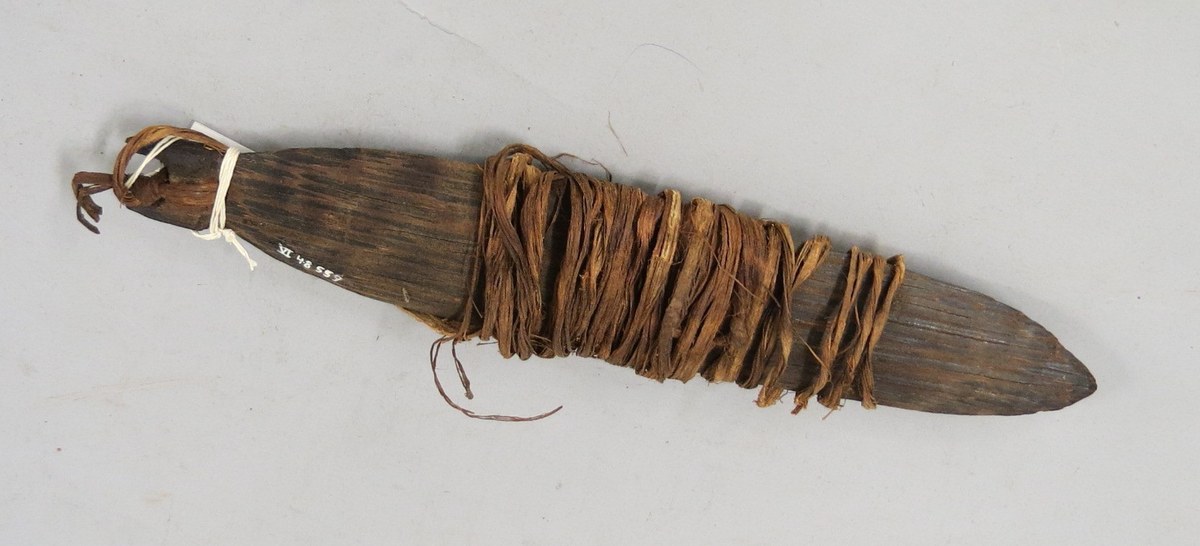
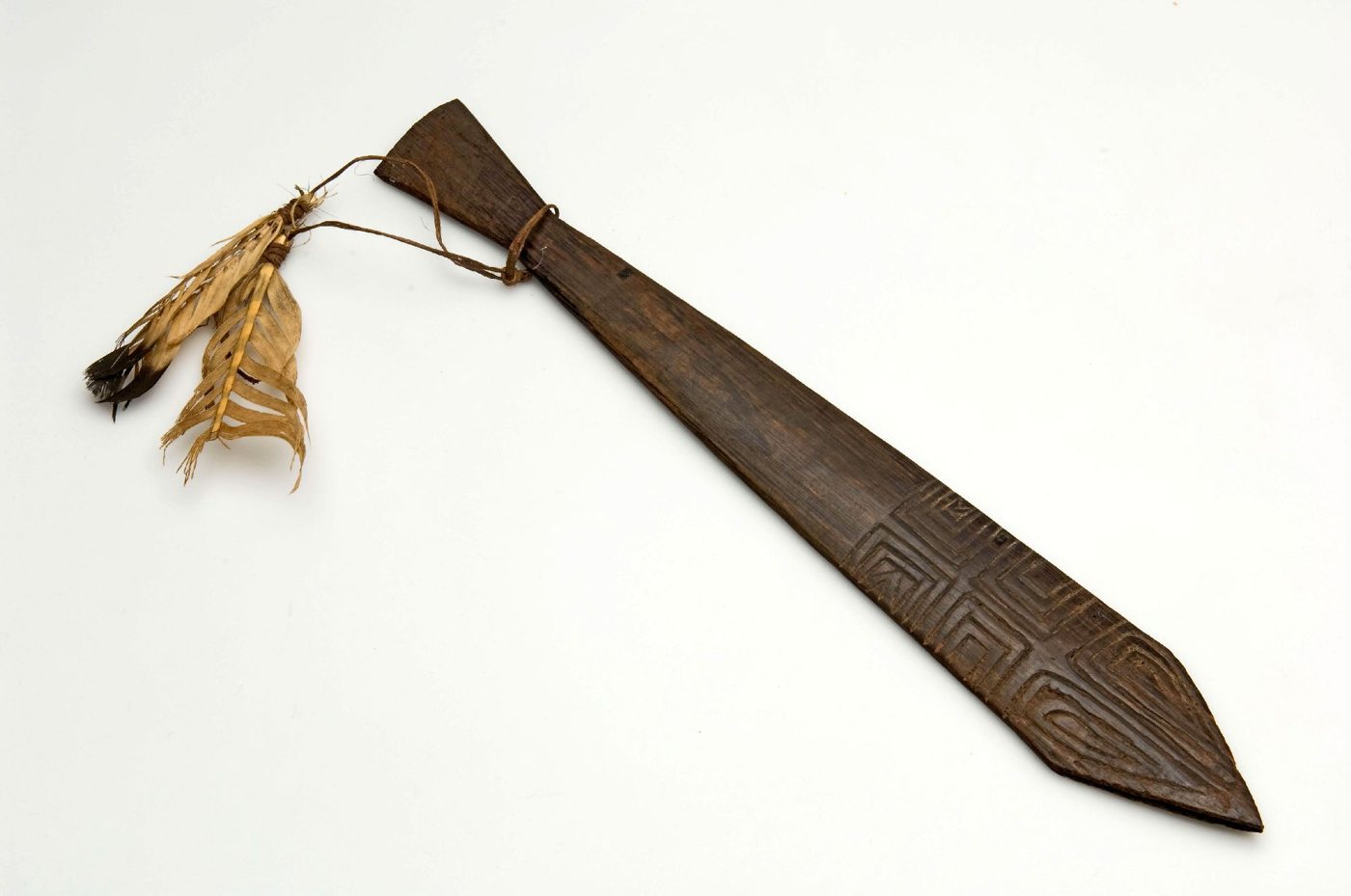
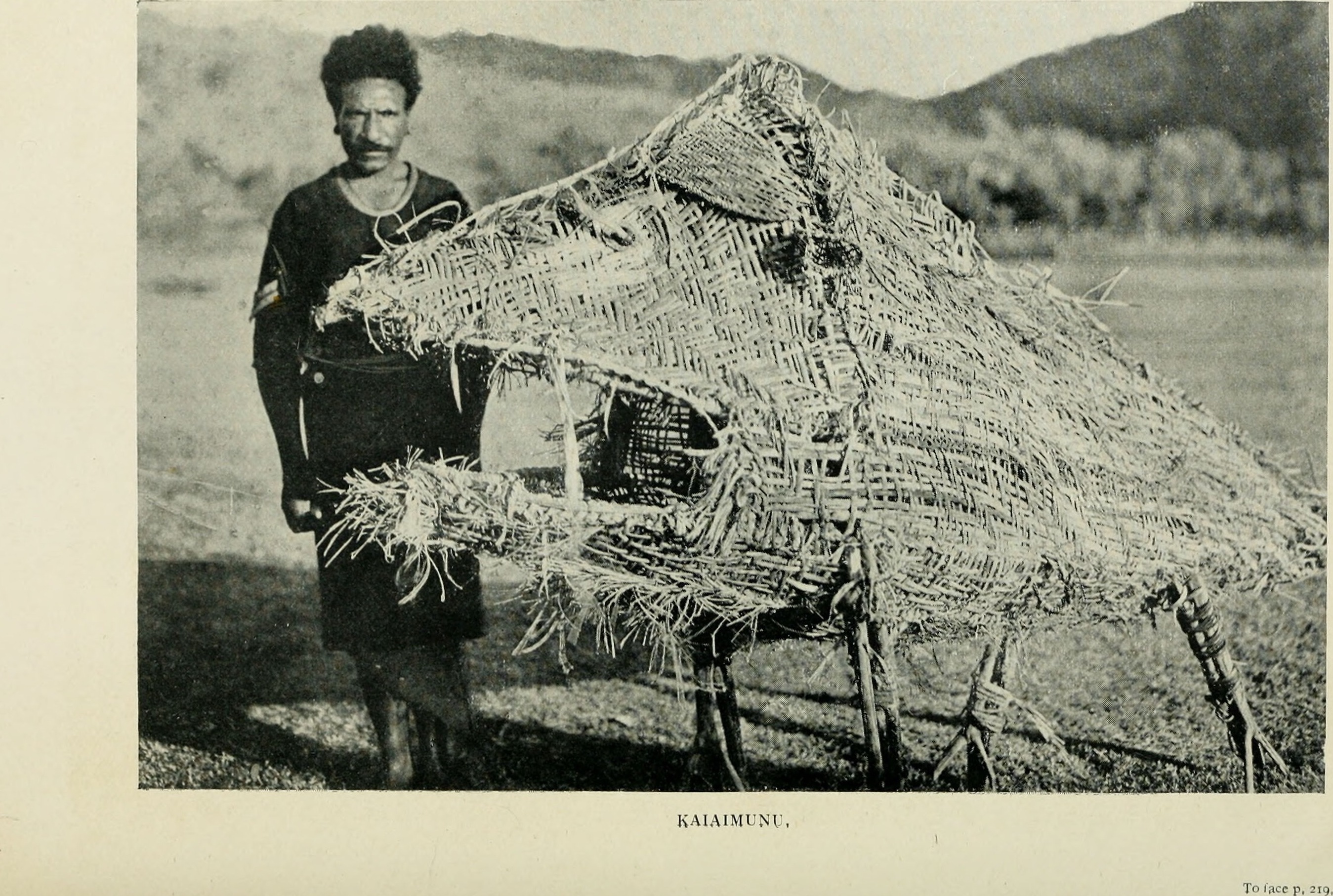
Seen from Australia, this is not a departure but an enlargement. The sisters remain the bright edge of the system. New Guinea supplies the heavy interior: the house, the devouring creature, the murder of the female inventor, the flutes, the masks, the blood, the renaming, the months of seclusion. The hidden roar is doing the same job in both places. It turns transformation from metaphor into event.
Greece keeps the same structure in mystery form
West, the institution changes media. Instead of ethnographers we have poets, mythographers, papyri, lexica, and marble. The structure survives. The Pleiades and Hyades are daughters of Atlas. Orion pursues the Pleiades. Dionysus is the torn and twice-born god of night rites, disguise, female entourages, and return. Clement lists the rhombos, the Greek bullroarer, among the toys with which the child-god was lured to his dismemberment. An Orphic papyrus passes a serpent through the initiate’s clothes and puts the rhombos in the basket. Nonnus has the nurse Mystis teach Dionysus the night rites. The female line, the dangerous boy-god, the serpent, and the roaring instrument are all still there.
Greece keeps an Atlas-born sister-cluster overhead and a ring of women around the boy-god below: Mystis, Rhea, Cybele, nurses, maenads. Centuries of literature have broken the institution into episodes, but the episodes reassemble into the same machine.
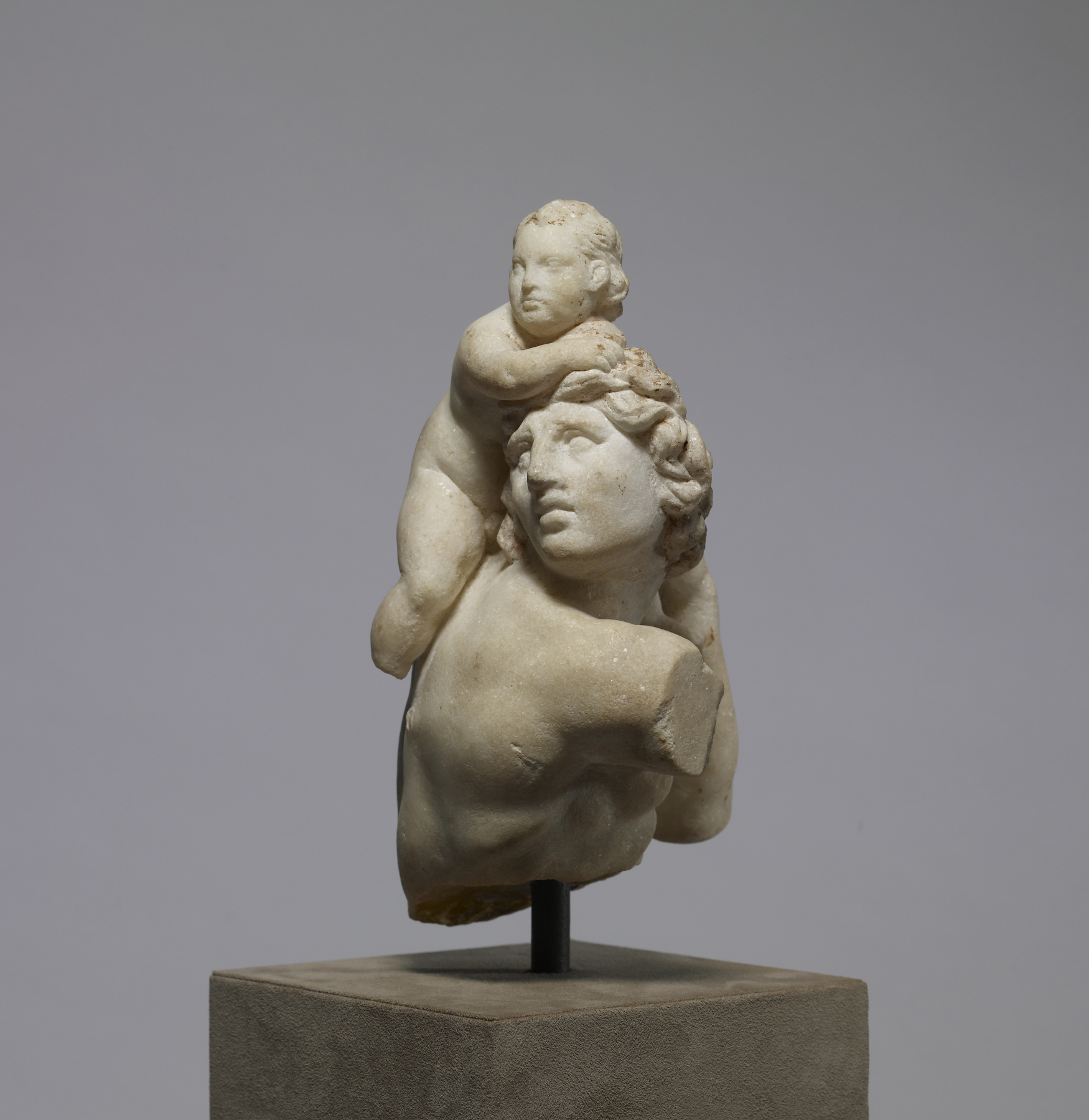
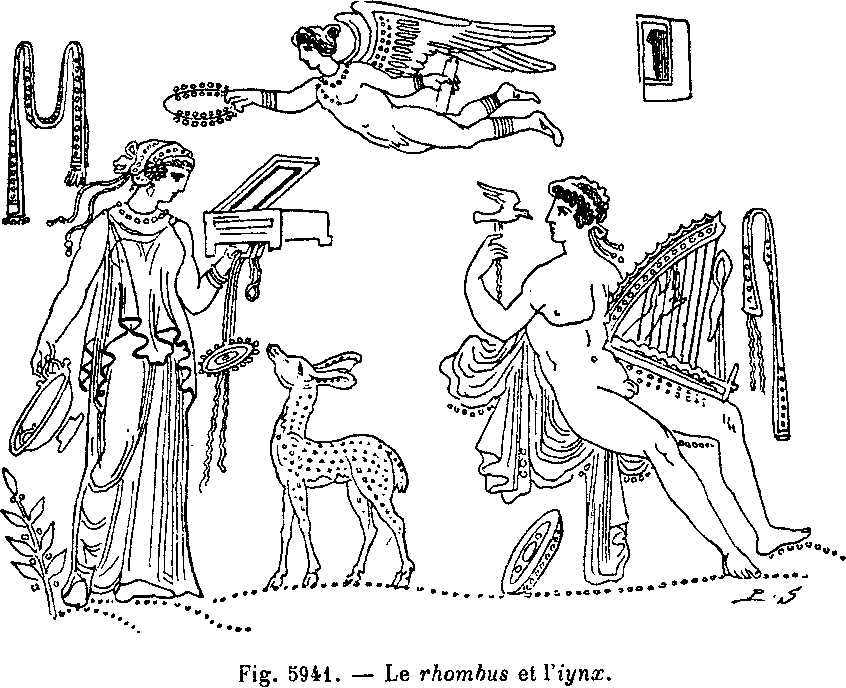
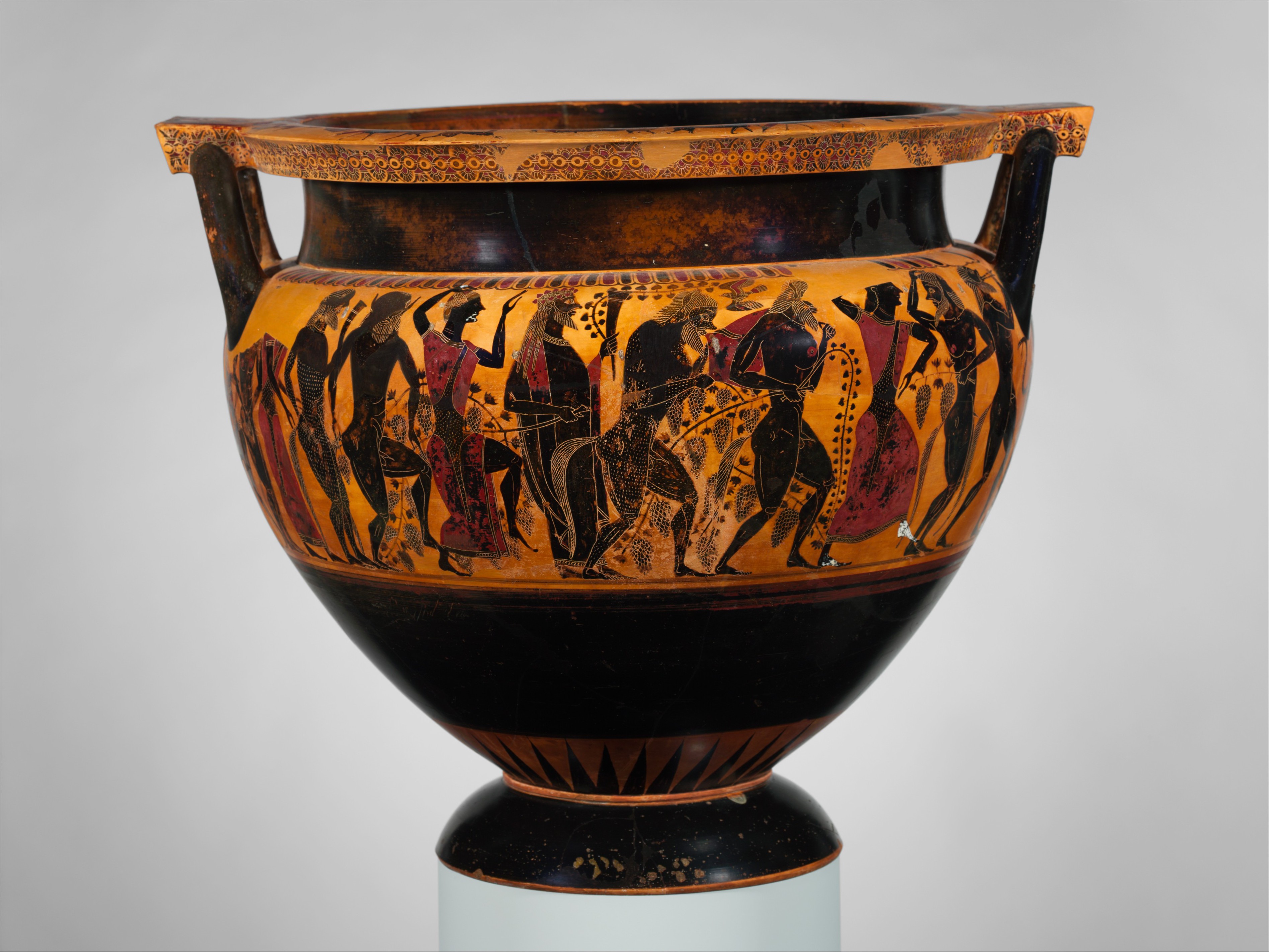
Greece is the proof of range. Read Australia and New Guinea alone and the institution could be Sahul’s alone. Greece breaks that containment. The roarer survives in a mystery religion that also keeps the star-sisters, the pursuer, the serpent, and the dying boy. The western terminus still speaks the same ritual language.
The stars open houses, kivas, and a new world
In the Vaupés, on the Colombia–Brazil border, the Amazonian house joins the sky to the ancestor’s body. Among the Barasana, the Pleiades correspond to viscera and head; Orion to a long bone; his belt and sword are an adze. Palm-wood flutes and trumpets give the ancestors breath, while the men’s house encloses boys and brings them through a symbolic rebirth. The Pleiades also belong to Woman Shaman and her wax gourd, and they set the night of the great initiation, He wi, which is held when the cluster stands low in the west at dusk. At its midnight climax the novices eat coca from that gourd, which stands for the Pleiades and Woman Shaman, while the men play the Jurupari flutes. The stars, female ancestral power, ritual instruments, and the making of men are parts of one cosmology. The Amazonian branch has its own chapter, The Palm and the Pleiades. Hugh-Jones 1979, pp. 188–197, 222–225; 1982, pp. 188, 200–201.
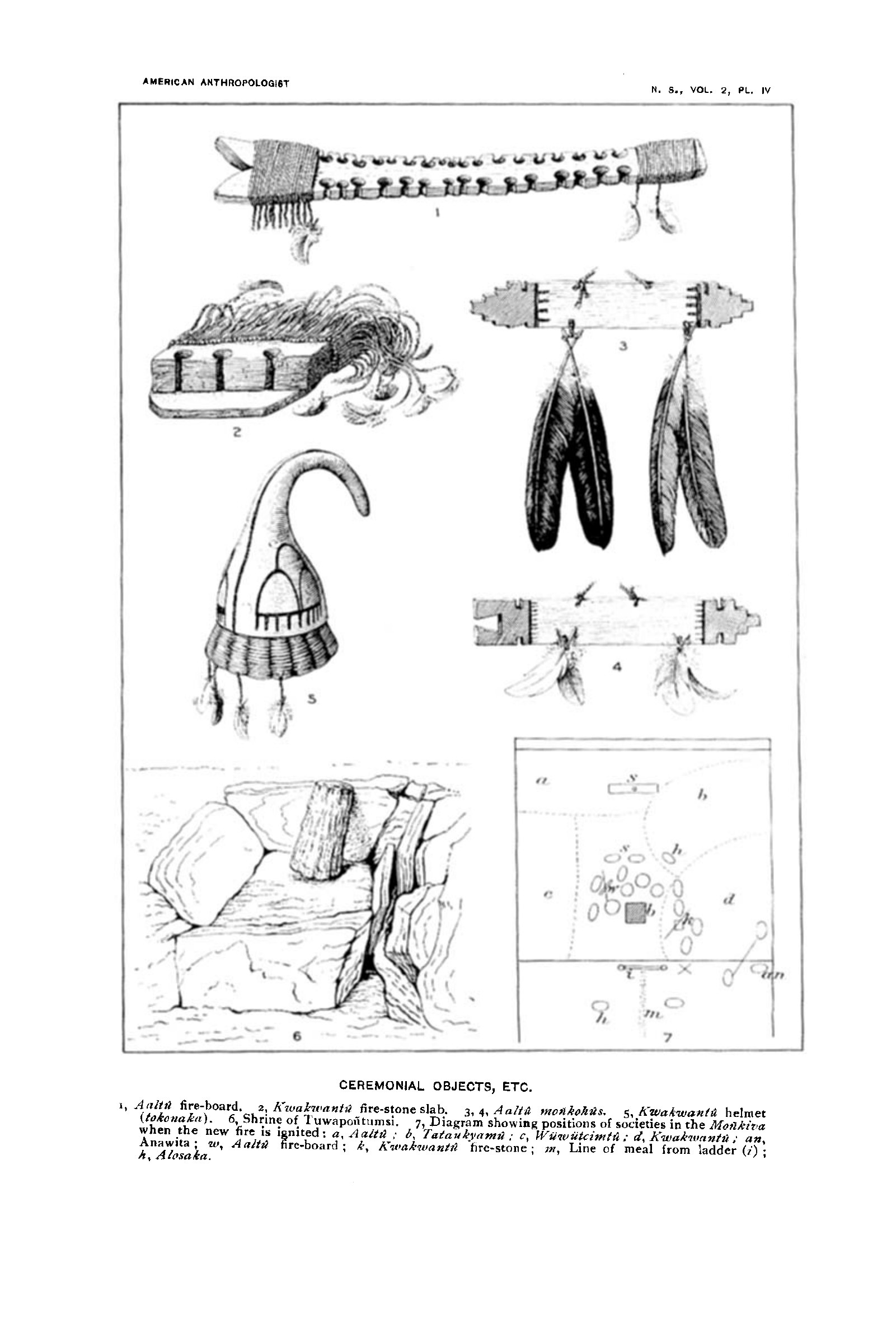
At Hopi Walpi, in northeastern Arizona, the same two constellations govern important night ceremonies in an initiation festival. During the November New Fire festival, Wuwuchim, Fewkes watched four novices of about sixteen leave Tcivato-kiva in horned helmets, carrying bells, and run between shrines under an older priest’s direction. Important night ceremonies in that kiva were timed by the Pleiades and Orion. Inside the same room, men held wooden effigies of the Great Snake while a low song, copper bells, and the beating of an agave rod filled the dark. Boys, timekeeping stars, and sounding serpents belong to one festival. Fewkes, pp. 99–100, 110 n. 2, 114.
The serpent slats were carried on strings while bells and the agave rod made the noise, and a serpent-headed club went out with the novices on patrol. The powers stay together with the work divided among several objects. The whirled board itself sounds in Walpi’s winter kivas: in the Winter Flute rite, Momi of the Tciia clan stood before the chiefs’ three sacred badges “twirling the whizzer or bull-roarer,” then did the same on the kiva roof. Fewkes, p. 135; Fewkes 1903, p. 30.
Among the Xhosa of South Africa, the Pleiades are isiLimela, the digging stars. Their dawn return in June marks the new agricultural year. Their appearance also set the coming-out of the abakwetha, the circumcision-school initiates, and men counted their years of manhood from that date. The cluster marks both the passage into adult life and the years lived afterward. Hodgson, p. 25.
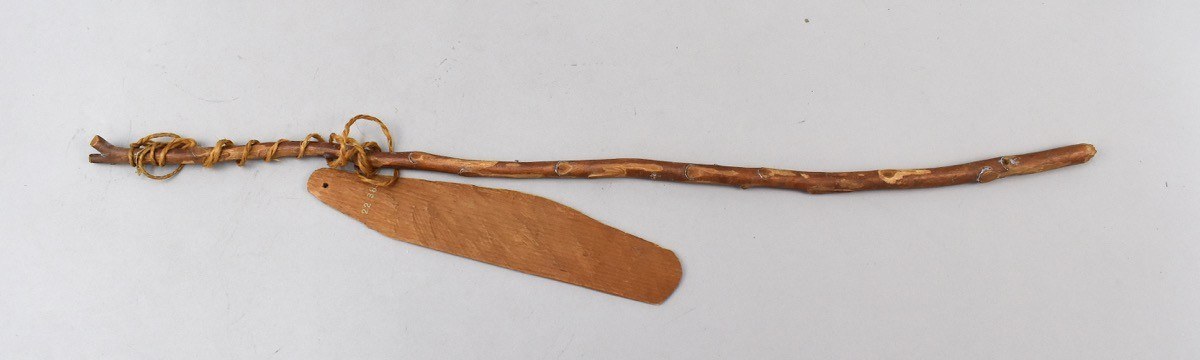
The Xhosa nodiwu raises wind and frightens children, and Tylor reported South African bullroarers making rain and warning women away from initiation. In 1885 Mrs Carey-Hobson described white-painted Xhosa initiates, one of them whirling what she took for the nodiwu. The board and the stars belong to the same school. Tylor, p. 265; Theal, p. 209; Carey-Hobson, p. 325.
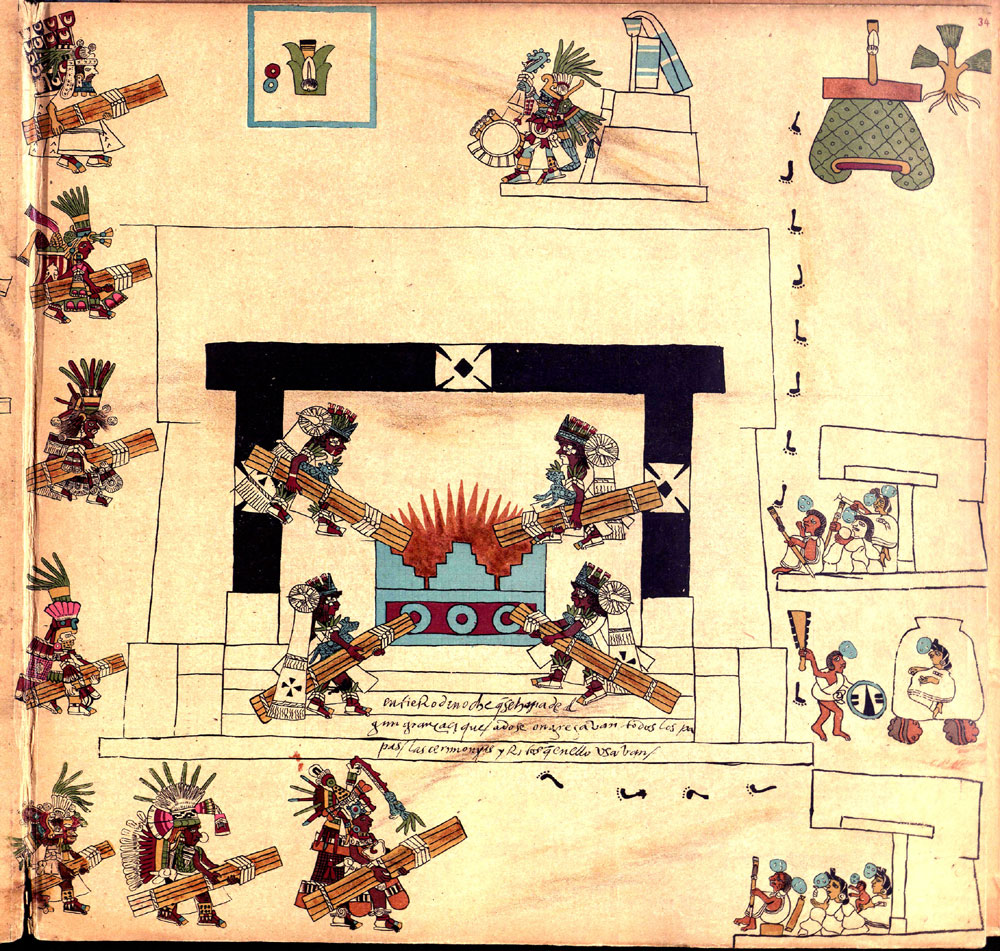
In central Mexico, the Mexica enlarged the threshold to the life of the world. At the end of fifty-two years, fires were extinguished and priests watched the Pleiades cross the midnight sky. Their continued passage allowed another cycle to begin. On Huixachtlan, now Cerro de la Estrella in Mexico City, new fire was drilled on a captive’s chest; the flame spread through temples and households. This was the renewal of a world rather than of a boy, but the shape is the same: a whole society waits in darkness, crosses through mortal danger, and receives new life under the Pleiades. Florentine Codex, Books 4 and 7.
.jpg)
These ceremonies have their own chapter, When the Stars Open the Lodge.
The stars are the upper register of the rite
The connection between the Seven Sisters and the bullroarer is the ritual structure itself. The Pleiades are the female novice-band lifted into the sky. Orion is the male pressure that pursues, tests, separates, and claims. The dark lane, swallowing house, serpent body, or hidden ground is the passage where the old person disappears. The roarer, flute, trumpet, drum, or mystery rhombos is the concealed ancestral voice that makes the transformation real.
Australia gives the whole celestial map in one glance. New Guinea gives the full ceremonial machine in operation. Amazonia builds the Pleiades and Orion into the ancestral body and sounds that body through the instruments of initiation. Greece keeps the star-women and roaring mystery in literary and ritual form. At Walpi, the two constellations order the same festival that joins novice boys, serpent effigies, and bells. The Xhosa count adult life by the cluster; the Mexica make its passage the warrant for a renewed world. These are substantial regional branches of an institution whose reach is larger than any one instrument.
Astronomy, mythology, men’s cults, women’s prior ownership, serpent ritual, swallowing, and secret instruments were never separate problems. They are the visible faces of one institution. The Seven Sisters and the bullroarer belong to one ancient initiation complex: the Pleiades are the celestial novice-band, Orion is the pursuing male power, and the hidden roar gives transformation a voice on earth.
Key sources
- Dianne Johnson, “Interpretations of the Pleiades in Australian Aboriginal Astronomies”, and Night Skies of Aboriginal Australia, for the Australian distribution of Seven Sisters traditions and the initiation timing of the cluster.
- Trevor M. Leaman and Duane W. Hamacher, “Aboriginal Astronomical Traditions from Ooldea, South Australia, Part 1: Nyeeruna and the Orion Story”, for the Ooldea lock between the Orion chase and male initiation.
- Phyllis M. Kaberry, Aboriginal Woman: Sacred and Profane (1939), p. 12; Daisy Bates’s Broome, Eucla, and Weld Range star notes via Digital Daisy Bates; Ernst Worms, “Djamar, the Creator,” Anthropos 45 (1950), pp. 647–650, for the western Australian board-in-the-sky complex. Daisy Bates, The Passing of the Aborigines (1938), “In a Trappist Monastery” for the Beagle Bay road burned by women, and “The End of Initiation, the Blood-Drinking” for the Broome kalligooroo.
- Ronald M. Berndt, Djanggawul: An Aboriginal Religious Cult of North-Eastern Arnhem Land (1952), and James A. Davidson on Yolngu bullroarers as the serpent’s body and voice.
- W. E. H. Stanner, On Aboriginal Religion, pp. 159–160, for the Murinbata taking the bullroarer from the Djamindjung and naming the new rite Manggawila.
- Donald Tuzin, The Voice of the Tambaran; Maurice Godelier, The Making of Great Men; Jan van Baal, Dema; and F. E. Williams, The Natives of the Purari Delta, for New Guinea, the murdered female inventor, the hidden voice, and the swallowing cult-house.
- Stephen Hugh-Jones, The Palm and the Pleiades: Initiation and Cosmology in Northwest Amazonia (1979), pp. 188–197 for the Pleiades–Orion bodily and instrumental correspondences, and pp. 222–225 for men’s symbolic production of the initiates. His “The Pleiades and Scorpius in Barasana Cosmology”, Annals of the New York Academy of Sciences 385 (1982), pp. 183–201, gives the Adze as Orion’s belt and sword at p. 188 (correcting the 1979 identification, p. 201 n. 5) and the Pleiades timing of He wi and the beeswax gourd at pp. 200–201. See The Palm and the Pleiades for the full Amazonian chapter and bibliography.
- J. Walter Fewkes, “The New-Fire Ceremony at Walpi,” American Anthropologist 2 (1900): 80–138; pp. 99–100 for novice patrols, p. 110 n. 2 for Pleiades–Orion timing, p. 114 for serpent effigies with bells and percussion, p. 135 for the carved serpent slats and the novices’ serpent-headed club, and plate IV for the festival equipment.
- J. Walter Fewkes, “Hopi Katcinas Drawn by Native Artists,” Twenty-first Annual Report of the Bureau of American Ethnology (1903), pp. 29–30, for the Winter Flute rite and the whizzer.
- Janet Hodgson, doctoral thesis, University of Cape Town (1985), p. 25, for isiLimela, the June return, the abakwetha coming-out, and the count of years of manhood.
- E. B. Tylor, review of Fison and Howitt’s Kamilaroi and Kurnai, The Academy, 9 April 1881, pp. 264–266, especially p. 265, for the regional South African rain-making and initiation-warning report; George McCall Theal, Kaffir Folk-Lore (1882), p. 209, for the Xhosa nodiwu, wind, and childhood fright; Mrs Carey-Hobson, discussion following Howitt’s “The Jeraeil,” Journal of the Anthropological Institute 14 (1885), p. 325, for the white-painted initiates and the whirled instrument.
- Bernardino de Sahagún and Nahua collaborators, Florentine Codex, Book 4, appendix, fol. 80r–v, for the Pleiades and fifty-two-year count; Book 7, ch. 9, fol. 17v, for fire-drilling and sacrifice; chs. 11–12, fols. 19r–20v, for the distribution of fire and general renewal. Digital Florentine Codex, Getty Research Institute.
- Clement of Alexandria, Protrepticus 2; James Hordern on P. Gurob I; Nonnus, Dionysiaca 9; Apollodorus 3.5.1; and Jane Ellen Harrison, Themis, for the Greek rhombos, Dionysiac death-and-return, and the female ritual belt around the god.
- Ray P. Norris and Barnaby R. M. Norris, “Why are there Seven Sisters?” (2020 preprint; 2021 chapter), for the Australian-Greek Pleiades-Orion parallel and its proposed antiquity; Julien d’Huy and Yuri Berezkin, “How Did the First Humans Perceive the Starry Night? On the Pleiades”, The Retrospective Methods Network Newsletter 12–13 (2017): 100–122, for the transmitted Orion-Pleiades bundle.