The Seven Sisters and the First Mystery · V of VII
The Daughters of Atlas and the Roaring God
Greece · the spring sky · Nysa · Athens · the mystery basket
In Greek spring the sky tells the story before the priests do. Orion rises with his lifted club and follows the Seven Sisters. Beside him, in the head of Taurus, stands another cluster of daughters of Atlas, the Hyades. Greek myth keeps them together: the hunted star-women, their sister nurses, the child they rear for the night rites, the women who teach him those rites, the drums and hidden noise that defend him, and the roaring board spun over his murder and rebirth. What survives in Greece is not an isolated curiosity called the rhombos. It is the Mediterranean branch of the same initiation complex that in Australia and New Guinea still joins pursued women, secret instruments, swallowing death, and return.
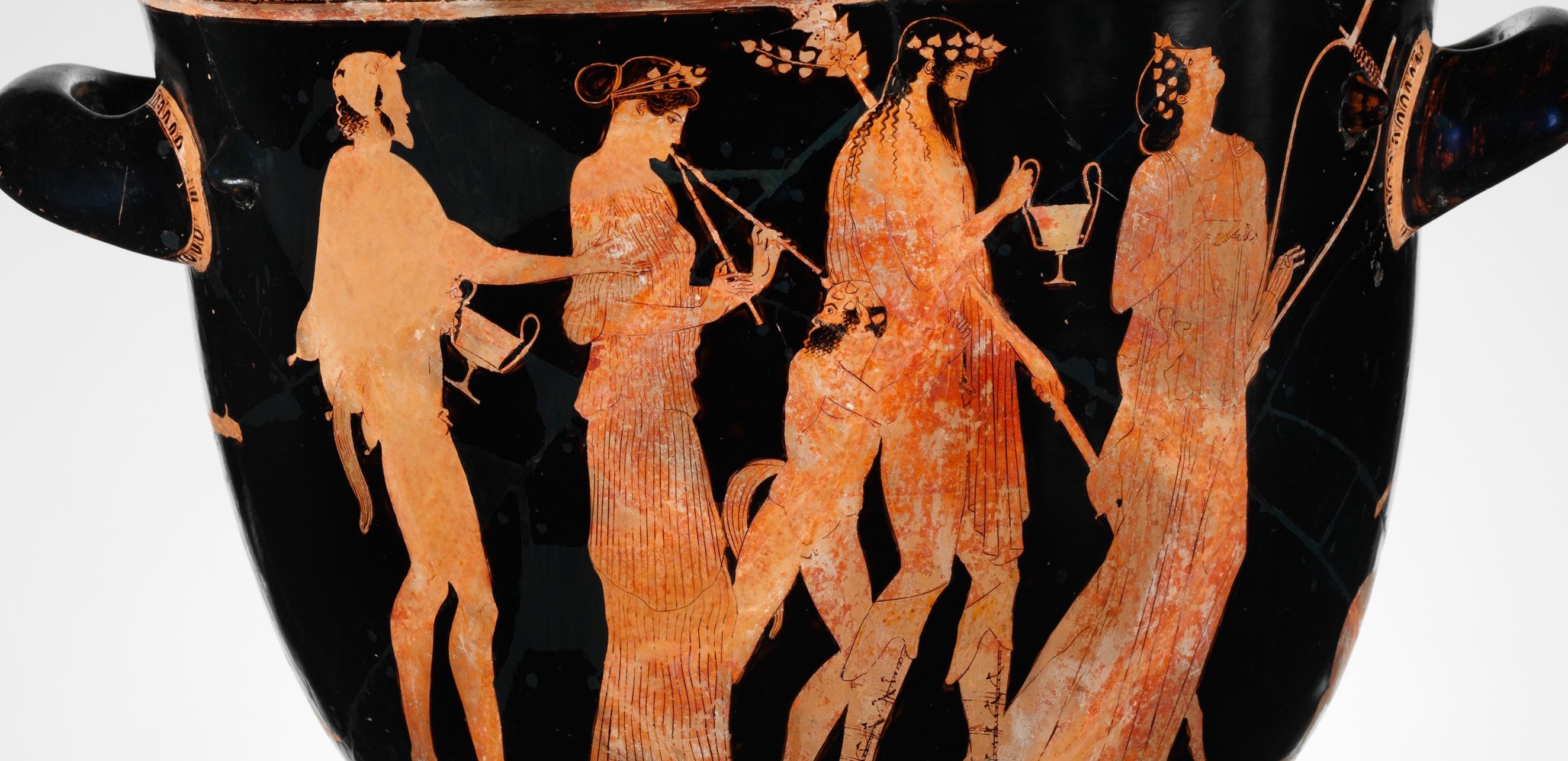
Greece preserves the Mediterranean branch of the Seven Sisters initiation complex: Orion pursues the star-women, their sister nymphs raise Dionysus, women teach him the mysteries, and the bullroarer sounds over his dismemberment and rebirth.
In brief
- The Greek sky already carries the plot: Orion chases the Pleiades, while the Hyades, their sisters among the daughters of Atlas, stand in the same Taurus-Orion field that frames the Mediterranean spring.
- Pherecydes, preserved by Hyginus, makes the Hyades—earlier called Dodonidae—nurses of Dionysus; other witnesses give the same office to the Nysiads. Distinct names preserve the same ritual position: a female company raises the mystery child.
- The mysteries themselves are taught by women. Nonnus gives Dionysus a female initiatrix, Mystis, while Demosthenes preserves the real Athenian house-rites of Glaukothea, where women ran initiation and men served them.
- Clement names both kōnos and rhombos among the toys with which the Titans lured the child. A scholiast explains the kōnos as wood on a string whirled to roar, and the Gurob papyrus puts the rhombos in the mystery basket.
- The rites retain the full initiatory machinery: sacred noise, snakes, clay-daubing, hidden objects, women’s custody, and the death of the divine child impressed back onto the novice’s body.
The sky already carries the rite
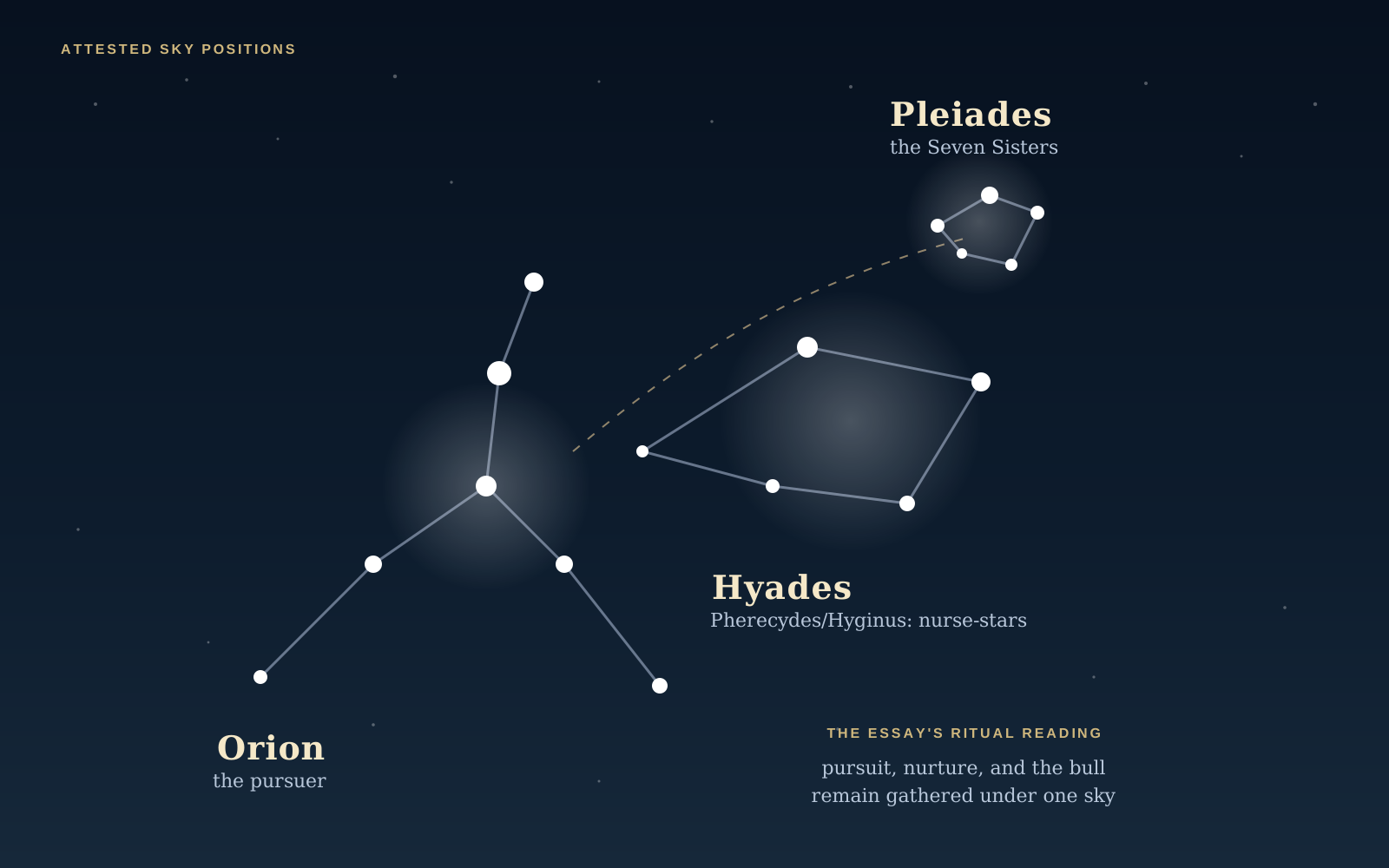
Greek myth does not place Dionysus under a neutral heaven. It keeps him under the daughters of Atlas. The Pleiades are seven sisters. The Hyades are their sisters too. Orion, the giant hunter, pursues the Pleiades across the sky until Zeus turns the women into stars. Beside that pursuit stands the second cluster, the Hyades in the face of Taurus, a sister-band whose very rising and setting marked weather, season, and the agricultural year. The scene matters because Dionysus belongs to that same spring field of stars: the hunter behind the women, the bull beside them, the daughters of Atlas above the mountain child.
Greek myth keeps the Pleiades and Orion in direct opposition, male pursuit against a cluster of fleeing sisters, and then shifts from one sister-cluster to the other without leaving the house of Atlas. The child god goes to his nurses, the nymphs who became stars. Australia uses Orion and the Pleiades as the visible grammar of pursuit in initiation country. Greece uses the same cast, then hands the mystery child to the sisters next door.


Atlas-born women raise the god
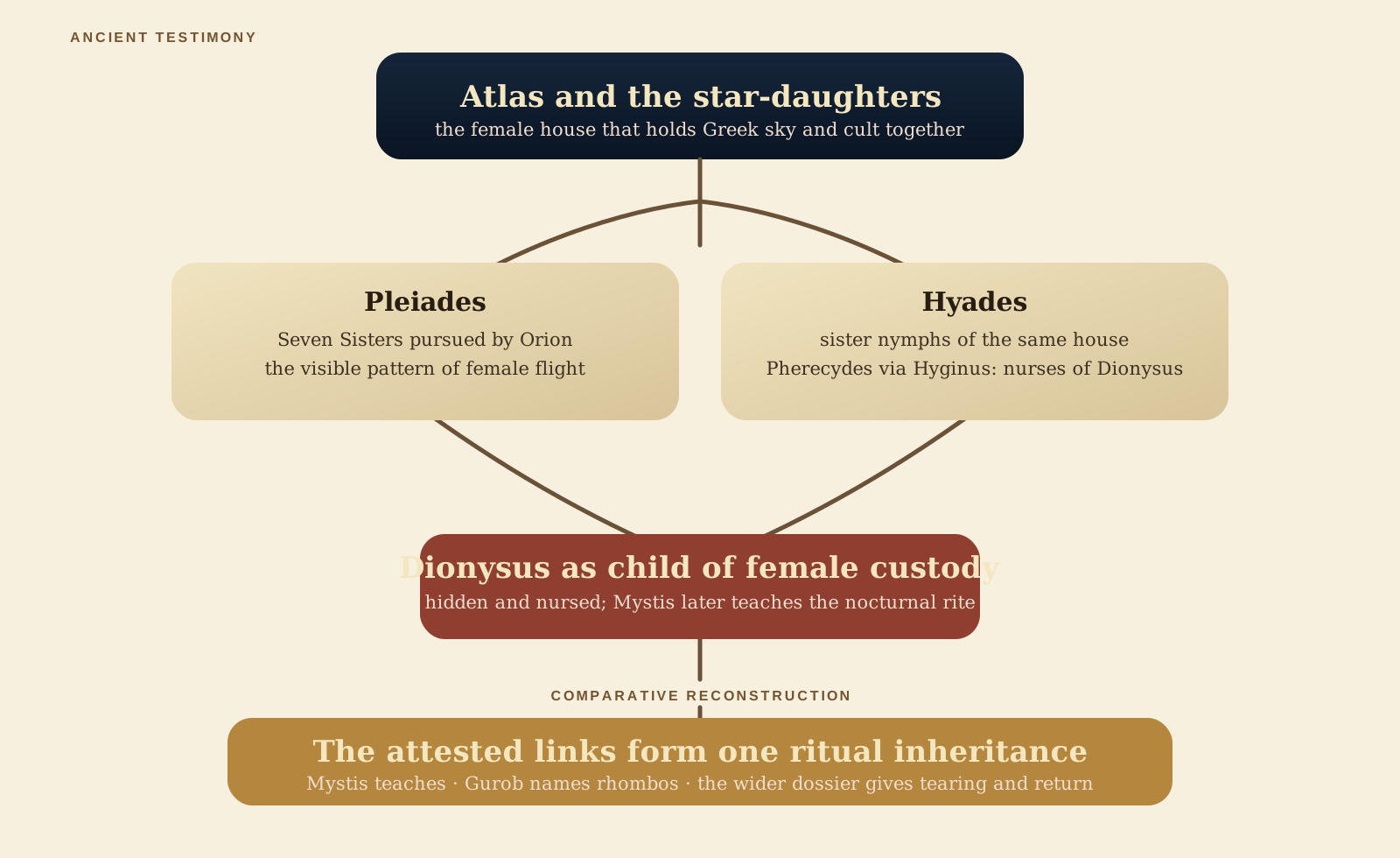
Dionysus is repeatedly given to women of the mountain. Pherecydes’ account, preserved by Hyginus, calls the seven Hyades his nurses and says they had earlier been called the Dodonidae. The Homeric Hymn and Ovid separately entrust the child to the Nysiads of Nysa; Pseudo-Apollodorus then says those Nysian nymphs were placed among the stars as the Hyades. The names do not collapse into a single list. Together they preserve the older arrangement: the god of the mysteries is reared by a female company tied to mountain, moisture, season, and star-lore.
The Hyades are the crucial bridge. They are sisters of the Pleiades, daughters of Atlas and Pleione or Aethra depending on the telling, and they belong visibly to the bull’s head. Pherecydes’ nurse-stars move the child from the hunted Seven Sisters to their sister-cluster without leaving the same female stellar house. The Pleiades carry the pursuit. The Hyades carry the nurture. The daughters of Atlas carry the mystery child.
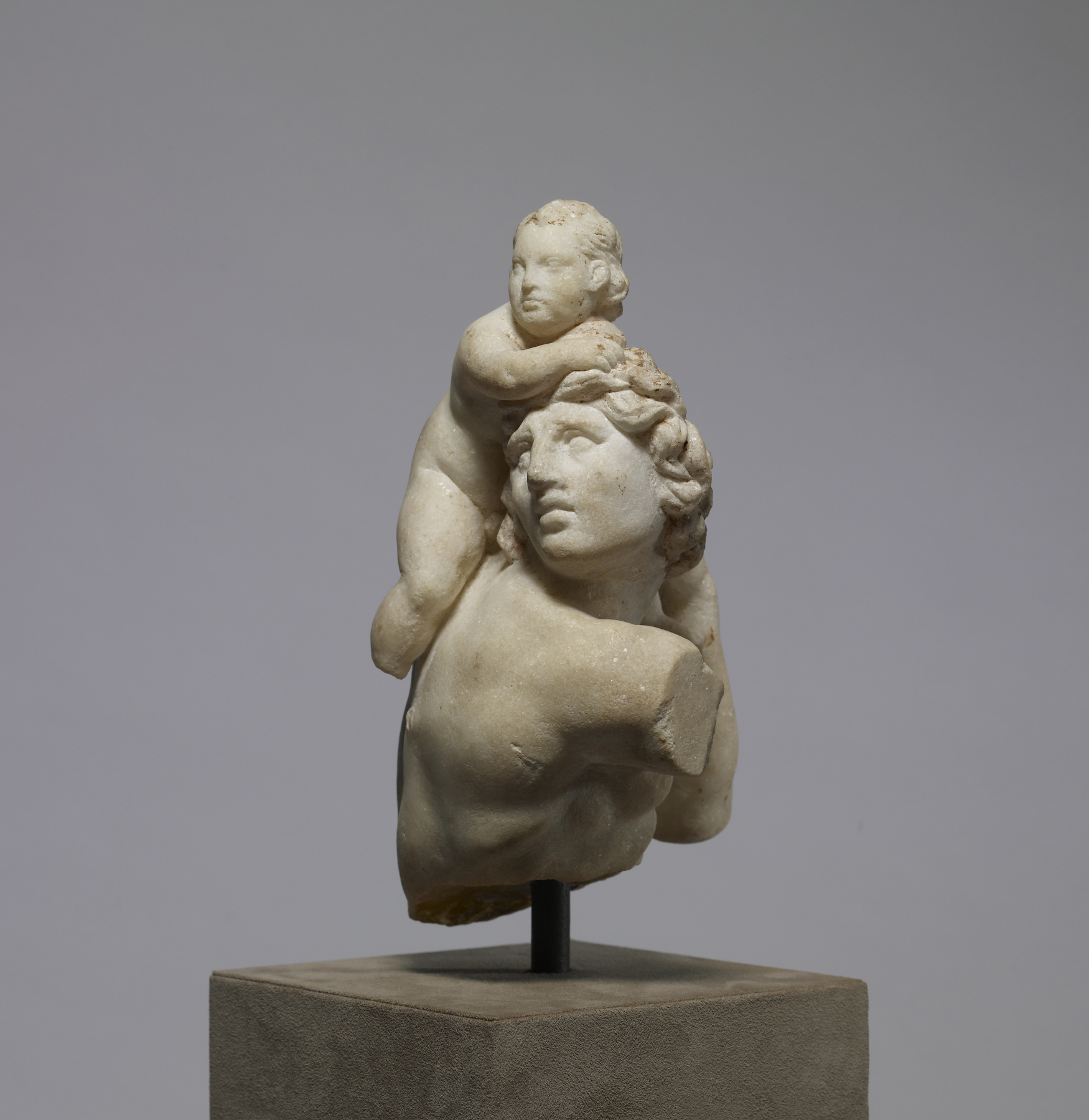
Across the atlas the male mysteries confess that women owned the sacred things first. Greece remembers the same priority in a courtlier key. Before male initiates handle the snake, before the boy Aeschines squeezes it overhead, before the rhombos is laid in the basket, the god himself is in women’s hands. He survives because women hid him, fed him, and kept the night-work of the rite.
Women teach the mysteries
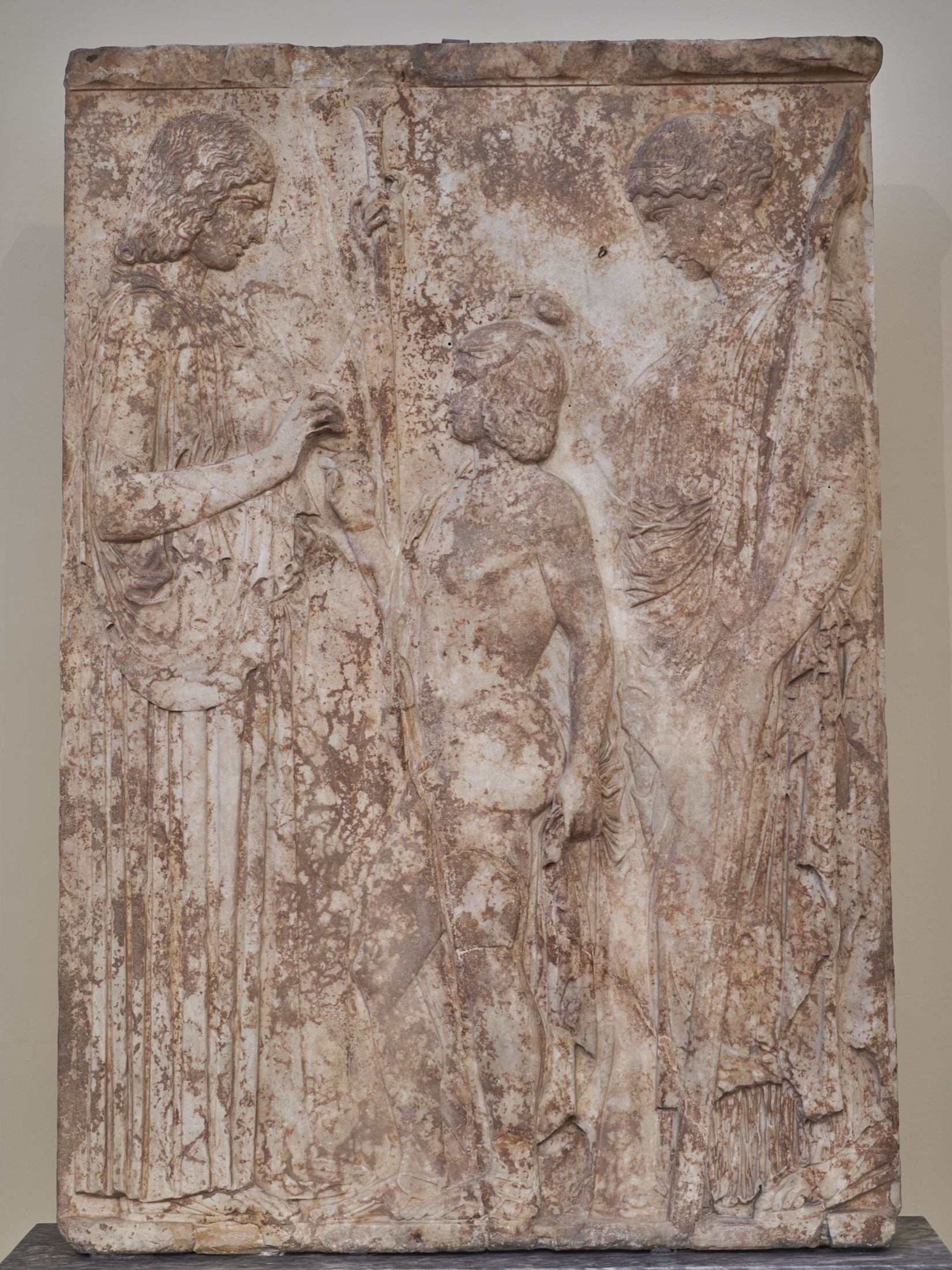
The nurses do not only keep the child alive. They hand him into initiation. Nonnus names Mystis, the nurse who taught Dionysus the night rites and gave him the mystic casket, and in 330 BCE Demosthenes was still sneering at Aeschines for the years he spent serving initiations run by his mother Glaukothea. That chain of women, from Atlas’s daughters to an Athenian house, has its own essay in The Women Who Taught the God. Australia says the men stole the Mother’s voice. New Guinea says the men killed the woman who knew the trick. Athens still remembers a stage at which the woman runs the room.
The god is hidden under sacred noise
Before the rhombos appears, Greek myth already insists on the acoustic envelope that surrounds the child. The Curetes and Corybants clash their arms, beat drums, and raise a wall of sound to hide the infant god or to defend the divine child from hostile ears. Greek religion knows the hidden object, the screened scene, and the wall of noise that lets transformation happen behind a mask of thunder.
The roarer belongs here. Haddon said the parallel with Australia was complete, and it is. In both places the novice hears before he sees. In both the unseen sacred voice overtakes the initiate before the mechanism is disclosed. In both the voice belongs to a power older than the initiate and rearranges his status when the secret is finally shown.
The roaring toy in the mystery basket
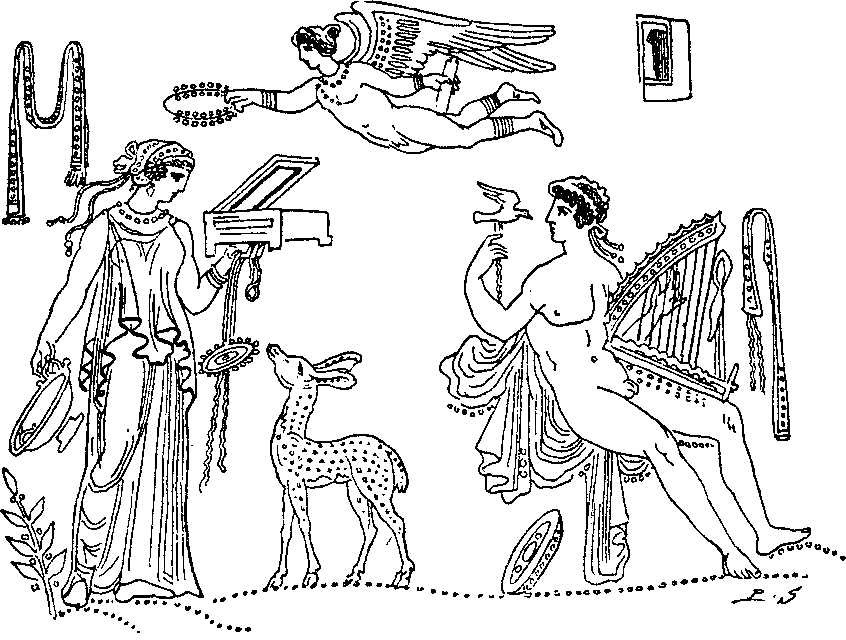
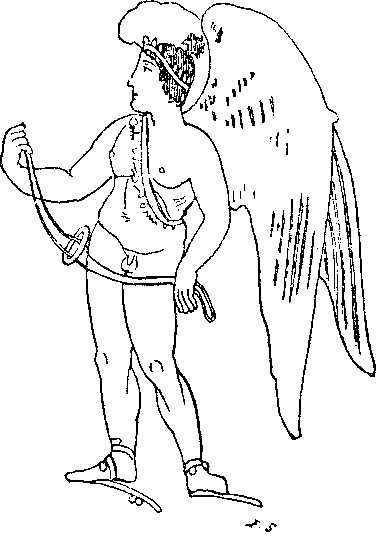
Clement of Alexandria quotes the old Orphic list of the child’s toys, naming both kōnos and rhombos among the objects with which the Titans drew him away before they tore him apart. A scholiast stops over the kōnos and says what it is: a little piece of wood with a string tied to it, whirled in the mysteries so that it makes a roaring sound. Greece kept the bullroarer inside the mysteries themselves.
The kōnos is a little piece of wood, to which a string is fastened, and in the mysteries it is whirled round to make a roaring noise.
Scholiast on Clement of Alexandria, quoted by Andrew Lang, Custom and Myth (1884), from Lobeck’s Aglaophamus.
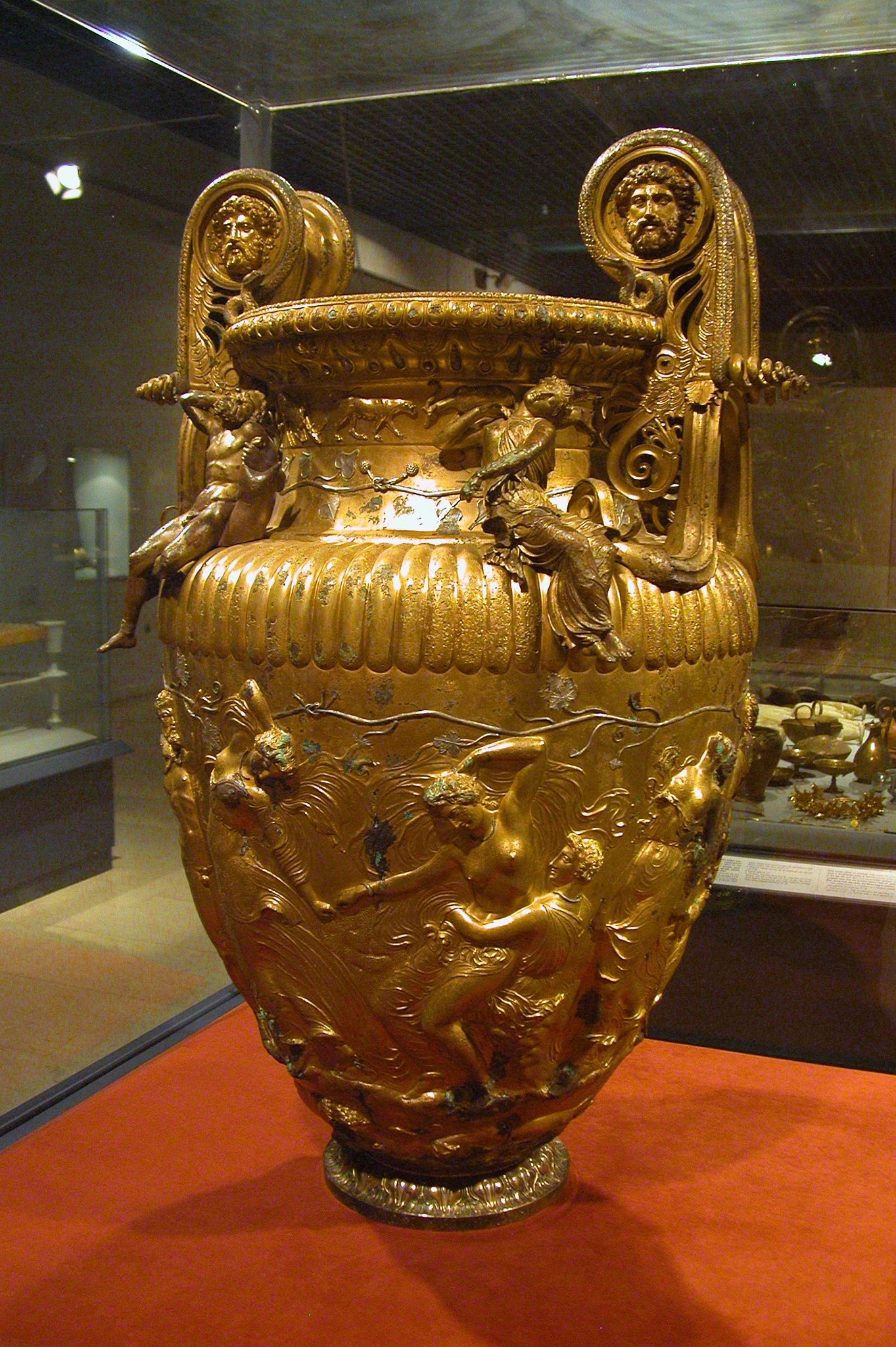
The Gurob papyrus puts the roarer in the rite. In the third century BC an Orphic ritual roll in Egypt listed what went into the basket: cone, rhombos, knucklebones, mirror. Five lines earlier the same sheet has the god pass “through the lap,” a serpent slipped through the initiate’s clothes. Serpent, basket, and named toys on one working sheet; set beside Clement’s tearing and the child’s return, the mystery packet is whole.
The child’s murder returns on the initiate’s body
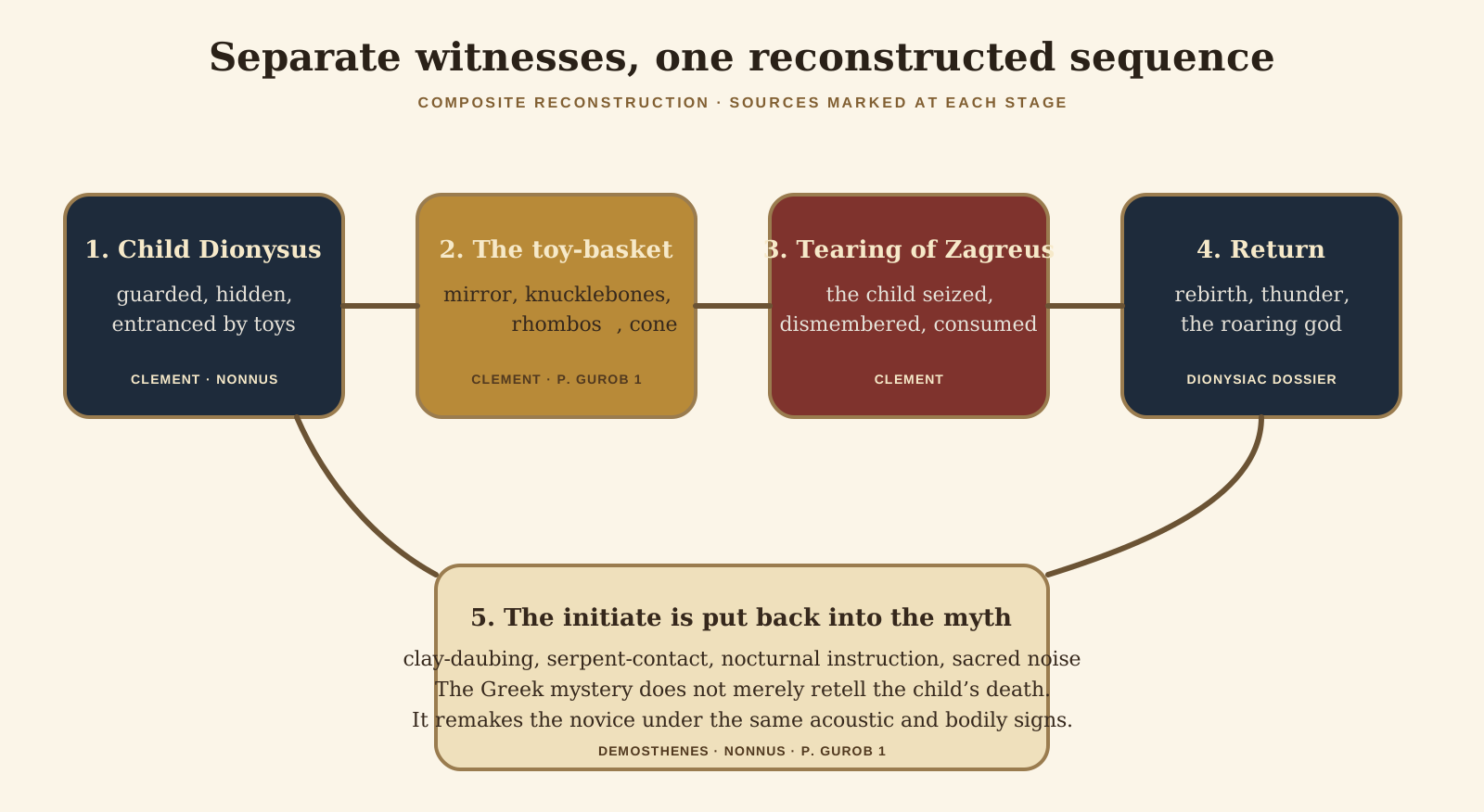
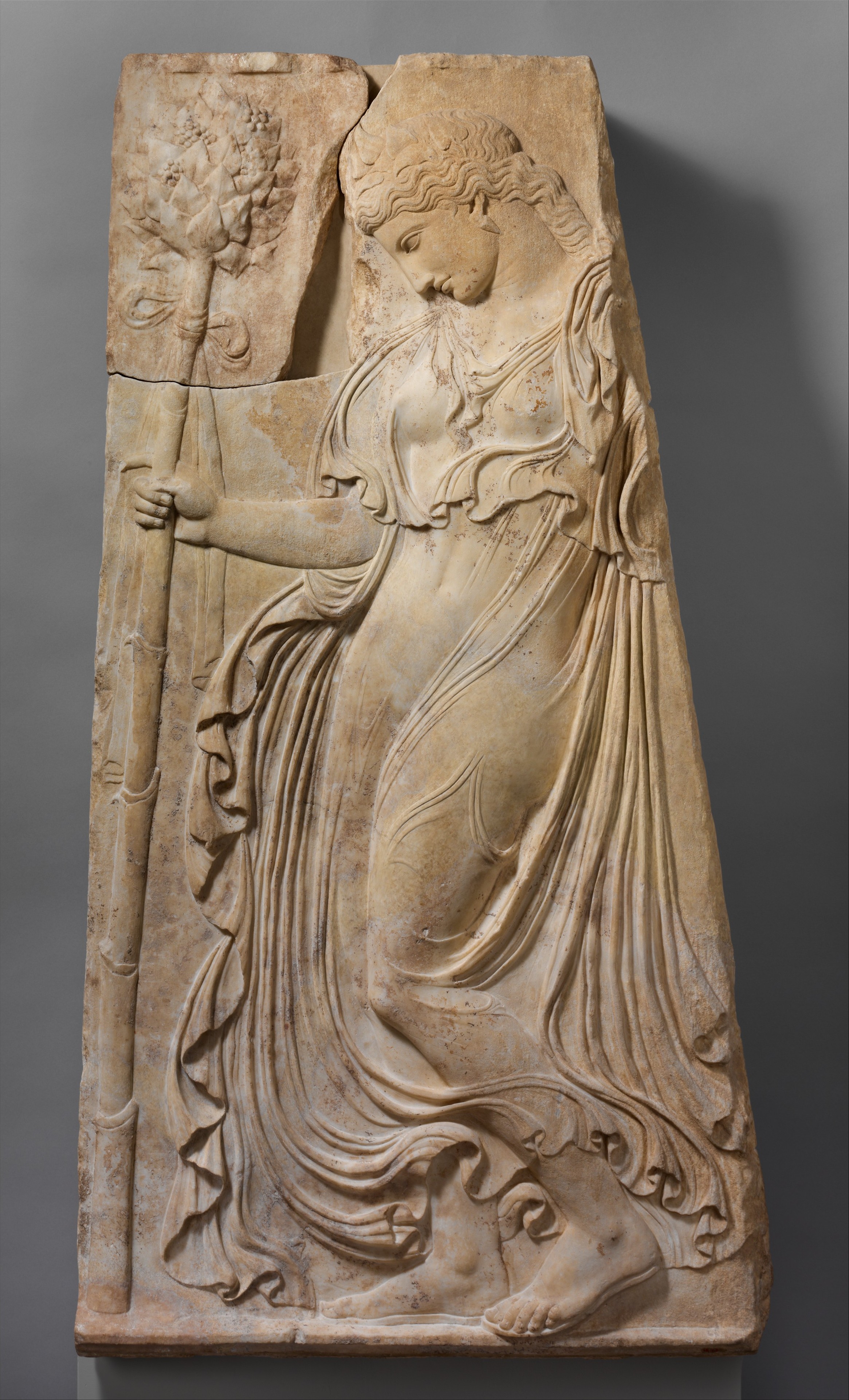
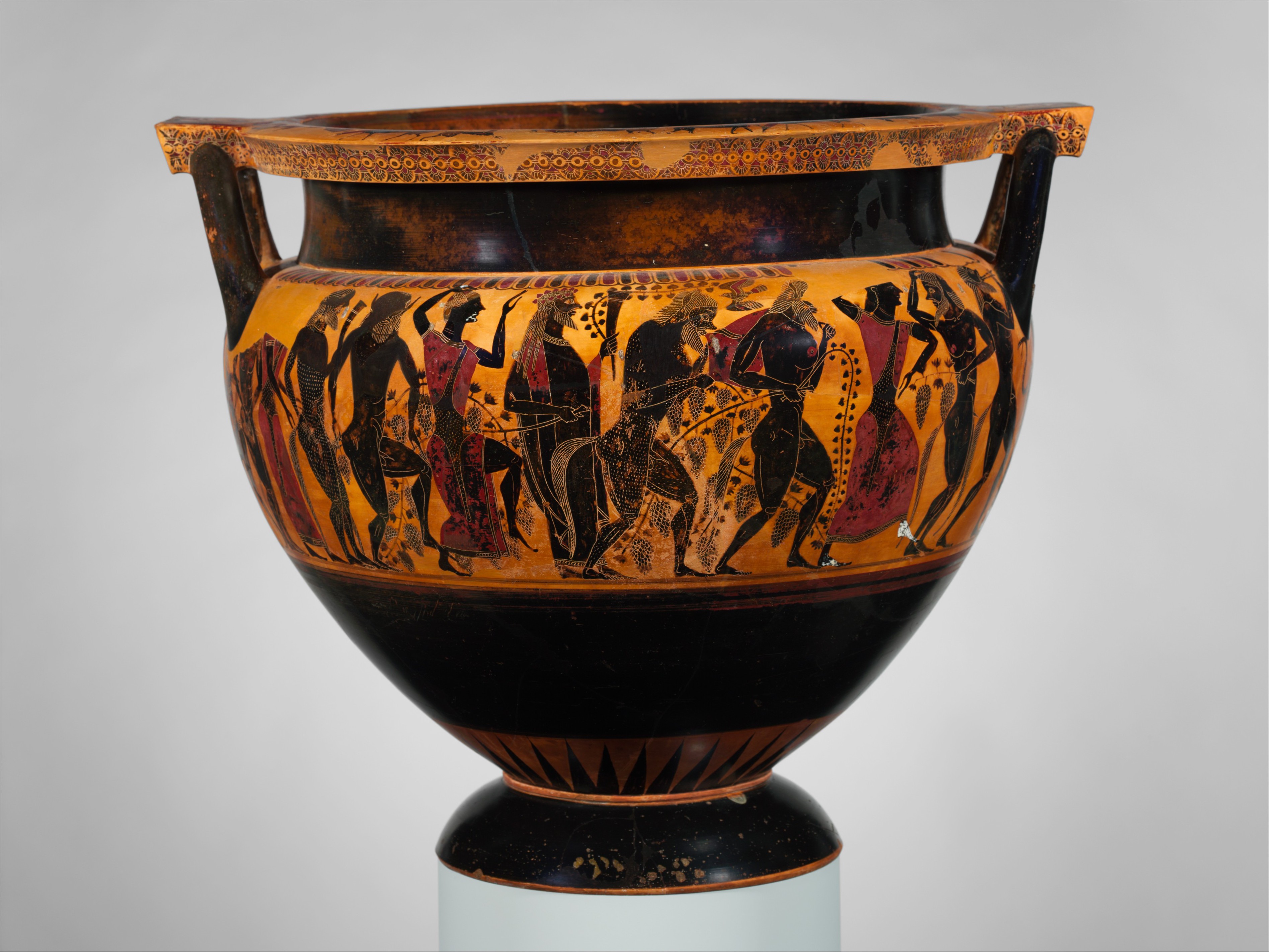
The Greek mysteries do not merely tell the story of Zagreus. They press it back into ritual. The Titans, Nonnus says, whitened their faces with gypsum so that the child would not know them before they seized him. The rite keeps the daub. Demosthenes mocks Aeschines for helping his mother bedaub initiates with clay and bran. Haddon, Lang, and Harrison all seized on it: the novice is put into the god’s death by being made to wear its signs.
In Greece the roarer does not float free as a toy. It sits inside a rite of concealment, daubing, snake-contact, sacred sound, and imitated death.
The sound-name of the god belongs here too. Dionysus is Bromios, the Roarer, the Thunderer. Mircea Eliade records the Greek formula that the rhombos was held to be the “thunder of Zagreus.” That formula gives the toy its ritual force: the whirled board becomes the acoustic sign of the torn god. Greece keeps the equation found across the whole field: hidden human hands create a non-human sound, and the community names that sound as the presence of the being whose death and return the novices are entering.
Jane Ellen Harrison set the Wiradjuri boys, burned to ash and moulded back into men, beside the torn and reconstituted Zagreus, and wrote that with the names changed the one account might have been written of the other. Bring Australia and New Guinea back into the frame and Greek myth stops looking like a classical oddity and starts looking like the literate edge of the same machine.
The Mediterranean branch survives whole
Greece preserves the Mediterranean branch of the Seven Sisters initiation complex: Orion pursues the star-women, their sister nymphs raise Dionysus, women teach him the mysteries, and the bullroarer sounds over his dismemberment and rebirth.
That sentence names a single surviving ritual architecture. The pursued sisters remain in the sky as the Pleiades. Their sister-cluster, the Hyades, takes the child in hand. Female custody persists in myth as Mystis and in civic memory as Glaukothea. Sacred noise remains the screen of transformation. The serpent crosses the body. The child is lured with toys, torn apart, and returns. Clement names kōnos and rhombos together; the scholion defines the former as a roaring board on a string; Gurob places the latter in the ritual basket. The two witnesses preserve one Dionysiac technology of the roar.
Once that bundle is seen whole, Greece stops being the place where an exotic Greek word faintly resembles the bullroarer. It becomes what it plainly is: the literate Mediterranean preservation of the same initiation complex that Australia still maps in Orion and the Seven Sisters and that New Guinea still stages with secret instruments, devouring beings, and reborn novices. The Greek branch has more poetry, more vase-painting, and more scholia. It has not changed the machine.
Key sources
- Pseudo-Apollodorus, Library 3.10.1, for Atlas and Pleione’s seven daughters, the Pleiades.
- Pseudo-Apollodorus, Library 3.4.3, for Hermes carrying the child Dionysus to the Nysian nymphs, whom Zeus afterwards places among the stars as the Hyades.
- Pseudo-Apollodorus, Library 3.5.1, for Rhea purifying Dionysus and teaching him the rites of initiation.
- Hyginus, Astronomica 2.21, preserving Pherecydes’ account that the Hyades, earlier called Dodonidae, were nurses of Dionysus.
- Nonnus, Dionysiaca 9.111–131, for Mystis teaching Dionysus the nocturnal mysteries.
- Demosthenes, On the Crown 18.259–260, for the woman-run initiation scene, clay-daubing, fawnskins, snakes, and ritual cries; Athenian Sabazios mysteries (Glaukothea / Aeschines).
- Clement of Alexandria, Protrepticus 2.17–18, for the child Dionysus’s toys, tearing, mystery formula, and the list naming kōnos and rhombos; the scholion on kōnos is quoted by Lang from Lobeck’s Aglaophamus.
- P. Gurob 1, col. i 24 and 29–30, with Hordern’s 2000 edition identifying the body-crossing serpent and the rhombos in the same ritual sheet; Orphic Dionysian rhombos (Gurob papyrus).
- James Hordern, “Notes on the Orphic Papyrus from Gurôb”, ZPE 129 (2000): 131–140, especially pp. 135 and 139, for the text of the mystery basket and its rhombos.
- Andrew Lang, Custom and Myth (1884), chapter “The Bull-Roarer”; A. C. Haddon, The Study of Man (1898), pp. 227–228 and 327; and Jane Ellen Harrison, Themis (1912), pp. 17–21 and 61–65, for the classic Greek-Australian comparison; Nonnus, Dionysiaca 6.169–173, for the Titans’ gypsum.
- Mircea Eliade, Rites and Symbols of Initiation (1958), p. 22 and note 13, for the ancient Greek rhombos as the “thunder of Zagreus.”