The Seven Sisters and the First Mystery · VII of VII
The First Mystery
Upper Paleolithic Europe · Sahul · Greece
Long before the surviving ethnographies, the institution was already old. Women gathered as a dangerous cluster, a male force followed them, boys were removed from the camp, a hidden instrument roared as the ancestors’ voice, and the novice crossed into another status by fear, blood, secrecy, and return. Living traditions still preserve the full sequence. Upper Paleolithic Europe preserves its instruments.
The Pleiades–Orion chase and the hidden ancestral voice belonged to the initiation complex carried through the Upper Paleolithic world; the Gravettian record preserves its European instruments, while living traditions preserve its ceremony.
In brief
- The Pleiades-as-women and Orion-as-pursuer bundle is one of the deepest distributed star complexes on earth, and its Australian and Greek forms preserve the same cast with striking fidelity.
- European archaeology preserves the instrument side: a perforated serpent-carved ivory blade lay among the Brassempouy Venuses, a replica of the Lalinde blade roars when whirled, and the French and Pyrenean rhombes keep the blade-form through the Upper Paleolithic.
- Living traditions preserve what archaeology cannot: women-first origin stories, hidden ancestral voice, swallowing or seclusion, bodily remaking, and the novice’s return under a new status.
- The Gravettian world that carved female figures and perforated blades had the same ceremonial machine. It is the earliest European register of the rite.
The sky-script is older than any one surviving people
The star pattern comes first because it is the hardest part to reinvent accidentally. Across very distant traditions the Pleiades are a female cluster, often sisters or young women, while Orion is the male figure who follows them, wants them, threatens them, or tries to claim them. Australia preserves the pattern in its strongest living form: Yugarilya and Kungkarungkara as the women, Nyeeruna or Njiru as the pursuer. Greece preserves the same cast in literate myth. Julien d’Huy and Yuri Berezkin trace the bundle as a package carried out of the Paleolithic, and Ray and Barnaby Norris argue that the shared Australian and Greek story goes back to a common origin a hundred thousand years old.
A female band pursued by a male force is already the upper image of initiation. Boys are taken from women. Women become inaccessible. Men claim the novices by force or simulated force. The sky keeps the relation visible even when the rite is not being performed. The cluster is the celestial register of the rite itself.


Once that sky-script is granted deep time, the rest of the complex stops looking strange. A hidden voice, a swallowed or secluded novice, women’s prior relation to sacred power, and a terrifying instrument belong naturally with a ritual world that already read the heavens as a scene of gendered pursuit and separation.
A serpent blade among the Venuses
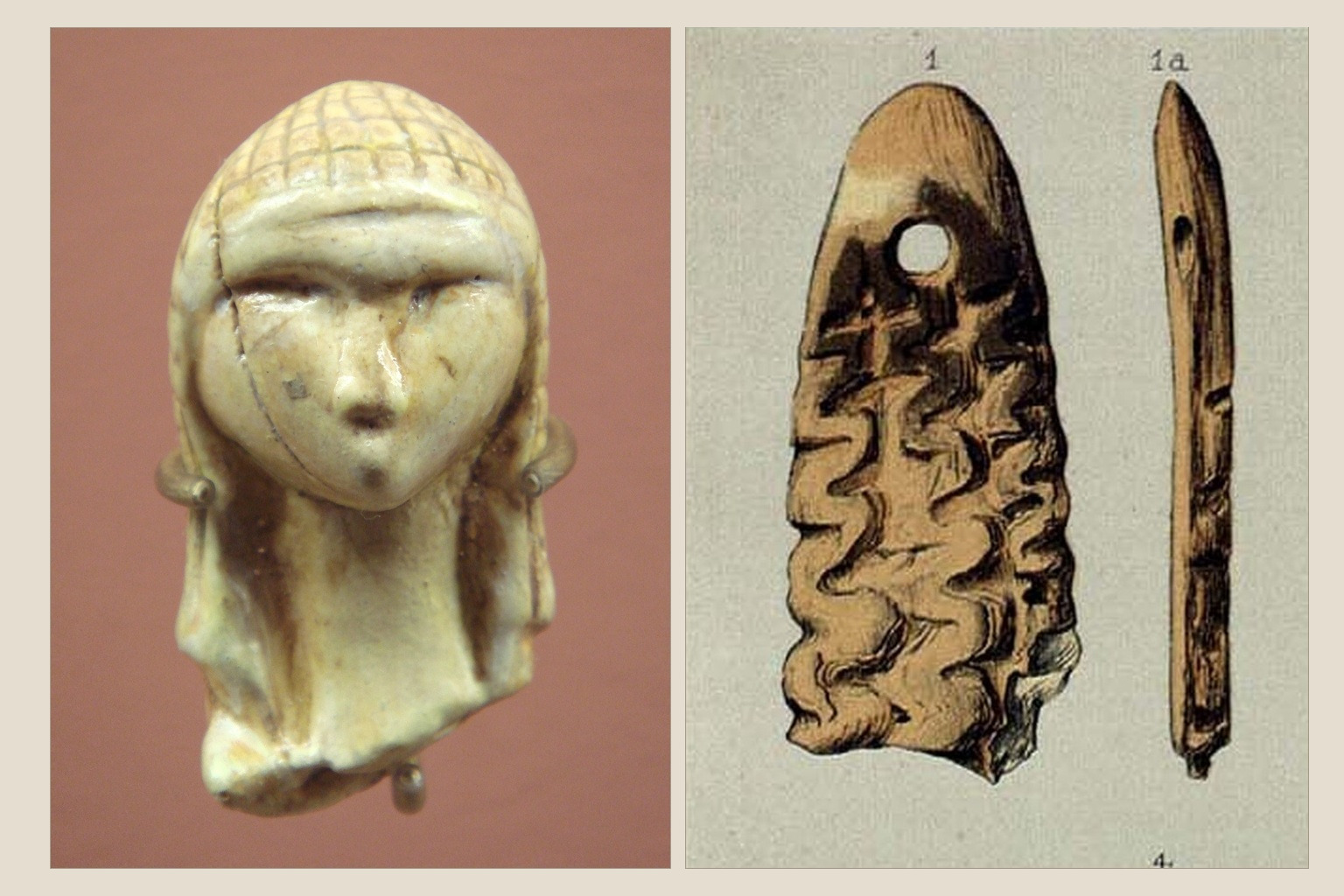
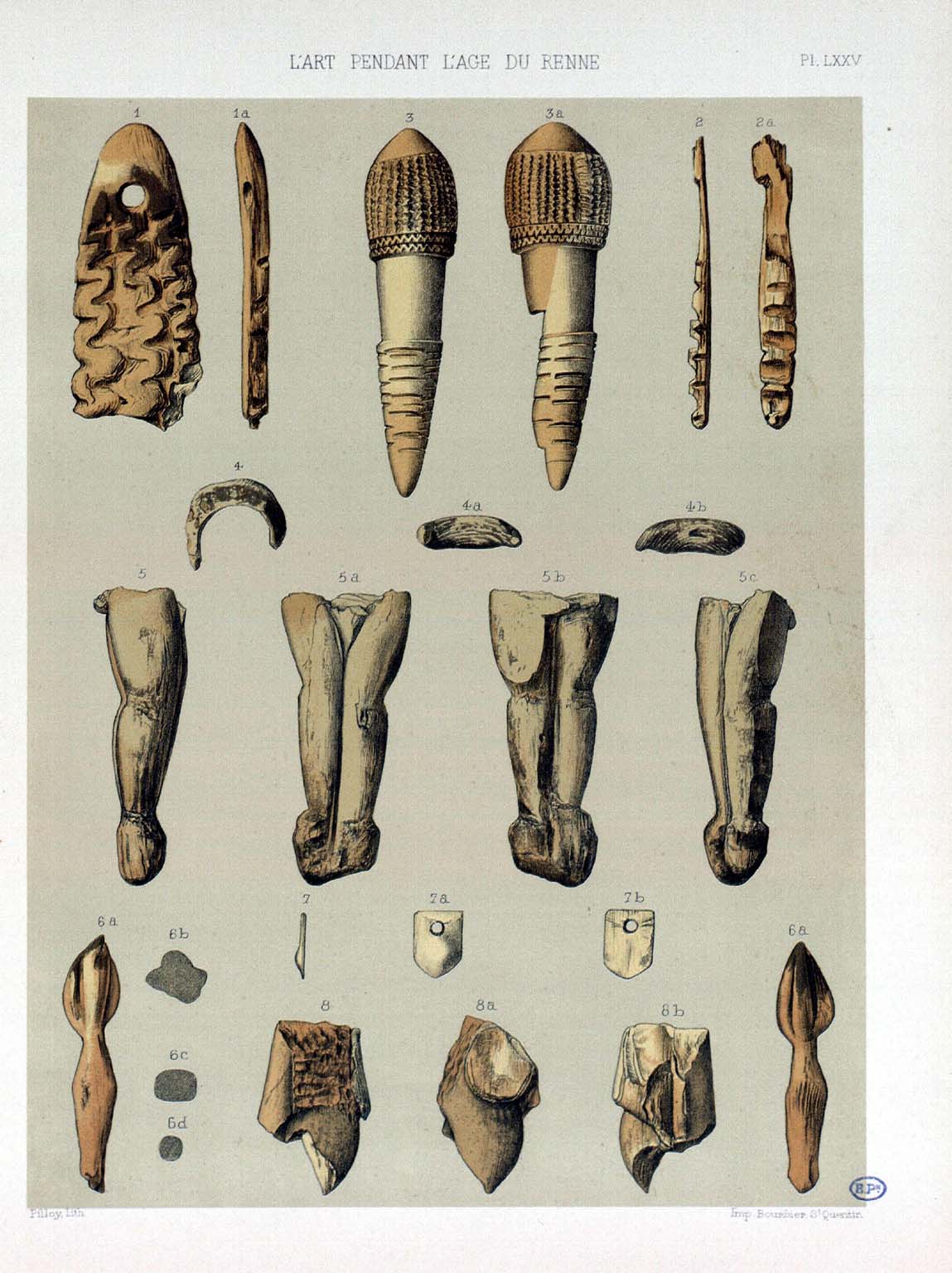
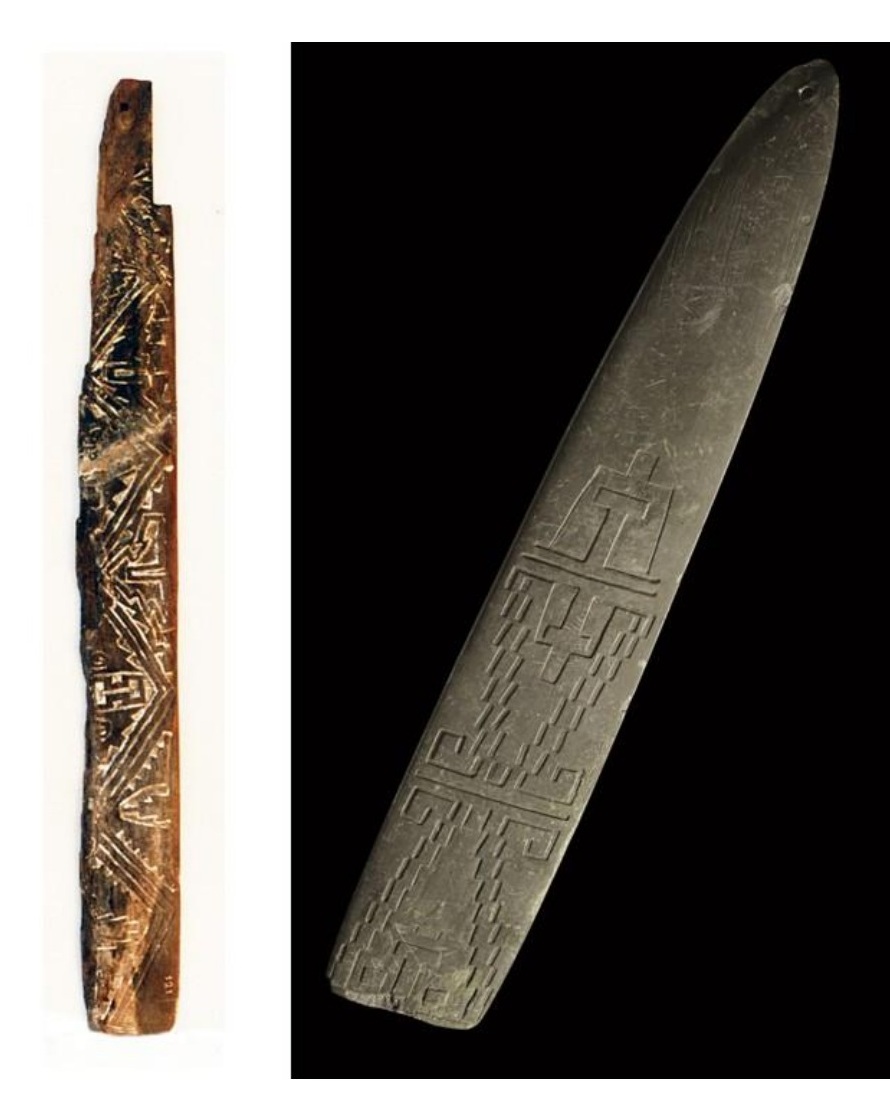
The European side begins at Brassempouy, in the Landes. In the Grotte du Pape, beside the famous female ivories, lay a perforated blade of mammoth ivory with three raised serpents winding down its decorated face. The diggers of the 1890s called it an amulet with wavy decoration and published no stratigraphy; Aurélien Simonet’s synthesis of the site places the old ivory ensemble in the Middle Gravettian. The museum still labels it a pendant. It is a pierced blade carved with snakes, from the cave that gave Europe its Venuses.
Women, carved ivory, and a serpent-marked blade pierced for a cord, together in one cave around thirty thousand years ago: the Gravettian already holds the instrument side of the initiation complex.
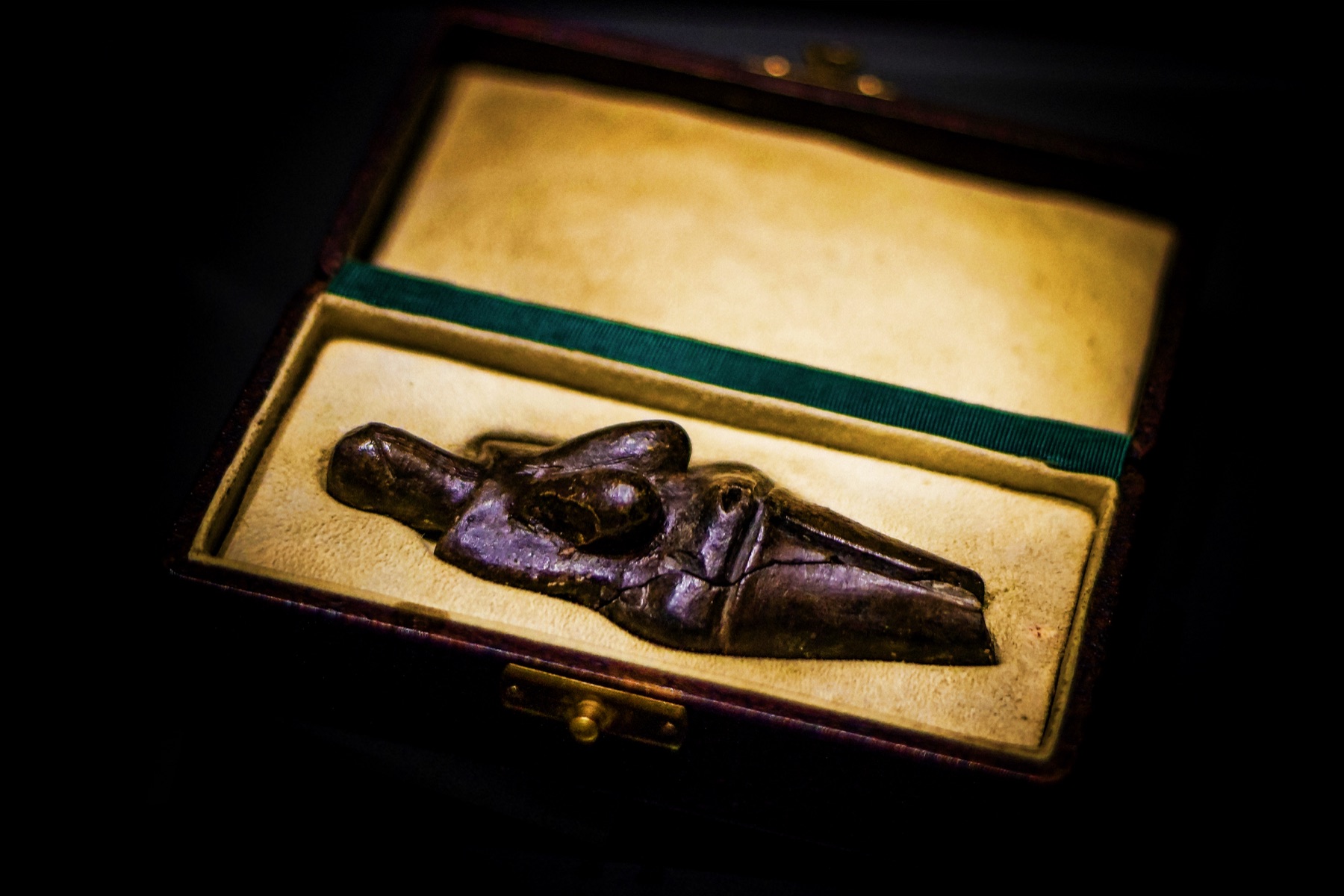
Moravia belongs beside it. Michel Dauvois counts the Pavlovian sites among the oldest rhombe horizons in Europe, and Dolní Věstonice, Pavlov, and Předmostí are the eastern Gravettian’s great female world. The ceremonial age that carved the Venuses was saturated with the right symbolic material.
Later Upper Paleolithic Europe keeps the blade form stable
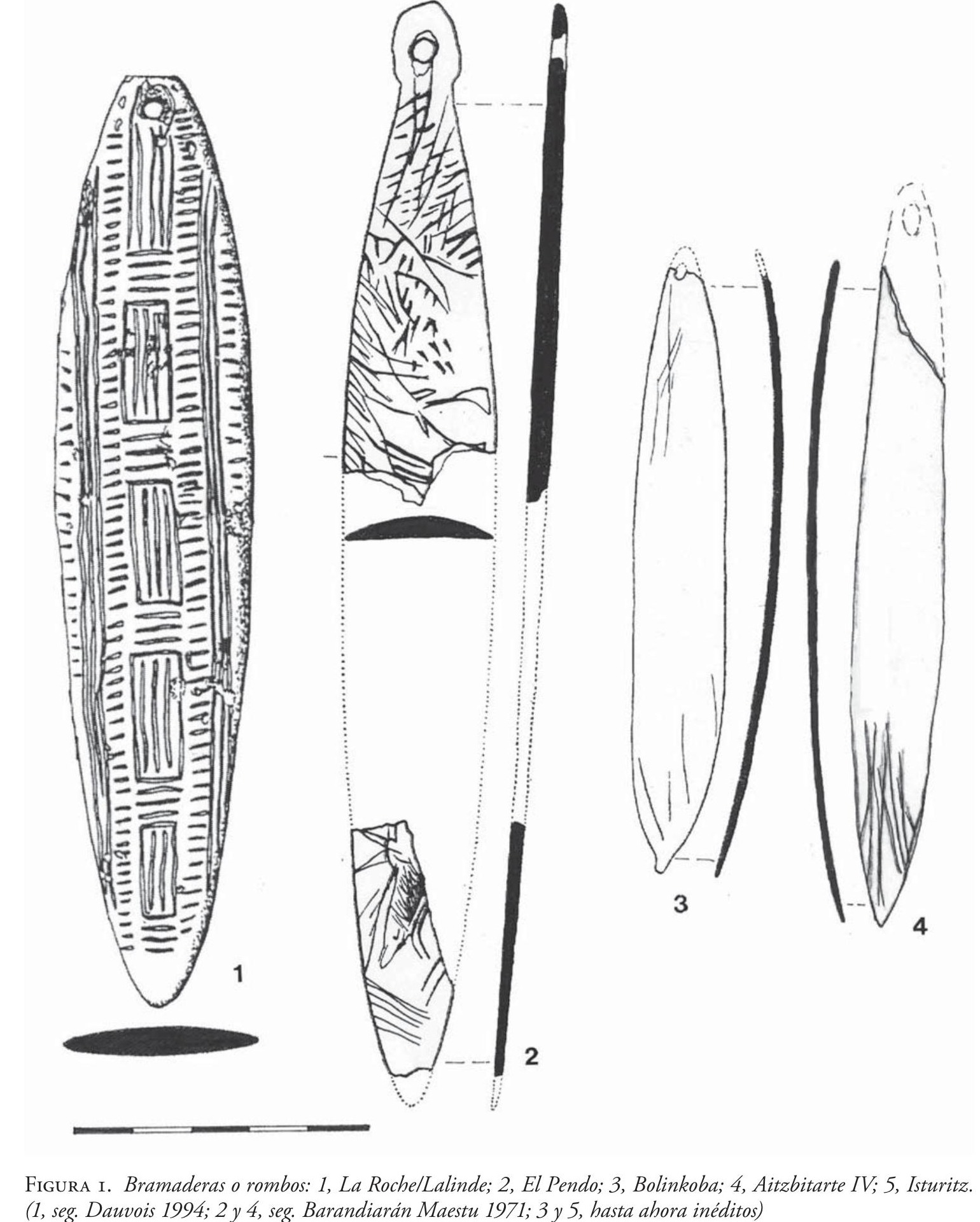
The later Upper Paleolithic makes the object family unmistakable. French and Pyrenean rhombes from Solutrean and Magdalenian contexts recur as long, thin perforated blades, often polished, sometimes decorated, visibly designed for suspension and movement. Lalinde is the mechanical crux: Denis Peyrony recognized the blade in 1930 as a European churinga, and Michel Dauvois later whirled a replica and recorded its hum. Ignacio Barandiarán has since catalogued thirty-four Magdalenian blades of the kind. Lalinde gives the roar; the corpus gives the family.
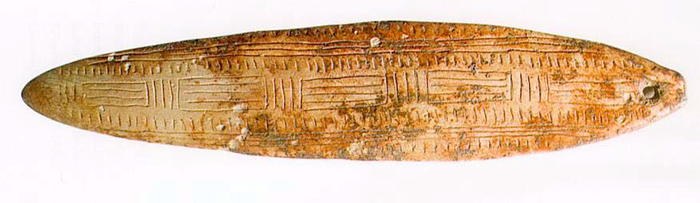
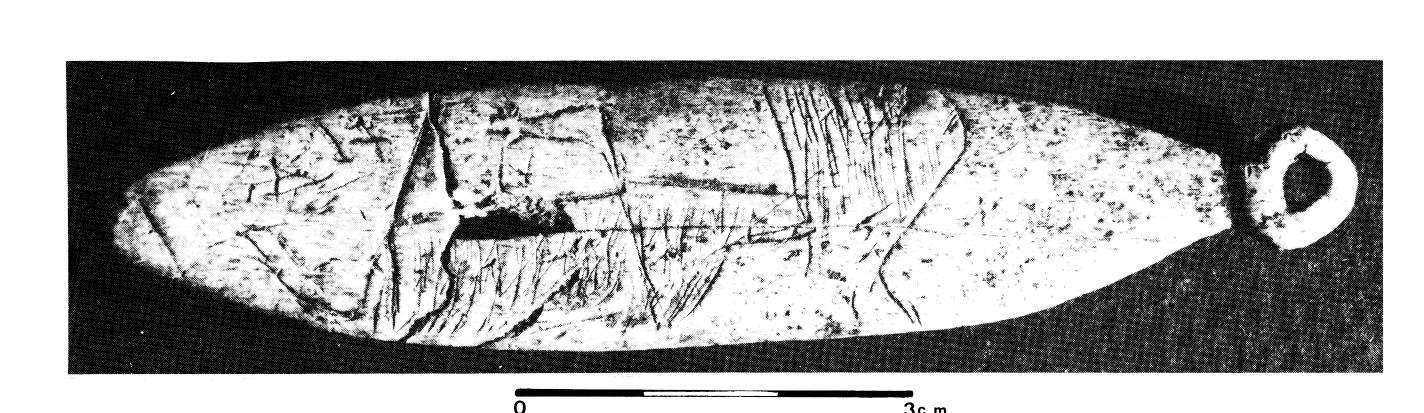
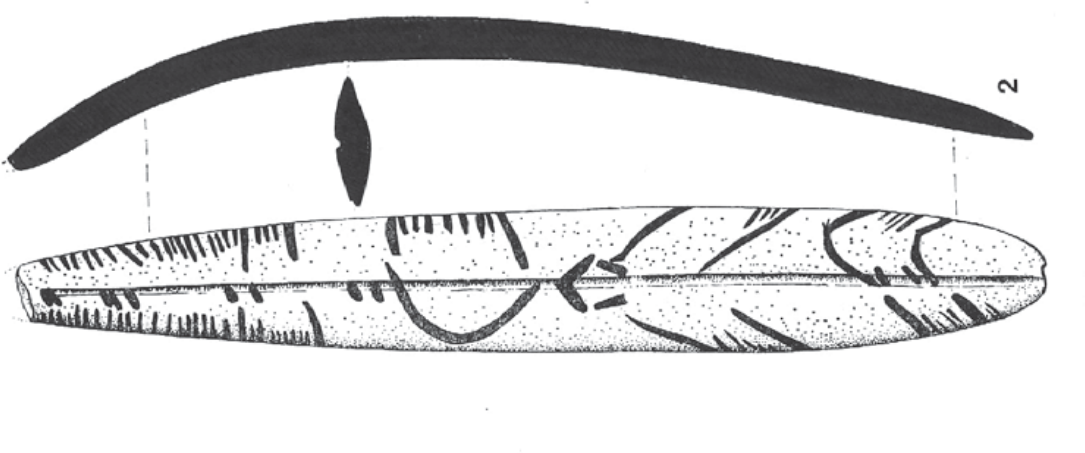
Lalinde is the working model. Isturitz belongs to the core corpus. Fontalès and El Valle show the form radiating outward. European prehistory keeps not one lucky resemblance but a field of deliberately suspended blades built to the same aerodynamic possibility.
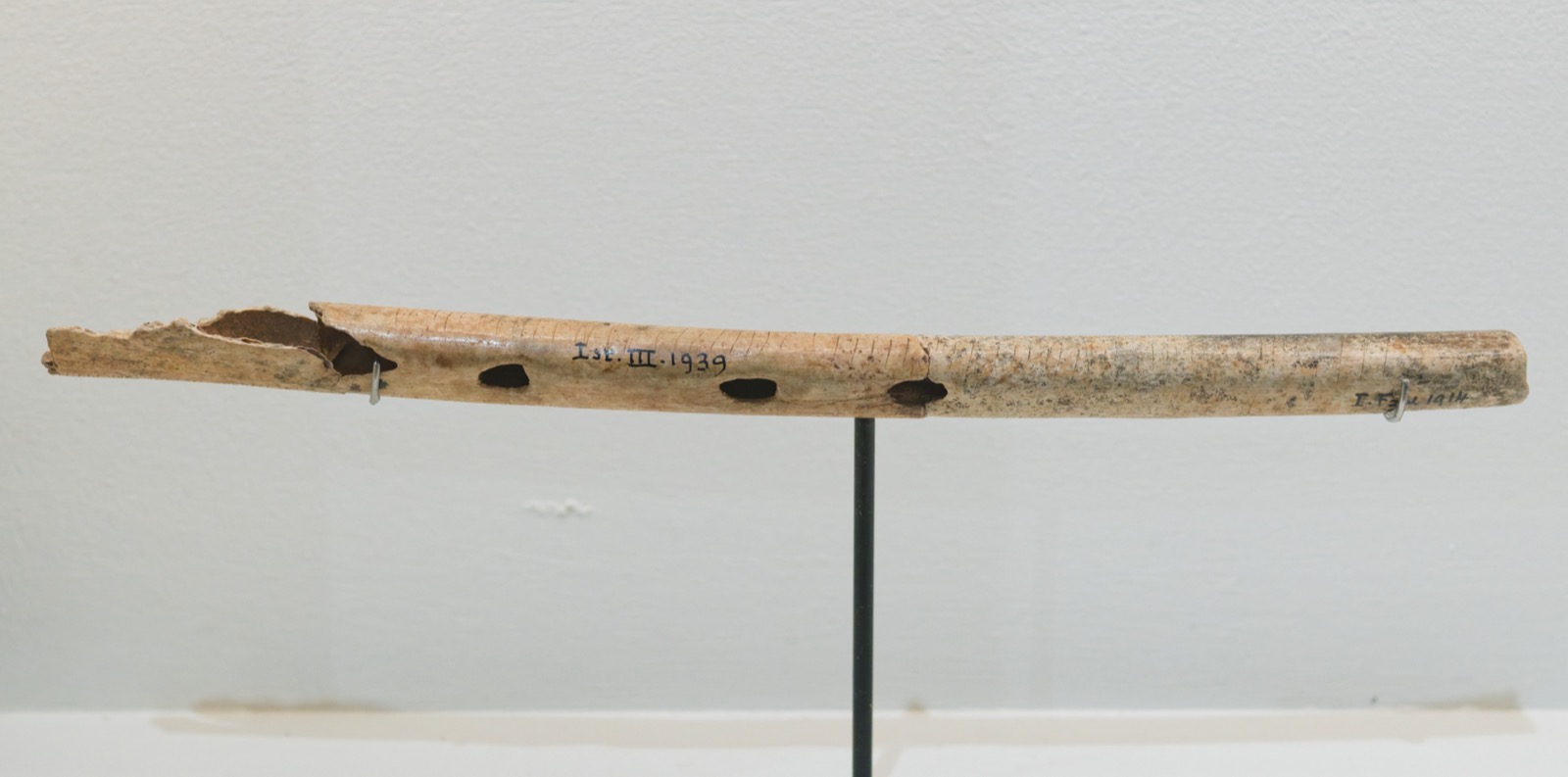
A bullroarer does not belong to a random toolkit. It belongs to ceremonial worlds that care about hidden sound, fear, offstage presence, and the bodily effects of voice. Roaring blades and flutes together are the surviving hardware of a ceremony whose performance is lost.
Living traditions preserve the ceremony archaeology only glimpses
Archaeology preserves objects brilliantly and performances badly. That is why the living branches matter so much to the deep argument. Australia, New Guinea, Amazonia, and Greece keep the social machine that the Upper Paleolithic record only hints at. In Australia the Pleiades women and Orion pursuer still stand over initiation. In New Guinea the hidden voice still belongs to a devouring being, to women-first origin myths, to seclusion, and to the remaking of boys. In the northwest Amazon, the Barasana make the Pleiades and Orion parts of the ancestral body, while palm-wood flutes and trumpets sound the ancestors inside the house that remakes boys. The Palm and the Pleiades follows that branch. In Greece the same package survives as literate debris: Atlas-born star-women, female custody, sacred noise, serpent, the basket of toys that held the bullroarer, tearing, and return.
Hopi Walpi in northeastern Arizona supplies a particularly concrete conjunction. Fewkes watched novice boys make nocturnal patrols during the New Fire festival; the Pleiades and Orion timed important night ceremonies in their society’s kiva; and men in that same room held carved serpent effigies while singing to bells and percussion. The wood embodied the serpent; bells and percussion made the ceremony audible. All of it belonged to one festival. When the Stars Open the Lodge sets this Hopi conjunction beside Amazonian stellar anatomy, the Xhosa calendar of manhood, and Mexica cosmic renewal.
Gravettian Europe left no ethnographer’s paragraph saying that boys were swallowed while the Pleiades rose and the bullroarer sounded behind the screen. Three things survive from that depth: the star bundle in myth, the instrument family in the ground, and the ritual sequence in living traditions. Put the three together and the first mystery is visible again.
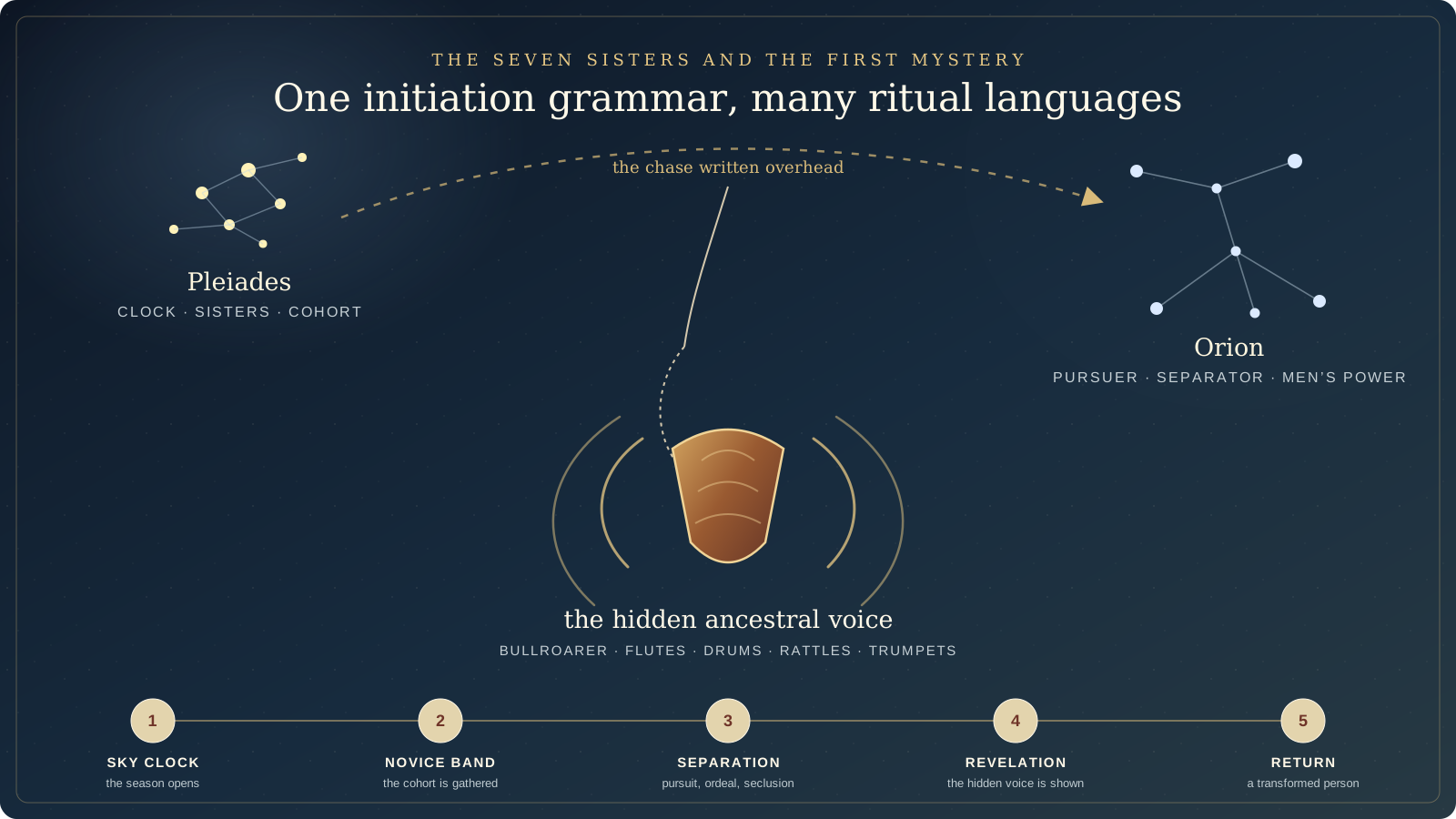
The stars preserve the cast, the ground preserves the instrument, and living rites preserve the event.
The first mystery was already old in the Upper Paleolithic
The living branches point backward toward one older institution. Australia keeps the sky-script in active use. New Guinea keeps the swallowing house, the theft from women, and the remade novice. Amazonia joins the Pleiades and Orion to the ancestral body and the sounding instruments of rebirth. Walpi brings those constellations, novice boys, serpent effigies, and sacred sound together in one festival. Greece keeps the Mediterranean literary edge of the same machine. Upper Paleolithic Europe keeps the instrument itself, already visible in Gravettian assemblage logic and stable in later rhombe corpora.
A female cluster and male pursuer were already a ritual sky. A hidden slat already belonged to a sacred sound-world more serious than ornament. A ceremonial world already existed in which sound, secrecy, danger, and transformation belonged together. The Pleiades–Orion chase and the hidden ancestral voice belonged to the initiation complex carried through the Upper Paleolithic world; the Gravettian record preserves its European instruments, while living traditions preserve its ceremony.
Key sources
- Ray P. Norris and Barnaby R. M. Norris, “Why are there Seven Sisters?” (2020 preprint; 2021 chapter), especially the abstract and opening pages, for the Australian-Greek Pleiades–Orion parallel and its proposed deep antiquity.
- Julien d’Huy and Yuri Berezkin, “How Did the First Humans Perceive the Starry Night? On the Pleiades”, The Retrospective Methods Network Newsletter 12–13 (2017): 100–122, for motif I115A and the Orion/Pleiades opposition as a transmitted sky bundle.
- Stephen Hugh-Jones, The Palm and the Pleiades: Initiation and Cosmology in Northwest Amazonia (1979), pp. 188–197 for the Pleiades–Orion bodily and instrumental correspondences, and pp. 222–225 for men’s symbolic production of initiates; developed in the series essay The Palm and the Pleiades.
- J. Walter Fewkes, “The New-Fire Ceremony at Walpi,” American Anthropologist 2 (1900): 80–138; pp. 99–100 for novice patrols, p. 110 n. 2 for the Pleiades–Orion timing, p. 114 for serpent effigies with bells and percussion, and p. 135 for the carved serpent slats and the novices’ serpent-headed club. The fuller worldwide comparison and its African and Mexican sources are in When the Stars Open the Lodge.
- Musée d’Archéologie nationale, collection record, for the Brassempouy blade’s exact dimensions and carved face; Édouard Piette, L’Art pendant l’Âge du Renne (1907), pl. LXXV figs. 1 and 1a, for the exact published image.
- Henri Delporte, “Brassempouy: ses industries d’après la collection Piette (Musée des Antiquités Nationales)” (1967), pp. 7–8, for de Laporterie’s “amulette à décor onduleux” (“amulet with wavy decoration”) and the lack of stratigraphy in the old recovery.
- Aurélien Simonet, “Le site à Vénus de Brassempouy (Landes, France) : l’hypothèse de la semi-sédentarité au Gravettien”, PALEO hors-série (2021), pp. 126–145, for the Middle Gravettian reassessment of the old ivory ensemble.
- Denis Peyrony, “Sur quelques pièces intéressantes de la grotte de La Roche près de Lalinde (Dordogne),” L’Anthropologie 40 (1930): 19–29, especially pp. 24–25, for Lalinde as the founding churinga comparison and the phrase “devait certainement avoir la même destination” (“must certainly have had the same purpose”).
- Michel Dauvois, “Homo musicus palaeolithicus et Palaeoacustica” (2005 [2006]), p. 232 and fig. 3, for the Lalinde sonagram and the quarter-rule formulation; his 2018 survey, section 7 “Rhombes,” for the Moravian/Pavlovian antiquity claim as a comparative horizon rather than an object-level proof.
- Ignacio Barandiarán Maestu, “Forma vs. función en tipología prehistórica: el caso de las bramaderas óseas magdalenienses”, Veleia 29 (2012): 307–334, pp. 314–323 and 331, for the dimensional envelope and the statement that originals have not been acoustically tested.
- Ignacio Barandiarán Maestu, “La bramadera de hueso” (2015), pp. 152–156, for the thirty-four catalogued blades, suspension typology, and the Isturitz material.
- Anne-Catherine Welté, “Propositions pour une nouvelle lecture d’une pendeloque de l’abri Fontalès” (1985), pp. 274–276, for the Fontalès dimensions, deliberate deposit, decoration, and wear; Barandiarán Maestu (2012), pp. 326–328 and figs. 4.2 and 5.1, for the El Valle and Fontalès comparisons and their deliberately graded status.
- Hyginus, Astronomica 2.21; Apollodorus, Library 3.4.3 and 3.5.1; Nonnus, Dionysiaca 9.111–131; Clement of Alexandria, Protrepticus 2.17–18; P. Gurob 1 (Kern, Orphicorum Fragmenta 31); and Mircea Eliade, Rites and Symbols of Initiation, p. 22, for the Greek branch that keeps the star daughters, female initiators, serpent, tearing, and roaring instrument together.