Atlas Essay — 7 November 2026
A New Word for I
In Australia, New Guinea and Africa, initiation gave the novice a new way to say who he was, in the seclusion where he learned the bullroarer's secret
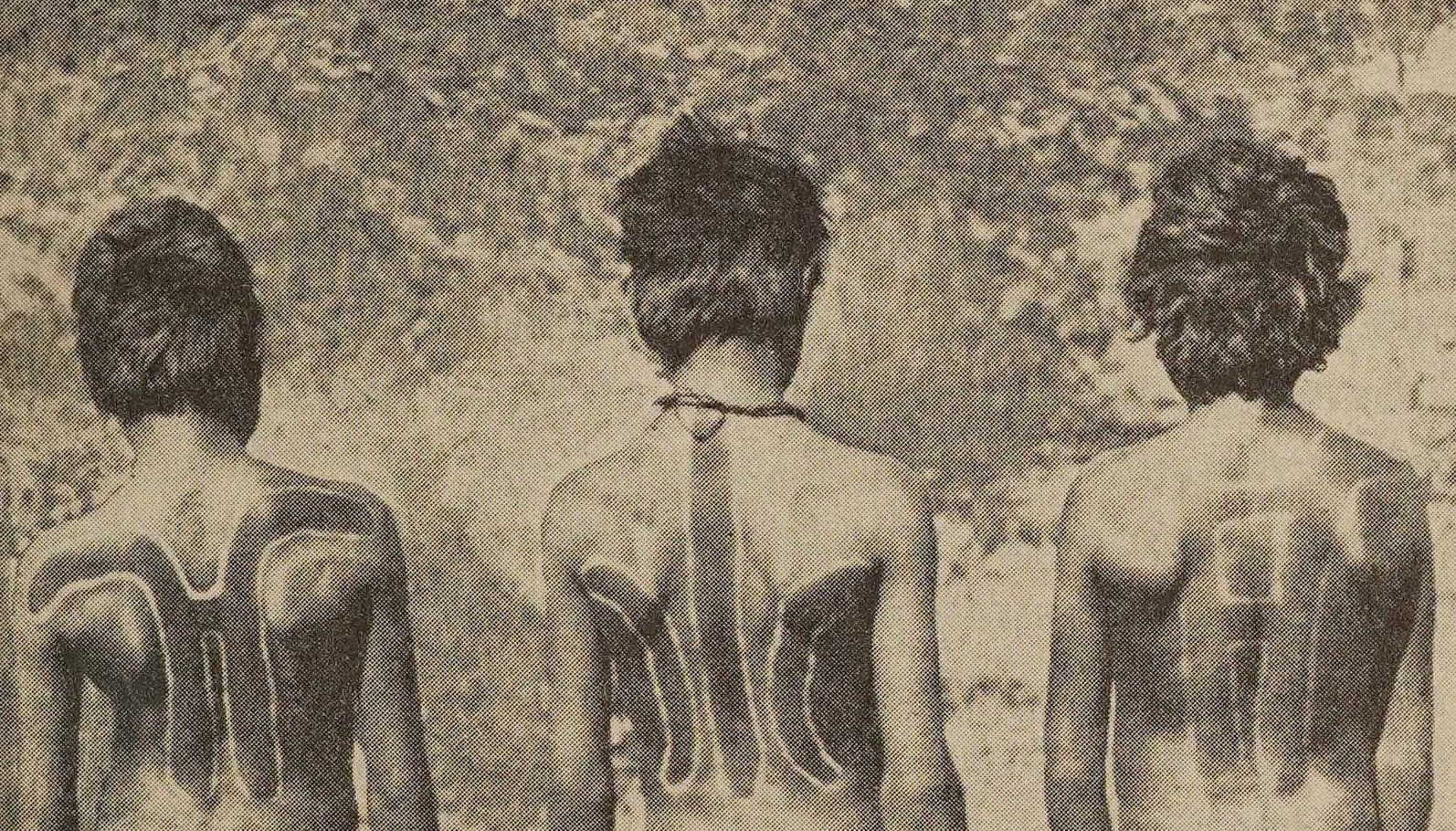
A boy of the Loritja, in the desert west of Alice Springs, sits alone in the scrub with a fresh wound. For some weeks he may speak to no woman and no child. When men out hunting come by he may say a few words to them, but only in a language he has just been taught, in which his own word for “I”, ngaiulu, has been taken from him and replaced with ngankulu. In his hand is the great bullroarer, the apuju. When he sees women he swings it, and they run from the voice of Maiutu. A few days earlier the old men had shown him that Maiutu was this piece of wood. He was given a new self and the god's secret in the same weeks.
The self was a lesson. In seclusion the novice is taught a new word for “I”, in a language women may not hear, in the same weeks he learns that the bullroarer is a man's voice and not a god's.
In brief
- The secluded Loritja novice learns ngankulu for “I” and swings the apuju that women take for the voice of Maiutu (Strehlow 1913, pp. 52–56).
- The Aranda novice's secret word list opens with the pronouns: everyday jinga, “I”, becomes anua, and “we two” becomes “I-you”. The same boy must call himself “dog” (Strehlow 1913, pp. 26, 32).
- The Western Desert people say their respect register, which Strehlow knew as the novices' language anitji, “was spoken by the Ancestral Beings … first, during a manhood ceremony”.
- Other rite languages build the speaker out of “we” or “other”: Dogon sigi so in Mali, Lardil Damin on Mornington Island, Warlpiri Jiliwirri at Yuendumu.
- In Western Province, Papua New Guinea, the opened man cries “I man now … That my name Íregíde”, and the first bullroarer says “My name is madubu”.
- In the Poro of Liberia the bush name makes a new person who no longer owes the old one's debts. The Egyptian mysteries and the Igbo title grades are both said to hold one secret: “I am what I am”.

Maiutu's voice and the boy's new “I”
Carl Strehlow ran the Lutheran mission at Hermannsburg, on the Finke River in the Northern Territory of Australia, from 1894 to 1922. He spoke Aranda (Arrernte) and Loritja (Luritja) with the men who performed the rites, and between 1907 and 1920 he published what they told him, in German, verse by verse and with the native words beside his own. His account of the Loritja initiation follows the boy from the night of his circumcision to the day his wound has healed.
The Loritja cut their boys at night, by firelight, on a table of four to six men lying crosswise on one another. Afterwards the boy is given his names. The men call him tatata, “the one who stays in the thicket”. The women call him jerkajerkata, “the hidden one”. The children call him apuju, the name of the great bullroarer. And he himself, Strehlow writes, “must call himself injitjituju, ‘dog’” (p. 50).
Then a lame man comes hobbling in from the west, straight at the boy, and when the boy reaches for his legs he draws back. The lame man is Maiutu, the being the boys have feared all their lives. The new tatata turns on the old men:
Where are the Maiutu, then? They are not coming to the circumcised boy at all. You always told all the boys: There is a Maiutu! We boys all believed it. And now it is not true. You only lied to us.
A chief answers him: Do you see this tjurunga? This is Maiutu.
Carl Strehlow, Die Aranda- und Loritja-Stämme in Zentral-Australien IV.1 (1913), p. 50 (translated from the German)
The boy is then told to do as the men have done: to tell the children, again and again, that Maiutu is real, “so that this news does not spread”, the news, Strehlow explains, “that there is no Maiutu” (p. 51). He is given his rules. He must not walk the women's paths. He must tread on grass so as to leave no footprint. He must eat his meat cold. If he disobeys, “we will spear you”, and if he wants to live, “behave well; otherwise you must burn in the fire” (p. 52). Then comes the language:
The Loritja tatata too must learn a secret language, tamala anitji, which he must use in talk with the men, while speaking with women and children is strictly forbidden him.
Strehlow IV.1 (1913), p. 52
It is drilled into him with a formula, word by word: “You shall call water by its name: kitamba.” Woman is mata, man urati, the circumcised boy injitjituju, “dog”. The great bullroarer, apuju in daily speech, is in the secret language simply maiutu: among men, the instrument is called by the god's name (pp. 52–54). Near the end of the list come the pronouns:
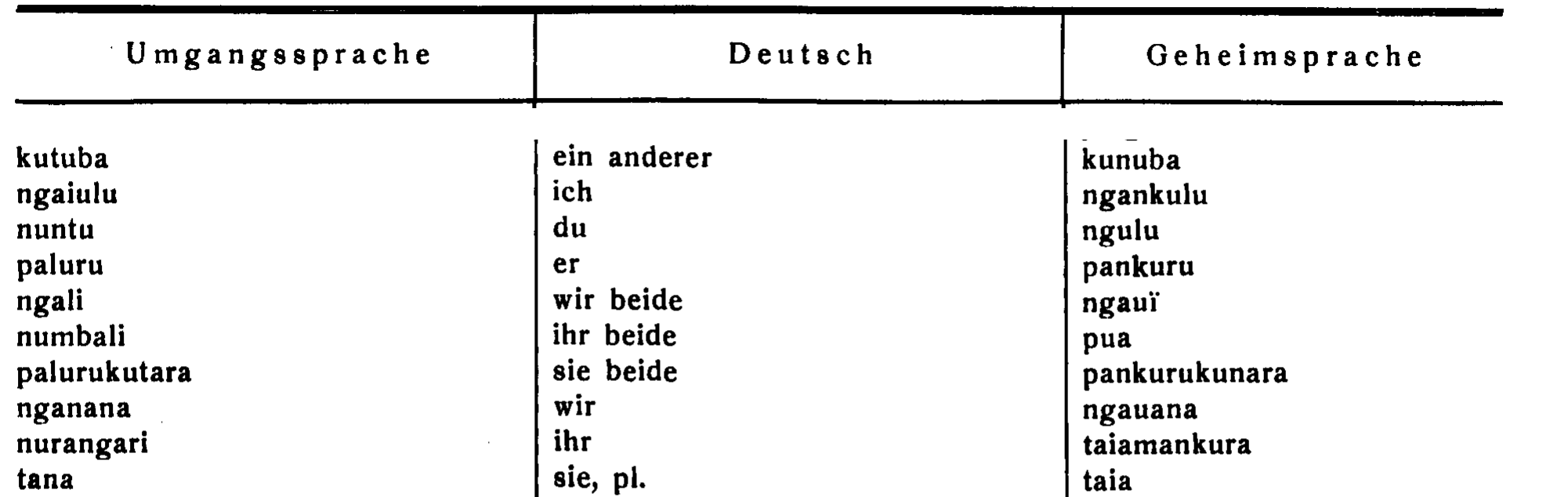
Strehlow's next sentences put the new word and the old god side by side:
The tatata must now stay for some weeks in a remote place until the wound has scarred over. … On his wanderings the boy must avoid the public paths. If he meets men out hunting, he may speak a few words with them in the secret language. But as soon as he sees women and children, he swings his great bullroarer apuju, which was put in his hand soon after the circumcision. The women and children take the humming sounds for the voice of the dreaded Maiutu and flee.
Strehlow IV.1 (1913), pp. 55–56
Here is the whole of the lesson in one paragraph. The boy learns that the god's voice is a board on a string, and he learns to be its voice. He learns a language the women may not hear, and the first thing that language changes is the word for himself. The same Loritja apuju and mantiki were collected by Spencer and Gillen; the southern Loritja who gave Strehlow this list are the people of the Matuntara country south-west of Hermannsburg.
Jinga, anua: the Aranda list
The Aranda next door did the same, and Strehlow wrote it down first. Soon after circumcision the men put several of the big bullroarers, the nankara, into the novice's hands and tell him what they are:
We have always told you that this was Tuanjiraka, who caused you the pain. You must give up your belief in Tuanjiraka and believe instead: this is Tuanjiraka. We told the children and women only of these tjurunga, and only compared Tuanjiraka with them. As we do, so you too shall tell the children again and again of Tuanjiraka, so that the message, that there is no Tuanjiraka, never spreads. Then we would all vanish from the earth, and under the whole sky it would be heard that we had died out.
Keep the tjurunga secret, and tell the children of Tuanjiraka. As the ancestors did, so you too have now become a man. Keep this knowledge to yourself. If the children were to hear it from you, you would fall sick unto death. As we do, so you too shall lie and say: “There is certainly a Tuanjiraka.”
Strehlow IV.1 (1913), pp. 25–26 (translated from the German)
Baldwin Spencer and Frank Gillen saw the same moment among the Aranda of Alice Springs in the 1890s. While the boy is still bleeding, a man presses bullroarers on the wound and tells him “that it was these and not Twanyirika which made the sound, that they were sacred Churinga and must never be shown or even mentioned to the women. To this the boy listened in silence” (1899, p. 248). The women had been told that Twanyirika, whose voice the roarer is, enters the boy after the operation “and takes him away into the bush until he is better, when the spirit goes away and the boy returns, but now as an initiated man” (p. 246 n. 1).
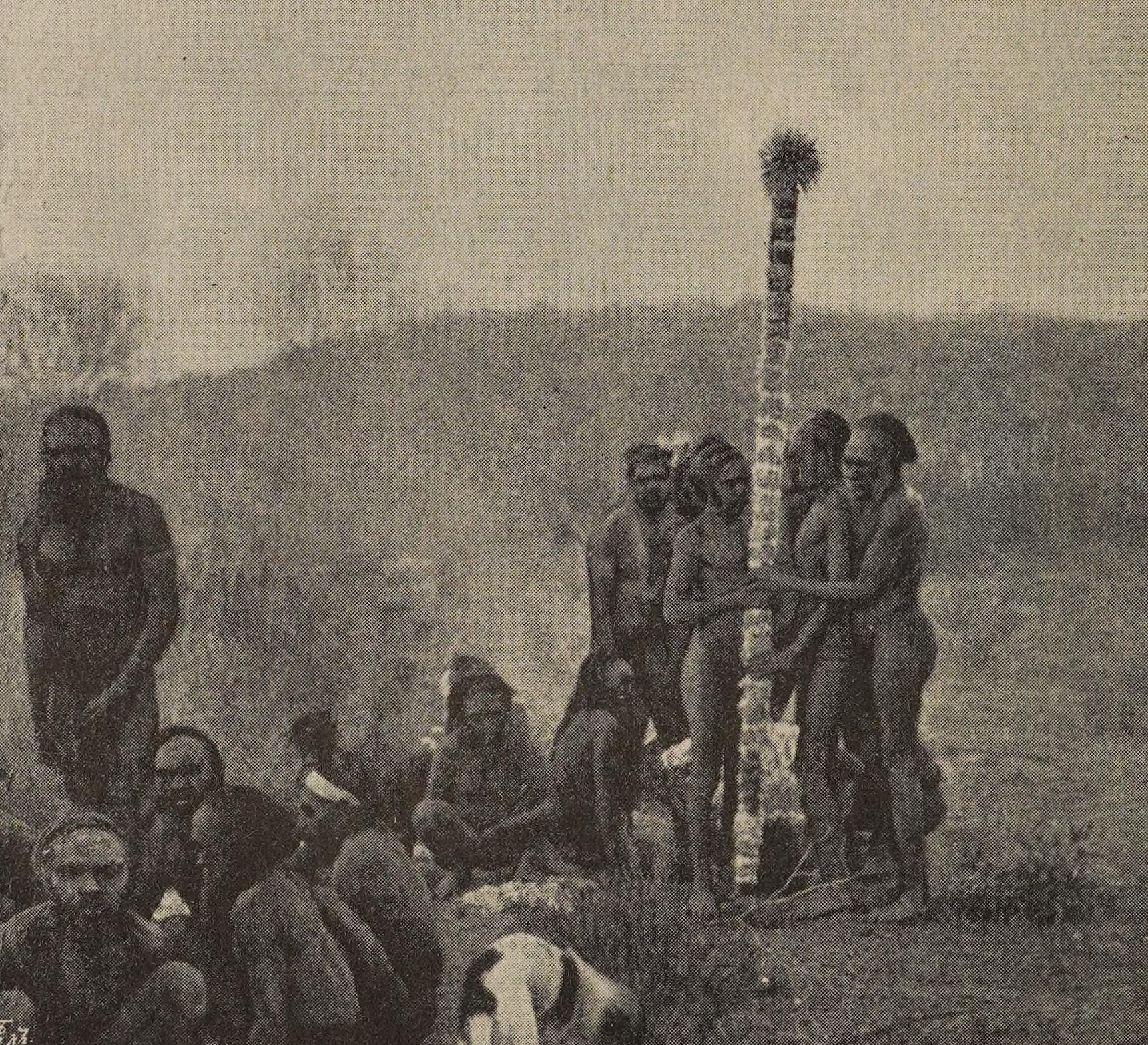
The Aranda boy too is renamed at every step: wongilja, “the one with the wound”; then rukuta, “the hidden one”. And he too must name himself an animal: “The circumcised boy calls himself injitjatuja, that is, dog” (Strehlow IV.1, p. 26). Then he is given his rules on pain of burning, and then:
The rukuta must also learn a secret language, ankatja kerintja, and use it in his dealings with other men during his involuntary exile. It is hard to decide whether the Aranda thought up this secret language themselves, or whether they took over its words, most of them wholly different from everyday speech, from the language of a far-distant tribe and only reshaped them.
Strehlow IV.1 (1913), p. 28
His guardians drill the words into him daily with the command “Unta … aretna arbuna tnauai”, “You shall call … by another name”. Water, woman, man, the old man. Father and mother, both now ngeraruka and eroatitja, words that also mean wallaby, eagle, the sun and a dozen other things. God, Altjira, becomes tnankara; the great bullroarer becomes tuanjiraka, the name of the being whose voice it is. Strehlow found the list absurd and said so in a footnote: it “sounds ridiculous when the rukuta calls not only himself but also the stars injitjatuja, that is, dogs” (p. 32 n. 1). Then, on p. 32, the pronouns:
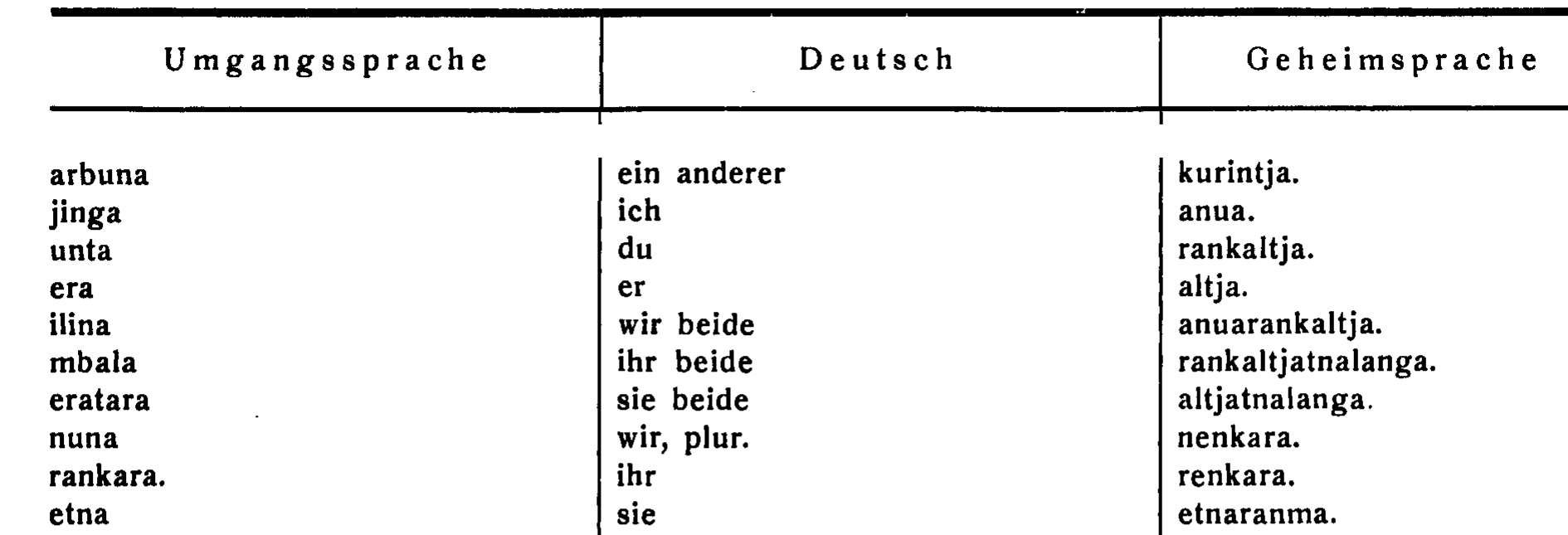
The secret “we two” is not a new root at all. It is the new “I” and the new “you” set side by side: anua-rankaltja. The language is built outward from the speaker. In seclusion the novice “may speak with men only in the secret language. If women or children come near him, he swings his nankara hard to scare them off” (p. 33). One more Aranda trace of the same moment survives in the land itself. An Aranda sacred place is called Anutjia, which Strehlow translates “it is I”: “so a honey-ant ancestor once answered” (Strehlow V, 1920, p. 16).
Strehlow could not tell where anua came from. One plain possibility is close at hand: the everyday Arrernte “we” is anwerne, and the novice's “I” may be that “we”, worn down. The bullroarers that went with this list are in the atlas as the Aranda churinga and the aritunga from Hermannsburg.
The mother-in-law's language and the first manhood ceremony
Strehlow guessed that the novices' words came from “a far-distant tribe”. They came from nearer home, from the most guarded speech of the novice's own people. Among the Aranda, the boy's secret language is also the language a man must use to his mother-in-law. He may not speak to her in camp or go near her; “if he meets her outside, he may communicate with her only from some distance, by means of the general secret language ankatja kerintja”, and if he spoke to her openly his body would itch all over or swell up (IV.1, p. 91). After the full initiation the young men are taught “yet another secret language”, and “so for instance the man speaks this secret language with his mother-in-law, his brother-in-law and his wife when others are present”. “Not a few of these words,” Strehlow adds, “agree with those of the secret language of the rukuta, the novices” (IV.2, 1915, pp. 47–48).
The Loritja name for the novices' language, anitji, is still in use. In the Ngaanyatjarra lands around the Warburton Ranges of Western Australia, the respect register yirrkapiri wangka is “also known as anitji”. It is spoken above all by the kin of a boy going through the man-making ceremony, his “grandfather, grandmother, aunt, uncle, mother and father”. And its speakers say where it came from:
“The respect register ‘yirrkapiri wangka’ was spoken by the Ancestral Beings in the Tjukurrpa first, during a manhood ceremony, then it was given to modern day people to speak and to hold.”Ngaanyatjarra speakers, in Elizabeth Ellis, Inge Kral and Jennifer Green, Western Desert Special Speech Styles (Endangered Languages Archive, dk0342)
The Loritja novice's “I” is this register's “I”. Across the Western Desert, nganku- is the first person of mother-in-law speech: R. M. W. Dixon gives the avoidance pronouns as nganku(lu), ngulyu, pangkuru, “I, you, he” (1980, p. 61), the same three words, give or take a vowel, that Strehlow's Loritja boy learned in the scrub. The missionary linguist W. H. Douglas, who worked at Warburton, called it “‘mother-in-law speech’ (a special form of speech used in taboo situations, such as when the mother-in-law is being addressed or during initiation ceremonies)”.
At Warburton this taught “I” once became everyone's “I”. Around 1950 a man named Ngayunya died. His name could no longer be spoken, and the ordinary ngayu, “I”, sounded too much like it. In Dixon's words, “ngayu was proscribed and replaced by nganku, a form borrowed from the special mother-in-law speech style” (1980, p. 29). For about ten years the whole community spoke of itself in the respect form, until another death, of a person whose name sounded like nganku, sent them back to ngayu (Gould 1969). The atlas's nearest record to Warburton is the Ngadadjara roarer.
So the boy in seclusion is not handed a code word. He is handed the “I” of restraint: the self a man must speak with when he is most watched, before the woman he may not look at and the men who made him. The novice and the son-in-law say “I” the same way. Both are speaking as someone being heard.
An “I” made of “we” and “other”
Other rite languages go further. They do not swap one “I” for another. They rebuild the speaker out of something larger.
On Mornington Island in the Gulf of Carpentaria, Queensland, the Lardil kept a ceremonial language called Damin, which they said had been made by a figure of legend, Kalthad. It “was learned by novices in the advanced phase of men's initiation. Men who went through this stage were called Warama”, and its purpose was “to serve as a vehicle of communication between Warama and all individuals involved in their initiation”. Ordinary Lardil was forbidden with those people until the novice had paid off his debt to them. The linguist Ken Hale, who recorded Damin with its last speakers, was struck above all by its pronouns. Ordinary Lardil has nineteen of them, with three persons, three numbers and more. Damin reduces them
to a single binary opposition: (a) n!aa ‘ego’ (b) n!uu ‘alter’. The first of these is used to refer to any set which includes the speaker, including the set which includes only the speaker. The second refers to any set which does not include the speaker.
Ken Hale, “Language Endangerment and the Human Value of Linguistic Diversity”, Language 68 (1992), pp. 37–38
The initiated Lardil man has one word for himself, and it is also his word for every “we” he belongs to. Hale knew of no other language, and no English word, with a term that abstract outside the jargon of kinship studies. The atlas holds a Lardil roarer.
At Yuendumu in the Northern Territory, Hale was invited to the Warlpiri kankalu initiation in 1967 and heard Jiliwirri, the ceremonial speech in which every word is replaced by its opposite. Sitting becomes standing, ground becomes sky. In Jiliwirri the speaker calls himself kari, which in ordinary Warlpiri is a suffix meaning “other”, as in yapa-kari, “another person”. And the ordinary word for “I”, ŋatju, does not vanish. It is used for “you” (Hale 1971, pp. 479–480 and p. 480 n. a). To say “I” as a new man, the Warlpiri novice says “other”; to say “you”, he says his old “I”. Men told Hale that it took them two to four weeks to catch the principle, and then it came all at once. The Warlpiri bullroarers belong to the same men's business.
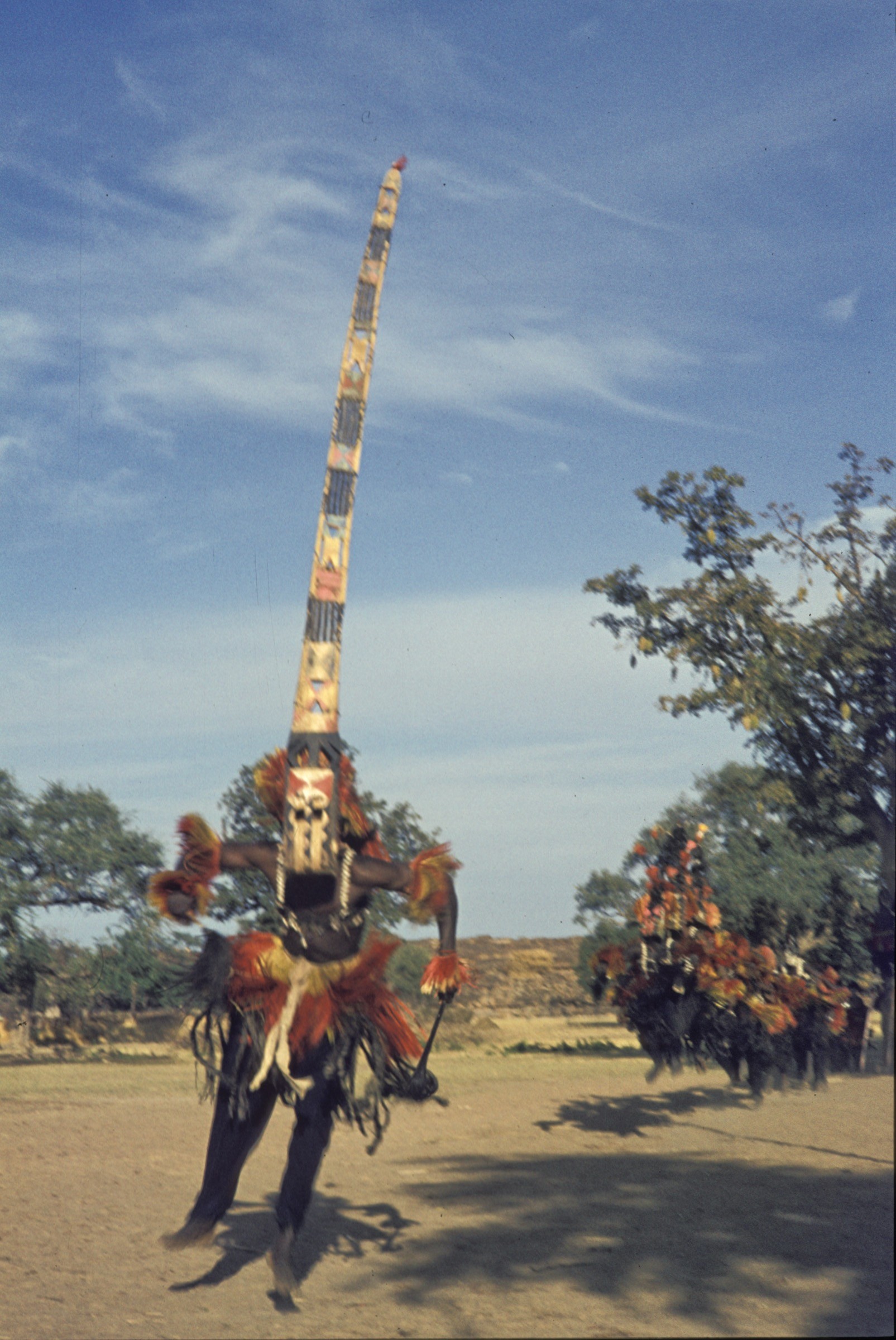
Across the world, at Sanga on the Bandiagara cliffs of Mali, the Dogon men of the mask society learn sigi so, the language of the Sigi festival and the masks. Michel Leiris, who recorded it in the 1930s, printed a line in which the masked speaker announces himself: emme … wanâ bçy, “Old man, eh! I have come” (Leiris 1948, p. 135). The “I” of that line is emme, which in everyday Dogon is “we” or “our”. The man behind the mask speaks of himself as a plural. At Sanga the bullroarer is the mother of the mask, the one, a man explained, who drinks the blood of women and children, and novices learn its myth and the secret language together; the atlas also holds a Dogon veni from Songo.
| People and place | “I” in the rite | What the word is in daily speech | Where it is taught |
|---|---|---|---|
| Aranda, Hermannsburg, Northern Territory | anua | Not used; the daily “I” is jinga | Seclusion after circumcision |
| Loritja, west of Hermannsburg | ngankulu | The mother-in-law “I”; the daily “I” is ngaiulu | Seclusion after circumcision |
| Ngaanyatjarra, Warburton Ranges, Western Australia | nganku- | The respect register anitji; the daily “I” is ngayu | Man-making ceremony; mother-in-law speech |
| Lardil, Mornington Island, Queensland | n!aa | “Ego”: any set that includes the speaker | Warama, the second initiation |
| Warlpiri, Yuendumu, Northern Territory | kari | “Other”; the daily “I”, ŋatju, now means “you” | Kankalu initiation |
| Dogon, Sanga, Mali | emme | “We, our” | The mask society |
“I man now”
Where the rite gives no new pronoun, it can still give the moment a man first says who he is. Between 1910 and 1912 the Finnish ethnologist Gunnar Landtman wrote down the tales of the Kiwai and their neighbours in Western Province, Papua New Guinea, in the pidgin his tellers used. Masingara is a bush village inland from the coast. A Masingara man named Gágere told him of Íregíde, “a man … who had no mouth or anus”. A runaway girl, Mürke, comes to his house, and that night, while he sleeps, she cuts him open. Then he wakes:
He felt a great lightness of body and looked round in bewilderment, “U, uä, uä!” being the only sound he uttered. Then he found that he could speak, “My god, I got mouth now! My god, I got yarn (faculty of speech) now, from mouth yarn he come! … I man now, my word, I man now! …”
It was broad daylight, and still he went on calling out, “Löpe, Jángedüu (and many other peoples), I man now! I got no mouth before, you hear my talk now! That my name Íregíde, that my name big man Íregíde. I kaikai now! Thats my girl he been make good for me! That name belong that girl now Äbapli, no more Mürke.”
Gunnar Landtman, The Folk-Tales of the Kiwai Papuans (1917), p. 428
The order is the order of a rite: a cut in the night, a waking, speech, “I man now”, his own name shouted to the neighbouring peoples, and a new name for the one who opened him. Before it, he told her father later, “I no savy people, all same etengena”, the beings of the bush (p. 429). In the next Masingara tale two wives cut the hairy Dági's monstrous arm down to size while he lies “dead asleep”, shave him, paint him and leave a basin of water beside him “to enable him to see his reflection on awaking”. He looks into it: “Me there, me proper man! Me got paint, plenty nice thing I got! Hallo, I all right, I man now!” (p. 421). A third Masingara boy, Jávági, is made a whole person by a kangaroo, which gives him teeth and ears; “his eyelids were closed at first for some time, but the kangaroo rubbed them open”. Landtman heard that story told straight after an account of “the great Masingle ceremony”, which is “part of the initiation of the young men” (Landtman 1927, pp. 108–109). The Masingara were a bullroarer people; their roarer is in the British Museum.
The roarer announces itself the same way. On Boigu in the Torres Strait, an old woman named Méte was splitting firewood when a splinter whirled into the air crying “bigu-bigu-bigu”. That night it came to her in a dream:
“Mother, that me, that my name bóigu” (or bígu, for it called out its own name when whirling round). “You go bush, cut him skin belong one wood … make him rope. … You make medicine along woman belong you, rub me along kasávo (semen) and de-gadi (secretion from the vulva), you sling me round. … You learn (teach) him people, you stow away along (from) woman, by-and-by no more kaikai.”
Told by Námai of Mawáta; Landtman (1917), no. 261, pp. 316–317
Across the strait on the mainland, near Bugi, a woman again found the first bullroarer, and the spirit of the wood told her husband in a dream: “My name is madubu. I am the father and mother of all yams. … They must be made in the men's club-house. No woman or child may see them” (Riley, in Haddon 1935, pp. 219–220). At the madubu initiation the men rose in dead silence and “threatened to shoot or club the novices, who howled and called for their mothers”; then each boy was handed a bullroarer by his guardian (p. 220). The missionary E. Baxter Riley, who worked among the Kiwai, rendered the word madubu itself as “I am a man” (van Baal 1966, p. 270). The atlas holds the Kiwai madubu and the Torres Strait bigu.
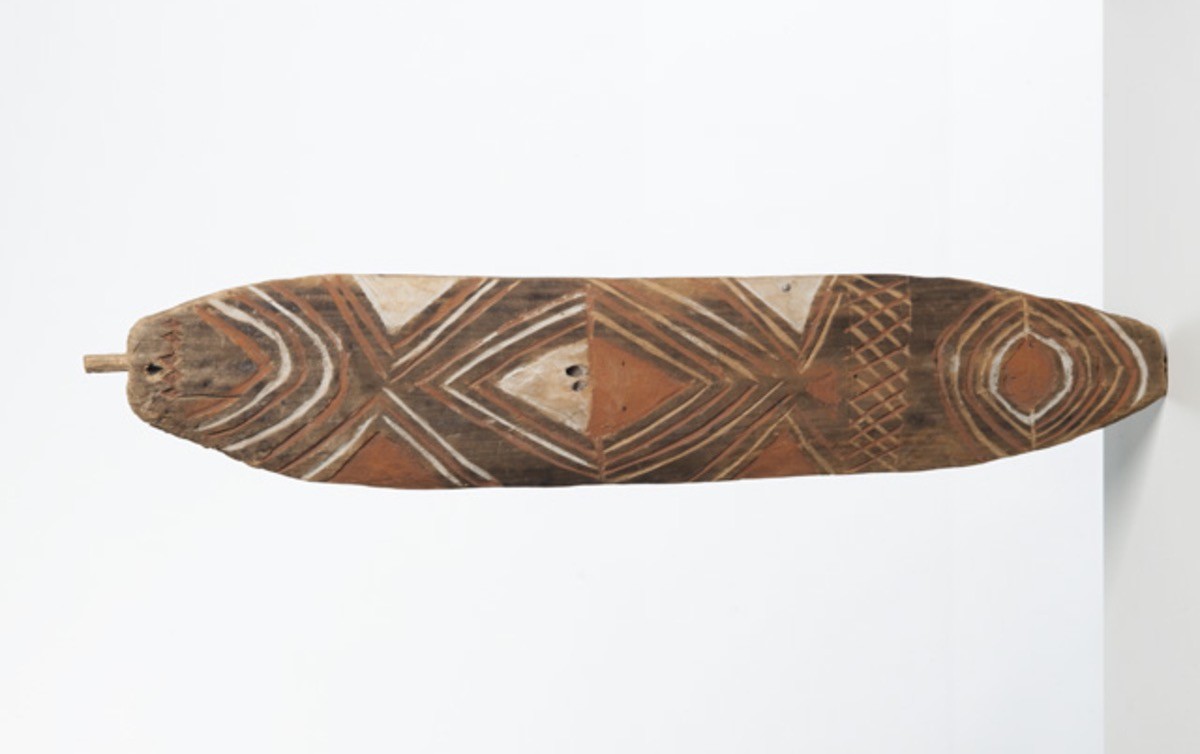
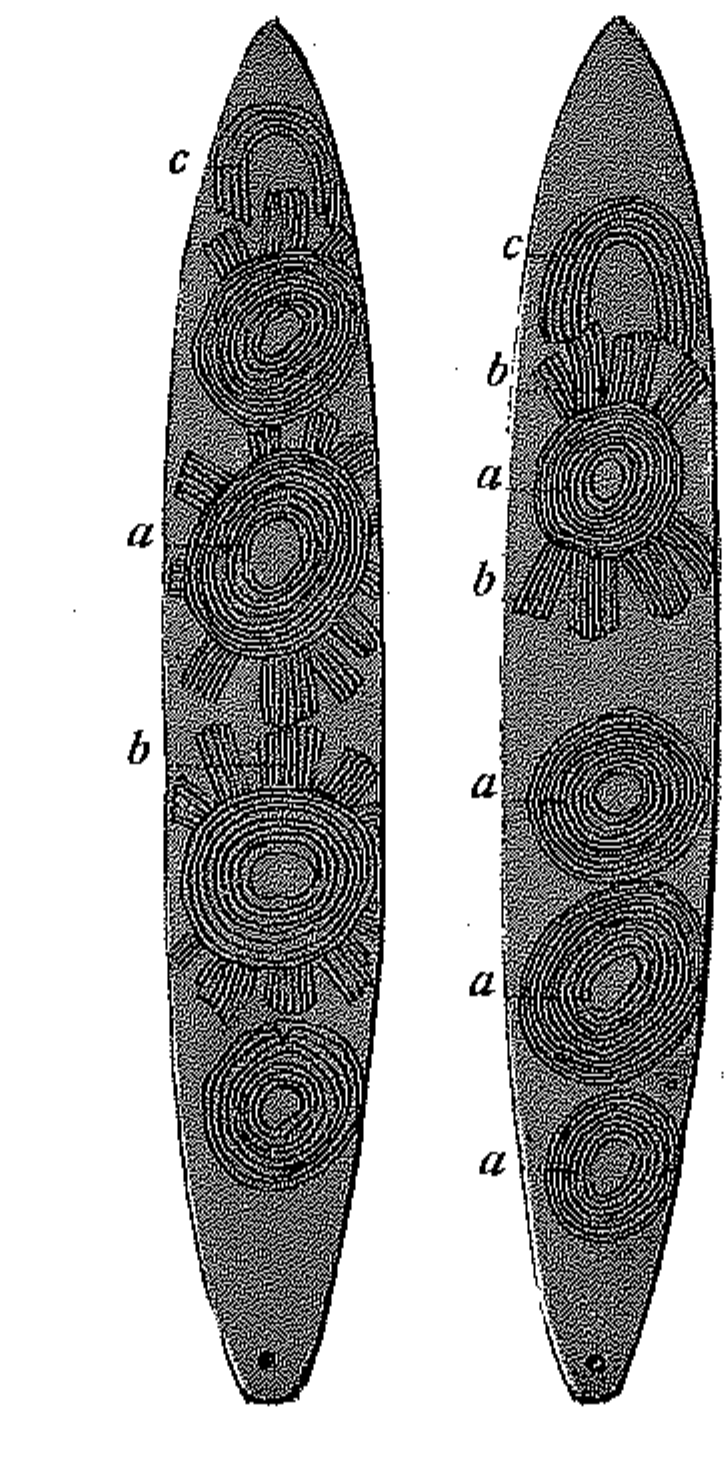
Back in Central Australia, the roarer is the self handed over in wood. When a young Aranda man has passed through subincision he is given a small bullroarer, the namatuna, smeared with the blood of his cut penis. It “represents the body of his own ancestor, that is, of his iningukua, who from now on goes with him again and protects him”. Later his grandfather takes him to the cave where the stone and wooden tjurunga are kept, shows him the one that belongs to him, and says:
Nana unta mburka nama; nana unta iningukua. This is your body; this is your second I.
Carl Strehlow, Die Aranda- und Loritja-Stämme II (1908), pp. 80–81
A new name, a new person
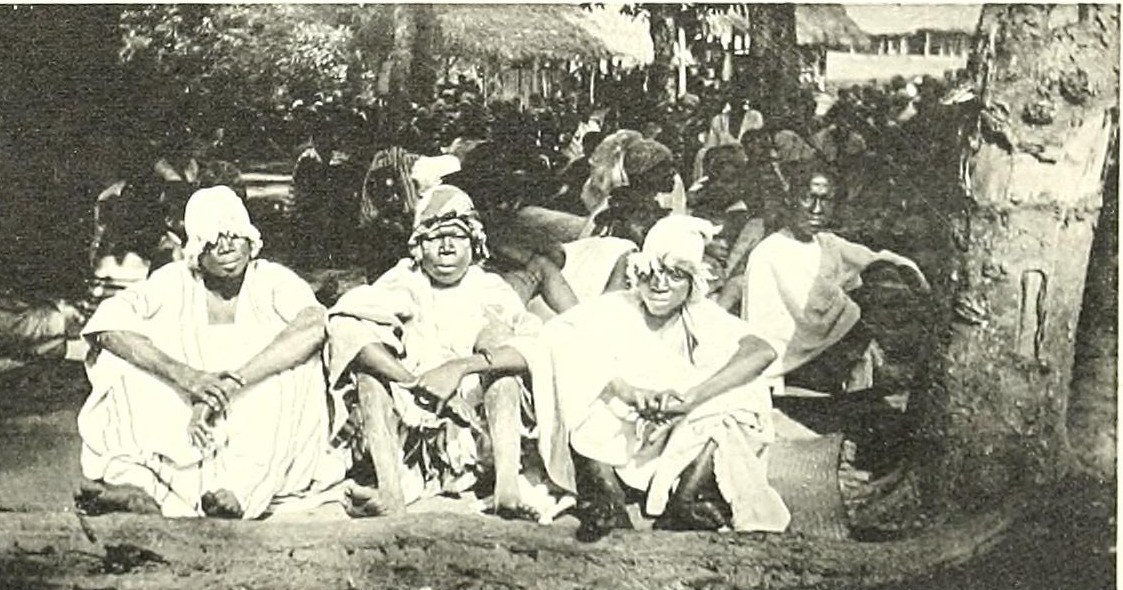
In the Poro forest schools of Liberia the new self is a legal fact. “Most of the Gbunde, Loma, and Mano take a ‘Bush’ name when they come out of the initiation schools,” wrote George Schwab, who travelled the Liberian hinterland in the 1920s with the doctor George Harley. The boy's childhood name becomes his “sin” name, from the settlers' word for the uninitiated, “sinners” (Schwab 1947, pp. 33–34). A Gio man explained what the name does by telling Schwab what his own people lack:
We do not get a new name in the Bush. We do not become new persons as the Mano do, so we are not released from debts that we had when we went into the Bush.
Gio informant, in George Schwab, Tribes of the Liberian Hinterland (1947), pp. 281–282
Among the Mano the boy who comes out of the bush is someone else; whatever the old one owed died with him. The Gio boys too “make bull-roarer talk” in their bush, but they come home as themselves. The Mano Poro, and the Gbunde, whose roarer bele wola heralds the Big Devil, take them in as one person and send them out as another. In between, the boy is supposed not to exist. A Gbunde boy, starving in the Poro grove, crept out to his parents' farm, and his mother saw him and wept over him. Men overheard. He was taken deep into the forest and “given a drink that quickly killed him”. When the session ended and his mother asked where her son was, the leaders told her she had been mistaken; “it was some spirit she had seen, because the devil had swallowed the boy and had not reborne him” (p. 286).
F. W. Butt-Thompson, a British officer who collected what he could of the West African secret societies, describes how the name arrives. “A society name is invariably bestowed upon the young initiate in the puberty school … The name becomes a seal to the initiation, a proof that the first grade is reached, and a very satisfactory mark of the new manhood or womanhood.” It is announced by the voice the roarer also speaks with:
Its bestowal is made the more memorable by the mystery of its first announcement. There are skilled ventriloquists amongst the officials … who know all there is to know about “belly-talking,” or the “voice of the spirit,” as it is sometimes called. They can make the command or the announcement they wish known come from the tree-tops, from the passing wind, from the flying bird, from the sleeping amphibian, from the prowling animal, and from the very deeps of the earth. … Secret, mat-lined tunnels and bamboo tubes connect council house or hut of official to that of the young initiates, through which wind is driven or voices transmitted.
Therefore, the new name may reach the new owner by strange and hitherto unknown means, and be iterated and reiterated until the novice wakes up to the fact that it is his. His secret name.
F. W. Butt-Thompson, West African Secret Societies (1929), pp. 148–150
The spirit's voice tells the boy who he is until he believes it. Butt-Thompson gives one doctor's initiation, from the Butwa society of south-central Africa, in which the candidate drinks, dances until he is possessed, and “gives himself a new name, saying: ‘I'm the spirit world, whence the noises come’”. He is speared in the chest and is “dead”; in a hut his body “is made to drink its own blood”. Months later he is led back to the village and, dancing, shouts his new name: “I'm Kasingu! (The Spinning Top)” (pp. 57–58). In the Ndembo of the Lower Congo the reborn novices “pretend to be quite strange to this world, do not know their parents or relatives”, and in the neighbouring Nkimba lodge they speak only the lodge language, in which even the ordinary “us”, kweto, is changed to kubwefo (Bentley 1887, p. 506; 1900, pp. 282–283).
I am what I am
The Igbo of south-eastern Nigeria have Okonko, a society of ten grades, bought one after another at great cost. Butt-Thompson closes his account of it with a passage he puts in quotation marks:
Finally, when he has passed through all the grades, which few do, when he has finally sworn the greatest oath of all, when he knows all the society's heart's secrets — and that can be summed up in the sentence: I am what I am through my knowledge of law and order and justice and morality — then, and not till then, he is an Elder, a man revered, honoured, and obeyed.
Butt-Thompson (1929), p. 34
The secret at the top of the grades is the same thing the Loritja boy is handed at the bottom: a statement of self. Sixty-five years earlier the German Egyptologist Heinrich Brugsch had said the same of the oldest mysteries of all. The priests of Egypt, he wrote in 1864, knew of one god, and the crowd of gods in the temples were only veils over that doctrine:
This doctrine of the one God was revealed only to the initiated, and laid in the grave with the dead, in written though obscure form, as a book in a roll for their last escort. The name of the one God is not spoken in these rolls, but only paraphrased with the deep words nuk pu nuk, “I am who I am”.
Heinrich Brugsch, Aus dem Orient (Berlin, 1864), p. 48 (translated from the German)
The rolls are the Book of the Dead, and the words are the dead man's own: in its spells he says “I” again and again, claiming to be Osiris and the gods, so that he may pass. Brugsch's colleague Peter Le Page Renouf read nuk pu nuk as “It is I who …”, the dead man's claim, rather than a divine name. Either way the scroll the initiate took into the grave was a book of things to say about himself. Within three years a Boston review had carried Brugsch's version across the Atlantic: the doctrine was “revealed to the initiated, and to them alone”, in “the papyrus roll which was put into the mouths of the dead to accompany them to the grave”, and its words were “I am that I am” (Christian Examiner, May 1867).
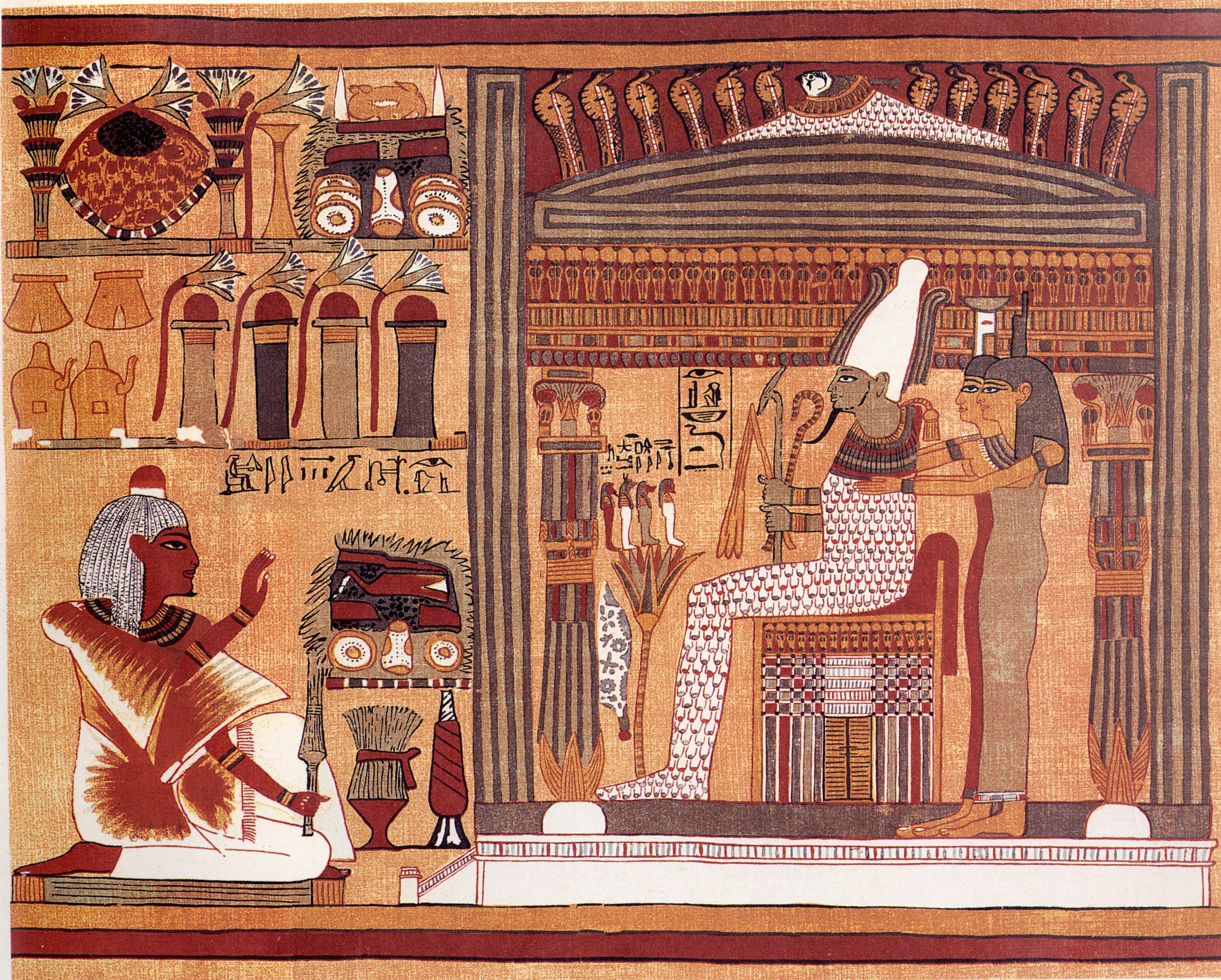
India put the same event at the beginning of the world. “In the beginning this was Self alone, in the shape of a person. He looking round saw nothing but his Self. He first said, ‘This is I;’ therefore he became I by name” (Bṛhadāraṇyaka Upaniṣad 1.4.1, trans. Max Müller). In that telling, the self exists from the moment it first says “I”. In the bush schools it exists from the moment it is taught to.
Put the cases in a line and the lesson is the same everywhere. A boy is taken from the women, cut, hidden and told he is a dog. The men show him that the god who roared at him all his childhood is a board on a string, and they make him swear to keep the women believing. In the same weeks they take his “I” away and give him another: the Aranda anua, the Loritja ngankulu, which is the “I” a man uses before his mother-in-law and which the Western Desert people say the Ancestral Beings spoke first, at the first manhood ceremony. The Lardil give him a word for himself that is also every “we” he belongs to; the Warlpiri give him “other”; the Dogon mask says “I” as “we”. The opened man at Masingara cries “I man now” and shouts his name to the peoples round about; the first bullroarer says “My name is madubu”; the grandfather lays a board in the young man's hands and says “this is your second I”. In Liberia the boy who comes out of the forest is a new person who no longer owes the old one's debts. At the top of the Igbo grades and at the heart of the Egyptian mysteries, the last secret is a sentence about the self.
This is what the men said they were doing. They hid the boy, took his name and his word for himself, and gave them back made new, in a language the women must not hear and under cover of a voice the women must not understand. The secret of the bullroarer and the secret of the self were taught together because they are one lesson. The voice in the bush was a man's voice, and the novice came out of the bush able to say “I” in it.
Key sources
- Carl Strehlow, Die Aranda- und Loritja-Stämme in Zentral-Australien, ed. M. von Leonhardi (Frankfurt am Main: Joseph Baer, 1907–1920). Part II (1908), pp. 80–81: the namatuna and “dies ist dein zweites Ich (iningukua)”. Part IV.1 (1913), pp. 25–26, the revelation of Tuanjiraka and “injitjatuja d. h. Hund”; p. 28, the secret language ankatja kerintja; p. 32, the pronoun list (jinga ich anua) and n. 1; p. 33; p. 50, the Loritja revelation of Maiutu and injitjituju; pp. 51–52, the Loritja rules and tamala anitji; pp. 53–56, the Loritja list (ngaiulu ich ngankulu) and the apuju; p. 91, the mother-in-law. Part IV.2 (1915), pp. 47–48. Part V (1920), p. 16, Anutjia.
- Baldwin Spencer and F. J. Gillen, The Native Tribes of Central Australia (London: Macmillan, 1899), pp. 216–217 and figs. 34–35; p. 246 n. 1; p. 248; pp. 254–256 and fig. 43.
- Elizabeth Ellis, Inge Kral and Jennifer Green, Western Desert Special Speech Styles Project, Endangered Languages Archive, deposit dk0342: yirrkapiri wangka, “also known as anitji”.
- R. M. W. Dixon, The Languages of Australia (Cambridge University Press, 1980), p. 29 (Warburton ngayu and nganku) and p. 61 (Western Desert avoidance pronouns). W. H. Douglas, An Introduction to the Western Desert Language (Oceania Linguistic Monographs 4, rev. ed. 1964), pronoun table. Richard A. Gould, Yiwara: Foragers of the Australian Desert (New York, 1969).
- Ken Hale, “Language Endangerment and the Human Value of Linguistic Diversity”, Language 68 (1992), pp. 35–41: Damin, pp. 37–38. Ken Hale, “A Note on a Walbiri Tradition of Antonymy”, in D. D. Steinberg and L. A. Jakobovits (eds.), Semantics (Cambridge University Press, 1971), pp. 472–482: kari and ŋatju, pp. 479–480.
- Michel Leiris, La langue secrète des Dogons de Sanga (Paris: Institut d'Ethnologie, 1948), p. 135.
- Gunnar Landtman, The Folk-Tales of the Kiwai Papuans (Helsingfors, 1917): pp. 316–317, the first bullroarer; pp. 421–422, Dági; pp. 426–429, Íregíde. Gunnar Landtman, The Kiwai Papuans of British New Guinea (London, 1927), pp. 108–109: Jávági and the Masingle ceremony.
- A. C. Haddon (ed.), Reports of the Cambridge Anthropological Expedition to Torres Straits I (Cambridge, 1935), pp. 219–220, after E. Baxter Riley, Among Papuan Headhunters (1925), p. 204. J. van Baal, Dema (The Hague, 1966), p. 270.
- George Schwab, Tribes of the Liberian Hinterland, ed. G. W. Harley (Papers of the Peabody Museum 31, Cambridge, Mass., 1947), pp. 33–34, 281–282, 286.
- F. W. Butt-Thompson, West African Secret Societies: Their Organisations, Officials and Teaching (London: Witherby, 1929), p. 34 (Okonko), pp. 57–58 (Butwa), pp. 148–150 (society names).
- W. Holman Bentley, Dictionary and Grammar of the Kongo Language (London, 1887), p. 506; Pioneering on the Congo I (London, 1900), pp. 282–283.
- Heinrich Brugsch, Aus dem Orient (Berlin, 1864), p. 48. “Brugsch's Aus dem Orient”, Christian Examiner 82 (May 1867), pp. 377–378. P. Le Page Renouf, Lectures on the Origin and Growth of Religion as Illustrated by the Religion of Ancient Egypt (Hibbert Lectures 1879; London, 1880), pp. 244–245.
- F. Max Müller (trans.), The Upanishads II, Sacred Books of the East 15 (Oxford, 1884): Bṛhadāraṇyaka Upaniṣad 1.4.1.
- Related essays: Not Spirits, but Men, The Men's-House Words, The Little People and The Initiates Used to Die.
- As far as we know, setting the taught “I” of the Australian rite languages beside the bush names of West Africa and the Egyptian “I am who I am” is original to this page.