No. AUSMAIN-031
Matuntara (Kukata)
Matuntara (Kukata) country south of the Levi Range, around the Palmer River tributary of the Finke River, eastward to Erldunda and westward to Curtin Springs, straddling the Northern Territory · South Australia border · Central Australia
Restricted
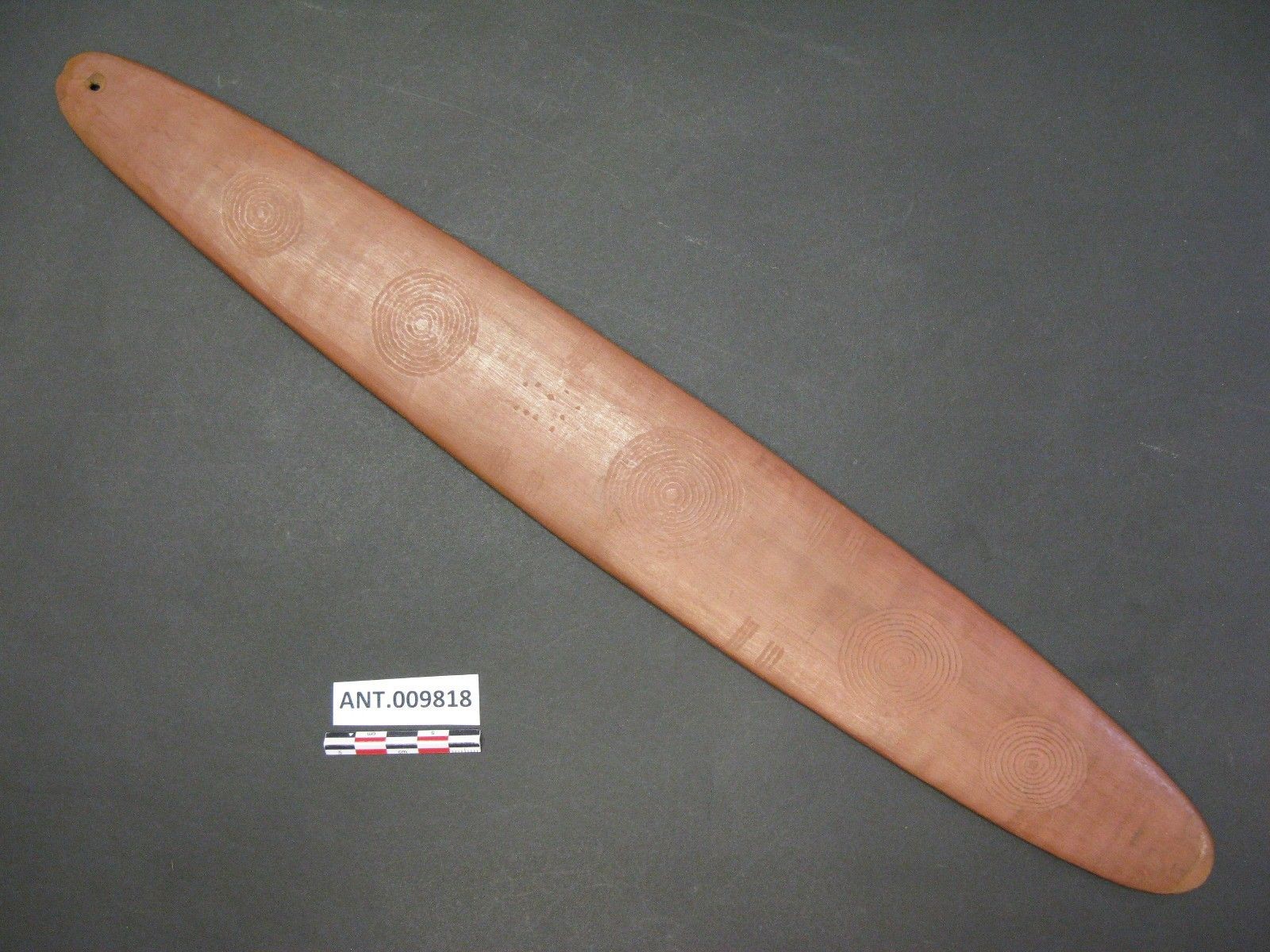
namatuna (Aranda); mandagi (Luritja)
Source term: namatuna
namatuna: the Aranda name (Luritja mandagi) for the small perforated tjurunga whirled as a bull-roarer; not to be seen by women or children.
Etymology. Roheim records mandagi as the Luritja word (Aranda namatuna) for the small perforated tjurunga whirled as a bullroarer, handed to the newly circumcised novice with the warning to keep off the women's paths and also charged for love magic. In the initiation lore of these western-desert groups the instrument is bound up with lame, one-legged 'bull-roarer beings' such as Apuju, whose name the uninitiated are taught to fear.
Among the Matuntara -- the Kukata, or Southern Luritja, whose country runs south of the Levi Range about the Palmer River and across the line into South Australia -- the bull-roarer belongs to the making of men. Geza Roheim, working in 1929 among the Aranda's Luritja-speaking western neighbours, recorded the small perforated tjurunga, the namatuna (mandagi in Luritja), whirled on its cord to roar. It is pressed into the newly circumcised novice's hands during his weeks of seclusion in the scrub, with the warning that when he whirls it he must keep to the thick scrub and off the women's road. The roar is also the voice of one-footed ancestral beings: as Roheim records, "Maiutu, Apuju, and other bull-roarer beings are lame or they have only one foot."
This namatuna, which is used for love magic, receives its magical power from blood taken from the subincision opening.
Geza Roheim, The Eternal Ones of the Dream (International Universities Press, 1945), p. 13.
Particulars
- Object
- A small flat slat-type bull-roarer (Hornbostel-Sachs 412.22), one of the perforated tjurunga "small ones with holes in them to be used as bull-roarers and to be whirled," called namatuna in Aranda and mandagi in Luritja. Whirled on a cord to produce a roaring hum; among the Matuntara's circle of Luritja-speaking western neighbours it is handed to the newly circumcised novice during his bush seclusion and is also charged with subincision blood for love magic.
- Function
- Initiation/circumcision instrument given to the secluded novice and whirled away from women's paths; the same small bull-roarer also serves as a love-magic charge.
Source
Geza Roheim, The Eternal Ones of the Dream: A Psychoanalytic Interpretation of Australian Myth and Ritual (New York: International Universities Press, 1945), pp. 13, 83, 88-89