Atlas Essay —
Taught Again Like a Child
Where the bullroarer sounds, the boy it takes comes home without his name, his parents or his speech, and is taught again
On the morning the circumcised boys came out of the forest near Finschhafen, the German doctor Otto Schellong went to find the ones he knew, and got a fright. “What had become of these otherwise so lively boys! Of their fresh faces and their cheerful laughter not a trace was to be found! Not the least sign from which I could have gathered that they were glad to see me again!” Their eyebrows were shaved, their teeth blackened, their eyes hollow and sunk, their arms and legs covered with sores. While the men dressed them for the walk home, “the ssagus sat mute and almost apathetic, and let everything be done to them patiently.” The women had been told that a monster had swallowed them, and the voice of that monster was the bullroarer.
Across the bullroarer’s range, initiation is staged as an erasure of the person followed by a reteaching. The roarer, or the being whose voice it is, does the erasing: the boy is killed, swallowed or carried off by the roaring spirit, and he comes back blank, mute, stripped of his old name, a stranger in his own town, to be named again and taught.
In brief
- The Lobi of Burkina Faso hear Dyoro approach in the bellow of the bullroarer. Those initiated to him are bound “on pain of death” to forget their first names, and take a new one only when they have “entered into their new personality” (Haumant 1929, p. 133).
- On the Huon Gulf of Papua New Guinea one word, balum, means the bullroarer and the monster that swallows the boys. At Finschhafen the circumcised came home mute, showing no sign of knowing friends, eyes shut, and opened them only on command, “as if waking from a deep stupor” (Schellong 1889, pp. 159, 161).
- Among the Kpelle and Gbunde of Liberia the bullroarer is one of the voices of the Poro’s Big Devil, who swallows the novices; when they come out, being “new born,” they “pretend to be strangers” in their own town (Schwab 1947, pp. 270, 286).
- In Central Australia the roarer’s spirit kills the boy, or takes out his insides and gives him new ones. Two medicine men described being killed and refitted the same way in the first person, and one came back having “completely forgotten who he was” (Spencer and Gillen 1904, pp. 343, 480–481, 498).
- Among the Euahlayi of New South Wales a boy went to sleep “the boy he had been, to wake in the morning a new man”, and the bullroarer’s spirit chose his new name (Parker 1905, pp. 73–74).
- These rites sit inside a wider pattern Frazer gathered from four continents, where the novice returns unable to eat or walk, not knowing his parents, and is taught “like the smallest child”; those accounts name no roarer (Frazer 1913, pp. 251–267).

“O circumcised, open your eyes”
On the Huon Gulf, on the north-east coast of Papua New Guinea, the Yabim, the Bukaua, the Tami and the Kai all initiated their boys in the belly of a monster, and all four gave the monster the bullroarer’s name: balum among the Yabim and Bukaua, ngosa among the Kai, kani among the Tami. In three of the languages the same word means a ghost; in Kai it means “grandfather” (Frazer, Balder II, p. 242). The missionary Heinrich Zahn put the Yabim teaching in a sentence: “The basic idea of the whole lie is: in the forest lives a monster (balum) that swallows the ngabali (boys) into its enormous body. The ransom can be made only with big fat pigs.” Under the humming of the roarers the boys were marched out to a hut built as the monster’s body, and “carried into the hut by their sponsors, where the balum (spirit) swallows them” (Zahn 1911, p. 297). On the way the old men struck each of them on the forehead and chin with a bullroarer.
Schellong saw them come out at Finschhafen, at the tip of the Huon Peninsula, in the 1880s. The thirty-eight ssagus he counted were washed in the sea and then dressed all day (p. 159). Their faces were whitened, eyelids and all, and with the eyes shut the effect was “uncannily corpse-like and rigid; one had the impression of walking plaster figures on a brown stand” (p. 160). Then they walked home:
“All of them have their eyes shut tight, the head laid back on the neck, the arms crossed over the little bag hanging in front, and they walk forward step by step as in a dream. …
Now the procession has entered the village itself … one hears the women sobbing, and sees the tears of emotion and joy roll down their cheeks. … The ssagus still walk quite mechanically, with closed eyes. …
A man walks down the line from behind and, touching each ssagu in the hollow of the knee with the handle of an axe, says: o ssagu dangussi, that is, ‘O circumcised, sit down’; but the ssagus do not sit; one sees no sign of life in them yet. Only when another man, beating the ground again and again with the stalk of a palm leaf, cries out: o ssagu mattá gella, ‘O circumcised, open your eyes’ … only then does one after another open his eyes, as if waking from a deep stupor. But one would be wrong to suppose that any sign of emotion, joy, surprise or the like now showed in these youths; nothing of the kind! That was not good form: silently each sat down on the mat spread before him and took the food the men offered him.”
„… erst da schlägt einer nach dem anderen, wie aus einer tiefen Betäubung erwachend, die Augen auf.“
O. Schellong, “Das Barlum-Fest der Gegend Finschhafens,” Internationales Archiv für Ethnographie 2 (1889), p. 161.
The boys Schellong had known came out of the monster with no sign of knowing him. They walk blind through the village, deaf to the first order, and when the second order opens their eyes they may show nothing, no joy and no surprise, because that “was not good form”. They come back as bodies that have to be told to sit and told to see.
On the south coast of New Guinea, in Indonesian Papua, the Marind gave the name of the bullroarer, sosom, to a giant who comes every year with the south-east monsoon: “Boys are presented to the giant, and he kills them, but considerately brings them to life again” (Frazer, pp. 242–243).
Forget your name, on pain of death
The plainest statement comes from Burkina Faso. The Lobi of the south-west of the country are divided into classes by the time of their initiation to Dyoro, “a divinity which is doubtless a dependency of the Earth”. The colonial ethnographer Henri Labouret, quoted by Jean-Camille Haumant in 1929, called the rites “changes of personality resulting from the fictive death and resurrection of the individual”. For several months, far from the houses, the novices are given special teaching and learn a secret language. At night one of the old initiates whirls a short piece of wood, pierced with a hole, on the end of a string,
“… producing by its rotation a roar like the bellowing of a buffalo. The neophytes, lying under mats with their eyes shut, are struck with religious fear on hearing this strange noise, which announces the approach of Dyoro. …
The young people initiated to Dyoro are bound, on pain of death, to forget their first names. They must not turn round when they are called by these names. They must not pronounce them.”
J.-C. Haumant, Les Lobi et leur coutume (1929), p. 133, nn. 2–3.
The note hangs on Haumant’s own sentence about names. At the Dyoro ceremonies the young people acquire their third name, which “they reveal only at the end of the rites, when they have entered into their new personality”. The old name is killed, on pain of death; the novice may not even turn his head at it; and the new one is withheld until there is a new person to carry it. The voice that announced Dyoro has taken away the child who answered to the first name, and that child is not allowed to come back. Boys and girls go through it together, and at the end the boys are shown what the rhombe is.
New born, strangers in their own town
In Liberia the Poro society of the Gbunde, Kpelle and their neighbours keeps its boys in a school in the bush. Its master, the Big Devil, is heard and never seen, and “the bull-roarer is another of his voices (bɛlɛ wola, Gbunde)” (Schwab 1947, p. 270). He swallows the novices: their scars are his teeth marks, he carries them in his belly, and those who die stay there (p. 284). The ones he gives birth to come home at night, and George Schwab was told what followed in the Kpelle town of Zienshu:
“The boys, being ‘new born,’ at first pretend to be strangers and to find everything about the town new and unfamiliar.”G. Schwab, Tribes of the Liberian Hinterland (1947), p. 286.
In the Gbunde and Kpelle Poro the roaring swallower and the stranger who comes home belong to one institution. A generation earlier, among the Vai and Gola of the Liberian coast, in an account that names no roarer, the boys taken to the magic forest were said to be killed by a forest spirit and woken to new life, and “at all events the children, when they come out, behave as if they no longer knew their parents and everything were strange to them” (Schurtz 1902, p. 103, after the Swiss naturalist Johann Büttikofer).
Far to the north-west, among the Fulbe (Fula) of Senegambia, in today’s Senegal and the Gambia, Heinrich Schurtz read of boys swallowed by a ghostly being called Horny, who kept them in its belly for days. “The terrible voice of the Horny (probably a bullroarer) is often heard in the woods,” he wrote, and “after their return the boys are still without speech for days” (p. 103). The “probably” is his own.
“I think I am lost”
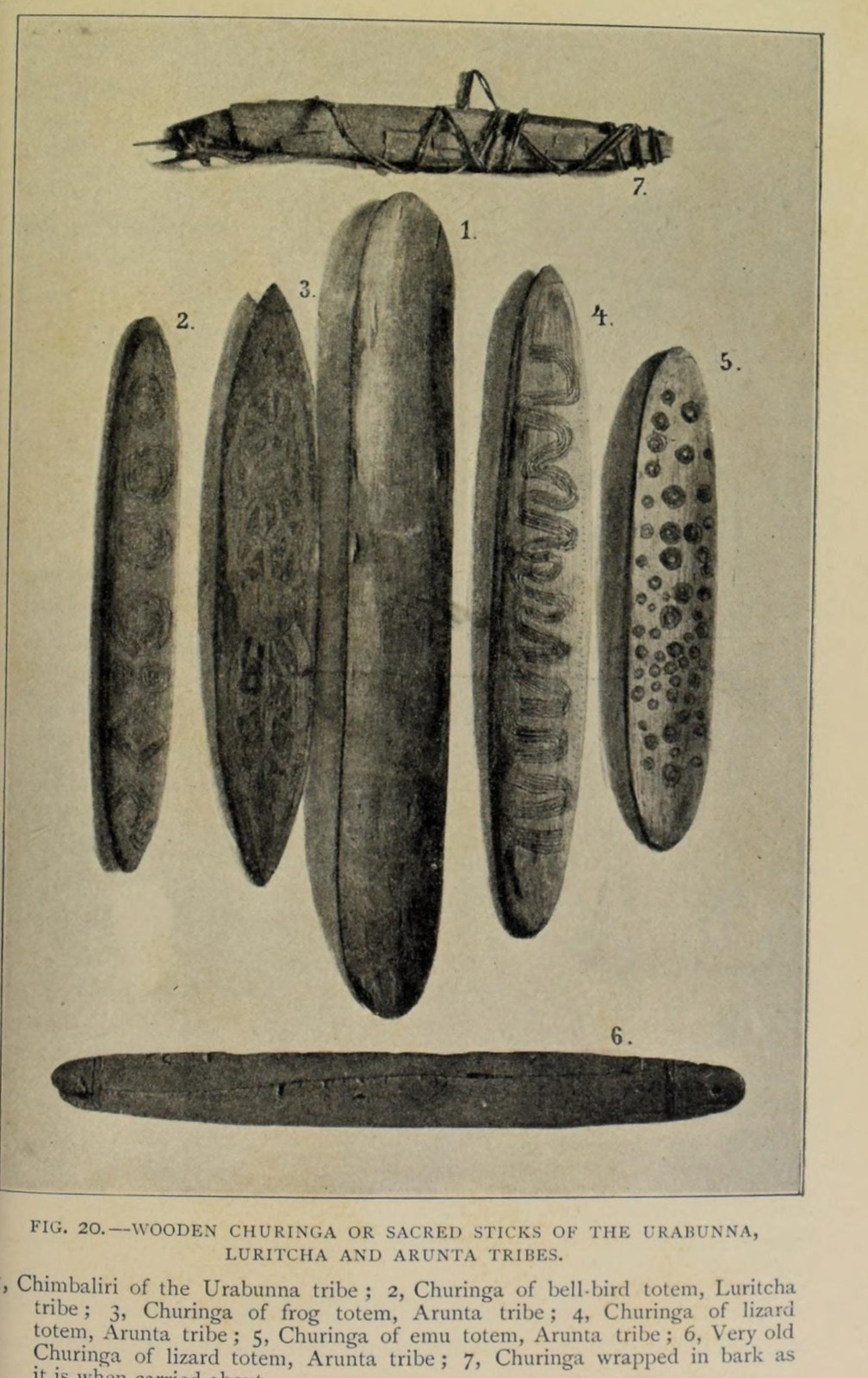
In Central Australia the roaring being kills the boy and builds him again. The Arunta (Arrernte) of the Alice Springs country, in the Northern Territory, told their women that at circumcision, as the bullroarer sounds all round the ground in the darkness, “Twanyirika enters the body of the boy and takes him out into the bush” (Spencer and Gillen 1904, p. 497). Among the Unmatjera (Anmatyerr) and their northern neighbours the Kaitish (Kaytetye), the roar was Twanyirika too, and “both women and children believe that in some way Twanyirika kills the youth and later on brings him to life again during the period of initiation” (p. 343). At Lake Eyre in South Australia the Urabunna (Arabana) taught that the sound of the boy’s sacred stick, chimbaliri, “is the voice of a spirit called Witurna, who takes the boy away, cuts out all of his insides, provides him with a new set, and brings him back an initiated youth” (p. 498). Near the Gulf of Carpentaria, in the Northern Territory, the Binbinga spirit “eats the boy up, restoring him subsequently to life”, and the Anula one “swallows and afterwards disgorges the boy in the form of an initiated youth” (p. 501).
Only the medicine men tell in the first person what it is like to be killed and refitted. Ilpailurkna, a celebrated Unmatjera doctor, told Baldwin Spencer and Frank Gillen how he had been made:
“A very old doctor came one day and threw some of his atnongara stones at him with a spear-thrower. Some hit him on the chest, others went right through his head, from ear to ear, killing him. The old man then cut out all of his insides, intestines, liver, heart, lungs — everything in fact. … When he awoke he had no idea as to where he was, and said, ‘Tju, tju, tju’ — ‘I think I am lost.’ But when he looked round he saw the old medicine man standing beside him, and the old man said, ‘No, you are not lost; I killed you a long time ago.’ Ilpailurkna had completely forgotten who he was and all about his past life. After a time the old man led him back to his camp and showed it to him, and told him that the woman there was his lubra, for he had forgotten all about her.”
Spencer and Gillen, The Northern Tribes of Central Australia (1904), pp. 480–481.
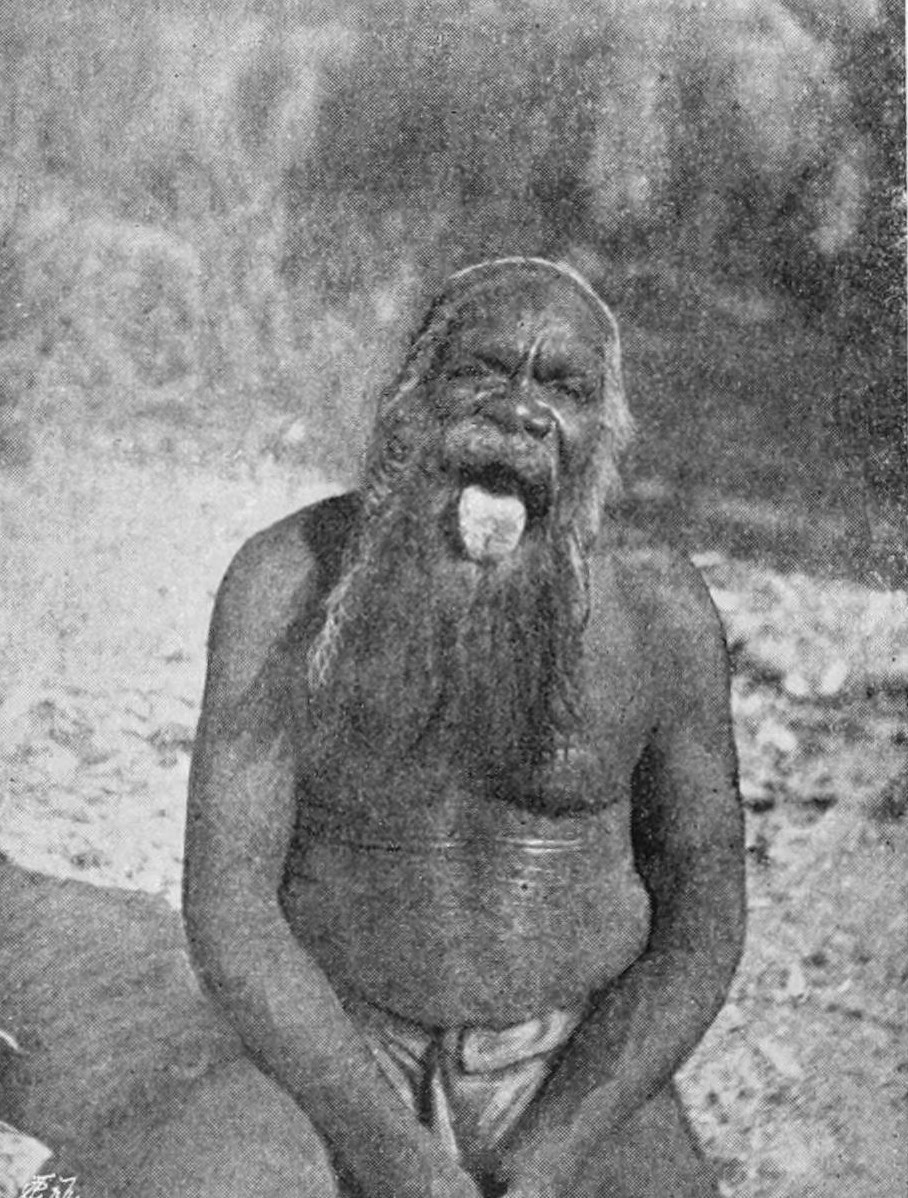
Among the Arunta the makers of doctors were spirits living in a cave under the plain. One of them throws an invisible lance that pierces the man’s neck from behind and passes through his tongue, leaving the hole in Plate I; a second pierces his head, and he “falls dead and is at once carried into the depths of the cave”. There the spirit “removes all the internal organs and provides the man with a completely new set”, and “he presently comes to life again, but in a condition of insanity”, and for several days he “remains more or less strange in his appearance and behaviour” (1899, pp. 523–524).
The boys are killed, emptied, given new insides and brought back; so are the doctors, and the doctors say what the operation leaves behind: a man who wakes in his own country lost, and has to be led to his camp and shown his wife.
Sleep a boy, wake a new man
In south-eastern Australia the erasure is a sleep. Katie Langloh Parker lived on the Narran River in north-western New South Wales among the Euahlayi (Yuwaalaraay), and was told how the boys came back from their trials at the Boorah:
“Each Munthdeegun told his boy he could sleep that night; he would go to sleep the boy he had been, to wake in the morning a new man; his courage had now been tried, and in the morning a new name and a sacred stone would be given to him. The Gayandi would settle their names that night and tell the wirreenuns.”
K. Langloh Parker, The Euahlayi Tribe (1905), pp. 73–74.
The Gayandi is the Boorah spirit, and the bullroarer that is its voice; Parker’s index says it plainly: “Bull-roarer, see Gayandi.” In the morning the men danced before the first boy and “called him to rise by a new name”, and he was now endowed with “the strength of the Boorah spirit”. Where it was the custom a front tooth was knocked out, and a doctor chanted over the boy, who had been “blindfolded and almost deafened by the whirring of Gayandi”: “Now you can meet the Boorah spirit, / Now will he harm you not. / He will know his spirit is in you” (p. 74).
To the south-west, among the Wonghi of the Lachlan, also in New South Wales, the novice was given “a new designation … indicating the change from youth to manhood”, and when his tooth was knocked out “a loud humming noise is heard” from a whirled board. The novices, it was said, were met one by one by Thuremlin, who “takes the youth to a distance, kills him, and in some instances cuts him up, after which he restores him to life and knocks out a tooth” (A. L. P. Cameron, 1885, quoted by Frazer, p. 227).
The Kurnai (Gunai) of Gippsland in Victoria made the sleep a ceremony of its own. Alfred Howitt watched the women march through the night around the covered, motionless boys, which “is supposed to have the effect of putting them to some kind of magic sleep, not like the ordinary sleep of mankind, from which they may waken into manhood”, and in the morning the women were sent away because “Tundun himself comes down to make the boys into men” (Howitt 1904, p. 625). Tundun is the larger of the Kurnai’s two bullroarers.
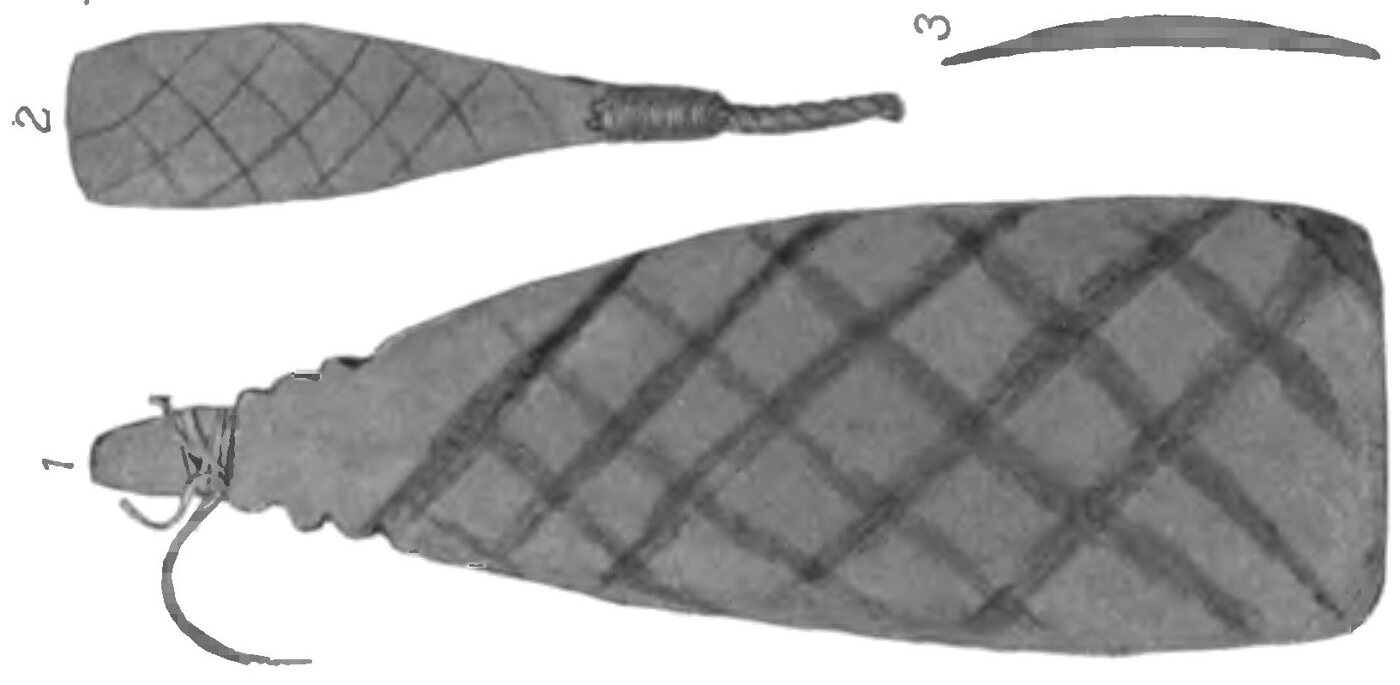
Fetched by the whirring sticks
On the Northwest Coast of America the roarer and the forgetting stand in one ceremonial. In the winter dance of the Koskimo, a Kwakwaka’wakw people of northern Vancouver Island in British Columbia, Canada, men climbed the roofs at midnight to whirl the whirring sticks. Their noise “is supposed to be the voice of Haialilaqas or Wīnā’lag·ilis, who comes to take away another novice”; then a hamats’a is heard shouting in the bush, and his father says the spirit “has taken his son” (Boas 1897, p. 610). Of the hamats’a of the Kwakiutl proper, Franz Boas wrote that when the dancing season is over “he feigns to have forgotten the ordinary ways of man, and has to learn everything anew” (p. 538).
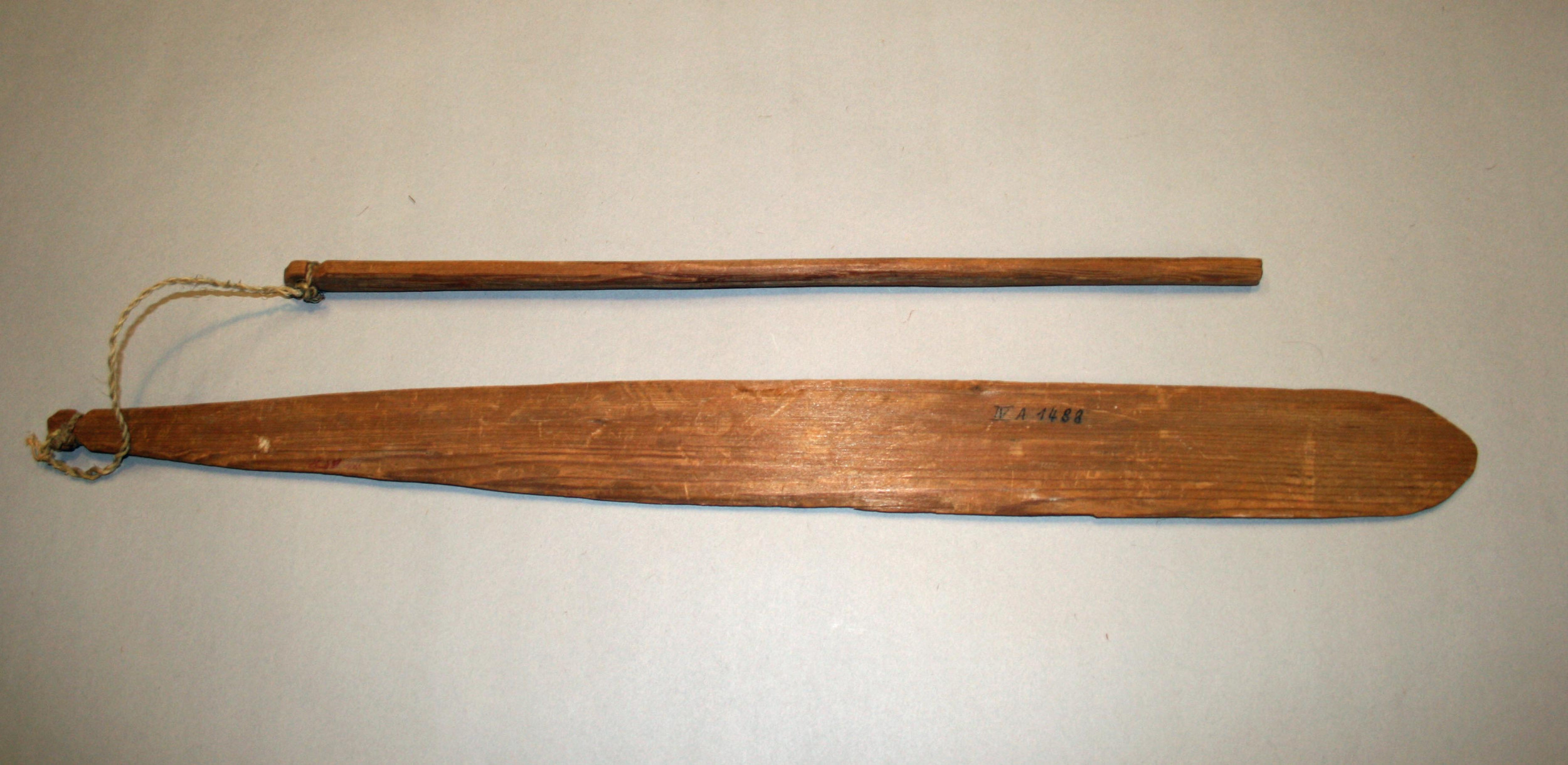
The voice that empties
Set the roarer’s cases side by side and the agent is always the same. Dyoro, who takes the Lobi child’s name, bellows in the dark through the rhombe. Balum, who swallows the Yabim boy, is the bullroarer’s name. The Big Devil who eats the Poro boy speaks through the bullroarer. Twanyirika and Witurna, who kill the Central Australian boy and remake him, are the bullroarer’s voice. The Gayandi, whose whirring deafens the Euahlayi boy, chooses his new name; Tundun comes down while the Kurnai boy sleeps; the Koskimo novice is fetched by the voice of the whirring sticks.
Frazer gathered the same return from four continents in 1913, and most of his cases name no roarer. In the land of Ambamba, in the Lower Congo (today DR Congo and Angola), the man the fetish carried away into the bush came back to life, but “his understanding is gone and the fetish man must teach him and direct him in every motion, like the smallest child” (Bastian, in Frazer, Balder the Beautiful II, p. 256). The reborn of the Ndembo society marched past their own mothers without a flicker of recognition, on pain of “a flogging, a fine, or even death”; they “had forgotten even how to eat their food”, and their guides chewed it for them “like mother birds feeding their callow young” (p. 254). On Ceram, in the Moluccas of Indonesia, sponsors taught the boys “all the common acts of life, as if they were new-born children” (p. 251). In Virginia the young men of the Huskanaw were kept in the woods on an intoxicating root, and any who showed a memory of his former life was put through it again: “Thus they unlive their former lives, and commence men by forgetting that they ever have been boys” (Beverley 1722, in Frazer, pp. 266–267). Where the roarer sounds, the roarer’s voice is what does the taking.
First the rite takes the boy away, by a voice that cannot be seen, and it names what was taken: his name, his speech, his knowledge of the people around him, his place in his own town. Then the men give these back one by one, under a new name. In A New Word for I the novice learns a new way to say who he is; first he is made to forget the old one.
The pretence is the rite
The old reports keep calling the forgetting a pretence. The Kpelle boys “pretend to be strangers”. The Kwakiutl novice “feigns”. With no roarer named, the Belli initiates of Quoja, on the coast of today’s Liberia and Sierra Leone, “pretend to know no one” (Dapper 1686, in Frazer, p. 258), and Mary Kingsley’s West African novices “pretend to have entirely forgotten their life before they entered the wood” (p. 259).
The witnesses are describing the rite exactly. An initiation is a performance: the swallowing is staged, the voice in the bush is staged, and so is the forgetting, imposed, rehearsed and enforced. The enforcement is in the same reports. The Lobi novice who answers to his old name may be killed. The Ndembo initiate who smiles at his sister may be flogged, fined or killed. The Virginian who remembers is drugged a second time. The Finschhafen boys walk with their eyes shut past the weeping women, because to show feeling “was not good form”. A forgetting commanded on pain of death and carried out before the whole village is an institution for removing a person and installing another, and the people who ran it said so.
It worked on the people in it. Of the Arunta doctor’s pierced tongue Spencer and Gillen wrote that “it is not impossible that, in course of time, the man really comes to believe that it was not done by himself” (1899, p. 523). Ilpailurkna told them his own death as plain fact. What the doctor tells of his own making, the women are told of every boy at the bullroarer’s sound. The roarer is how a people empties a child and fills a man. The voice in the dark takes the boy away, and the one who comes back stands blind before the weeping women until a man beats the ground with a palm stalk and cries, “O circumcised, open your eyes.”
Key sources
- Spencer, B. and F. J. Gillen. 1899. The Native Tribes of Central Australia. London: Macmillan. The Arunta doctor and his return “in a condition of insanity”, pp. 523–525; fig. 104, p. 524; fig. 20.
- Spencer, B. and F. J. Gillen. 1904. The Northern Tribes of Central Australia. London: Macmillan. Twanyirika kills and revives the youth, p. 343; Arunta Twanyirika, p. 497; Ilpailurkna, pp. 480–481; Witurna, p. 498; Katajalina and Gnabaia, p. 501.
- Zahn, H. 1911. “Die Jabim.” In R. Neuhauss, Deutsch Neu-Guinea III, 289–394. Berlin: Reimer. The swallowing monster and the blow with the bullroarer, p. 297.
- Schellong, O. 1889. “Das Barlum-Fest der Gegend Finschhafens (Kaiser-Wilhelmsland).” Internationales Archiv für Ethnographie 2: 145–162. The return, pp. 159–161.
- Frazer, J. G. 1913. Balder the Beautiful, vol. II (The Golden Bough, part VII). London: Macmillan. Ch. XI, “The Ritual of Death and Resurrection”, pp. 225–278: Wonghi, p. 227; Koskimo, p. 229 n.; balum, ngosa, kani, p. 242; Marind sosom, pp. 242–243; Ceram, p. 251; Ndembo, p. 254; Ambamba, p. 256; Belli-Paaro, p. 258; Kingsley, p. 259; Virginia, pp. 266–267.
- Parker, K. Langloh. 1905. The Euahlayi Tribe. London: Constable. pp. 73–74.
- Howitt, A. W. 1904. The Native Tribes of South-East Australia. London: Macmillan. The Kurnai Jeraeil, p. 625.
- Haumant, J.-C. 1929. Les Lobi et leur coutume. Paris: Presses Universitaires de France. p. 133 and nn. 2–3 (quoting H. Labouret).
- Schwab, G. 1947. Tribes of the Liberian Hinterland, ed. G. W. Harley. Papers of the Peabody Museum 31. pp. 270, 284, 286.
- Schurtz, H. 1902. Altersklassen und Männerbünde. Berlin: Reimer. Vai and Gola, and the Fulbe Horny, p. 103.
- Boas, F. 1897. “The Social Organization and the Secret Societies of the Kwakiutl Indians.” Report of the U.S. National Museum for 1895, 311–738. archive.org. The hamats’a “feigns to have forgotten”, p. 538; the Koskimo whirring sticks, p. 610.