Atlas Essay — 2026-08-07
Nggwal: The Cult That Crossed Sahul
Nggwal · Manggawila · Djanggawul
In the East Sepik hills of Papua New Guinea, a woman made the first bullroarer and was killed so men could possess its enormous voice. In Arnhem Land on Australia’s northern coast, two ancestral sisters carried ceremonial law until men stole their sacred bags. The highest power of the Ilahita men’s cult was Nggwal; the Arnhem ancestors were the Djanggawul. Between the two traditions lies a drowned continent. Between the two names, almost nothing.
Nggwal and Djanggawul belong to the same historically diffused Sahul bullroarer complex.
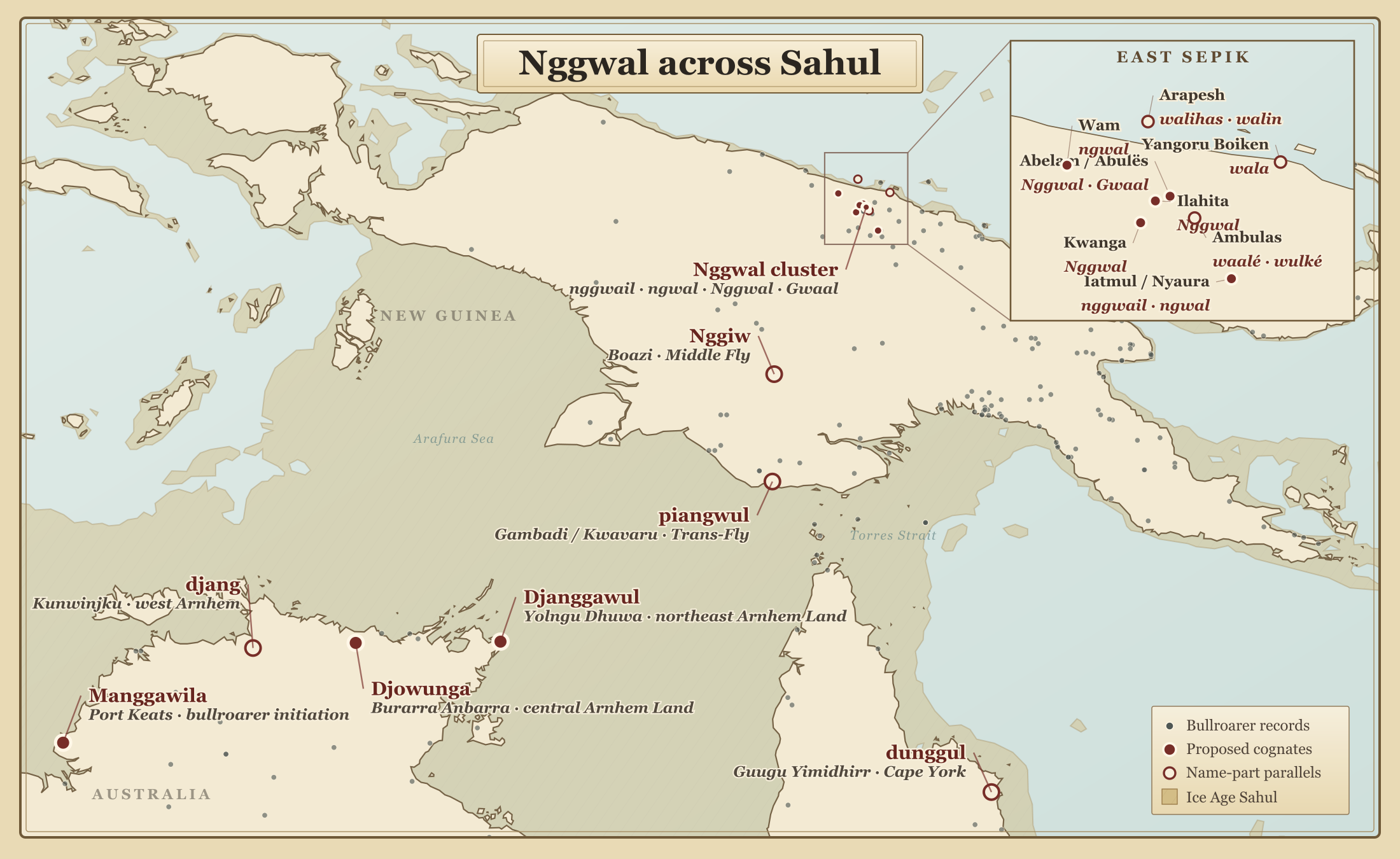
In brief
- Nggwal and Djanggawul belong to the same historically diffused Sahul bullroarer complex.
- In the East Sepik, nggwail, ngwal, Nggwal, Gwaal, and nggwalndu name ancestors, clan spirits, and the highest powers of initiation.
- In northern Australia, Manggawila names a transferred bullroarer initiation; Djanggawul names sea-crossing ancestors who created law, country, language, and clan life.
- Across New Guinea and northern Australia, women discover, make, birth, own, or embody the bullroarer before men take control of it.
- The complex belongs to deep Sahul: bullroarer traditions fill both sides of the former continent, while documented transfers show that rites and sacred names crossed language boundaries together.
The names multiply
Two names anchor the trail: Nggwal in Papua New Guinea and Djanggawul in Australia. Around each stands a local family of sacred names. Between them, more names attach to ancestors, initiation, serpents, women, and the bullroarer itself.
| People and place | Name | What bears the name |
|---|---|---|
| The documented Nggwal family | ||
| Iatmul and Nyaura, Middle Sepik | nggwail; ngwal | Grandparents, grandchildren, clan ancestors, and ancestors simply. |
| Abelam / Abulës, East Sepik | Nggwal; nggwalndu; modern Gwaal | The highest cult grade and the great clan spirits. |
| Kwanga, East Sepik | Nggwal | The highest cult grade. |
| Ilahita Arapesh, East Sepik | Nggwal | A borrowed cult grade, tutelary power, and named clan spirits. |
| Wam, East Sepik | ngwal | A Tambaran initiation grade. |
| The surrounding East Sepik sacred vocabulary | ||
| Plains and Mountain Arapesh | walihas; walin | Great clan and lineage spirits associated with the Tambaran voice. |
| Yangoru Boiken | wala | Ancestral and territorial spirits; men with bullroarers could appear as “the wala.” |
| Ambulas / Abulës | waalé; wulké | Two neighbouring words: a spirit and a bullroarer. |
| The northern Australian cluster | ||
| Murinbata, Port Keats | Manggawila | A senior bullroarer initiation received from the Djamindjung. |
| Port Keats | Wangguwala | The foreign-language title of a woman-serpent’s sea-journey song. |
| Neighbouring Jaminjung / Ngarinyman | wangguwala; wangguwarla | Saltwater or sea. |
| Yolngu Dhuwa clans, northeast Arnhem Land | Djanggawul | Sea-crossing ancestors who create law, country, language, and clan life. |
| Burarra-speaking Anbarra, Arnhem Land | Djowunga | A western Dhuwa transformation led by Old Woman Modj. |
| Name-part parallels | ||
| Kunwinjku and Manilakarr, western Arnhem Land | djang | An ancestral being, its sacred story, and the place where its power remains. |
| Boazi, Middle Fly | Nggiw | The founder of initiation, where the bullroarer is “the voice of the old woman.” |
| Gambadi / Kwavaru, Trans-Fly | piangwul | The lizard who seizes the first bullroarer in one story of its birth from a woman. |
| Guugu Yimidhirr, Cape York | dunggul | The initiation bullroarer; the same word also means “snake.” |
The Sepik family needs no reconstruction: every form is on record. Manggawila and Djanggawul make the strongest Australian comparison. Djanggawul begins with djang; Nggiw, piangwul, and dunggul preserve shorter pieces of the same sound inside the same ritual world.
Nggwal among the ancestors
Iatmul nggwail names a grandfather or grandchild and also a clan ancestor. Among the Nyaura, ngwal means ancestors. Abelam nggwalndu are the great clan beings; their public name is nggwal. The modern Abulës spelling Gwaal preserves the same name.
At Ilahita, Donald Tuzin found Nggwal ruling the men’s cult as its highest grade. It was not an Arapesh word. Abelam and Kwanga used the same name for their highest grade, and Ilahita remembered it as a later power brought from the Middle Sepik. Wam men also had a Tambaran grade called ngwal.
Anthony Forge recorded how ceremonies crossed this small country. Abelam communities sold or leased ritual rights, sacred objects, spells, instructions, performances, and entire complexes. Clan beings shared a small stock of names from village to village. The system allowed “virtually perfect transmission of ritual innovations.”
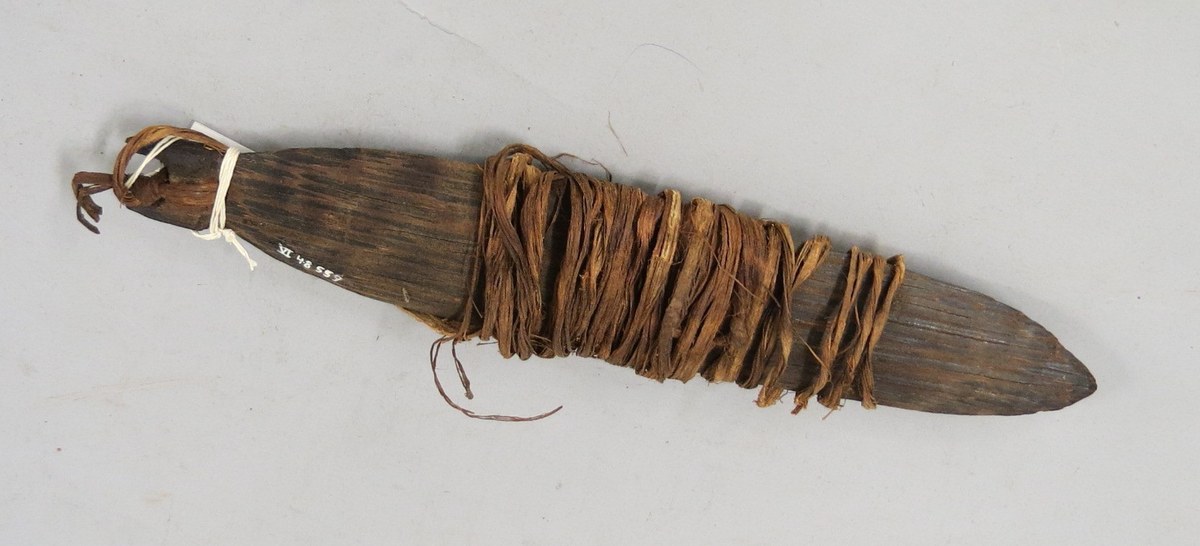
A second ring of sacred vocabulary surrounds Nggwal. The Plains Arapesh have walihas; the Mountain Arapesh have walin; Abelam and Yangoru Boiken have wala. Ambulas has waalé for a spirit and wulké for a bullroarer. Together they make a dense neighbouring field in which spirit names built on w and l, ancestral beings, and the bullroarer continually meet.
“In these ways virtually perfect transmission of ritual innovations can take place.”— Anthony Forge, “The Power of Culture and the Culture of Power,” p. 145
Manggawila and Djanggawul
At Port Keats in northern Australia, Manggawila names a senior bullroarer initiation. Farther east in Arnhem Land, the Djanggawul are sea-crossing ancestors who create wells, country, law, language, ceremony, and clan life. The centres of the names are almost the same: nggawil and nggawul.
The Australian names also grow into local families. Kunwinjku djang is an ancestral being, its story, and the place where its power remains. At Milingimbi, Djanggawul became the elder sister’s personal name; her younger sister was Ganjudingu, and together they were Maijilwara. Farther west, the Burarra-speaking Anbarra remade the Dhuwa complex as Djowunga, led by Old Woman Modj.
Port Keats adds Wangguwala, the principal song of Kukpi, a black-snake woman who travels by sea, makes water, and brings law. The song was said to be in a foreign language and to concern her sea journey. In neighbouring Jaminjung and Ngarinyman speech, wangguwarla or wangguwala means saltwater or sea.
Women made the voice
At Ilahita, the bullroarer was walop, and its drone was the voice of Lefin, a red-bearded dwarf spirit. Nggwal was the highest power behind it. Deep inside the cult stood Mimi’unemb, the woman who made the first bullroarer. She tied wood to a cord and terrified the country with its sound. A man stayed behind to learn the secret. A voice so immense, he decided, should not belong to a woman. He killed her.
The cult called the roar a male spirit’s voice but kept Mimi’unemb alive inside its origin. Men had taken a woman’s invention and made it the sound of male law.
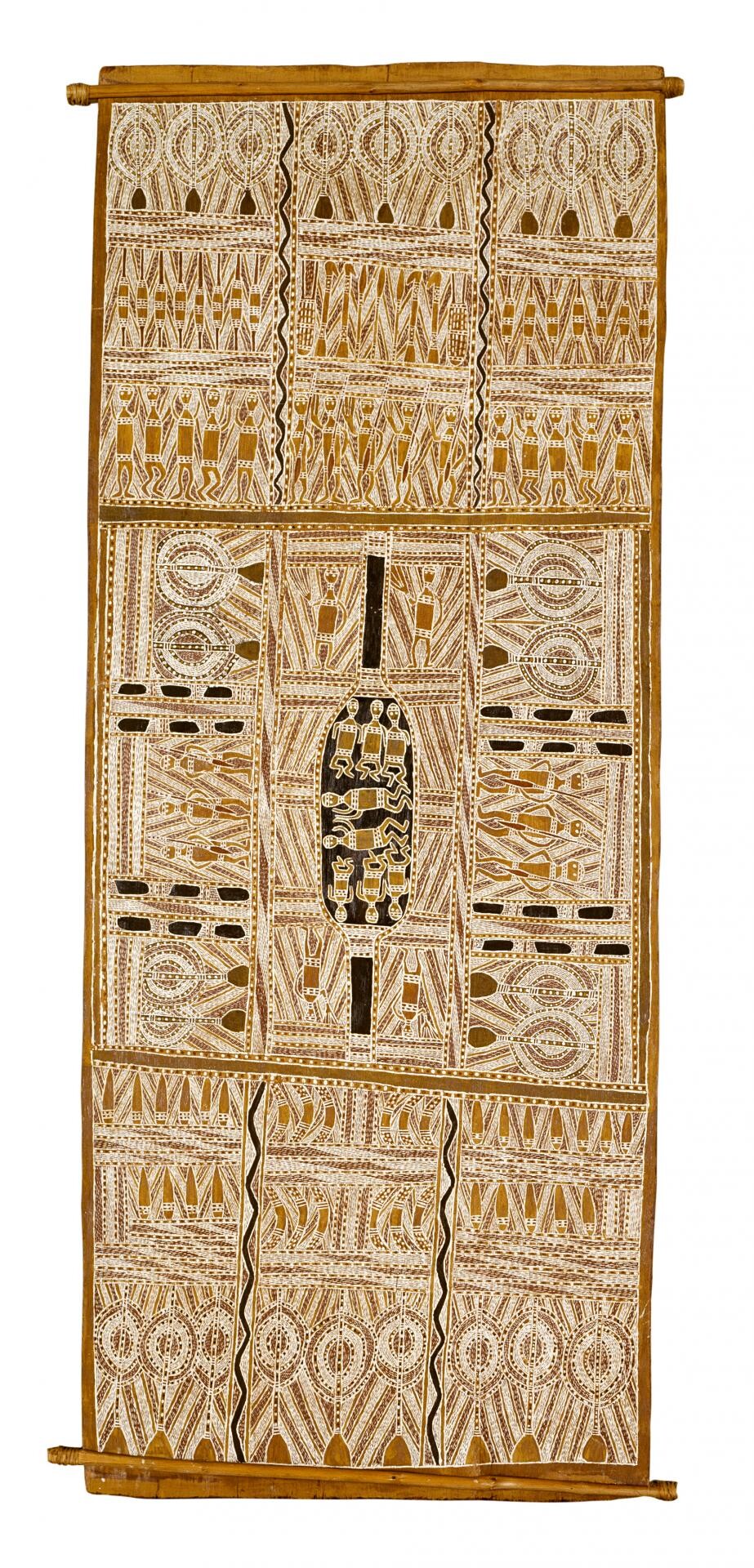
The Djanggawul sisters carry digging sticks, feather ornaments, sacred objects, baskets, and mats from Burralku across the sea. They open wells, shape the coast, name beings and places, give birth to clans and languages, and perform the first ceremony. Men later steal their sacred bags. The sisters answer that the men may keep the objects: the women still possess the knowledge and the power to give life. Berndt preserved their answer in one question: “Haven’t we still our uteri?”
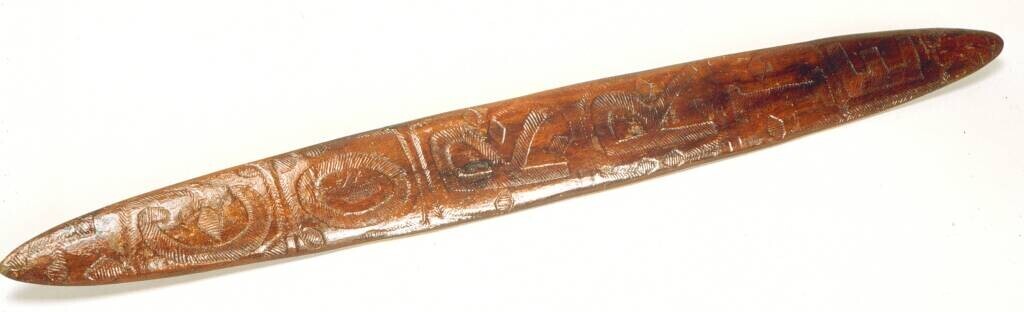
The same structure fills the bullroarer world shown by the grey dots on the map. At the Rai Coast, a deity places the instrument in an old woman’s net-bag. At the Huon Gulf, a woman discovers it and men kill her. In the Middle Fly it speaks as “the voice of the old woman.” In the Trans-Fly it grows inside a woman’s body. Among the Kiwai, a woman discovers it and it becomes the mother and father of yams. K. A. Gourlay counted fourteen New Guinea origin myths: twelve begin with women, and a thirteenth makes the bullroarer a child born from a woman.
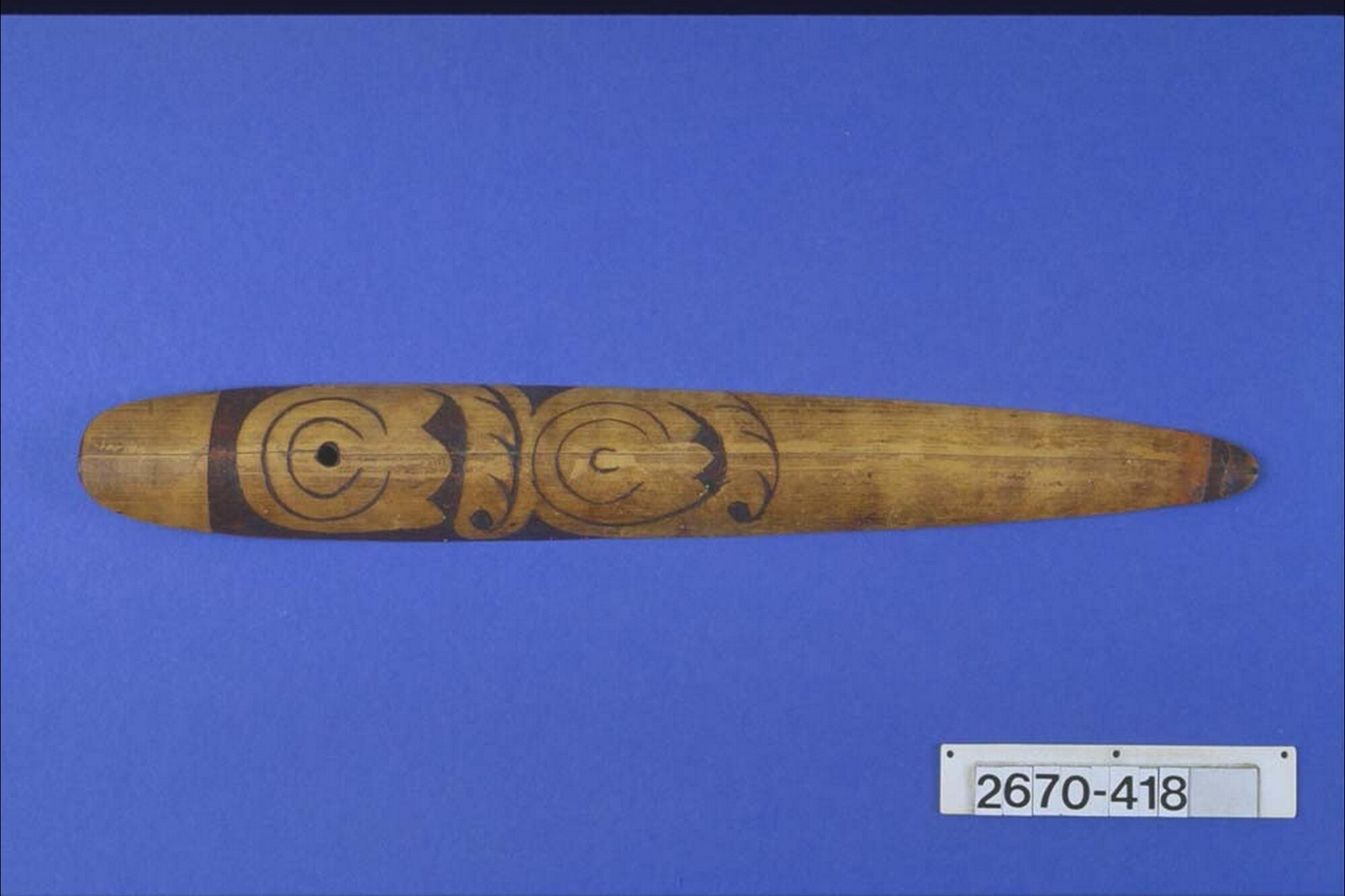
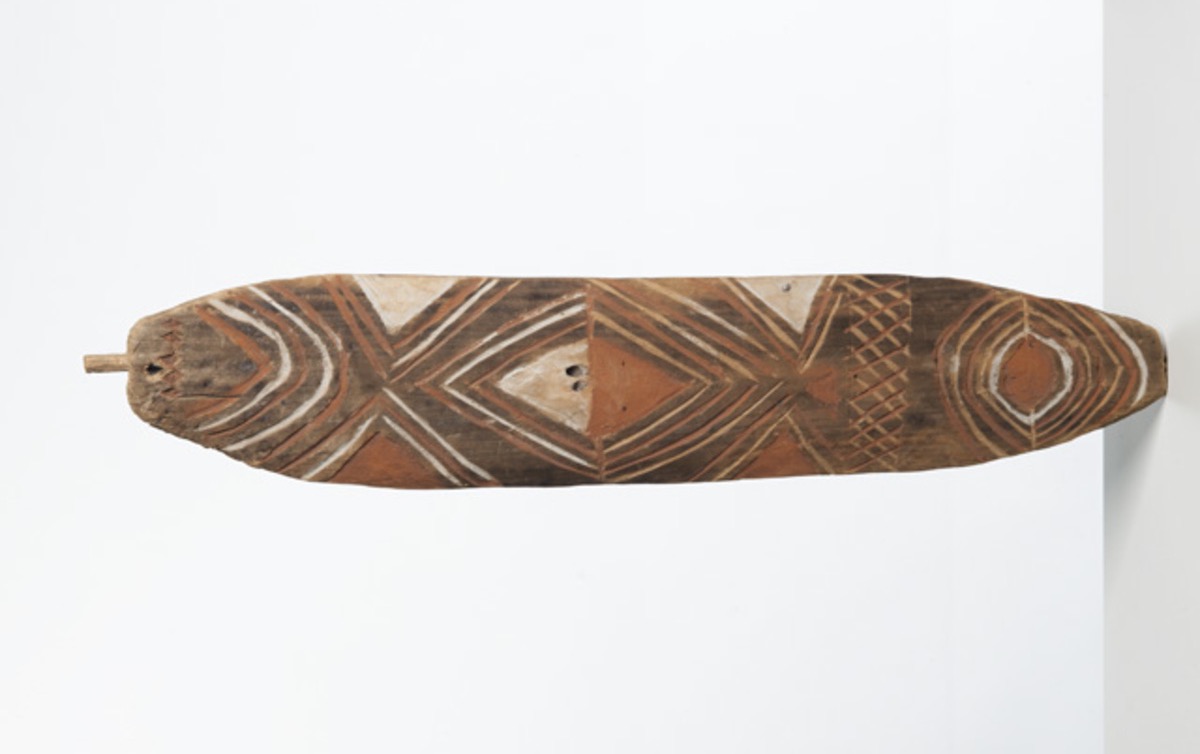
In Arnhem Land, the Wawilak sisters teach men the rites, and the bullroarer becomes the great snake’s body and voice. In Kunapipi, its roar becomes the cry of a murdered Old Woman. At Port Keats, hidden bullroarers sound as “the voice of the Mother.” Across both sides of Sahul, ancestral voice, women’s generative power, serpents, fertility, and male initiation keep returning together.
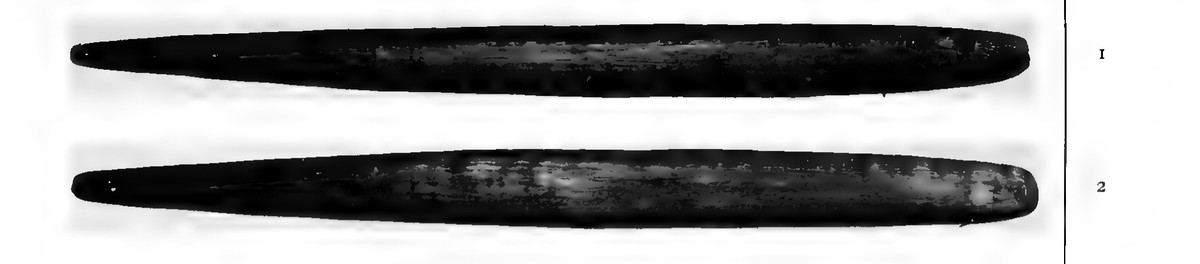
Rites and names travel together
Nggwal crossed from a Middle Sepik language into Ilahita with a new ritual grade. At Port Keats, the Murinbata once swung a spear-thrower on a cord. Their Djamindjung neighbours taught them to use a bullroarer instead. The Murinbata built a new initiation around it, called the rite Manggawila, and made it their senior initiation.
Sosom provides a third example in southern New Guinea. Among the Marind, Sosom is the giant of the bullroarer cult, and the instrument is his voice. Farther east at Masingara, sosom names both the bullroarer and a child-eating monster. At Setavi, the instrument is sosa. Paul Wirz recorded that the Marind ceremony and its bullroarer came from the east, after which Marind country became another centre of transmission.
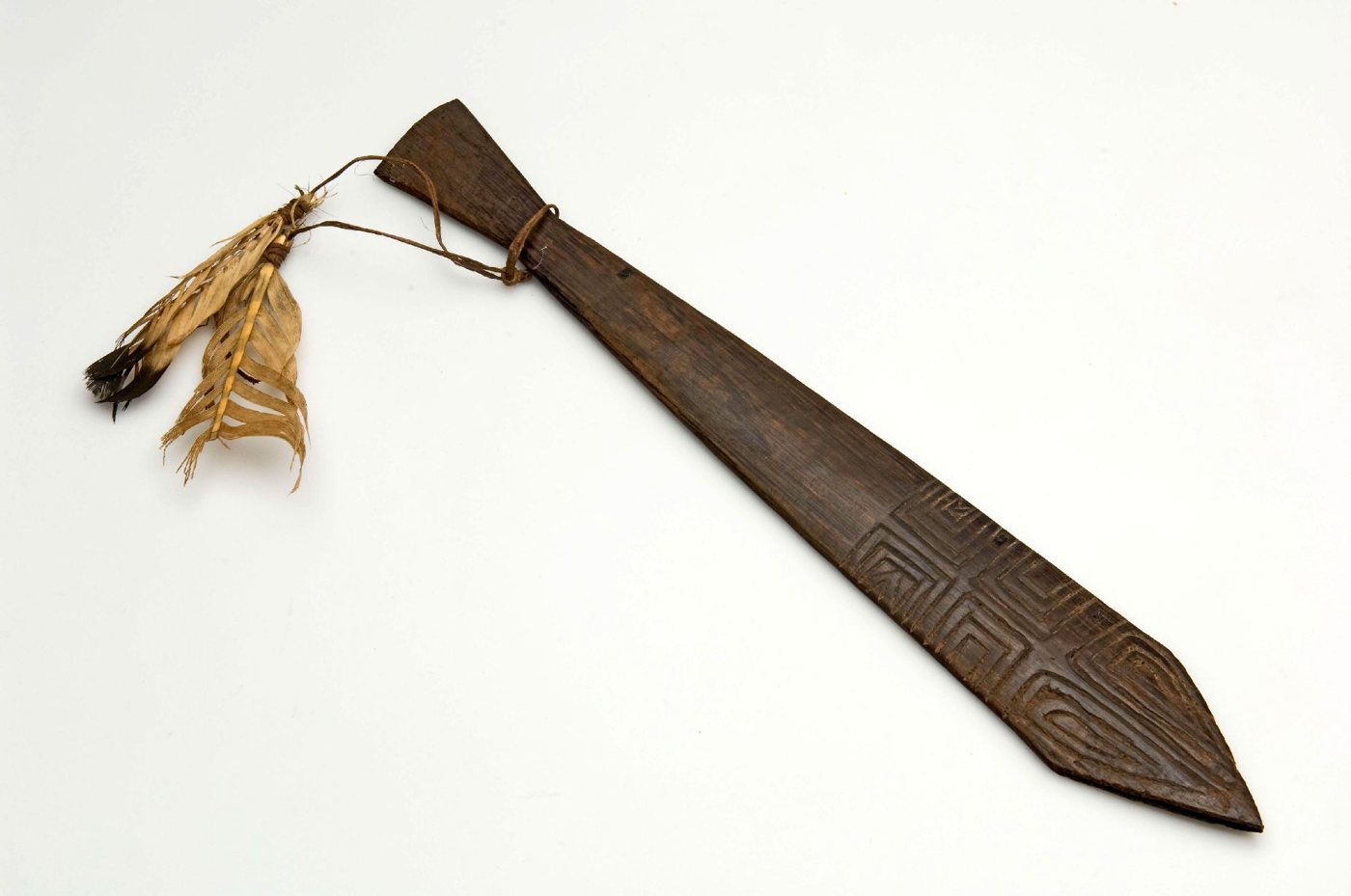
These local transfers establish the mechanism: communities carried whole ceremonies across language boundaries, kept powerful names recognizable, and made the borrowed rites their own.
Sahul before the sea
Today the Arafura Sea separates New Guinea from Australia. At the end of the Ice Age it lay inside one continent. Rivers crossed the exposed plain, and Lake Carpentaria filled part of what is now the Gulf. On the map above, hatching marks the Ice Age extent of Sahul; the country now under water formed its middle.
Alan Williams and his colleagues reconstructed the loss of 2.12 million square kilometres from the Australian part of Sahul. Nearly ninety per cent of that inundation came between about 14,600 and 8,000 years ago. On the northwestern shelf, newer mapping reveals an inland sea, a freshwater lake, gorges, and rich country capable of supporting large populations. Lake Carpentaria and its surrounding savannah occupied another great part of the drowned interior.
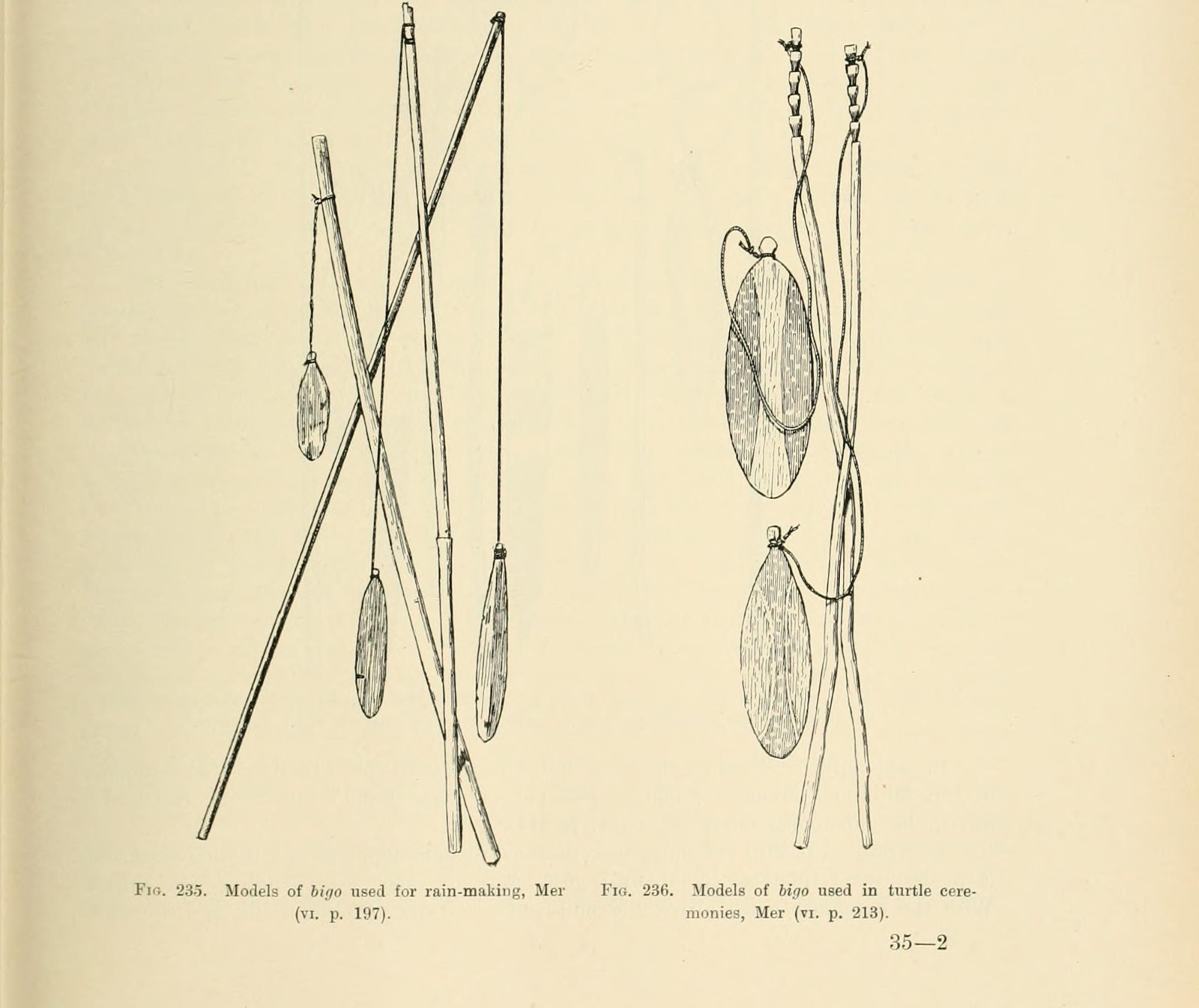
The bullroarer complex was already embedded too deeply and too widely to be the wake of a recent voyage. In 1898 R. H. Mathews called its use at Australian initiation ceremonies universal “throughout the continent.” In the Papuan Gulf, F. E. Williams wrote that sacred bullroarers were believed to date from “the very foundation of things.” Bullroarer records crowd both New Guinea and Australia, rooted in local languages, clan systems, serpent traditions, crop rites, and laws about women and men.
The drowned plains supply the scale of the world in which this complex spread: a peopled continent whose surviving traditions now stand on opposite sides of the Arafura Sea. Torres Strait became a sea passage through what had once been Sahul’s middle.
What diffusion preserved
A travelling cult keeps a structure, not a fixed cast of gods. Across Sahul, five things hold together:
- Shared ancestry: one cult binds many clans, each with its own beings, names, objects, and stories.
- Portable law: names, songs, objects, and ritual rights can be handed over, stolen, sold, or inherited.
- Women first: women create, own, birth, or embody the power before men take control of it.
- Fertility: human birth, yams, water, pigs, land, and clan life flow from the same sacred power.
- The hidden voice: an ancestor’s overwhelming cry is revealed as a bullroarer swung by men.
Local change is part of the pattern. Ilahita made Nggwal the summit of a men’s cult but kept the murdered woman inside its secret origin. Port Keats joined Manggawila to a sea-going woman-serpent and two stone bullroarers. Arnhem Land multiplied the Djanggawul into distinct clan traditions, ceremonies, sisters, serpents, and ancestral places. The complex survived because each community made it local.
Nggwal across Sahul
The names form two dense local constellations. In the Sepik, nggwail, ngwal, Nggwal, Gwaal, and nggwalndu gather around ancestors, clan spirits, and initiation. In northern Australia, the cognates Manggawila, Djanggawul, and Djowunga gather around a transferred bullroarer rite and ancestral law; djang echoes the opening of Djanggawul.
Both families live inside the same unusual sacred machinery. Women create or possess the first power. Men take the object and turn its voice into initiation. The bullroarer becomes an ancestor, a serpent, a mother, a source of fertility, and the sound of ceremonial law. Related names, related meanings, and related rites converge in the same former continent.
Nggwal, Manggawila, and Sosom prove that names could travel with ceremonies and remain recognizable while the cult changed around them. The dense field of bullroarer traditions on the map supplies the continental body; the names reveal one of its old internal connections.
Nggwal and Djanggawul belong to the same historically diffused Sahul bullroarer complex.
Discussed in Andrew Cutler, “Nggwal: The Cult That Crossed Sahul,” Vectors of Mind.
Key sources
Donald Tuzin, Unity in Duality: Social and Ritual Organization of the Ilahita Arapesh (Australian National University dissertation, 1973), especially pp. 279–81; and The Voice of the Tambaran (University of California Press, 1980).
Jim Metzner, Pulse of the Planet: Extraordinary Sounds from the Natural World (1994), pp. 110–12, for Donald Tuzin’s fuller telling of Mimi’unemb’s death.
Anthony Forge, “The Power of Culture and the Culture of Power,” in Style and Meaning: Essays on the Anthropology of Art (2017), pp. 139–52, especially pp. 143–45, for nggwal, nggwalndu, nggwail, walihas, wala, and the trade in ritual complexes.
Christiane Falck, “Calling the Dead: Spirits, Mobile Phones, and the Talk of God in a Sepik Community” (PhD thesis, James Cook University, 2016), p. 117 and n. 103, for Nyaura ngwal as ancestors and the earlier Iatmul usage recorded by Gregory Bateson.
Bryant J. Allen, “The Place of Agricultural Intensification in Sepik Foothills Prehistory,” in Papuan Pasts (2005), p. 618 n. 37, for Wam ngwal.
Margaret Mead, The Mountain Arapesh II: Supernaturalism (1940), especially pp. 392 and 426, for walin and the Mountain Arapesh Tambaran voice; Kundama, Sapayé, and Wilson, Ambulas Dictionary (2006), entries 3078, 3359, and 2273, for waalé, wulké, and puku.
Ronald M. Berndt, Djanggawul: An Aboriginal Religious Cult of North-Eastern Arnhem Land (1952), especially pp. 1, 40–41.
Rirratjingu Aboriginal Corporation, “The Birth of a People”; Queensland Art Gallery | Gallery of Modern Art, “Dhuwarrwarr Marika: Yalangbara”; National Museum of Australia, “The Djang’kawu ancestors” and “Material objects with meaning”; Art Gallery of New South Wales, Mawalan Marika, “Djaŋ’kawu creation story.”
James A. Davidson, “Mathaman: warrior, artist, songman,” Art Bulletin of Victoria 29, for the Wawilak ceremonial inventory and the snake-body, snake-voice bullroarer.
W. E. H. Stanner, On Aboriginal Religion (1959–63; collected 1966), especially pp. 142–47 and 159–60, for Kukpi, Wangguwala, the stone bullroarers, and the transferred Manggawila initiation.
Margaret Clunies Ross, “Two Aboriginal Oral Texts from Arnhem Land,” Oral Tradition 1/2 (1986), pp. 446, 450–51, for Anbarra Djowunga and Old Woman Modj.
Tristen Jones and Daryl Wesley, “Towards Multiple Ontologies: Creating Rock Art Narratives in Arnhem Land,” Hunter Gatherer Research 2/3 (2016), pp. 282–83, for Alfred Nayingull’s explanation of Kunwinjku djang and the Manilakarr account of people becoming djang.
Walter E. Roth, North Queensland Ethnography Bulletin 12 (1909), p. 175, for Guugu Yimidhirr dunggul, both bullroarer and snake.
K. A. Gourlay, Sound-Producing Instruments in Traditional Society, New Guinea Research Bulletin 60 (1975), especially p. 26 and p. 79 with footnote 1.
F. E. Williams, Papuans of the Trans-Fly (1936), especially the introduction, pp. xxviii–xxix; Setavi in Semariji country, p. 59; the Keraki instruments, pp. 181–86; and the Gambadi and Keraki birth traditions, pp. 307–08.
Jan van Baal, “The Cult of the Bull-Roarer in Australia and Southern New Guinea,” Bijdragen tot de Taal-, Land- en Volkenkunde 119 (1963), pp. 201–14; and Dema (1966).
Paul Wirz, Die Marind-anim von Holländisch-Süd-Neu-Guinea (1922), part II, pp. 25 and 86.
Duncan Wright, Gina Repu, and Lara Passi, “The Waiat Archaeology Project in Torres Strait, northern Australia” (2021).
Anna-Sapfo Malaspinas et al., “A genomic history of Aboriginal Australia,” Nature 538 (2016), pp. 207–14.
Alan N. Williams, Sean Ulm, Tom Sapienza, Stephen Lewis, and Chris S. M. Turney, “Sea-level change and demography during the Last Glacial Termination and early Holocene across the Australian continent,” Quaternary Science Reviews 182 (2018), pp. 144–54.
Kasia Norman et al., “Sea level rise drowned a vast habitable area of north-western Australia driving long-term cultural change,” Quaternary Science Reviews 324 (2024), article 108418.
Todd Torgersen et al., “Late Quaternary environments of the Carpentaria Basin, Australia,” Palaeogeography, Palaeoclimatology, Palaeoecology 67 (1988), pp. 245–61.
R. H. Mathews, “Bullroarers Used by the Australian Aborigines,” Journal of the Anthropological Institute of Great Britain and Ireland 27 (1898), p. 54, for the instrument’s initiation use “throughout the continent.”
F. E. Williams, Drama of Orokolo (1940), p. 159, for Papuan Gulf bullroarers believed to date from “the very foundation of things.”