No. AUSIN-003
McIvor River Koko-yimidir dunggul
Australia · Cape York Peninsula · Queensland
Restricted
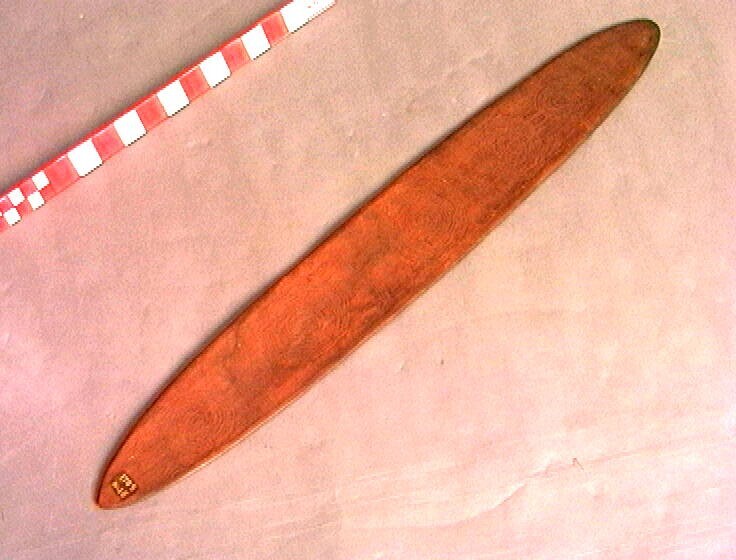
dunggul
dunggul: in Koko-yimidir the same word means snake.
In Walter Roth's account of the Koko-yimidir initiation he witnessed in June 1899 on the southern bank of the McIvor River, the painted novices are told to lie down and feign sleep, then each is suddenly "awakened" by a sharp pinch on the arm and told he has been snake-bitten. As the boy starts crying, his old mentor kills the imaginary snake by whirling a small variety of bull-roarer through the air in various directions, an action believed to prevent the bite from proving fatal. The instrument is then handed to the novice, who thereby gains the power to kill not only snakes but people by its agency. It is called dunggul, a word that also means snake. Two or three days later the snake dance ended with the boys being shown a huge representation of a carpet snake fixed on a tree, and Roth records that the women went through no ceremonial.
Particulars
- Object
- Small bullroarer used in initiation snake episode
- Function
- Bullroarer is handed to novice after ritual snake episode; term also glossed as snake
Source
Roth North Queensland Ethnography Bulletin 12; McIvor River section