No. MINE2026-050
Gunwinggu gubar
Australia · Western Arnhem Land stone country, Liverpool River to Oenpelli (Gunbalanya), Northern Territory
Function not recorded
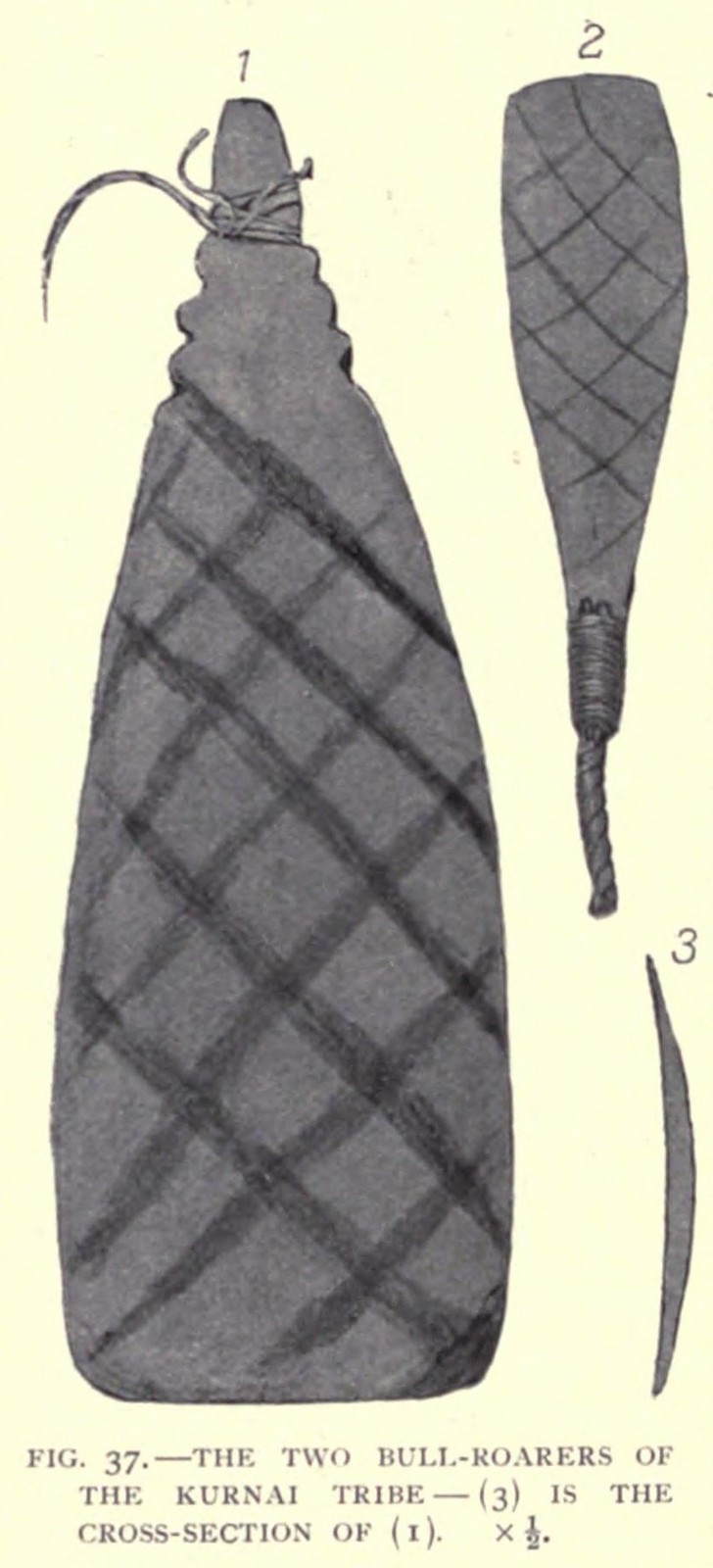
gubar; djabuluruwa
Source term: BULLROARER: gubar; djabuluruwa
Gunwinggu speakers had two names for the bullroarer: gubar and djabuluruwa. Theirs is the language of the western Arnhem Land stone country, from the Liverpool River to Oenpelli, whose rock shelters hold some of the richest painted galleries on earth. On the coasts to the north, the neighbouring languages called the instrument uwar or wubar.
Particulars
- Object
- A bullroarer, called gubar or djabuluruwa.
- Function
- Not recorded.
Source
Arthur Capell, A Vocabulary of 600 Words in Forty North Australian Languages (Sydney, 1956), typescript, State Library of New South Wales, A 6929, p. 18