Atlas Essay —
They Killed the Monster and Kept Its Voice
New South Wales · Central Australia · Arnhem Land · the Gulf of Papua · the north-west Amazon · Greece
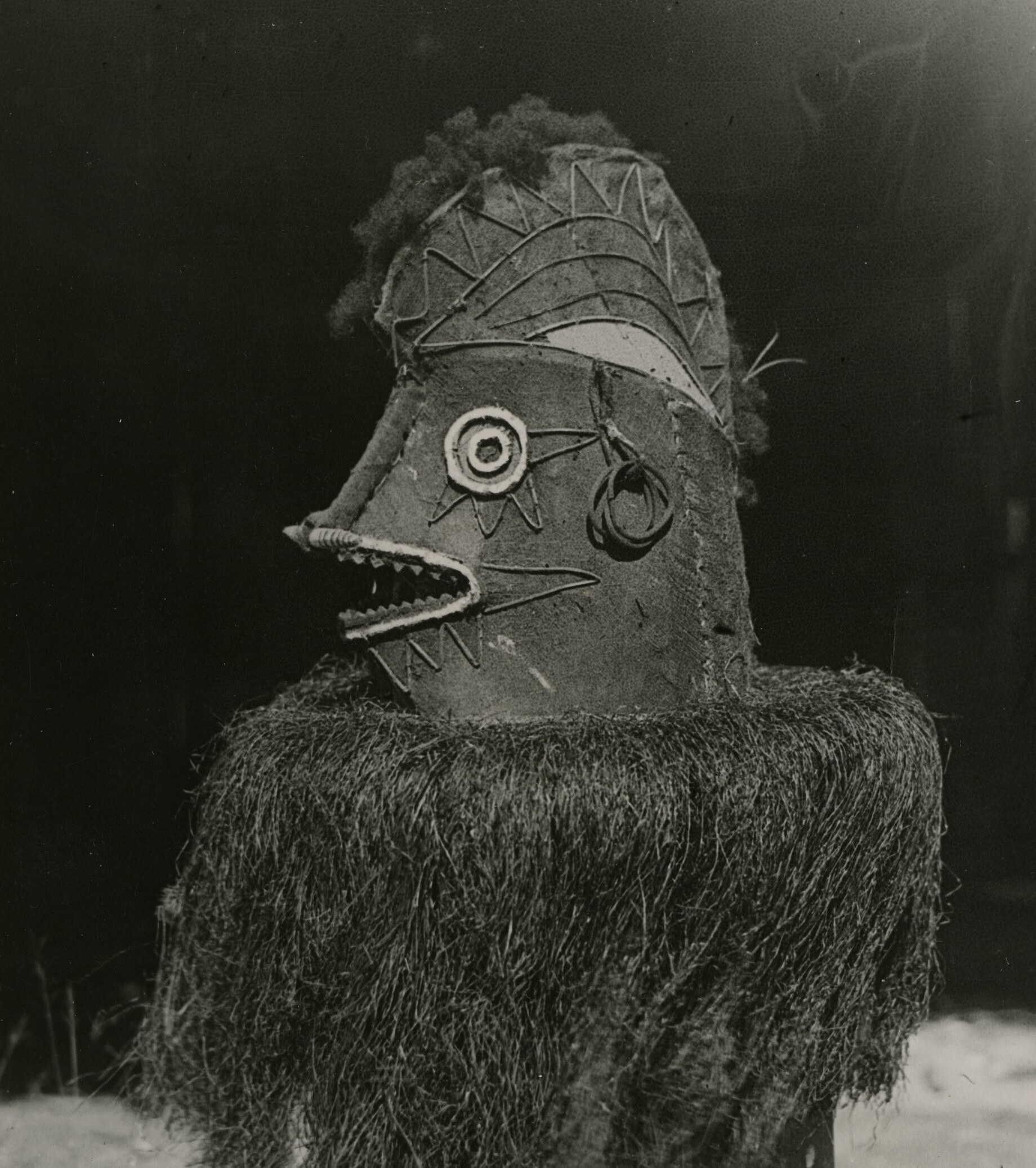
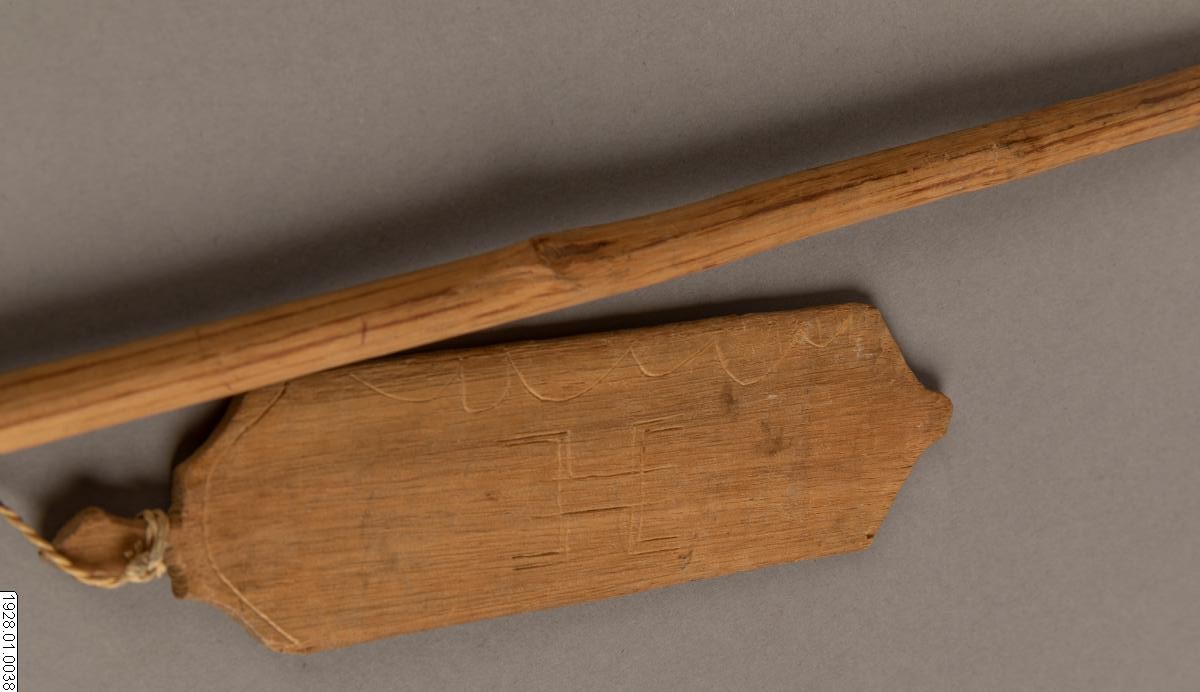
Dhuramoolan was meant to make men of the boys. Among the Wiradjuri of New South Wales, the boys were handed to him in the bush, and he brought fewer back each time. Questioned by Baiame, the All-Father, the survivors said he had eaten the others. Baiame destroyed him, but kept his voice: he put it into every tree of the forest, split one, and swung the first bullroarer, which roared with Dhuramoolan’s voice. From then on men initiated the boys themselves, inside that sound. A story built the same way is told in Arnhem Land, in Australia’s Northern Territory, on the Gulf of Papua in Papua New Guinea, and in the forests of the north-west Amazon. Each time the devourer dies, and each time the sacred instrument comes out of his body.
The monster that killed the boys was killed in its turn, and the bullroarer’s voice comes out of its body. Across Australia, New Guinea and the Amazon, the instrument that makes boys into men is made from the being that used to eat them.
In brief
- The Wiradjuri of the Macquarie River in New South Wales say Baiame destroyed the boy-eater Dhuramoolan “but put his voice into all the trees of the forest”; the first bullroarer “had Dhuramoolan’s voice,” and the large roarer was still called dhuramoolan (Mathews 1896, pp. 297–298).
- Their Euahlayi neighbours of northern New South Wales say Byamee’s first initiator “began to eat the boys’ faces”; he became the devil Nahgul, whom the doctors still hunt down: they “kill him, drink his blood, and eat him.” The wooden roarer kept his first name, Gayandi (Parker 1905, pp. 67, 137–138).
- The Mara of the Gulf of Carpentaria, in the Northern Territory, say Eaglehawk killed the man-eating Mother Mumuna, and “her blood splashed on to every tree, and it was that blood that contained the sound”; swung, the first roarer “turned into a mumuna” (Berndt 1951, pp. 151–152).
- The Western Arrarnta of Hermannsburg in Central Australia name their bullroarer for Tuanjiraka, who beheads the novices and revives them; in their Loritja neighbours’ telling of the same being, the boy he revived spears him to death (Strehlow 1907, p. 102; 1908, pp. 48–49).
- The Elema of the Gulf of Papua say the monster Oa Birukapu snapped up the little boys until he was shot through the navel; in his entrails the women “found inside them the bull-roarer,” and the men’s spells still say “I am splitting open Oa Birukapu’s belly” (Williams 1940, pp. 177–179, 205).
- In the Vaupés, on the border of Colombia and Brazil, the anaconda Pohe-pinõ vomits the bones of the boys he ate, “the first musical instruments,” and is burned; the palm of the sacred flutes grows where he burned. Kuwai and Milomaki burn the same way (Bidou 1983, p. 38; Wright 1993, p. 11; Koch-Grünberg 1921, p. 386).

Baiame splits a tree
R. H. Mathews heard the story in 1893, at the great Burbung held on Bulgeraga Creek, a branch of the Macquarie River in central New South Wales, where Wiradjuri people from the Macquarie, the Castlereagh, the Bogan and the Barwon had gathered to make young men. His informant was an old man, a doctor, and he told it from the beginning: a giant “something between a blackfellow and a spirit,” whose voice “resembled the rumbling of distant thunder,” took the boys away to be initiated and always brought some fewer back.
On Baiamai compelling them to speak the truth, they told him that Dhuramoolan had feasted on their fellows. … At this part of the performance he sometimes bit the entire face off the boy and devoured him. Upon hearing this Baiamai became very angry and destroyed Dhuramoolan, but put his voice into all the trees of the forest and told it to remain in these trees for ever. He then split one of the trees, and made a bull-roarer (mudthega) which he fastened to a string and swung round, and it had Dhuramoolan’s voice. It could be made out of any tree, because the voice of Dhuramoolan had been put into them all. Baiamai then told his chief men that for the future they must themselves initiate the youths of the tribes, using the mudthega … to represent the voice of Dhuramoolan to which they had all been accustomed.
R. H. Mathews, “The Bûrbûng of the Wiradthuri Tribes” (1896), pp. 297–298
Nothing of the eater is wasted. His body is destroyed, his voice is moved into wood, and his office passes to the men. The instrument even keeps his name. The large bullroarer of the Burbung, Mathews adds on the same page, “is known by the several names of mudthega, booboo, and dhuramoolan,” and the small one swung beside it carries the name of his wife, Moonibear. When the women heard the roar from the bush they heard Dhuramoolan, and they were right: it was his voice, kept alive in a split tree after his death. Initiates Used To Die follows the boys he ate; Dionysus in Australia follows the cover story told to the women, which matches the Greek Zagreus step for step.
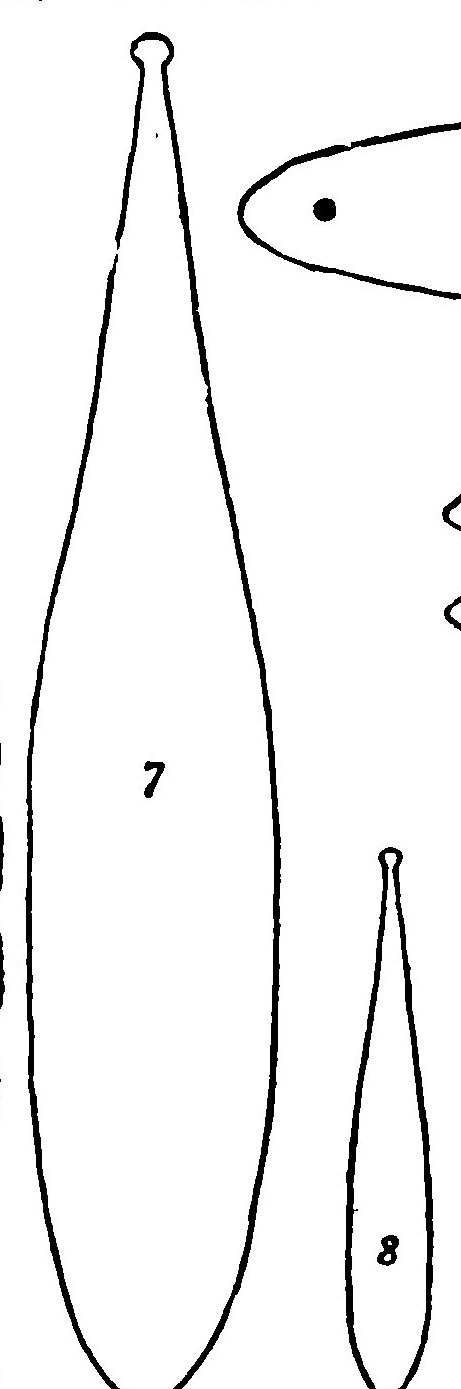
North of the Wiradjuri, the Euahlayi of the Narran River, in northern New South Wales, tell the same founding with the same monster. Catherine Langloh Parker wrote it down: Byamee wanted the Boorah spirit to have “a form as well as a voice,” and to knock out the novice’s front tooth.
He made a stone figure in the image of man, having a voice. This spirit, known variously as Gayandi, or Darramulun, went to the Boorah, but when he was to knock out the front tooth, he began to eat the boys’ faces. He was too strong; he would not do to preside over Boorahs. Byamee transformed him into a large piggiebillah-like animal, though instead of being covered with spines, thick hair grew over him; he has since been known as Nahgul.
K. Langloh Parker, The Euahlayi Tribe (1905), p. 67
Byamee then tried a stone blade, too heavy to roar, and at last heard a chip whiz from his axe as he chopped a coolabah: “‘That is what I want,’ he said, ‘I’ll make a Gayandi of wood.’” The face-eater was Gayandi; the wooden roarer is Gayandi. The name passed from the one to the other at the moment the eater was put out of office, exactly as Dhuramoolan’s passed to the mudthega. (The failed stone blade is the subject of The First One Didn’t Work.)
And the Euahlayi kept killing him. Seventy pages on, Parker describes Nahgul as he is now, still prowling the ceremonial grounds with the sacred object of the rite inside his body:
Nahgul is the rejected Gayandi, who was found by Byamee too destructive to act as president of the Boorahs. He principally haunts Boorah grounds. He still has a Boorah gubberrah, a sacred stone, inside him, hence his strength. He sets string traps for men, touching which they feel ill, and suddenly drop down never to rise again. The wirreenuns know then that Nahgul is about. They find out where he is. Circling, at a good distance, the spot he is on, they corroboree round it. Hearing them, Nahgul comes out. They close in and seize him, kill him, drink his blood, and eat him; by so doing gaining immense additional strength.
Parker, The Euahlayi Tribe (1905), pp. 137–138
The eater of boys is eaten by the doctors, and what they take from him is strength. The sacred stone of the Boorah is inside him, and that detail recurs on the far side of the Torres Strait. The Euahlayi Gayandi is the instrument of a rite that began with a monster, and the monster has been dying ever since.
Her blood in every tree
Two thousand kilometres to the north-west, in the Roper River country on the Gulf of Carpentaria, in the Northern Territory, the Mara told Ronald Berndt how the Kunapipi began. The great Mother of the cult, Mumuna, lit smoky fires to draw men to her camp, fed them, and gave them her daughters for the night. While they slept she crushed them with boulders, cooked them and ate them, and vomited their bones onto an ant-bed to see whether they would rise. They did not come back whole: “They didn’t come out like we do,” the tellers said, “they came out half and half” (Berndt, “Gadjeri,” p. 3250). Then a man came who slept lightly.
‘We’ll kill this ‘old’ Woman’, shouted Eaglehawk; and he killed her, while the Mungamunga (her beautiful daughters) ran away.
As Mumuna died, she called out brr! and that sound went into every tree; her blood splashed on to every tree, and it was that blood that contained the sound.
Afterwards, in memory of Mumuna, the Eaglehawk cut down a big tree, and from its wood he made a bullroarer which is the Mumuna (or Mumunga). He tried to get the sound of the dying woman. As he swung it, it ‘turned into a mumuna’; and its sound was the sound contained in the wood of the tree, which had in it the Mumuna’s blood.
Ronald M. Berndt, Kunapipi (1951), pp. 151–152, as quoted by Chris Knight (1987), p. 306
Here the transfer is bodily. Dhuramoolan’s voice was put into the trees by Baiame’s word; Mumuna’s cry rides into them on her own blood. Berndt put it plainly: “The Mumuna dies and sends her last cry, with her blood, to every tree. The sound of the swinging bullroarer is that cry” (1951, p. 156). When Eaglehawk swung the first blade it did not imitate her; it turned into her. Afterwards he and his companions smeared themselves, and when Kunapipi novices are painted, the men say of them, “they are smeared with the inside liquids of Mumuna’s womb!” (p. 160). The instrument carries her name to this day: mumuna is the public name for the Kunapipi bullroarer from the Roper to Oenpelli in western Arnhem Land, and on the Roper in 1912 Baldwin Spencer heard that the roar of “the bull-roarer or kunapippi” was the voice of a spirit called Mumanna, “who takes the boy away” (Spencer 1914, p. 176).
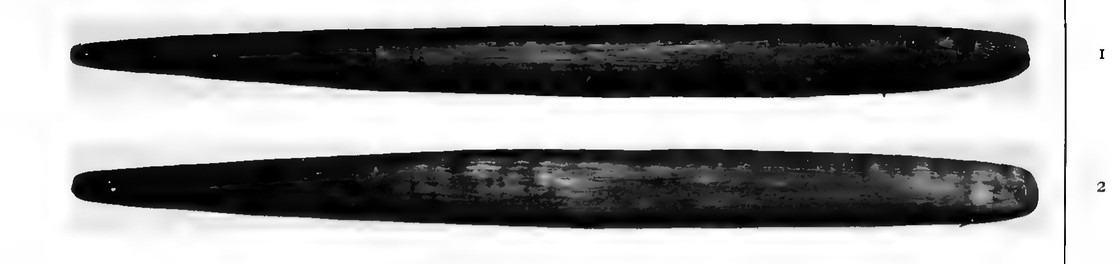
So the Mara bullroarer is twice the eater’s: cut from wood that holds her blood, and called by her name. The boys who hear it are swallowed by Mumuna as the rite says, but by a Mumuna who is already dead and whose voice is now in the men’s hands. The Dalabon to the north-west tell a gentler version, in which the swallower is not killed but replaced: a father and son stop feeding her men and put bullroarers in her place, and a night bird catches her voice by swinging one (the Dalabon Lumaluma). The swallower goes; the instrument takes her place and her voice. The Mother of All follows Mumuna as the primordial Mother of the north; here she is the eater who became the instrument.
The boy spears the Maiutu
In Central Australia the killer is small. At the Hermannsburg mission on the Finke River, Carl Strehlow heard from the Western Arrarnta, the western Aranda, of the Tuanjiraka, little men from the north-east who cut off their right legs and carried them over their shoulders, and one of whom wound living snakes around his head, neck, arms and body. The women and children were told what such a being did with their boys.
When a boy is to be circumcised, he is brought to Tuanjiraka. Tuanjiraka says to the boy: Look up at the stars. When the boy looks up, Tuanjiraka strikes his head off with the lizard tail, so that it rolls far across the ground. At noon the next day, when the boy’s body is full of maggots and stinking, Tuanjiraka puts the head back on, and the boy comes alive again … When the women or children hear Tuanjiraka’s voice [the sound made by the bullroarer], they run away in fright.
Tuanjiraka has a wife named Melbata and many children, who are called nankara [nankara is also the name of the large bullroarer]. After circumcision such a bullroarer is shown to the novice with the words: This tjurunga you shall call Tuanjiraka.
Carl Strehlow, Die Aranda- und Loritja-Stämme, part I (1907), p. 102, translated from the German (“Diese tjurunga sollst du Tuanjiraka nennen”)
The roar is his voice, the great board bears his children’s name, and at the moment of revelation the board is given his own name. Strehlow’s Loritja informants, the desert people west of Hermannsburg, told the same tale of beings they called Maiutu, and Strehlow wrote the equation into his text: “Maiutu (= (A) Tuanjiraka)”, the A standing for Aranda. Their Maiutu are the same one-legged little men wound with snakes, and they behead the boy in the same way, with the same lizard tail, after the same command to look up at the stars. Then the Loritja telling goes on where the Aranda one stops.
The boy, alive again, goes off and cuts a reed stalk, into which he sticks a sharp spinifex stem; with this spear the boy spears the Maiutu, who, mortally wounded, cries out: “Alas, my young man is spearing me to death!” When this Maiutu has died, the novice carries him into a rock cave and covers him with stones.
Strehlow, Die Aranda- und Loritja-Stämme, part II (1908), p. 49, translated from the German
Here the killing is done by the initiate himself. The being who cut off his head dies on the boy’s spear, and is buried under stones; Strehlow’s editor noted that the Maiutu’s dying cry is drawn from the secret language of the novices. Put the two tellings of one being side by side and the Central Australian sequence is the Wiradjuri one again: the boy-killer dies, his voice is the roar, and the board the young man is handed bears the killer’s name.
Found in his belly
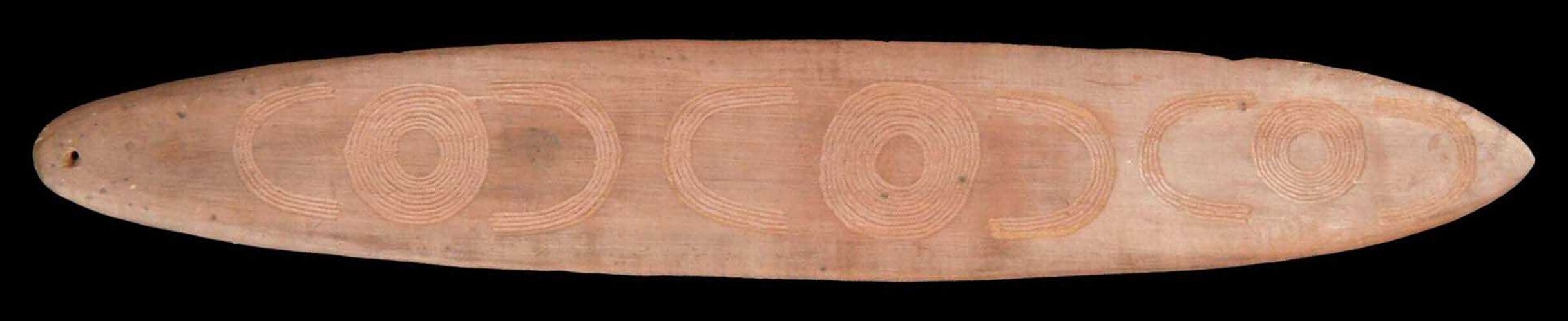
Across the Torres Strait, the Elema of the Gulf of Papua kept their bullroarers in the great men’s houses of the coast, the eravo, and the women were told the roar was the cry of monsters that came to be fed. F. E. Williams, the government anthropologist, spent years at Orokolo in the 1930s, and the tale he heard told most often was told “to explain the origin of the thing that was found” in a monster’s entrails. Oa Birukapu was a giant from the east who lay hidden near the village of his daughter, Aviara.
But from time to time one or other of the little boys, to the consternation of the village, disappears. Aviara alone knows the cause of their disappearance; they are snapped up by Oa Birukapu in his hiding-place. … and when next the little boy passes by, Oa Birukapu, not hearing the warning sound, snaps him up and devours him. It is only when his teeth close on the rattle itself that he realizes that he is eating his grandson.
F. E. Williams, Drama of Orokolo (1940), p. 177
Men were brought from the west to kill him. They found the one place a weapon would enter: “Advancing upon him they stoop down and shoot him from beneath, transfixing him in his one vulnerable spot—the navel. Oa Birukapu rolls over on his back and dies” (p. 178). The visitors, from the Purari delta further west along the Papuan Gulf, feasted on his body and gave his entrails to their women.
It is these entrails which contain what is in some connexions the raison d’être of the story … For the western women took the entrails home with them to the Upper Purari, washed them, cut them up, and found inside them the bull-roarer. It was in this way (according to the present myth) that the women first became acquainted with this secret object which they used thenceforward to hoax the men until the latter seized it from them and reversed the position.
Williams, Drama of Orokolo (1940), p. 179
Some of Williams’s informants said the hevehe and kovave masks were in the entrails too, and Douglas Newton later gave the tale in that fuller form (1961, p. 26). Williams himself thought that Oa Birukapu might stand for the men’s house and his swallowing of the children for their initiation (p. 181). The Elema did not leave the killing in the past. When the keepers of a men’s house worked the magic of their bullroarers, the secret words were: “I am splitting open Oa Birukapu’s belly” (p. 205). Another spell ran: “I am about to drag out Birukapu’s entrails” (p. 208).
“I am splitting open Oa Birukapu’s belly.”An Elema bullroarer spell, in Williams, Drama of Orokolo (1940), p. 205
The missionary J. H. Holmes, who worked on the same coast before Williams, wrote the story down with the eater called Oalea, and it is plainer still. Oalea, a giant and a cannibal, came to a woman, Aviaru, who was cooking for her child: “Having eaten the food, Oalea’s hunger was not appeased, so he seized the child and ate him” (p. 189). Two brothers who went against him were struck in the ankles, and “though the wounds were small they both died instantly, and Oalea pulled them in pieces and ate them” (pp. 189–190). Then Oripeu came for her sons, a woman “of great power over gods and men,” and her presence awed him. The end of him is the beginning of the cult.
He then took out his stomach and intestines, gave them to her and immediately expired. Oripeu found inside the stomach Aviaru’s child, a native bag, an arm-shell and a tiparu, bull-roarer, the first of its kind and supposed to have been the secret of Oalea’s supernatural power.
J. H. Holmes, In Primitive New Guinea (1924), p. 190
The eaten child and the bullroarer come out of the same stomach. Nahgul carries the Boorah’s sacred stone in his belly; Oalea carries the first tiparu in his. In both, the eater’s power was the instrument all along, and his death delivers it to the people he ate. What follows, in Holmes as in Williams, is a struggle over who will hold it. The women danced with the tiparu in masks, until the men saw through the disguise and took it from them, and Oripeu “put a taboo on it that no woman should ever use it again” (p. 191). The Orokolo bullroarer is a man-eater’s secret, cut out of him.
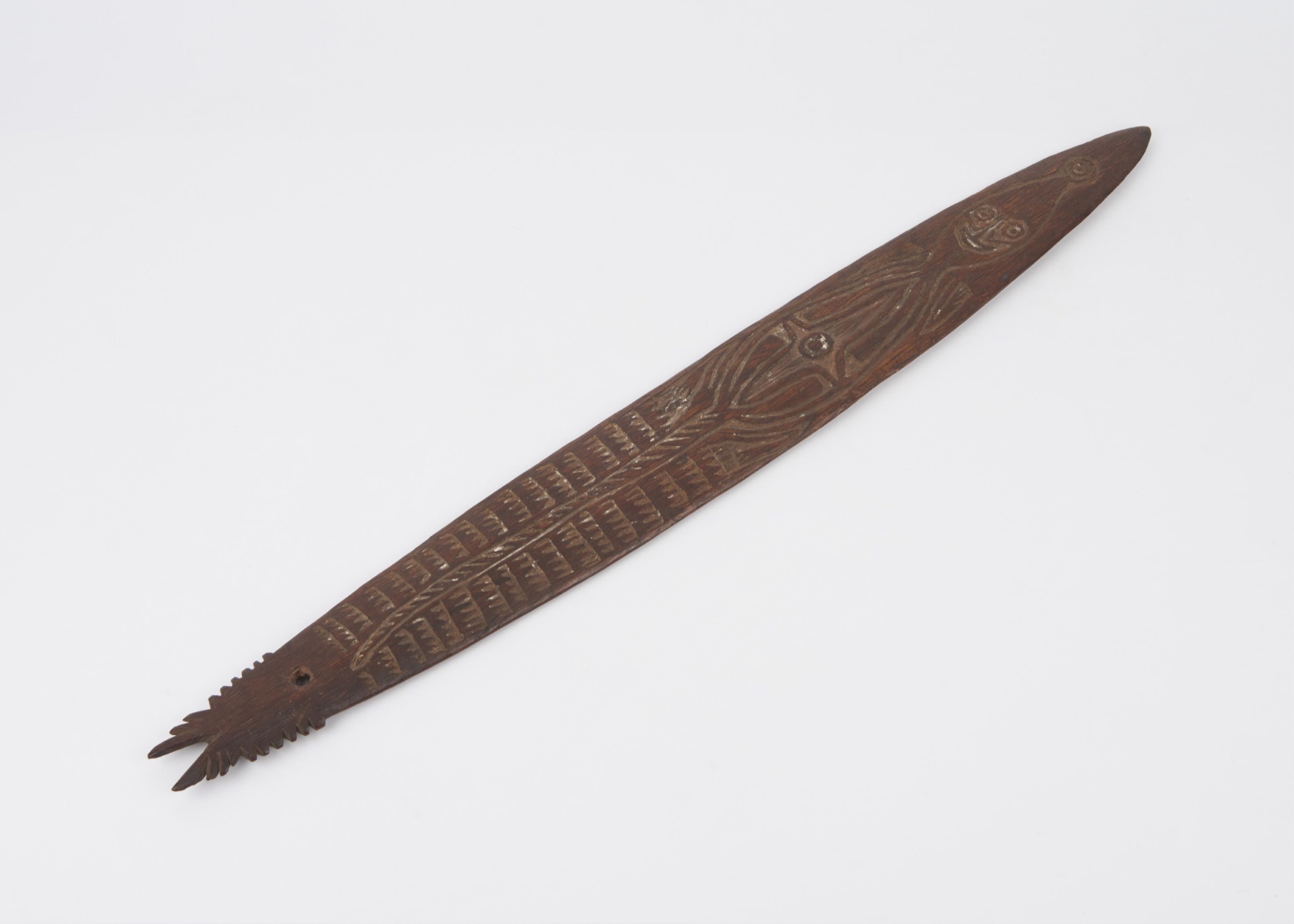
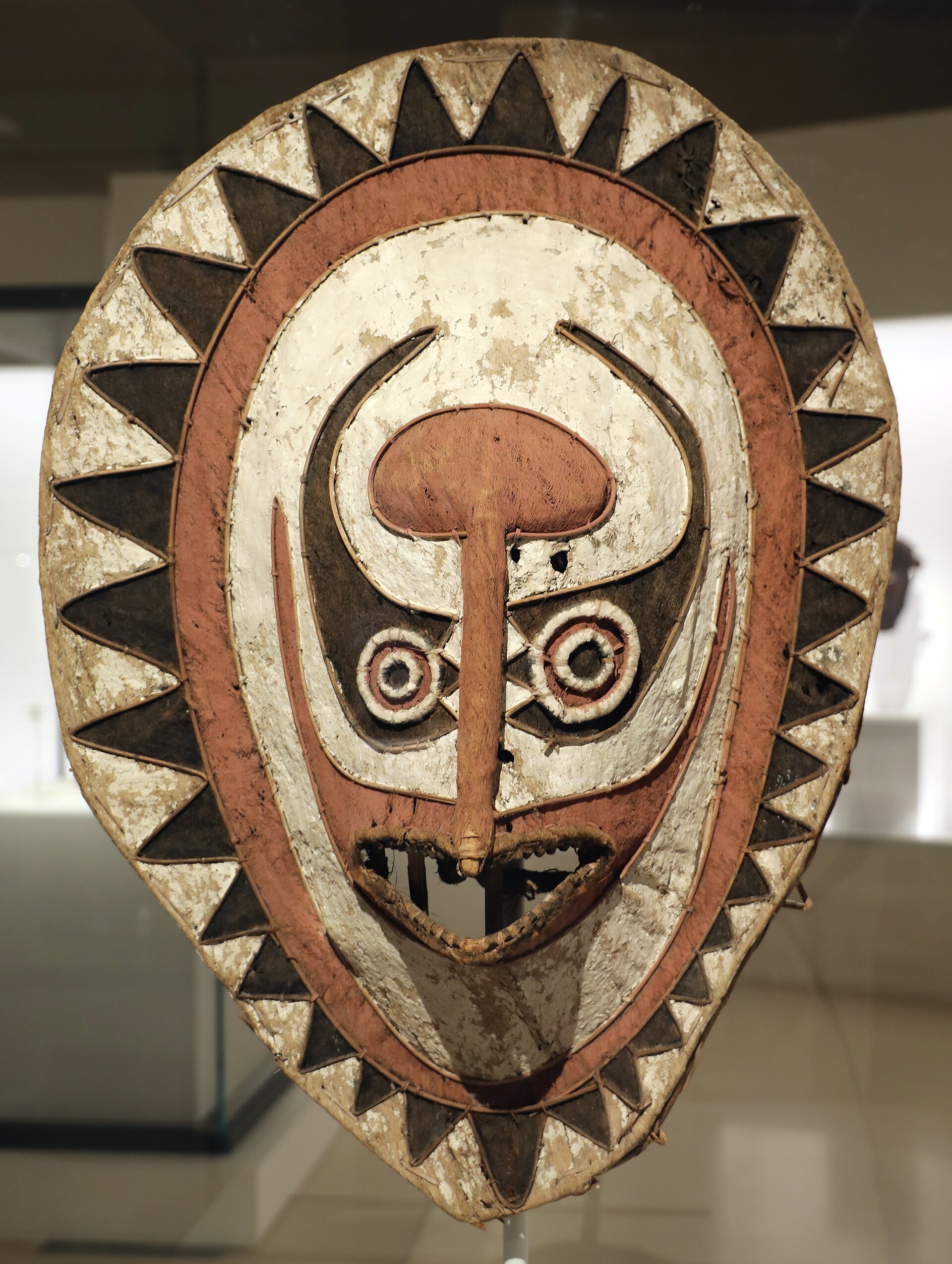
“Make a fire and burn me”
In the Vaupés, the river country on the border of Colombia and Brazil in the north-west Amazon, the sacred instruments of men’s initiation are long flutes and trumpets of paxiuba palm, hidden from women and kept under the water of the rivers between rites. The peoples of the region give them a single origin, told in many versions. The Tatuyo version from the Pirá Paraná, a river of the Colombian Vaupés, recorded by Patrice Bidou, begins with the Sun Father himself, in the form of the anaconda Pohe-pinõ, leading the novices into the forest during their fast. They broke it by cooking fruit at the foot of a tree, sheltered from a storm in a hollow log, and the log closed on them: it was Pohe-pinõ, lying on the ground, and he swallowed them. Then he drank and smoked until he was sick.
Drunk on all these substances, he vomited. So he gave back the bones of the children he had swallowed and digested. These were the first musical instruments, the “bones of the sun.” But these first instruments could not suffice for all the people of the earth, so Pohe-pinõ said: “Make a fire and burn me.” They burned him. … On the spot where he had burned, the paxiuba palm sprang up … Its trunk was then felled … and cut into as many pieces as there were groups; so each received its own musical instruments.
Patrice Bidou, “Le travail du chamane” (1983), p. 38, translated from the French
The sequence is the Australian one, complete. An initiator eats the boys. The eater is destroyed. The instruments come from him twice over: first from the bones of the boys inside him, as the first tiparu came out of Oalea beside Aviaru’s child, then from the palm that rises where his body burned, as Dhuramoolan’s voice went into the trees of the forest. In Stephen Hugh-Jones’s Tatuyo version, “the sound of the He was He Anaconda himself” (Hugh-Jones 1979, p. 284). The flutes are the anaconda’s voice in the way the mudthega is Dhuramoolan’s.
The telling of the Tatuyo elder Quintino Rodríguez, published by the indigenous captains of the Pirá Paraná in 2015, adds that the anaconda “had turned his grandsons’ bodies into sacred flutes,” and that “from his bones arose every kind of Yurupari for the different ethnic groups” (ACAIPI 2015, pp. 78–79). The Baniwa of the Içana, on the Brazilian side, tell it of Kuwai, the child of the creator Yaperikuli, whose whole body sounds “in a great roar.” Kuwai swallowed three boys who broke their fast and vomited their remains back at the ritual house. Then the creator killed him with the one thing that could: fire.
As Kuwai continues to sing and dance, Yaperikuli leads him around a huge fire and suddenly pushes him in, throwing the heaviest logs on top. … As Yaperikuli pushed him into the fire, Kuwai tells him to return to the burning-place, at Hipana. Yaperikuli knows that Kuwai would leave, in return for his killing, the materials to make the Kuwai flutes and trumpets for all future initiation rites. When Yaperikuli returns, a paxiúba tree shoots out from the ground up to the sky.
Robin M. Wright, “Pursuing the Spirit” (1993), p. 11, on the Hohodene Baniwa
“In return for his killing.” The instruments are the price of Kuwai’s death, left at the place where he burned.
The Yahuna of the lower Apaporis, a river that runs from the Colombian Vaupés into Brazil, told Theodor Koch-Grünberg the same death without the anaconda. Milomaki was a boy who came from the east singing so beautifully that crowds came to hear him; those who heard him went home, ate fish and died. Their kin seized him and burned him on a pyre, and he sang to the end: “Now my body breaks, now I am dead!” From his ashes the first paxiuba palm grew in a day and a night, and “the people made great flutes from its wood, and these gave back the beautiful melodies that Milomaki had once sung” (“Die Leute aber machten aus ihrem Holz große Flöten, und diese gaben die wunderschönen Weisen wieder, die einst Milomaki gesungen hatte,” Koch-Grünberg 1921, p. 386). Women and little boys may not see them.
These are flutes and trumpets, not bullroarers, but they are the same institution: sacred sound, made by men in secret, presented to women as a being, revealed to boys at initiation. And the region has the bullroarer as well. The Desana of the Papurí, another Vaupés river, whirl a wooden slat they call nurá-mee, “horsefly,” which Gerardo Reichel-Dolmatoff recorded as “the voice of the power of the Sun” (1971, p. 59), and it sits in the same set of warning voices as the flutes. The Baniwa, the people of Kuwai, left bullroarers on their swinging sticks in museum collections from the Içana and the Uaupés. In the Vaupés the Sun’s voice is both a whirled blade and the palm of a burned eater.
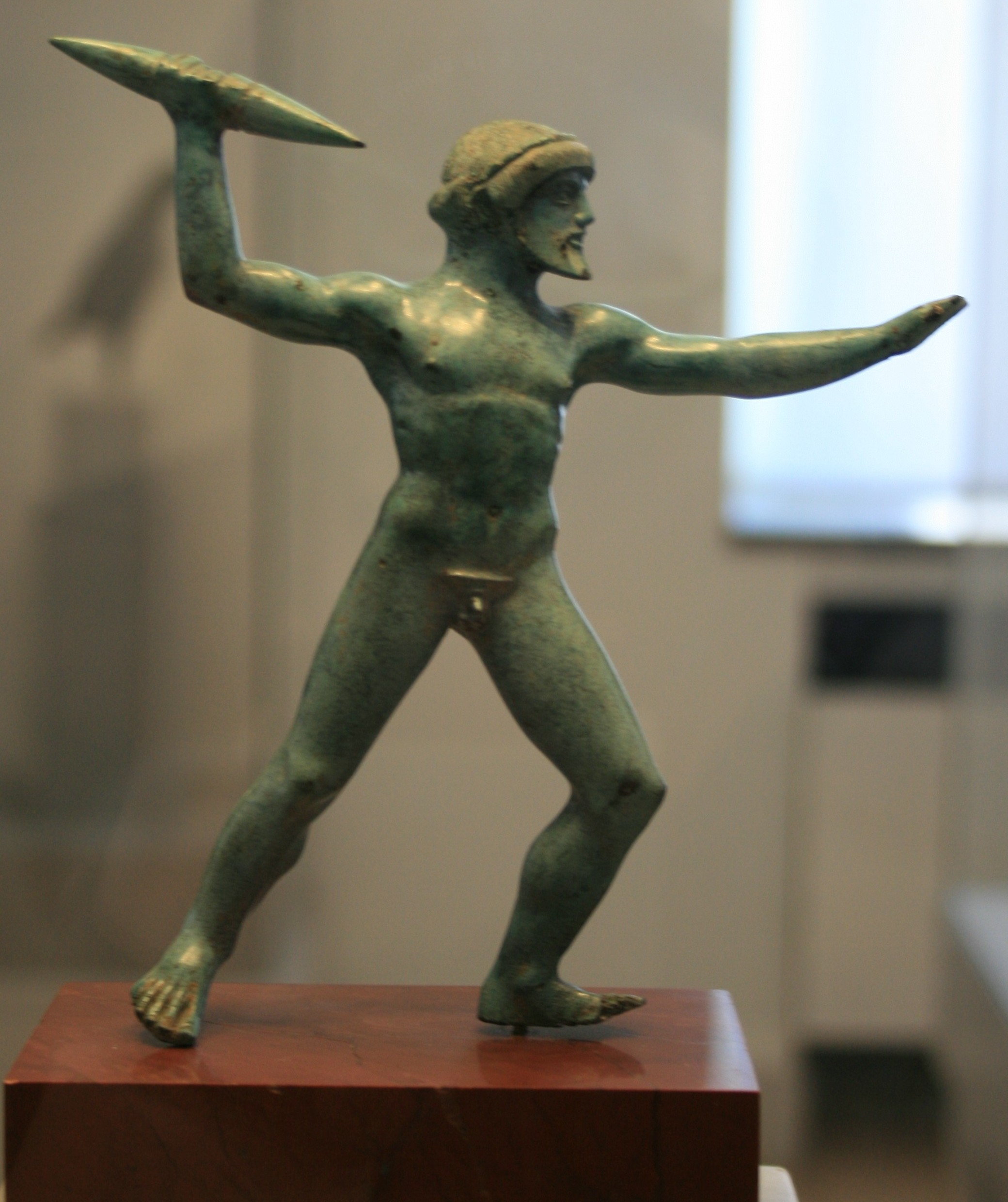
Out of the Titans’ ash
Greece told the inverse of this story, and kept the bullroarer in it. In the Orphic myth of Dionysus, the Titans lured the child from his guardians with toys, the rhombos among them, tore him apart and ate him. Zeus struck them with lightning. Jane Harrison summarised what the ancient authorities say followed: “the wicked giants or white-clay-men are struck with lightning by Zeus and burnt to ashes and from these ashes sprang the human race” (Themis, 1912, p. 15). The eaters of the child are destroyed by the high god, and something that lasts is made from their remains. In Australia it is the voice in the wood, in the Vaupés the palm of the sacred flutes, and in Greece it is mankind itself, made of the ash of the eaters with the eaten god inside it. The Dionysiac mysteries kept the rhombos as the lure, the instrument that drew the child to his death. Dionysus in Australia sets the Titans beside the Wiradjuri step by step; The Slain God’s Voice follows the roarer as a relic of the god himself.
Killed again at every initiation
The rite does not merely remember the killing. It performs it. At the Burbung of 1893 the novices were covered with blankets beside a fire, and as the flames began to crackle the old men started the bullroarers and beat the ground with bark: “The old men told the boys they were going to be burnt by Dhuramoolan.” Then the blankets came off, and the headman pointed at the men swinging the blades.
“There he is! that is Dhuramoolan,” and proceeded to explain to the boys how the noise was made … The story of Dhuramoolan, and the origin of the mudhega was then detailed to them … The bull-roarers were then handed to the novices and they were invited to examine and whirl them round … An hour or two after this, the bull-roarers were destroyed by splitting them in pieces, and driving them into the ground out of sight. Sometimes, instead of doing this, they are burnt.
Mathews, “The Bûrbûng of the Wiradthuri Tribes” (1896), p. 311
Dhuramoolan was destroyed once by Baiame, and at every Burbung the men destroy him again: they split him, bury him or burn him, as Pohe-pinõ was burned and as the Titans were burned. The boys are told they will be burnt by the eater; it is the eater who is burnt. The terror the novice feels is real, because the voice is real, and the revelation is not that the monster never existed but that he is dead, and that his voice now belongs to the men who killed him. The boys handle him. Then they are men.
This is why the bullroarer is so often a being and not a symbol. It carries the killer’s name (dhuramoolan, Gayandi, mumuna, Tuanjiraka), his voice, his blood, or the substance of his burned body, and it was found inside him, beside the eaten boys and their bones. A people who tell the story this way have answered the question every initiation raises: what happened to the thing that used to eat the boys? It was killed, and it was made to sing for them.
The answer is strikingly close across the Macquarie River, the Roper, the Gulf of Papua and the Vaupés: a devourer of boys or men, a killing, and an instrument from the corpse that speaks with the devourer’s voice, kept by men and hidden from women. What repeats is not the wording but the order of events, which is harder to invent twice than any single motif, told by peoples who swing the same instrument at the same rite. That is what a trail looks like. Where the bullroarer travelled with its initiation, it carried an account of where its voice came from, and the account is a killing. The roar the boys hear in the dark is the last cry of the thing that once ate boys like them, cut out of it and put into wood.
Key sources
- Berndt, Ronald M. Kunapipi: A Study of an Australian Aboriginal Religious Cult. Melbourne: Cheshire, 1951. Pp. 151–152 (the death of Mumuna), 156 (“The Mumuna dies and sends her last cry”), 160.
- Berndt, Ronald M. “Gadjeri.” In Encyclopedia of Religion, 2nd ed. (2005), pp. 3249–3251 (“they came out half and half,” p. 3250).
- Bidou, Patrice. “Le travail du chamane: essai sur la nature de la pensée mythique.” L’Homme 23, no. 1 (1983): 5–43. Pp. 36–38 (Pohe-pinõ).
- Harrison, Jane Ellen. Themis: A Study of the Social Origins of Greek Religion. Cambridge, 1912. Pp. 14–15.
- Holmes, J. H. In Primitive New Guinea. London: Seeley, Service, 1924. Pp. 188–191 (Oalea and the first tiparu).
- Hugh-Jones, Stephen. The Palm and the Pleiades: Initiation and Cosmology in Northwest Amazonia. Cambridge, 1979. Pp. 262, 284–286 (He Anaconda).
- Knight, Chris. Menstruation and the Origins of Culture. PhD thesis, University College London, 1987. Pp. 306–307 (Berndt’s Mara text, quoted).
- Koch-Grünberg, Theodor. Zwei Jahre bei den Indianern Nordwest-Brasiliens. Stuttgart: Strecker und Schröder, 1921. Pp. 386–387 (Milomaki).
- Mathews, R. H. “The Bûrbûng of the Wiradthuri Tribes.” Journal of the Anthropological Institute 25 (1896): 295–318. Pp. 297–298 (Dhuramoolan), 311 (the bullroarers split or burnt).
- Parker, K. Langloh. The Euahlayi Tribe. London: Constable, 1905. Pp. 67 (Gayandi and Nahgul), 137–138 (Nahgul killed and eaten).
- Reichel-Dolmatoff, Gerardo. Amazonian Cosmos. Chicago, 1971. P. 59 (the Desana nurá-mee).
- Spencer, Baldwin. Native Tribes of the Northern Territory of Australia. London: Macmillan, 1914. P. 176 (Mumanna).
- ACAIPI (Asociación de Capitanes Indígenas del Pirá Paraná). Hee Yaia Godo ~Bakari. Bogotá: Fundación Gaia Amazonas, 2015. Pp. 77–79 (the Tatuyo telling of Quintino Rodríguez).
- Newton, Douglas. Art Styles of the Papuan Gulf. New York: Museum of Primitive Art, 1961. P. 26.
- Strehlow, Carl. Die Aranda- und Loritja-Stämme in Zentral-Australien. Frankfurt am Main: Städtisches Völker-Museum. Part I (1907), p. 102 (Tuanjiraka); part II (1908), pp. 48–49 (the Maiutu).
- Williams, F. E. Drama of Orokolo: The Social and Ceremonial Life of the Elema. Oxford: Clarendon, 1940. Pp. 172–182 (the tale of Oa Birukapu), 205, 208 (the spells).
- Wright, Robin M. “Pursuing the Spirit: Semantic Construction in Hohodene Kalidzamai Chants for Initiation.” Amerindia 18 (1993). Pp. 10–11 (Kuwai).
As far as we know, lining up these tellings as one sequence (devourer of boys, killing, instrument from the corpse) is original to this page.