Atlas Essay —
When the Aeroplane Came
Highland New Guinea · northern Namibia · Venice · western Ukraine · Taiwan
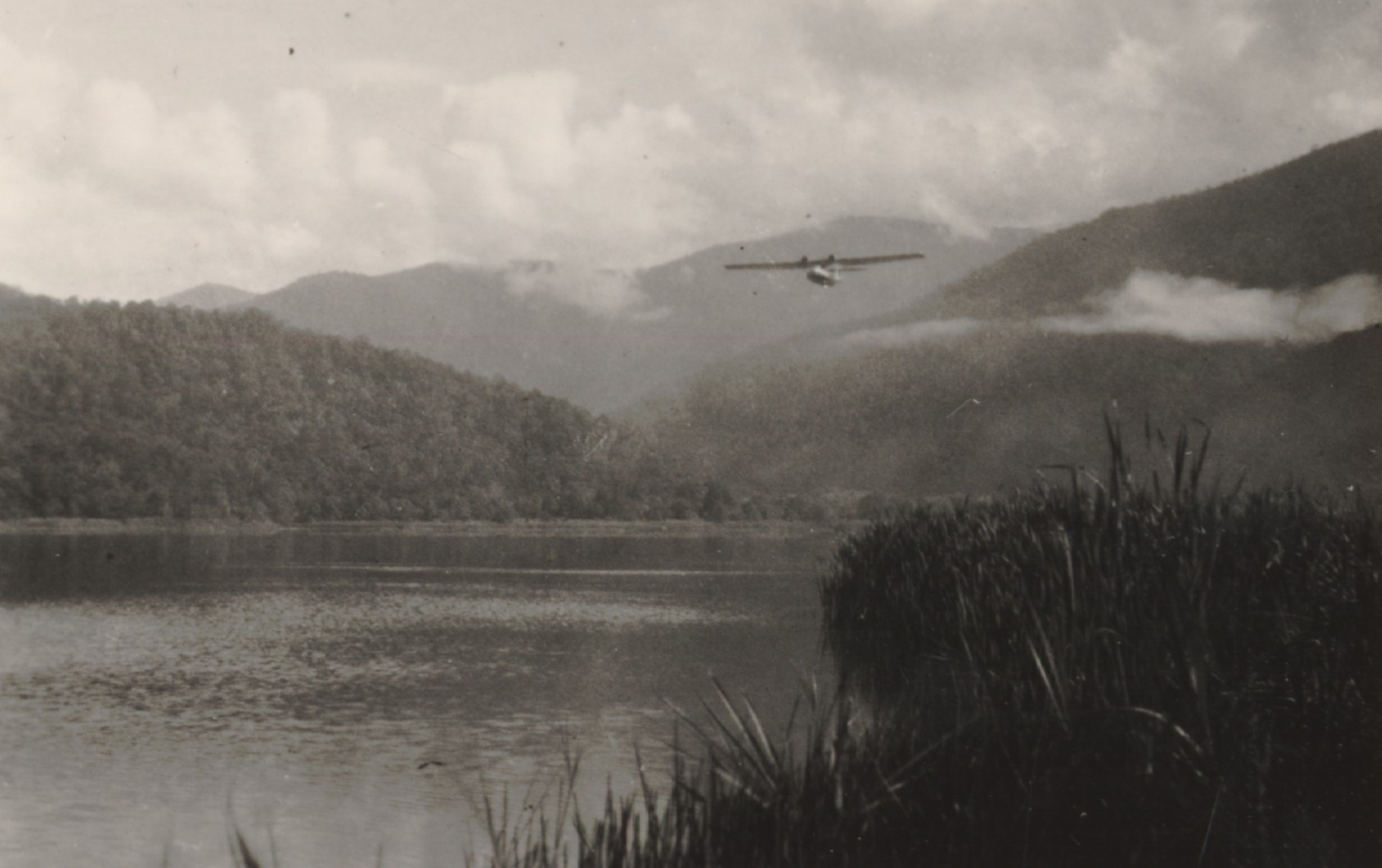
On 23 June 1938 a flying boat on a reconnaissance run crossed the central ranges of western New Guinea and found, below it, a broad and crowded valley that no outsider had walked into: the Grand Valley of the Baliem, home of the Dani. The Dani already had a word for a thing that hums through the air on a string. A boy would thread a vine through a chip of wood and whirl it round his head, and they called the game aneivu-aneivu, from ane, “voice, noise.” Thirty years later the ethnographer Karl Heider wrote that aneivu was the word the Dani now used for the aeroplane. Half a world away, in the summer of 1921, the boys of Venice were doing the same thing the other way round. They called their bullroarer el motor, which was their word for the aeroplane.
When the aeroplane came, the bullroarer and the aeroplane traded names. In highland New Guinea and in Owamboland the roarer’s name went up into the sky with the new machine. In Venice and in a Polish village at war the aeroplane’s name came down to the boys’ whirling board, and in Taiwan the board itself was cut in the shape of a jet.
In brief
- The Dugum Dani of the Grand Valley, in Indonesian New Guinea, called a boy’s whirled chip of wood aneivu-aneivu, from ane, “voice, noise.” By the 1960s aneivu was their word for the aeroplane (Heider 1970, p. 199).
- Among the Owambo of northern Namibia the roarer of boys’ circumcision was the voice of edila, a giant bird that swallowed the boys (Loeb 1948, p. 27). The Oshindonga dictionary gives edhila as “big bird; aeroplane; kudu horn as a wind-instrument in initiation ceremony.”
- In Venice in August 1921, boys called their roarer el motor, “the word with which the urchins of Venice usually mean the aeroplane” (Battaglia 1925, p. 193).
- Polish children in the village of Bzowica, now in western Ukraine, played “the airplane game” during the Second World War. They started the board like an engine, and it growled like one.
- From Tainan, Taiwan, comes a cardboard bullroarer cut as a delta-wing jet, with air-force roundels on its wings and a bottle cap rattling at the nose.

Aneivu in the Grand Valley
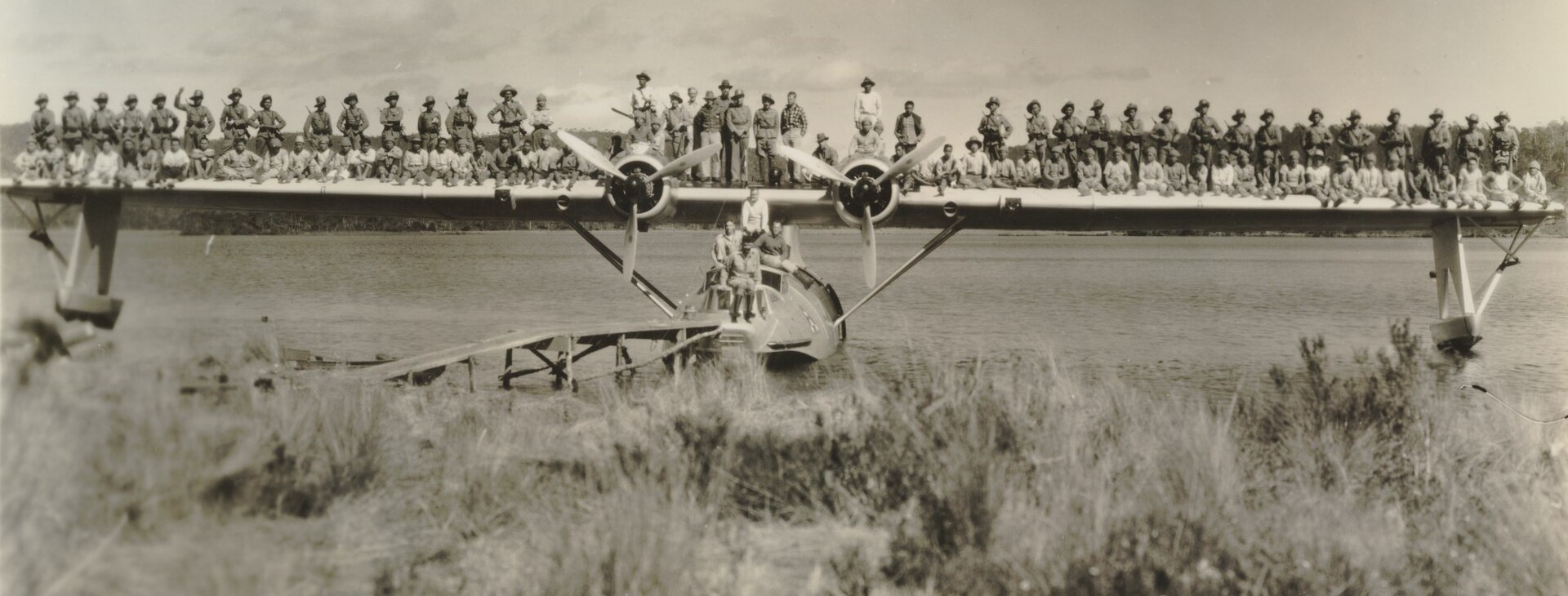
The Grand Valley lies high in the central ranges of New Guinea, at the right-hand edge of the map, in what is now the Indonesian province of Highland Papua. Explorers had met Dani groups in the surrounding mountains since 1909, always on foot. The valley itself was found from the air. The American Museum of Natural History’s Archbold Expedition was flying between Lake Sentani on the north coast and Lake Habbema in the mountains, and on 23 June 1938 its flying boat came over the ridge into the Grand Valley. In August, after two patrols had met there, the expedition’s men were flown out by the pontoon plane, which landed on the Baliem River itself (Heider 1970, p. 303).
Karl Heider lived in the Dugum neighbourhood of the Grand Valley in the early 1960s, and in his book on the Dugum Dani he gave a page to the games of children: splat-pancakes of mud, beetles led on grass leashes, somersaults down the hillside. Among them is a bullroarer.
“Aneivu-aneivu. (Ane, voice, noise; ivu, apparently the imitation of the noise. Aneivu is the term now used for airplane.) I once observed a boy make a ‘bull-roarer’ of a chip of wood at the end of a thin vine: the vine was threaded through a hole in the chip and knotted. A whirring sound was produced by whirling the chip around the head. Informants generally said this had no ritual significance, but one said it was to make the boy grow larger.”
Karl G. Heider, The Dugum Dani (1970), p. 199.
The Dugum Dani bullroarer is a voice and the sound of that voice, said twice. The word that named a boy’s whirring chip was ready to hand when a much larger thing began to whirr over the valley, and the Dani gave the aeroplane the toy’s name. “Now,” Heider writes: the aeroplane had the word by the time he arrived, a generation after the first flight.
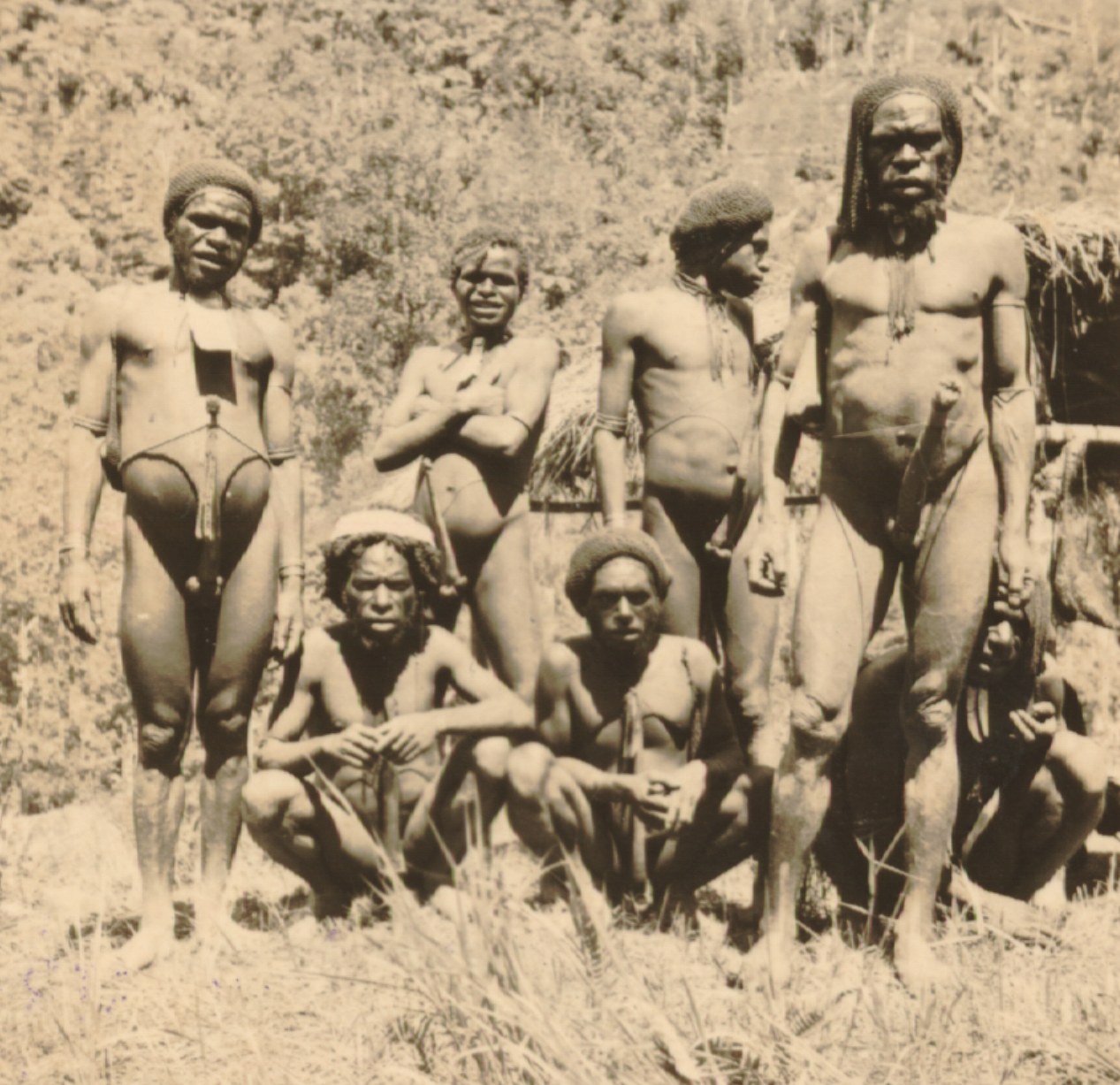
The aeroplane went further into Dani speech than a single word. Dani myth tells how everyone, Dani and white man, dogs and pigs, was together in the beginning at the Huwainmo cave, and how the white man came out first, wearing clothes and carrying guns, and went away over the mountains. Heider heard the story grow:
“By 1968 a Cessna airplane had been incorporated into this episode, and some informants countered my attempts to learn of the distant past with, ‘You were here first, you flew out of the cave in your Cessna, you tell us what it was like then.’”
Heider, The Dugum Dani, p. 145.
The Big Bird of Owamboland
Across the Indian Ocean, on the border of Namibia and Angola, the Owambo kingdoms heard the roarer as a bird. Among the Kwanyama, the instrument was sounded when boys were circumcised, and it was the one secret of the rite. Edwin Loeb recorded it:
“The only esoteric feature of the ceremony seems to be the use of the bull-roarer (edila). The boys were not told the nature of this instrument, but both they and their mothers at home believed that its humming sound was the voice of a giant bird called edila which swallowed the candidates. If a youth survived, it was because he had succeeded in passing through the anus of the creature. If, however, he succumbed to the circumcision, it was because he remained in the monster’s stomach.”
Edwin M. Loeb, “Transition Rites of the Kuanyama Ambo,” African Studies 7 (1948), p. 27.
“It threw me up, and when I came down I fell into its mouth. Then I came out of its anus.”The Kwanyama boys’ song of the edila, in Loeb 1948, p. 27
In Uukwaluudhi, a kingdom in western Owamboland, the Big Birds were rain spirits, and old men appointed by the king carried their voices across the country before the sowing. C. H. Hahn described them in 1928:
“As they pass among the kraals they whirl the instruments above their heads, thus creating a sharp whirring sound to represent the noise made by the wings of huge flying birds. No one is allowed to address them or even to set eyes upon them as this will bring bad luck to such persons and their crops.”
C. H. Hahn (1928), p. 4, quoted in Märta Salokoski, How Kings Are Made, How Kingship Changes (2006), p. 229.
So when an aeroplane first crossed Owamboland, there was already a name for a great bird whose wings roared in the sky. In Oshindonga, the Owambo language spoken next to Kwanyama, the word is spelled edhila, and T. E. Tirronen’s Ndonga–English dictionary gives it three senses in a row:
“e/dhila (oma-) big bird; aeroplane; kudu horn as a wind-instrument in initiation ceremony.”
T. E. Tirronen, Ndonga–English Dictionary (1986), s.v. edhila.
The Big Bird, the machine and the bird-voice of the initiation share one word. The same entry carries a saying, Wa adha omadhila ga tutha, which Tirronen renders “You came too late to find anything”: you found the Big Birds already departed. The small-bird form ondhila took the aeroplane too. A bilingual dictionary of 2004 gives it as “bird, respected person, aeroplane,” and illustrates it with a sentence any child in the north might say: Kombanda yondundu otaku tuka ondhila, “The aeroplane is flying over the mountain.”
El motor in Venice
In Venice the aeroplane’s name came down to the roarer. The ethnologist Raffaello Battaglia was being rowed across the lagoon one evening in 1921:
“On one of the last days of August 1921, towards dusk, as the gondola taking me to Murano was drawing away from the Fondamenta Nuove, I heard a deep hum rise from the bank, rapidly climbing in pitch. My thoughts ran at once to the rombo. Turning round, I saw standing on the Fondamenta, in a ring of boys his own age, a little boy who was whirling the humming wood.
The next day I began my search. In the dark corner of a kitchen opening onto the Calle delle Tre Croci, I found the object I was after. The boy was out. His mother and his friends, who came with me, could tell me nothing definite about the toy, to which they attached no importance.”
Raffaello Battaglia, “Sopravvivenze del rombo nelle Provincie Venete,” Studi e Materiali di Storia delle Religioni 1 (1925), p. 192; translated from the Italian.
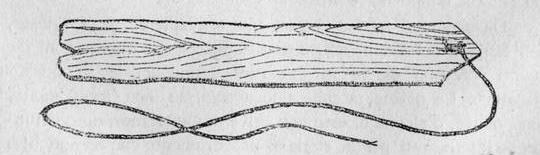
On the next page Battaglia gives the name, and its source:
“The old name of this object (if it had one) has fallen out of memory. The rombo I saw was called by the friends of the boy who owned it el motor (‘the motor’). With this word the urchins (and the common people) of Venice usually mean the aeroplane, whose motor and propeller produce, in flight, a noise not unlike the one the board makes when it is whirled hard through the air. This likeness of sound must have suggested the term el motor, by the same association from which the names of the humming wood usually come, in one country after another.”
Battaglia 1925, p. 193; translated from the Italian.
Battaglia then runs through those other names. In Sicily the roarer is lapuni, the hornet; around Pisa, cicala, the cicada; around Pavia, firlön, from the whirr of insects or birds in flight. Before the aeroplane, Italian boys heard a creature with wings. In 1921 Venetian boys heard the newest thing with wings, and the creatures that hum behind it are the subject of The Voice on the Wing.
The airplane game
Bzowica was a Polish village in the old province of Tarnopol, now Bzovytsia in the Ternopil region of western Ukraine. Henryk Śliwa grew up there during the Second World War, and he later wrote down the games of its children, which the editors of his village’s website call a testimony of “children’s games amid the raging war.” One of them was the zabawa w samolot, “the airplane game”:
“For this game you needed a little board 30–35 cm long, 7–8 cm wide and 1.5–2 cm thick. The best wood for it was birch. With a sharp hatchet you cut a board of the right size from a log meant for the fire. Boys of eight to ten could whittle it with the hatchet, sometimes without doing themselves much harm.
The great problem was making a hole for the cord in the top of the board. Only the carpenter in the village had a drill, or rather augers, and none of the children dared go to the carpenter with such a problem. So we picked the hole out with a nail and a rather pointed knife, from one side and then the other, until it went through.
To start this toy you took in your hand the end of the cord, which finished in a piece of round stick, like the starting cord of a petrol engine, and began to whirl the whole thing round your head. Spun faster and faster, the board began to turn on itself, twisting the cord as far as it would go, and then began to unwind the other way. As it turned, the cut air began to shake and to give out a growl like a petrol engine running. There was one growl when the board turned to the left and another when it turned to the right.”
Henryk Śliwa, “Zabawy dzieci w Bzowicy” (Children’s games in Bzowica), Olejów na Podolu, article 246; translated from the Polish.
The boys of Bzowica had an engine to hear and an engine to copy, down to the pull-cord. Over a countryside crossed by warplanes, the board was an aeroplane, and its game was named for one.
A jet on a string
In Taiwan the roarer took the aeroplane’s shape. The ethnomusicologist Laurence Picken brought back from Tainan, on the island’s south-west coast, a bullroarer printed on card and folded into a delta-wing jet. The Museum of Archaeology and Anthropology in Cambridge describes it:
“Cardboard bullroarer, whirling aerophone, in form of delta-wing aircraft, with metal bottle cap locked between folded cardboard cut-out appendages over nose of aircraft. Suspended from length of red nylon thread, attached near tip of one wing.”
Museum of Archaeology and Anthropology, University of Cambridge, 1977.340.
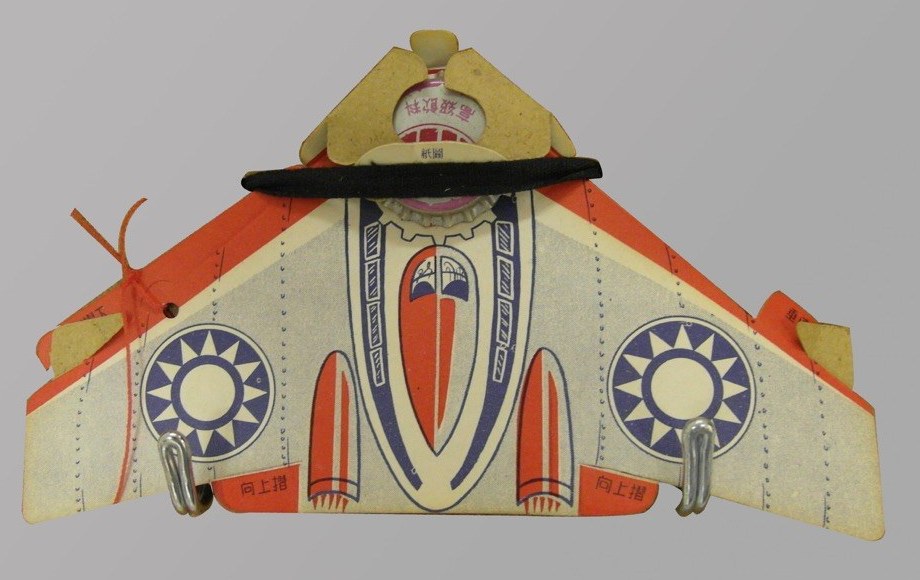
The wings carry the twelve-rayed white sun of the Republic of China’s air force. The child who swung it held a fighter plane on a string, and it roared.
The names, both ways
| People or place | Name | What it names | Source |
|---|---|---|---|
| Dugum Dani, Grand Valley, Indonesian New Guinea | aneivu-aneivu; aneivu | a boy’s whirled chip, “voice, noise”; the airplane | Heider 1970, p. 199 |
| Kwanyama and Ndonga, Owamboland, Namibia | edila; edhila, ondhila | the roarer’s giant bird; “big bird; aeroplane; kudu horn” of initiation | Loeb 1948, p. 27; Tirronen 1986 |
| Boys of Venice, Italy | el motor | “the motor”: the aeroplane, then the roarer | Battaglia 1925, p. 193 |
| Children of Bzowica, western Ukraine | zabawa w samolot | “the airplane game” | Śliwa, article 246 |
| Tainan, Taiwan | — | a roarer cut as a delta-wing jet | MAA 1977.340 |
| Gros Ventre, Montana | nakaantan | “making cold”: the roarer, then the thermometer | Kroeber 1908, p. 190 |
| Romanian soldiers, Bucești, 1917 | — | a shingle that shrieked like a shell | Pelimon, in Ilie 2017, p. 132 |
Thermometers and shells
The aeroplane was not the only new machine to meet the roarer. On the northern Plains of Montana, the Gros Ventre had a notched wooden roarer that by 1908 was a children’s toy. Its name had nothing to do with sound:
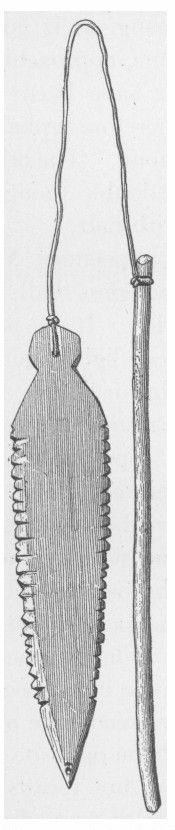
“The bull-roarer and buzzer were both well known to the Gros Ventre, but seem to be only children’s toys. They were both called nakaantan (‘making cold,’ a name given also to the thermometer), probably from the widespread Indian idea that the bull-roarer breeds wind.”
A. L. Kroeber, Ethnology of the Gros Ventre (1908), p. 190.
A thermometer makes no noise. The Gros Ventre gave it the roarer’s name for what the roarer did, which was to bring the cold, and the glass tube that showed the cold coming took the name of the board that called it.
On the Romanian front in the summer of 1917, a machine-gun lieutenant named Alexandru Pelimon was quartered with his company in the village of Bucești, just behind the line of the Siret, while the offensive of Mărăști went forward in the mountains. The old soldiers had found the roarer’s other likeness:
“A few madcaps among the old hands had invented a toy out of a little shingle tied to a string. When they whirled it in the air, the shingle made a noise like a shell whistling through the air. The recruits and the newly arrived sergeant, when they heard that whirring, ran like mice for the shelters, to the laughter of those who were in on the joke.”
Alexandru Pelimon’s war memoir, published by Cornel-Constantin Ilie in Muzeul Național 29 (2017), p. 132; translated from the Romanian.
The sergeant, Pelimon adds, was ashamed when he found out, and angry, and he cursed the jokers’ mothers. The Bucești shingle had no new name, but it had the new sound exactly.
The voice in the sky
Everywhere the roarer went it was a voice in the air that came from no visible mouth. The Dani called it a voice. The Owambo called it a great bird whose wings could be heard but never seen, and Venetian and Sicilian boys named it for the hornet and the cicada. When the twentieth century put a real roaring thing in the sky, people knew the sound at once, because they had been making it for a very long time.
The names crossed in both directions. In the Grand Valley a boy’s game lent its word to the Cessna, and the Cessna went into the myth of the cave. In Owamboland the Big Bird that swallowed the boys lent its name to the aeroplane, and a dictionary now lists the bird, the plane and the horn of initiation under one word. In Venice, Bzowica and Tainan the aeroplane lent its name, its engine and finally its shape to the board’s flying voice. The Gros Ventre gave the roarer’s name to the thermometer, and on the Siret front a shingle on a string sent a sergeant running from a shell that was never fired.
Each of these peoples heard the same thing. A thin board on a string sounds like something with wings coming over the hill, and when the thing with wings finally came, it had the board’s name, or the board took its name.
Key sources
- Karl G. Heider, The Dugum Dani: A Papuan Culture in the Highlands of West New Guinea (Viking Fund Publications in Anthropology 49, 1970), pp. 145, 199, 303. PDF.
- Edwin M. Loeb, “Transition Rites of the Kuanyama Ambo (A Preliminary Study), Part I,” African Studies 7(1) (1948), p. 27. Scan.
- Märta Salokoski, How Kings Are Made, How Kingship Changes: A Study of Ritual and Ritual Change in Pre-colonial and Colonial Owamboland, Namibia (University of Helsinki, 2006), pp. 149, 229–230, quoting C. H. Hahn (1928), p. 4. Thesis.
- T. E. Tirronen, Ndonga–English Dictionary (Ondangwa: ELCIN, 1986), s.v. edhila, ondhila, itutha. Scan.
- J. J. Viljoen, P. Amakali and M. J. Namuandi, Oshindonga/English, English/Oshindonga Embwiitya Dictionary (Gamsberg Macmillan, 2004), s.v. edhila, ondhila, aeroplane. Scan.
- Raffaello Battaglia, “Sopravvivenze del rombo nelle Provincie Venete,” Studi e Materiali di Storia delle Religioni 1 (1925), pp. 190–217, especially pp. 192–193 and fig. 1. Page 192.
- Henryk Śliwa, “Zabawy dzieci w Bzowicy,” Olejów na Podolu, article 246. Article.
- Museum of Archaeology and Anthropology, University of Cambridge, 1977.340, cardboard bullroarer from Tainan, Taiwan, collected by Laurence Picken. Collection.
- A. L. Kroeber, Ethnology of the Gros Ventre, Anthropological Papers of the American Museum of Natural History 1(4) (1908), pp. 190–191 and fig. 26.
- Cornel-Constantin Ilie, “‘Oameni de fier. Amintiri din războiul 1916–1918’. Alexandru Pelimon despre bătăliile de la Mărăști, Mărășești și Oituz,” Muzeul Național 29 (2017), p. 132.
