Atlas Essay —
The Teacher Who Eats Boys
From Mount Roraima to Central Australia, the being who first made boys into men and men into doctors was a man-eater
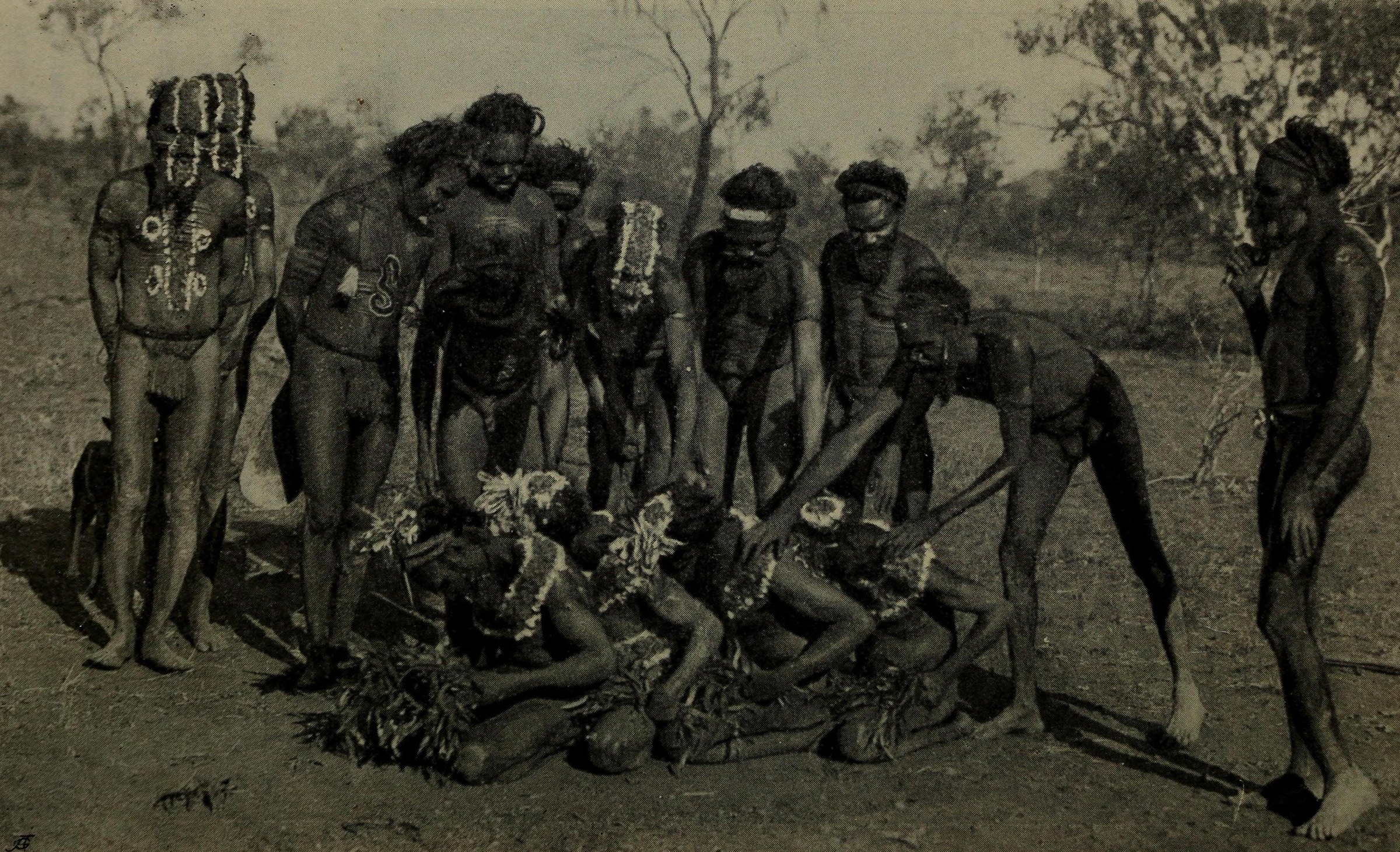
Below Mount Roraima, where Venezuela, Brazil and Guyana meet, the Taulipáng tell of a house deep in the mountain Dzalän-tepe. In the house is a deep, ugly hole with a liana tied above it. Piai’mä carries a young man home on his back, shows him how to swing out over the dark, and clubs him as he swings back. The body falls onto a scaffold with a gutter in it, and Piai’mä’s wife stands below catching the blood. Then the two of them eat him. “So he did with all the young men.” In a hut of the same name, the same Piai’mä purged five boys until they fell down, drew cords through their noses until the blood came, and sent three of them home, old and some of them bald, as the first shamans.
The first initiator was a cannibal, and the shaman’s school is what survived being eaten.
In brief
- Under Roraima, Piai’mä is “the man-eating giant” and “at the same time the first shaman.” His slaughterhouse and the hut where he made the first shamans carry one name, Dzalän-tepe (Koch-Grünberg 1916, pp. 7–8, 66, 78).
- In Central Australia the Kaytetye say Atnatu made the first churinga and swung it when he initiated his sons. When the men let the roar stop, he speared them and ate a newly made man; every boy must keep his roarer sounding “or else Atnatu will spear him” (Spencer & Gillen 1904, pp. 347, 499–500).
- At the Arrernte Engwura the novices are wild cat men whose raid “is connected with eating the men who were killed,” tamed all night under a lifted churinga (Spencer & Gillen 1899, pp. 367–368).
- The Wiradjuri of New South Wales handed their boys to Dhuramoolan, who “bit the entire face off the boy and devoured him,” or swallowed him and vomited him up a young man “possessing all the tribal knowledge” (Mathews 1896, p. 297).
- On the Uaupés in the Brazilian Amazon, the old man Ualri swallowed a troop of boys, and the Jurupari instruments were cut from the palm that grew out of his belly (Stradelli 1890, pp. 670–673, 800–801).
- The eaters make doctors. The Arrernte Oruncha, who ate the lizard people, “takes him into the earth and makes him into a medicine man”; on the Brisbane River the roar was the medicine-men “swallowing the novices” (Spencer & Gillen 1899, p. 526; Howitt 1904, p. 596).

Piai’mä eats all the young men
The Taulipáng and their neighbours the Arekuna, today counted among the Pemon, live on the savannas round Roraima, the great table mountain on the borders of Venezuela, Brazil and Guyana. A young Taulipáng, Mayuluaipu, told the story of Piai’mä’s death in Portuguese to the German ethnologist Theodor Koch-Grünberg, who travelled among them in 1911–1913 and put it into German word for word.
“Piai’mä had holes in both his earlobes. He met a man who was fishing. He said to him: ‘O brother-in-law, put your legs into my ear-holes, so that you may see my house!’ … The house was deep in the mountain Dzalän-tepe. In the house was a deep, ugly hole. Over the hole a liana was tied. Piai’mä ordered the man to swing on the liana. The man did not understand. So Piai’mä showed him.
“… When the man flew back out of the dark of the house, Piai’mä struck him on the head with the club, so that he fell dead into the hole. He fell onto a scaffold. In the scaffold was a gutter, through which the blood ran down to the ground, where Piai’mä’s wife caught it. Then the man’s body fell to the ground too, and the wife beat him quite dead with her club. Then Piai’mä and his wife ate the man. … So he did with all the young men.”
Theodor Koch-Grünberg, Vom Roroima zum Orinoco, vol. 2 (1916), myth 26, p. 78; our translation. German: “So machte er es mit allen jungen Männern.”
Even the killing is a lesson: the man does not know how to swing, so Piai’mä shows him. In the end the youngest brother of a family he has emptied lets himself be carried off with a shell trumpet, makes Piai’mä show the swing once more, and smashes his shin as he flies back out of the dark. Piai’mä drops into his own pit, and his wife below cooks and eats the blood, thinking it the blood of his victims, before she clubs the body. “Do not kill me! I am your husband!” The young man walks home blowing his trumpet and singing that he has killed Atätai, Piai’mä’s name in the language of the Ingarikó (pp. 79–80).
That is the man-eater. Koch-Grünberg, introducing the myths, says who else he is:
“In several tales he is the man-eating giant who does every kind of mischief, but in the end falls into his own trap and is killed by a brave man. He is at the same time the first shaman, the ‘great sorcerer,’ as his name already seems to say, made up of piai, shaman, and the augmentative suffix -ima, great. He creates the first shamans among men through his teaching, and gives them the magic plants, above all tobacco, which plays so great a part in the curing of the sick.”
Koch-Grünberg (1916), pp. 7–8; our translation. German: “Er ist zugleich der erste Zauberarzt.”
A curer on the savannas is a piai. The being who clubbed the young men over the pit is the Great Piai, and his name is the name of the profession.
The school has its own story, and a shaman told it: Aküli, a young Arekuna curer who spoke no Portuguese, with Mayuluaipu translating as he went. A boy called Tauapeni goes out with his four little brothers after some small tame birds and cannot hit them. The birds belong to Piai’mä, “the lord of tobacco,” and he takes the children. “He gave them water until they vomited it up again.” Then he tells them what he is doing:
“I will educate you, so that you do not run about like animals, and then I will lead you back to your father and your mother, so that you do not perish. I will educate you. The water that I gave you until you vomited shall make your voice good and beautiful, so that you can sing well and beautifully and always speak true and never tell a lie!” Then he made shamans of them. He said to them: “The emetic that I give you is not for you alone and not only for today, but for ever and for all shamans. When they vomit, they know what is right in the world.”
Koch-Grünberg (1916), myth 21, p. 64; our translation.
He gives them emetics every day in a little hut where no one sees them, “for that is very dangerous for women,” and they grow very thin. They vomit into a canoe and drink the vomit again “until they could no more,” and fall down drunk. “Their heart still beat. Their eyes were still alive.” Piai’mä makes two very long cords of his wife’s hair, puts them into each boy’s nostrils and draws them slowly out through the mouth, “so that blood came.” Then he climbs to the ridge of the house and forbids them to look. Two look, and their eyes burst, and they become night ghosts whose cry is like the sound of a flute. Three boys are left. Piai’mä fattens them again, “stayed with them many years and made them shamans. The brothers were already old. Some already had a bald head” (pp. 64–66).
He sends them home with tobacco, with burrs to smother an enemy’s garden and with drugs to drive a woman mad. They reach their parents’ house at sunset as the dancers come out:
“Here comes a ghost to meet you, here comes a carrion vulture to meet you!” With that they went into the house. At the entrance they stopped and said: “Piai’mä taught us!” Their mother did not know them. … When they had spoken their names, their mother knew them again. Then they danced until early morning. They had beautiful voices, which Piai’mä had given them.
Koch-Grünberg (1916), myth 21, p. 67; our translation. German: “Piai’mä hat es uns gelehrt!”
They come home as the dead, announcing a ghost and an eater of corpses. They left as children and stand in the door as old men whom their mother cannot place. One of them, who went out as plain Ilöngali, now carries Atätai in front of his name: the eater’s own name, in the Ingarikó tongue (p. 67, n. 7). And they do not stay. They turn their father, their mother and all their kin into Mäyiko, mountain spirits who are “people like us,” the teller explained, but invisible, whom only shamans can see (p. 11). Then they go back to Piai’mä, and two of them stay “in Dzalän-tepe” (p. 68).
Set the two houses side by side. The hut where the boys vomited “was called Dzalän-tepe” (p. 66); the house with the pit “was deep in the mountain Dzalän-tepe” (p. 78). The same tame birds lead the boys into the school and the young man round the slaughterhouse, and the same wife watches the senseless boys in one and catches the blood in the other. It is one house on one mountain. The families tell it as the story of the sons who never came back; a shaman tells it as the story of the three who did.
Koch-Grünberg knew the school was open. Myth 21, he wrote, shows “the whole hard making of the present-day shaman in all its details,” and the hunters of his own day still drew a cord through the nose and out of the mouth until the blood came: “so Piai’mä already does with his pupils” (p. 21). The men who had been through it named a man-eater as its founder. No bullroarer sounds in these myths. What the eater gave the three who came home was a voice.
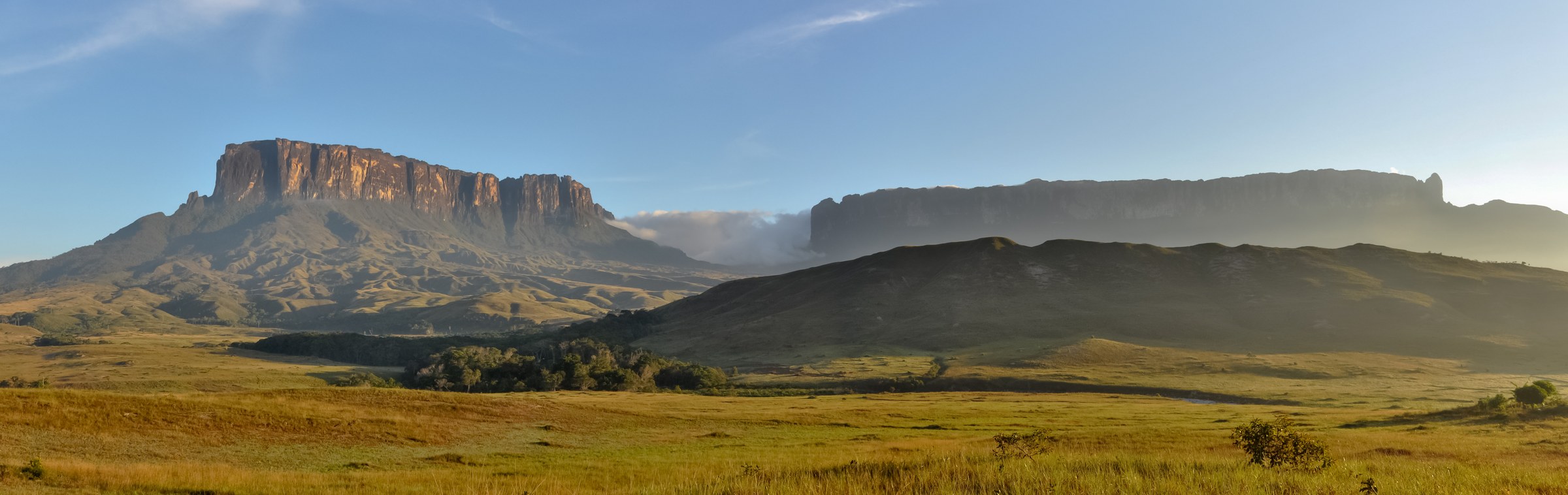
Atnatu listens for the roar
Half a world from Roraima, the Kaytetye, whom Baldwin Spencer and Frank Gillen called the Kaitish, live around Barrow Creek in the Northern Territory of Australia, north of the Arrernte country of Alice Springs. Spencer and Gillen were with them in 1901, and the Kaytetye men told them of the being behind their initiation:
“This Atnatu is reported to be an ertwa oknirra — very great man — with a very black face, who derives his name from the fact that he has no anus. He arose up in the sky in the very far back past — further back even than the Alcheringa. He made himself and gave himself his name.”
Baldwin Spencer and F. J. Gillen, The Northern Tribes of Central Australia (1904), p. 498
Some of his children in the sky “gave him no Churinga and did not perform sacred ceremonies for him, as they ought to have done,” so he dropped them through a hole in the sky into the Kaytetye country, saying: “I shall all day long sit up here Atnatu, but you will sit down there men, with plenty of flesh.” That is how the first people came to be on the earth. Atnatu stayed above, “where he makes intichiuma and eats everything” (p. 499).
He is the first initiator twice over. When two little-hawk boys of the Dreaming were trying to make themselves men, he dropped them a stone knife out of the sky (p. 345). And the bullroarer is his: “Atnatu first of all made the Churinga, and swung them up in the sky when he initiated his offspring, and now he is glad when he hears the natives on the earth making the bull-roarer sound as they initiate the boys, but he is angry if they do not” (p. 499).
The Kaytetye know what his anger does. At Irribilia, in the Dreaming, the men grew so tired that “the boys were actually cut without the swinging of the sacred Churinga.” Atnatu hurled his spears down on the men, killed them and dragged them up into the sky. “Tradition says that he eat one of them — a young etwakurka — but found the flesh no good for food,” and he brought the others to life again up there (p. 347). The women, hearing no roar, ran to the ground and found only tracks and blood. An ertwakurka is a youth who has been cut and is not yet through the last rites, a man just made (Spencer & Gillen 1899, p. 260). The maker of the first churinga ate a newly made man on the day the roar failed.
He must be careful to swing the bull-roarer, which is shown to him for the first time, or else Atnatu will spear him.Spencer and Gillen, The Northern Tribes of Central Australia (1904), p. 500
The rite the Kaytetye practise is built on that meal. A boy hears the rule on the day he first sees the instrument, and out in the bush, healing, “he must continually swing the Churinga so that Atnatu may hear him and be kept thereby in a good humour” (p. 347). If it is silent, Atnatu rattles his spears; if it stays silent “he hurls the spears down, and drags the men and boys up into the sky” (p. 499). The roar keeps the eater from taking the boys: while it sounds he is pleased, and when it stops he drags them up into the sky.
And every roar on earth has its answer above. When Atnatu hears it, “he is pleased, and makes his sound and at the same time also initiates one of the many young men who are with him up in the sky” (p. 347). The men he speared at Irribilia are his standing class, alive, unseen, and still being initiated by the one who ate their companion.
The neighbours keep the same rule. An Anmatyerr boy, between the Kaytetye and the Arrernte, must make the roar in the bush, or “another arakurta who lives up in the sky, will come down and carry him away” (p. 498; the Anmatyerr bullroarer). The Jinibara of south-east Queensland tied the great roarer to the swinger’s wrist, “for on no account must the bull-roarer be allowed to fall, or the swinger would be punished” (Winterbotham 1982, p. 43; the bundundabi). At the Keeparra, on the New South Wales coast between Newcastle and the Macleay River, the armed men beat their weapons together so that a blade flying off its string would fall unheard, and the novices were told the roar was the voice of Goign, “who would come and eat them if he got the chance” (Mathews 1897, pp. 328, 331; the Keeparra bullroarer).

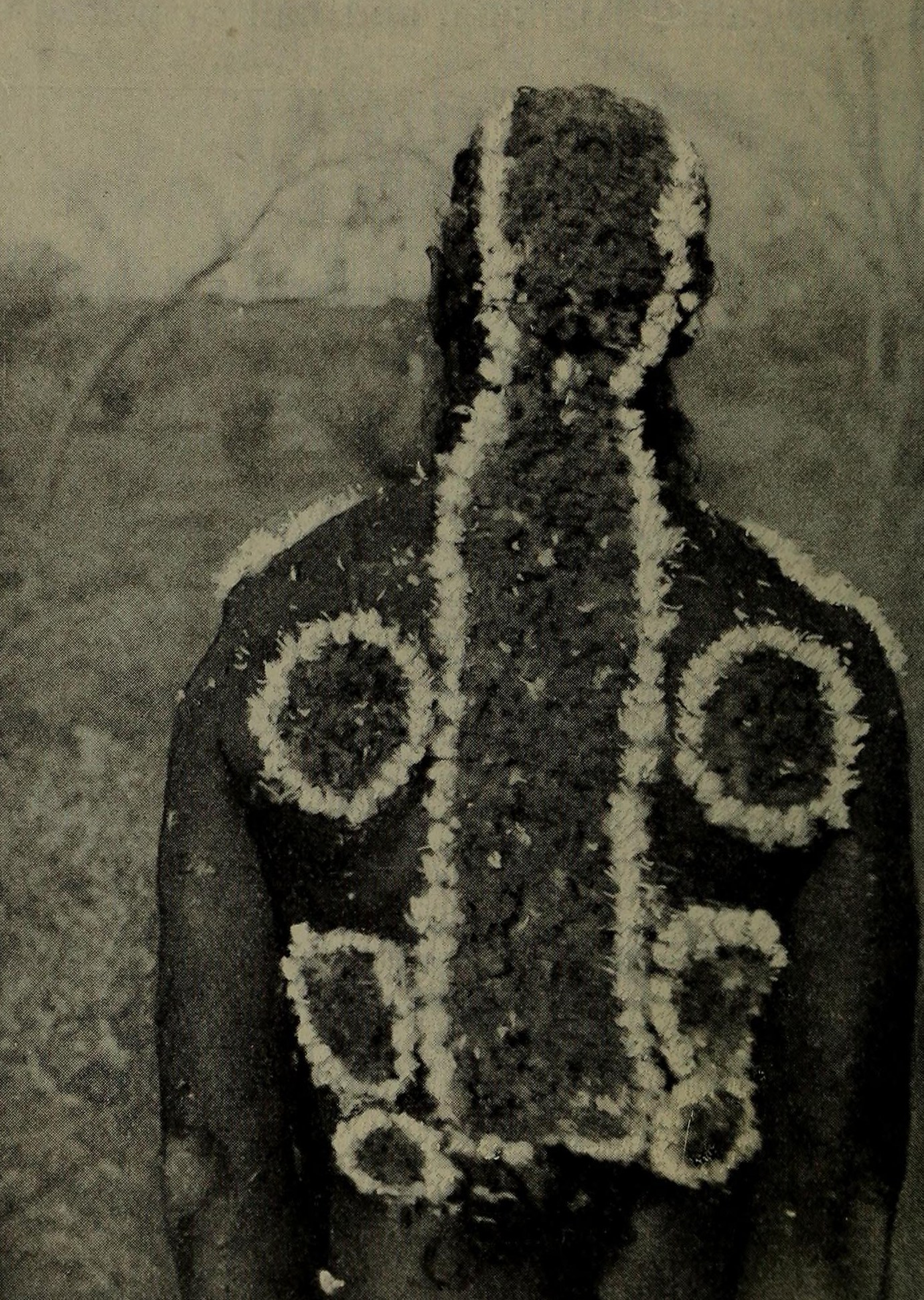
South of the Kaytetye, at Alice Springs, the Arrernte, whom Spencer and Gillen called the Arunta, turn the story round and put the cannibal inside the boy. Towards the close of the Engwura, their last and greatest initiation, the young men are called Illpongwurra. The leader makes the Ambilyerikirra, two large churinga bound together with human hair-string “so as to be completely concealed from view” (p. 364). After dark the young men rush across the river and hurl burning sticks over the heads of the women; “hundreds of them whizzed like rockets through the darkness” (p. 365). Then they run back and lie down in a row, and all night the leader lifts the bound churinga up and down in front of them, “without any cessation, save for a few seconds at a time,” while an old man whispers “instructions or information about the Alcheringa” (pp. 365–366). The Arrernte explained it:
“All that the natives can say in explanation of this is that the rushing across to the women’s camp represents an attack by a party of wild cat men, who are Illpongwurra and not yet made Urliara, upon another party, and that the lying down quietly in front of the Ambilyerikirra represents the ‘taming’ of the wild Illpongwurra under the influence of the sacred Churinga. They also say that if from any cause the strength of the men who are lifting up and down the Churinga should fail, then the Illpongwurra will die. …
“The natives say that the idea of attacking another party, as represented in the first incident, is connected with eating the men who were killed.”
Spencer and Gillen, The Native Tribes of Central Australia (1899), pp. 367–368
The novices are wild men who raid a camp to eat the dead. The churinga, rising and falling through the night, tames them, and if it stops they die. Spencer and Gillen drew the conclusion themselves. The taming “of the wild men whose natures are thereby made less fierce, may perhaps point back to a time when some powerful man, or group of men, introduced a reformation in regard to the habit of cannibalism” (p. 368). Five years later, setting the Arrernte beside the Urabunna of Lake Eyre in South Australia, who cut their men’s backs in memory of the death of “a great hawk ancestor who used to kill and eat the natives” (1904, p. 335), they said it outright: “Ceremonies associated with the cessation of cannibalism are represented during the final initiation ceremonies of both tribes” (p. 337).
So the Kaytetye and the Arrernte hold the two ends of one story. In the Kaytetye telling the eater is above, and the sound of the churinga keeps his spears off the boy. In the Arrernte rite the eater is the boy, and the churinga holds him down until morning. Either way a young man’s life hangs on old men who must not tire of working the board.
Dhuramoolan swallowed the boy
R. H. Mathews camped with the Wiradjuri on Bulgeraga Creek, by the Macquarie River in central New South Wales, just after their initiation, the Burbung, had been held, and an old doctor told him the story behind it:
“A long time ago there was a gigantic and powerful being, something between a blackfellow and a spirit, called Dhuramoolan, who was one of Baiamai’s people. His voice was awe-inspiring and resembled the rumbling of distant thunder. At a certain age the boys of the tribes were handed over to Dhuramoolan, in order that he might take them away into the bush, and instruct them in all the laws, traditions and customs of the community, to qualify them to sit in the councils, and discharge all the duties and obligations devolving upon them as tribesmen.”
R. H. Mathews, “The Burbung of the Wiradthuri Tribes” (1896), p. 297
Each boy came back with an upper incisor gone, “as a visible sign that they had been initiated by Dhuramoolan.” Not all came back. When Baiamai made the survivors talk, “they told him that Dhuramoolan had feasted on their fellows.” He took the tooth by setting his own lower teeth beneath it, and “at this part of the performance he sometimes bit the entire face off the boy and devoured him” (pp. 297–298). Mathews gives the other telling in a footnote:
In some tribes this part of the story is varied by stating that Dhuramoolan swallowed the boy, and after a time vomited him up again a young man, possessing all the tribal knowledge, but minus a tooth.Mathews (1896), p. 297, n.
That one sentence holds the whole rite. The boy goes into the teacher and comes out a man, and what he carries out of the belly is the law. Baiamai destroyed Dhuramoolan, put his voice into the trees and made the first bullroarer from one of them; he told his chief men “that for the future they must themselves initiate the youths of the tribes,” using it “to represent the voice of Dhuramoolan to which they had all been accustomed,” and “instituted the ceremonies of the Burbung as it is at present practised” (p. 298). The eater was removed, and the men took over his office and his voice. North of the Wiradjuri, the Euahlayi tell the same of Gayandi, who was set to knock out the boys’ front teeth and “began to eat the boys’ faces” instead, and whose voice lives on in a piece of wood (Parker 1905, p. 67), a history followed further in They Killed the Monster and Kept Its Voice.
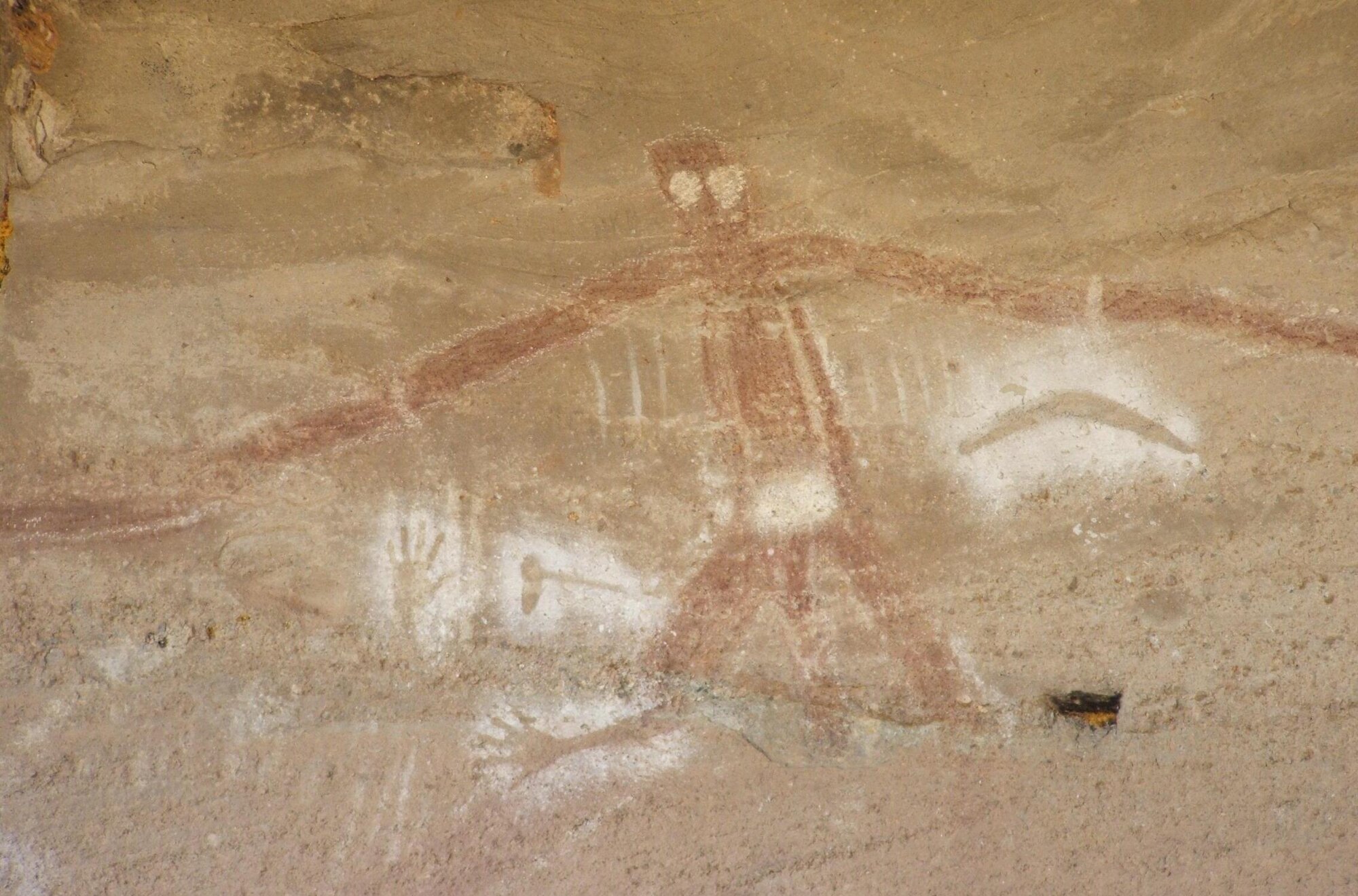
When the eater was put out of the rite, the eating went to the men who kept it. On the Narran River in northern New South Wales, Katherine Langloh Parker had the story from Yudtha Dulleebah, “one of the oldest black men in the district.” At a Euahlayi Boorah, two boys looked up when they should have kept their heads down, and when the old men roared at them, they laughed. “The boys laughed. Their fates were sealed.” Two old men flashed out their sacred stones and chanted, and “an answer came from the scrub, the voice of Gayandi.” The boys fell to the ground as if dead. The old men opened their veins, and the old doctors dipped their stone knives in the blood and touched with them the lips of all present (pp. 71–72). Then:
“The bodies of the Boorah victims were cooked. Each man who had been to five Boorahs ate a piece of this flesh, no others were allowed even to see this done. Then the bones and what was left of the bodies were put into the middle of the fire, and all traces of the victims so destroyed.”
K. Langloh Parker, The Euahlayi Tribe (1905), p. 73; see the Euahlayi bullroarer
The men sang that those who scoffed at sacred things must always be killed and eaten like this, and “that the strength they had wasted should go into other men who would use it better” (p. 73). The senior initiators ate the boys who failed, at the fire, with the roar answering from the scrub.
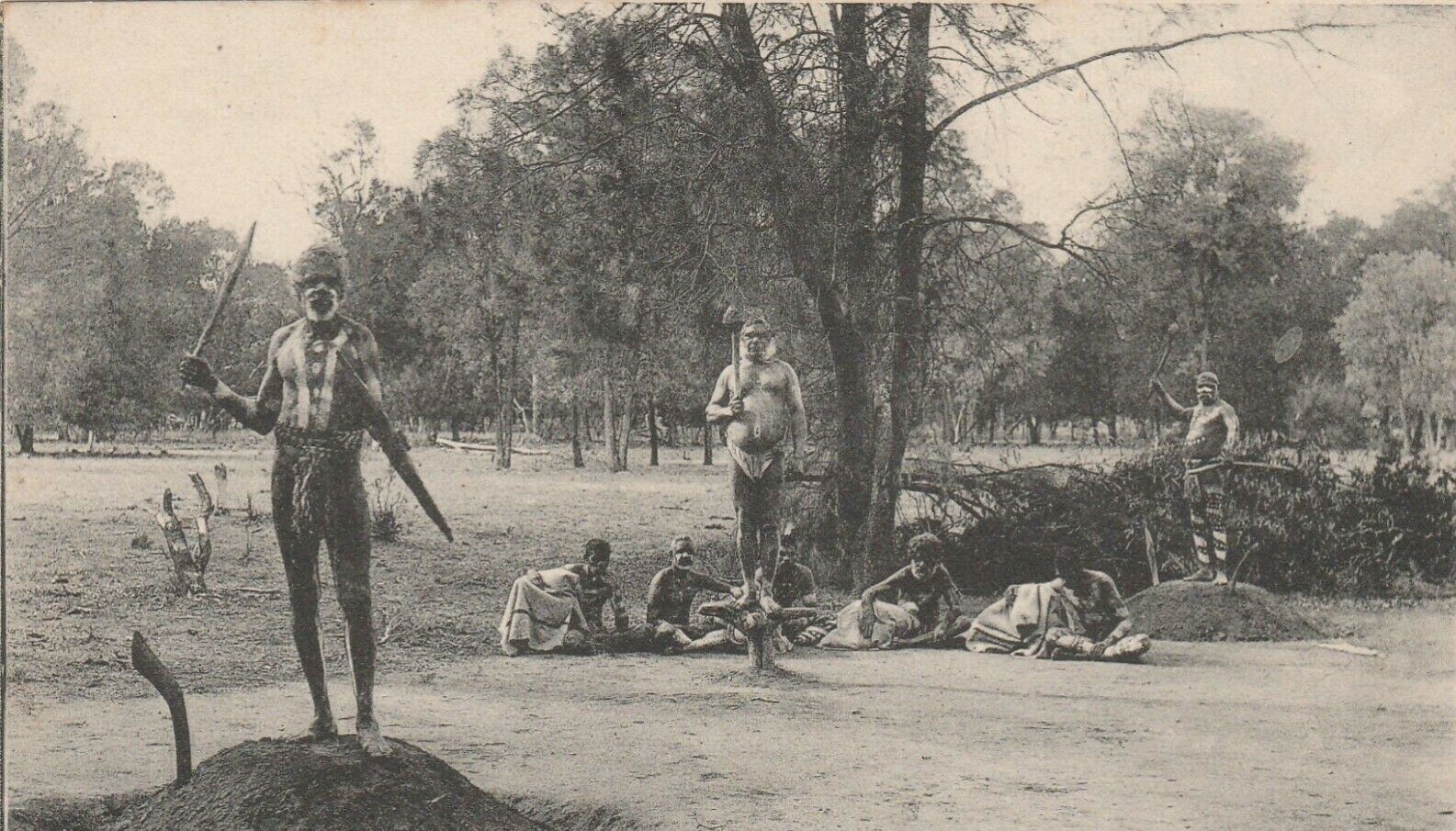
On the Roper River in the Northern Territory, the people Spencer called the Mungarai, today the Mangarrayi, tell of “a very big man named Kunapippi” who came up out of the ground with bags full of spirit children, “all boys and no girls,” and made the first sacred sticks, “called, like himself, Kunapippi” (Spencer 1914, p. 214). He twirled a stick as he came home from hunting “to let the boys know that he was close by,” and “performed the ceremonies of circumcision and subincision, and showed them how to conduct the operations” (pp. 215–216). He ate a party of strangers, disgorging their bones. “Before this he had eaten two of his own boys, but they cut him open and rescued them alive” (pp. 216–217). The two who came out of his belly kept his sticks and taught the strangers everything he had taught them.
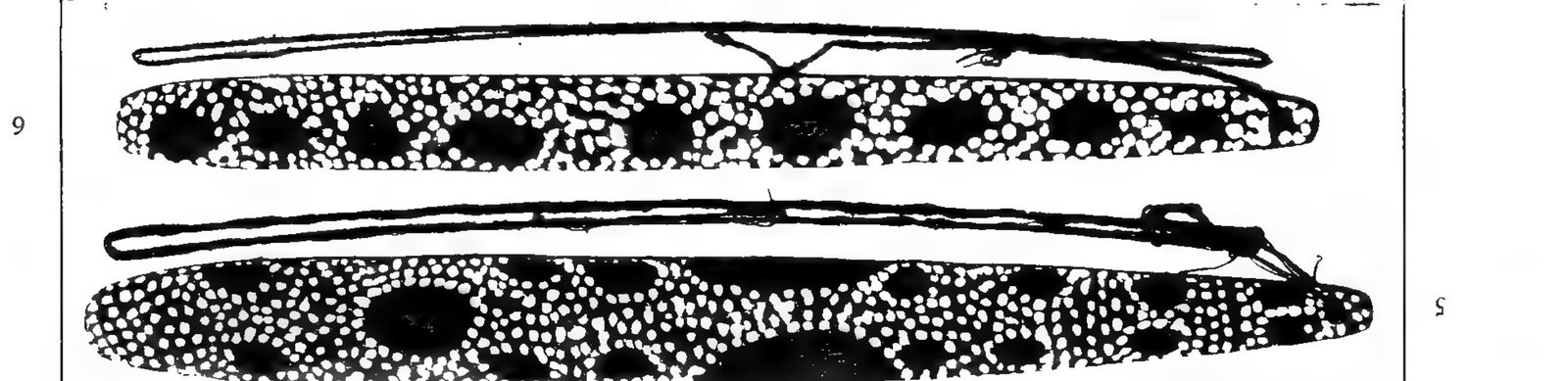
Across the Arafura Sea, the Marind-anim of the south coast of New Guinea, around Merauke in Indonesia’s province of South Papua, tell their boys that the giant Sosom, whose voice is the bullroarer, will eat them. At Kumbe the men find him curled round the post “just like a dog,” and “Finally, Sosom devours all the neophytes and adolescents (in Okaba the older men, too), each time he swallows one, disgorging another through his posterior parts” (van Baal 1966, p. 480). “Sosom is still in the bullroarer he presented to man, it being his voice” (p. 486; the Marind-anim bullroarers). Whether he swallows them whole, eats their faces or eats one and sends the rest home, the being the boys are given to puts them through his body.
Ualri’s bones
Some thousand kilometres south-west of Roraima, on the Uaupés River in the Brazilian Amazon near the Colombian border, the Tariana and their neighbours keep the Jurupari law, with sacred trumpets and flutes that no woman may see. Its great legend was pieced together by Maximiano José Roberto, a nephew of a Tariana chief of Jauareté, from many tellers, and printed in Italian by Ermanno Stradelli in 1890. It has its own old man who swallows boys, and it carries the eater one step further than Roraima. It turns him into the instruments.
Ualri is one of the old men of Jurupari who keep the secrets of the law. The boys call him Nonno, grandfather. A troop of them send him up a fruit tree and light a fire under it to roast what falls, leaving him choking in the smoke. He comes down in a fury, puts his amulet to his nose and calls down rain, lightning and thunder. As the boys run about looking for shelter, he calls to them from the forest that there is a house:
“He asked to be turned into a house, and became a house, and the boys went in; and when the last had gone in, the doors closed, and so the boys were left in the belly of Ualri, turned man again.”
Ermanno Stradelli, “Leggenda dell’Jurupary” (1890), p. 670; our translation. Italian: “e i ragazzi restarono così nella pancia di Ualri, ritornato uomo.”
The village shaman divines where they are: “in the belly of one of those old men,” swallowed in the storm. The people brew drink to make the old men drunk “and see whether the one who swallowed them will vomit them up again” (p. 670). Ualri drinks and drinks and feels nothing. Before dawn “all his bones seemed turned into instruments, and the sounds that came out of them could be heard distinctly” (p. 670), Later, as he sat in a corner of the feast-house with the music still coming from his bones, very low, the shaman told the chief that the boys had died in him at that moment (p. 671). They bound him and led him to the pyre, and on the way “his bones sang a new music,” and the shaman said: “It is the music of Jurupari” (p. 672).
As he burned, the earth shook and a paxiúba palm burst out of his belly and rose until it struck the sky. The shaman, stung by the snakes and insects that swarmed from the ashes, named what Ualri had been: “From the ashes of this man-eater not only was born a new kind of people, but an infinity of poisonous animals” (p. 673). Later Jurupari comes to the palm and tells his men they must fell “this bone of Ualri” without a sound. When it is down, “Jurupari measured and cut the instruments” (pp. 800–801).
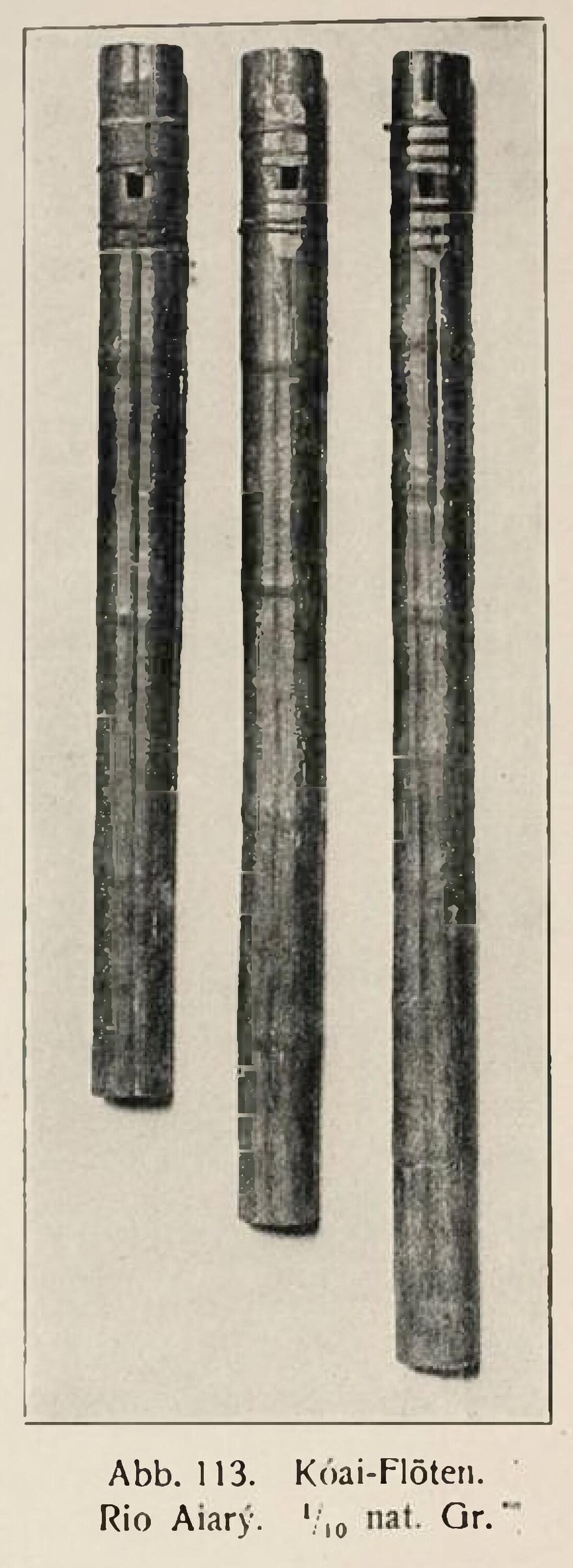
The grandfather who knows the law becomes a house that swallows boys, and the instruments of the rite are cut from his body, sounding with the boys inside him. On the Uaupés, as at Barrow Creek, the music of initiation is the eater’s own.
The eater makes the doctor
Piai’mä made shamans. So do the Australian eaters. On the Brisbane River in Queensland, A. W. Howitt’s correspondents found that the Turrbal and their neighbours gave the roar to the doctors themselves:
“The unearthly sounds made by the bull-roarers were believed by the women and children to be made by the medicine-men when swallowing the novices during the ceremonies, and a woman who attempted to spy out the ceremonies would have been certainly killed.”
A. W. Howitt, The Native Tribes of South-East Australia (1904), p. 596; see the Brisbane River bullroarers
The Arrernte name the eater who makes doctors. In the first days the Oruncha, the “devil-devil” men of the Dreaming, “killed and ate a lot of lizard men and women” whom others had shaped into people; one of the victims, found as a severed head, came to life to warn the survivors, “the Oruncha killed us but they threw away my head” (Spencer & Gillen 1899, p. 390). At the Engwura the young men were shown two “Oruncha men, engaged in baking the man in the earth oven,” while the man in the pit “imitated admirably the hissing and spluttering noise of cooking meat” (p. 351). One Oruncha lives in a rocky hill close to Alice Springs, and this is his other trade: “occasionally he seizes upon a man, takes him into the earth and makes him into a medicine man” (p. 526).
What happens under the ground is told the same way in every Arrernte school of doctors. A spirit throws a lance that pierces the man’s neck from behind, then another through his head from ear to ear, “and the victim falls dead.” In the cave the spirit “removes all the internal organs and provides the man with a completely new set,” and he “presently comes to life again, but in a condition of insanity” (pp. 523–524). An Anmatyerr doctor, killed and emptied in this way by the old doctor who made him, woke not knowing where he was and had to be led home and told which woman was his wife (Spencer & Gillen 1904, pp. 480–481), as the three brothers stood unknown in their mother’s door.
On the Gulf of Carpentaria the two trades are joined in so many words. The Binbinga of the McArthur River have two spirits in the sky, the Mundagadji, covered in white down, with knives instead of arms: “they are always anxious to come down and kill and eat some black-fellow” (p. 501). A famous Binbinga doctor, Kurkutji, walked into a cave where the old spirit Mundadji “came up, caught him by the neck, and killed him. Mundadji cut him open, right down the middle line, took out all of his insides and exchanged them for those of himself” (p. 487). Their neighbours the Mara, of the Limmen Bight, know two knife-armed spirits called Minungara: “It is they who make doctors, but at the same, if a man falls ill, they are always anxious to come down and kill him” (pp. 501–502). When they come for a man, “they tell him not to be too frightened for they do not want to kill him altogether,” and they cut him open and set him down by his camp, where his friends have been mourning him for dead (p. 488).
The pupil learns the appetite too. Among the Wiimbaio of the lower Murray River in New South Wales, a doctor was made with a dead man’s body, “usually by digging one up”; “the bones were pounded up and chewed,” and a correspondent of Howitt’s saw a novice plastered with human excrement, carrying the arm bone of a disinterred body wrapped in twigs, “and he kept gnawing it” (Howitt 1904, p. 404).
The medicine man is the boy who went all the way in. Initiation gives every youth a measured share of what the doctor gets whole: the killing, the emptying, the stranger who walks back into camp. In the story the women are given, the bullroarer is the sound of the eater who kills the boy. Among the Binbinga it is Katajalina, “who lives in an ant-hill and comes out and eats the boy up, restoring him subsequently to life” (p. 501). The eaters make the doctors, and the doctors make the boys, in the eater’s voice.
What survived being eaten
The school is what survived being eaten. Every rite here runs a boy through an eater and keeps the ones who come out. Piai’mä’s pupils went back to live in the mountain where he ate the young men. Atnatu’s class is the party he speared, alive in the sky and initiated again each time a bullroarer sounds below. The Wiradjuri boy came up out of Dhuramoolan “possessing all the tribal knowledge.” Where the eater was put out of the rite, the men who took his office took his voice, and at the Euahlayi fire they ate the boys as well.
So the sound of the rite is the eater’s sound. It is Atnatu’s churinga answering from the sky and Dhuramoolan’s voice put into the trees; on the Uaupés it is the man-eater’s own bone, cut into trumpets. The roar the women hear is the teacher eating the boys, and the man who walks out of the bush is what he gave back.
Roraima and Barrow Creek lie an ocean and two continents apart, and their tellings agree joint for joint: a first being older than the ancestors, the rite and its sound made by him, young men eaten, the taken kept with him out of sight, the pupils sent home remade and unrecognised. Two peoples do not each invent a story with that many joints. It travelled with the school it explains, from a time when the first teacher ate the class.
Three old men stand in a doorway below Roraima at sunset as the dancers come out. They are somebody’s little boys, and nobody knows them. “Piai’mä taught us,” they say, and then they sing, in the voices he gave them.
Key sources
- Theodor Koch-Grünberg, Vom Roroima zum Orinoco: Ergebnisse einer Reise in Nordbrasilien und Venezuela in den Jahren 1911–1913, vol. 2, Mythen und Legenden der Taulipang- und Arekuna-Indianer (Berlin: Reimer, 1916), pp. 7–8 (Piai’mä, man-eating giant and first shaman), p. 11 (the Mäyiko), p. 21 (the making of the present-day shaman; the cord through the nose), pp. 63–68 (myth 21, told by the Arekuna Aküli: the first shamans), pp. 78–80 (myth 26, told by the Taulipáng Mayuluaipu: the house in Dzalän-tepe and Piai’mä’s death). Translations from the German are ours.
- Baldwin Spencer and F. J. Gillen, The Northern Tribes of Central Australia (London: Macmillan, 1904), pp. 335–337 (the cannibal hawk; ceremonies of the cessation of cannibalism), p. 345 (Atnatu’s stone knife), p. 347 (Irribilia; Atnatu listens for the roar), p. 421 (the men Atnatu speared), pp. 480–481 (the Anmatyerr doctor), pp. 487–488 (Kurkutji; the Mara doctors), p. 498 (Atnatu made himself; the Anmatyerr arakurta; Witurna), pp. 499–500 (Atnatu’s children; the first churinga; the ertwakurka eaten; “or else Atnatu will spear him”), pp. 501–502 (Gnabaia, Katajalina, the Mundagadji and the Minungara).
- Baldwin Spencer and F. J. Gillen, The Native Tribes of Central Australia (London: Macmillan, 1899), p. 260 (the grades of initiation), p. 351 (the Oruncha earth oven), pp. 364–368 (the Ambilyerikirra and the taming of the wild cat men), p. 390 (the Oruncha who ate the lizard people), pp. 523–526 (the making of medicine men).
- R. H. Mathews, “The Burbung of the Wiradthuri Tribes,” Journal of the Anthropological Institute of Great Britain and Ireland 25 (1896), pp. 297–298 and n. (Dhuramoolan; Baiamai institutes the Burbung).
- K. Langloh Parker, The Euahlayi Tribe: A Study of Aboriginal Life in Australia (London: Constable, 1905), p. 67 (Gayandi eats the boys’ faces), pp. 71–73 (the two boys who laughed).
- Ermanno Stradelli, “Leggenda dell’Jurupary,” Bollettino della Società Geografica Italiana, ser. 3, vol. 3 (1890), pp. 669–673 (Ualri swallows the boys; his bones sound; the palm from his belly), pp. 800–801 (“this bone of Ualri”; the instruments cut). Translations from the Italian are ours.
- A. W. Howitt, The Native Tribes of South-East Australia (London: Macmillan, 1904), p. 404 (the Wiimbaio doctor gnawing the bone), p. 596 (the medicine-men “swallowing the novices”).
- Baldwin Spencer, Native Tribes of the Northern Territory of Australia (London: Macmillan, 1914), pp. 214–217 (Kunapippi of the Mungarai) and Plate II.
- J. van Baal, Dema: Description and Analysis of Marind-anim Culture (South New Guinea) (The Hague: Martinus Nijhoff, 1966), p. 480 (Sosom at Kumbe), p. 486 (“Sosom is still in the bullroarer he presented to man”).
- L. P. Winterbotham, Some Original Views around Kilcoy, Book 1: The Aboriginal Perspective (Brisbane: Archaeology Branch, Queensland, 1982), p. 43 (Gaiarbau on the bundundabi).
- R. H. Mathews, “The Keeparra Ceremony of Initiation,” Journal of the Anthropological Institute of Great Britain and Ireland 26 (1897), p. 328 (the din over a falling blade), p. 331 (Goign would eat them).
- As far as we know, the pairing of Piai’mä with Atnatu is original to this page.