No. WINTERBOTHAM1982-001
Bundundabi, the strong wind
Australia · Kilcoy–Stanley River, upper Brisbane River valley, southeast Queensland (Jinibara bora rings at Durundur, Villeneuve and Kilcoy · Sandy Creek)
Restricted
bundundabi; gungarbi
Source term: bull-roarer
bundundabi: "a strong wind", the large sacred bullroarer of the bora. gungarbi: the small camp bullroarer. mimburi: the two dark "coal sacks" in the sky, the bora rings of the dead; the word means water flowing continually, a source. bora: the initiation ground and ceremony.
The Jinibara had two voices on a string. At nightfall the woman minding the children whirled the gungarbi, the small "female" bullroarer anyone could see, to call them home. The head man kept the camp's only one, and it also gathered people for news. A death had its own call: three sweeps in the morning, wow, wow, wow, then a crack to the right and to the left. The bundundabi, "a strong wind", was male and sacred, seen only by the initiated. Its swinger wore a bracelet tied by a lawyer-cane line to the blade, because whoever let it fall was punished, and its roar called the novices to each day of the bora. The bora was laid out from the sky. The dead held their own ceremonies in two dark rings among the stars, and every bora ground copied them, the larger ring to the north and the smaller to the south. When the sky rings swung away from north and south, no ceremony was held until they came back.
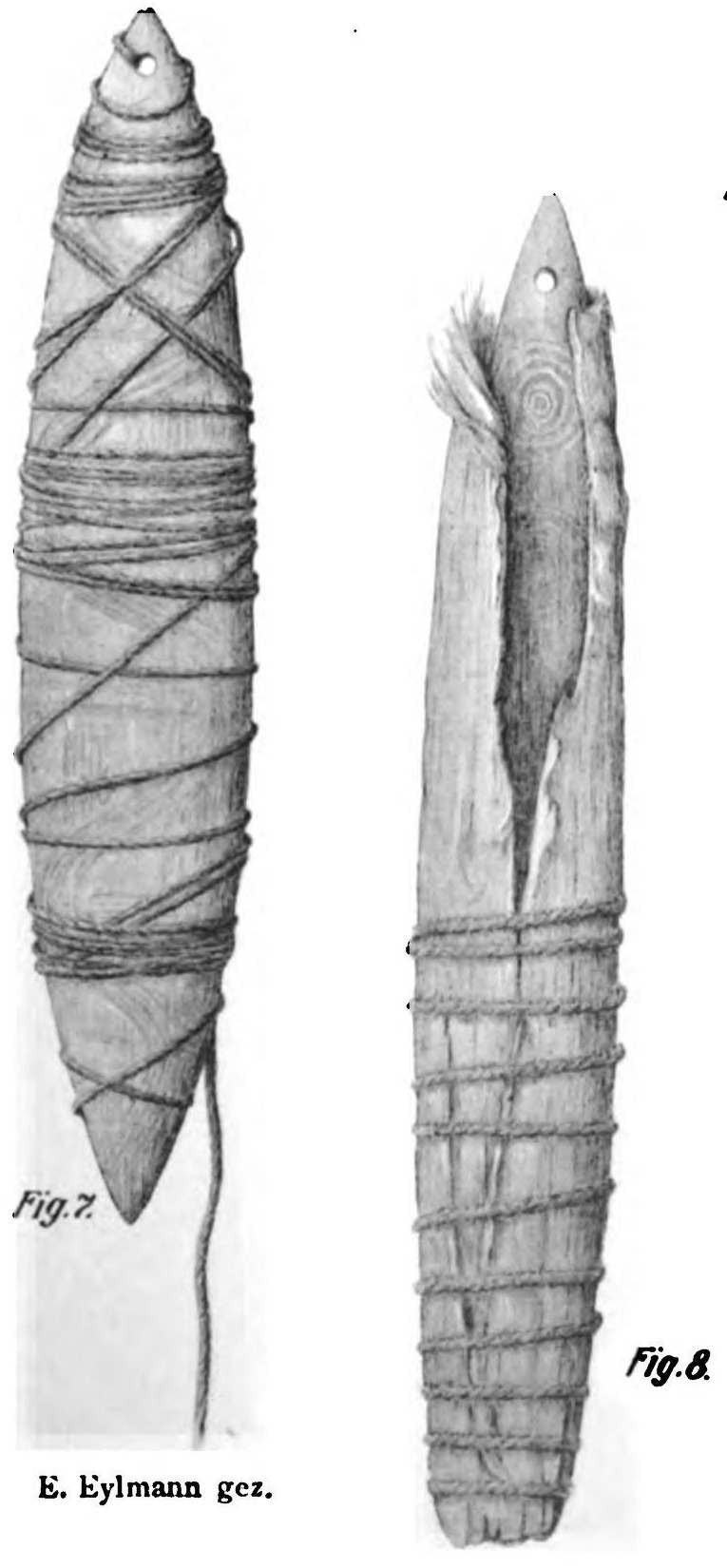
The large bull-roarer was called bundundabi, which means “a strong wind”.
Gaiarbau, in L. P. Winterbotham, “The Gaiarbau Story,” in G. Langevad (ed.), Some Original Views around Kilcoy (1982), p. 43
Particulars
- Object
- Two bullroarers. The small gungarbi was the "female kind", seen by all; there was one in each camp, kept by the head man. The large bundundabi was the sacred "male" instrument, swung with two hands on a lawyer-cane line tied to a bracelet on the swinger's wrist and fixed to the blade with kangaroo tendon.
- Function
- The gungarbi was sounded by the woman in charge to call the children home at nightfall, to gather people when news was to be announced, and to announce a death: three morning calls, then a crack to the right and left. The bundundabi was used only at the bora, used and seen only by the initiated, to call the novices to each day's initiation proceedings; a swinger who let it fall was punished.
Source
L. P. Winterbotham, “The Gaiarbau Story,” in Gerry Langevad (ed.), Some Original Views around Kilcoy, Book 1: The Aboriginal Perspective, Queensland Ethnohistory Transcripts 1(1) (1982), pp. 43, 75–77