No. MAT1898-008
Hunter-Macleay gonnandhakeen
Australia · Hunter to Macleay Rivers, New South Wales · Southeast
Restricted
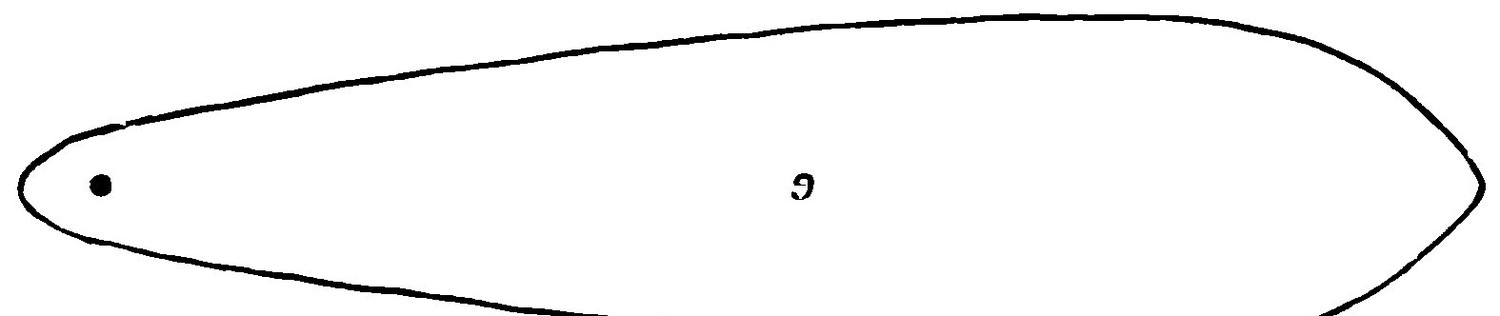
gonnandhakeen
Source term: bull-roarer
gonnandhakeen: the local name for the bullroarer among the tribes between the Hunter and Macleay Rivers, NSW.
Etymology. Mathews glosses the name — goonandhakeea in his Keeparra account, gonnandhakeen in his 1907 Notes — as "excrement-eater", and the word belongs to a wider complex he records around the being Goign: the ceremonial ring is the goonambang, or "excrement place".
Among the tribes between the Hunter and Macleay Rivers, the bull-roarer bore a startling name: gonnandhakeen, glossed by R.H. Mathews as "excrement-eater" — the quartz crystals of the ceremony were held to be the excrement of Goign, the being who presided over the Keeparra initiation. At the moment the novices were led away, the mothers were covered over with rugs and made to keep up a low humming; two men on either side of the ring loudly swung their bull-roarers while the armed men beat boomerangs together, so that if a string snapped the women would not hear the instrument fall to the ground. The guardians told one another, in the boys' hearing, that they supposed Goign was killing all the women and children in the camp; later the novices were told the roar was the voice of Goign, who would come and eat them if he got the chance. The revelation came by a trick: a headman pretended to spy Goign's squirrel going into a hollow tree, the roar swelled nearer — "we told you to beware of Goign, here he comes!" — and the boys were made to raise their heads and look upon two men swinging the gonnandhakeen. They were warned on pain of death never to tell the women or the uninitiated, and the instruments were placed in their hands to touch their bodies with.
After the dances and games are over, one of the men sometimes sounds a goonandhakeea (excrement-eater) in the bush near the camp. The guardians or some of the other men then shout out, as if addressing some one, “The boys are here yet! Don't interfere with them!”
R. H. Mathews, "The Keeparra Ceremony of Initiation", Journal of the Anthropological Institute 26 (1897), p. 331
Particulars
- Function
- Gonnandhakeen bullroarer used at Keeparra and Dhalgai ceremonies.
Sources
- R. H. Mathews, “Bullroarers used by the Australian Aborigines,” Journal of the Anthropological Institute 27 (1898):52–60, figs. 9–10 View · archived
- R. H. Mathews, Notes on the Aborigines of New South Wales (1907), reprint of “Bullroarers used by the Australian Aborigines,” figs. 9–10 View · archived
- R. H. Mathews, “The Keeparra Ceremony of Initiation,” Journal of the Anthropological Institute 26 (1897), p. 331