Atlas Essay —
Thunder’s Own
Peoples far apart say the bullroarer belonged to Thunder first, and reached them by gift, copy, trade or theft
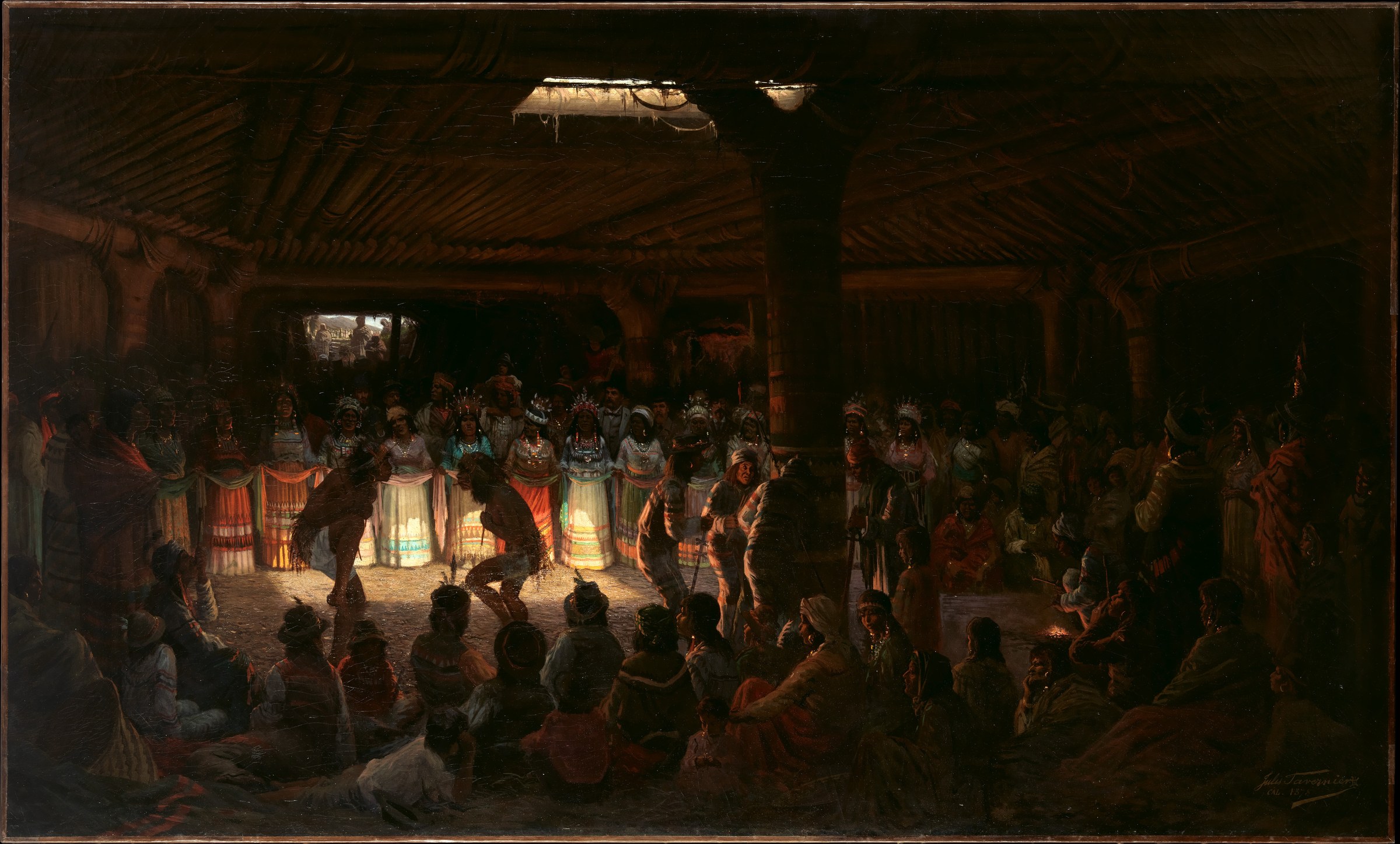
In the early days, William Benson of the Eastern Pomo told Edwin Loeb, there was no winter and no summer, and the people of Clear Lake in northern California grew cruel. So the creator Marumda called to a man who lived in the north, gave him a sack, and told him to pack it with cloud and swing it about his head all over the world. The sack buzzed as he whirled it. It rumbled, it cracked, his eyes flashed like fire, and it rained. He was Thunder man. When the people wanted him to go away again, their ritual leader told four men to stand up in the dark dance house and wield bullroarers.
From California to the Malay Peninsula, peoples say the bullroarer was Thunder’s before it was theirs. He whirled it first. They hold theirs as his gift, as a copy of his, or as a thing bought or stolen, and when they swing it the voice is his.
In brief
- Among the Eastern Pomo of Clear Lake, California, Thunder man makes the first storm by whirling a sack of cloud round his head, and the bullroarer is called the “doll of Thunderman.” All the Pomo held it to be his voice.
- The Jicarilla Apache of northern New Mexico tell how Black Lightning split a spruce and cut the first bullroarer from the splinter. Thunder whirled it. The people made a copy, and the first one was sent “back to Thunder.”
- A Hopi artist in Arizona painted Cotokinuñwû, the God of Thunder, with a bullroarer in his right hand. At Mishongnovi the board was the “Thunder-Stick,” and the War Twins stole one from the Flute priests’ kiva there and brought on a storm with it.
- On the Upper Xingu in central Brazil, the Kamaiurá ancestor who made thunder and lightning bought the bullroarer from a fish for red toucan feathers. The neighbouring Bakairi call the instrument by their word for thunder and lightning.
- On the Tekai River in the Malay Peninsula, the thunder spirit Nenek makes the lightning “by flashing about a thin board which is attached to a string.”
- Where the board is only a toy, Thunder still has a claim on it. Jahai children in Malaysia are hushed with his name when they whirl it too loudly, and boys on the California coast and in north-east Scotland whirled it at the storm to make the thunder stop.

Thunder man’s sack
The Pomo lived north of San Francisco Bay, from the coast inland to Clear Lake. Benson told it this way:
“In the early days there was no winter and summer. Day came for the people to get what they needed; night came for rest. People got cruel. Then a being, a man that lived in the north, Xalimatoto (Thunder man), heard a voice calling. He answered it. ‘Come, get some of my cloud,’ it said, ‘take it around all over this world. Make it rain. Put it in your sack as you go around the world. Swing it about your head like this. Make it rain. Those people down there are getting bad. They’ve forgotten all the things they were taught in the beginning.’ It was Marumda.
He gave Xalimatoto a sack, and Xalimatoto packed the cloud into it and started out, swinging it about his head. The sack made a buzzing sound as he whirled it, it made a rumbling sound, then a crack! he batted his eyes and they flashed like fire. In this manner he went all about the world and made it rain. Everyone got in the ceremonial house, piled on top of one another.”
William Benson, in Edwin M. Loeb, Pomo Folkways (1926), p. 390.
Thunder man came back every month for four months. Then the yomta, the leader of the secret society, told the people what Thunder wanted: a feast and a dance. “Those above will be Xalimatoto, and those down on the ground, those will be people. They’ll get up in the dark; eight will climb up and eight will stay on the ground. Now I want four women to sing in this. Now I want four men to wield bull roarers” (pp. 390–391). To start the roaring he struck the centre post with his two sticks, “as he does still.”
That was the Pomo Thunder ceremony as it was given at Clear Lake. Men, women and children gathered in the dark dance house and lay down, “so as to avoid injury.” Four initiates of the bullroarer stood by the centre post.
“Then the yomta commenced prayer, and the drummer started in striking the foot drum with his feet, first gently, then with increasing violence in imitation of the approach of thunder. As the drumming grew louder one of the padok matu’tsi began twirling his bull roarer, using both hands, and allowing it first to wind up and twist the string in one direction, then reversing, and allowing the string to unwind. Each of the four padok matu’tsi took his turn at the play on the bull roarers. Then the drummer once more played on the foot drum, this time in diminuendo, imitating the dying off of the thunder.”
Loeb, Pomo Folkways (1926), pp. 379–380.
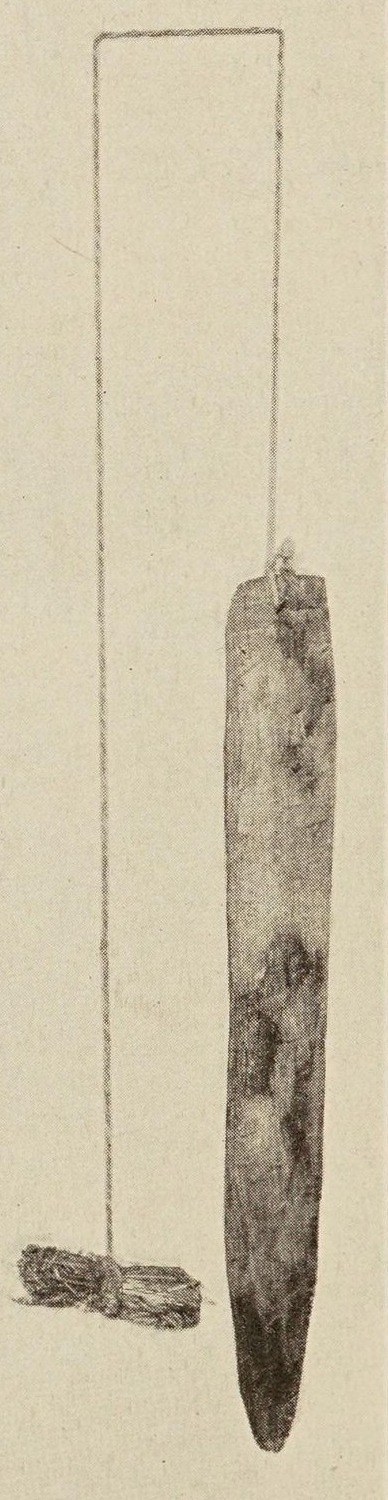
The Eastern Pomo name for the instrument was kalimatoto padok, “doll of Thunderman” (p. 222). Jim Pumpkin, brought into the ghost house at Clear Lake as a boy, saw four men whirl it: “I looked at the bull roarer but did not touch it. I was told that it was the voice of Thunder God (Kalimatoto). … He told me that I would die if I told about what I saw and heard to any of the non-initiated” (p. 352). At Sherwood the bullroarer was the voice of Makila, Thunder man (Loeb 1932, p. 4). Everywhere among the Pomo, Loeb wrote, the bullroarer was “the voice of Thunder man,” and since it had sounded in the old ghost ceremony, some called it the voice of the dead as well (1926, p. 302).
Since the voice was his, it could undo what he did. “The bull roarer was always used when a man or woman was scared by thunder”; the head of the society swung it over the patient and then pointed it to the five directions (pp. 323–324).
That the roar is Thunder’s voice is said in many places. The Yuki of Round Valley, north of the Pomo, called the bullroarer “thunder voice” (Foster 1944, p. 210); the Ndaka of the Ituri forest in the Democratic Republic of the Congo “called thunder and the hum of the bullroarer the voice of Asobé” (Schebesta 1950, p. 15; translated from the German); and among the Yuin of New South Wales, Australia, “the roaring of the Mudthi represents the muttering of thunder” (Howitt 1904, p. 538). The Pomo say more than that. They say whose the instrument is, and the peoples who follow say how they came to hold it.
The first one goes back to Thunder
A thousand miles to the south-east, the Jicarilla Apache of northern New Mexico tell the story in full, down to who keeps the original. Their great curing rite is the ceremony of the Hactcin, the supernaturals who made the world and who come masked into a brush corral to dance sickness away. Before people held the ceremony, the Hactcin held it themselves, and the first thing they sent for was wood.
“Then to Black Wind Hactcin they said, ‘Black Wind Hactcin, you must go over to Black Lightning Hactcin and ask him for some lightning riven wood. Bring that and invite him to come too.’
When Lightning was asked to come, he agreed to do so. He stepped into a black cloud. He was going to travel in that black cloud. He entered it from the top of a mountain and then sent his arrow, the black flint, and split a spruce tree. He broke it. It splintered and pieces blew in different directions. The one which fell to the east, he picked up and brought along.
With the piece he had picked up he made something. He cut it with his black flint. He made it the shape of that black flint. He brought it to the corral.”
Morris E. Opler, Myths and Tales of the Jicarilla Apache Indians (1938), p. 147.
“Thus was made the bull-roarer.” Lightning “tied a string to the lightning riven stick and spun it, making a noise” while the Hactcin came forward (p. 149). From then on the stick is Thunder’s. “Thunder Hactcin stood in the doorway and whirled the groaning stick,” and at each dance he sounded it outside the corral to the east, south, west and north (p. 151). He stays outside because “the bull-roarer is not supposed to be twirled in the sight of the people” (p. 152). When the first ceremony was over, Thunder left his groaning stick for the ceremony and went home to Flint Mountain, and the people were to call him “Grandfather” (p. 165).
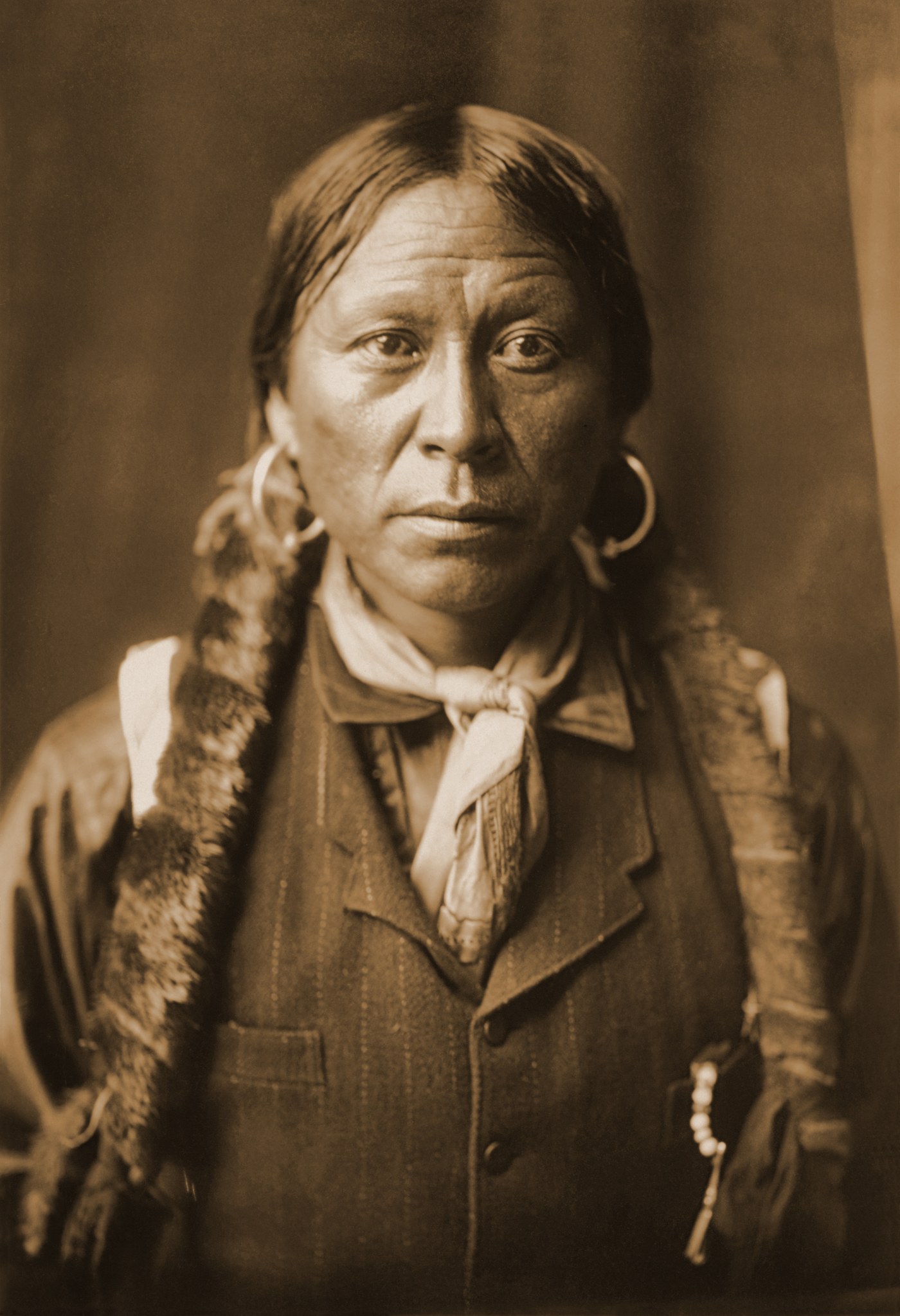
Then the people learn the rite. They go out looking for a piñon struck by lightning, “so that they could find a piece of lightning riven wood lying to the east,” as Lightning had picked the splinter that fell east (p. 183). The cord has to be mountain-sheep hide, as the first cord was, and “the man who made it patterned it after the first one which had been made” (p. 184). On the last night Talking Hactcin holds up the new stick before the dancers and settles whose is whose:
This new one I will leave for you. But this old one I will send back to Thunder.Talking Hactcin, in Opler, Myths and Tales of the Jicarilla Apache Indians (1938), p. 199
Grey Hactcin made himself “like a flash of light” and carried it home. The people saw lightning flash four times in the distance, “Thunder Hactcin lighting the way for Grey Hactcin who was bringing him his groaning stick.” Thunder took it and sent word: “Tomorrow evening when the people go to bed I am going to send a shower” (p. 200). The Jicarilla swing a copy. The first bullroarer is on Flint Mountain, and “Thunder will watch over the groaning stick.”
Their Navajo neighbours cut theirs, too, from a pine the lightning has struck (Franciscan Fathers 1910, p. 414).
The God of Thunder’s whizzer
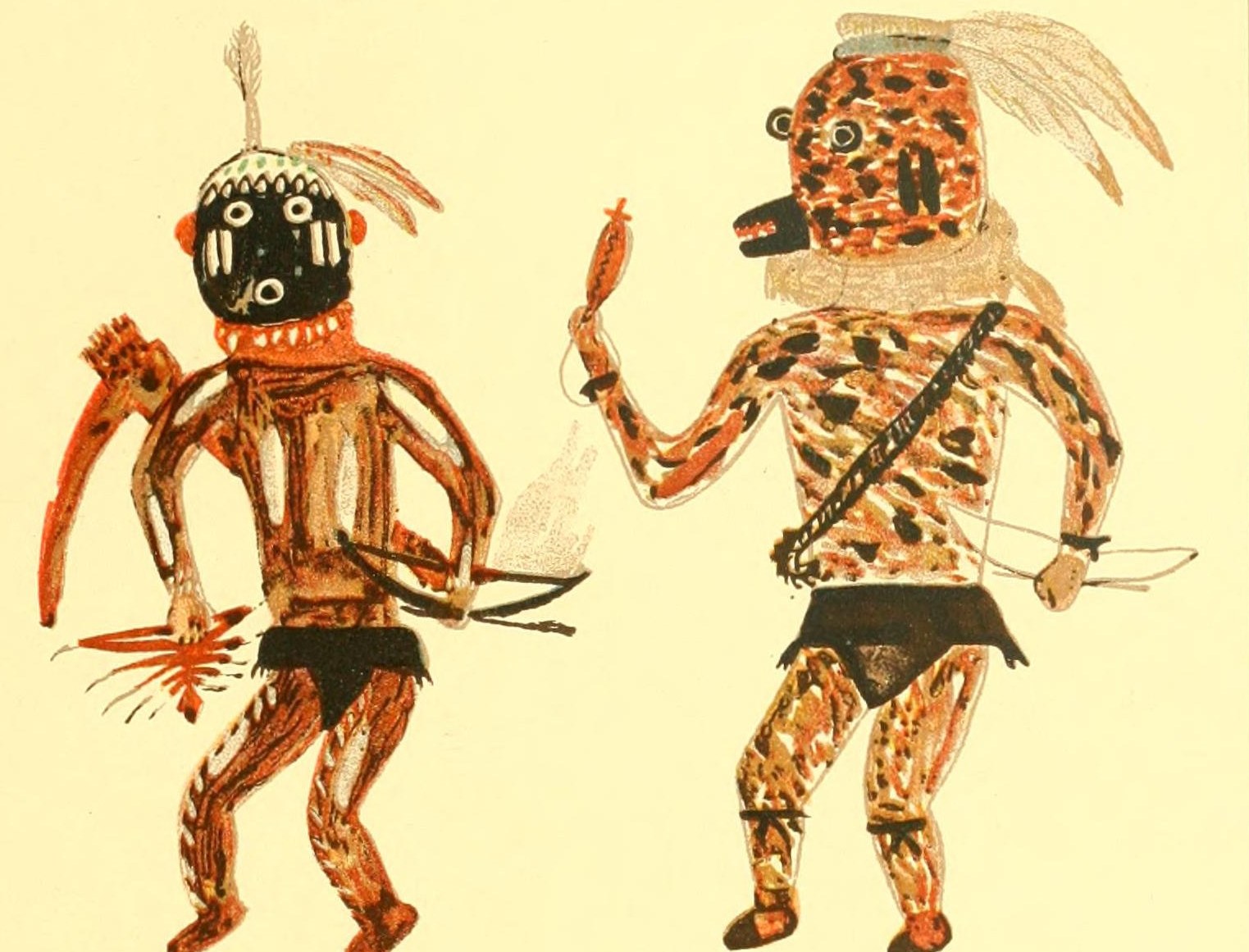
The Hopi of north-eastern Arizona put the instrument in the god’s hand and painted him holding it. Cotokinuñwû, the God of Thunder, lives in the sky. In 1900 Jesse Walter Fewkes paid Hopi painters to draw every masked god of the ceremonial year, and one of them drew this:
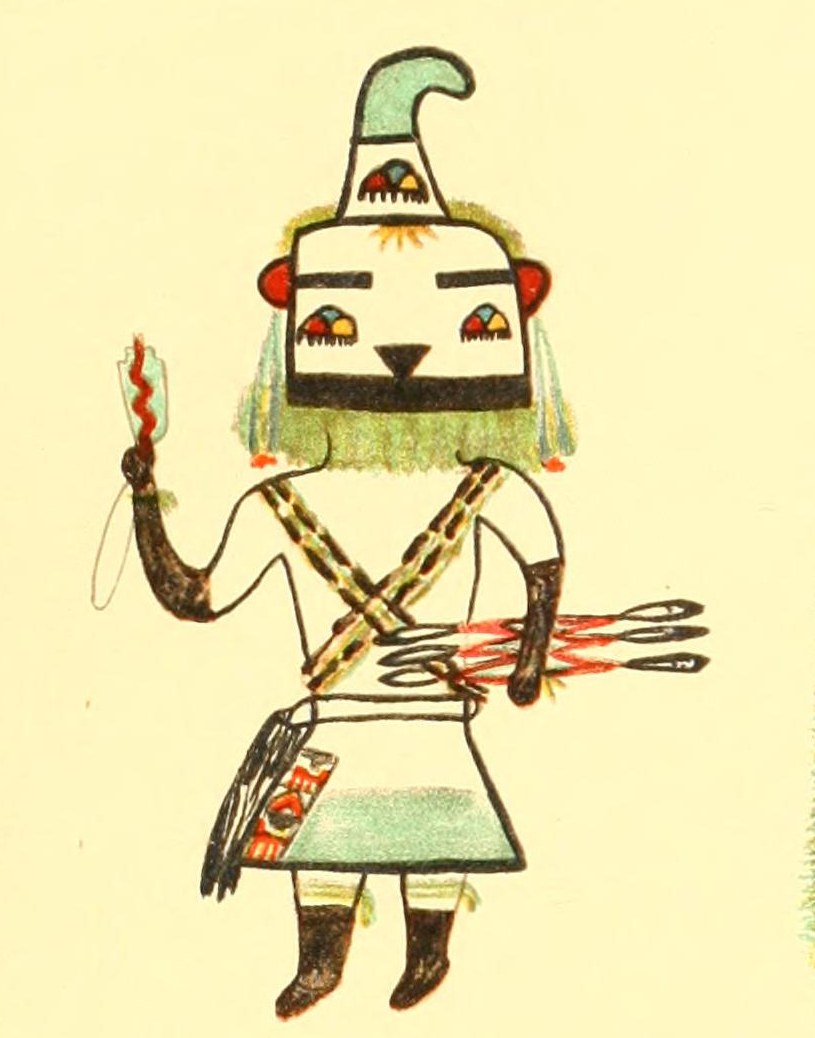
“This picture represents Cotokinuñwû, the Heart-of-the-sky god, who is readily recognized by the single curved horn on the head and the rain-cloud symbols on the face and base of the horn. In his left hand he carries the framework of sticks which symbolizes the lightning. … In the right hand he carries the whizzer or bull-roarer, a slat to which a string is attached, with lightning represented by a zigzag band in red.”
J. Walter Fewkes, Hopi Katcinas Drawn by Native Artists (1903), p. 120.
The lightning frame is a lattice of crossed sticks that shoots out and snaps back. Frame and bullroarer go together in Hopi ritual. At the Snake ceremony of Oraibi each of two warriors shot the frame four times toward the kiva hatch and swung the bullroarer four times: “These acts symbolize lightning and thunder” (Voth 1903, p. 328). In the god’s hands they are the things themselves. At Mishongnovi, on Second Mesa, eighteen bullroarers collected in 1887 went to the Smithsonian under the name “Thunder-Stick.”
It was at Mishongnovi that the board was stolen. The thieves are Pöokonghoya and his brother, the little War Twins who live with their grandmother outside every Hopi town. Kúhkuima of Shipaulovi told it. The twins were batting their ball across the country near Shongopavi and came into Mishongnovi, where the Flute priests were sitting in their kiva.
“In one of the trays that were standing on the floor was lying a lightning frame, thunder board, netted water jug, etc. This tray they grabbed and went out. None of the priests said anything.”
Kúhkuima, in H. R. Voth, The Traditions of the Hopi (1905), p. 84.
On the Corn-Ear Bluffs the owner of the rock sat watching them in the form of an old man. It was Cotokinuñwû. They started home.
“After they had gone a little distance they shot the lightning frame, and twirled the bullroarer several times. By the time they had reached the canyon, or gulch, right east of Shongopavi, and as they were beginning to ascend to the village, clouds had gathered in the sky and it began to thunder and rays of lightning began shooting through the sky. Soon it began to rain.
They began to run towards their house, and just as they arrived there they once more shot the lightning frame and twirled the thunder board. By this time it thundered very hard and loud, and lightning was flashing. One of the Hopi houses in the village was struck and shattered.”
Voth (1905), p. 85.
Their grandmother called them mischief makers. They hid frame and board in two covered pots, “and because the Pöokonghoyas afterwards had these things they were the cause that it always rained and the Hopi had good crops.” The priests’ thunder board ends in the keeping of the gods who make the weather.
Bought with toucan feathers
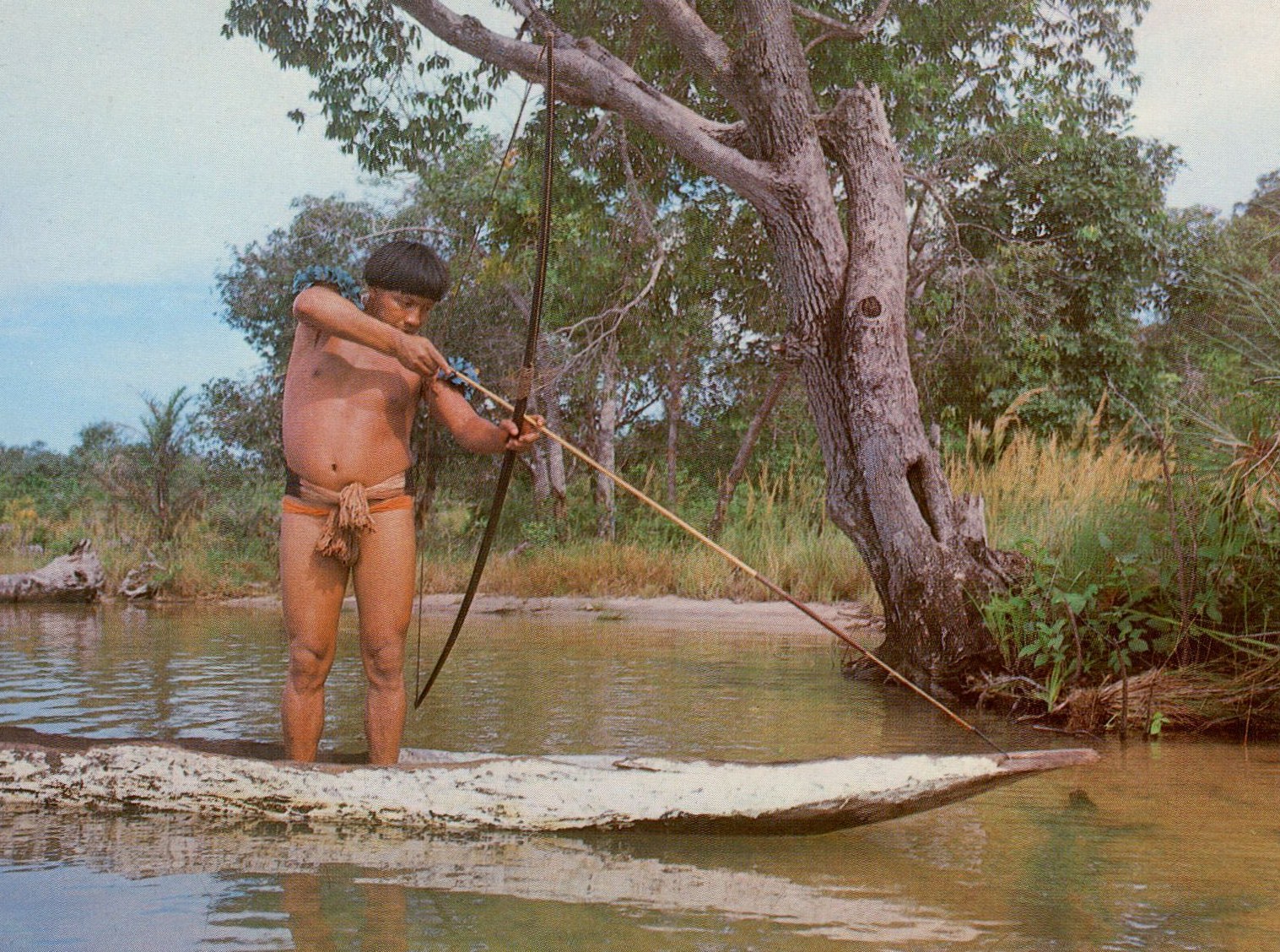
In central Brazil the bullroarer changes hands by trade, and the maker of thunder is one of the traders. The Kamaiurá live beside Lake Ipavu on the Upper Xingu, a southern tributary of the Amazon in Mato Grosso. Yanamá was one of the first Kamaiurá made by the creator Mavutsiné.
“Yanamá, for instance, created tupán, thunder and lightning, well known in Tupi mythology. From akán, the fish, Yanamá obtained the bull-roarer (urivurí) in exchange for toucan feathers. Later Yanamá gave the bull-roarer to the piqui tree who taught him how to make piqui oil.”
Kalervo Oberg, Indian Tribes of Northern Mato Grosso, Brazil (1953), p. 53.
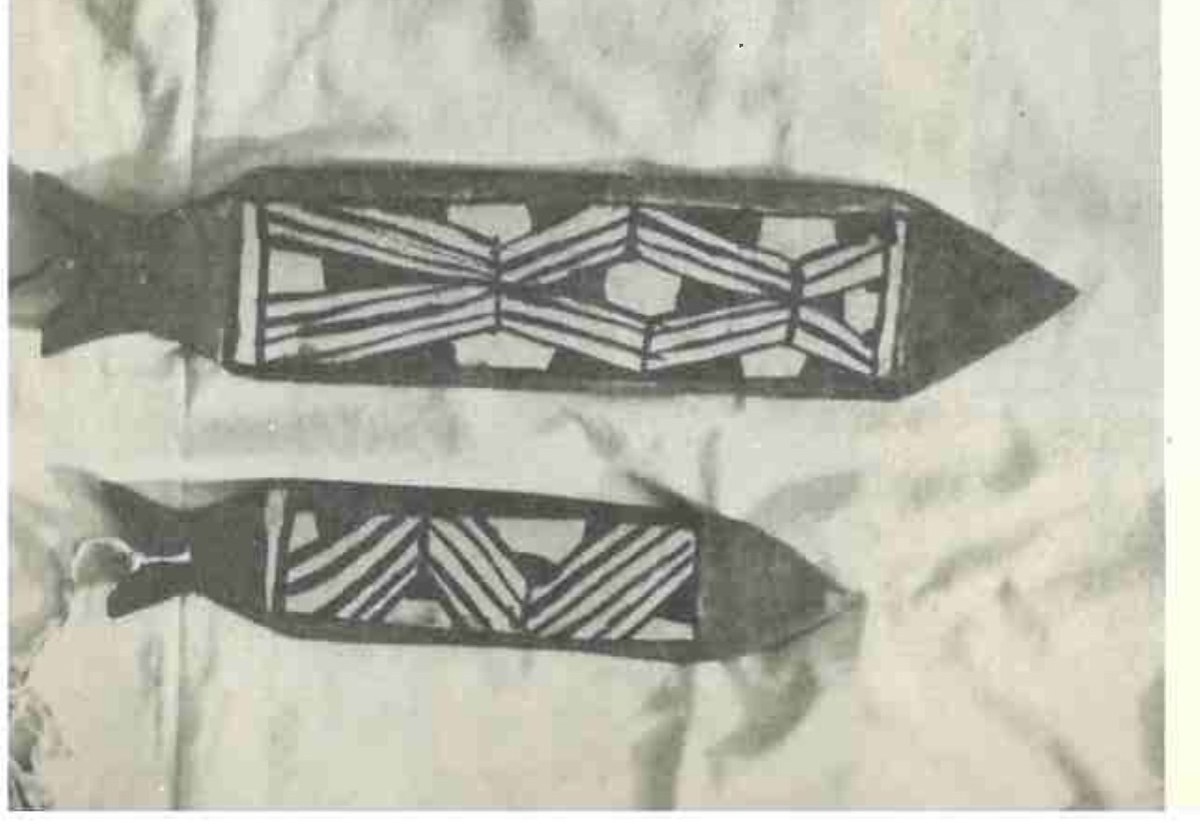
The fish is “the mythical dogfish,” and the price was red toucan feathers (p. 24). The instrument still looks like its first owner: it “is about 18 inches in length, is shaped like a fish and is covered with painted zigzag lines or diamond-shaped designs in red over a black or white surface” (pp. 54–55). A woman who saw it would lose her hair, swell and sicken. And it still does the work of the man who bought it. When the dance for the fruit trees fails to bring the rains, it is “repeated with the use of the urivurí, bull-roarer, which is specifically used to induce rain” (p. 57).
On the neighbouring Kulisehu River the Bakairi, who speak a Carib language unrelated to Kamaiurá, put the owner into the name: they call the instrument yelo, “their common word for lightning and thunder, roughly ‘thunderstorm’” (von den Steinen 1894, p. 328; translated from the German).
Nenek’s board
On the far side of the Pacific the board is in the storm-maker’s hand again. The Semaq Beri are forest people of the Tekai River in Pahang, Malaysia, in the middle of the Malay Peninsula. This is how their weather is made:
“Thunder, they say, is caused by a spirit called Nenek (Mal. = ancestor), who makes a noise in his armpits by banging his arms against his sides. He also makes the lightning by flashing about a thin board which is attached to a string (i.e., a bull-roarer).”
Ivor H. N. Evans, “Some Sakai Beliefs and Customs,” Journal of the Royal Anthropological Institute 48 (1918), p. 191.
Nenek is “ancestor,” or grandfather, the title the Jicarilla give their Thunder. He owns a thin board on a string and whirls it in the sky, as Thunder man whirled his sack.
Whirled back at him
Thunder’s title holds even where no cult keeps the board. The Coast Yuki of the Mendocino shore in California used no bullroarer in any sacred ceremony. Their creator was the thunder god Keyumka, and the toy kept his name: “The instrument was called tinem (thunder) and was openly twirled by boys to stop a thunder storm” (Loeb 1932, pp. 55–56). In the north-east of Scotland boys whirled a slat of wood on twine during thunder, “under the belief that the thunder would cease, or that the thunderbolt would not strike,” and called it the “thunner-spell” (Gregor 1881, p. 153).
In the hills of Perak and Kelantan, Malaysia, the Jahai have a toy bullroarer and a thunder god, Karei, with an ear for noise. A Jahai woman silenced a pack of shouting children with one line: “Pen un, pen un menimin, Karei lawaj!” If you play like that, Karei will soon strike (Schebesta 1954, p. 188). The boys’ bullroarer, the pusign, answered to the same god:
“This bullroarer is only a children’s toy. If the children now and then get too loud with it, the adults bring them to silence with a reference to Karei.”
Paul Schebesta, Die Negrito Asiens, vol. II/1 (1954), p. 189; translated from the German.
Thunder’s own
Gift, copy, purchase, theft: each is a way of holding something that belongs to someone else. The Pomo hold Thunder man’s doll. The Jicarilla swing a copy, patterned on an original that has gone home to Flint Mountain. The Hopi priests kept a thunder board until the gods walked into their kiva and took it. The Kamaiurá hold a thing that was paid for. Even the Jahai child has his toy on sufferance, until Karei hears.
The pattern runs round the Pacific and across the Americas, and the same small furniture turns up far apart: a sky being who whirls a board or a sack on a string, an old man called Grandfather, a zigzag of lightning painted on the blade. Details like these travelled with the instrument. The bullroarer went from people to people across the world, and with it went the knowledge that it was borrowed, and from whom.
On the last night of the first Hactcin ceremony the Jicarilla were handed the new groaning stick and watched the old one go. Far off, lightning flashed four times: Thunder lighting the way for the messenger who was bringing him back his own.
Key sources
- Edwin M. Loeb, Pomo Folkways, University of California Publications in American Archaeology and Ethnology 19(2) (1926), p. 222 n. 50 (“doll of Thunderman”), p. 302 (the bullroarer Thunder man’s voice), pp. 323–324 (cure for thunder fright), p. 352 (Jim Pumpkin’s initiation), pp. 379–380 (the Thunder ceremony), pp. 390–391 (William Benson’s story of the first storm and the first Thunder ceremony).
- Edwin M. Loeb, The Western Kuksu Cult, UCPAAE 33(1) (1932), p. 4 (Sherwood Pomo: the voice of Makila), pp. 55–56 (Coast Yuki: tinem and the thunder god Keyumka).
- George M. Foster, A Summary of Yuki Culture, Anthropological Records 5(3) (1944), p. 210 (“thunder voice”; the spring).
- Morris Edward Opler, Myths and Tales of the Jicarilla Apache Indians, Memoirs of the American Folk-Lore Society 31 (1938), “The Origin of the Hactcin Ceremony”: p. 147 and n. 1 (Black Lightning makes the bullroarer), p. 149 (it is strung and spun), pp. 151–152 (Thunder Hactcin whirls it out of sight), p. 165 (Thunder leaves it and goes home), pp. 183–184 (the people make a copy), pp. 199–200 (the original returned to Thunder).
- Franciscan Fathers, An Ethnologic Dictionary of the Navaho Language (Saint Michaels, Arizona, 1910), p. 414 (the Navajo groaning stick of lightning-riven pine).
- J. Walter Fewkes, Hopi Katcinas Drawn by Native Artists, Twenty-first Annual Report of the Bureau of American Ethnology (1903), p. 91 and pl. XXX (the War Twins), p. 120 and pl. LVIII (Cotokinuñwû with lightning frame and bullroarer).
- H. R. Voth, The Traditions of the Hopi, Field Columbian Museum Anthropological Series 8 (1905), tale 20, “Pöokonghoya and His Brother as Thieves,” told by Kúhkuima of Shipaulovi, pp. 84–85.
- H. R. Voth, The Oraibi Summer Snake Ceremony, Field Columbian Museum Anthropological Series 3(4) (1903), pp. 327–328 and n. 1 (lightning frame and bullroarer: “These acts symbolize lightning and thunder”).
- Paul Schebesta, Die Bambuti-Pygmäen vom Ituri: Die Religion der Ituri-Bambuti (Brussels: Institut Royal Colonial Belge, 1950), p. 15 (thunder and the bullroarer as the voice of Asobé).
- A. W. Howitt, The Native Tribes of South-East Australia (London: Macmillan, 1904), p. 538 (the Mudthi, thunder and Daramulun).
- Kalervo Oberg, Indian Tribes of Northern Mato Grosso, Brazil, Smithsonian Institution, Institute of Social Anthropology Publication 15 (1953), p. 24 (the dogfish and the toucan feathers), p. 53 (Yanamá, thunder and the trade), pp. 54–55 (the instrument and its taboo), p. 57 (used to induce rain).
- Karl von den Steinen, Unter den Naturvölkern Zentral-Brasiliens (Berlin: Reimer, 1894), pp. 327–328 (the Bakairi yelo).
- Ivor H. N. Evans, “Some Sakai Beliefs and Customs,” Journal of the Royal Anthropological Institute 48 (1918), p. 191 (Nenek).
- Paul Schebesta, Die Negrito Asiens, vol. II/1: Wirtschaft und Soziologie (Vienna-Mödling: St.-Gabriel-Verlag, 1954), pp. 188–189 (Karei and the Jahai pusign).
- Walter Gregor, Notes on the Folk-Lore of the North-East of Scotland (London: Folk-Lore Society, 1881), p. 153 (the thunner-spell).