Atlas Essay —
The Kurnai Fall
In Gippsland, boys shown the bullroarers were told how the secret reached women and the first world ended
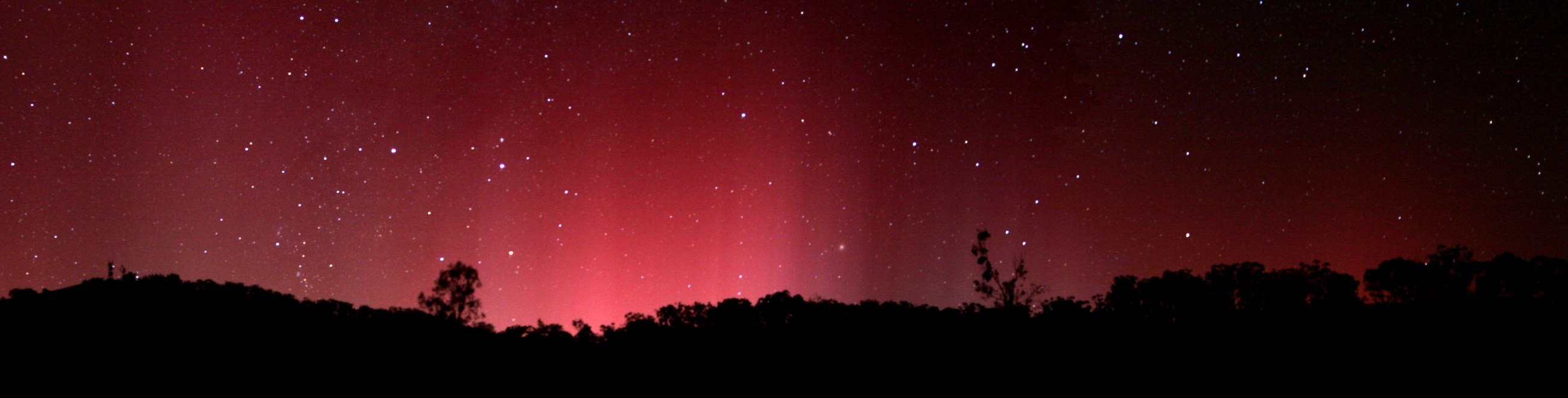
Towards sunset one day in late January 1884, on a little plain at the edge of the tea-tree scrub in Gippsland, in south-eastern Australia, six Kurnai boys knelt with blankets over their heads while sixteen men came out of the bush whirling bullroarers. The blankets came off. An old man with a spear-thrower pointed at the sky, then lower, then at the men with the roarers, and said “Look there! Look there! Look there!” Then he told the boys why they must never tell. Long ago a man had given this secret to the women. The sky caught fire, men went mad and speared their own children and wives, the sea came over the land, and the great father who had lived among them went up into the sky and never came back.
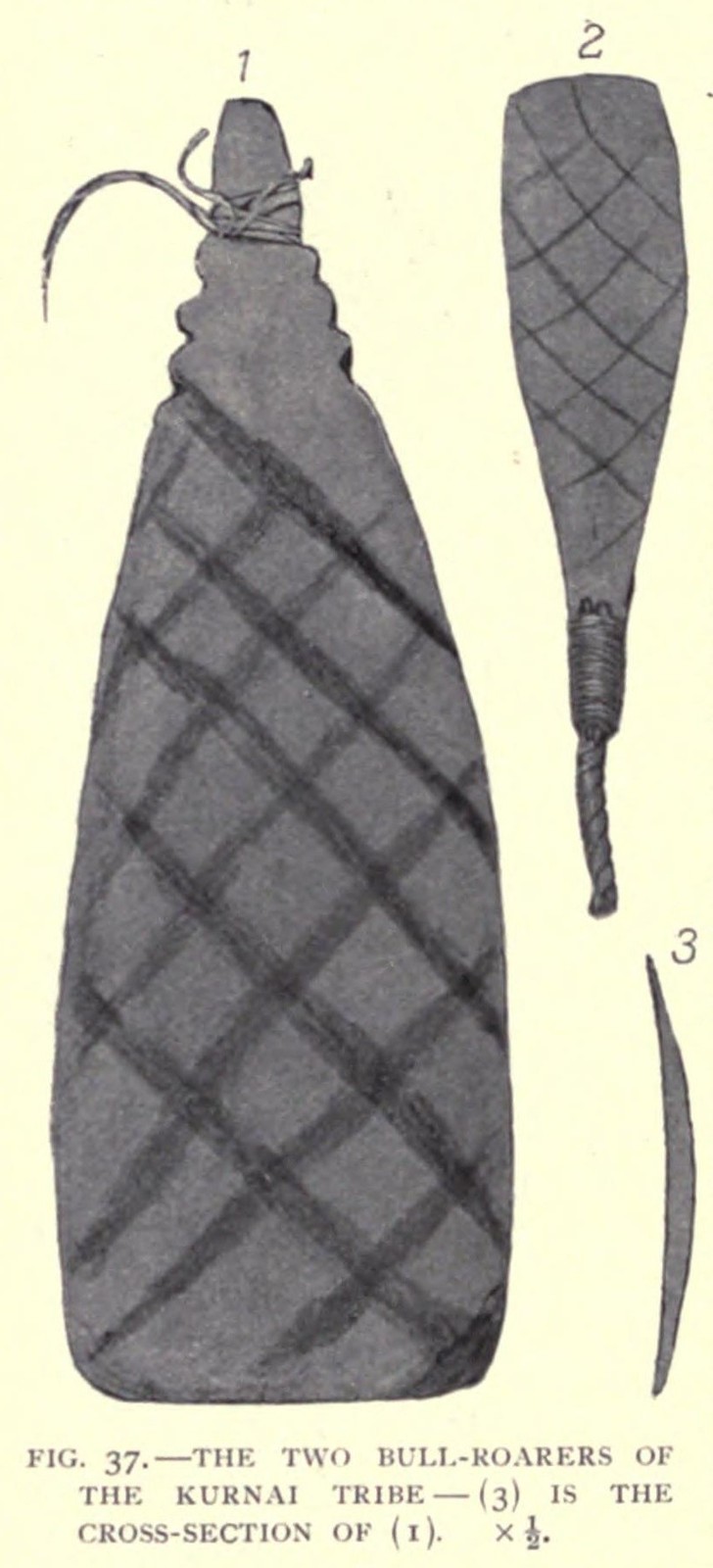
The Kurnai told a Fall at the moment the bullroarers were revealed. Forbidden knowledge reaches women; the first order ends in men spearing their own children and wives, and a flood; the sky-father withdraws for good. The novices heard it with the instruments in front of them and then took them in their own hands.
In brief
- At the Jeraeil, the Kurnai initiation, the headman told the story straight after the boys first saw the two bullroarers, Tundun and his wife. Then the boys were made to swing them (Howitt 1885, pp. 312–314; 1904, pp. 629–631).
- The story holds the parts of Genesis 2–7: a father who gave the arts and the names; a secret that must not pass; its passage to women; “fathers killing their children, husbands their wives, and brethren each other”; a flood that leaves a remnant; and a god who no longer lives on earth.
- The oath was the story in small. An older account has the spear held at each boy’s eye: “If you tell this to any woman you will die — you will see the ground broken up and like the sea” (Fison and Howitt 1880, p. 198).
- The Fall was kept alive outside the rite. When the aurora rose, the Kurnai swung a dead man’s hand at it and cried “do not let it burn us up,” and the old men ordered an exchange of wives. In the story the fire drove husbands to kill their wives; in the camp it made them exchange them for a day (Howitt 1904, pp. 170, 277, 430).
- Neighbours taught their boys pieces of the same story. Daramulun of the Yuin went up after a flood; Bunjil of the Kulin went up in a whirlwind; Baiame of the Wiradjuri killed the being who ate boys, and the bullroarer was made from his voice.

“Look there!”
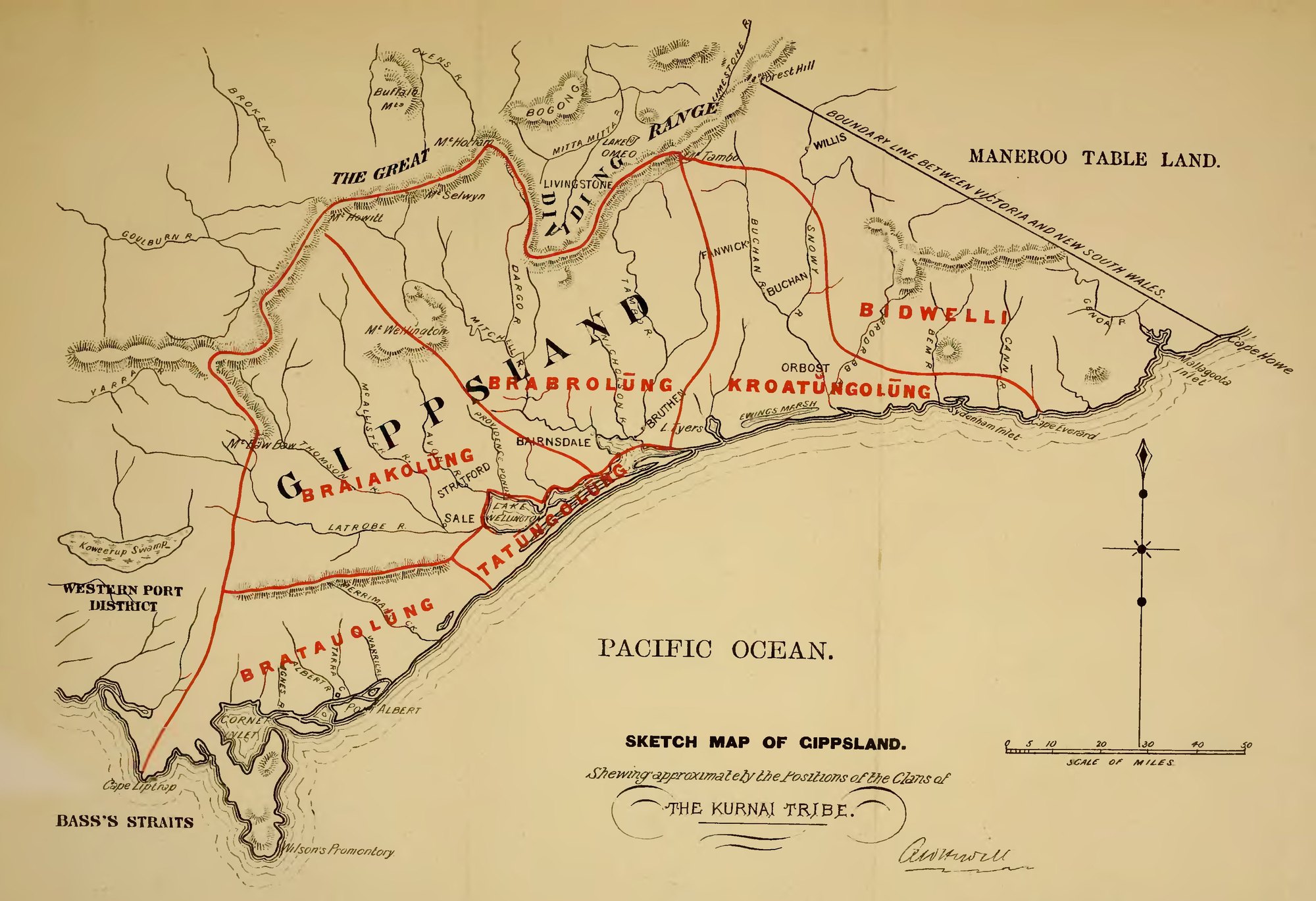
The Kurnai, today the Gunaikurnai, held the coast and river country of Gippsland, the south-eastern corner of Victoria, between the Australian Alps and Bass Strait. Their initiation was the Jeraeil, a word meaning “leafy,” from jerung, a branch (1904, p. 617). The last great Jeraeil had been held nearly a quarter of a century before. Alfred Howitt, who had known the Kurnai for twenty years, sent round the call in August 1883, and the old men held it again at the end of the following January (Howitt 1885, pp. 302–304). They were glad to hold it, they said, because the young men “had been too much with the whites, so that now they paid no attention either to the words of the old men or to those of the missionaries” (1904, pp. 617–618). They told him it was “the exact reproduction of the Jeraeil of their fathers.”
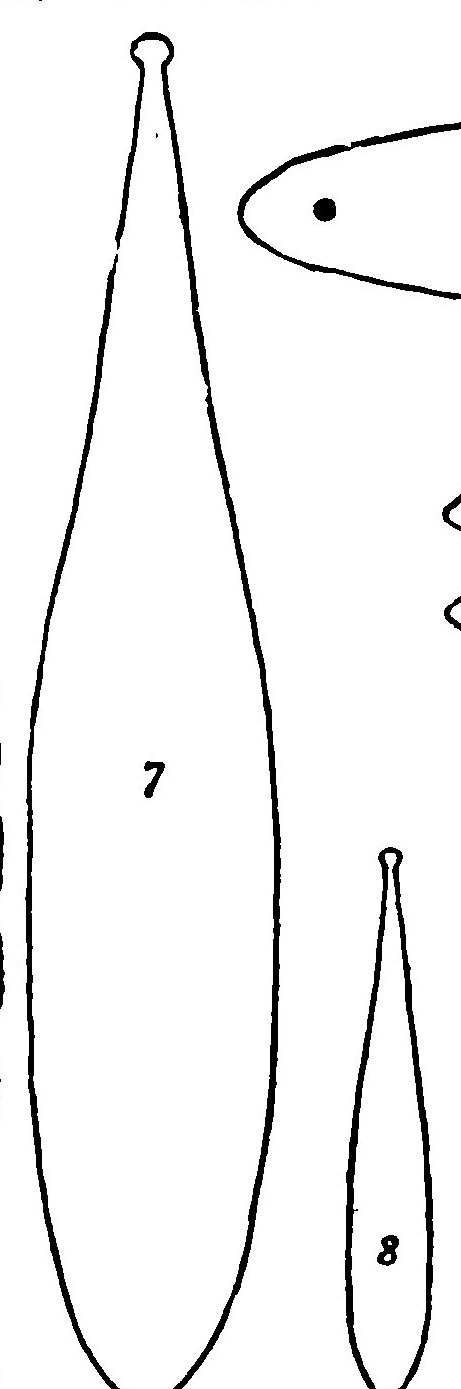
On the first night the boys were “laid to sleep as boys, in order to be awakened as men” (1904, p. 623). Their guardians had a phrase for what came next: “This afternoon we will take you, and show your grandfather to you.” The grandfather was the bullroarer. The Kurnai had two, the larger Tundun, “the man,” and the smaller Rukut-Tundun, “the woman, or wife of Tundun” (1904, p. 628). Howitt was sitting with the guardians when the men in the scrub tried their new instruments, and he heard, several times, “the peculiar screech of the ‘woman Tundun.’” An hour before sunset the boys were led out “for a walk.”
The second Headman emerged from the scrub at about a hundred and fifty yards’ distance, holding his bull-roarer, a “man Tundun” in his hand, which he commenced to whirl round, making a dull-sounding roar. The man immediately following him had a “woman Tundun”; and in this way sixteen men came slowly forward, each one, as he came into the open, whirling his instrument and adding to the roaring and screeching din. … When this ceased, the Headman ordered the novices to stand up, and raise their faces towards the sky. Then, pointing upwards with his spear-thrower, the blanket was pulled off the head of each boy by his Bullawang, and the eyes of all the novices being directed to the uplifted throwing-stick, the Headman said, “Look there! Look there! Look there!” successively pointing first to the sky, then lower, and finally to the Tundun men.
Two old men now immediately ran from one novice to the other, saying in an earnest manner, “You must never tell this. You must not tell your mother, nor your sister, nor any one who is not Jeraeil.” In the olden times spears were held pointed at the novices at this juncture, to emphasise the threats that were made, should they reveal the mysteries unlawfully. The old Headman then, in an impressive manner, revealed to the novices the ancestral beliefs, which I condense as follows:—
A. W. Howitt, The Native Tribes of South-East Australia (1904), pp. 629–630; an earlier wording in “The Jeraeil” (1885), pp. 312–313.
What he revealed was this:
Long ago there was a great Being, called Mungan-ngaua, who lived on the earth, and who taught the Kurnai of that time to make implements, nets, canoes, weapons—in fact, all the arts they know. He also gave them the personal names they bear, such as Tulaba. Mungan-ngaua had a son named Tundun, who was married, and who is the direct ancestor—(the Wehntwin, or father’s father)—of the Kurnai. Mungan-ngaua instituted the Jeraeil, which was conducted by Tundun, who made the instruments which bear the names of himself and of his wife.
Some tribal traitor once impiously revealed the secrets of the Jeraeil to women, and thereby brought down the anger of Mungan upon the Kurnai. He sent fire (the Aurora Australis), which filled the whole space between earth and sky. Men went mad with fear, and speared one another, fathers killing their children, husbands their wives, and brethren each other. Then the sea rushed over the land, and nearly all mankind were drowned. Those who survived became the ancestors of the Kurnai. Some of them turned into animals, birds, reptiles, fishes; and Tundun and his wife became porpoises. Mungan left the earth, and ascended to the sky, where he still remains.
From that time, say the Kurnai, the knowledge of the Jeraeil and its mysteries has been handed down from father to son, together with the penalty for unlawfully revealing them, and for breaking the ordinance of Mungan—namely, destruction by his fire, or death at the hands of the men to whom his laws have been transmitted.
Howitt (1904), p. 630; an earlier wording in “The Jeraeil” (1885), pp. 313–314.
Mungan-ngaua means “our father”; Howitt adds that “He has no other name among the Kurnai” (1885, p. 313 n.). The old women knew there was a being in the sky called “our father,” and nothing more. “It is only at the last and the most secret part of the ceremonies that the novices are made aware of the teachings as to Mungan-ngaua” (1904, pp. 492–493).
The gesture and the story are one lesson: the spear-thrower travels from the sky, where Mungan now is, down to the instruments Tundun made, and the story tells how the father came to be up there. Finally the boys “were told to take the Tundun in hand, and to sound it, which they did with evident reluctance and apprehension” (1904, pp. 630–631). They had just been told what this object had once cost: the fire, the speared wives and children, the flood, and now it was in their hands.
The ground broken up and like the sea
Howitt had written the rite down once before, in 1880, from the headman Tulaba (Fison and Howitt 1880, p. 198 n.). That version is shorter and harder. The boys sit with their heads under possum rugs. An old man slips a throwing-stick under each rug and says, “Look at the murrawun—look where it is going to!” He lifts it, pointing upwards, and then points to the old men sounding the instruments in the twilight: “See the turndun!”
Each boy is held by an old man by the back of the neck with the left hand, while in the right he points a spear to the boy’s eye, and says, “If you tell this to any woman you will die—you will see the ground broken up and like the sea; if you tell this to any woman, or to any child, you will be killed.”
Lorimer Fison and A. W. Howitt, Kamilaroi and Kurnai (1880), p. 198.
The oath carries the Fall inside it. Telling a woman breaks up the ground and lets the sea in, as it did the first time. The same book keeps a second piece of the story, one of the few Kurnai traditions Howitt had then collected:
Long ago there was land to the south of Gippsland where there is now sea, and … at that time some children of the Kurnai, who inhabited the land, in playing about found a turndun, which they took home to the camp and showed to the women. “Immediately,” it is said, “the earth crumbled away, and it was all water, and the Kurnai were drowned.”
Fison and Howitt, Kamilaroi and Kurnai (1880), p. 269.
Here the betrayal is an accident, children playing. The result is the same, and it comes “immediately.” That shorter telling remembers the plain that went under Bass Strait, as The Bullroarer and the Flood argues. In the Jeraeil the flood is one clause in a longer sentence, and the sentence is about what the boys must now do: keep the thing from the women, or bring the end of the world down again.
Clause by clause
Set the headman’s story beside the opening chapters of Genesis and the two are built from the same parts. A father-god lives close to the first people and gives them what they have. One thing must not pass, and its passing breaks the world. Then come killing inside the family, a flood that leaves a remnant, and a god who no longer lives among men. The table follows the headman’s order.
| The Kurnai | Genesis | |
|---|---|---|
| The father on earth | Mungan-ngaua “lived on the earth” and taught the Kurnai “all the arts they know.” | “The LORD God planted a garden eastward in Eden; and there he put the man” (2:8); “Unto Adam also and to his wife did the LORD God make coats of skins” (3:21). |
| The names | “He also gave them the personal names they bear.” | “Male and female created he them; and blessed them, and called their name Adam” (5:2). |
| The secret and its penalty | The mysteries of the Jeraeil, handed down “together with the penalty for unlawfully revealing them … destruction by his fire.” | “In the day that thou eatest thereof thou shalt surely die” (2:17). |
| The breach | “Some tribal traitor once impiously revealed the secrets of the Jeraeil to women.” | “She took of the fruit thereof, and did eat, and gave also unto her husband with her” (3:6). |
| Killing in the family | “Men went mad with fear, and speared one another, fathers killing their children, husbands their wives, and brethren each other.” | “Cain rose up against Abel his brother, and slew him” (4:8); “the earth was filled with violence” (6:11). |
| The flood | “The sea rushed over the land, and nearly all mankind were drowned. Those who survived became the ancestors of the Kurnai.” | “And Noah only remained alive, and they that were with him in the ark” (7:23). |
The Kurnai give the story two turns. In Eden the woman takes the knowledge herself and hands it to the man; in Gippsland a man hands it to the women. And in Eden the people are driven out while God stays in the garden; in Gippsland the people stay and the father goes up. The second turn moves the parting. Genesis puts the expulsion first, before Cain and before the flood, so that the loss of the garden opens the long decline. The Kurnai put Mungan’s going last, after the sea has come over the land and the survivors have become the Kurnai. His departure closes the story, and what he leaves behind on earth is the rite.
The forbidden thing is the same kind of thing in both: knowledge of what the sacred is made of. In Eden it is the knowledge of good and evil. In Gippsland it is the knowledge that the voice of Tundun is a board of wood whirled by men, and that the men are Tundun’s grandsons. Either way, once the wrong people know it, the old intimacy with the father is over.
One more part is closer than it looks. In Eden the god is heard before he is seen: “the voice of the LORD God walking in the garden” (3:8). At the Jeraeil, on the night the boys were shown the instruments, they went out with their guardians, “each carrying a Tundun,” and walked slowly round the women’s camp in the dark, swinging them, so that “Tundun is thus supposed by the women and children to be walking round the camp before returning to the place whence he came” (1904, pp. 631–632). In both places the sacred is a voice that walks.
Mungan’s fire
The Kurnai did not leave the Fall in the past. The aurora australis rises over Gippsland only “on very rare occasions” (1904, p. 170), and when it came the Kurnai saw the first catastrophe beginning again. Howitt learned what they did:
When the aurora australis was seen, all the Kurnai in the camp swung the “dead hand” towards the alarming portent, shouting such words as these: “Send it away! send it away! do not let it burn us up!”
A. W. Howitt, “On Some Australian Beliefs,” Journal of the Anthropological Institute 13 (1884), p. 189; again in 1904, p. 430.
The bret was “the dried hand of one of their dead kinsfolk” (1904, p. 277), invoked in times of danger. The ancestors were being asked to push back Mungan’s fire. And those nights were the only time the old marriage of all to all came back, in an exchange of wives:
This was thought by them to be a sign of Mungan’s anger, and the old men ordered an exchange of wives for the time.Howitt, The Native Tribes of South-East Australia (1904), p. 170
Elsewhere he sets both acts on the same night: the dead hand swung at the sky, and the wives exchanged for the day (1904, p. 277). In 1884 Howitt already read the exchange as an expiation, “connected with a supposed impending supernatural calamity which the deceased ‘ancestors’ were at least able to prevent, and I suspect that they were supposed to have caused it” (1884, p. 189 n.). In the story, the fire in the sky drove husbands to kill their wives. In the camp, the same fire made husbands give their wives up for a day. Every red night in the south brought back the first part of the Fall, and the old men answered it with a rite.
Tundun’s paddle
Tundun and his wife survived the flood as porpoises. The Kurnai roarer, Howitt noted, is shaped “much that of the little bark paddle which the Kurnai use when sitting down in their canoes,” and the Kurnai used that likeness. A blade sometimes came off its string in the dark. If a woman or a child found it, “their curiosity is satisfied by the statement that it is a ‘paddle belonging to Tundun’ which he is supposed to have dropped in returning home” (1904, p. 632). The lie was told for exactly the accident in the older story, where children found a turndun and showed it to the women. The paddle belongs to a being who went into the sea.
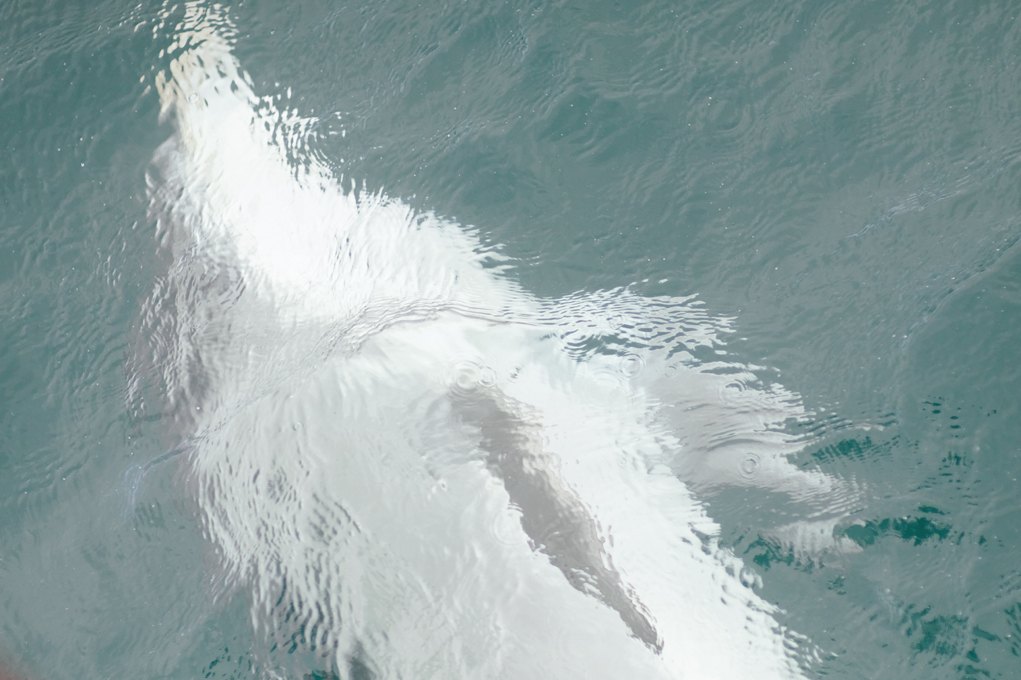
The Kurnai were not alone on this coast. Howitt notes that the Coast Murring, the Yuin-speaking people north of the border in New South Wales, “also have a deluge legend, which, inter alia, recounts how an eminent man of former times became a porpoise” (1885, p. 314 n.).
Once the boys had held the Tundun, they used it on the women that same night. Howitt watched the new men take to it:
At the Jeraeil I am describing the novices thoroughly entered into the fun of frightening the women; and, having got over their awe of the bull-roarers, they made an outrageous noise with them. The moment the roaring and screeching sounds were heard there was a terrible clamour of cries and screams from the women and children, to the delight of the novices, who now in their turn aided in mystifying the uninitiated.
Howitt (1904), p. 632; (1885), p. 315.
The women were told that at the secret parts of the Jeraeil “Tundun himself comes down to make the boys into men,” and that if they saw or heard what went on, he would kill them (1904, p. 625). One of the headmen put it in his own words: “If a woman were to see these things or hear what we tell the boys, I would kill her.” Howitt added: “I am certain that, at the time, the old man meant what he said” (1904, p. 626). That is the penalty of the story, “death at the hands of the men to whom his laws have been transmitted,” spoken by one of those men. The terror in the women’s camp at night was the price of keeping the Fall from happening again.
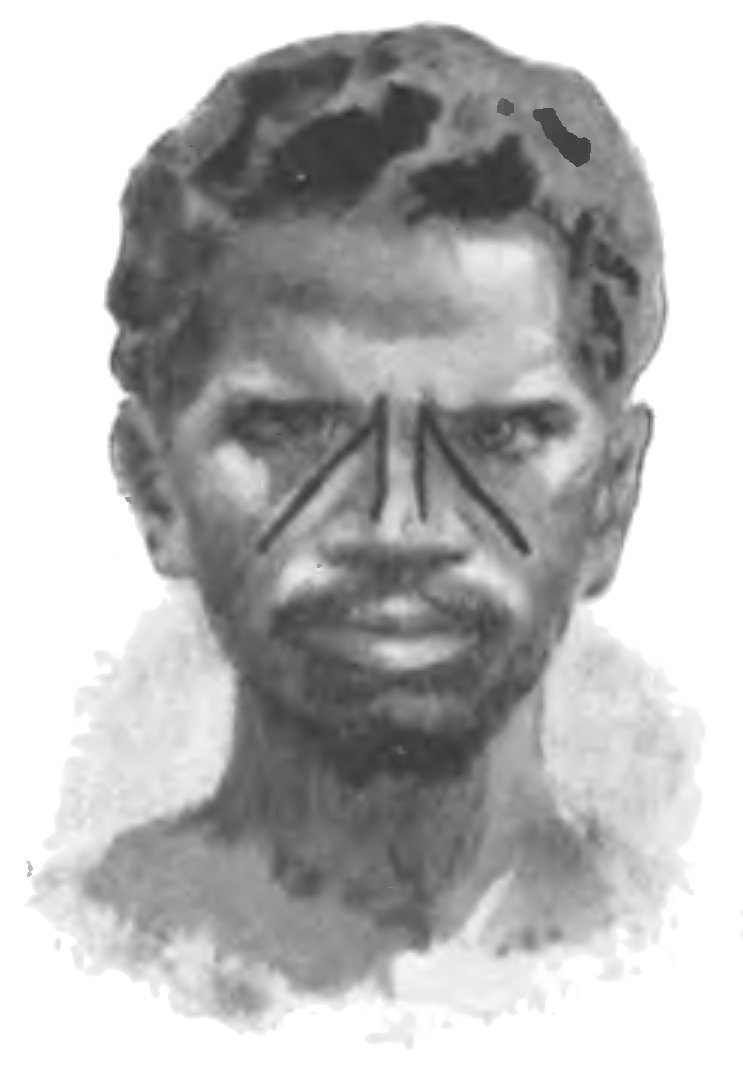
The fathers who went up
The Kurnai told the most complete Fall in south-eastern Australia, and their neighbours taught their own boys pieces of the same story (Plate II). Howitt summed up the being they all revered in one line: “This supernatural being, by whatever name he is known, is represented as having at one time dwelt on the earth, but afterwards to have ascended to a land beyond the sky, where he still remains, observing mankind” (1904, p. 500).
The nearest version belongs to the Yuin of the south coast of New South Wales, the people whose Kuringal initiation Howitt had attended. It was taught at the rite, and it has a flood and an ascent. Daramulun lived on the earth with his mother when “the land extended far out where the sea is now.”
After Kaboka, the thrush, had caused a great flood on the earth, which covered all the coast country, there were no people left, excepting some who crawled out of the water on to Mount Dromedary. Then Daramulun went up to the sky, where he lives and watches the actions of men. It was he who first made the Kuringal and the bull-roarer, the sound of which represents his voice. He told the Yuin what to do, and he gave them the laws which the old people have handed down from father to son to this time.
Howitt (1904), p. 495: “Such are the beliefs which are taught at the Yuin Kuringal.”
Inland, on the Monaro tableland, the Ngarigo said that Daramulun died and his ghost went up to the sky, and that his name was told to a young man only when his tooth was knocked out (1904, p. 495). West of the Kurnai, the Kulin of the Yarra River said that Bunjil “finally went up to the sky-land with all his people … in a whirlwind,” and “there, as the old men instructed the boys, he still remains, looking down on the Kulin” (1904, pp. 491–492). The Wurundjeri elder Berak remembered being taken out of camp at night as a boy, “before his whiskers grew,” by his mother’s brother, who pointed at the star Altair with his spear-thrower and said: “See! that one is Bunjil; you see him, and he sees you.” The Kurnai headman pointed his spear-thrower the same way.
Farther north the story turns on the secret itself. The Wiradjuri of the Macquarie River, in central New South Wales, told R. H. Mathews at a Burbung camp on Bulgeraga Creek why the bullroarer exists. Dhuramoolan, whose voice “resembled the rumbling of distant thunder,” took the boys away to make them men, and the survivors told Baiame “that Dhuramoolan had feasted on their fellows.” Baiame destroyed him, split a tree and made a bullroarer that “had Dhuramoolan’s voice,” and then gave the order the Kurnai traitor broke. He “thought it would be better not to communicate Dhuramoolan’s imposition to the women and uninitiated, but to continue to make them believe that he came and took the boys away and burnt and resurrected them as heretofore” (Mathews 1896, pp. 297–298). The Kurnai story told what happens when that order is broken. Its Wiradjuri neighbour told who gave the order in the first place.
“The old men told us so”
Howitt had known the Kurnai for twenty years before he heard the story of Mungan, and they made sure of it. At the Jeraeil the old men would not go on until he proved, in a thick scrub “far from the possibility of a woman’s presence,” that he had been initiated by the Yuin. He showed them the Yuin bullroarer, then the smaller of the two used by the Chepara of southern Queensland. “They at once pointed out to me, after inspecting it, that there ought to be another, and a larger one.” Then they wanted the name of the “wicked man” who had betrayed the secrets of the Tundun to him; “they were silenced, if not satisfied, when I said that the man who first told me was dead” (1904, pp. 627–628). Of the two who had told him, the living one stayed away from the Jeraeil, “ostensibly through sickness, but really from consciousness of tribal treachery, and fear of the consequences.” The story of Mungan reached Howitt only when the headman told it to the six boys: “These the Kurnai carefully concealed from me until I learnt them at the Jeraeil” (1885, p. 321 n.).
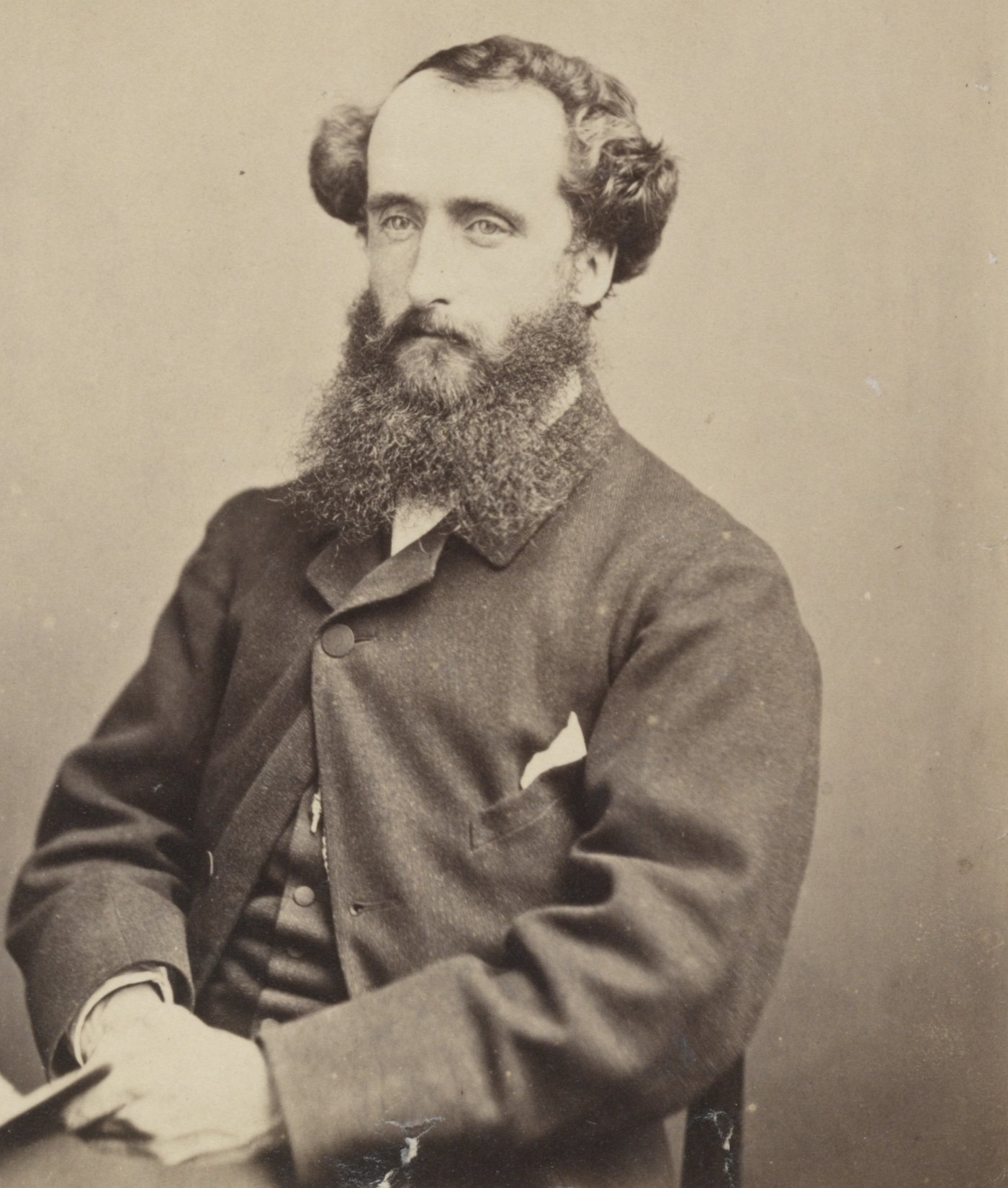
The men who told it had learned it before the missions came. The Gippsland missions were founded “about 1860, therefore subsequently to the Jeraeils at which my most trusted native informants were initiated,” and asked about the legends of the ceremonies, “including that of Mungan-ngaua and his son Tundun, they said, ‘The old men told us so’” (1904, pp. 504–505). Mungan, Howitt saw, was the same father as Daramulun and Baiame, and he thought it “perhaps indicative of great antiquity, that this identical belief forms part of the central mysteries of the initiations of a tribe so isolated as the Kurnai” (1885, p. 321). His verdict on the sky-father belief was that it “has been locally evolved, and not introduced from without” (1904, p. 507).
The boys become the keepers
The Kurnai told their Fall at the one moment in a man’s life when it bore on him most: the evening he first saw the bullroarers. The headman told it as the reason for the oath the boys had just sworn, with the instruments that caused the catastrophe a few yards away, and then he put the instruments in their hands. From that night each of them carried the secret whose loss had ended the first world. Each of them walked round the women’s camp in the dark as the voice of Tundun. Each was sworn to the penalty, the fire in the sky or a spear from the men who held Mungan’s law. Whenever the aurora rose they would see Mungan’s fire and remember what it meant. Genesis tells everyone how paradise was lost. The Jeraeil chose a few boys, told them, and made them the men who had to keep it from being lost again.
Then they met their mothers one last time as boys. At the dry creek near the Thomson River each mother stood with a vessel of water. Her son splashed her with a stick, and she filled her mouth and spat the water over his face and head. “The novices then walked off to the young men’s camp, and the women went to their own. One of them was crying at the loss of her son” (1904, p. 637).
Key sources
- A. W. Howitt, The Native Tribes of South-East Australia (London: Macmillan, 1904). Scan. The Jeraeil, pp. 616–637 (“showing the Grandfather” and the headman’s story, pp. 628–631; frightening the women and Tundun’s paddle, pp. 631–632; the mothers’ water, p. 637); Mungan-ngaua, pp. 492–493; Bunjil, pp. 491–492; Daramulun among the Yuin and Ngarigo, p. 495; the sky-father and the missions, pp. 500, 504–507; the aurora, pp. 170, 277, 430.
- A. W. Howitt, “The Jeraeil, or Initiation Ceremonies of the Kurnai Tribe,” Journal of the Anthropological Institute 14 (1885), pp. 301–325, esp. pp. 302–304, 312–315 and 321. Scan.
- A. W. Howitt, “On Some Australian Beliefs,” Journal of the Anthropological Institute 13 (1884), esp. p. 189 (the aurora and the dead hand) and p. 194 (Bunjil and Daramulun go up).
- Lorimer Fison and A. W. Howitt, Kamilaroi and Kurnai (Melbourne, 1880), pp. 195–198 (the initiation and the oath) and Appendix E, pp. 267–270 (the turndun and the drowned land). Scan.
- R. H. Mathews, “The Būrbŭng of the Wiradthuri Tribes,” Journal of the Anthropological Institute 25 (1896), pp. 295–318, esp. pp. 297–298.
- Genesis 2–7, King James Version.
- On this site: the Kurnai flood beside its Ice Age shoreline, The Bullroarer and the Flood and Myths That Remember Sahul; the Jeraeil as a showing of the Dreaming, Everywhen; Tundun and his wife as a pair, Two Voices and Grandfather and Mother; the myths in which women owned the instruments first, Mother Right.