Atlas Essay —
Born in Summer
The Great Basin and the Colorado Plateau · Utah, Idaho, Colorado, Arizona and north-eastern California, United States
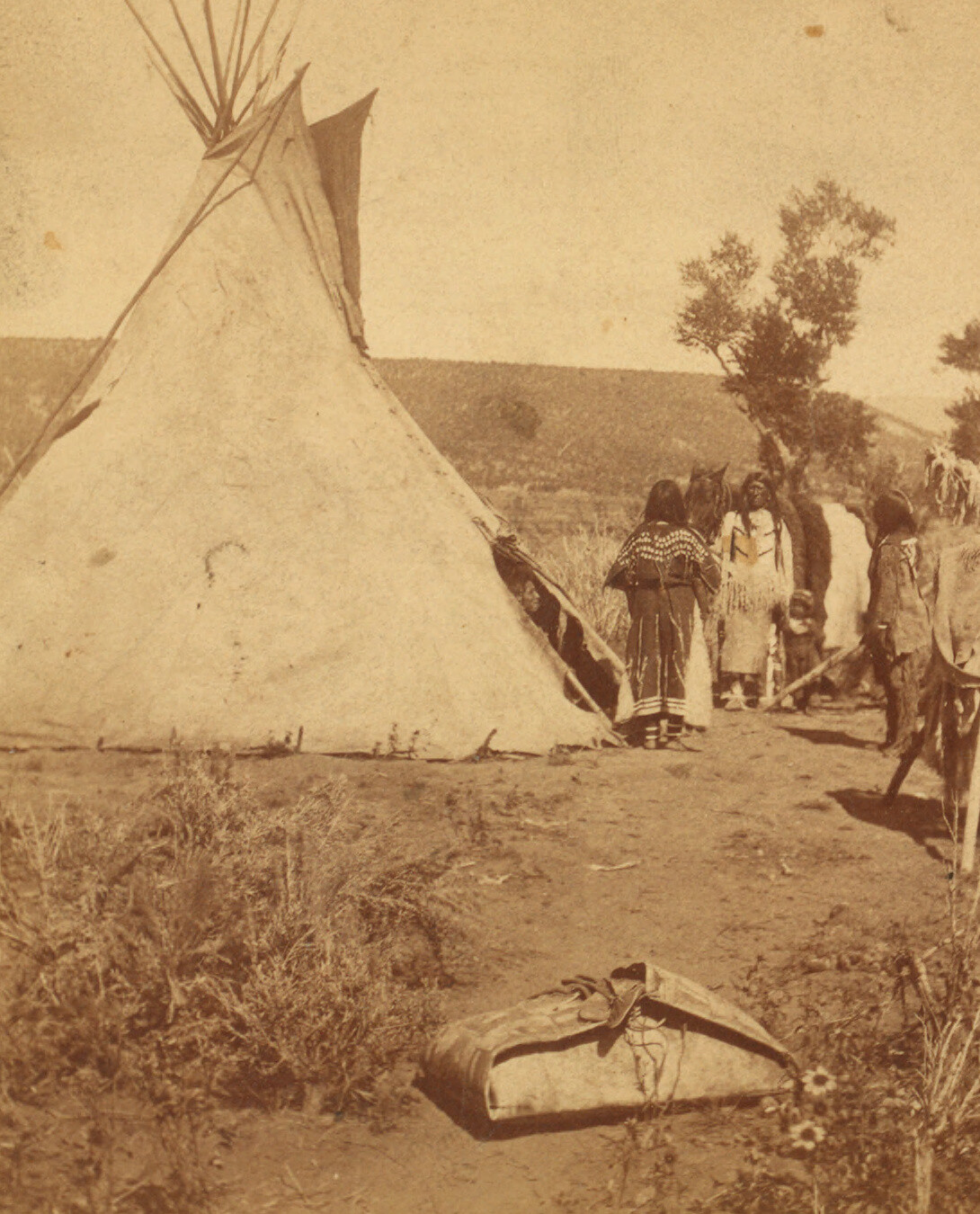
It was winter, and some old men were boiling a cottontail, which brings snow. So they sent a boy outside with a bullroarer cut from a dried juniper limb and had him blow across the boiling pot toward the south, calling for rain and wind. They chose him because he had been born in the middle of summer, when it was hot.
Across the Numic peoples of the Great Basin, the bullroarer and the buzzer that call the warm wind work only in the hands of someone born in summer. The season of your birth is the weather you can call.
In brief
- Among the Paiute of Surprise Valley in north-eastern California, Isabel Kelly was told in 1930 that when the snow lay deep “they asked a man born in summer to make the wind blow,” and he whirled a stick over his head to call the south wind.
- Omer Stewart’s survey of the Ute and Southern Paiute marks the wind-roarer “Used effectively only by people born in summer” for four Ute bands in Utah and Colorado and for the San Juan Paiute at Navajo Mountain, Arizona. Anne Smith heard the same rule from all three Northern Ute bands.
- Julian Steward found it among the Shoshoni and Bannock of Idaho and northern Utah, on the bullroarer and on the bone buzzer, which they called the “warm hand-hum” and used to make a warm wind in winter.
- The Bannock ran the rule in reverse as well: a buzzer whirled in winter by a person born in winter brings storms.

A boy born in midsummer
Surprise Valley lies in the far north-eastern corner of California, a sagebrush basin under the Warner Mountains with alkali lakes along its floor. Its Northern Paiute people, the Kidütökadö, told Isabel Kelly that the bullroarer, kwi’mo, was a boy’s toy and also “a magical device to make the wind blow.” It was made of juniper and marked with black spots or lines. Winter there meant snow that would not leave, and most of their weather work was aimed at melting it. One man remembered his part in it:
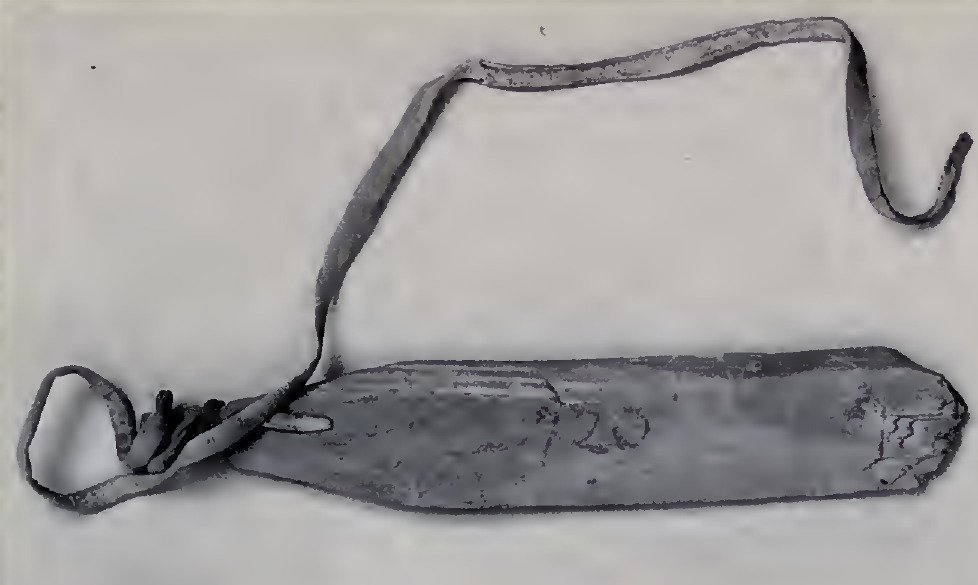
“You must not boil cottontail because it brings snow; you must fry or roast it. Once some old men were going to boil cottontail and they told me to stand outside. In my hand I had a bullroarer made from a dried juniper limb. It was about two inches wide and six inches long. It was not notched. Two or three black marks ran crosswise on the face. A stick, like a handle, was tied to the end of its thong.
“I blew the water, in which the cottontail was boiling, south, saying, ‘Come, rain and wind.’ It was winter, a long time ago, before any white men were here; I was a small boy, born in the middle of summer when it was hot. That is why they had me do this.”
Isabel T. Kelly, Ethnography of the Surprise Valley Paiute (1932), p. 201.
Joshua Brown, an old man of Surprise Valley, described the grown man’s version of the same job:
“When the snow was deep and did not melt, they asked a man born in summer to make the wind blow. He had a stake about eight inches long, which he whirled over his head. This is called tüsa’ibidun. He stood outside the house and tried to call the south wind. He talked, then stopped; then he did it again.”
Kelly (1932), p. 202.
The summer-born person could turn weather away as well as call it. When a thunderstorm came close, Joshua said, the old people would “say to someone born in summer, ‘Put on your paint and go outside.’” The summer-born stepped out as the lightning began, looked at the thunder, and waved it off: “tell them, ‘Go over there.’ Then they will go away.”
Used effectively only by people born in summer
Some four hundred miles to the east, among the Ute and the Southern Paiute, Omer Stewart went band by band through the uses of the whirrer of wood: toy, chasing devils, making the wind blow, clearing away clouds, stopping the wind. Then he added one more line: “Used effectively only by people born in summer.” He marked it yes for the Moanunts of Salina Canyon in central Utah, the Timpanogots of Utah Lake, the Wimonuntci of eastern Utah and the Taviwatsiu of the Colorado Front Range. Far to the south he marked it again for the San Juan Paiute in the Navajo Mountain country of northern Arizona, whose roarer stopped the wind instead of raising it.
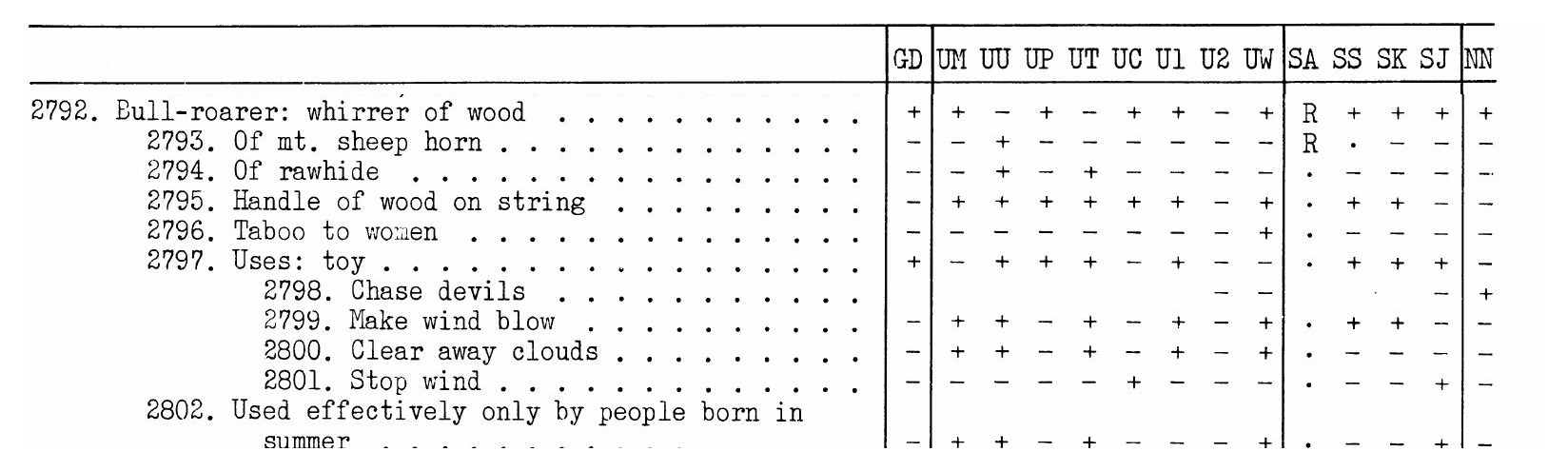
The rule passed to the buzzer as well, the bone or wooden disc twirled on a doubled string until it hums. On the next page of the same survey the buzzer “Causes wind” and is “Effective if person born in summer” for the Timpanogots, the Uncompahgre and the Moache of Colorado, and for the San Juan Paiute.
Anne Smith, working among the Northern Ute in 1936 and 1937, heard it as a plain instruction. “The bullroarer was used to call the wind,” she wrote, and it “should be swung by someone born in the summer to bring wind to blow away rain or snow.” She gave no band for the rule, and by her own convention that means the Uintah, White River and Uncompahgre bands all held it.
The warm hand-hum
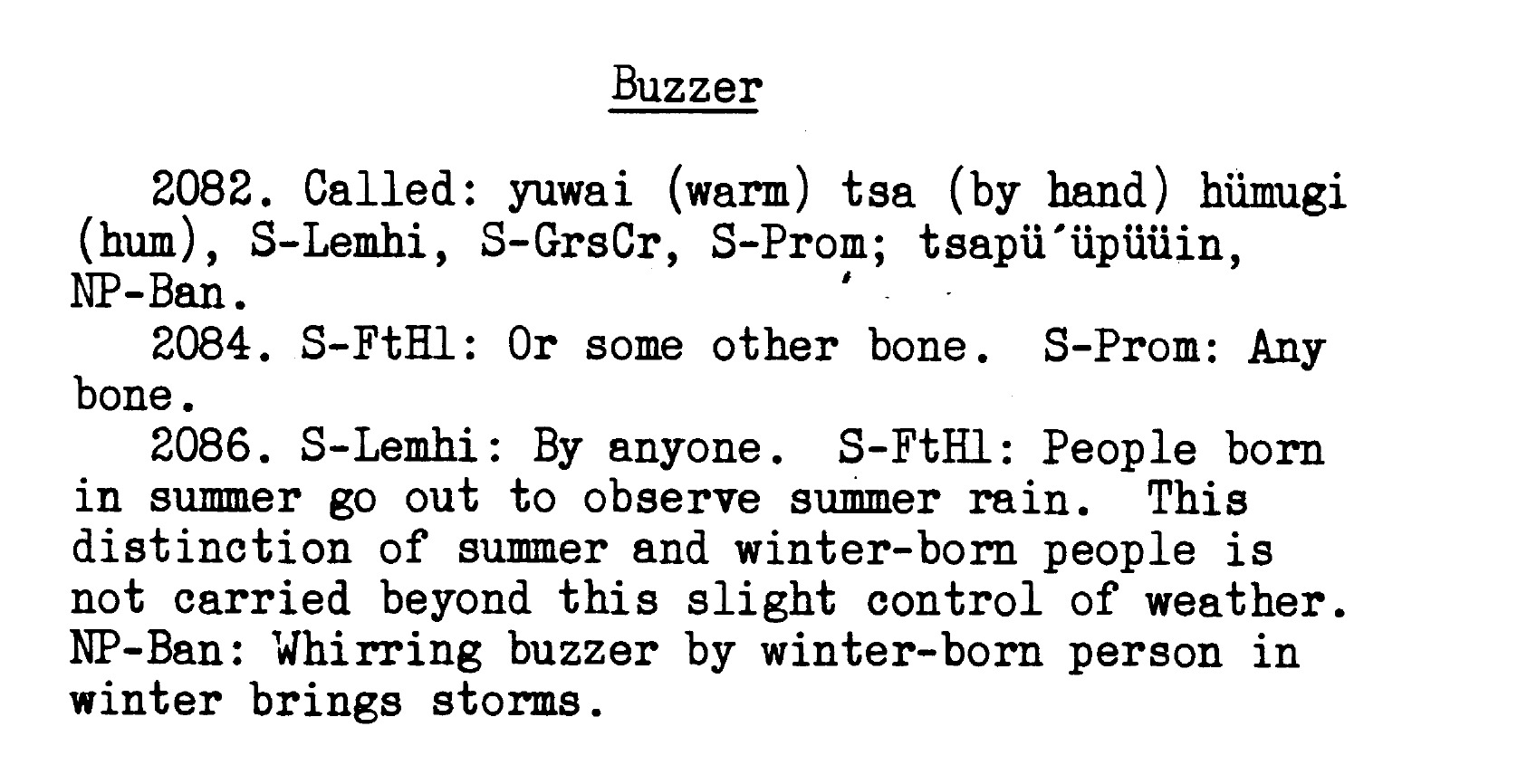
North of the Great Salt Lake and up on the Snake River plain of south-eastern Idaho, Julian Steward asked the same questions of the Shoshoni and the Bannock. At Promontory Point and Cache Valley the bull-roarer was “Used to bring warm wind,” and only “By people born in summer.” The buzzer carried more of the rule than the roarer did. The Shoshoni called it yuwai tsa hümugi, “warm, by hand, hum.” Its use was “To make warm wind in winter,” and it was “Done by people born in summer” at Promontory, among the Fort Hall Shoshoni and among the Bannock who shared the Fort Hall country with them. Steward was firm about where the buzzer belonged:
His note on the rule shows its logic. At Fort Hall, “People born in summer go out to observe summer rain.” Among the Bannock the winter-born had their own weather: “Whirring buzzer by winter-born person in winter brings storms.” Each person calls the season they were born in.
The idea reached one step past the instruments. Among the Lemhi Shoshoni of the Salmon River the “warm dance,” yuwai nukai, had to be led by “a man born in summer.”
The weather you were born in
Most weather roarers in the atlas belong to someone who has earned them: a rain-maker, a priest, a shaman, an initiated man. In the Great Basin the qualification was a fact about the person that nobody chose. A child could hold it, which is why the old men in Surprise Valley sent a small boy out into the snow. No dream or purchase would get it for a man born in January.
Four fieldworkers found it, each working alone, among peoples of all three branches of the Numic language family: the Northern Paiute and Bannock in the west, the Shoshoni in the middle, the Ute and Southern Paiute in the south. They recorded it from north-eastern California to the Colorado Rockies and from the Snake River to the Arizona line, on two different instruments, with the same reasoning behind it. Summer is warm wind and summer rain, and a person born in summer carries the season in them. When the snow lies deep, the people send for one of them, and the wind comes from the south.
Key sources
- Isabel T. Kelly, “Ethnography of the Surprise Valley Paiute,” University of California Publications in American Archaeology and Ethnology 31(3) (1932): 67–210, pp. 177 (the bullroarer, kwi’mo), 201–202 (weather control).
- Omer C. Stewart, “Culture Element Distributions: XVIII, Ute–Southern Paiute,” Anthropological Records 6(4) (1942), p. 291 (bull-roarer, elements 2792–2802) and p. 292 (buzzer, elements 2856–2865).
- Julian H. Steward, “Culture Element Distributions: XXIII, Northern and Gosiute Shoshoni,” Anthropological Records 8(3) (1943), pp. 278 (the buzzer as a weather instrument), 287 (the warm dance), 333 (bull-roarer, elements 1974–1981), 336 (buzzer, elements 2082–2087), 383–384 (notes).
- Anne M. Smith, Ethnography of the Northern Utes, Papers in Anthropology 17 (Santa Fe: Museum of New Mexico Press, 1974), pp. 9 (band designations), 164 (weather control).
- James W. VanStone, Ethnographic Collections from the Northern Ute (Chicago: Field Museum, 1997), fig. 37 f.
- As far as we know, setting these accounts side by side as one Numic rule is original to this page.