Atlas Essay —
The Dog That Spoke
From the Malay Peninsula to the Kimberley, mocking an animal brings the flood, and the bullroarer is kept inside that law
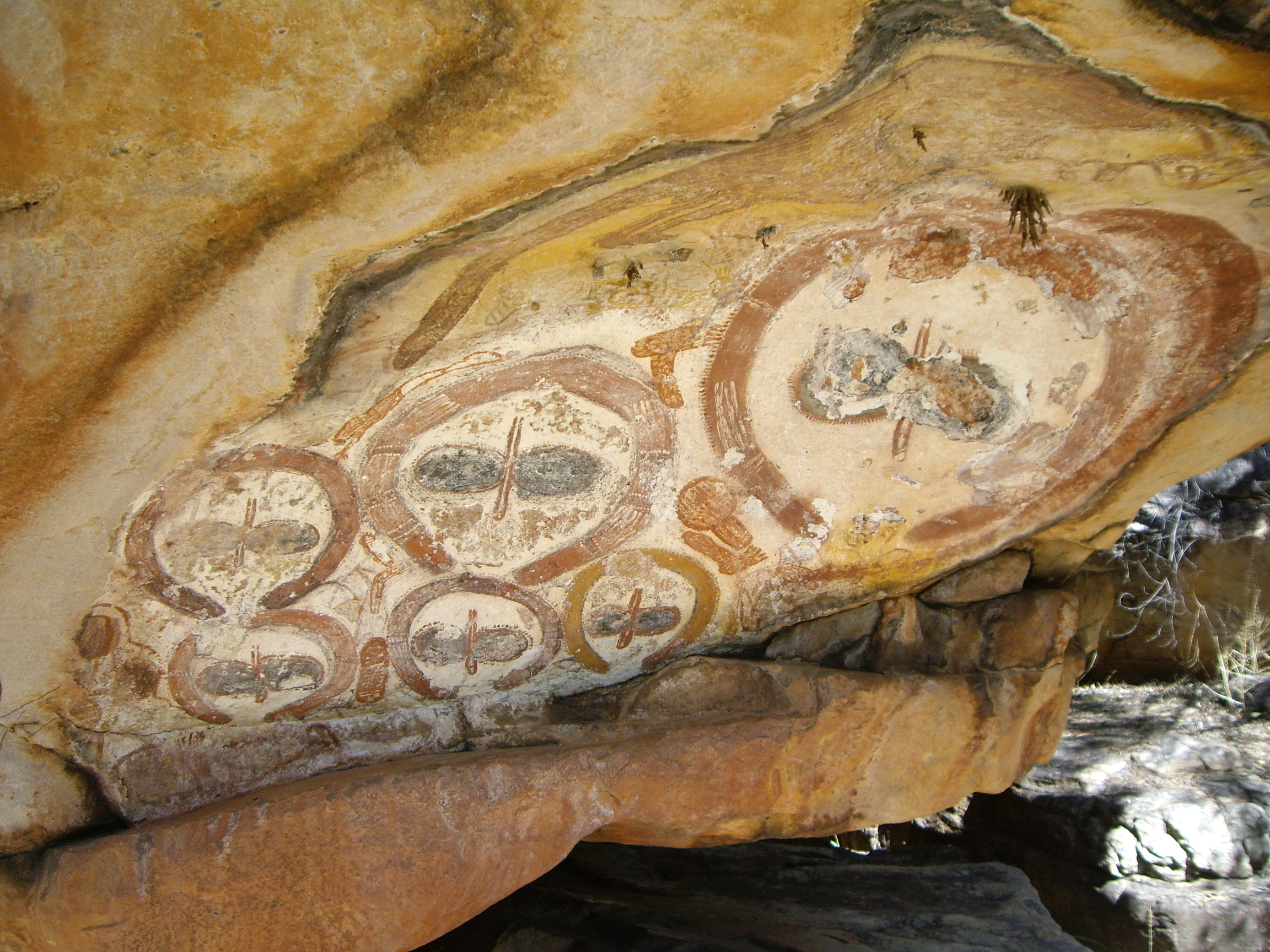
In the Dreaming, as Daisy Utemorrah told it at Mowanjum in the Kimberley of north-west Australia, there lived a people called the Dillangari whose dogs were the size of calves, and whose children were warned never to make the dogs talk. One day the children played with the dogs, a dog answered them, and the water took the tribe. Some 3,500 kilometres to the north-west, in the forests of the Malay Peninsula, a mother silences her shouting children with the thunder god’s name, and the toy bullroarer the boys whirl is silenced with them.
From the Malay Peninsula to the Kimberley one law holds: laugh at an animal, dress it up or make it talk like a person, and the storm comes and the ground takes the village. On the peninsula the thunder god’s law names the bullroarer itself; in the Kimberley and the Wardaman country the flood is told beside the rite where a boy is cut and handed the roarer.
In brief
- Across Island Southeast Asia, from the Philippines to the island of Flores in Indonesia, people who laugh at an animal, dress it or make it speak are drowned, swallowed by the earth or turned to stone, and their village becomes a lake. Archaeologist Adam Brumm and anthropologist Gregory Forth have found the same law in the Kimberley of north-west Australia.
- Among the Kintak Bong of Kedah, Malaysia, the thunder god Kaei’s list of sins runs from mocking a leech or an ape to incest, and then: “the bull-roarer must not be swung in the forest because it attracts the tiger.”
- Among the Jahai, noisy children’s play is a sin against Karei the thunder god, and the boys’ whirled toy is hushed with his name. On the Tekai River in Pahang, Malaysia, the thunder spirit makes the lightning by flashing a thin board on a string.
- In the Kimberley the Ngarinyin say their bullroarers and the lightning are one and the same, and the Unambal say the storm Wandjina Kaluru threw the first lightning by slitting open his penis.
- Before they drowned the boys who tortured Tumbi the owl, the avenging Wandjinas held an initiation on a hilltop and subincised themselves. In the East Kimberley a boy is handed his bullroarer at subincision; years later he must keep clear of the river, for fear of the Rainbow Serpent’s flood.
- The Wardaman of the Northern Territory say the people of the Dingo totem brought subincision, and stone knives, and that the flood came when a dingo was tortured until it spoke. Their elders still warn: don’t hit a sleeping dog.

The dog that spoke
Daisy Utemorrah was a Ngarinyin and Wunambal woman, raised at the Kunmunya mission on the Kimberley coast of Western Australia and later living at Mowanjum near Derby, where the Worora, Wunambal and Ngarinyin were resettled together. Her story of the Dillangari was printed in 1980 in a book the senior women of Mowanjum largely made themselves. The men of the tribe, going out after kangaroo, told their wives to keep the children away from the dogs, because the people would be drowned if the dogs ever began talking like them. The women passed the warning on and added a second: never to hit any bird that belongs to the Wandjina, such as Tumbi the owl, or the Wandjina would send rain and storms. The children asked why they could not play with the dogs. Because, the women said, if a dog answers you, we will all be swallowed by water and no one will survive.
The women forgot. Some went off for berries and honey and yams; the rest, who were meant to be watching, went down to the river for waterlily roots. The children called and yelled to the dogs, and one of the dogs answered back in a human voice. At once the Wandjina sank the whole tribe under the ground and under the water. That evening another Wandjina came walking towards the place and heard nothing. He went to the caves of Ngunaguri, the Spirit Dog, and asked where the people were. Ngunaguri told him they were drowned: the children had been teasing the dogs and making them talk like people, he had warned them many times, and so he had caused them all to be swallowed up. The Wandjina cursed him. From then on the dog would serve the people as their master, and he would never talk to anyone again; he would only bark. The Dillangari would be dreamed back into life by others and would stand for the dog. And that, Utemorrah ended, is why people all over the Kimberley still stop their children from teasing dogs.
About 2,500 kilometres to the north, on Mindanao in the southern Philippines, the Manobo tell the same story with a hunting dog. The men had killed a wild pig and sent one of their dogs home ahead of them with the pig’s ears tied round its neck. The women at home began asking it where its companions were. It did not answer, because dogs do not talk; but the women kept on until the dog was forced to speak, and it told them the hunters were coming, heavy with meat. That evening, after the meal, a great rain cloud came up and the earth went dark. The wind blew, there was a sound of boiling deep in the ground, and water came up out of the earth. The houses flooded, the dogs were washed away, the people turned into crocodiles, and the place became the lake called Napalit. The Manobo rule behind it, as the missionary linguist Richard Elkins recorded it, is narrower than kindness to animals. One may not speak to an animal in a way that calls for a spoken answer.
An Australian dog that must not talk and a Philippine dog that must not talk might be a coincidence. They are not alone.
Do not mock the animals
In 1981 the linguist Robert Blust gathered the rule from dozens of peoples across Island Southeast Asia and gave it a name, the thunder complex. Its core offence is mockery. A person laughs at an animal, teases or torments it, talks to it, dresses it in clothes or ornaments, makes it dance: treats it, in short, as if it were a person. Then the storm comes. Gregory Forth, who has worked for forty years among the Nage of Flores in Indonesia, points out that the name undersells what follows, because in most places the punishment is not a thunderbolt but rain, rain that will not stop, and a flood that drowns the offenders and their whole village. Often the ground opens and swallows the houses, and a lake lies where the village stood. In Indonesia the offenders are often turned to stone, or into eels, fish or crocodiles.
The examples run the length of the islands. In the Riung uplands of northern Flores the ancestors Ndival and Lobak gave a commandment that no one should laugh uproariously at animals. One day of hard rain a household with no fire called to its neighbours to send some over; in this weather, the neighbours said, tie it to the dog’s tail and we will call him. The dog came down into the yard running in circles with its tail on fire, and everyone laughed. The thunderstorm broke, the village sank into the ground, and the lake of Tiwu Ngandong filled the place. Variants of the dog and the firebrand are told all over Flores and the small islands to its east, and each one explains a lake, a hot spring or the head of a stream. In Sabah, on the north tip of Borneo, the Dusun and Murut tell it too, and there the laughing villagers are turned to stone. The flood myths of Sundaland carry the Riung telling on their map.
Other Dusun told Owen Rutter of a village that went under the water because its headman had dressed his dog in clothes, made it drunk and set it dancing, and the people laughed. The Angkola Batak of northern Sumatra remember an old woman who hung her dog with jewellery; the storm came and her village became a lake. The Bugis and Makassarese of southern Sulawesi in Indonesia tell of a weaving woman who dropped her shuttle and told her dog to fetch it. It did, and the woman, the dog and the house turned to stone. The Eastern Toraja of central Sulawesi say that the sago palms round one pond are the people who once broke the rule there, and that a palm pierced there would bleed.
The law can be turned round. In a long drought, the same peoples who fear the storm will dress a dog, a cat or a frog in clothes on purpose, or give it a little spear, to bring the rain; the Western Toraja play with a tree lizard. And the storm, once it is coming, can be turned back. In the Manggarai country of western Flores a lock of hair is cut from the head of whoever caused it and thrown in the fire; the wind carries the smell up to the god, who thinks the offender is dead and calls off the storm. Elsewhere the price is blood.
Blust traced the law to the forest foragers of the Malay Peninsula and the Philippines, the peoples once called Negritos. On his reading the Austronesian farmers who reached the Philippines from Taiwan some four thousand years ago took it over from the foragers they met there, and carried it south and east with them through Indonesia as far as Milne Bay in Papua New Guinea. Taiwan itself, the Austronesian homeland, has none of it. The map shows it on both sides of the Timor Sea.
Karei’s law
The Semang foragers of the Malay Peninsula live in the forested hills of northern Malaysia and southern Thailand, and their thunder god is the law-giver. He is called Karei by the Jahai and Kaei by the Kintak Bong; his voice is the thunder, and he hears what the people do. When the storm breaks directly over a camp they pay him in blood. Paul Schebesta, a Catholic missionary-ethnologist who lived among them in 1924 and 1925, was woken by a crash of thunder in a Jahai camp on the Perak River in northern Malaysia and ran out into the rain:
“With one bound I was in the open, heedless of the cascade of rain, watching Tĕbu’s wife, who, with a splinter of bamboo (abag), was stabbing her shin until the blood poured from it. In her left hand she held a bamboo filled with water, into which she wiped off the blood. She then poured the mixture into a split bamboo and sprinkled a little of it upon the ground. Then she raised herself and began to scatter the blood and water in the air, once in the direction from which the thunder came, and then towards every quarter of the heavens, crying as she did so: ‘Chub! Chub!’ (Go! Go!)”
Paul Schebesta, Among the Forest Dwarfs of Malaya (1928), pp. 87–88.
The blood on the ground was for Karei’s wife Manoid, Schebesta learned the next morning, and the blood thrown in the air was for Karei himself. What had called the storm was a sin, and the Semang keep long lists of them. Among the Kintak Bong of Kedah, Schebesta wrote the list down. The sins atoned for with blood include adultery, killing the animals sacred to Kaei, watching dogs mate, making love by day in the camp, playing with birds’ eggs, and this:
“(3) To mock, or laugh at the following animals: the leech, the snake ular talong, butterflies, and various species of ape.”
Schebesta (1928), p. 223.
Then come the graver sins, the ones blood cannot pay for, and the bullroarer is among them:
“Other crimes, again, cannot be expiated with the blood sacrifice. Kaei punishes them in another way. If parents-in-law associate in any way with their children-in-law of the other sex, if they so much as speak with one another or come near one another, even involuntarily, the sagwogn bird is at once seen in the neighbourhood of the camp. …
It is a sin for the parents to sleep with their older children of different sex. Further, the bull-roarer must not be swung in the forest because it attracts the tiger.”
Schebesta (1928), p. 223.
Ivor Evans, the ethnographer of the Federated Malay States Museums, gave the tiger’s reason: hearing the roar, it thinks a companion is calling. He had collected a Kintak Bong bullroarer himself. In the camp it was the children’s toy, but its owners had another name for it:
“The bull-roarer, of which I obtained a specimen at Lubok Tapah, is used as a toy by Kintak Bong children, but Mempelam told me that it is the ghosts’ Jew’s-harp.”
I. H. N. Evans, Studies in Religion, Folk-Lore, and Custom in British North Borneo and the Malay Peninsula (1923), p. 177.
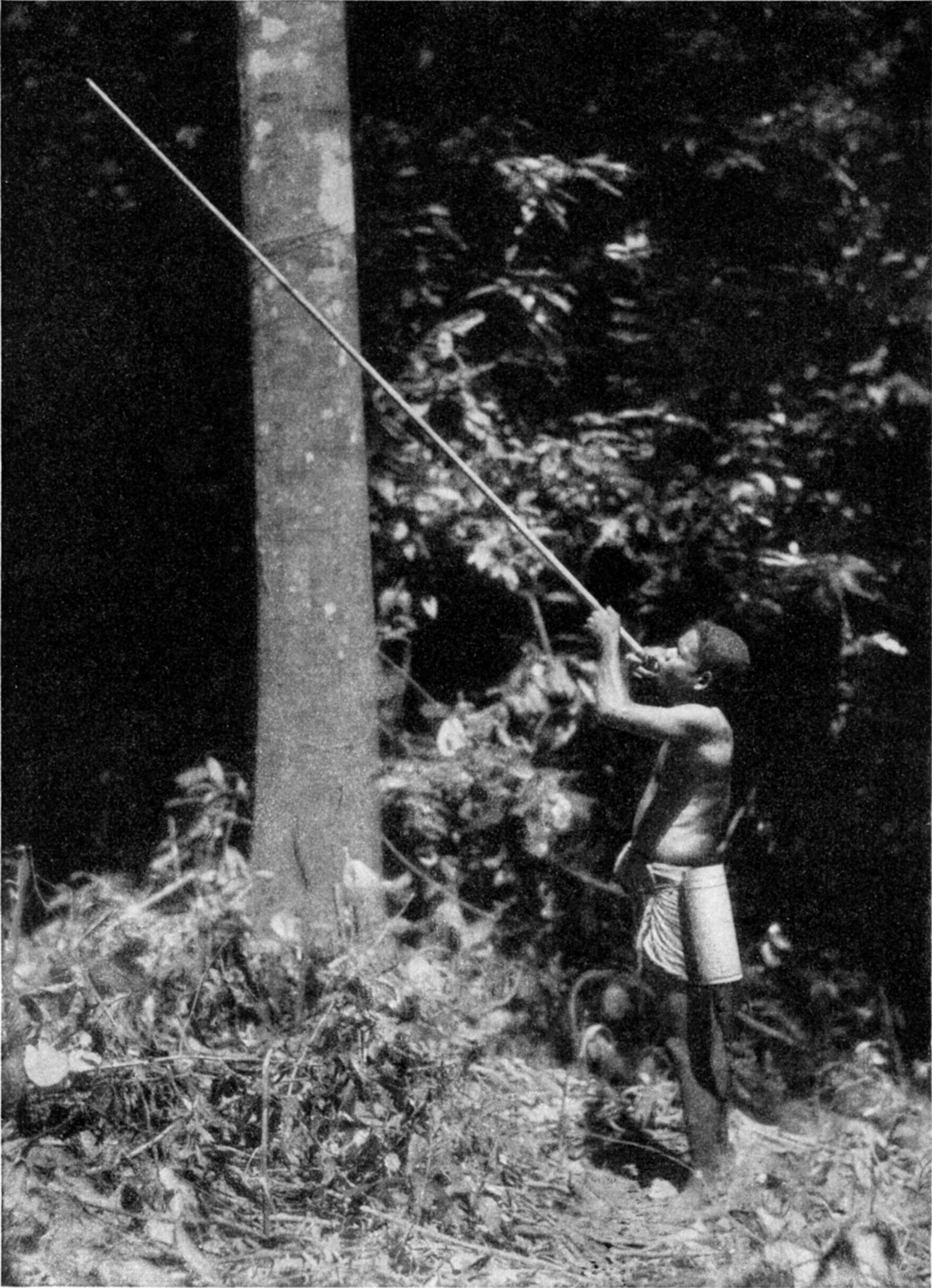
Among the Jahai, Kaei’s neighbours, the rule reaches the noise itself. Schebesta watched a Jahai camp go silent under a storm, and noted that the Semang use their fear of thunder to keep their children in order:
“When, one evening, the children were making more noise than usual, Burong’s wife called out to them: ‘Pen un, pen un, men min Karei law aid!’ (If you play like that, it is a sin against Karei!) which means roughly: the thunder will strike you. Immediately the children were silenced, and dispersed.”
Schebesta (1928), p. 96.
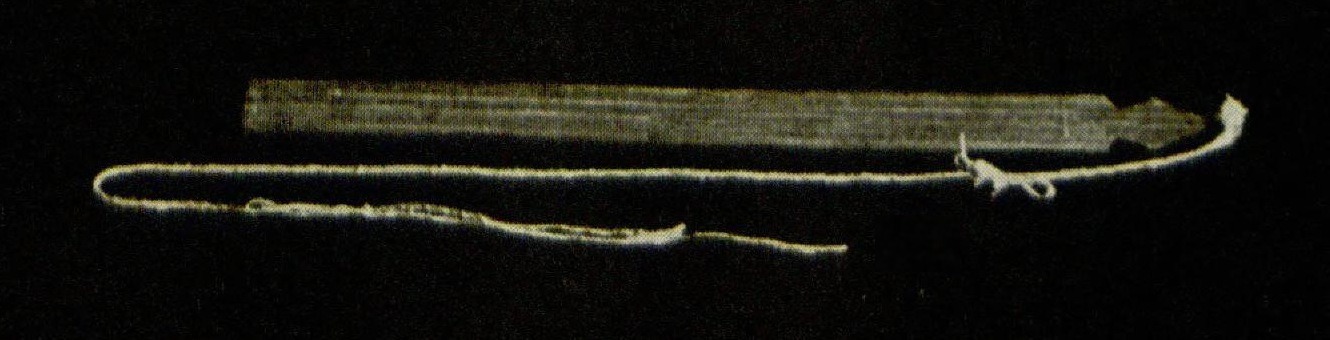
Thirty years later Schebesta described the Jahai boys’ toy, the pusign, a leaf-thin board whirled on a cord, and said the grown-ups stopped it in the same way: when the children got too loud with it, they pointed to Karei. Thunder’s Own follows the instrument from Karei’s forest to California. The noise a whirled board makes belongs, in this country, to the thunder.
Further south, on the Tekai River in Pahang, Evans found the thunder being with a bullroarer of his own:
“According to some Sakai-Jakun whom I met on the Tekai River (Pahang) in 1914, thunder is caused by a spirit called Nenek, who makes a noise in his armpits by banging his arms against his body. Lightning is caused by his flashing a thin board about, which is attached to the end of a string.”
Evans (1923), pp. 206–207; his footnote to the board reads “A bull-roarer (?)”.
On the same page he recorded the law. The Tekai people’s neighbours on the Kemaman and the Bera forbade anyone to burn lice in the fire, “or to dress up a monkey and laugh at it,” for fear of a storm that destroys villages, and a village above Jeram on the Pahang had once been swallowed whole for it, leaving a single house-post standing. East across the Malay Peninsula the Batek say their thunder beings make the thunder by spinning roaring tops, competing for the loudest, and asked their ethnographer Kirk Endicott not to play his radio when a storm was coming. On Flores, at the far end of the islands, the Ende swing a small bamboo roarer, the jata, in the fields to bring the rain, and their Lio neighbours warn children off it because its whirr sounds like a snake on the move and may bring the real one, as the Kintak Bong roarer brings the tiger.
Tumbi the owl
The Kimberley is the north-western corner of Australia, a country of sandstone gorges and rivers running north into the Timor Sea. Its great epic is the Wanalirri saga, the one story that gathers all the Wandjinas into a single catastrophe. It begins much as the dog story begins. The adults are away foraging and the children are alone in camp. Some small boys find a Barking Owl in a hollow tree and take it from its nest. They pluck out its feathers. They throw it up into the air, again and again, telling it to fly, and every time it falls. They push a stick through its nose, the way a man wears a nose-bone, and all the while they laugh at it. The owl is Tumbi, the child of Wodjin, the greatest of the Wandjinas. It struggles up into the clouds and calls on its father.
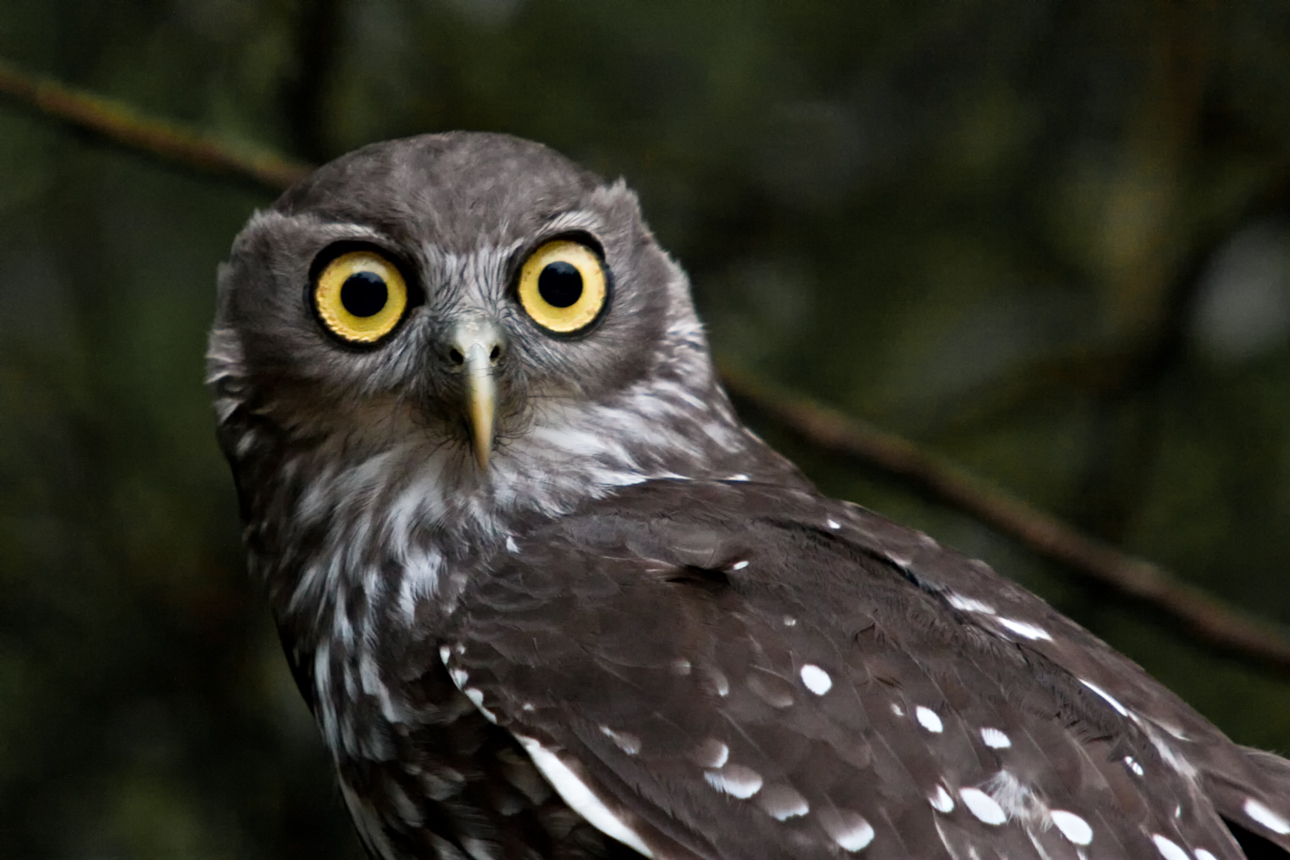
Wodjin roars like thunder. He sends bird after bird and then other animals to find the people, and they fail him one by one, until the Bicycle Lizard points them out. Then the storm comes. In some tellings it is days of lightning before the rain, in others a great wind; in others the Wandjinas go to war, and wherever a man’s spear pierces one of them, water gushes out of the wound. The brolgas, the cranes who are the Wandjinas’ wives, dance on the sodden earth until it turns to mud, and the people sink into it and drown. Pandanus palms grow now where they went down. Two children survive by clinging to the tail of a wallaby. They kill a fat kangaroo and burn its tail on a fire with sweet leaves, the smoke rises and pleases the Wandjina, and the rain stops. Wodjin goes into the cave at Wanalirri and paints himself on the wall.
The oldest written telling was taken down by the German ethnologist Helmut Petri among the Ngarinyin in 1938. In it two boys at Dunbei catch a little bird that belongs to a Wandjina, play with it, push a little stick crossways through its nose and throw it away up into the clouds. The bird complains that it has no feathers and no wings left. A Wandjina is speared and a great deal of water runs out of his wound; the brolga Wandjina sings over the people, a great water rises, and they all drown. Bamboo grows thick on the spot today.
In the telling the archaeologist Ian Crawford published in 1968, the Wandjinas find the people camped on a wide flat near a spring and gather on a hilltop above them. There, before they attack, they hold an initiation, “circumcising and subincising themselves”; Wodjin says he wants to be light so as to catch the people if they run. The cutting makes Wodjin sick and swollen, too swollen to fight, but he can still bring the rain by stroking his beard, and the flat is flooded. The lizard that betrays the people comes out of his penis. The Wandjinas who drown the mockers of the owl are newly made men, circumcised and subincised as Kimberley boys are, and the first act of their war is the rite.

Kaluru’s lightning
The Wandjinas are painted without mouths. One of Petri’s Ngarinyin teachers from the Sale River told him why: if they had mouths and opened them, a great flood that destroys everything would have to come. They speak in the thunder instead. The storm Wandjina Kaluru carries the lightnings inside his body, and the Ngarinyin told Petri an old law that goes with him: no one may be painted with yellow ochre while a storm is on, because Kaluru will kill whoever does it with his lightning.
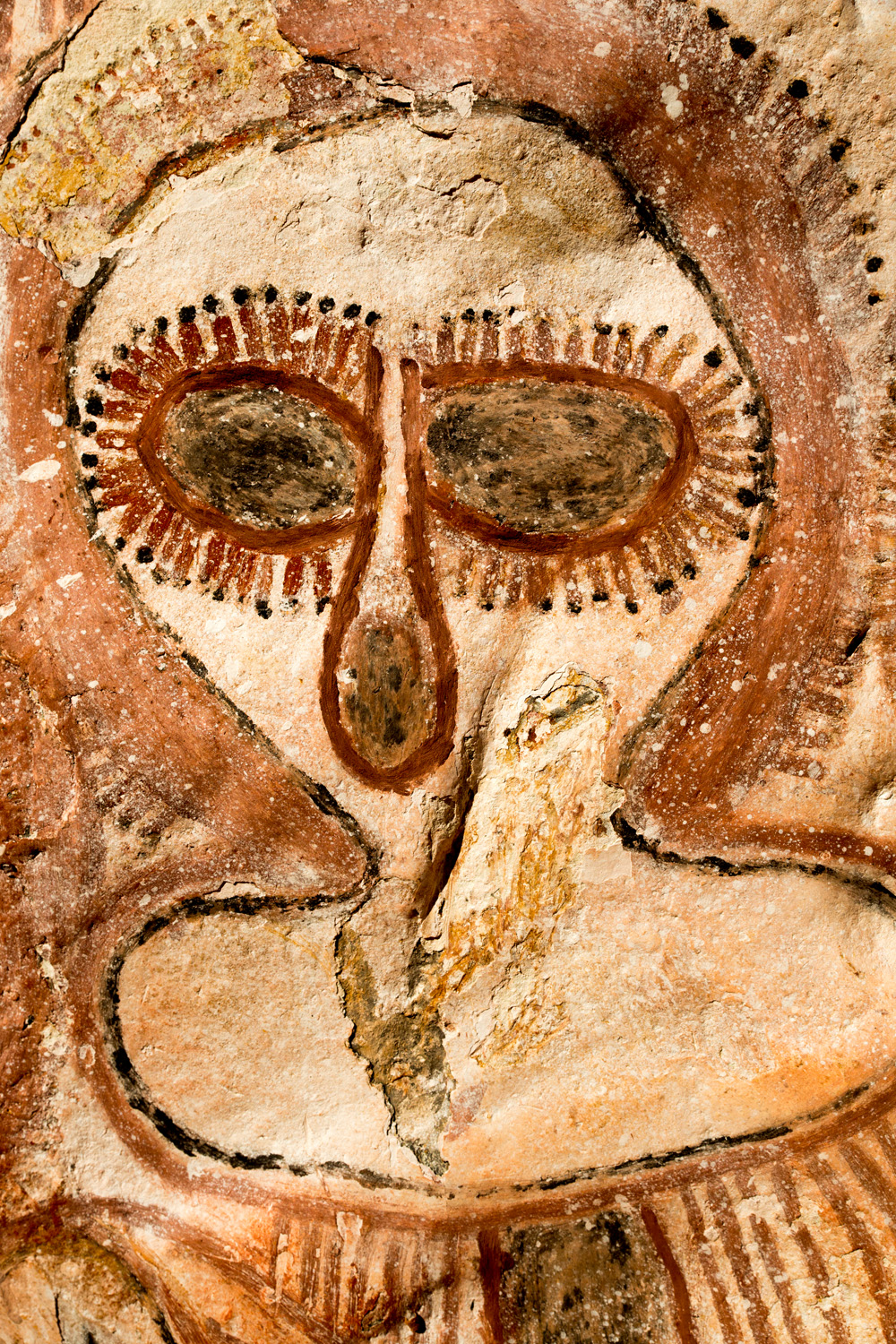
The Ngarinyin bullroarer belongs to the same lightning. In Petri’s account of the culture hero Ngunyari, who made the first sacred boards, the mai-angari were made with Ngunyari’s own blood, he painted them with the signs of the lightning, and when he swung them their hum was his own voice. The reason he painted lightning on them is given in a clause: “for the mai-angari and the lightning are one and the same”. Lightning Wood follows that board from the Kimberley to Arnhem Land and the American Southwest.
Where Kaluru’s lightning comes from, the Unambal of the far north Kimberley coast told Petri’s companion Andreas Lommel. Kaluru threw his first lightning by slitting open his penis and letting the fire and the lightning out of it. He makes the fire by turning the red inside of his slit penis outward, and he steers the bolt by taking his penis in his hand and pointing the way with his club. Lommel watched men in thunderstorms trying to steer the lightning after Kaluru’s example. The first lightning in the world was the first subincision, the cut along the underside of the penis that ends a Kimberley boy’s initiation. The atlas’s essay on the second cut follows that rite beside the roarer across Australia.
“for the mai-angari and the lightning are one and the same”Helmut Petri, Sterbende Welt in Nordwest-Australien (1954), Ngarinyin myth of Ngunyari; translated from the German
South of the Ngarinyin, on the lower Fitzroy, the Nyikina told Petri of two brothers who made the storm with their roarers. Windinbigi saw a small cloud coming up, wanted rain, and gave the cloud his buliuana. The cloud carried the bullroarers away, and Windinbigi told it to make a great rain in the west, then asked the clouds for lightning, then for thunder. The same brothers put a buliuana into the yellow snake’s mouth to make it strong and poisonous. When the Nyikina tell of the first circumcision, the elder has all his buliuana with him, and he opens his arm and the blood springs out.
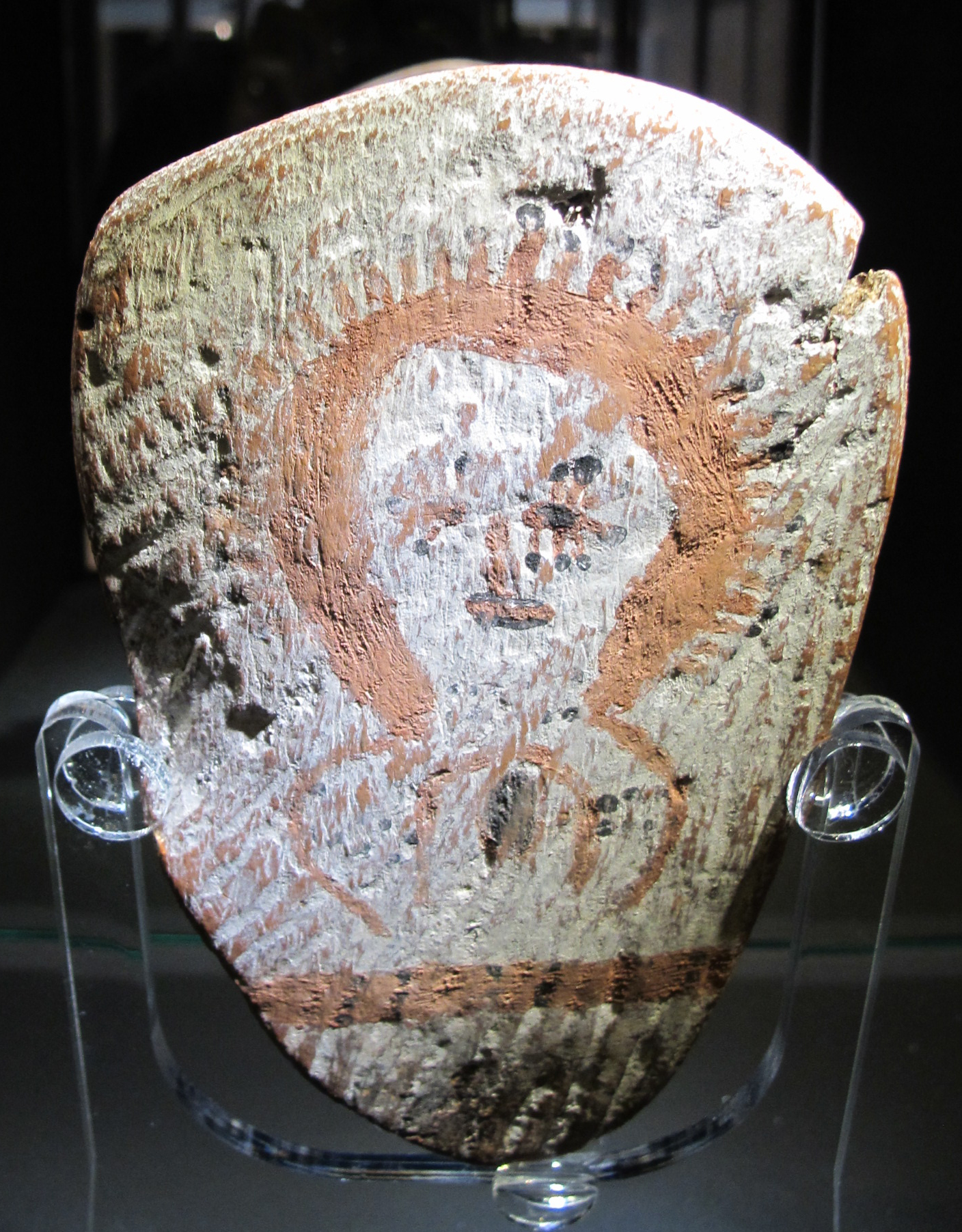
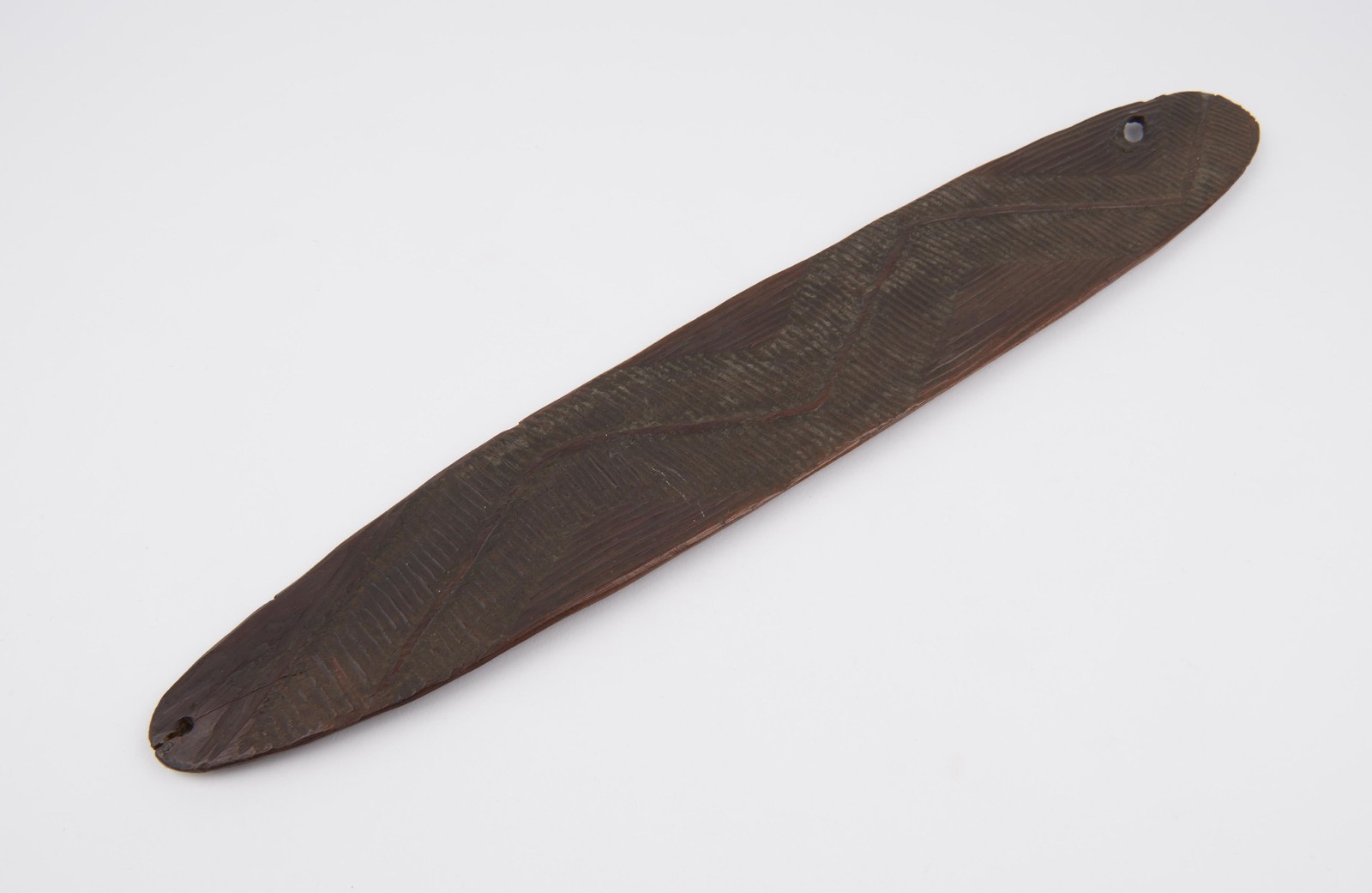
On the other side of the Kimberley, the anthropologist Phyllis Kaberry worked in the 1930s among the peoples of the east, around Halls Creek and the Ord River, and set down the stages of a boy’s initiation in order. Before circumcision he is allowed to watch the old men dance with the biliaŋa, a small sacred board, though he may not yet touch it or say its name. At fourteen or fifteen he is subincised, and given a pearl-shell to wear, armbands, and a biliaŋa or buluwa:nu to swing. Years later comes the rite of the white-ant larvae, and it carries a particular danger: he is kept apart for five days, and he must not drink from the river, for fear of the floods of Kaleru, the Rainbow Serpent, who might seize him. Kaberry gave the reason elsewhere in the same book. In the Dreaming two young boys ate the larvae that men may not eat until old age, and Kaleru sent the floods. The boy who swings the roarer grows up under the threat of the flood two boys once called down.
The Dingo people
East of the Kimberley, across the border in the Northern Territory, the Wardaman live in the stone country between the Victoria and the Flora rivers. Bill Harney, a drover and patrol officer who spent his life among them, wrote down their creation in 1957. In the Dreaming, he wrote, their spirits came from the west with the Earth Mother, Kunapippi, the Old Woman, who danced and let the spirit children out of her body to people the land. The Rainbow Serpent Djamala travelled in her band. With her also came the Mininne, the people of the Dingo totem. They “introduced the practice of sub-incision”, and they gave the tribes stone knives for the hunt, which they drew out of a pocket in their ears.
The world was flat then. A man of the Lizard totem broke the law by torturing a dingo, and the dingo in its pain spoke out in the Wardaman language, and a flood came out of the east and swept over the earth. The Lizard people ran, and the water caught them as they stopped to drink at a pool; they are the pandanus palms that line the rivers now. The antbeds standing in the swamps are other people the flood transformed, and the baobabs with their raised limbs are people who cried out for help. The Wardaman were saved because the lands they had respected rose with them above the water. For days the water rose with the land. Then a man cut off the index finger of his left hand, and the blood ran out and covered the waters, and the flood died away and left the hills and rivers as they are.
The blood is the Semang answer to the storm, as Schebesta saw it in the Jahai camp, and further east it is the same answer. The Mamanwa of Mindanao and the Ayta of Bulacan on Luzon, both in the Philippines, turn back a storm sent for an offence against their thunder god by cutting a finger or a leg, mixing the blood with water and throwing it at the sky. Harney’s Old Woman is Kunapippi, and her rite, as Harney described it across the region, is the one with the roaring bullroarers: when the boy is carried off into the dark to the whirr of the boards, the women hear the old mother crying.
The Wardaman elder Yidumduma Bill Harney, Bill Harney’s son, told the end of the creation in his own words sixty years later. The Dog, Mardborronggo, was asleep at Muning when a little boy came walking and sang out to him, and the Dog did not move. The boy picked up a flint from the ground and split the Dog’s ears with it. The editor of his book glosses the cut plainly: it is subincision. The Dog is the one with the most powerful sound, and when he cried out the whole world changed. The country went still and turned to rock, the trees stood up where they are, and the people were changed into animals. Dogs carry the little split in the ear to this day, and the Dog became the dingo.
“Don’t hit that dog when he sleeps; he might sing out”Yidumduma Bill Harney, Wardaman, in Margie West (ed.), Bush Professor (2016), p. 83
The rule is still spoken. A sleeping dog is not to be hit, because he might cry out, and whoever hit him might be turned into a pandanus, or a rock, or anything at all. The Wardaman’s own bullroarer, the Kuraba, speaks with the voice of another ancestor, the Emu Gumurrinji: when it is swung for the men’s Law the women sit blindfolded, and the sound calls the boys to the ceremonial ground. It belongs to the same Law as the Dog of Muning, who cried out when a boy with a flint made the first cut.
Across the Timor Sea
The dingo is the one animal that tells us someone crossed the sea. It was the first large placental land mammal the continent had seen, and it can only have come to Australia by boat. Its bones are dated directly to about 3,200 years ago at Madura Cave on the Nullarbor Plain, on Australia’s southern coast, and estimates put its landing between about 5,000 and 3,500 years ago. No one knows who brought it. The rock paintings of the Wandjinas, with their haloes and their missing mouths, appear in the Kimberley as a distinct style about the same time, between 4,000 and 3,800 years ago.
The law of the mocked animal is in the Kimberley and the Wardaman country and not in Arnhem Land, the Top End east of them, where the Makassan fleets came every year from Sulawesi for two centuries to fish for trepang and left their words, their boats and their knives in the paintings. That absence rules out the Makassans. Brumm and Forth put the law’s arrival with the dingo itself. A small party of Austronesian seafarers, sea-going fisher-folk rather than farmers, came ashore on the Kimberley coast with their dogs about four thousand years ago and stayed long enough to teach their hosts how the animals must be treated: you do not laugh at them, and you never make them talk. The Barking Owl, whose call is a low double bark, folded in with the dog.
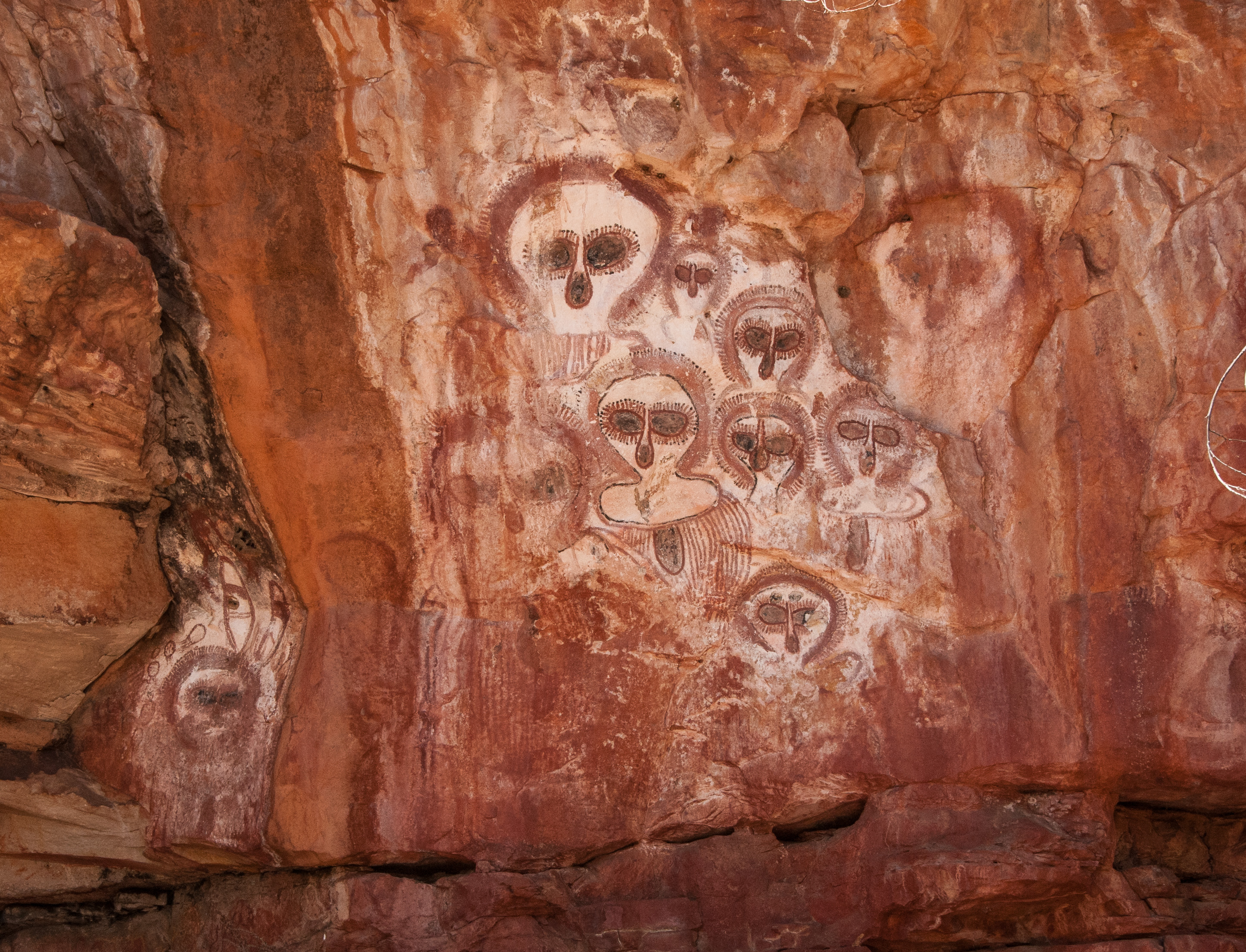
Whatever the route, the law is the same on both shores, and on both it lives close to the bullroarer. In the Semang forest the thunder god who drowns the mockers of animals also forbids the roarer among the trees and hushes the boys who whirl it, and the thunder spirit of the Tekai makes his lightning with a board on a string. In the Kimberley the Wandjina who drowns the mockers of his owl cuts himself first, as a boy is cut; Kaluru’s lightning comes out of the cut, and the boards are the lightning. In the East Kimberley the boy who is handed his roarer at subincision grows up in fear of the serpent’s flood. Among the Wardaman the Dingo people bring subincision, the dog speaks, the water comes and blood holds it back. Kimberley parents still keep their children from teasing dogs, and the Wardaman still tell theirs not to hit a dog when it sleeps.
Key sources
- Adam Brumm and Gregory Forth, “Aboriginal flood narratives and the thunder complex in Southeast Asia,” Archaeology in Oceania 60(1) (2025), published online 30 October 2024, doi:10.1002/arco.5343 (the Kimberley and Wardaman evidence; the Manobo, Riung, Dusun, Batak, Bugis, Toraja and Manggarai comparisons; the blood and hair countermeasures; the dingo and the Wandjina dates; the Makassan argument).
- Daisy Utemorrah et al., Visions of Mowanjum: Aboriginal Writings from the Kimberley (Adelaide: Rigby, 1980), pp. 46–48 (“How the people were all drowned”) and p. 75 (Tumbi the owl).
- Robert Blust, “Linguistic evidence for some early Austronesian taboos,” American Anthropologist 83(2) (1981): 285–319; Blust, “Terror from the sky: unconventional linguistic clues to the Negrito past,” Human Biology 85(1–3) (2013): 401–416.
- Gregory Forth, “Animals, witches, and wind: eastern Indonesian variations on the ‘thunder complex’,” Anthropos 84 (1989): 89–106, pp. 95–96 (Manggarai); Forth, “Thunder complex” papers of 2022 and 2023 (Flores, Borneo, southwestern China).
- Richard E. Elkins, “The Anit taboo: a Manobo cultural unit,” Practical Anthropology 11 (1964): 185–188 (the dog made to speak; Lake Napalit).
- Paul Arndt, “Aus der Mythologie und Religion der Riunger,” Tijdschrift voor Indische Taal-, Land- en Volkenkunde 75 (1935): 333–393, p. 350 (the dog with the firebrand; Tiwu Ngandong).
- Owen Rutter, The Pagans of North Borneo (London: Hutchinson, 1929), p. 258 (the dressed and drunken dog); P. Voorhoeve, Overzicht van de volksverhalen der Bataks (1927), p. 101 (the jewelled dog); N. Adriani and A. C. Kruyt, De Bare’e-sprekende Toradja’s van Midden-Celebes (1912), I, pp. 16, 52–53; A. C. Kruyt, De West-Toradjas op Midden-Celebes (1938), II, pp. 362–366.
- Paul Schebesta, Among the Forest Dwarfs of Malaya, trans. A. Chambers (London: Hutchinson, 1928), pp. 87–88 (the blood sacrifice in the storm), p. 96 (“a sin against Karei”), pp. 222–223 (the Kintak Bong sins; the bull-roarer and the tiger); Schebesta, Die Negrito Asiens II/1 (1954), pp. 188–189 (the Jahai pusign).
- I. H. N. Evans, Studies in Religion, Folk-Lore, and Custom in British North Borneo and the Malay Peninsula (Cambridge, 1923), p. 177 (the ghosts’ Jew’s-harp), pp. 206–207 (the Kemaman and Bera storm-taboo; Nenek’s board); Evans, The Negritos of Malaya (Cambridge, 1937), pp. 120, 175, 180 (the tiger and the companion’s call).
- Kirk Endicott, Batek Negrito Religion (Oxford: Clarendon, 1979), p. 78 (the radio in a storm), p. 164 (the thunder beings’ roaring tops).
- Jaap Kunst, Music in Flores (Leiden: Brill, 1942), pp. 158–159 (the Ende jata); Paula R. Bos, Biographies of Florenese Musical Instruments and Their Collectors (Amsterdam: KIT, 1999), p. 44 (the rain and the Lio snake).
- Helmut Petri, Sterbende Welt in Nordwest-Australien (Braunschweig: Limbach, 1954), p. 107 (the mouthless Wandjinas), p. 140 (Kaluru and the yellow ochre), Ngarinyin myths I,3 (Ngunyari and the mai-angari) and I,4 (the flood at Dunbei), Nyikina myths III,1 and III,3; Andreas Lommel, Die Unambal: Ein Stamm in Nordwest-Australien (Hamburg, 1952), p. 37 (Kaluru’s first lightning); both as reproduced in Horst Südkamp, Wondjina, pp. 96–102, 231–232, 247, 254–261; translated from the German.
- I. M. Crawford, The Art of the Wandjina: Aboriginal Cave Paintings in Kimberley, Western Australia (Melbourne: Oxford University Press, 1968), p. 32 (the Wandjinas’ revenge), p. 39 (the legend of Wodjin).
- Kim Akerman, Wanjina: Notes on Some Iconic Ancestral Beings of the Northern Kimberley (Carlisle: Hesperian Press, 2016), pp. 23, 99, 118–142 (the Wanalirri tellings).
- Phyllis M. Kaberry, Aboriginal Woman, Sacred and Profane (London: Routledge, 1939), p. 206 (Kaleru’s floods and the two boys), pp. 224–225 (the stages of a boy’s initiation; the biliaŋa or buluwa:nu).
- W. E. Harney, Life Among the Aborigines (London: Hale, 1957), pp. 33–34 (Kunapippi, the Dingo people and the flood).
- Margie West (ed.), Yidumduma Bill Harney: Bush Professor (Katherine: Godinymayin Yijard Rivers Arts and Culture Centre, 2016), pp. 14–15, 66–67, 82–83.
- Brumm and Forth set the Kimberley stories beside the Southeast Asian law. As far as we know, setting the bullroarer and the subincision rite beside both is original to this page.