Atlas Essay —
The Lover’s Roarer
Central Australia · north-west Queensland · the Kimberley coast · Cape York · California · the Amazon · Greece and Rome
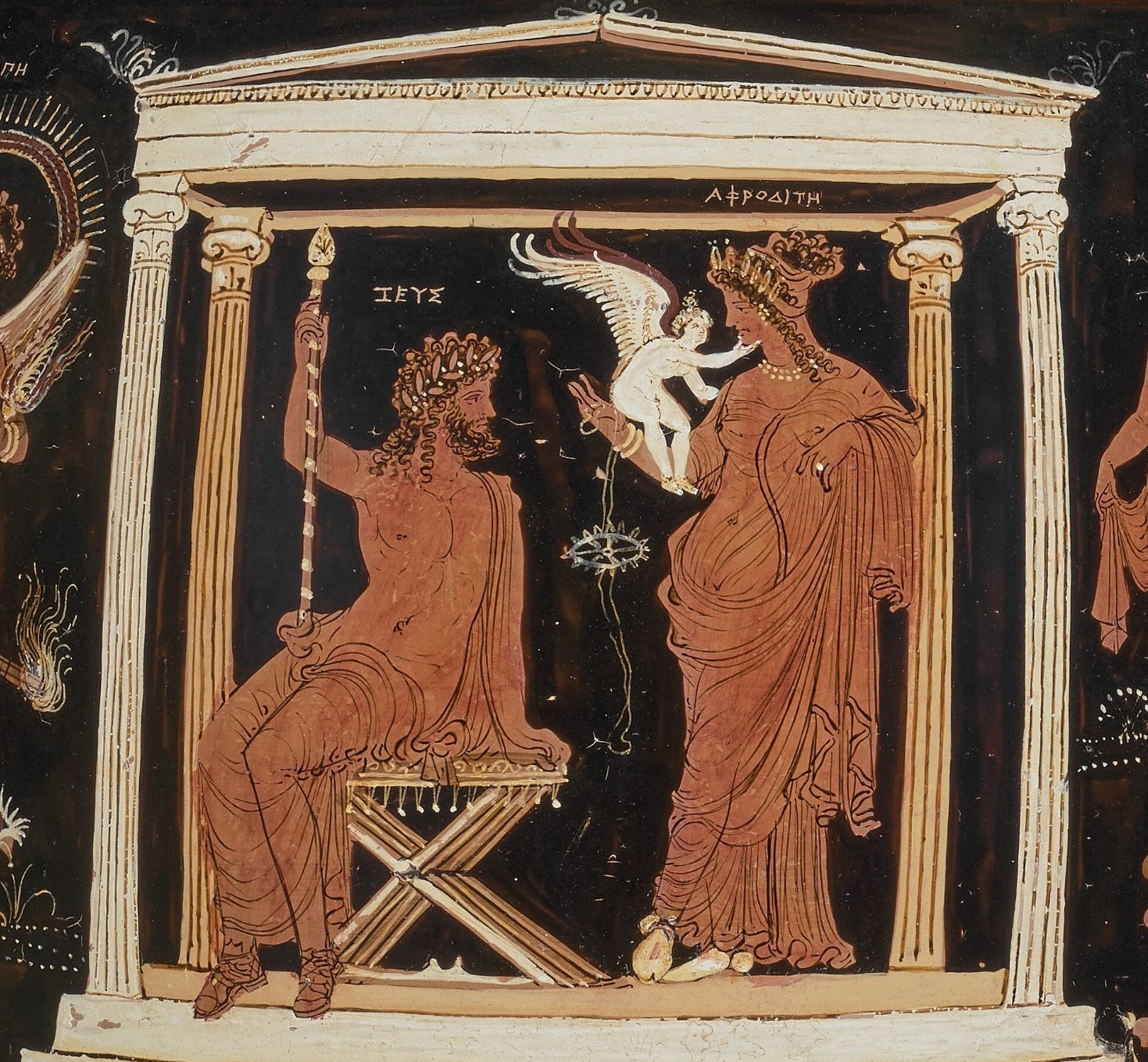
At daybreak in Central Australia a man stands up alone in the bush, after a night of low singing with his friends, and swings a small carved board on its string until it hums. Fifty miles away a woman hears the hum, sees nothing, and before long she walks in to him. More than two thousand years earlier and half a world away, a young woman named Simaetha stands under the moon with a bronze whirler in her hand and prays that her lover will whirl at her door as it whirls. The small bullroarer, the one most strictly hidden from women, turns out to be the instrument a man aims at one woman.
From the Kimberley coast to Cape York, the small bullroarer that women must never see is also swung at night, far from camp, to draw one woman to the swinger; in Greece and Rome the whirled rhombos does the same work for a lover, and in California and the Amazon the same distant whirl sends harm.
In brief
- Arrernte novices in Central Australia receive the small bullroarer after circumcision with the warning “For the woman’s road don’t take it”; the same board, charged with blood from the subincision cut, is the love charm (Róheim 1945, p. 13).
- Spencer and Gillen watched the Arrernte charm at work: swung at dawn after a night of songs, its hum “is carried to the ears of the far-distant woman”, and a widow walked in from Glen Helen, fifty miles away (1899, pp. 541–542).
- Among the Yaroinga of north-west Queensland the graved whirler is swung through the night far from camp, and the woman who sees nothing “finds herself repeatedly exclaiming, ‘I like this-fellow-boy’” (Roth 1897, p. 182).
- At Roebuck Bay on the Kimberley coast the whistling-stick “is used to call a woman to a man, and at the man-making ceremonies”; on Cape York the Wiknatara swing the moipaka outside camp so that a married woman comes out to look.
- The Yokuts of California smear poison on the roarer and shoot it at a victim by whirling; a Cubeo shaman in the Amazon whirls a stone one and the distant victim feels a machete blow.
- In Theocritus’s second Idyll Simaetha whirls a bronze rhombos so that Delphis may whirl about her door; Lucian’s Syrian sorceress, Propertius and Ovid keep the whirled rhombus in the same office.

The woman’s road
Start at Hermannsburg, the mission on the Finke River west of Alice Springs, in the Arrernte country of Central Australia. The Hungarian anthropologist Géza Róheim worked there in 1929 and wrote the people’s name Aranda. Knatata, of the honey-ant totem, was the nominal headman of the men there, and he told Róheim what happens to a boy between his circumcision and his return to camp. The boy lives apart in the bush until his wound heals. Then the old men hand him a small bullroarer, the namatuna, and give him two rules:
Knatata remembers how, before being brought back into the camp, the boys are handed the bull-roarer (namatuna) and told “For the woman’s road don’t take it.” “When you whirl it, you keep to the thick scrub only.” This namatuna, which is used for love magic, receives its magical power from blood taken from the subincision opening.
Géza Róheim, The Eternal Ones of the Dream (1945), p. 13.
The board is kept off the paths women walk, swung only where the scrub is thick, and charged with the blood of the young man’s own subincision. It is also, in the same sentence, the love charm. The two Arrernte men who told Róheim about their own initiation, Kulaia and Thomas of the MacDonnell Ranges around Alice Springs, remembered the night the new men first held it. A ceremonial pole stood on the ground with namatuna and ornaments hanging from it:
Then they receive the namatuna and whirl it all night to frighten the women and children. The women and children do not dare to get up all night—or rather the old men forbid them to get up. They must urinate into the sand, where they are.
Róheim, The Eternal Ones of the Dream, p. 110.
That is the bullroarer as most readers meet it: a roar in the dark that pins the women to the ground. The Arrernte churinga could be seen by a woman only on pain of death. Yet the young man who swings the namatuna all night to keep the women down will swing the same small board later to bring one of them to him.
A hum carried fifty miles
Baldwin Spencer and Frank Gillen, who worked together at Alice Springs in the 1890s, set the love rite down step by step. Their Arrernte word for the board is namatwinna, from nama, grass, and twinna, to strike, because the swinger first strikes it against the ground. It is a small churinga, “about six or eight inches in length”, marked with a design of the man’s own totem. They introduce it with the rule that governs every wife-charm they describe: the woman drawn must belong to the class a man may lawfully marry.
The first of these methods is used when the woman, whom it is desired to charm, lives in some distant group. When a man is desirous of securing such a woman for himself, and it makes no difference whether she be already assigned or not to some other man—indeed she is perfectly sure to be so—he takes a small wooden Churinga about six or eight inches in length, or, if he has not got one, then he will manufacture one for the occasion, marking it with a design of his own totem.
Armed with it he goes into the bush accompanied by two or three friends whom he has asked to come, and who may be of any relationship to him. All night long the men keep up a low singing of Quabara songs together with the chanting of amorous phrases of invitation addressed to the woman. At daylight the man stands up alone and swings the Churinga, causing it first to strike the ground as he whirls it round and round and makes it hum.
His friends remain silent, and the sound of the humming is carried to the ears of the far-distant woman, and has the power of compelling affection and of causing her sooner or later to comply with the summons. Not long ago at Alice Springs a man called some of his friends together and performed the ceremony and in a very short time the desired woman, who was on this occasion a widow, came in from Glen Helen about fifty miles to the west of Alice Springs, and the two are now man and wife, the union being regarded as a perfectly lawful one as they belonged to intermarrying classes.
Baldwin Spencer and F. J. Gillen, The Native Tribes of Central Australia (1899), pp. 541–542.
The rite was public knowledge among the men. If the charm brought in another man’s wife and the husband came armed, the swinger’s own group stood by him and fought. The custom, Spencer and Gillen add, “is by no means confined to the Arunta tribe, but exists at all events among the Ilpirra, Walparri, Kaitish and Warramunga tribes, all of whom use Churinga which are the equivalents of the Namatwinna of the Arunta” (p. 542). The Walparri are the Warlpiri, whose country runs north-west of Alice Springs into the Tanami Desert. And in a footnote on p. 541 the two authors reach across to Queensland: their namatwinna “is evidently precisely the same thing as the kind of ‘whirler’ described already by Mr. Roth, and used as a ‘love-charm’ to attract and secure women amongst the Yaroinga tribe.”
Lightning to her right and left
Spencer and Gillen gave the act; Róheim, thirty years later, went after the incantations. In the country around Hermannsburg the small bullroarer has two names, Arrernte namatuna and Luritja mandagi, the second of which belongs to a name family that runs across the desert to the Kimberley coast. The love magic as a whole is called ilpindja, and it begins with a woman drawn in the sand:
First an imbatja (footprint) representing a woman, is made in the sand. Then they put the matati (pubic tassel) on the footprint. Then the tjilara (head band) is deposited on the matati and the namatuna (bullroarer) on the tjilara. Then they “sing” all these objects. The Ilpirra will also sing the shell (takuli) which they wear hanging over the penis. They “sing” the wing feathers which he puts in his hair; in short, everything he uses as an ornament.
And then the man touches his own body with all the objects which he has sung. The woman sees him with lightning crashing down to his right and left wherever he goes. She falls in love and runs to meet him.
Róheim, The Eternal Ones of the Dream, pp. 83–84.
The greatest of these spells belongs to the wildcat totem. The men raise a ceremonial pole on a hilltop and sing it over several visits until it grows a body, takes the feathers for a head, and stands up as a man “fully decorated for love-making”. The women see lightning encircling him. “They ‘see this with the belly’,” Róheim was told, “i.e., they feel it inside and the lightning draws them towards the man.” The men sing the moon too, and the moon becomes a man who fetches the women, makes them “crazy”, and drives them to the pole. The whole incantation comes from Malpunga, the culture hero of the area, who on Róheim’s next page owned the first tjurunga and invented love magic (p. 85). And every totem’s ilpindja, simple or elaborate, turns on one object:
But in all cases the main instrument that brings the women is the namatuna, which in these songs is called quatja para, penis of the water, i.e., lightning.
Róheim, The Eternal Ones of the Dream, p. 84.
One more Arrernte teaching turns the whole arrangement on its head. “It is a general Aranda belief,” Róheim writes, “that the small bull-roarer (namatuna) now used for winning the love of the alknarintja women was originally owned by the alknarintja women themselves. It then passed into the possession of men” (p. 175). The alknarintja are the women who refuse men, the ones the charm is made to overcome. The instrument that pulls them in was theirs to begin with.
After the subincision
South-west of the Arrernte, in the Western Desert where Australia’s Northern Territory meets South and Western Australia, Róheim watched a Pitjantjatjara initiation in 1929. The boy was circumcised, sent into the bush, and kept there; he must not shout, must sit in the dark, must walk on all fours so that no woman would see him standing. He received the bullroarer, mandagi, only after the older men had opened the veins of their arms and poured blood over his back until he was coated in it:
At the same time he was told that there is no apuju (bull-roarer demon) and that the noise is made by the men. After this he may whirl the mandagi himself not only for the purpose of frightening the women but also later, when his wounds are healed, after the subincision, for the purposes of love magic.
Róheim, The Eternal Ones of the Dream, p. 234.
Two jobs, one board. To the women and children the roar is the voice of Apuju, the one-legged demon who cuts off the boys’ heads and sets them back on, so that every man’s Adam’s apple is a scar. To the boy the demon is now unmasked, and the board is put in his hand with two jobs: frighten the women as a body, and, once his second cut has healed, draw one of them.

“I like this-fellow-boy”
Some six hundred kilometres east of Alice Springs, on the upper Georgina River in north-west Queensland, Walter Roth worked through the 1890s as a government surgeon and drew everything he was shown. The whirler, he wrote, is found throughout the district: a flat spindle of gidgee wood, drilled at one end with a sharpened emu bone, tied by a string to a small stick, and swung until “the flat surface as it catches the wind” roars. Roth sorted the north-west Queensland whirlers by size. The small plain ones, about four inches, were toys for anyone. The larger graved ones “are brought into requisition at certain of the initiation ceremonies”, while among the Yaroinga “they may be put to the special use of love-charms”; and “both these last-mentioned would appear to be always kept away from the view of women” (p. 129).
Across the district the graved whirler speaks to the women at circumcision from a distance. In the Boulia district, if they come back to the ceremonial ground too early in the morning, “some of the men would swing the ‘whirlers’, the sound of which they know is a signal for them to retire” (p. 171); at Roxburgh Downs, on the Georgina River, once the foreskin is cut, “two whirlers (Figs. 318, 319) are sounded as a signal to the women that the ceremony is now over” (p. 172). Ten pages later Roth gives the Yaroinga use of the same kind of board:
Love-charms.—Among the Yaroinga certain kinds of “whirlers” (sect. 215) are used as “love-charms.” This form of implement is obtained from the Workia (? and Undekerebina) tribe, whence its use in this connection has been learnt. It appears to have no special term applied to distinguish it from the ordinary toy-variety, than which it is larger, although it is recognisable by two types of gravings: one (Fig. 320), the ring of concentric circles (u-nen-goo-doo), represents the smouldering fire-sticks, coolibar-roots, &c., being swung round and round at the camp fires during the “sing-songs,” &c., which often occupy the interval between sunset and sunrise; the other (Fig. 318) is a representation of the female genitals, each half-circle indicating a labium.
The charm is swung at intervals during the hours of night, at a considerable distance from camp, by males only, in the belief that the woman whom they are bent on marrying will reciprocate their passions with increased fervour. The female referred to, of course sees nothing of the web into which she is becoming entangled, though she may feel its effects: she experiences herself as becoming more and more enamoured, and finds herself repeatedly exclaiming, “I like this-fellow-boy.” No woman is ever allowed to handle, much less to gaze on, one of these whirler love-charms.
Walter E. Roth, Ethnological Studies among the North-West-Central Queensland Aborigines (1897), §325, p. 182.
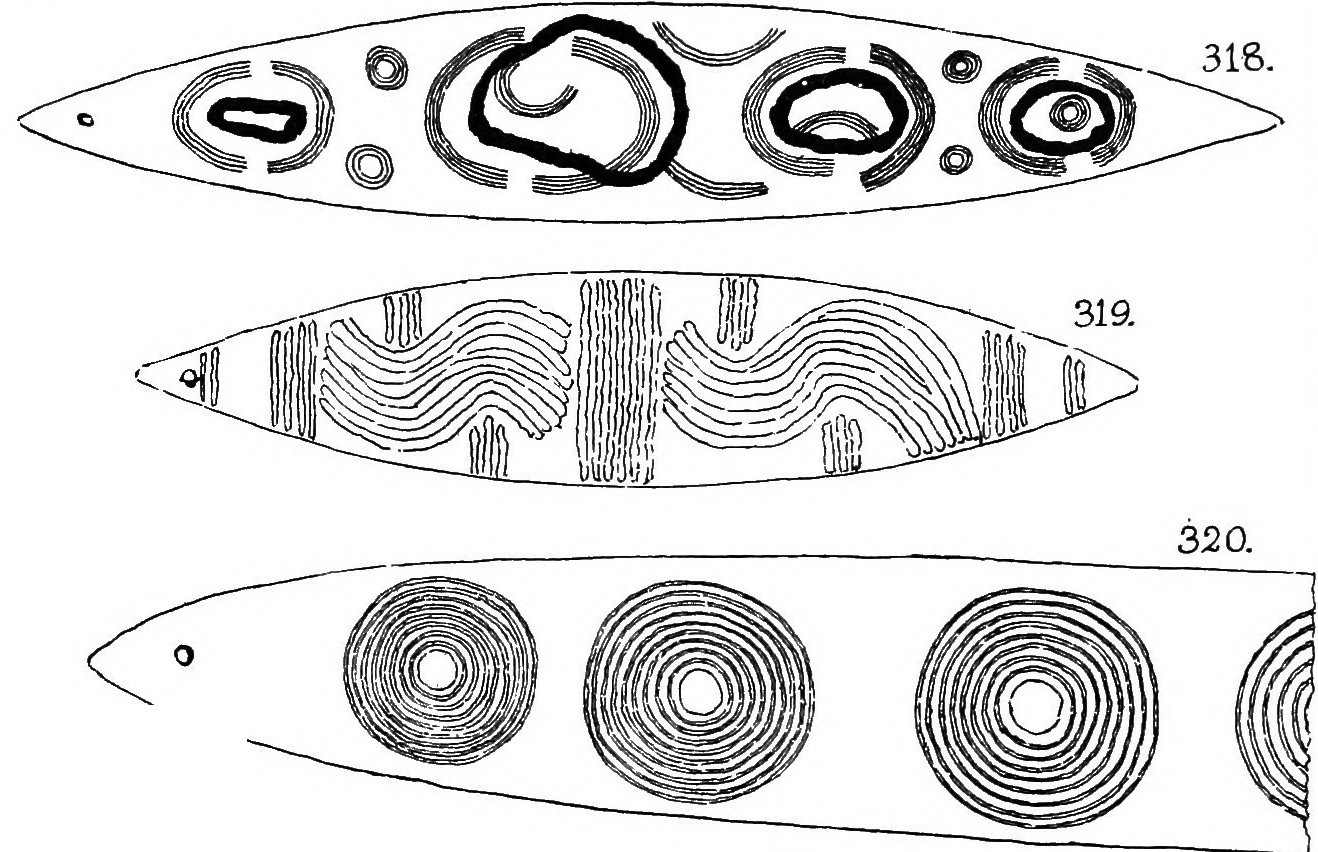
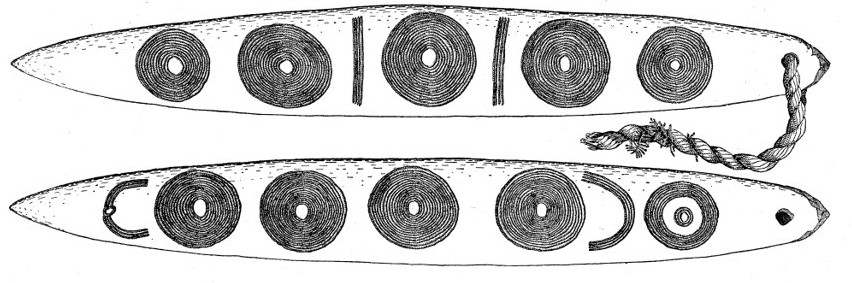
Both gravings tell the board’s errand. The rings are firebrands whirled round and round through the night of singing, the same nightlong circling the charm itself performs out in the dark. The paired half-circles are the woman. A board from Linda Creek, in the same Georgina country, shows how fine the ringed kind could be: sixteen inches long, five concentric figures on each face, strung on a cord of human hair and emu down, rubbed all over with red ochre and grease.
Calling a woman at Roebuck Bay
On the far side of the continent, at Roebuck Bay by Broome on the Kimberley coast of Western Australia, Ada Peggs wrote long letters home about the people she met. One of them, a man called William, made her a whistling-stick and smoothed it down with a piece of broken glass before he cut the markings. She wrote down what it was for:
Then he has made and given me a whistling-stick, in shape very like a laurie, with a hole in one end by which it is swung, when it makes a humming noise. Here it is used to call a woman to a man, and at the man-making ceremonies (it is the same as the bull-roarer).
Ada Janet Peggs, “Notes on the Aborigines of Roebuck Bay, Western Australia,” Folk-Lore 14 (1903), pp. 349–350.
Love first, then initiation: the Roebuck Bay whistling-stick calls a woman and makes men. Up the coast at Beagle Bay the Nyulnyul worked the same double life into one word: the small sacred board is mandaki, and the love spell made by swinging it, often on a board cut with the figure of a woman, is mandakidkid.
She comes out to look
The fourth corner is Cape York, the long peninsula at Australia’s north-eastern tip, where Ursula McConnel lived among the Wik peoples of the Archer and Watson rivers in the 1920s and 1930s. The Wikmunkan and Wiknatara keep four bullroarers, and the four grow up like girls. The small plain moiya is a girl at puberty, swung by the young initiates; the painted pakapaka is a girl fully grown. The Wiknatara moipaka are a married pair, male and female, both painted red and white, and the moipaka is a lover’s instrument with its own rule of sight:
The moipaka is swung to attract the attention of a married woman. If it is swung outside the camp she will come out of curiosity to see what it is. The swinger then quickly hides it, for should a woman see it she would cease to be curious and hence the charm would not work. It can be swung only by married men.
Róheim, The Eternal Ones of the Dream, p. 80, after Ursula McConnel, “Myths of the Wikmunkan and Wiknatara Tribes,” Oceania 6 (1935).
The woman must hear the voice and never see the board: the same rule that hides the roarer from every woman at initiation is here the mechanism of the charm. And the Wik, like the Arrernte, say the roarer began with women. Two girls found the first ones and swung them, singing:
“It belongs to us women, really we have found it! But no matter! We leave it for the men! It is they who will always use it.”
Róheim, The Eternal Ones of the Dream, p. 80, after McConnel.
Then they pushed the bullroarers into the crack of a bloodwood tree and went down under the water, and the place became the totem centre of the little girl and the young girl.
The same whirl, sent to wound
The love charm has a dark twin, and it turns up on the other side of the Pacific. Among the foothill Yokuts of California’s Sierra Nevada, the Wukchamni of the Kaweah River used the bullroarer both to heal and to kill. Harold Driver set down what Sam Garfield told him in the 1930s:
The bull-roarer was rotated in hands as in making fire and point applied to afflicted part of body. Supposed to extract poison. … Poison might be placed on the bull-roarer and shot at someone by whirling the instrument.
Harold E. Driver, “Culture Element Distributions: VI, Southern Sierra Nevada,” Anthropological Records 1:2 (1937), p. 126.
In the north-west Amazon, on the Cuduyarí River in Colombia, the Cubeo feared one figure above all, the shaman they call the jaguar. Irving Goldman, who lived on the river in 1939 and 1940, listed the shaman’s ways of killing at a distance: spines shot invisibly into the body, deaths dreamed in sleep, nail-cuttings boiled in pepper broth. The list ends with a whirl:
Finally, a shaman has a stone bull-roarer. As he whirls it the victim suffers as if struck with a machete.
Irving Goldman, The Cubeo: Indians of the Northwest Amazon (1963), p. 268.
The shape of the act is the Australian one exactly. A man whirls an object where the target cannot see it, and something crosses the distance and lands in that one body: affection in Queensland, poison in California, a blade in the Amazon.
Simaetha’s bronze rhombos
The scene moves to the Greek world of the third century BC. In the second Idyll of Theocritus, Simaetha, a young woman living alone with her maid Thestylis, has been abandoned by the athlete Delphis, who has not knocked at her door for twelve days. At night, by moonlight, she sets out her magic. She calls on the moon and on Hecate; Andrew Lang’s prose translation of 1880 keeps her voice:
But now I will bewitch him with my enchantments! Do thou, Selene, shine clear and fair, for softly, Goddess, to thee will I sing, and to Hecate of hell. The very whelps shiver before her as she fares through black blood and across the barrows of the dead.
Theocritus, Idyll 2.10–14, tr. Andrew Lang, Theocritus, Bion and Moschus (1880).
She burns barley and bay, melts wax, shreds a fringe from Delphis’s cloak into the flame, and between each act comes the refrain to her love-wheel, the iynx: “draw home to me the man I love.” Then, among the spells, she works a second instrument:
χὡς δινεῖθʼ ὅδε ῥόμβος ὁ χάλκεος ἐξ Ἀφροδίτας,
ὣς τῆνος δινοῖτο ποθʼ ἁμετέραισι θύραισιν.And as this bronze rhombos whirls by Aphrodite’s power, so may he whirl about my door.
Theocritus, Idyll 2.30–31.
A rhombos is the Greek bullroarer. The ancient lexicographer Diogenianus, quoted in the scholia to Clement of Alexandria, defines it as “a little piece of wood to which the cord is tied, and in the rites it was whirled so that it would roar”. Euripides heard it in the rites of the Mother of the Gods, “the circling, airborne rush of the whirled rhombos” (Helen 1362–1363), and the philosopher Archytas noted that rhomboi swung gently give a deep note and swung hard a high one. A. S. F. Gow, later the Cambridge editor of Theocritus, sorted the two instruments of the spell in 1934. He read the ancient definition and recognised the object:
The instrument described … though I know no ancient representation of it, is pretty plainly the turndun of Australian aboriginals, or bull-roarer of modern England. In Australia this is an oblong piece of wood to the point of which a cord is attached. The instrument is swung in a circle by the cord and emits a muttering roar which rises in pitch as the speed is increased.
A. S. F. Gow, “ΙΥΓΞ, ΡΟΜΒΟΣ, Rhombus, Turbo,” Journal of Hellenic Studies 54 (1934), pp. 5–6.
“At each recurrence of the refrain Simaetha takes up her magic wheel and sets it spinning: at l. 30 she swings a bronze bull-roarer; the purpose is the same, the method … different.”
A. S. F. Gow, 1934Gow illustrated both. One photograph shows an iynx in action, a wheel on a doubled cord that winds up and runs back with a whirr; another sets a diamond-shaped tin rhombos beside a turndun from New South Wales, and Gow found the little lozenge the more effective for its size.
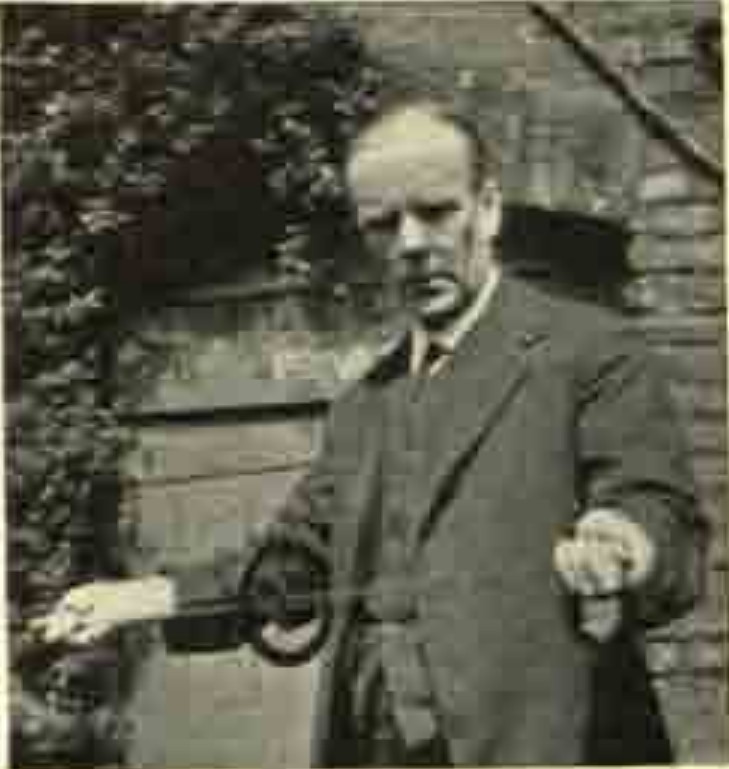
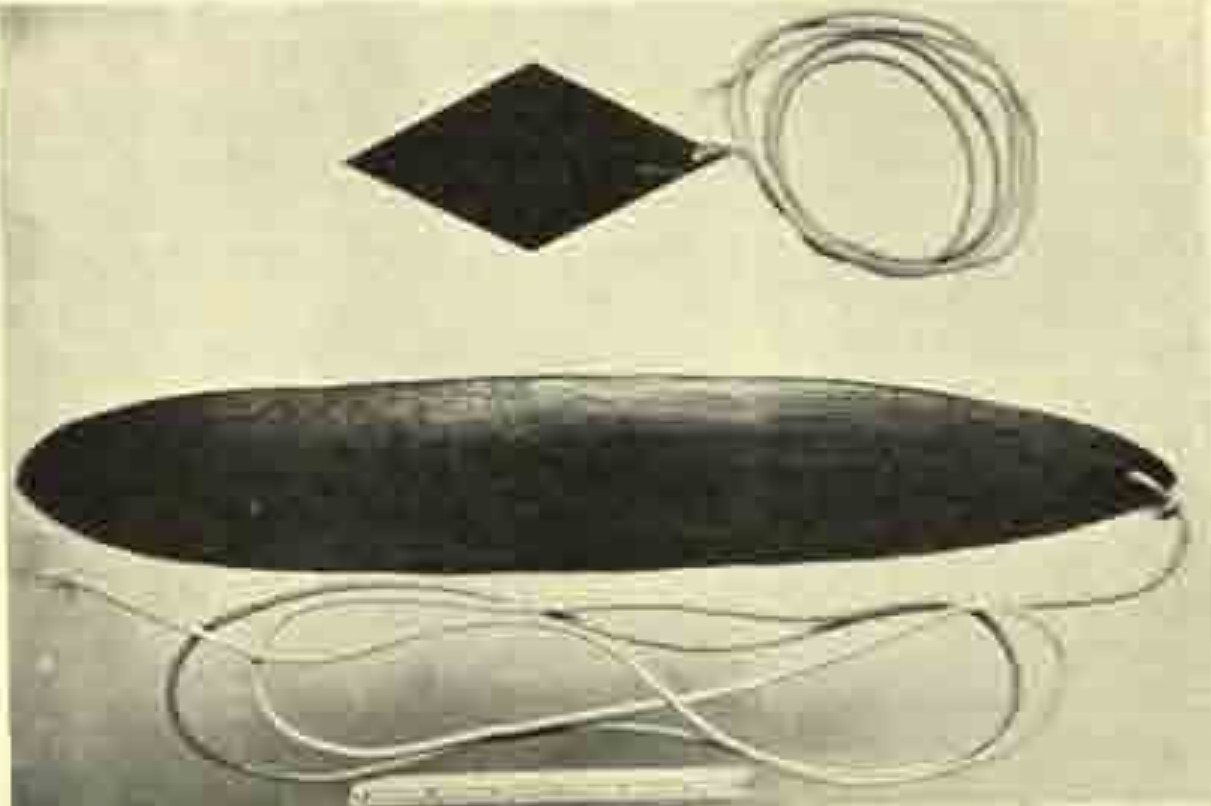
Simaetha’s spell carries its own dark twin. If the binding fails, she tells the moon, she has other means:
Now with magic rites I will strive to bind him, but if still he vexes me, he shall beat, by the Fates I vow it, at the gate of Hell. Such evil medicines I store against him in a certain coffer, the use whereof, my lady, an Assyrian stranger taught me.
Theocritus, Idyll 2.159–162, tr. Lang.
The rhombus in Athens and Rome
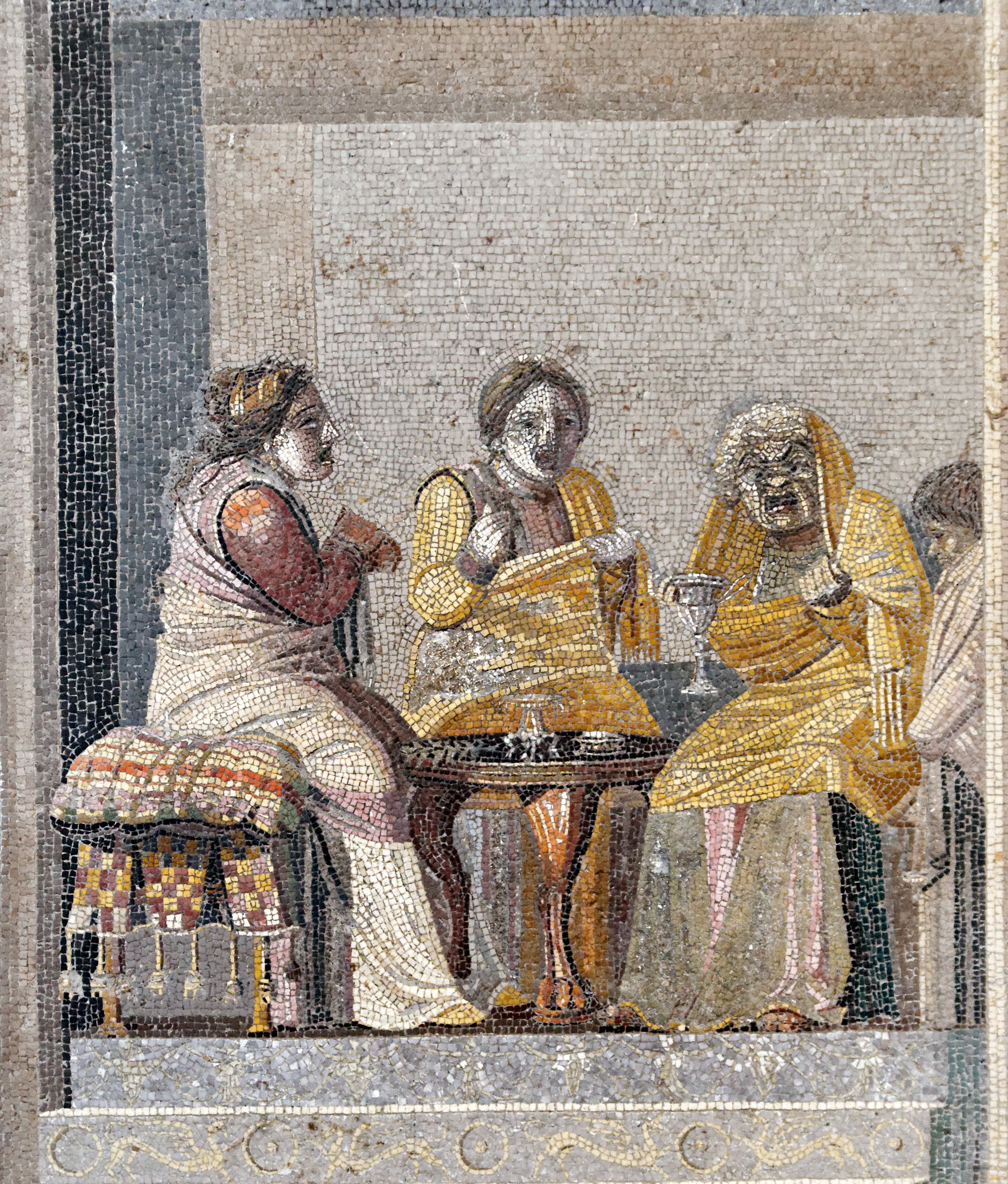
The whirled lover-charm outlived Theocritus by centuries. In Lucian’s Dialogues of the Courtesans, written in the second century AD, the courtesan Melitta has lost her young man to another woman, and her friend Bacchis tells her of a Syrian sorceress near the Ceramicus in Athens who once brought Bacchis’s own lover back after four months. The fee is a drachma and a loaf. Something of the man is needed: his clothes, his sandals, a few of his hairs.
She hangs them from a peg and fumigates them with sulphur, sprinkling salt on the fire as well, and she speaks both names over them, his and yours. Then she brings a rhombos out of her bosom and whirls it, reciting some incantation on a running tongue, barbarous and terrifying names. That is what she did then. And not long after, Phanias came back to me, though his friends rebuked him for it and the girl he was living with begged him again and again—led by the incantation.
Lucian, Dialogues of the Courtesans 4.5.
The Latin love poets of the first century BC took the instrument over with its Greek name. In Propertius, Cynthia complains that a rival woman has stolen the poet from her by magic: “That shameless woman has beaten me not by her character but by herbs: he is drawn by the threaded wheel of the rhombus. The monstrous charms of the swollen toad’s venom and bones gathered from dried-out snakes drag him” (3.6.25–28). When Cynthia lies sick, the spells that should save her fail: “the rhombi twisted under the magic chant give out, the laurel lies burnt on the dead hearth, and the Moon refuses to come down from the sky so often” (2.28.35–37). Ovid’s bawd Dipsas, who can turn rivers back to their springs, “knows well what herbs can do, what threads set spinning by the twisted rhombus, what the venom of a mare in heat” (Amores 1.8.5–8). Martial mourns another old procuress with a question: who now will know how “to draw down the moon with the Thessalian rhombus” (9.29.9)?
One office, from the scrub to the door
Wherever the rite is written down it is the same rite: at night or at the break of day after a night of singing, the swinger stands far off, in the thick scrub, outside the camp, under the moon while the lover lies in another house. The target sees nothing; the Yaroinga woman “sees nothing of the web into which she is becoming entangled”, and the Wik charm fails if the woman catches sight of the board. What reaches her is the sound, and it turns her toward the swinger: she walks in from Glen Helen, she comes out to look, she says “I like this-fellow-boy”, and Delphis, in Simaetha’s prayer, whirls about her door as the bronze whirls in her hand.
In Australia the charm is the same small board the boy receives at initiation, under the rule that keeps it from every woman’s eyes. The Arrernte novice is told to keep it off the woman’s road; the Pitjantjatjara youth learns that the demon’s voice was the men’s all along and is given the board to frighten the women and then to court one; in north-west Queensland the graved whirler signals the women off the circumcision ground, and among the Yaroinga the same kind of board is a love charm no woman may handle or see. The voice that drives all the women from the ground is aimed, on another night, at one woman alone. Turn the same throw toward an enemy and it carries poison on the Kaweah River and a machete blow on the Cuduyarí, and Simaetha keeps poisons in a coffer, against the night her binding fails.
The charm travels, and the sources say so. Roth was told that the Yaroinga obtained their love-charm whirler from the Workia to the north, “whence its use in this connection has been learnt”. Spencer and Gillen found the Arrernte namatwinna matched by equivalent boards among the Ilpirra, Warlpiri, Kaitish and Warramunga, and recognised Roth’s Queensland whirler as “precisely the same thing”. The small board’s Luritja name, mandagi, runs north-west across the desert to Beagle Bay, where the Nyulnyul love spell is mandakidkid; that road is traced in Mantiki. People passed the board to their neighbours with its use attached, and the use went wherever the board went.
The roarer that the women of Central Australia were forbidden to see was, the Arrernte said, theirs before it was the men’s; the Wik girls who found the first ones gave them up singing. The instrument came back to women in the only way the rule allowed: as a hum in the dark, from somewhere out past the camp-fires, that a woman could not see and could not stop hearing.
Key sources
- Géza Róheim, The Eternal Ones of the Dream: A Psychoanalytic Interpretation of Australian Myth and Ritual (New York, 1945), pp. 13 (Knatata, the woman’s road), 80 (Wik moiya, pakapaka and moipaka, after McConnel), 83–84 (ilpindja love magic), 109–110 (Kulaia and Thomas), 175 (the namatuna first owned by women), 234 (Pitjantjatjara mandagi). Scan.
- Baldwin Spencer and F. J. Gillen, The Native Tribes of Central Australia (London, 1899), pp. 541–542 and p. 541 n. 1. Scan.
- Walter E. Roth, Ethnological Studies among the North-West-Central Queensland Aborigines (Brisbane, 1897), §215 p. 129, §§300–301 pp. 171–172, §325 p. 182, pl. XVII figs. 316–320. Scan.
- R. Etheridge Jr., “On circular and spiral incised ornament on Australian Aboriginal implements and weapons,” Records of the Australian Museum 3:1 (1897), pp. 1–6, pl. I.
- Ada Janet Peggs, “Notes on the Aborigines of Roebuck Bay, Western Australia,” Folk-Lore 14:4 (1903), pp. 324–367, at pp. 349–350. Text.
- William B. McGregor, A Grammar of Nyulnyul (Canberra: Pacific Linguistics), §1.3 and wordlist s.v. mandaki, mandakidkid.
- Ursula McConnel, “Myths of the Wikmunkan and Wiknatara Tribes,” Oceania 6:1 (1935), pp. 66–93.
- Harold E. Driver, “Culture Element Distributions: VI, Southern Sierra Nevada,” Anthropological Records 1:2 (1937), p. 126, notes to elements 1242–1243. Scan.
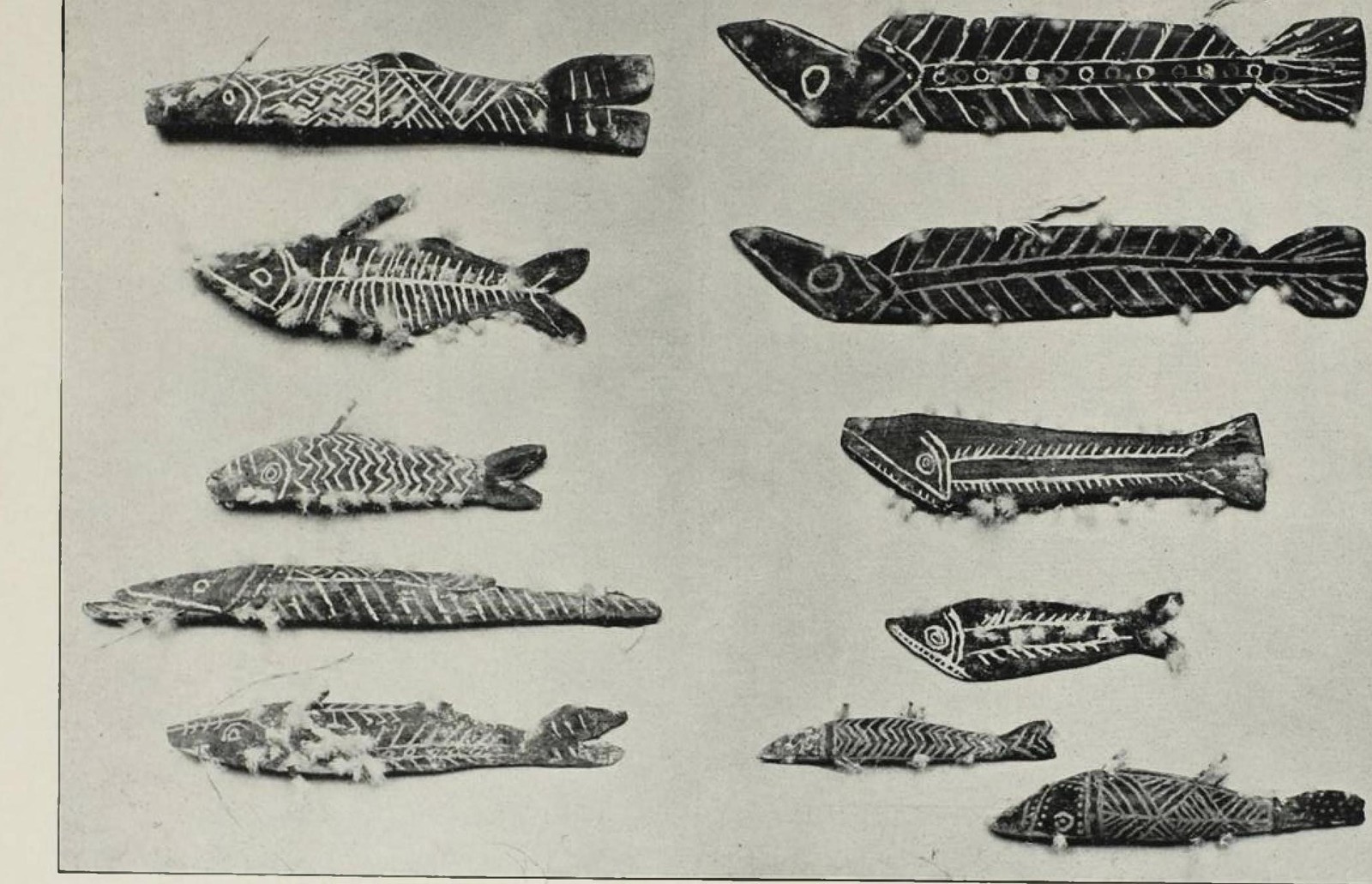
- Irving Goldman, The Cubeo: Indians of the Northwest Amazon (Urbana, 1963), p. 268. Theodor Koch-Grünberg, Zwei Jahre unter den Indianern (1909–1910), the Kobéua fish bullroarers.
- Theocritus, Idyll 2, especially lines 10–14, 30–31 and 159–162; tr. Andrew Lang, Theocritus, Bion and Moschus Rendered into English Prose (London, 1880). Text.
- A. S. F. Gow, “ΙΥΓΞ, ΡΟΜΒΟΣ, Rhombus, Turbo,” Journal of Hellenic Studies 54 (1934), pp. 1–13, especially pp. 5–8 and figs. 6–7. Christopher A. Faraone, Ancient Greek Love Magic (Cambridge, Mass., 1999), pp. 150–152 and glossary.
- Lucian, Dialogues of the Courtesans 4.5. Euripides, Helen 1362–1363. Archytas, fr. 1 (Diels–Kranz 47 B 1).
- Propertius 2.28.35–37 and 3.6.25–28; Ovid, Amores 1.8.5–8; Martial 9.29.9. Translations here are the essay’s own.