No. STANNER1963-001
Wilili's shrill night summons
Australia · Port Keats (Wadeye), Northern Territory · Top End
Restricted
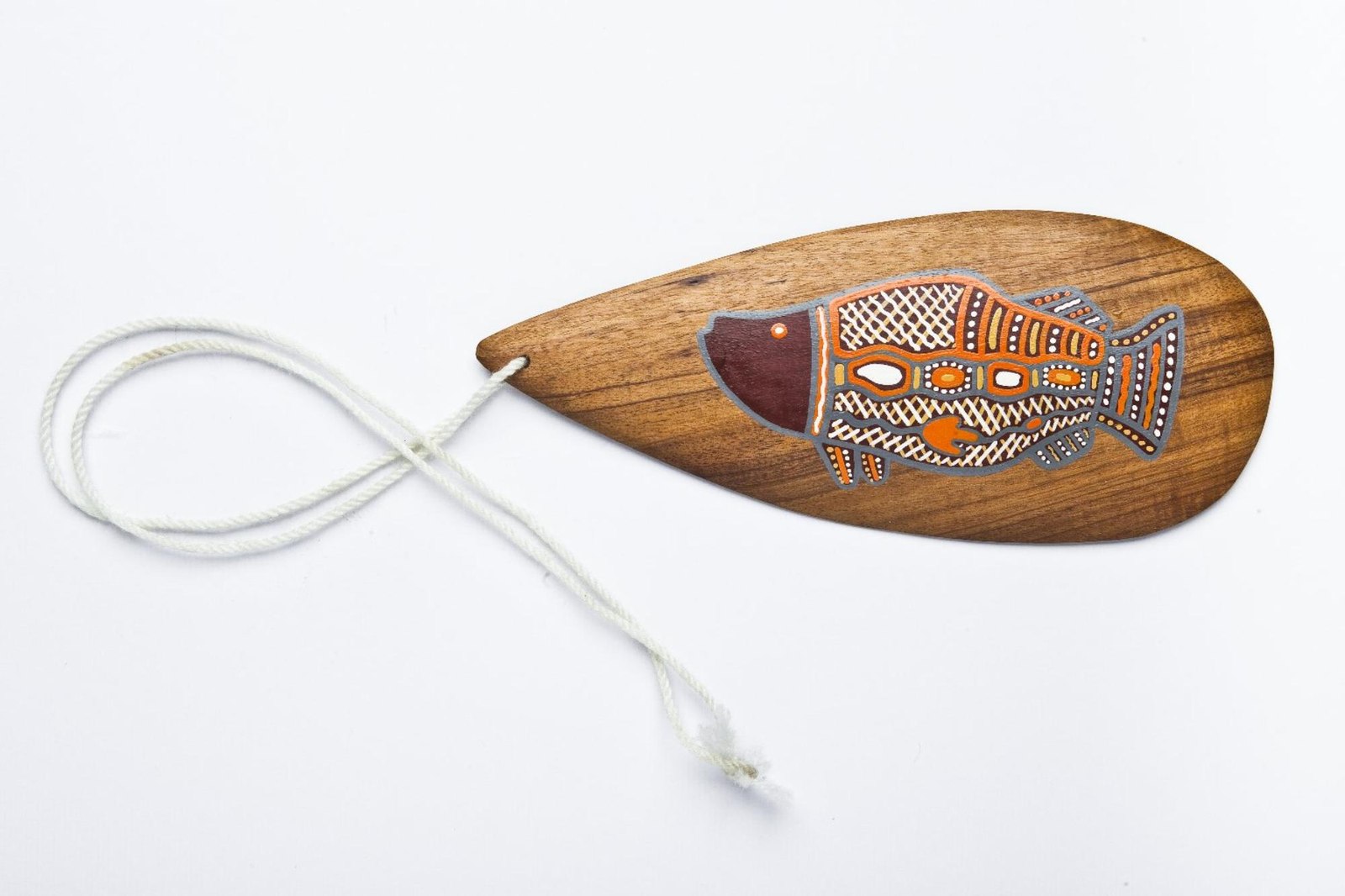
karait pule
Source term: a tiny bullroarer (known as karait pule)
karait pule: 'dead friend', 'ghost leader', the tiny bullroarer of Wilili. Wilili: the night custom it signalled (a Djamindjung word). ŋinipun: the marriage subsections.
A shrill whine in the dark, somewhere out beyond the camp, was the signal. The ritual leader was swinging the karait pule, "dead friend" or "ghost leader," a tiny bullroarer, and at its sound every fully initiated man and every adult woman went out into the night to lie together, each man with women of the two subsections he might marry. Some men said its high voice overcame women with desire. The custom, Wilili, came to the Murinbata of Port Keats from the Victoria River peoples, and for a short time it was coupled to Punj, their great bullroarer rite. Murinbata men spoke of it between shame and amusement: none would admit taking part, each hinted that others had, and all agreed it was not true Murinbata custom.
Wilili was clearly incremental, not integral, to the bullroarer rite of the Murinbata.
W. E. H. Stanner, On Aboriginal Religion (Sydney University Press, 2014), p. 169
Particulars
- Object
- A tiny bullroarer with a high-pitched, shrill sound.
- Function
- Swung at night by the ritual leader at a distance from camp as the signal for Wilili: all fully initiated men and all adult women went out into the darkness to have intercourse according to their marriage subsections. Some men said its shrill sound made women overcome with sexual desire. A short-lived custom coupled for a time with the Punj bullroarer rite.
Source
W. E. H. Stanner, On Aboriginal Religion (Sydney University Press, 2014), pp. 168-169