No. HOWITT1904-004Australia
White Cliffs roarers for fish and honey
Australia · White Cliffs, K'gari (Fraser Island), Queensland · Southeast Queensland
Weather / fertility magic
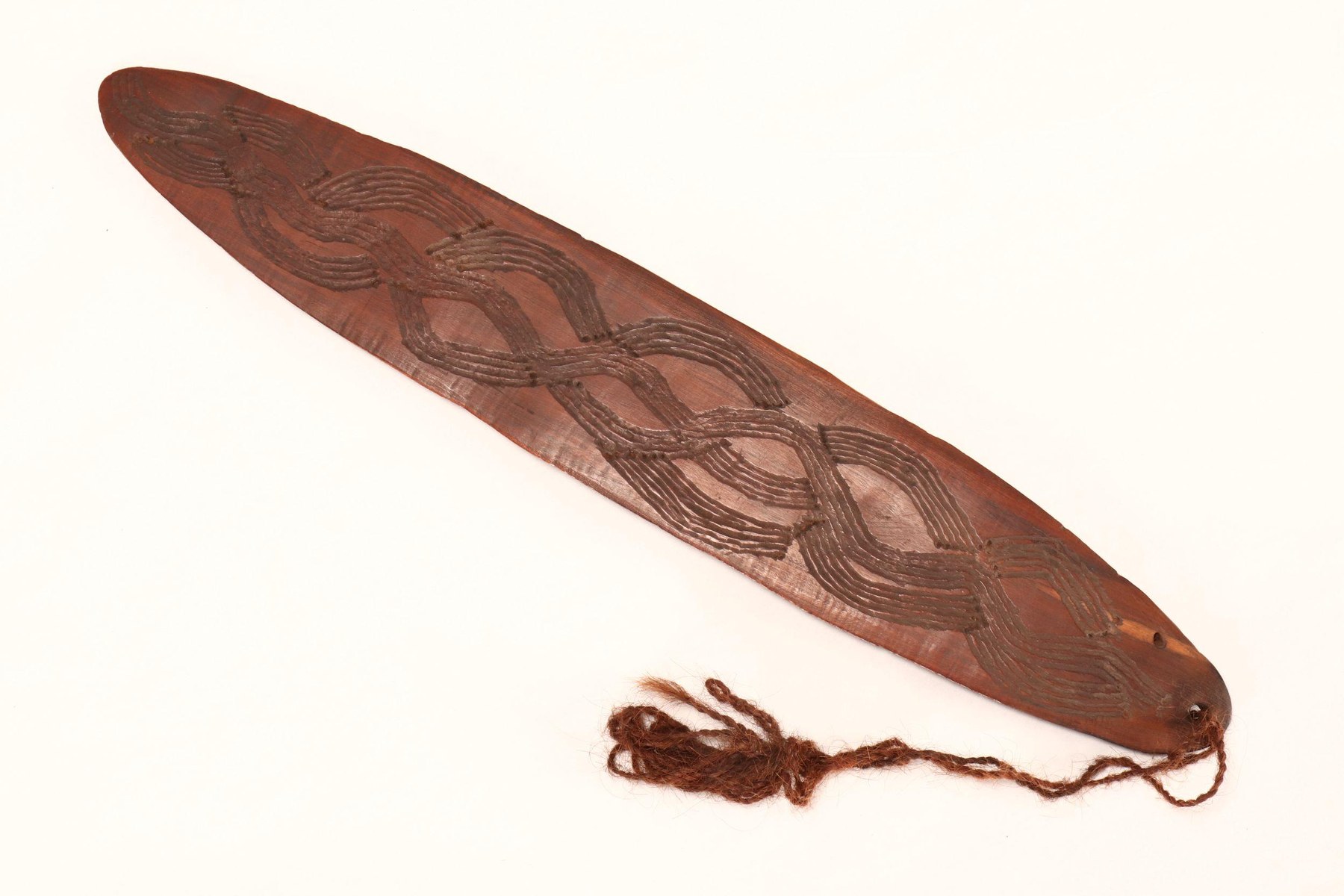
Source term: bull-roarers
At White Cliffs on K'gari, the island the colonists called Fraser, a tribe held a ceremony to bring plenty of fish and honey, and the women swung the bull-roarers beside the men. Across the strait, at the mainland Dora, women ran from the camp at the first roar, told that listening would deafen them and looking back would blind them. On the island, for the food of the sea and the bush, they whirled it themselves.
A tribe at White Cliffs, Frazer's Island, on the coast of Queensland, held a ceremony for the purpose of ensuring plentiful supplies of fish and honey, in which both men and women took part, swinging bull-roarers.
A. W. Howitt, The Native Tribes of South-East Australia (1904), p. 400
Particulars
- Object
- Bull-roarers; form not recorded.
- Function
- Swung by both men and women in a ceremony held to ensure plentiful supplies of fish and honey.
Source
A. W. Howitt, The Native Tribes of South-East Australia (1904), p. 400