No. FRY1933-001Australia
Manabokma before the tjuruna
Australia · Mount Doreen–Cockatoo Creek, Northern Territory · Central Australia
Restricted
- Initiation rite
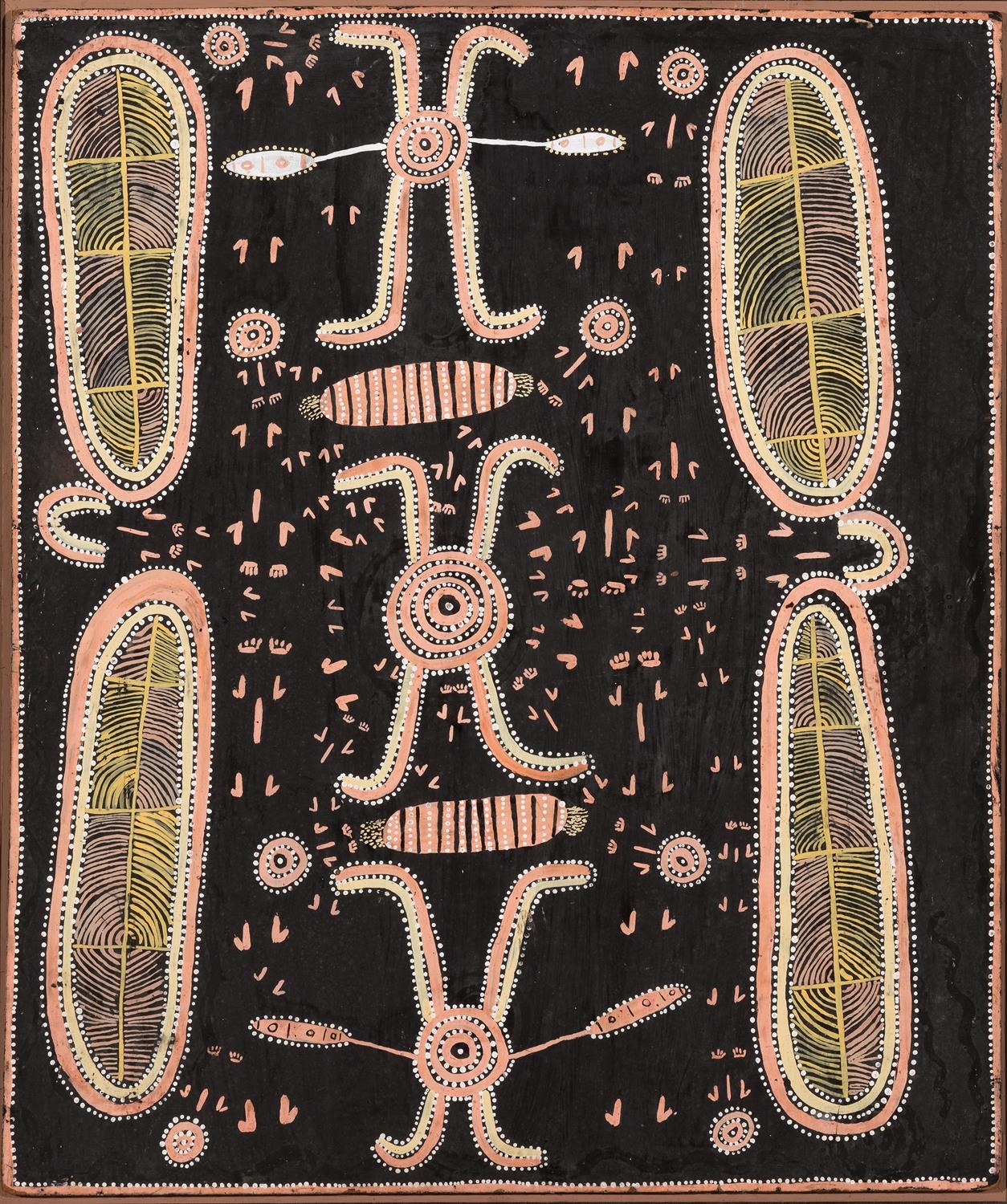
manabokma
Source term: manabokma (Ngalia); small bullroarer
manabokma: the Ngalia small bullroarer given after circumcision (Pintupi mataki, Aranda namatuna). tjuruna: the sacred boards and stones shown to a man later in his initiation.
After a Ngalia boy was circumcised, and before the old men showed him his tjuruna, he was given a manabokma, a small bullroarer of his own, the instrument the Aranda called namatuna. The humming blade came first and the tjuruna waited. The Ngalia were desert people of the country around Mount Liebig, west of Alice Springs. In 1972 the Papunya painter Long Jack Phillipus Tjakamarra laid out a Mala, spinifex-wallaby, ceremony as if from above. The dancers' tracks hop in from the edges toward the centre, their slowing gait marked by tails and front paws; painted figures at top and bottom swing bullroarers on taut strings, their thrum warning the uninitiated off the ground. The four great ovals in the corners are probably where the newly initiated learned the Mala songs, designs and dances. It was painted just before the August 1972 quarrel at Yuendumu over sacred detail shown in public.
After a boy has been circumcised, but before he has been shown his tjuruna, he is given a mataki (Pintubi) manabokma (Ngalia).
H. K. Fry, “Body and Soul,” Oceania 3 (1933), quoted in M. F. Ashley-Montagu, Coming into Being among the Australian Aborigines (1937), p. 99
Particulars
- Object
- A small bullroarer, the manabokma, which Fry equates with the Aranda namatuna.
Discussed in one essay
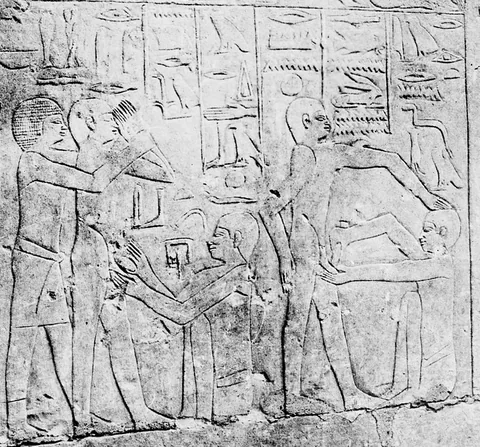 The Bridegroom of Blood
Sources
- H. K. Fry, “Body and Soul: A Study from Western Central Australia,” Oceania 3 (1933): 247–256, quoted in M. F. Ashley-Montagu, Coming into Being among the Australian Aborigines (1937), p. 99 View · archived
- John Kean, catalogue essay on Long Jack Phillipus Tjakamarra, Mala (Spinifex Wallaby), 1972, Deutscher+Hackett, 29 November 2017, lot 45 View
Nearby in the atlas
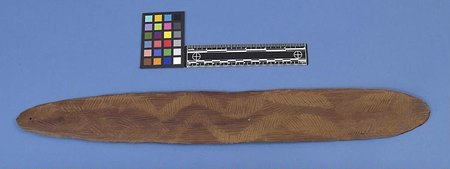 Hackett's four Musgrave–Mann bladesAustralia · South Australia / Musgrave and Mann Ranges · Restricted
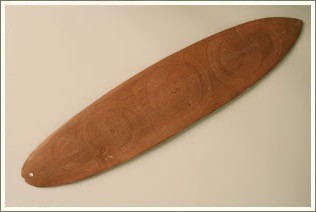 Aranda churinga: an ancestor's other bodyAustralia · Central Australia (Aranda / Arrernte country) · Restricted
 Arunta churinga bullroarer complexAustralia · MacDonnell Ranges / Alice Springs region · Restricted
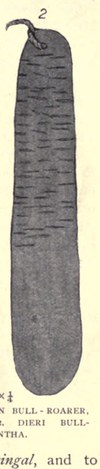 Dieri yuntha bullroarerAustralia · Restricted
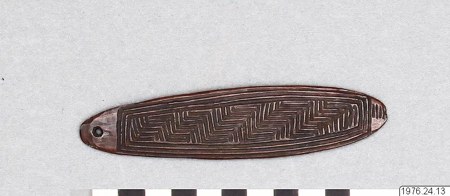 Kwerenaty, guardian of the initiatesAustralia · Upper Sandover River, north-east of the MacDonnell Ranges, Northern Territory · Restricted
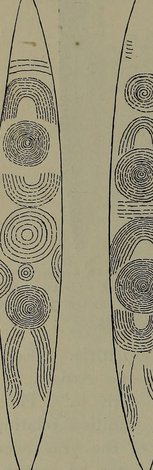 Kaitish (Kaytetye)Australia · Sandover / Barrow Creek region · Restricted