Atlas Essay —
How the Snake Got Its Venom
The Kimberley · Cape York · central Australia · south-east Queensland · South Papua
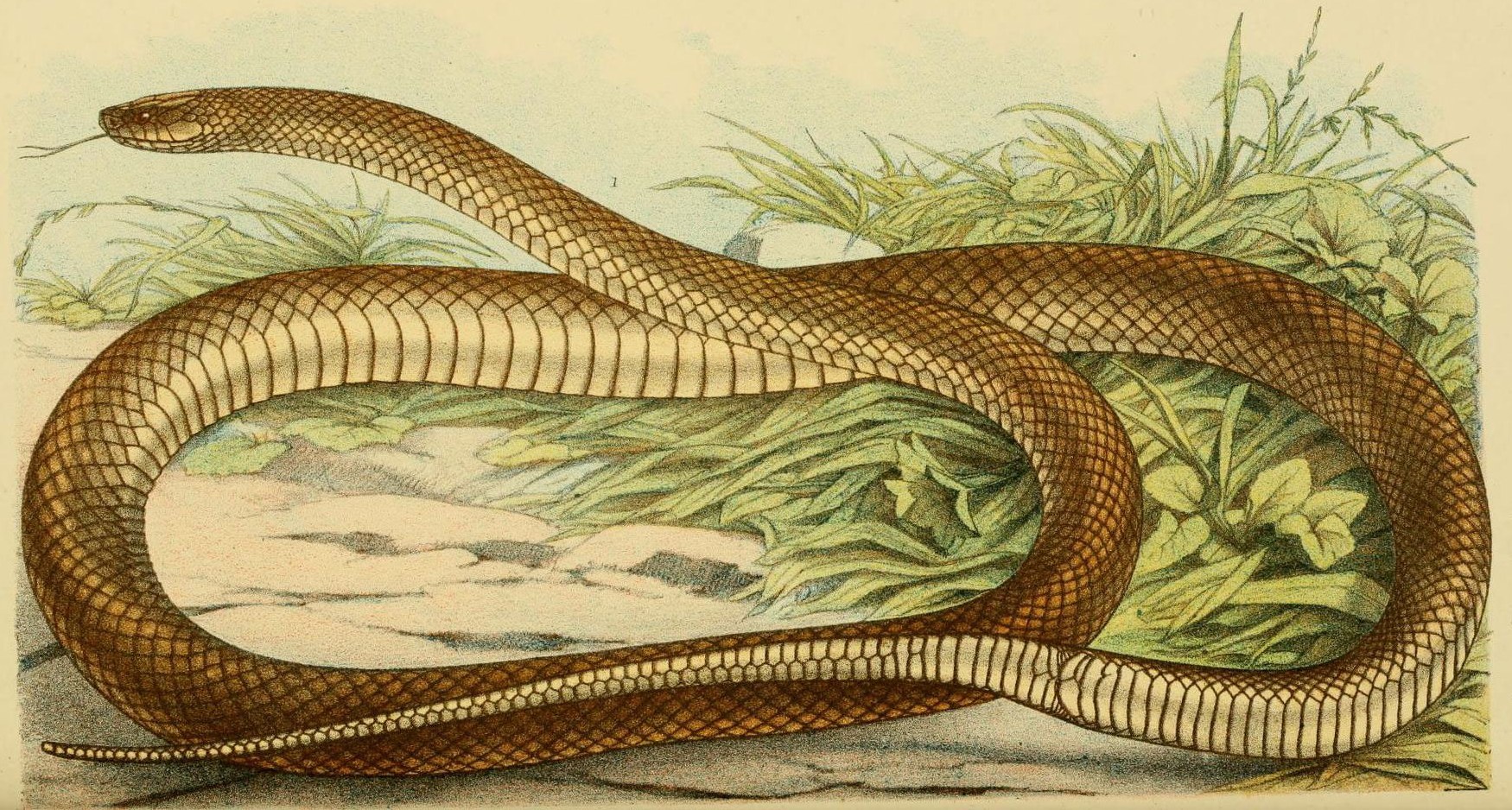
Two brothers walk the red scrub of the Kimberley, in the far north-west of Australia, giving every creature its secret name. They catch a yellow snake and push a bullroarer into its mouth, to make it strong and venomous. More than two thousand kilometres to the east, on Cape York, an old man pinches a sleeping boy and tells him a snake has bitten him; then he whirls a small bullroarer to kill the snake, and the bite does the boy no harm. The roaring board puts the venom in, and the roaring board takes the danger out.
The bullroarer holds the snake’s venom. In the Kimberley it put the venom into the snake’s mouth; across Australia and into New Guinea the same instrument kills the snake, cancels its bite and keeps the novice from harm. What gives the poison takes it away.
In brief
- The Nyikina of the Fitzroy River, in the Kimberley of Western Australia, tell how the brothers Yalgi and Windinbigi put a buliuana, a bullroarer, into the mouth of the yellow Banaka snake “to make it strong and venomous.” Only men of the Banaka section can kill it; anyone else is bitten (Südkamp, after Petri, pp. 254–255).
- On the McIvor River on Cape York, Queensland, each novice was told he had been snake-bitten, and his mentor whirled a small bullroarer to kill the imaginary snake, “such action being believed to prevent the bite having a fatal effect.” The roarer, called dunggul, “a term also meaning a snake,” then passed to the boy with the power to kill snakes and people (Roth 1909, p. 175).
- Among the Kabi and Wakka of south-east Queensland, a snake met on the road by the novices brought out the bullroarer: “the Bondaban (bull-roarer) is whirled, the snake is killed and shown to the youths” (Mathew 1910, p. 99). The Alyawarr of central Australia say the bullroarer looks after the young men “in case they get eaten by devils or bitten by snakes.”
- The Muyu of southern New Guinea open the lesson of the bullroarer with a cry of “snake!” The man who shouts it takes up the roarer and swings it, and then the sacred flutes are shown (Schoorl 1997, pp. 179–180).
- In California the Wukchamni Yokuts pressed the bullroarer to the body “to extract poison,” and loaded it with poison to whirl sickness into an enemy (Driver 1937, p. 126): one instrument, working the venom both ways.

A bullroarer in the snake’s mouth
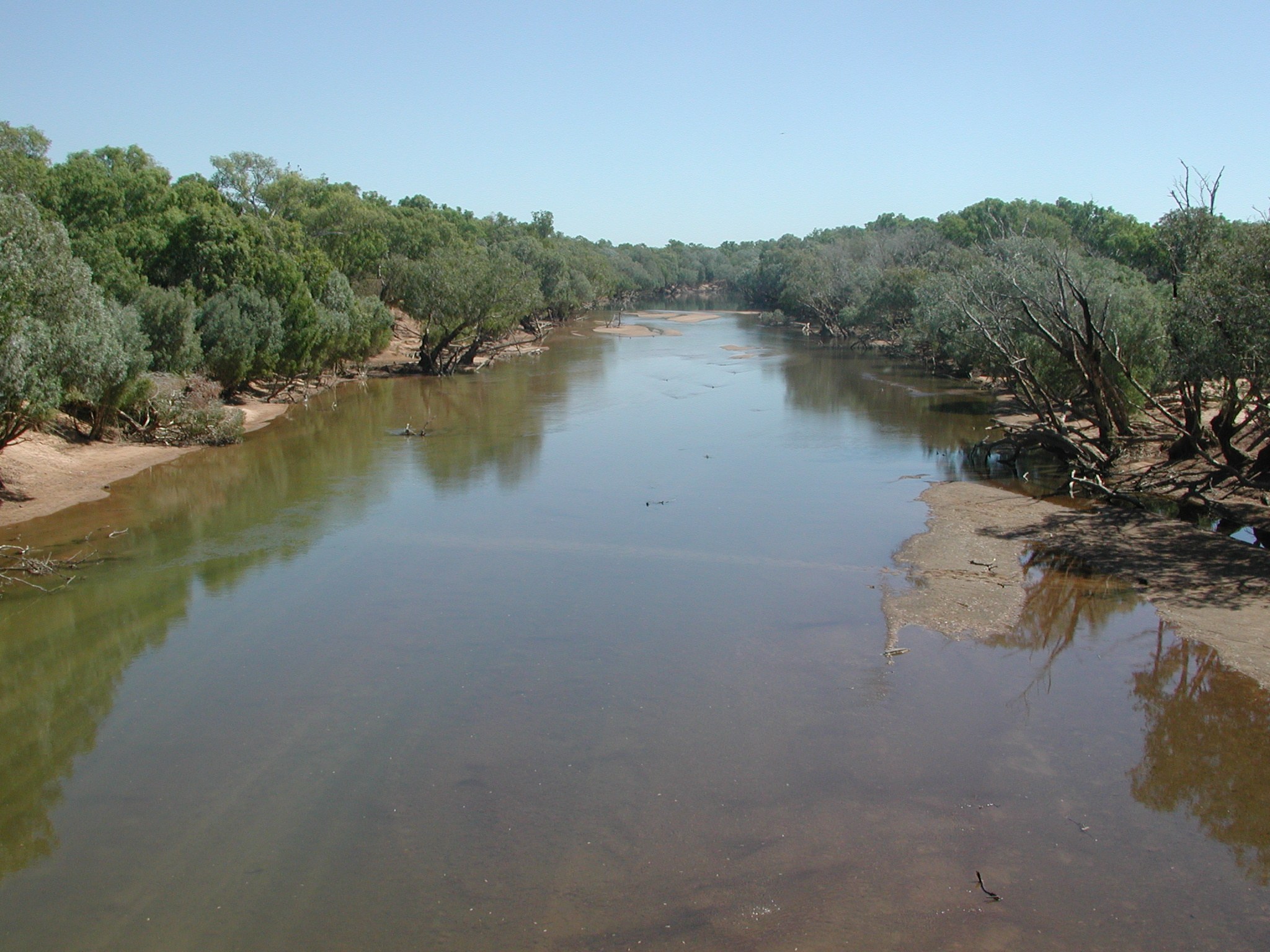
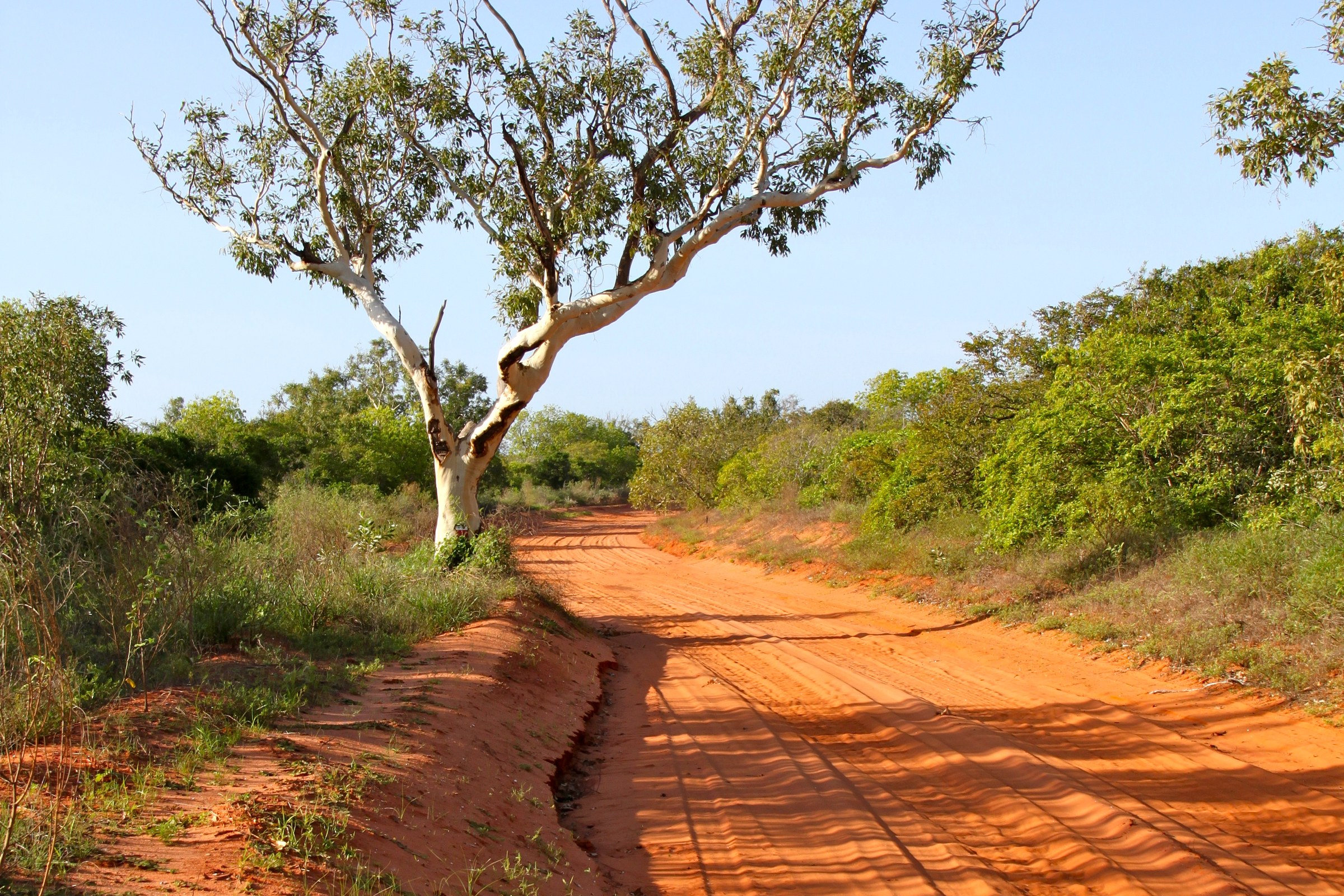
The Fitzroy River, the Mardoowarra, rises in the ranges of the Kimberley and runs west through the pindan, the low red scrub of north-western Australia, to King Sound. Its lower reaches are the country of the Nyikina. In the 1930s they told the German ethnologist Helmut Petri how two brothers, Yalgi and Windinbigi, came from Nyilgar, a spring in Mangala country, and walked the land giving every creature its name: a secret name, which only men may speak, for the black cockatoo, the wild turkey, the kangaroo and the black-headed snake. Their father was called Buliuana, and buliuana is also the Nyikina word for the great bullroarer. The brothers carried the boards with them and gave them out as they went.
In the pindan they met a second snake.
“Yalgi looked and said to Windinbigi: ‘That is a Banaka’ (yellow snake). Windinbigi answered: ‘We must catch this snake.’ So they did. They put a buliuana into the Banaka’s mouth, to make it strong and venomous. Only men of the Banaka section can kill this snake. If others try, they are bitten. Today there are yellow snakes in the pindan. To every animal that Yalgi and Windinbigi found they gave a name and also a buliuana, to make it big and strong.”
Horst Südkamp, Wondjina, “Yalgi und Windinbigi,” after Petri 1954, pp. 254–255. German: “Sie steckten der Banaka ein Buliuana ins Maul, um sie stark und giftig zu machen.”
The snake did not have its venom before the brothers came. It was put into the snake, through the mouth, and what put it there was a bullroarer. Every other creature they met got a board for what it lacked. The eagle-hawk’s nest was unfinished, and its eggs kept falling out until the brothers gave it a buliuana. The wild bees were crying in a hollow tree because their honey kept running out of the nest; Yalgi climbed up with a board, and the leaking stopped (the bees are followed further in The Voice on the Wing). Caught in a bushfire, Yalgi ringed himself with boards against the heat, and Windinbigi gave more to a little cloud, which carried them off to make the rain.
The gift came with a law. The Banaka is also the name of one of the four sections into which Nyikina society is divided, and the men of that section alone can kill the yellow snake. Anyone else who tries is bitten. The board that made the snake dangerous made a class of men who are safe from it.
Venom is a gift
Peoples who ask how the snake got its venom often answer that it was handed over. In a story Katie Langloh Parker gathered from the river peoples of New South Wales and southern Queensland, told under the names of the Euahlayi, the poison once belonged to the great goanna, Mungoongarlee, who kept it in a bag in his mouth. The black snake, Ouyouboolooey, tricked him into handing the bag over, and walked off “putting the poison bag into his own mouth.” He would not give it up to be destroyed.
On Bayou Lacomb in Louisiana, in 1910, the Choctaw woman Pisatuntema told how a poisonous vine in the bayous, sorry for the bathers it killed, called the chiefs of the snakes, bees and wasps and gave its poison away, “for up to that time no snake, bee or wasp had the power it now possesses.” On the Upper Congo the Boloki told how the Python, who gave birth to all the snakes, called her children to receive their poison; the water-snake went fishing instead, missed the gift, and “is only laughed at when he bites.” The venom comes from outside the snake, and someone gives it. Among the Nyikina, the gift is a bullroarer.
The dunggul
The McIvor River reaches the Coral Sea a little north of Cooktown, on the east coast of Cape York in Queensland. Towards the end of June 1899 the doctor and ethnographer Walter Roth watched an initiation on its southern bank, four miles from the mouth. Some hundred and fifty people from the McIvor, the Endeavour, the Starcke and Cape Bedford had come together, and the rite ran four or five weeks. Day after day the men danced the animals before the novices: the body-louse, the black palm, the frog, the mosquito, the kangaroo, the flying fox and the stone-fish, with the snake dance last of all, closing the rite (p. 172).
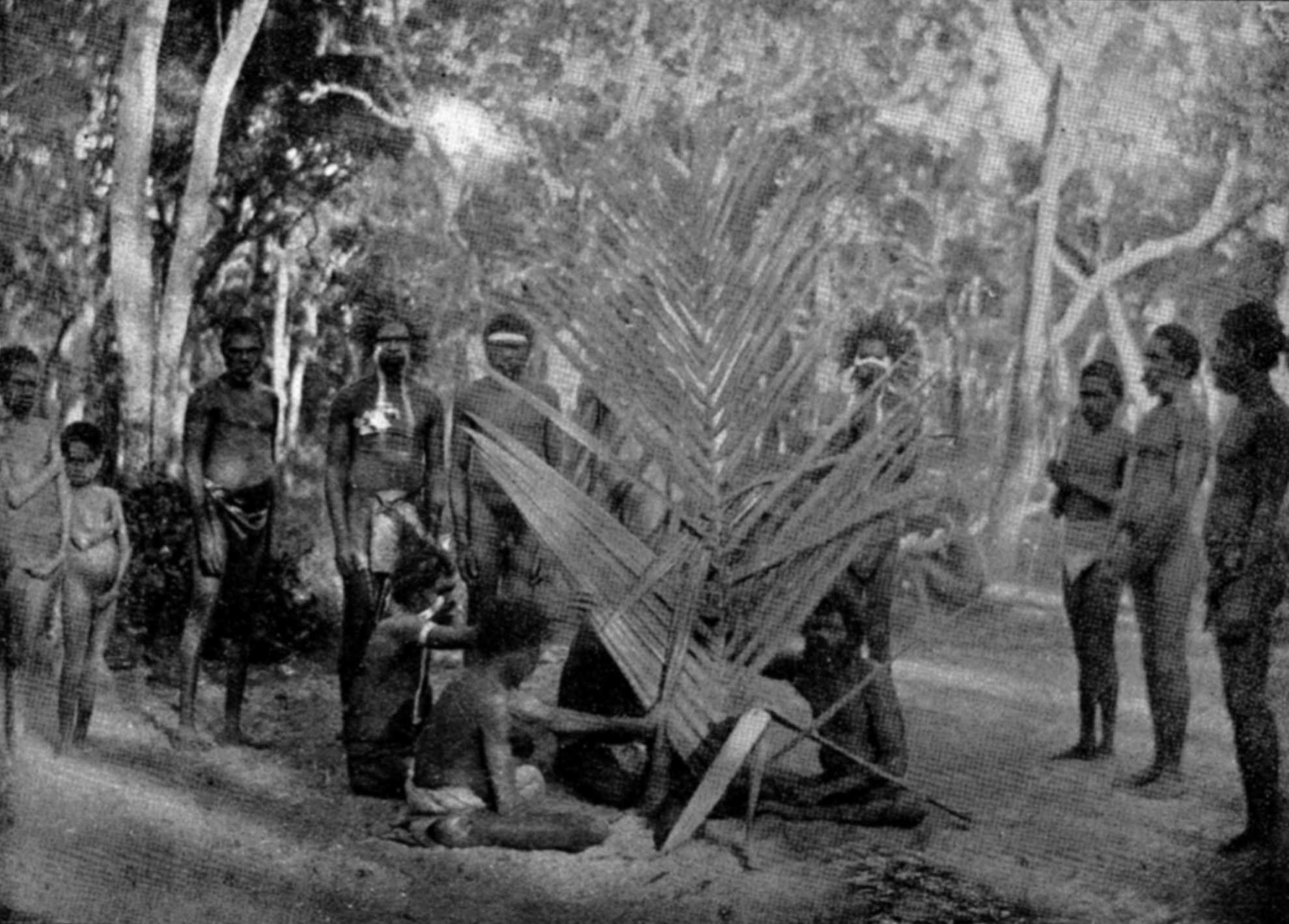
In the snake dance the novices were painted with white streaks around the eyes and down the body, and told to lie down and sleep. Then:
“Each one is next suddenly ‘awakened’ by a sharp pinch on the arm and told that he has been snake-bitten, at which he commences to be frightened, and then starts crying. His old mentor then proceeds to kill the imaginary snake by means of a small variety of bull-roarer which he whirls through the air in various directions, such action being believed to prevent the bite having a fatal effect. This bull-roarer is now given to the novice, who then has the power not only to kill snakes but even people by its agency; it is called dunggul, a term also meaning a snake. Two or three days later the snake dance is ended by the novices being shown a huge representation of a carpet snake fixed on a tree, and the ceremony is completed.”
Walter E. Roth, “On Certain Initiation Ceremonies,” North Queensland Ethnography Bulletin 12 (1909), pp. 175–176.
This is the Nyikina gift run in reverse. On the Fitzroy the board goes into the snake and the snake becomes deadly; on the McIvor the board goes against the snake and the bite loses its death. Then the boy is handed the board itself, and the power passes with it: he can now kill snakes, and people. The instrument bears the snake’s own name. It works as the yellow snake’s venom works among the Nyikina, killing through the one who holds it, and as the Banaka men hold their exemption, the McIvor boy holds the killing power. In Mars and the Snake Doctors the same scene stands beside the Xerente of Brazil, whose bullroarer called the teacher of the men who cured snakebite.
The roar over the snake
Fifteen hundred kilometres down the Queensland coast, the Kabi of the Mary River and the Wakka of the Burnett made their boys into men in the dhur, a great circle banked with earth, at grounds such as Boobangery on the Yabber run and Waraba near Caboolture. The boys were led about by Kamaran, headmen of another tribe, fasting and watched at every step. The Scottish minister John Mathew, who knew these peoples from 1865, recorded what happened when the party came on a snake:
“While being conducted by the Kamaran, if a snake is met with, the Bondaban (bull-roarer) is whirled, the snake is killed and shown to the youths, but they are not allowed to partake of it. In fact, fasting is part of the ordeal.”
John Mathew, Two Representative Tribes of Queensland (1910), p. 99.
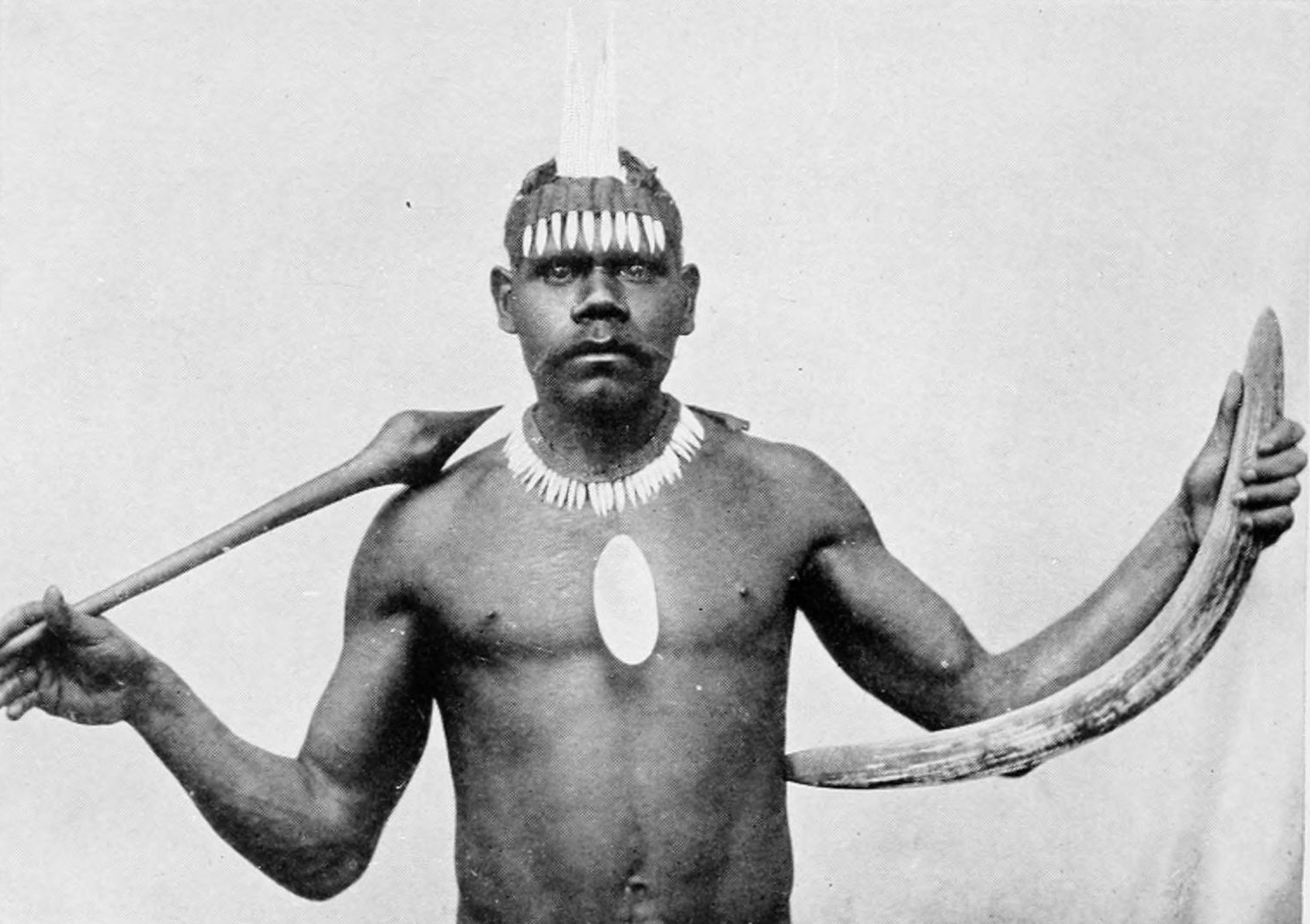
First the roar, then the dead snake held up before the boys. Further down the same coast, on the south coast of New South Wales, the roarers announced the visitors to a Yuin initiation, and a medicine-man dancing before a serpent of clay dropped a live brown snake from his mouth; that scene belongs to Live Snakes.
In central Australia the Alyawarr, of the Sandover River north-east of Alice Springs, call the bullroarer kwerenaty. Their dictionary gives its work in their own words and in English:
“It makes a noise at the initiation grounds, and women never see it. … The bullroarer looks after the ‘youngfellers’, in case they get eaten by devils or bitten by snakes.”
Alyawarr Lexicon (AuSIL Interactive Dictionary Series, 2019), s.v. kwerenaty.
Across Torres Strait, in the south of the island of New Guinea, the Muyu live on the upper Kao and Digul rivers in the Indonesian province of South Papua, against the border with Papua New Guinea. Their bullroarer is the mulin, hidden from women and children, and the boys are shown it at a pig-killing feast, the yawarawon. The lesson begins with a snake:
“Another yawarawon slaughter is held to demonstrate the bullroarer (mulin) and the flutes (konkomok). In this ceremony the men sit in a circle, talking and joking, and suddenly one of them gropes about in the leaves and shouts that he sees a snake. Everyone leaps to his feet, and the man who shouted takes the bullroarer and begins to swing it round and round. Then the flutes are shown.”
J. W. Schoorl, Kebudayaan dan Perubahan Suku Muyu (1997), pp. 179–180, translated from the Indonesian.
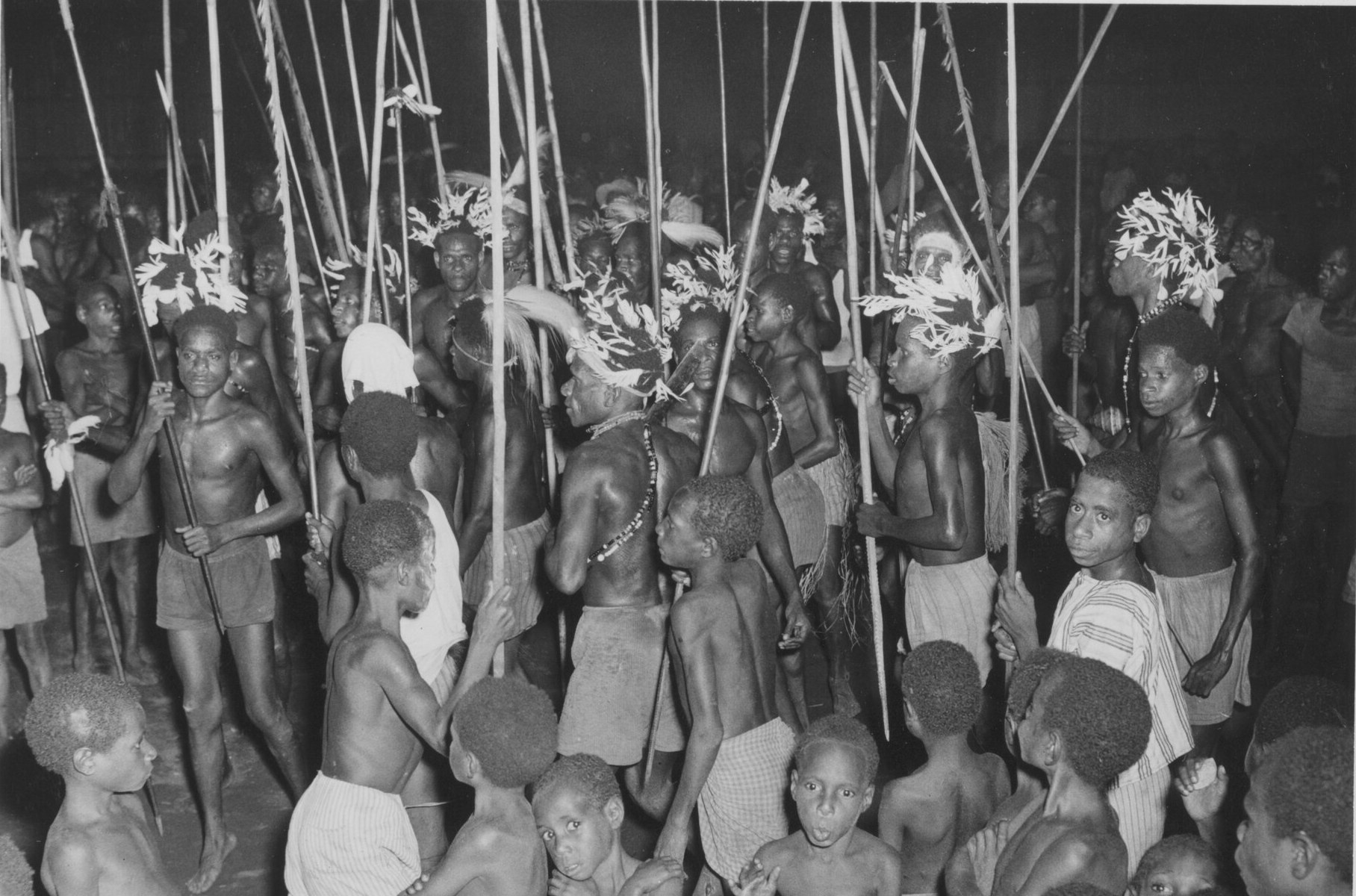
At the Muyu feast the snake is a pretence, the shout a piece of theatre, and the roar is the answer to it. The order is the McIvor order: danger from a snake, then the bullroarer, then the secret shown. On Cape York the snake that bit the boy was imaginary too. In both rites a snake is conjured for the bullroarer to meet.
The giver and the taker
Set side by side, these rites make one account of the venom, and the bullroarer stands at both ends of it. The comparison is original to the Bullroarer Atlas; as far as we know the Nyikina gift and the Cape York, Queensland, central Australian and Muyu rites have not been placed together before. In the Kimberley the board goes into the snake’s mouth and the yellow snake becomes the one that bites. On Cape York the board kills the snake and the bite cannot kill. In Queensland it sounds over a snake killed on the road and held up before the fasting boys; in central Australia it keeps the snakes off the young men; in New Guinea it answers the cry of “snake.” Where the venom enters and where it is turned back, the roarer is there.
A single people can hold both ends. The Wukchamni Yokuts of the Kaweah River, in the foothills of the Sierra Nevada in California, told Harold Driver in the 1930s how their bullroarer was used in curing:
“The bull-roarer was rotated in hands as in making fire and point applied to afflicted part of body. Supposed to extract poison.” … “Poison might be placed on the bull-roarer and shot at someone by whirling the instrument.”
Harold E. Driver, Culture Element Distributions: VI, Southern Sierra Nevada (1937), p. 126.
Drawn out of the patient, and whirled into the enemy: the Nyikina gift and the McIvor cure in one board. Among the Xerente of central Brazil, the bullroarer called down Mars, the teacher of night doctors, and “it is the pupils of Mars who hold communication with poisonous snakes and cure their bite” (Nimuendajú 1942, p. 90). At Oraibi in Arizona, where warriors swing the roarer on the kiva roofs while the Snake men dance with rattlesnakes in their teeth, the Snake society closes its rite by drinking its secret medicine and vomiting it from the kiva roof; The God Within the Breast follows that rite from Arizona to the Greek mysteries.
The Nyikina said it first and said it plainest. The snake was not born with its venom. Two brothers carrying their father’s name in their hands caught it, opened its mouth and put the bullroarer in. Everything that follows is the same instrument used again: to kill the snake that bit the boy, to sound over the snake on the road, to guard the young men in their camp, to answer the cry in the leaves. What the board gave, the board can take away, and the boy who is handed it walks out of the rite holding the snake’s power in his own hand.
Key sources
- Horst Südkamp, Wondjina: Der göttliche Tiermensch. Geistkinder- und Wiedergeburtsglauben nordwestaustralischer Stämme (online edition, after 2000), pp. 99–100 (Buliuana, the brothers’ father and the great bullroarer), 229 n. 290 (the Nyigina myths taken from Petri), 253–256 (“Yalgi und Windinbigi,” the Banaka snake at pp. 254–255). After Helmut Petri, Sterbende Welt in Nordwest-Australien (Braunschweig: Limbach, 1954); English translation by Ian Campbell, The Dying World in Northwest Australia (Carlisle: Hesperian Press, 2011).
- Walter E. Roth, “North Queensland Ethnography, Bulletin No. 12: On Certain Initiation Ceremonies,” Records of the Australian Museum 7 (1909): 166–185, pp. 169–176 (the McIvor River initiation; the dances at p. 172; the snake-bite and the dunggul at p. 175; the carpet snake at p. 176), and Plate LV.
- John Mathew, Two Representative Tribes of Queensland (London: T. Fisher Unwin, 1910), pp. 97–100 (the man-making ceremonies; the Bondaban and the snake at p. 99), and the plate facing p. 121.
- Alyawarr Lexicon (AuSIL Interactive Dictionary Series, 2019), s.v. kwerenaty.
- J. W. Schoorl, Kebudayaan dan Perubahan Suku Muyu dalam Arus Modernisasi Irian Jaya (Jakarta: Grasindo, 1997), pp. 179–180.
- K. Langloh Parker, More Australian Legendary Tales (London: David Nutt, 1898), “Mungoongarlee the Iguana and Ouyouboolooey the Black Snake,” pp. 61–67 (the poison bag at pp. 65–66), and preface p. x.
- David I. Bushnell Jr., “Myths of the Louisiana Choctaw,” American Anthropologist 12 (1910): 526–535, p. 533 (“How the Snakes Acquired Their Poison”).
- John H. Weeks, Among Congo Cannibals (London: Seeley, Service, 1913), pp. 213–214 (“Why the Water-snake has no Poison”).
- Harold E. Driver, “Culture Element Distributions: VI, Southern Sierra Nevada,” Anthropological Records 1:2 (1937), p. 126, notes to elements 1242–1243.
- Curt Nimuendajú, The Šerente, trans. Robert H. Lowie (Los Angeles: Southwest Museum, 1942), pp. 89–90.
- H. R. Voth, The Oraibi Summer Snake Ceremony, Field Columbian Museum Anthropological Series 3:4 (1903), pp. 347–348 and 353–358 (the emetic and the antidote).
- Frederick McCoy, Natural History of Victoria: Prodromus of the Zoology of Victoria, vol. 2 (Melbourne, 1890), pl. 142.