No. MINE2026-048
Kabi and Wakka: the snake shown to the novices
Australia · Upper Burnett River · Bunya Mountains · Southeast Queensland
Restricted
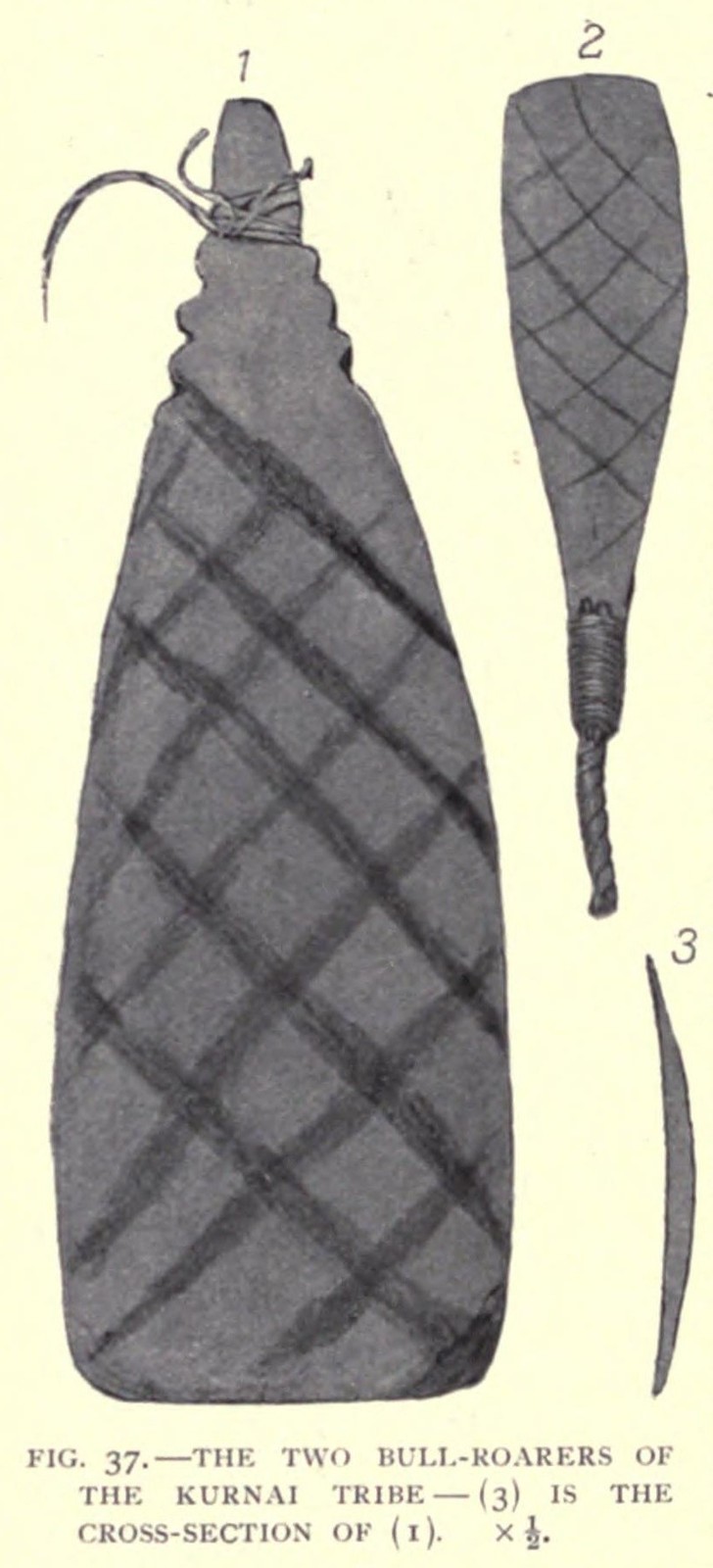
Bondaban
Source term: Bondaban (bull-roarer)
Bondaban: bull-roarer. Dhur: 'a circle', the earth-banked ring of the man-making. Kīvar-yëngga: man-making. Kamaran: headmen who conducted the novices. mundha: prohibited food.
Among the Kabi and Wakka of the Mary and Burnett rivers in southern Queensland, a boy was made a man inside the dhur, a ring banked with earth. The Kamaran, headmen from another tribe, led the novices about and watched their every move. The boys fasted, their heads wrapped in rugs, and were forbidden to look up at the sky. If the party came on a snake, the Bondaban, the bullroarer, was whirled; the snake was killed and held up before the youths, who were not allowed to eat it. That evening the forbidden foods were passed round for them only to look at.
While being conducted by the Kamaran, if a snake is met with, the Bondaban (bull-roarer) is whirled, the snake is killed and shown to the youths, but they are not allowed to partake of it.
John Mathew, Two Representative Tribes of Queensland (1910), p. 99
Particulars
- Object
- The Bondaban, the bullroarer whirled during the Kabi and Wakka man-making ceremonies (Dhur, Kīvar-yëngga).
- Function
- Man-making: while the fasting novices were led about by the Kamaran (headmen), a snake met on the way was greeted by whirling the Bondaban, then killed and shown to the youths, who were forbidden to eat it.
Source
John Mathew, Two Representative Tribes of Queensland (London: T. Fisher Unwin, 1910), p. 99