Atlas Essay —
Mars and the Snake Doctors
Xerente country, Tocantins, Brazil · The howling of Hieparo-wawe
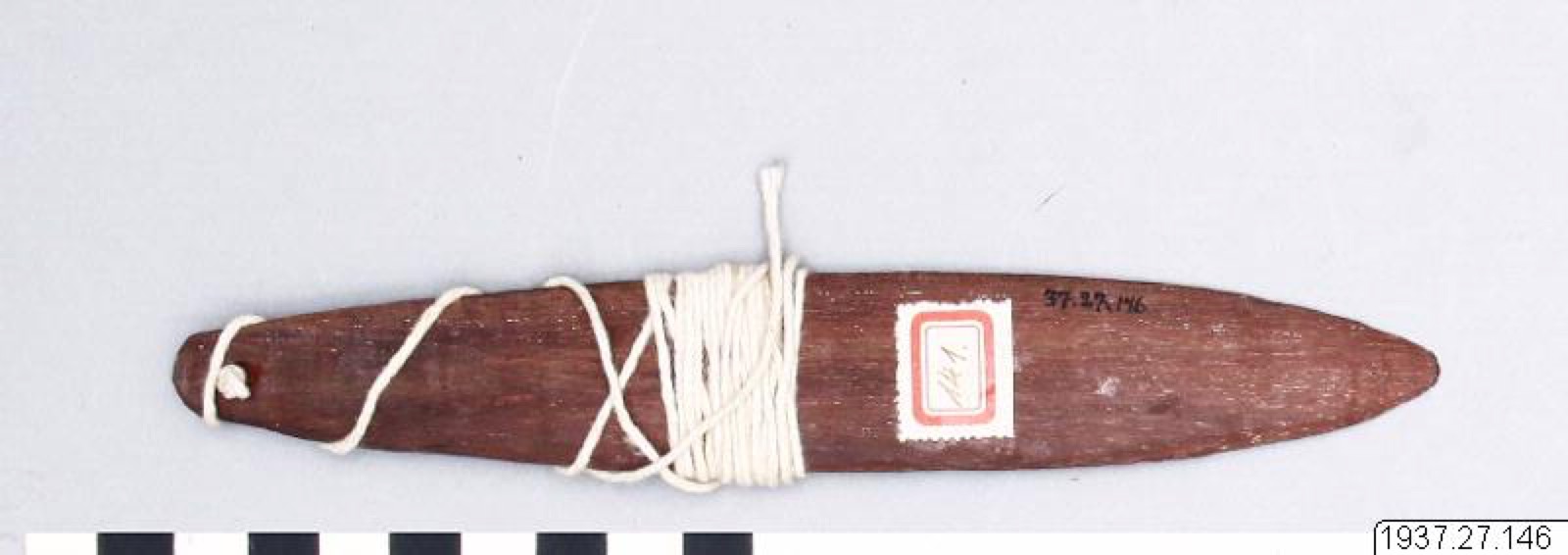
A pupil goes into the woods carrying an elongated calabash with a lid. Inside is a bullroarer. At the appointed place he takes out the blade and swings it. The sound is the howling of Hieparo-wawe, the shaggy night being who personifies Mars, and it brings the teacher to his pupil. The lessons last about six days. The men who receive them are also the men credited with speaking to poisonous snakes and curing their bites. A strip of wood, a planet and a dangerous animal belong to one course of instruction. [1]
The Xerente bullroarer turned a vision into an apprenticeship: the men who called Mars with it were also the men credited with speaking to poisonous snakes and treating their bites.
In brief
- A star chose its pupil, first in a dream and then in encounters in the countryside. The bullroarer belonged to the subsequent meetings with Mars.
- Mars’ pupils worked as night doctors who sang with rattles. Their trained powers included speaking with poisonous snakes and curing their bites.
- A Nama healer who called snakes to him, and an Australian novice who received a snake-named bullroarer, show two further ways that a teacher could confer authority over a dangerous animal.
Mars has pupils in the woods
The Xerente, who call themselves Akwẽ, live in the Cerrado of central Brazil, east of the Tocantins River in the state of Tocantins. Their country joins savanna, wooded ground and river valleys. The accounts of apprenticeship described here were gathered by Curt Nimuendajú during his visits in 1930 and 1937, and published in The Šerente in 1942. [1] The planet in their night sky entered human affairs as Hieparo-wawe, a teacher encountered in the same countryside where people hunted. [2]
Hieparo-wawe had a recognizable appearance. His hair was long and shaggy. He came only at night, often to a lone hunter waiting at his stand, and was regarded as the lord of will-o’-the-wisps. His pupils painted themselves in his colors: black over the body, with the face, hands and feet red. The teacher’s appearance became something a human body could carry. [1, p. 89]

To enter this relation was to acquire a particular patron. The Sun and Moon stood above a larger company of celestial beings. Venus and Jupiter belonged to the Sun’s retinue; Mars was the Moon’s chief companion. People addressed Sun and Moon over matters affecting the community as a whole, while the stars offered personal knowledge and power. The stars could act on their own initiative. A hunter might meet the being who would become his teacher without first appealing through the whole celestial company. [1, pp. 84–86]
The division ran into human life. Different patrons had different pupils, and those pupils acquired different powers. Learning to hunt, learning to heal and learning how to approach a being in the woods belonged to the same account of how knowledge reached a person. Expertise began with a relationship.
The star chooses the man
The first encounter was the star’s decision. A man saw his future patron in a dream; later he met him in human form out in the countryside. The messengers of the Sun appeared by day, those of the Moon by night. Nimuendajú’s account of a daytime meeting gives the arrival its bodily force:
A man will be going through the steppe all day. Suddenly his heart begins to pound and his hair stands on end. A branch is heard snapping. The wanderer looks. There He is standing in profile view; His hands resting on a bow; His face turned upward. He calls us to Him and teaches us how to become a good hunter or doctor. On the following day He reappears at the same spot.
Nimuendajú, The Šerente, p. 86; translated by Robert H. Lowie.
The snapping branch and the returning visitor turn the landscape into a place of instruction. The man has been going about his life; suddenly another person addresses him. What follows has the shape of teaching: a pupil, a subject to learn, a place to meet, and a return on the following day. The extraordinary encounter opens into repeated practice.

The novice’s ordinary life changed while he learned. The hunter described in this account restricted his food and abstained from sex during instruction. Brue, a Xerente chief whose teacher was Venus, said his own apprenticeship had lasted twelve days. He also remembered taking an exceptional quantity of game. The teacher’s gifts were expected to become visible in the learner’s capacities. [1, p. 86]
Mars’ pupils had their own period of instruction, about six days, and their own means of arranging further meetings. This is where the bullroarer enters. A star’s initial choice lies beyond the pupil’s command; the ensuing relationship gives him somewhere to go and something to do. Once he has a teacher, he can keep an appointment.
The pupil borrows the teacher’s voice
The sacred Xerente bullroarer carried the name hieparo-wawe-wazdize, “howling of Hieparo-wawe.” The man sounded the being’s own voice to meet him again:
When his pupils, during their approximately six days’ period of instruction, want to meet him in the woods, they carry with them a bull-roarer (hieparo-wawe-wazdize’, “howling of Hieparo-wawe”) in an elongated lidded calabash. At the appointed spot they whirl it, and forthwith the demon appears.
Nimuendajú, The Šerente, p. 89; punctuation normalized from Lowie’s translation.
The instrument makes the relation repeatable. Its cord and blade supply a sound that the pupil can produce at the meeting place. The teacher’s howling comes from the pupil’s hand, and the teacher is expected to answer it with his presence. Calling and impersonating meet in the same act: the learner uses something of the master to bring the master near.
The painted body supplies a second part of that approach. Mars’ pupils wore his colors; their instrument made his noise. Apprenticeship therefore involved more than receiving information. The learner took on recognizable features of the being from whom the knowledge came. When the pupil returned to ordinary company, the capacity he claimed had a particular source and a particular form.
The surviving seventeen-centimetre blade keeps this arrangement at a human scale. Its cord is wound around a small piece of wood. The great distance between a point of light overhead and a person standing in the woods is crossed through something portable. The calabash contains a means of renewing an encounter.
The night school produces doctors
Mars’ pupils sang at night with rattles. They were said to discover the cause of illness and remove it in the form of a maize kernel or a small piece of wood. Pupils of Venus and Jupiter worked by day, using a red wand to draw the cause of disease from the patient. Their affiliation with a celestial teacher continued into the time and manner of their work. [1, pp. 89–90]
Sun
Venus and Jupiter
Pupils doctor by day
Red wand
Moon
Mars · Hieparo-wawe
Pupils doctor by night
Song and rattles · communication with snakes
The distinction between the lesson and the sickbed matters. The bullroarer brings the pupil to his source of knowledge. Song and rattles accompany the curing performances that Nimuendajú describes. The instrument’s place in healing is established through the person who learns with it and then acts as a doctor. It belongs to the making of the practitioner.
And the practitioner had a striking specialty:
The same pupils connect the sky to the ground. A man learns to approach a nocturnal being in the woods and becomes someone who can address a dangerous animal there. Communication and curing appear together as his acquired powers. The snake can be met as a being with which a trained person has dealings.
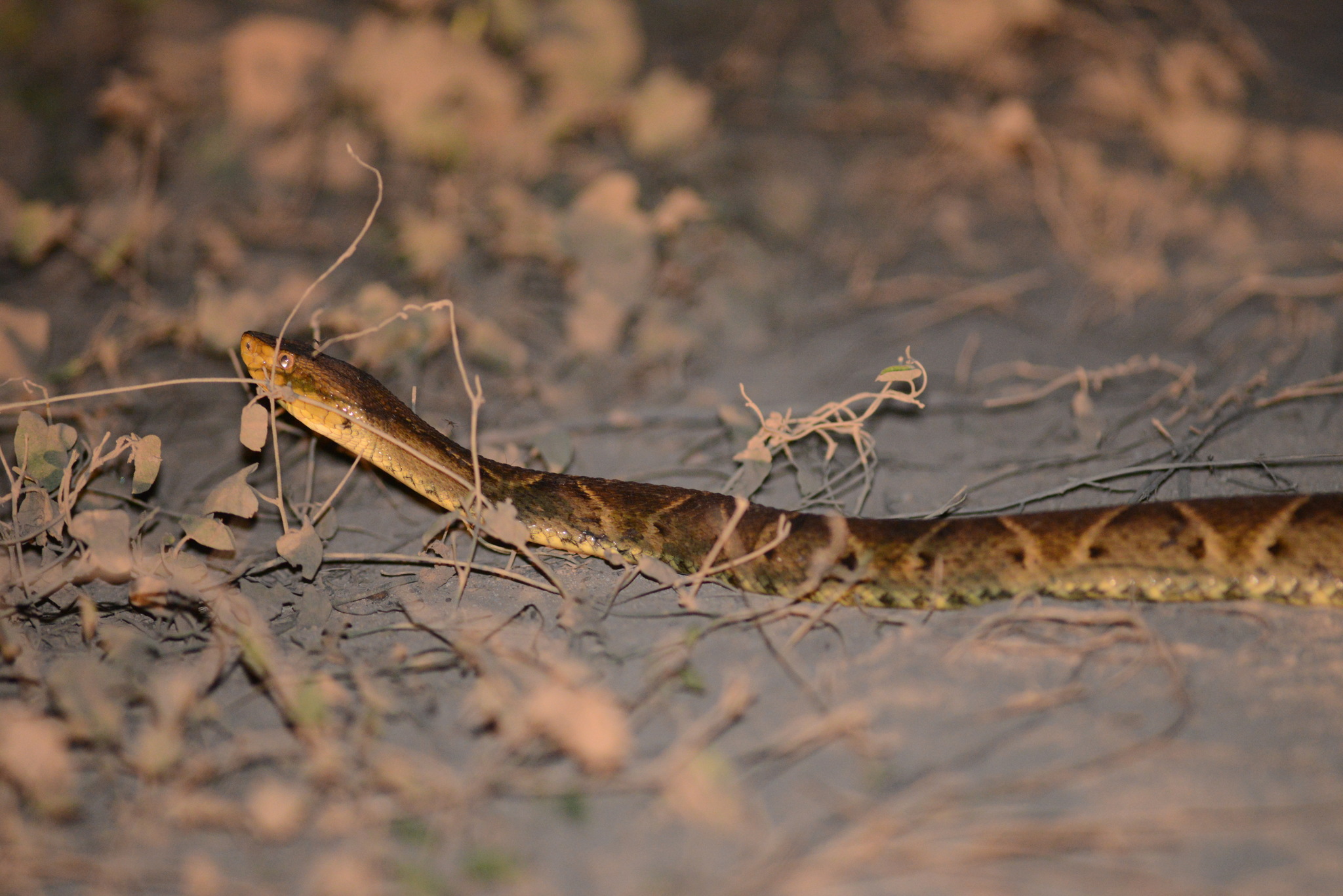
This gives the title “snake doctor” a particular meaning. His authority extends to the source of the danger as well as the person endangered. Knowing how to speak to the animal belongs beside knowing how to treat its bite. The ordinary person encounters a threat; the specialist claims a relationship through which he can act.
The apprenticeship gives that claim a history. This man has a teacher, has spent days learning, has worn the teacher’s colors and called him with a named instrument. The power is attached to a course of instruction. The bullroarer makes that history concrete.
Brue knows the road back
Brue’s relationship with Venus shows how much a celestial teacher could mean to his pupil. He told Nimuendajú that he had died twice, and that Venus had twice restored his soul to its body. To describe his journey, he drew a chart on the ground. It had a lake, paths, a dangerous encounter, a crossing into the village of the dead, and another road leading into the sky. [1, pp. 90–91]
The sky itself contained a settlement. Sun and Moon occupied opposite sides of a fenced opening. Venus and Jupiter had their place beside the Sun, with Orion’s belt nearby. The bodies visible overhead also had houses that a traveler could reach. Brue knew where he had gone, who he had met and how he had returned.
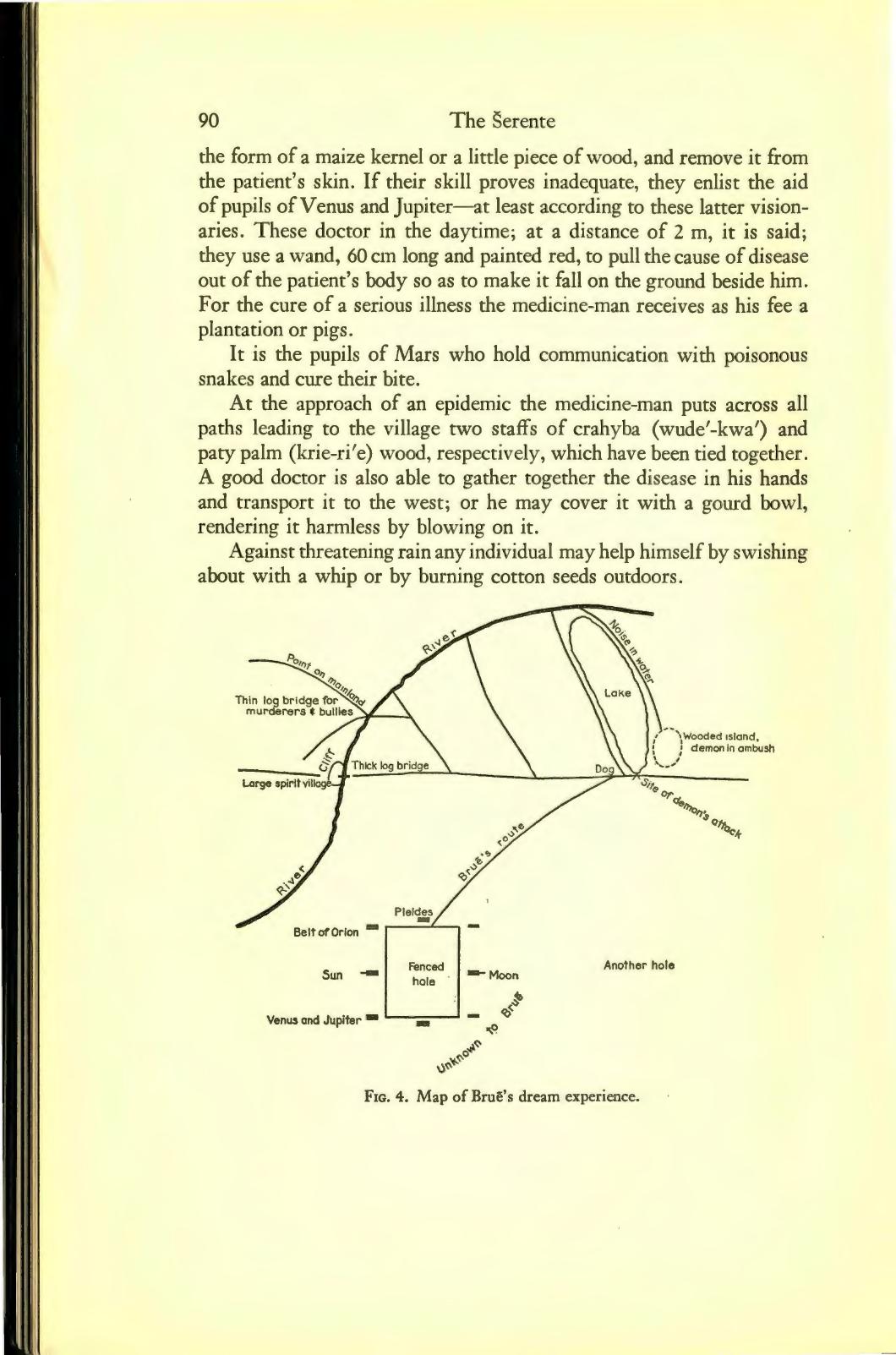
Venus finally took him back: “He seized it by the hand and made it rise, so I was well again.” [1, p. 91] The hand belonged to Brue’s body. His teacher’s care extended to reuniting the pupil with his own living form.
Brue’s patron was Venus, while the bullroarer belongs to Mars’ pupils. Together their accounts describe a world in which healing and teaching take place through continuing relations with celestial persons. A teacher can give knowledge, objects, songs and a way home. A doctor’s work draws on what he has learned by moving through that world and returning.
The snake specialty fits this arrangement closely. The power to negotiate one encounter supports the claim to negotiate another. Mars’ pupil carries an established relation into the space where a human being meets a poisonous snake. His qualification is knowledge of how to approach another kind of being.
Other teachers give authority over snakes
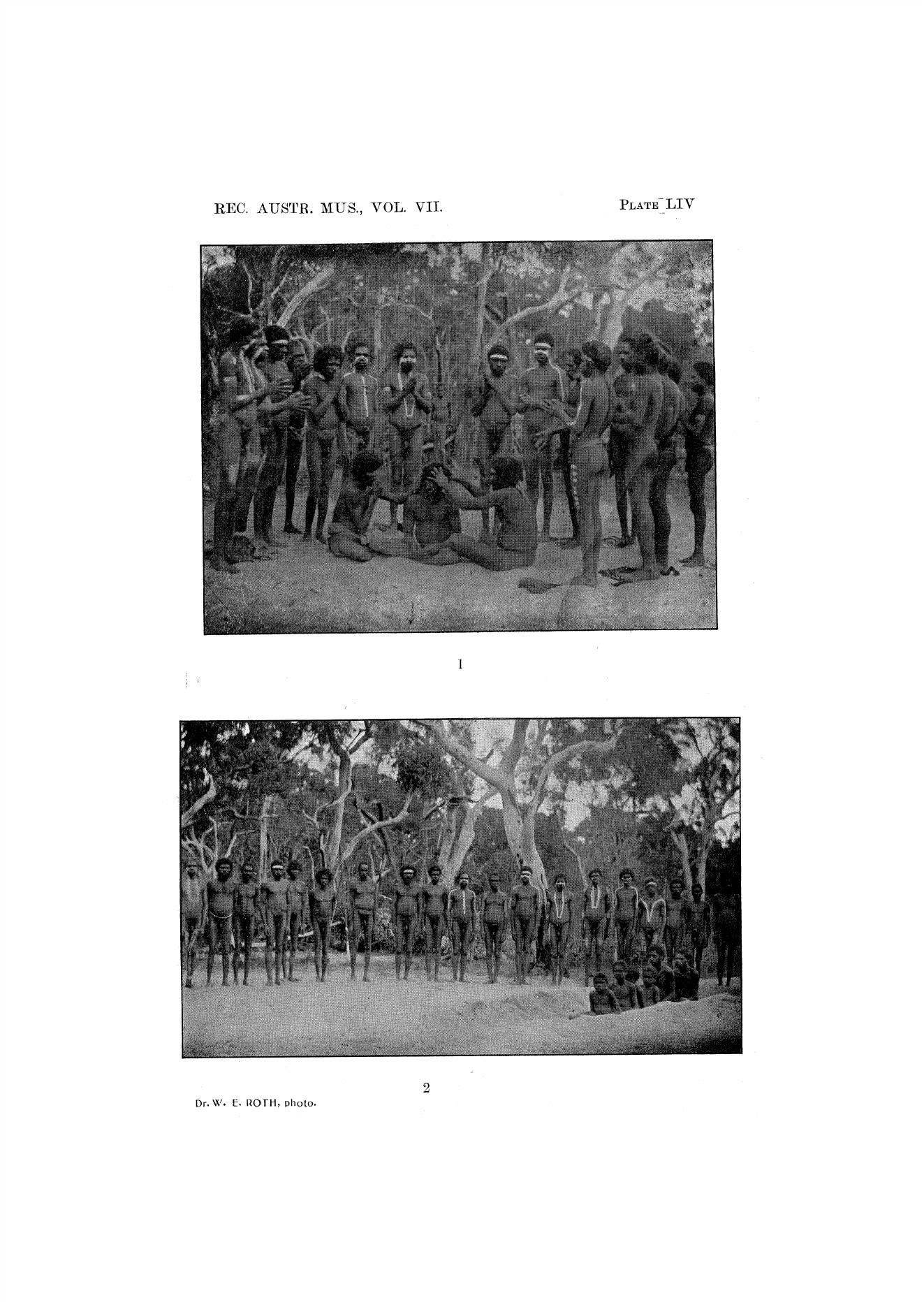
On the McIvor River in northern Queensland, Australia, a teacher gave his pupil a different kind of authority. In the Koko-yimidir initiation witnessed by Walter Roth in June 1899, a novice pretended to sleep. A pinch on the arm woke him, and he was told a snake had bitten him. The mentor whirled a small bullroarer to kill the imaginary snake and prevent the staged bite from proving fatal. He then handed the instrument to the novice. [3]
The blade was called dunggul, also a word for snake. With it the novice acquired the power to kill snakes and people. This was general initiation, rather than a named school of medicine. Its contribution to the comparison is the transfer: the mentor first demonstrated the power and then put its instrument into the learner’s hand.
In Namaqualand, in southern Africa, another specialist’s power was expressed through an invitation. Robert Jacob Gordon’s notes from his 1779–80 journey describe a man who completed initiation under an older practitioner, treated victims of venom, and could address a snake entering a hut. “Come to me,” he said. The animal was said to approach, remain with him, and leave without biting the frightened people nearby. The specialist released snakes and refrained from striking them dead. [4]
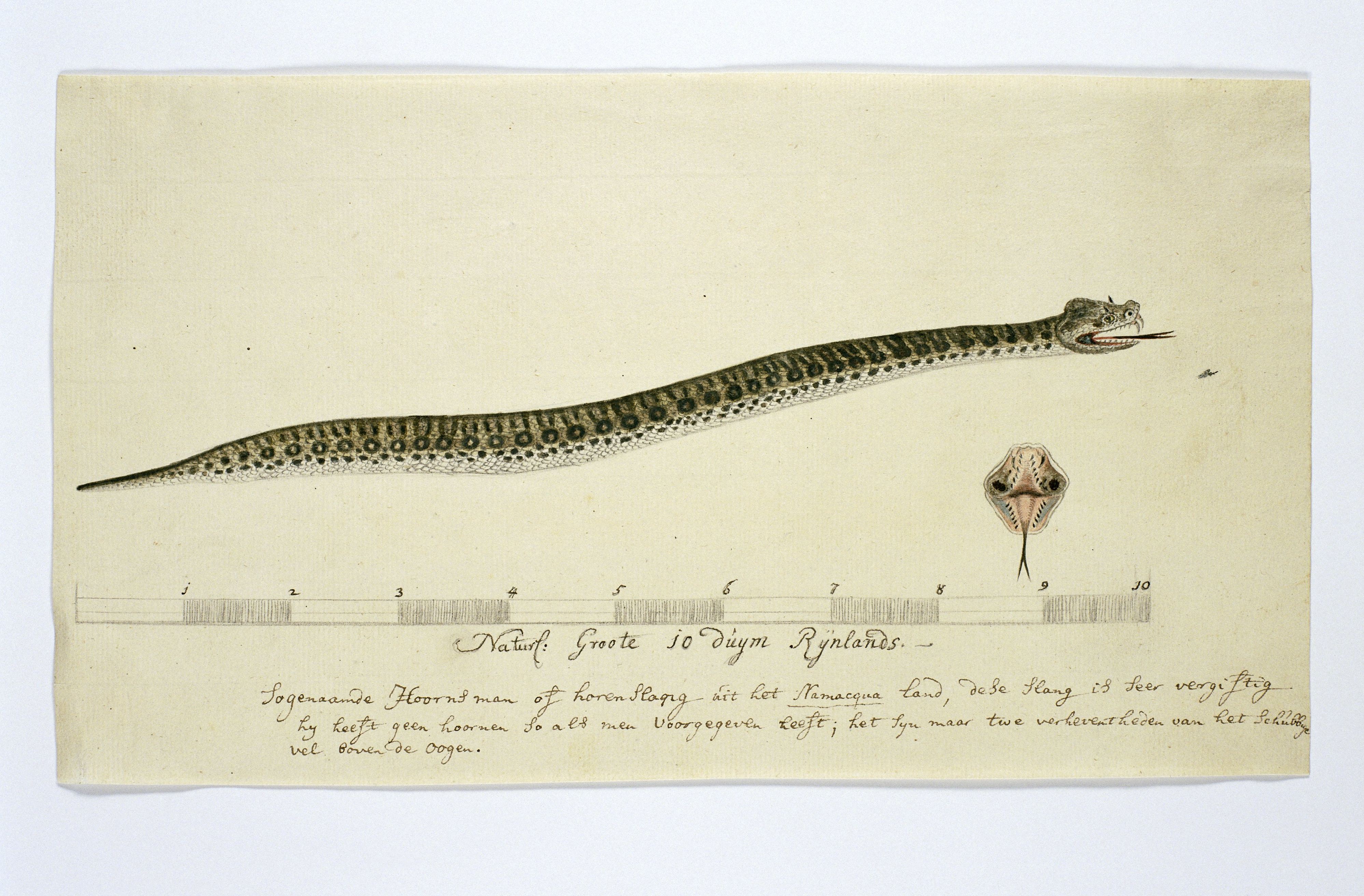
The Nama healer’s invitation sits especially close to the Xerente claim. Both accounts make communication with snakes part of a trained healer’s authority. The Australian novice receives power to kill; the Nama specialist gains a relation expressed in restraint. A dangerous animal can become an adversary to defeat or a being to address. In either case, the qualified person has learned to do something that the frightened bystander cannot.
The Xerente apprenticeship brings that lesson back to the bullroarer. Its particular contribution is a way to maintain contact with the teacher who confers the power. Mars’ howling gives the pupil a repeatable act inside a relation that began with the star’s choice.
The pupil comes back with a relationship
A bullroarer can make a formidable noise. Among Mars’ pupils, that noise also keeps an appointment. The instrument belongs to the days between the first encounter and the practitioner’s return to the community, when someone is becoming able to do work that others cannot do for themselves.
The object, the teacher and the pupil each supply a part. A small blade makes the howling. Hieparo-wawe gives the knowledge. The pupil carries the resulting authority into hunting, doctoring and communication with poisonous snakes. The same person joins the stages; the instrument helps sustain the relation through which he learns.
The Xerente bullroarer turned a vision into an apprenticeship: the men who called Mars with it were also the men credited with speaking to poisonous snakes and treating their bites.
In the woods, the learner opens a calabash and calls his teacher. Beside a snake, the trained man can claim that he knows how to speak. The distance between those encounters is the distance an apprenticeship crosses. He returns with a relationship he can put to work.
Key sources
1. Xerente teachers, instruments and snake doctors. Curt Nimuendajú, The Šerente, translated from the manuscript by Robert H. Lowie (Los Angeles: Southwest Museum, 1942). Sun, Moon and stellar patrons, pp. 84–85; selection and instruction, p. 86; Mars’ paint, calabash and bullroarer, p. 89; doctoring and the snake specialty, pp. 89–90; Brue’s chart and return with Venus, pp. 90–91.
2. Xerente country and the living people. Instituto Socioambiental, “Xerente,” Povos Indígenas no Brasil, especially “Nome,” “Localização” and “Organização social e cosmologia.” For the occurrence of Bothrops moojeni in Tocantins, Deize Carneiro Queirós, O Acidente Botrópico no Tocantins (Universidade Federal do Tocantins, 2020), abstract.
3. The McIvor River initiation. Walter E. Roth, “North Queensland Ethnography. Bulletin No. 12. On Certain Initiation Ceremonies”, Records of the Australian Museum 7(3) (1909):166–185, especially pp. 169–176, the bullroarer episode on p. 175, and plate LIV (PDF). Participants ranged from children to adults; puberty was not the criterion for admission. The rite is also discussed in the Atlas essay The God Within the Breast.
4. The Nama specialist who addresses snakes. Robert Jacob Gordon, appendix to the first notebook of his fourth journey, Brenthurst Library MS 107/3/1/1, manuscript pp. 63–64, Namaqualand, approximately 1779–1780; published Dutch transcription and English translation. “Come to me” translates kom na my toe. Historical context: Andrew Smith and Duncan Bull, “Col. RJ Gordon’s Observations on Some Cultural Practices among the Khoekhoen in the Late 18th Century”, The Digging Stick 33(3) (2016):1–5, especially pp. 2–3.