No. AUSMAIN-015
Kaiabara
Australia · Wide Bay - Burnett, inland from Maryborough · Southeast Queensland
Restricted
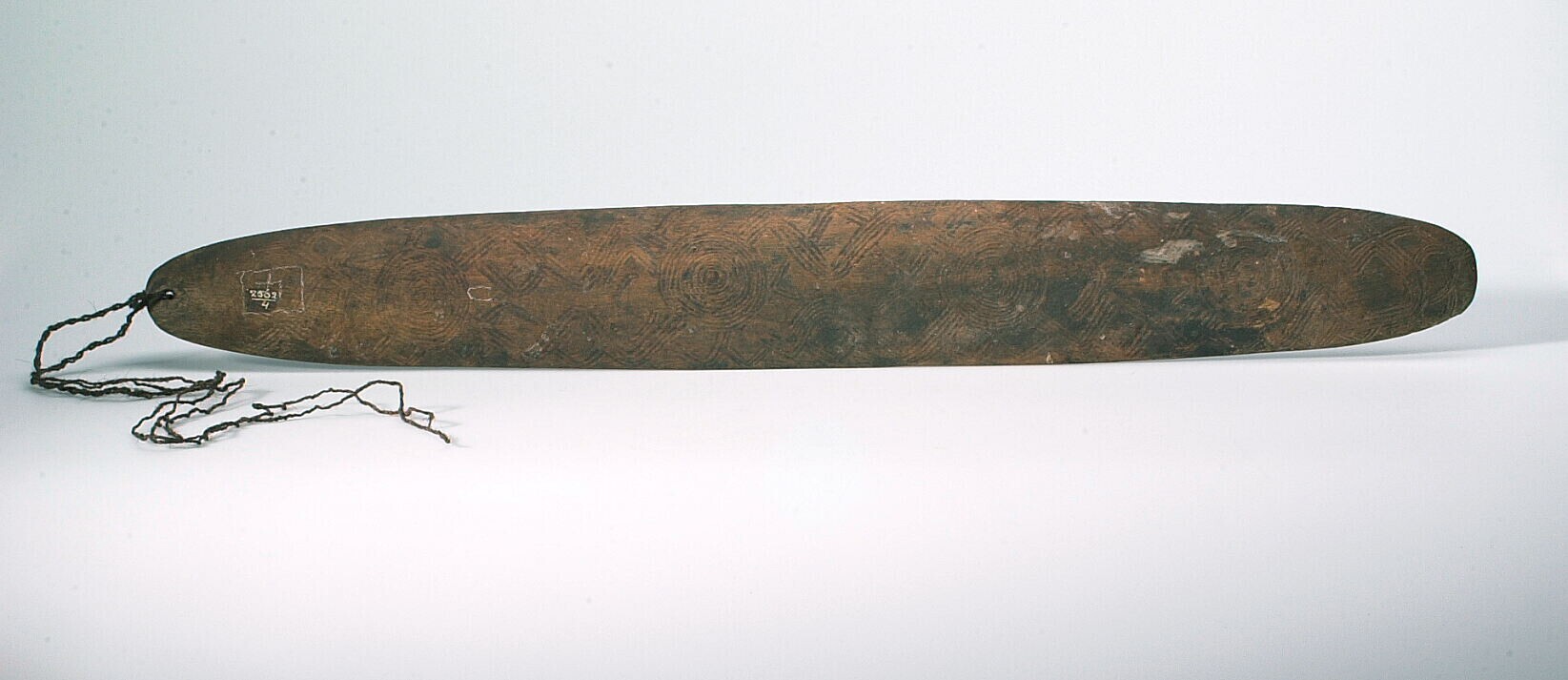
Pundunda
Pundunda — the Kaiabara name for the bull-roarer sounded in the scrub after the Dora fight; forbidden to be seen by women.
After the staged battle of the Dora, in which the two tribes' newly named boys were set facing each other and told to fight under the old men's tuition, the elders then joining in until the fighting turned severe — five men killed in one such fight, the wounded and maimed very numerous — the Kaiabara boys and their Quonmies, the guardians who had led them through the rite, withdrew into the thick scrub within hearing of the camp and sounded the bull-roarer called Pundunda. Hearing it, the women ran out of the camp. They were told that if they stayed and listened they would lose their hearing, and if they looked back they would go blind. A.W. Howitt recorded the practice among the tribes near Maryborough, in the Wide Bay district of southern Queensland, in his Native Tribes of South-East Australia.
The noise is not continued long. The women are not allowed to see the Pundunda.
Howitt 1904:606
Particulars
- Object
- Bull-roarer sounded in the scrub after intertribal Dora fight; concealed from women.
- Function
- Initiation; voice-of-spirit signal that boys and Quonmies had withdrawn for sacred instruction.
Source
Howitt, Native Tribes of South-East Australia (1904)