No. AUSIN-001
Burdekin River hair-strung bullroarer
Australia · North Queensland
Function not recorded
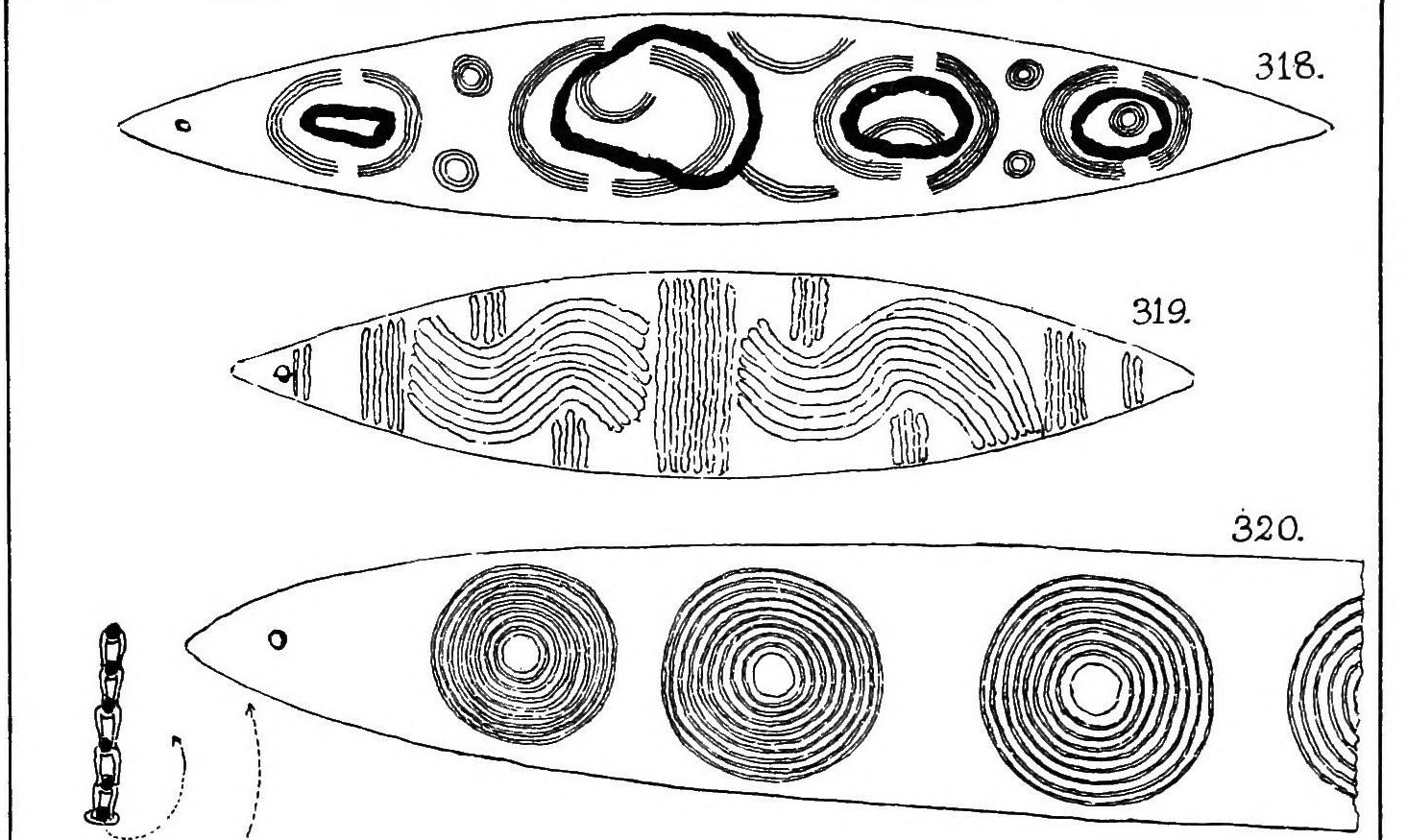
Source term: bull-roarer
A wooden bullroarer from the Burdekin River near Townsville, in North Queensland: carved on both faces, coloured with red pigment, and pierced at one end where a length of twisted hair string was threaded through to swing it. It reached the British Museum through Collingwood Ingram, who collected it in 1902, when he was barely past twenty. Ingram, who went on to a long career as an ornithologist, knew the lower Burdekin: he later published on the birds of Inkerman Station, on the river's delta, while his father, Sir William Ingram, employed the naturalist Wilfred Stalker to collect bird skins across the same country.
Particulars
- Object
- Wood bullroarer with fibre and pigment in British Museum collection
- Function
- Not recorded.
Source
British Museum object Oc1977-03-1; collected 1902; Description as displayed: "Bullroarer of wood, with carved design on both sides and decorated with red pigment; Pierced at one end with small hole threaded with twisted hair string." Production ethnic group "Made by: Aboriginal Australian"