CAMERON1880-001 - ethnographic attestation
Gunggari Bora ceremony bullroarer
Australia - Queensland - Maranoa River district
Restricted Candidate only
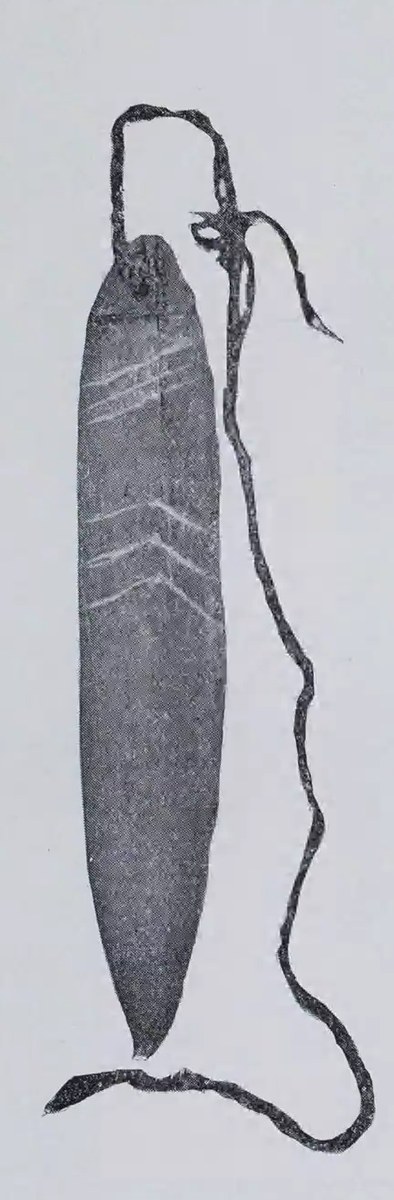
Source term: use of bullroarer
In July 1880 the pastoralist A. L. P. Cameron, one of A. W. Howitt's most reliable outback correspondents, wrote to him about the Unghi — the Gunggari of the Maranoa River country in southern Queensland, whose lands ran from the Maranoa and Warrego south to the Balonne. His letter touched on the Bora initiation ground, beliefs about the dead, protective charms, and the use of the bullroarer, an instrument sounding somewhere within a men's ceremony still sealed from view.
Unghi tribe; Bora ceremony; after-death beliefs; protective charms; use of bullroarer
AIATSIS MS 69 (Howitt Collection), finding-aid annotation for Box 2, Folder 5, Paper 1a: A. L. P. Cameron to A. W. Howitt, 4 July 1880
- Object
- No object survives: the attestation is archival. A letter from the pastoralist-ethnographer A. L. P. Cameron to A. W. Howitt, written from Mossgiel on 4 July 1880, is catalogued by AIATSIS (MS 69, Howitt Collection, Box 2, Folder 5, Paper 1a) with the annotation "Unghi tribe; Bora ceremony; after-death beliefs; protective charms; use of bullroarer." The letter itself has not been read.
- Function
- Attributed to the Bora initiation ceremony by the archive's own catalogue annotation; no detail of the instrument, its name, or its handling is available until the letter can be read.
- Source
- A. L. P. Cameron to A. W. Howitt, Mossgiel, 4 July 1880. Catalogued twice, independently: (1) AIATSIS MS 69 (Howitt Collection), Box 2, Folder 5, Paper 1a, finding-aid annotation "Unghi tribe; Bora ceremony; after-death beliefs; protective charms; use of bullroarer," indexed to Gunggari D37; (2) Museums Victoria / Howitt and Fison Archive, document XM106…
- Source location
Page references
AIATSIS MS 69, Box 2, Folder 5, Paper 1a; Howitt and Fison Archive XM106
- Source confidence
- low Maranoa River corridor anchor (near Mitchell, Queensland), the centre of the country Howitt himself assigned the Unghi, "between the Maranoa and Warrego Rivers... extending southwards to the Balonne River"; a region-level point, since the sources support no finer locality.
- Initiation rite
- Forbidden to women