A series in eight essays
Is This a Bullroarer?
Many pierced blades look ready to roar. Some of them may: the world’s oldest worked jade includes thin slats, and Jōmon stone spatulas are worn at the hole where a whirled cord wears. Others turn out to belong to a Roman writing kit or a Bronze Age shaving set. These illustrated studies compare whole families of objects by form, wear and find context, and say which way each one points.
The essays
-
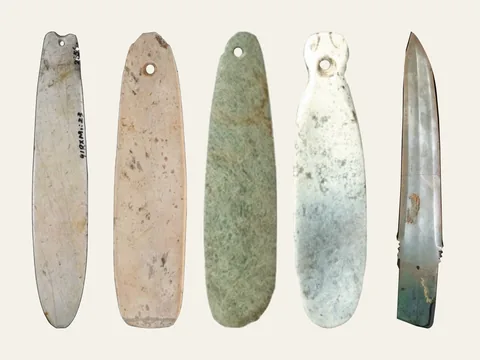 The Jade Complex
The world’s oldest worked jade includes thin, end-pierced slats. One tied to a cord turned in water like a spinner lure, and Jōmon spatulas are worn as no freely hanging pendant wears.
Read the essay →
-
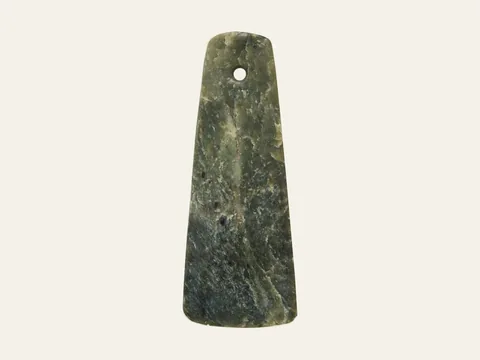 Stone Spatulas
Five Jōmon stone spatulas are worn at 45° on both faces of the hole and not at its top, where a hanging pendant wears: the mark of a cord pulled taut.
Read the essay →
-
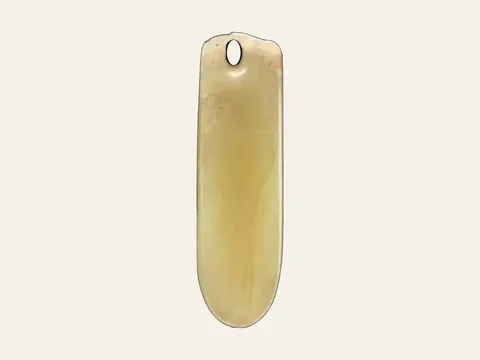 Grooved Jade Blades
Hollowed jade blades join Japan, northern China and the Russian Far East. The only one ever tied to a cord turned in water, and its excavators called it a lure.
Read the essay →
-
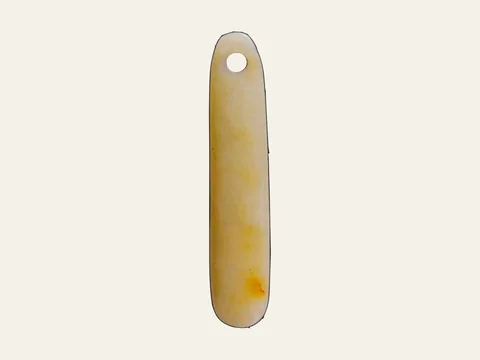 Jade Slats and Stone Strips
Plain jade slats are the oldest form in the jade complex, about nine thousand years old, and the thinnest have the section of a stone bullroarer.
Read the essay →
-
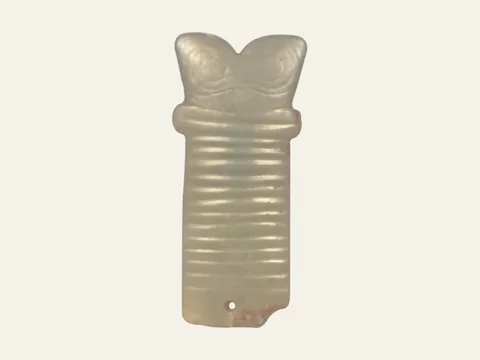 Heads, Necks, and Jade Blades
Six headed jade and stone forms compared: insect-like carvings, a forked animal face, a gourd-shaped ornament, and a notched gui.
Read the essay →
-
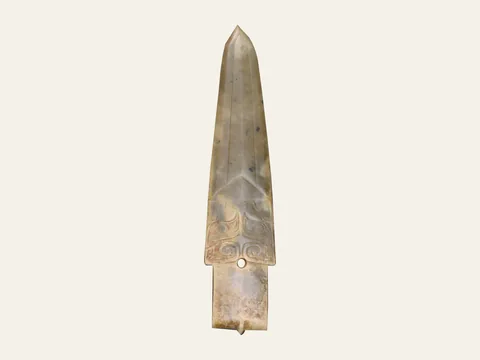 Tanged Jade Blades
Tangs, toothed shoulders and back holes distinguish Chinese ceremonial blades from simple perforated slats. Ten objects show why mounting matters.
Read the essay →
-
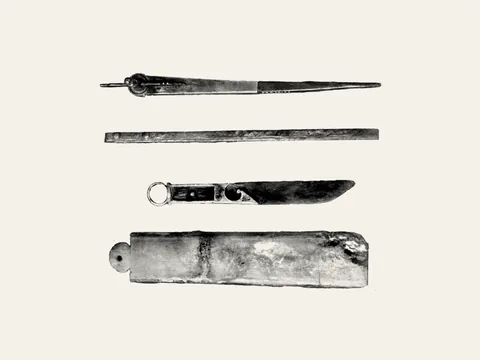 The Plate in the Writing Kit
Roman bone plates with a pierced tab look like bullroarers, but they lie with styli, inkwells and wax spatulas, and their wear is the wear of a writing tool.
Read the essay →
-
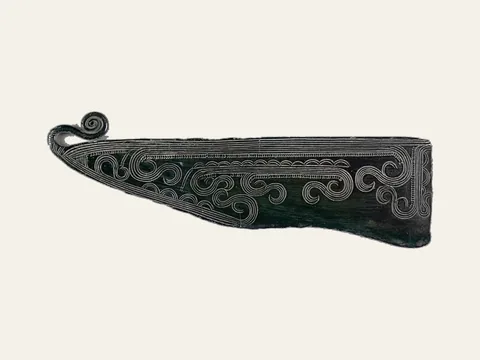 Nordic Ship Razors
Nordic Bronze Age razors carry the sun’s journey by ship and serpent on a blade shaped like a bullroarer. Their sharpened edges show what they were for.
Read the essay →