Atlas Essay —
The God the Smith Made
Iron bullroarers · West African smiths · Prometheus and Hephaestus
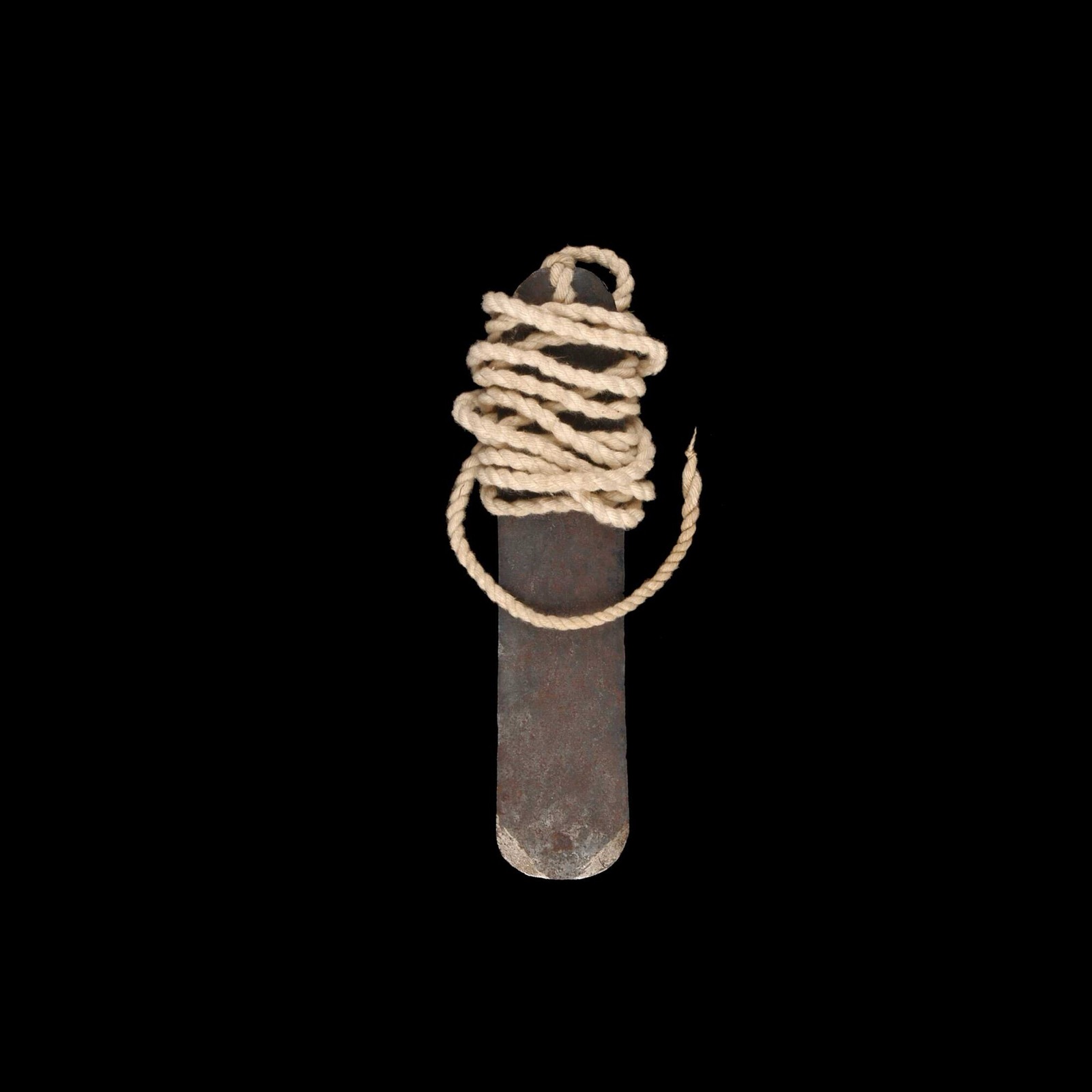
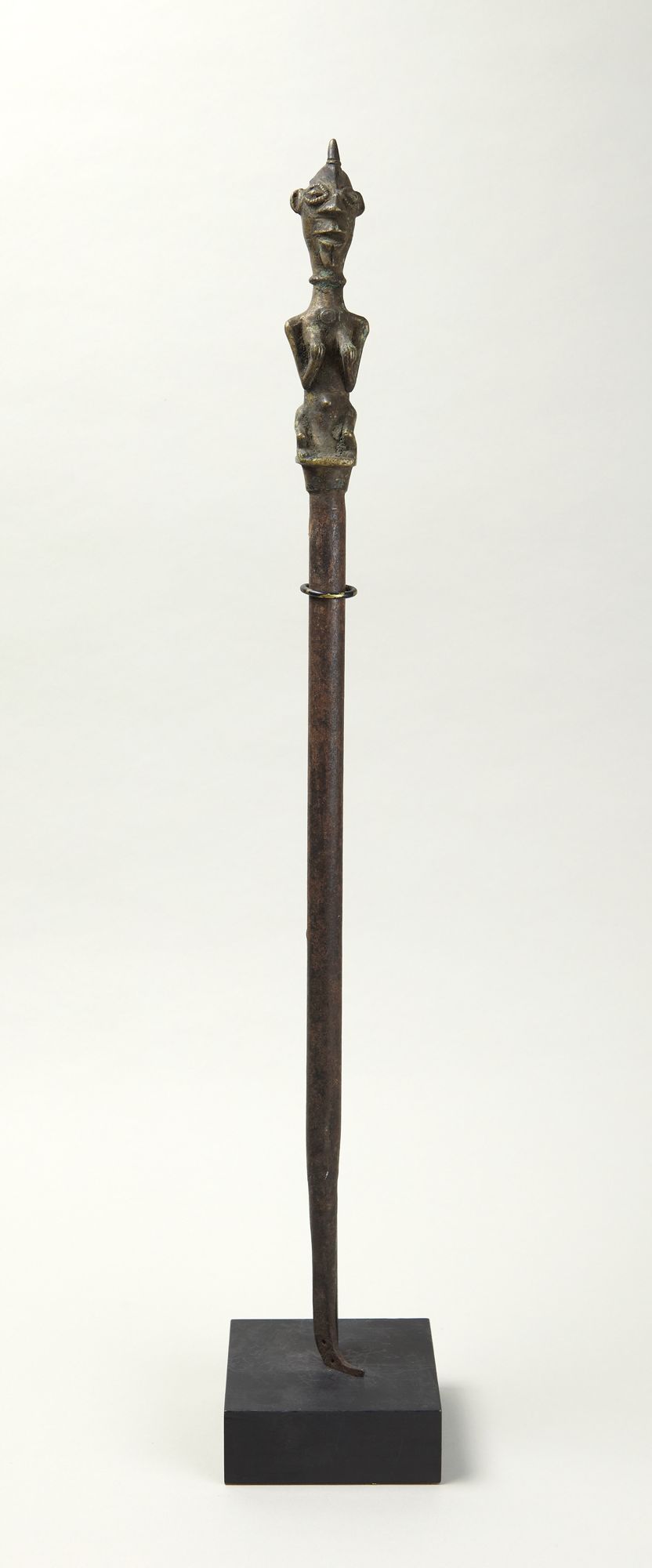
A smith at Sangha, on Mali’s Bandiagara Escarpment, forged a narrow blade of iron and attached a cotton cord. The object measures twenty-one centimetres. It weighs 128 grams. A strong man swung it at night during Dogon ceremonies for the dead. In the museum it lies silent, its cord gathered beside it. In the hand it became a presence that people could hear arriving through the dark. The maker’s work was small enough to carry. What it brought into the village was much larger. [1]
The iron bullroarer makes the smith a maker of divine presence: a human craft gives the god a body, a voice and a place in the community.
In brief
- Among the Bwa of Mali and the Dorhosié of Burkina Faso, the sacred iron bullroarer was the god itself. Keeping and sounding it gave that god a local life.
- Bobo smiths helped make the bush habitable through the bullroarer. Yoruba Ogun and Fon Gu place ironworking at the center of divine power.
- Ogotemmêli’s Dogon first smith steals celestial fire, a close comparison to Prometheus. Hephaestus supplies the other half of the argument: a craftsman who makes active beings and an object that Greeks worshipped.

Do waits in a sheepskin
The bullroarer is a voice made from a swinging blade. A cord carries it around the player while the blade turns in the air. Wood commonly supplies the body; the Bamana examples in Mali include both wood and iron. The metal version puts another specialist behind the sound. Before the player can bring the voice to life, the smith must give the material its shape.
Among the Bwa around San, in Mali, Do could take the form of an elliptical iron plate, roughly thirty centimetres by ten, with a long cord attached. The plate rested in a sheepskin pouch hung from a roof beam. Its names described its action: aliwe, “it cries”; linisa, “makes noise.” Yet its identity went beyond the noise. It was, in Jean Capron’s account, “the divinity itself.” [2]
The sheepskin is as revealing as the cord. A god who can be put away has a material address. Someone must keep the pouch, know the occasions on which it opens, and take responsibility for what comes out. The instrument’s silence between ceremonies belongs to its power: a voice held in reserve acquires a different authority from a sound anyone can make whenever they please.
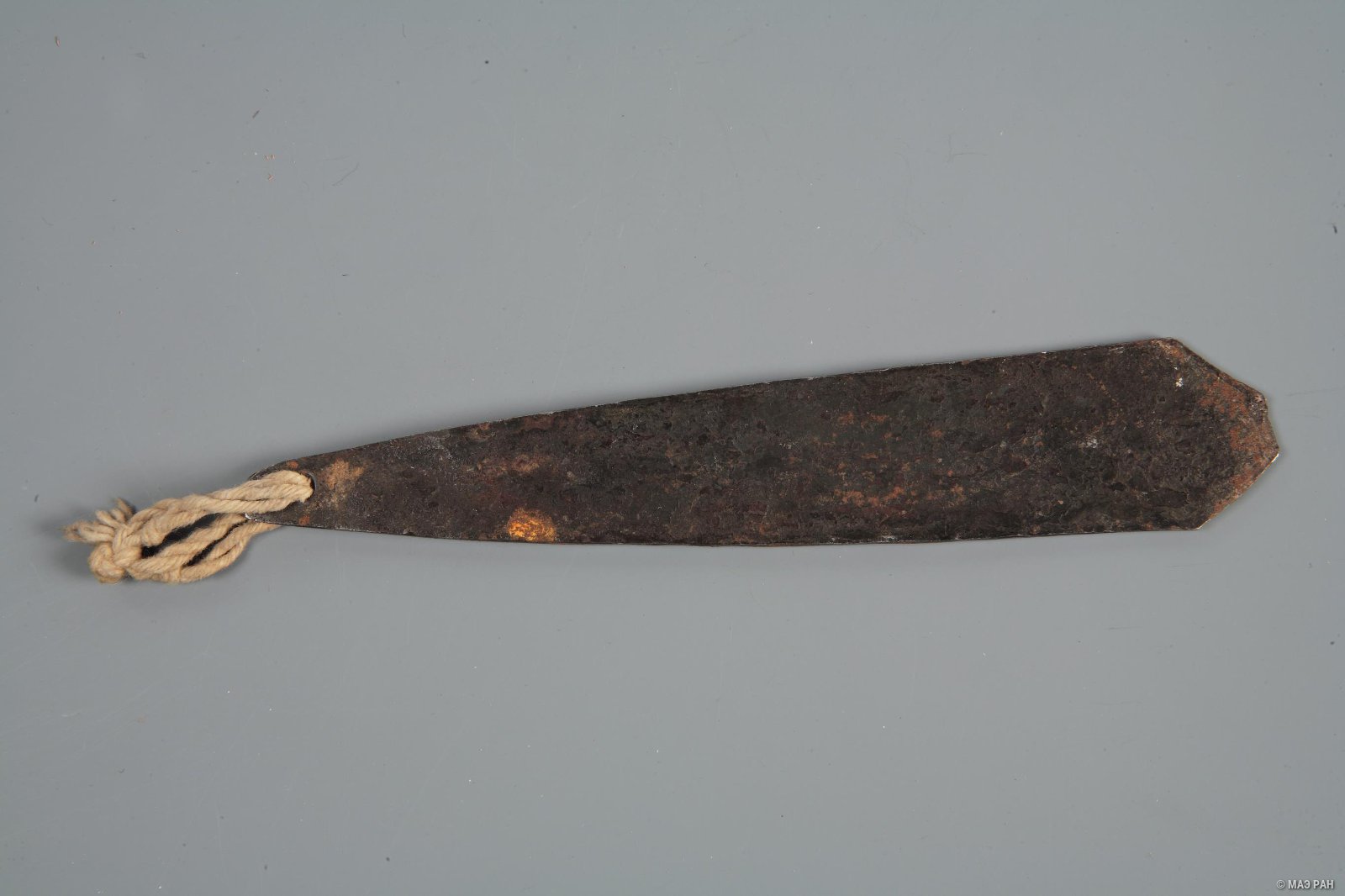
The sacred iron appeared rarely. Other cries of Do came from whistles or human lips; the bullroarer belonged to exceptional occasions. For the greatest sacrifices, the priest carried it to the bush altar. Capron explicitly identifies the blade as forged iron and records its custody, in some places, with smith families. Around San, the smith also mediated disputes and helped restore communal agreement. Manufacture, custody and reconciliation brought the same specialist into several parts of the god’s social life. [2]
This is a more demanding occupation than making a useful tool. The hoe changes what a field will yield; the sacred blade changes who can speak with authority, when a gathering becomes a rite, and how a settlement meets the powers beyond its houses. The sound gives an otherwise portable strip of metal a reach that extends across the community.
Zorhogo walks after dark
Farther south, among the Dorhosié of what is now Burkina Faso, the god Zorhogo lived outside the village in a sacred grove. His body was a flat piece of iron, swung on a cord. At night his keeper, the Zorhodaria, went around the settlement sounding it. The god hunted sorcery and wrongdoing. Women, children and uninitiated men were kept from seeing him. The keeper wore ordinary clothes. The arrival depended on the iron and its voice. [3]
A god on patrol needs a way to enter human affairs. Zorhogo’s blade supplied one. The keeper could carry him past houses; the sound could reach people who never saw the thing producing it. Here the bullroarer made a division between hearing and seeing into an instrument of government. The unseen being could be publicly present, and the public could recognize its authority through a noise.
Among the Toura in western Côte d’Ivoire, another iron voice announced Goton. The blade sounded from the bush before a stilt performer and dancers appeared. Women and children could watch that public appearance. The same cult was reported among the neighboring Dan. Louis Tauxier placed these sacred instruments among “gods made by human hands.” [4]
The different rules sharpen the point. Zorhogo’s unseen night patrol and Goton’s visible public emergence are two arrangements of a manufactured divine presence. Each community determines what may be seen, who may handle the body, and what the voice announces. The smith’s product enters an organized life of keepers, audiences and obligations. The god’s place among people is made along with his material form.
The Bobo smith makes room for a village
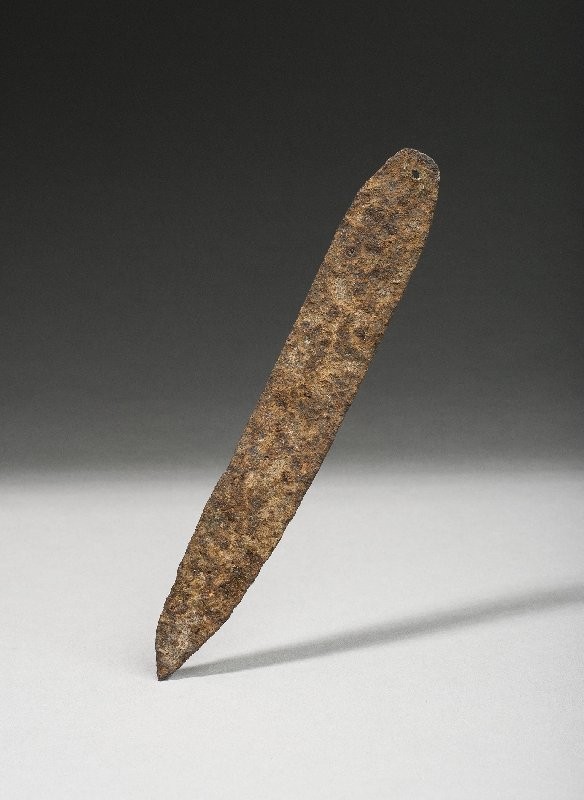
The Bobo of western Burkina Faso, neighbors of the Bwa, give the smith an even earlier responsibility. In their creation traditions, Wuro makes the smith before the farmer. A chameleon teaches the dangerous work of metal. When the creator withdraws, the smith helps secure the continuing presence of Wuro’s son Dwo through the leaf mask. Human settlement begins with a craft specialist already standing between the community and the beings that make its life possible. [5]
That order of creation gives farming a technical prehistory. Before there can be the ordinary rhythm of cultivation, someone must learn to handle substances and powers that resist the human hand. The smith comes first because the world has to be worked before it can be inhabited. A sharpened edge opens ground; a ritual act establishes permission to remain there.
At Sonsogoma, the founding task is explicitly acoustic. Bobo smiths pacify a hostile bush with the bullroarer. The old settlement’s dancing ground can remain recognizable after the houses have gone, and at Lena some dance grounds repeat the rhomboidal form of the instrument. The annual ceremonies renew the relationship between the living community, its founders and the place they occupy. [6]
The smith’s voice-making craft therefore operates on two scales. In the workshop it gives a small blade the shape it needs. At the settlement’s edge it helps turn dangerous country into a place where people can live. The bullroarer’s reach joins those scales: an object that fits in a hand can fill the surrounding land with the presence of the power under which the village was founded.
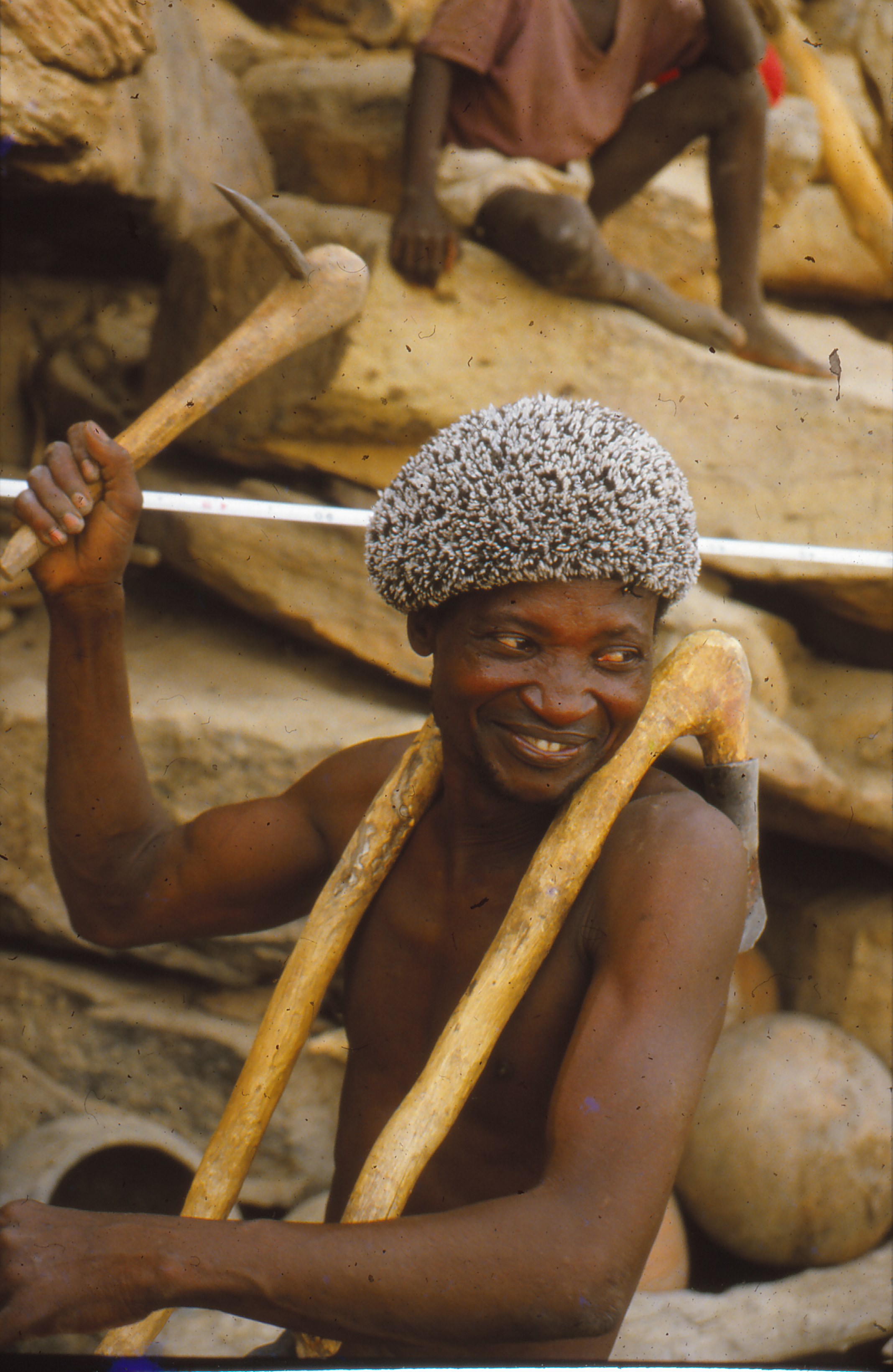
Greek worship also remembered a craftsman at the beginning of settled life. The short Homeric Hymn to Hephaestus credits Hephaestus and Athena with teaching people the work that brought them out of caves and into comfortable houses. Its closing request asks the smith for excellence and prosperity. Across this comparison, craft supplies more than equipment. It establishes the conditions in which an ordinary human life becomes possible. [7]
Ogun gathers in iron; Gu stands upright
To the southeast, in the Yoruba world of Nigeria and Benin, Ogun makes the connection between metal and deity immediate. His iron opens roads, clears fields and equips hunters and smiths. An altar can gather him in a group of iron objects receiving oil. Robert Farris Thompson describes this establishment of Ogun and the converse act of dismantling the assembled iron. He also records Ketu Yoruba hunters carrying the god into the forest in their guns. [8]
The objects continue to be recognizable pieces of human equipment. Their capacity to hold divine presence lies in their material, their work and the acts that establish them as Ogun. The god is close enough to carry. As with the iron voice, this closeness requires things people have made and practices people sustain.
Fon Gu, in neighboring Benin, received a spectacular body from a maker whose name survives. In nineteenth-century Abomey, Akati Ekplékendo worked as both smith and priest of Gu. He fashioned the standing iron figure now in the musée du quai Branly–Jacques Chirac: thin legs beneath a broad tunic, a weapon raised beside the body, tools arranged above the head. He assembled the figure from raw iron and imported manufactured metal, hammering, forging and riveting the parts together. Its hat also served as a tray for offerings. [9]
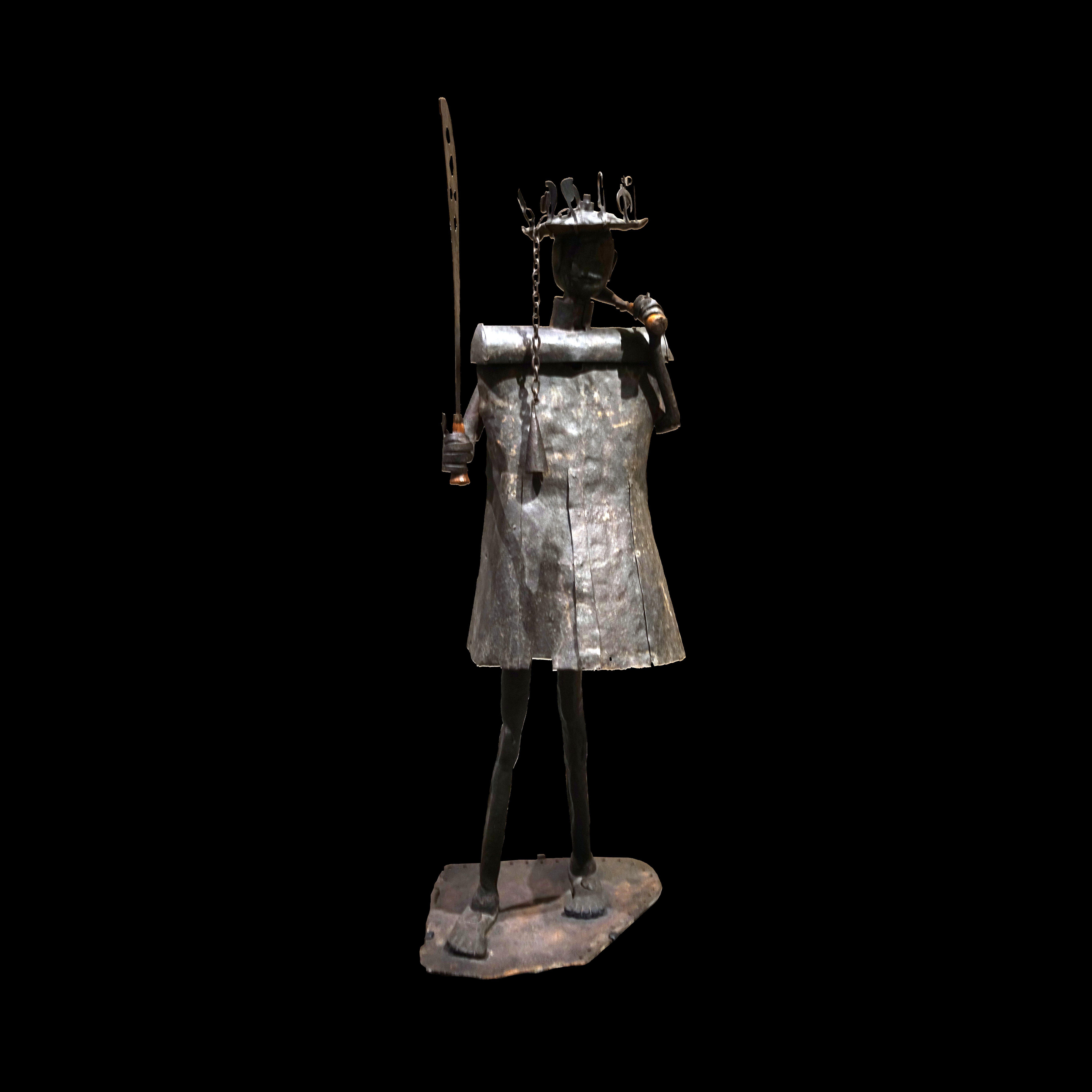
Akati brings the maker into view. A reader does not have to imagine an anonymous hand somewhere behind the sculpture. The man who knew the god’s cult also knew how to cut and join his metal. His two offices met in the finished work: the priest understood the presence he served, and the smith gave it a body that could stand before people and receive offerings.
The comparison with a bullroarer brings out two kinds of embodiment. Gu’s figure shows limbs, clothing and equipment. The blade can remain almost featureless and still make a forceful entrance. One work gives the god a visible bearing; the other gives him an audible arrival. Both depend on the maker’s command of matter, completed by the community’s acts of worship.
The first smith steals the sun’s fire
At Sangha, where the opening blade was made, Ogotemmêli told a much larger account of the first smith. In his conversations with Marcel Griaule, the smith takes an ember and incandescent iron from the celestial forge of the Nommo, divine beings of the Dogon world. He hides the stolen material in his bellows skin and descends along a rainbow. Firebrands pursue him; the skin helps him withstand them. At the landing, hammer and anvil strike his limbs, articulating the body with elbows and knees. The descent brings to earth both the equipment of craft and a body able to use it. [10]
The bellows skin carries extraordinary weight in this account. At a forge, a bellows controls the fire by supplying air. In the descent, it carries and protects the stolen heat. The smith brings his knowledge down in the material form of his own apparatus. Even his newly jointed limbs belong to the same event: the body that will hammer and cultivate emerges with the means of doing those things.
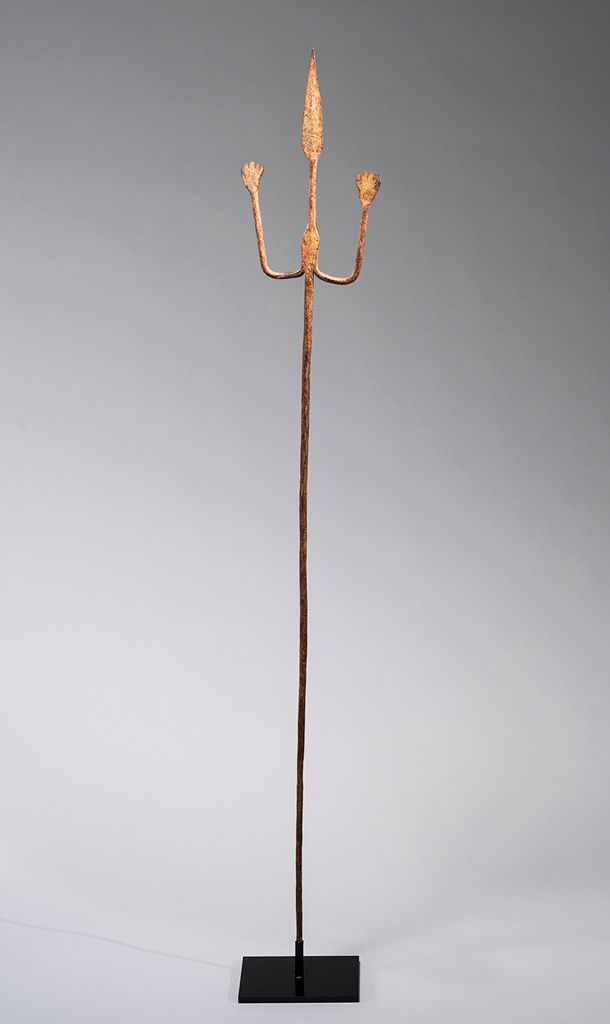
Ogotemmêli also places divine bodies inside the working tools. The hammer is a male Nommo; the anvil is a female Nommo; their wooden support is their bed. “When the hammer strikes the iron, the couple unites.” [10] The forge repeats a union through each blow. Making an object is continuous with the generative action of the beings whose bodies make up the workshop.
That account of the forge and its tools explains why a smith can occupy such a charged position in the instrument’s world. He works among divine bodies to produce new bodies. The Sangha blade is a compact result of that occupation: iron brought into a form that another person can set moving, until the hand-made thing acquires a voice.
Prometheus brings the power to make
Prometheus is the obvious Greek companion to the descending Dogon smith. In Hesiod, he steals fire for mortals in a hollow fennel stalk, carrying what Zeus has withheld across the boundary between gods and people. Ogotemmêli’s smith carries his stolen ember in a bellows skin. Each theft makes divine fire transportable. Each brings people a capacity they did not previously possess. [11]
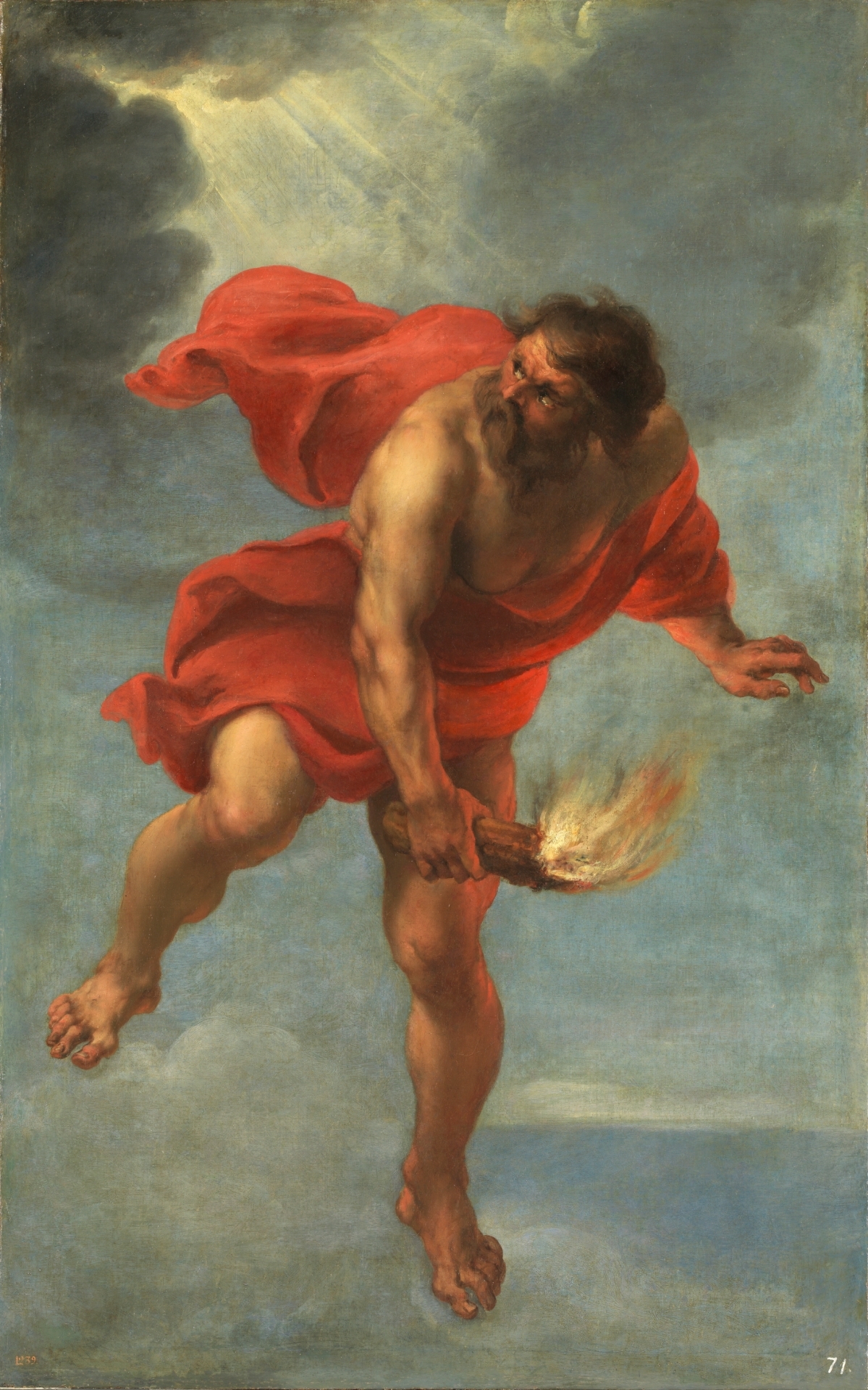
The containers tell the two episodes at the scale of a hand. A stalk can hide an ember; a skin can shelter the smith’s fiery cargo. The immense change in human possibility travels inside something small. Fire becomes a possession that can be carried, tended and applied. A gift from the divine world enters the practical world of people who must keep it alive.
Prometheus Bound makes the civilizing claim expansive. The prisoner names the arts he has given humanity: number and writing, animals put to work, seafaring, healing, divination and the metals hidden underground. His conclusion is that “every art possessed by man comes from Prometheus.” [12] Fire stands at the head of a changed relationship to the world. People can discover concealed resources and use them to make a life.
Prometheus is a fire-bringer and teacher of arts. Hephaestus is the Greek god who actually works the forge. Keeping both in view makes the comparison stronger. The Dogon first smith combines the theft with the craft; the Greek figures let us see those powers in separate hands. One obtains what people need to make things. The other demonstrates what a maker can do.
Hephaestus gives metal a life
In the Iliad, Thetis, Achilles’s mother, finds Hephaestus sweating at his bellows. He has made twenty tripods with golden wheels so that they can travel to the gods’ assembly and return by themselves. The handles still need fitting; he is preparing the rivets. The workshop joins an extraordinary finished capacity to a familiar unfinished job. [13]
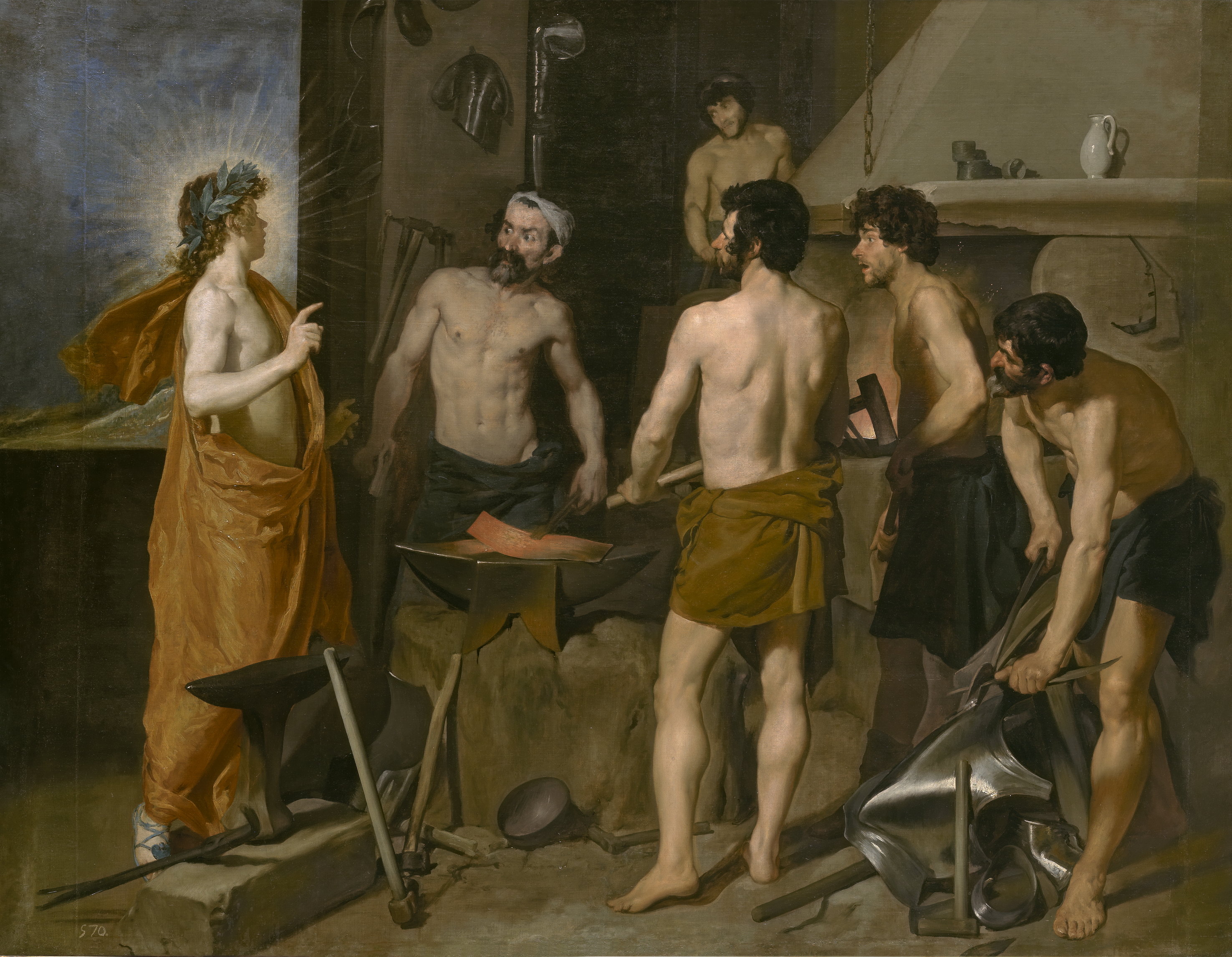
When Hephaestus leaves his anvil, golden attendants hurry to support him. They resemble young women, have understanding and speech, and know their work. The god who moves with difficulty is helped by beings made in his own workshop. Worked metal has entered a relationship with its maker: it can recognize a task and act for him. Homer describes them directly: “In them is understanding in their hearts, and in them speech and strength.” [13]
Homer’s gold makes vivid a possibility that the iron bullroarer realizes through sound. A finished artifact can act upon the people around it. The attendants walk and speak within the poem; the blade’s voice arrives in an actual village. In each case, knowing that something was made is compatible with granting it capacities that exceed a passive object.
The same expertise can bind a god. At the opening of Prometheus Bound, Hephaestus must fasten the fire-bringer to a rock under the supervision of Power and Force. He dislikes the task, but Zeus commands it. “Oh handicraft that I hate so much!” he cries. His ability gives the ruler’s punishment its physical means. [12]
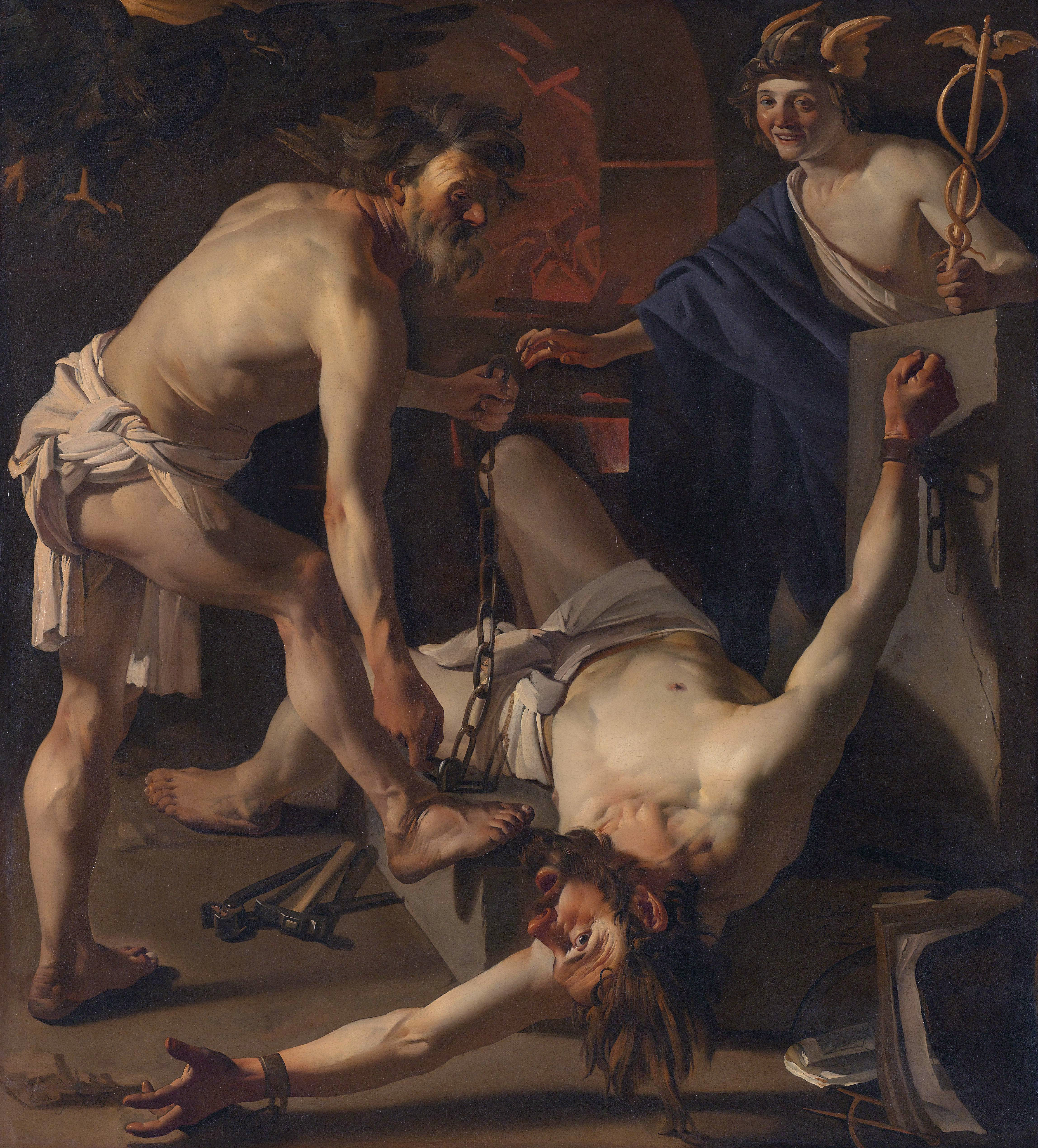
The scene puts a political edge on divine craftsmanship. Prometheus’s gift enlarges human freedom to act; Hephaestus’s work restricts the giver’s movement. Technical knowledge serves a community, a ruler or a god according to who can command its use. Zorhogo’s night patrol belongs beside this scene. The sacred voice also makes authority effective through a made object and the specialist who knows how to operate it.
Hephaestus also heads a family of ritual craftsmen. Strabo, surveying the Greek mysteries, reports that “some represent the Corybantes, the Cabeiri, the Idaean Dactyli, and the Telchines as identical with the Curetes,” the armed dancers whose rites went with “uproar and noise and cymbals and drums and arms.” The Idaean Dactyls were the smiths of that family, “the first to discover and to work iron,” and two early genealogists made the Cabeiri children of Hephaestus himself. In the same pages Strabo quotes Aeschylus on the Thracian rites: “frightful mimickers from some place unseen bellow like bulls.” [15] The Curetes are the dancers who circled the child Dionysus as the Titans crept up with their toys, the bullroarer among them, and Clement adds that the Corybantes “they call Cabiric.” [16] By this ancient reckoning the roar of the mysteries came from the smith’s own people. The child’s story, and its double in Australia, is told in Dionysus in Australia.
Chaeronea feeds the smith’s work
At Chaeronea in central Greece, the comparison passes from a poet’s workshop into a place of worship. Writing in the second century CE, Pausanias describes a sceptre that the people attribute to Hephaestus. They identify it with the one Homer sends from the smith to Zeus, then through Hermes and the house of Pelops to Agamemnon. In Chaeronea it is called Spear, and it receives the community’s foremost divine honor. [14]
The object has no public temple. Its priest keeps it in a house for a year. Sacrifices are offered every day, with a table laid out for it. “This scepter, then, they worship, calling it Spear.” [14] The thing attributed to the craftsman has become a recipient of sustained care and feeding.
Pausanias does not identify its material, and the maker credited here is a god. The comparison with the African iron makes that difference productive. Greece assigns the sacred artifact to a divine smith; the Bwa and Dorhosié place divine presence in an object of human manufacture. Chaeronea supplies the common action: a community houses and feeds a made thing as an object of worship.
Do’s sheepskin and the sceptre’s temporary lodging give this action an intimate scale. Divine presence requires a keeper, a place to rest, and a schedule of attention. The tool or artifact enters a durable relationship with the community. Its making supplies the body through which that relationship can proceed.
The god arrives through the hand
The smith occupies the meeting point of these accounts because he changes what matter can do. He brings an edge out of iron, a standing figure out of joined plates, a voice out of a swinging blade. The fire thief explains how such powers reached humanity. The divine craftsman magnifies their possibilities. The human smith practices them in a workshop where the materials, tools and results can themselves belong to the gods.
The iron bullroarer makes the claim especially tangible. Its keeper can point to a blade, take hold of a cord and bring a presence into the night. Bobo smiths use its power to make a settlement possible; Bwa custodians bring it to sacrifice; Zorhogo’s keeper takes it past the houses it governs. The community’s obligations give that voice an authority that carries beyond the reach of the swinging arm.
The iron bullroarer makes the smith a maker of divine presence: a human craft gives the god a body, a voice and a place in the community.
At Sangha, the cord lies beside the iron. At Abomey, Akati’s rivets hold Gu upright. At Chaeronea, a priest sets a table for the smith’s work. In each place, making gives people something through which they can live with a power greater than themselves. The hand that shapes the object helps determine how the god will enter the world.
Key sources
1. Sangha iron bullroarer. Musée du quai Branly–Jacques Chirac, 71.1935.60.20: maker, iron and cotton, dimensions, weight and nocturnal ceremonial use.
2. Bwa Do. Jean Capron, “Quelques notes sur la société du do chez les populations Bwa du cercle de San” (1957), pp. 86, 93, 101 n. 3, 103 and 128 n. 4. “The divinity itself” translates la divinité elle-même, p. 86. The Bwa around San and the Bobo discussed below have distinct institutions.
3. Zorhogo. Louis Tauxier, “Les Dorhosié et Dorhosié-Finng du cercle de Bobo-Dioulasso” (1931), p. 84: the iron god, grove, keeper, restrictions and night rounds.
4. Goton. Louis Tauxier, “La religion des Touras” (1931), pp. 265–266. “Gods made by human hands” translates dieux fabriqués de main d’homme, p. 265; the iron voice and public emergence are on p. 266.
5. Bobo creation. Guy Le Moal, Masques bobo : vie, formes et couleurs (2008), pp. 30–33: the first smith, chameleon, Wuro’s departure and Dwo’s presence.
6. Bobo settlement and the bullroarer. Samuel Millogo, “Rhombes et seuils de transition” (2000), pp. 161–163, especially the smiths’ pacification of Sonsogoma, p. 161. The dance-ground shape is local; other grounds are circular.
7. Crafts and settled life. Homeric Hymn 20, “To Hephaestus,” 1–8, translated by H. G. Evelyn-White (1914).
8. Ogun in assembled iron. Robert Farris Thompson, “The Three Warriors: Atlantic Altars of Esu, Ogun, and Osoosi,” in The Yoruba Artist: New Theoretical Perspectives on African Arts (1994), pp. 232–233. The altar-establishment account quotes Sandra T. Barnes (1980), p. 37; the hunters’ guns are Thompson’s Kajola field example. For the broader metalworking context, Emma George Ross, “The Age of Iron in West Africa” (2002).
9. Akati’s Gu. Gaëlle Beaujean, “La statue de fer dédiée à Gou — Sculpture d’Ekplekendo Akati,” in Didier Houénoudé and Maureen Murphy, eds., Création contemporaine et patrimoine royal au Bénin : autour de la figure du dieu Gou, pp. 12–19, especially pp. 12–14. The maker was also a priest of Gu.
10. The Dogon first smith and the forge. Marcel Griaule, Dieu d’eau : entretiens avec Ogotemmêli (1948; 1975 edition), Sixth Day, original pp. 38–41, and Thirteenth Day, pp. 79–80. The account here follows Ogotemmêli’s telling. The hammerstroke quotation translates Quand la masse frappe le fer, le couple s’unit, p. 80.
11. Prometheus’s stolen fire. Hesiod, Works and Days 42–58 and Theogony 561–569, translated by H. G. Evelyn-White (1914).
12. The fire-bringer and his bonds. Prometheus Bound, traditionally attributed to Aeschylus, 1–87 and 436–506; quotations at 45 and 506. Translation by Herbert Weir Smyth (1926).
13. Hephaestus’s workshop. Homer, Iliad 18.368–380 and 410–427, especially the golden attendants at 417–420. Translation by A. T. Murray (1924–1925).
14. The worshipped sceptre. Pausanias, Description of Greece 9.40.11–12, translated by W. H. S. Jones (1935); its earlier genealogy is Homer, Iliad 2.100–108. The comparison concerns the worship and custody of a manufactured sacred object.
15. The smith-daimones of the mysteries. Strabo, Geography 10.3.7, 10.3.16 and 10.3.19–22, translated by H. L. Jones (1928): the Curetes identified with the Corybantes, Cabeiri, Idaean Dactyls and Telchines (10.3.7); Aeschylus’s Edonians on the bellowing mimics (10.3.16); the Cabeiri as children of Hephaestus in Acusilaus and Pherecydes (10.3.21); the Dactyls as the first ironworkers (10.3.22).
16. The Curetes, the toys and the Cabeiri. Clement of Alexandria, Exhortation to the Greeks 2.17–19: the Curetes dancing round the child as the Titans approach with toys (2.17; the rhombos is among them in G. W. Butterworth’s 1919 Loeb translation); the Corybantes called Cabiric (2.19, translated by William Wilson, 1885).