No. BONWICK1870-001
Tasmania's hidden roar
Australia · lutruwita · Tasmania
Restricted
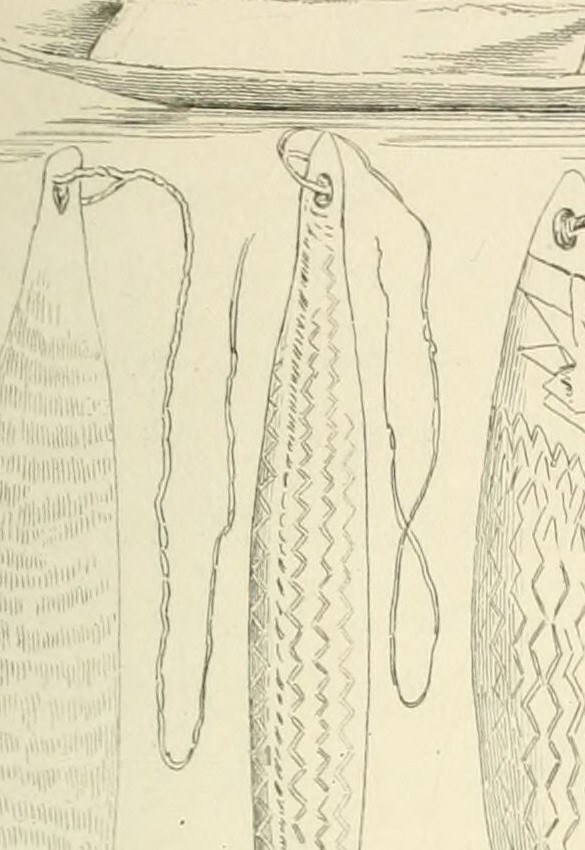
Source term: mooyumkarr
mooyumkarr — the name Eyre had printed twenty-five years earlier for a South Australian bullroarer; Bonwick gave the mainland word to the Tasmanian instrument.
A healer pressed and rubbed the painful place, whispered a charm, and drew out the bone or stone believed to be lodged inside. But the same doctor could also send illness. That double power had a sound: an oval wooden blade whirled on a string, hidden from women’s sight. James Bonwick, an English-born teacher and amateur historian who had lived in Hobart, published this account in 1870. By then invasion, warfare, disease and forced removal had devastated Tasmania’s Aboriginal nations; at putalina/Oyster Cove, survivors continued ceremony and passed on culture.
They twirled round the magic mooyumkarr, an oval piece of wood with a string.
Bonwick 1870:175
Particulars
- Object
- An oval wooden blade attached to a string and whirled through the air.
- Function
- Used by doctors and exorcists in healing and harmful magic; women were forbidden to see it.
Source
James Bonwick, The Daily Life and Origin of the Tasmanians (London: Sampson Low, Son & Marston, 1870), pp. 175–176