Atlas Essay —
The X-Ray Style
Arnhem Land · India · Scandinavia · Siberia · the Arctic · the Northwest Coast · the Dordogne
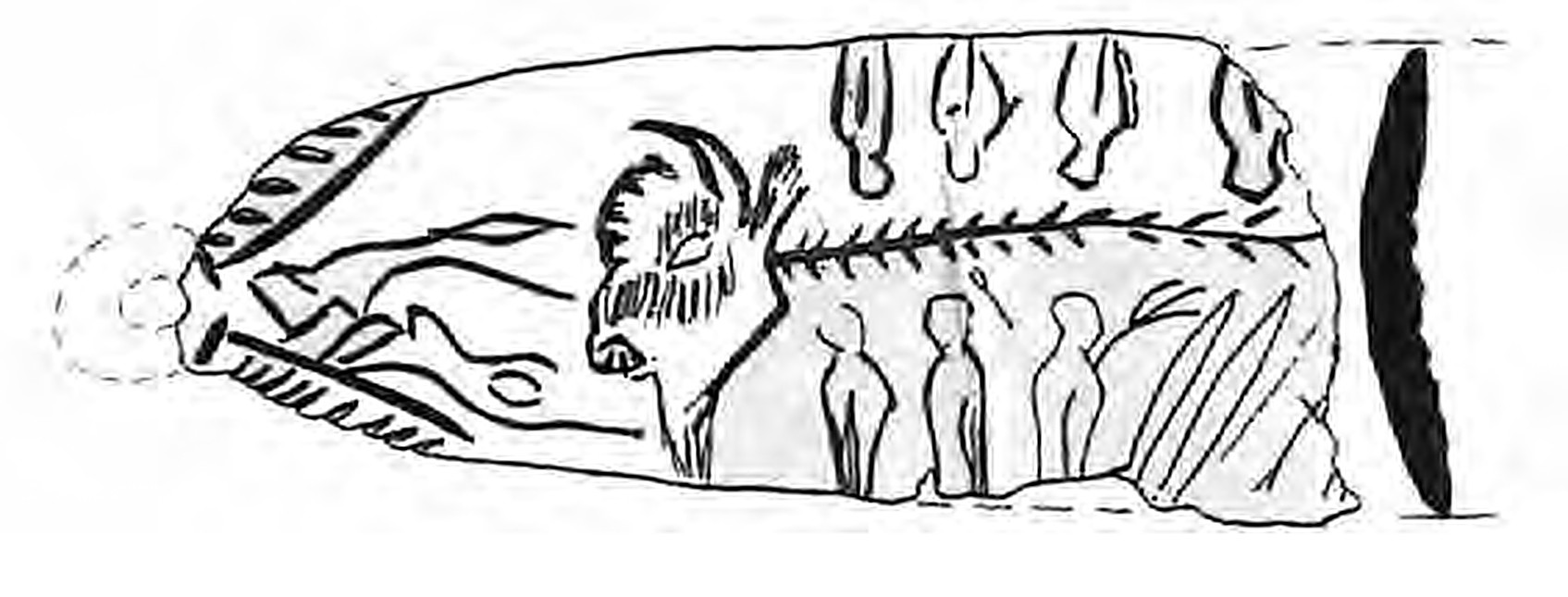
A painter at Ubirr lays down the outline of a barramundi, and then does the strange thing: he paints its backbone. Ribs hang off the spine, the gut sac swells, the heart sits where a heart sits. Twelve thousand kilometres away and twelve thousand years earlier, a Magdalenian engraver in the Dordogne took a strip of bone, drilled it at one end for a cord, and cut into it a bison reduced to head, spine and two legs, with seven small people standing along the backbone. The same idea, the same solution, the same refusal to let the skin have the last word — and, on the Dordogne bone, the instrument that carries the idea still attached to it.
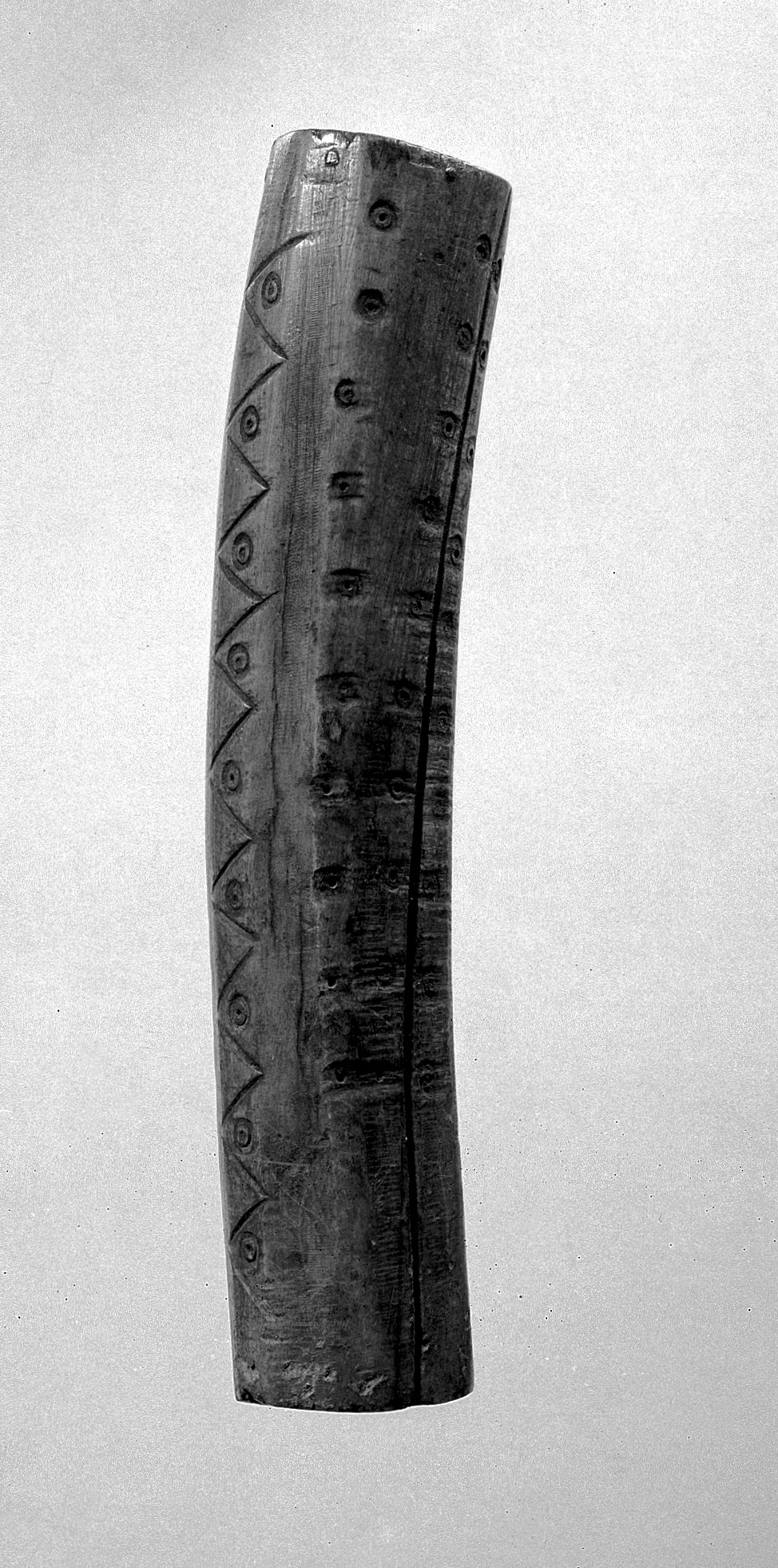
The x-ray style — the animal drawn alive with its skeleton showing — is one tradition on the move, not a coincidence repeated from continent to continent. It maps onto the shamanic world exactly: Arnhem Land, India, Scandinavia, Siberia, the Arctic, the Pacific coast of North America. It was carried out of Ice Age Eurasia with the rest of the shaman’s kit, and it did not travel alone: the initiation vision that strips the novice to his bones, and the bullroarer that speaks with the ancestors’ voice, went with it. On one Magdalenian bone from Chancelade, hafted like a roarer and engraved with a bison stripped to its frame, the whole bundle is visible in a single object.
In brief
- The x-ray convention — skeleton and organs painted inside the living animal — runs from western Arnhem Land through India, Scandinavia, Siberia, the Arctic and the Northwest Coast: the map of the hunting world and of shamanism.
- The ethnography explains why. Shamanic initiation reduces the novice to his own bones; Eliade: “Bone represents the very source of life.” The style is that vision set down in ochre.
- Elkin found the same complex in Australia, beside the bullroarer — and used the words “X-ray eyes” for the sky-hero Baiame a decade before art historians borrowed the term for the paintings.
- Joseph Campbell named the travelling package outright: shamanism moved east into America and southeast to Australia together with “the x-ray style of animal painting and engraving, the atlatl, and the bull roarer.”
- The Raymonden bone from Chancelade carries both halves at once: Barandiarán groups it with the Magdalenian bone bullroarers on its rare ringed hafting, and its engraving is the x-ray convention — an animal shown as bone, with the congregation at the spine.
What the style is
The name is a modern joke that stuck: these paintings see through the skin, as if the rock were a fluoroscope. In the strict sense, x-ray art “depicts animals or human figures in which the internal organs and bone structures are clearly visible,” as the Metropolitan Museum’s essay on the Arnhem Land galleries puts it. The painter draws the profile of a barramundi or a kangaroo, then fills the silhouette not with pattern for pattern’s sake but with anatomy: the vertebral column as a ladder down the middle, the ribs hanging off it, the heart, the liver, the gut sac, the optic nerve.
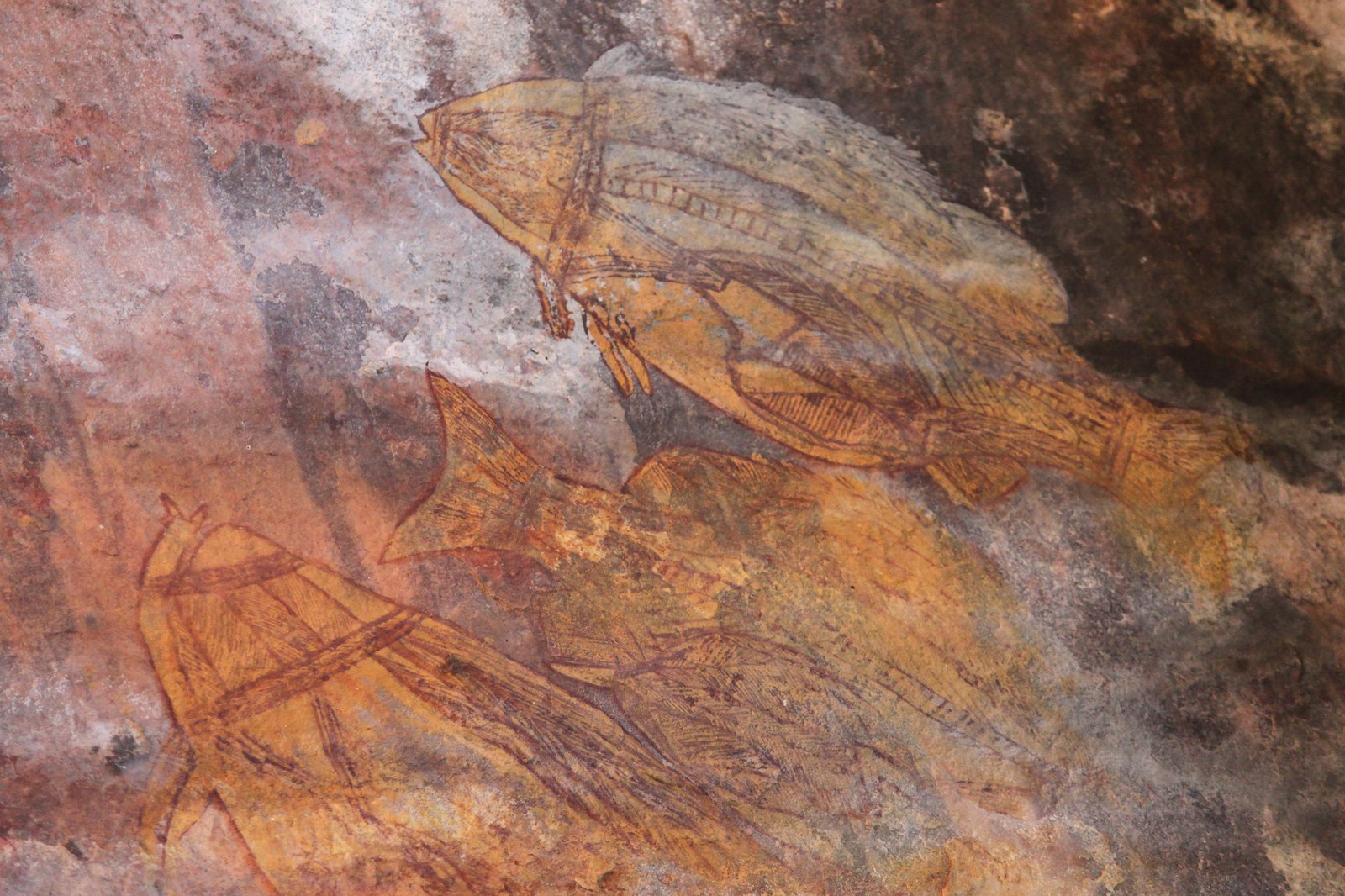
Western Arnhem Land is the style’s living capital. In the sandstone shelters of Ubirr and Injalak the tradition is conventionally reckoned to have taken its classic form around four thousand years ago, and it never stopped: the latest x-ray paintings show rifles with the bullets visible in the magazine, the new tool given the same interior honesty as the old fish. The earliest images show backbone and ribs; the mature style adds muscle masses, fat deposits, even breast milk. Ancestral beings and yesterday’s catch hang on the same wall, painted with the same convention. Whatever else the style is, it is a statement about what a living body is: a thing with life inside it, and the life drawn as bones.
The skeleton in the shaman
Why bones? The ethnography of shamanism gives a consistent answer: because the bones are where the life is, and the specialist of the sacred is the man who has seen his own. Mircea Eliade, assembling the Arctic and Siberian evidence, made the skeleton-vision a diagnostic of shamanic initiation. Of the Eskimo angakok he writes, quoting Rasmussen’s Iglulik informants:
“Though no shaman can explain to himself how and why, he can, by the power his brain derives from the supernatural, as it were by thought alone, divest his body of its flesh and blood, so that nothing remains but his bones. And he must then name all the parts of his body, mentioning every single bone by name.”
— Knud Rasmussen’s Iglulik account, quoted in Mircea Eliade, Shamanism: Archaic Techniques of Ecstasy, pp. 62–63
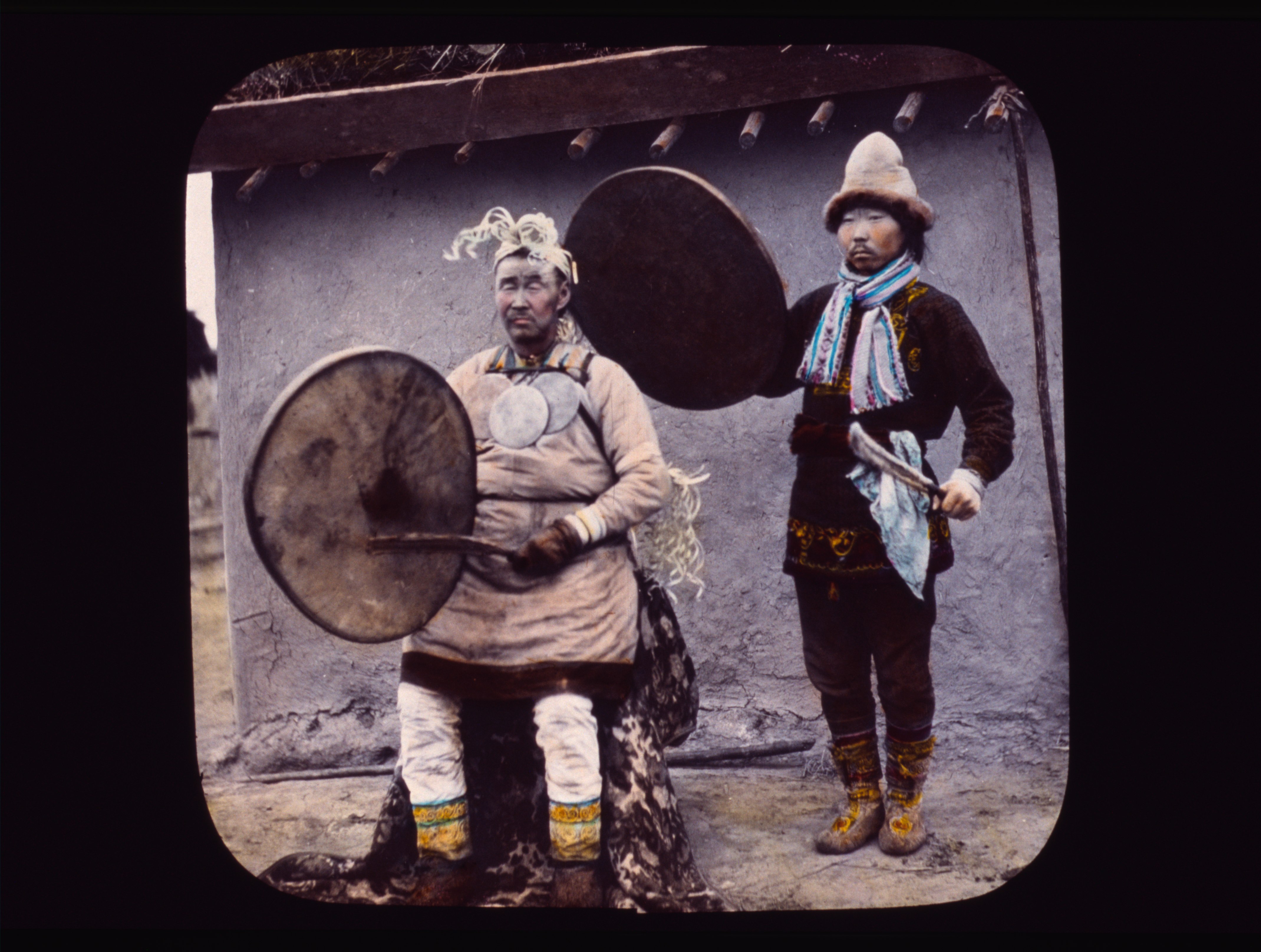
In Siberia the same reduction is performed on the novice rather than by him: the spirits dismember the candidate, boil the flesh from his bones, count the bones, and reassemble him — a dead man remade, with iron where the joints were. The Siberian shaman then wears the vision: Eliade notes that the costume “bears certain iron objects imitating bones,” tending to give the wearer “the appearance of a skeleton.” And the logic underneath, in Eliade’s summary, is exactly the logic a hunter would arrive at:
“Bone represents the very source of life, both human and animal. To reduce oneself to the skeleton condition is equivalent to re-entering the womb of this primordial life, that is, to a complete renewal, a mystical rebirth.”
— Eliade, Shamanism, ch. 2 (“Contemplating One’s Own Skeleton”)
Australia keeps the same complex, and keeps it beside the bullroarer. A. P. Elkin’s Aboriginal Men of High Degree — the classic study of Aboriginal “clever men” — records a Forrest River initiation in which the master “takes the form of a skeleton” before riding the rainbow-serpent into the sky with the candidate in a bag, and inserts quartz crystals into the young man’s remade body. In south-east Australia the sky-hero himself performs the x-ray: Baiame, in the vision Elkin reports, pierces the postulant “with his ‘X-ray’ eyes” — Elkin’s own choice of word, a decade before art historians borrowed it — looking into and through the candidate to judge him. And when the clever men of western New South Wales displayed their powers, Elkin writes, the performance opened the way every initiation opens:
“After the bull-roarer had been swung, thus creating a mystic atmosphere, for it is the voice of Baiame (the sky cult-hero), the men present were told to sit around and stare into a big fire.”
— A. P. Elkin, Aboriginal Men of High Degree, on a “clever man” display in western New South Wales
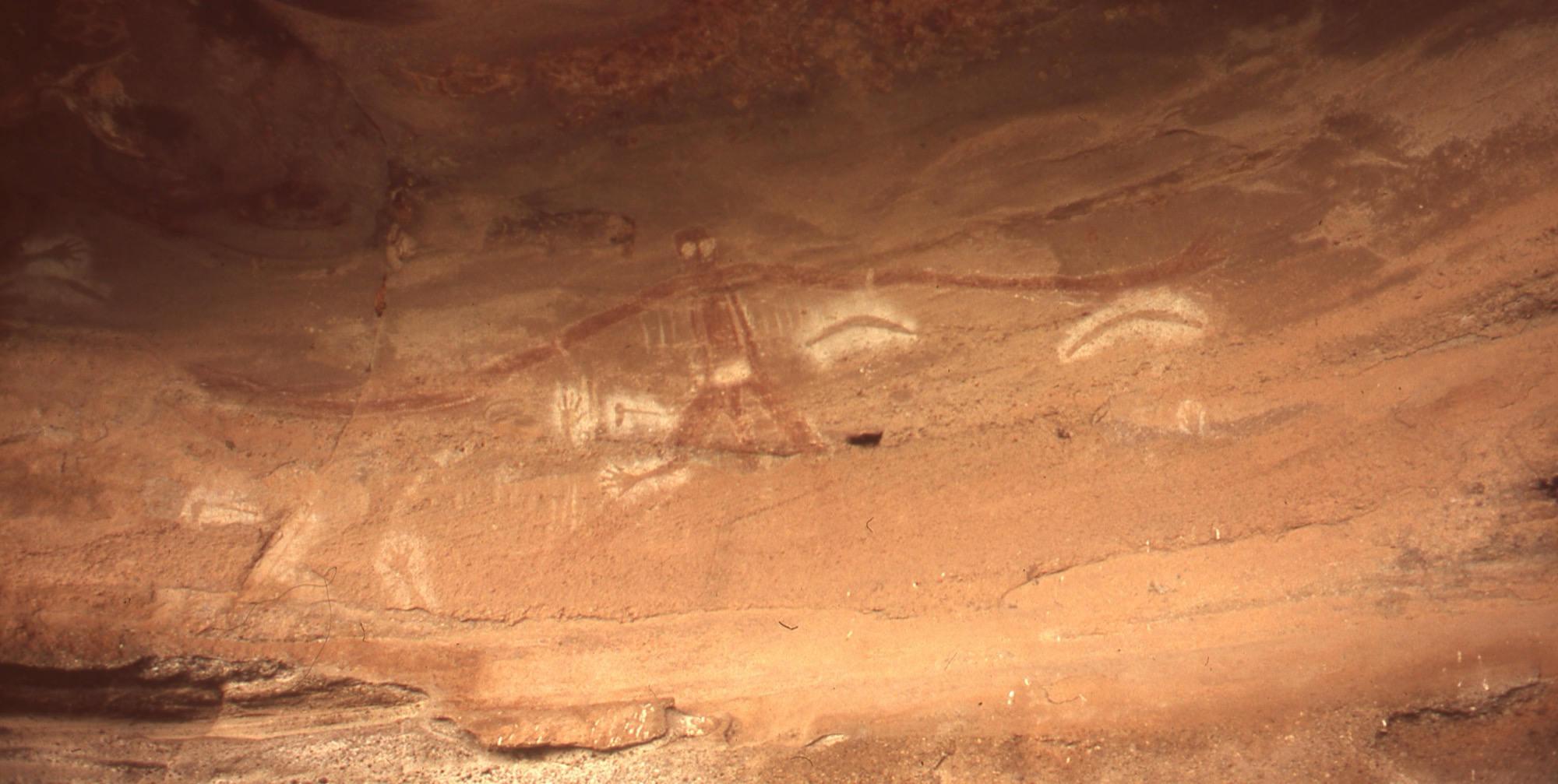
Seen from inside this complex, the x-ray painting is not an anatomical curiosity. It is the initiate’s way of seeing, set down in ochre: the world as it looks to a man who has been taken apart, counted bone by bone, and put back together. And the sound that opens the ceremony where that happens is the whirled blade.
A map of the style
Arnhem Land is the deepest gallery, but the reference works draw the distribution wide. The standard dictionaries of archaeology place x-ray depictions in the Mesolithic rock art of northern Europe from roughly the eighth millennium BC, and then, in a great arc, through Siberia, the Arctic, North America, India, Malaysia, western New Guinea and New Ireland — the map, near enough, of the hunting cultures and of shamanism. Region by region:
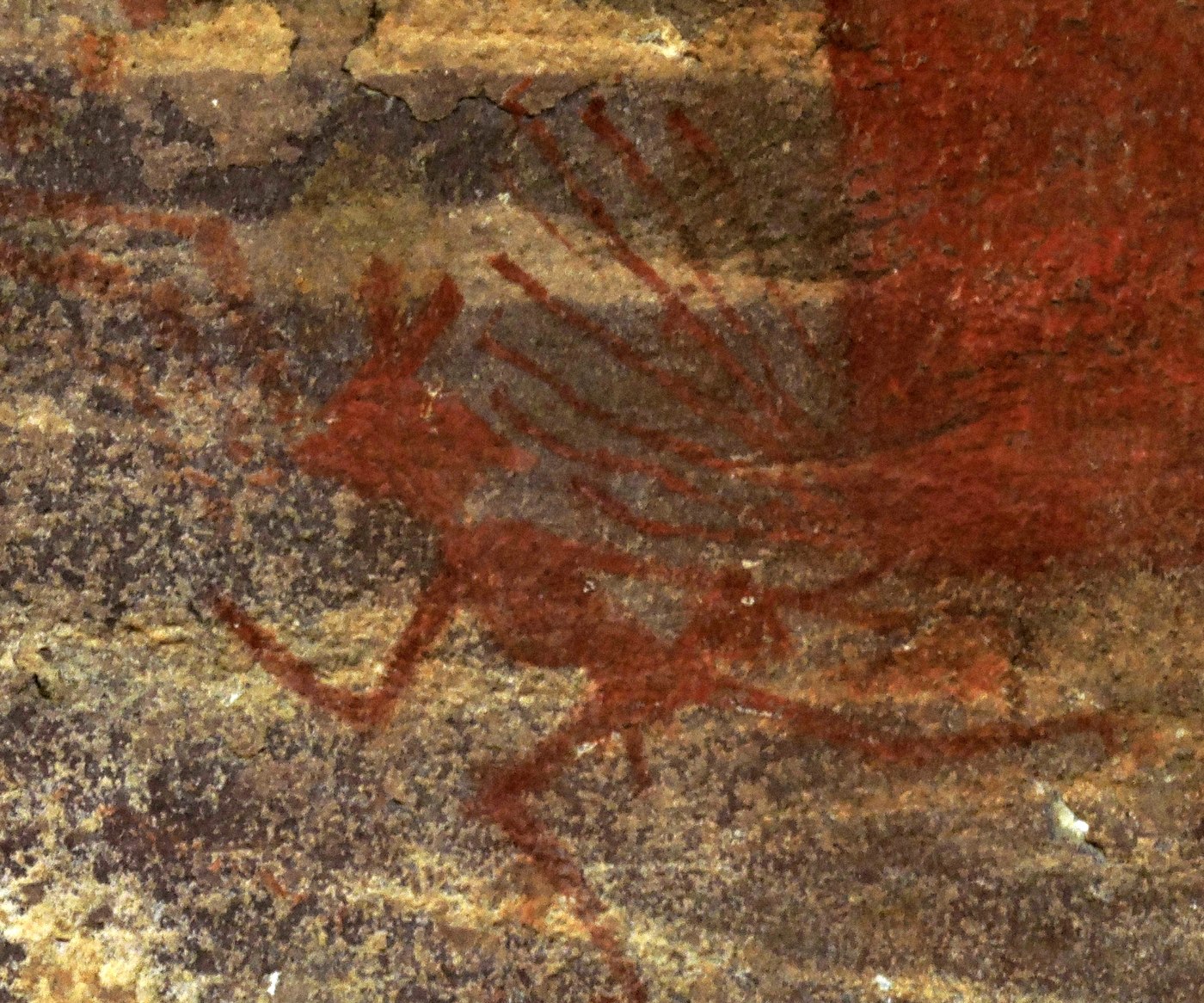
- Australia. The western Arnhem Land galleries — Ubirr, Nourlangie, Injalak — where the style is still painted, and where it belongs to the same ritual world as the bullroarers of Arnhem Land: art of the ancestral beings, made by initiated men in a landscape the Dreamings shaped.
- India. The Mesolithic shelters of Bhimbetka and central India fill their deer and boar with interior lattices — a body-interior convention the rock-art literature reads alongside the Australian style.
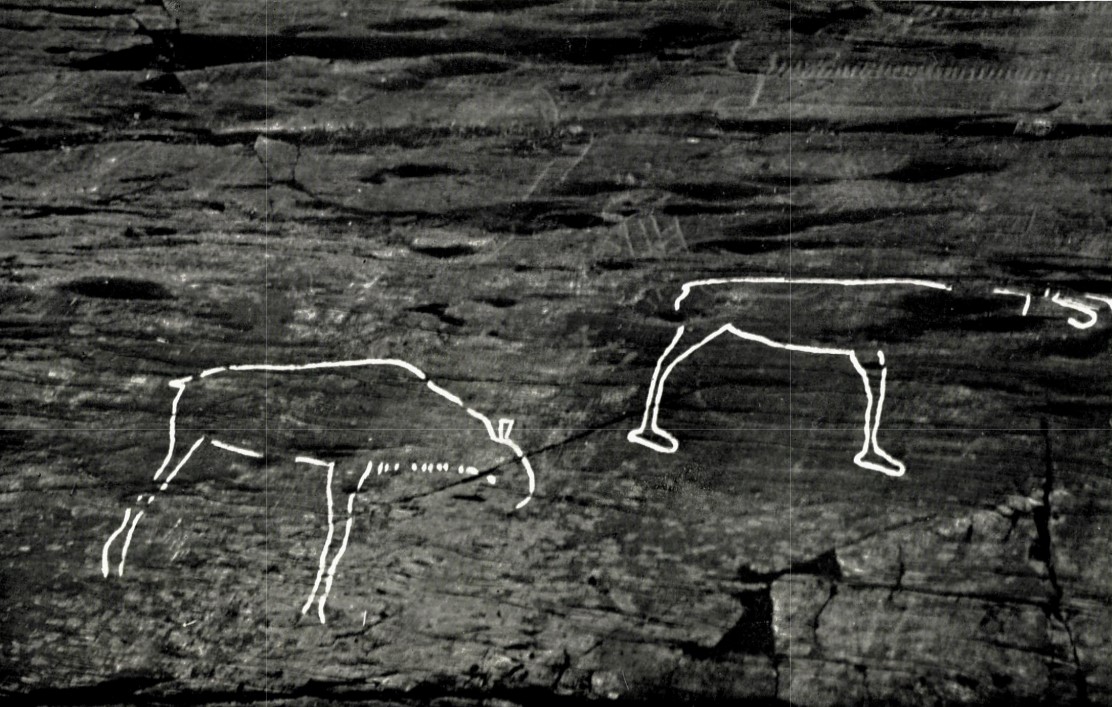
- Scandinavia. The elk carvings of the Norwegian and Swedish hunting-art tradition carry interior detail from early on: the “life-line” from mouth to heart, and at sites like Bardal, cross-hatched compartments inside the great elk outlines — the skeleton showing through four thousand years before the Vikings.
- Siberia and the Arctic. Here the style lives less on rock than on the body: the Evenki or Yakut shaman’s coat with its iron ribs and arm-bones sewn on, the costume-as-skeleton Eliade described. The Chukchi and Eskimo carving traditions play the same game in ivory — and it is among the Chukchi that the whirled blade summons the weather. The Iglulik angakok gave the skeleton-vision its clearest words.
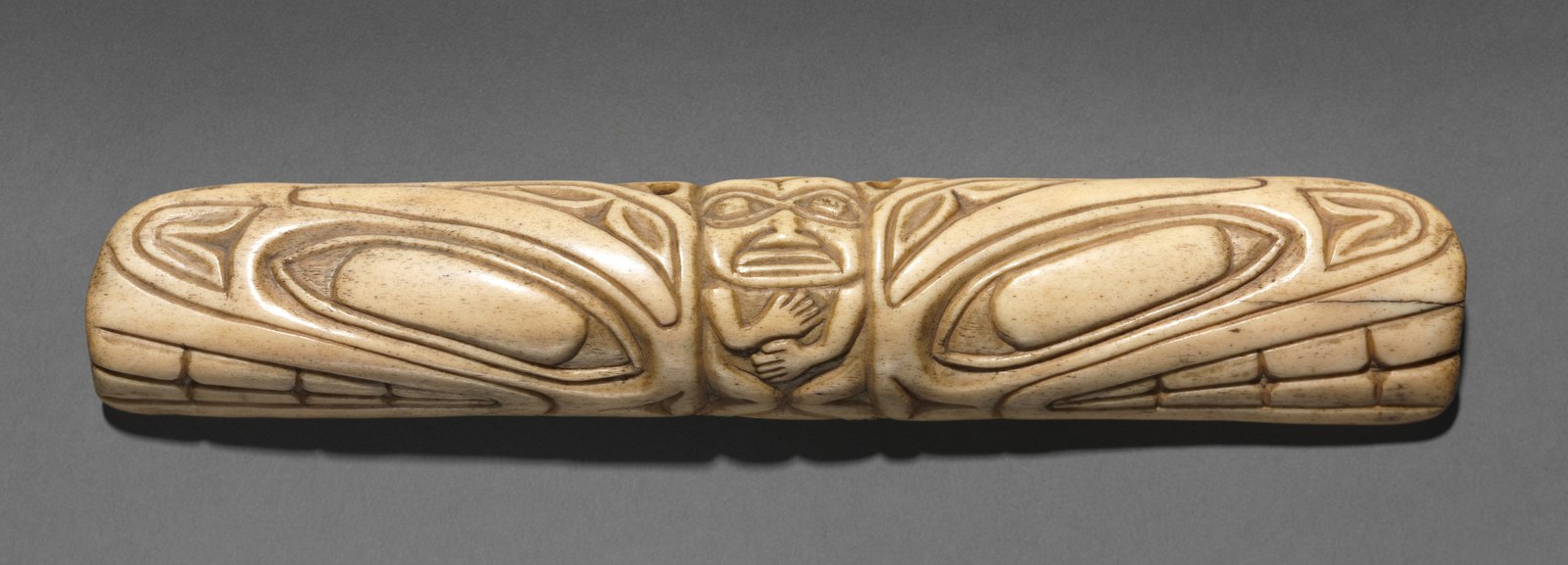
- The Northwest Coast. Franz Boas’s famous analysis of “split representation” describes the animal “imagined cut in two from head to tail” and opened flat — a formal cousin of the x-ray, in which the carver, like the painter, refuses to let the surface of the body have the last word. Tlingit shamans wore the interior view on bone charms and soul-catchers.
The arc is not a private list. It is what the standard reference works catalogue. What it means is the question.
One tradition on the move
The arc is a route. Andreas Lommel — ethnographer of the Kimberley, later director of Munich’s ethnographic museum — made the case in Shamanism: The Beginnings of Art (1967). The shaman, he wrote, “is not merely a medicine man… he is above all an artistically productive man”: on Lommel’s reading, the first artist we can name as such, and the art of the Ice Age caves and the art of living shamanic cultures are one tradition seen at two moments. His book runs the skeleton motif from Siberia into Arnhem Land as a single inheritance.
Carl Schuster spent a quieter career on the same road. His enormous archive of motif-comparisons — condensed after his death by Edmund Carpenter into Patterns That Connect — traced designs he believed constituted “a form of language” across the Old and New Worlds: joint-marks, genealogical figures, bodies drawn as lineages. Schuster rarely argued a single motif in isolation. His claim was cumulative: tribal art the world over preserves fragments of one ancient symbolic system, of which skeletal and joint-marked bodies are a recurring member.
Joseph Campbell made the argument explicit and drew it on a map. The first volume of his Historical Atlas of World Mythology, The Way of the Animal Powers (1983), lays the x-ray style out region by region — Arnhem Land, Scandinavia, Siberia, North America — and treats it as a tracer dye for the spread of shamanism itself. And in Campbell’s summary the style does not travel alone:
“Passing eastward across Siberia into America, as well as southeasterly to Australia, shamanism traveled as but one element of a living compound that included — besides the x-ray style of animal painting and engraving, the atlatl, and the bull roarer — an elaborate complex of social regulations, ceremonials, and associated mythological ideas, which scholars have designated by the very broad term totemism.”
— Joseph Campbell, Historical Atlas of World Mythology, Vol. I: The Way of the Animal Powers (1983), p. 133
There is the whole claim in one sentence: x-ray art, the spear-thrower and the bullroarer as fellow-travellers in a single Paleolithic export. Eliade, no card-carrying diffusionist, ends up in the same country on the question of origins, endorsing Horst Kirchner’s reading of the Lascaux bird-man as a shaman in trance and concluding that by around 25,000 BC Europe already “offers evidence for the earliest forms of shamanism,” with the ideology of bone and rebirth crystallizing among the mammoth-hunters earlier still.
Against this stands Boas, who knew the Northwest Coast material more intimately than anyone, and who warned that its “dissections and distortions” of the animal body are, “in many cases, a fitting of animal motives into fixed ornamental patterns,” intelligible only “as an integral part of the structure of Northwest coast culture.” He is right, and he is describing the wrong thing. Boas is explaining the local grammar — why the Tlingit carver opens the body this way, into ovoids and formlines, rather than some other way. He is not explaining why the body should be opened at all. Every inherited idea arrives somewhere and is immediately rebuilt in the local idiom; that is what inheritance looks like on the ground. The ovoid is Northwest Coast. The refusal of the skin is not, and it is shared with painters in Kakadu who never saw a formline. Boas’s own soul-catchers — carved bone blades from a shaman’s kit, the body opened, the spirit held inside — belong to the same complex he was declining to look outside of.
The Chancelade bone
Which brings us to the Dordogne, and to the object at the head of this page. In 1887–88, Michel Hardy and Maurice Féaux, digging the Raymonden shelter at Chancelade — the same shelter that yielded the famous “Chancelade Man” skeleton — recovered a thin engraved bone about nine centimetres long, pierced at one end through a raised, notched ring. On it, an artist of the Upper Magdalenian engraved a scene unlike anything else in Paleolithic art: a bison’s head, two detached legs, and a backbone drawn as a long barbed line — the animal stripped to its frame — with seven small human figures standing along the spine, three on one side and four on the other, one of them holding a branch.
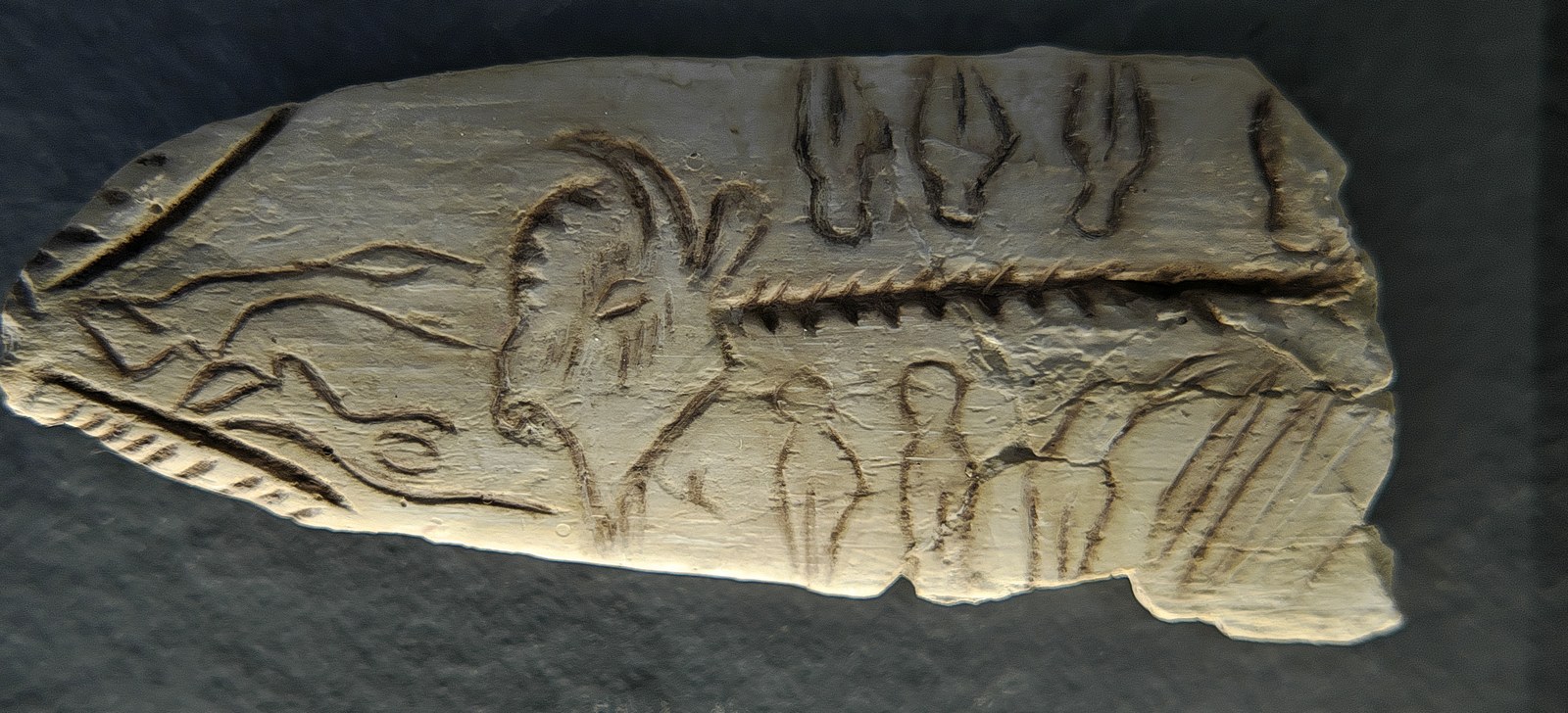
The piece has been argued over for a hundred and thirty years. Hardy, publishing it in 1891, read the head as a musk-ox; the consensus since has settled on bison. The abbé Glory, and Michel Soubeyran after him, saw a hide stretched out for scraping, the figures as workers at the frame. Soubeyran later changed his mind and titled the scene a défilé au bison: a procession, seven people filing past the remains of the animal — a reading uncomfortably close to a communion service. The museum tradition calls it a hunting trophy. Cleyet-Merle and Rigaud, cataloguing the site’s art for the Base Jean Clottes, single it out from Raymonden’s menagerie of doubtful engravings as the one “highly symbolic work” in the collection: a dismembered bison “of which only the head, two legs and the vertebral column remain, surrounded by seven humans.”
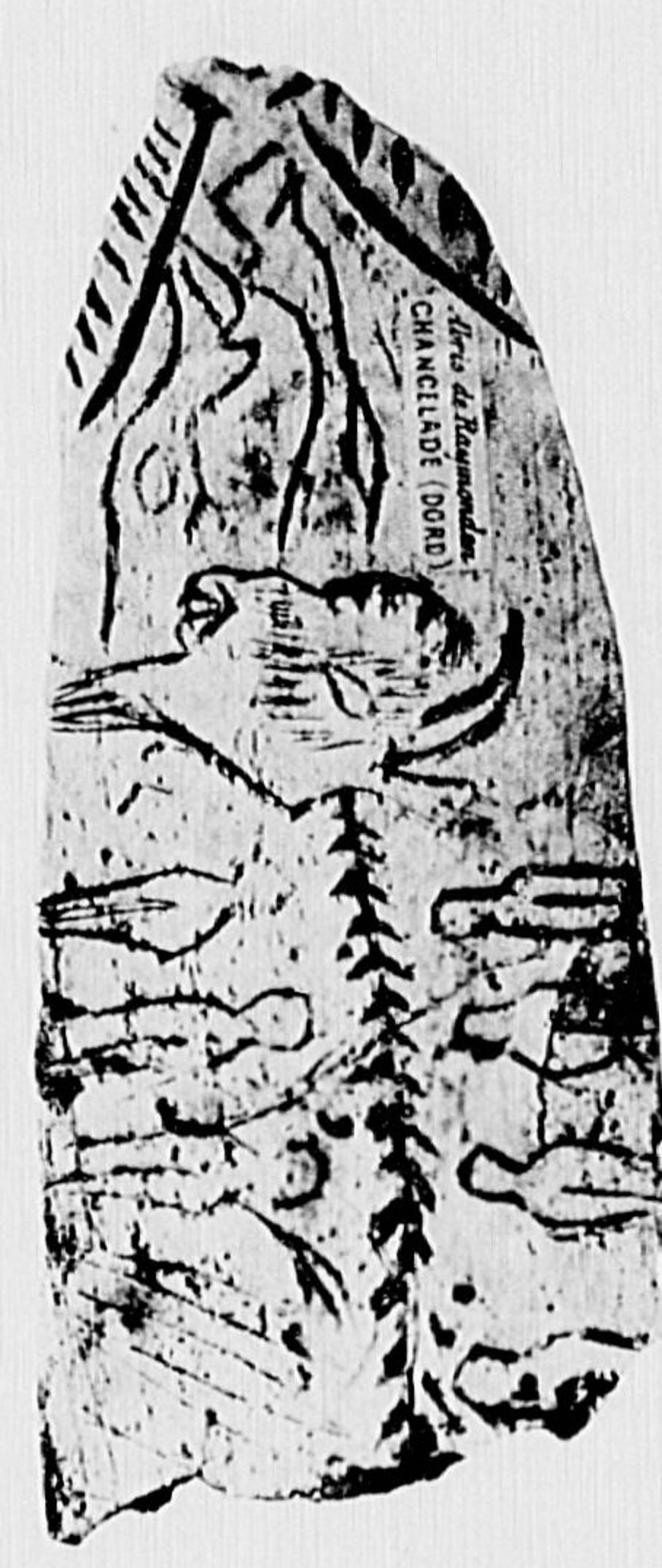
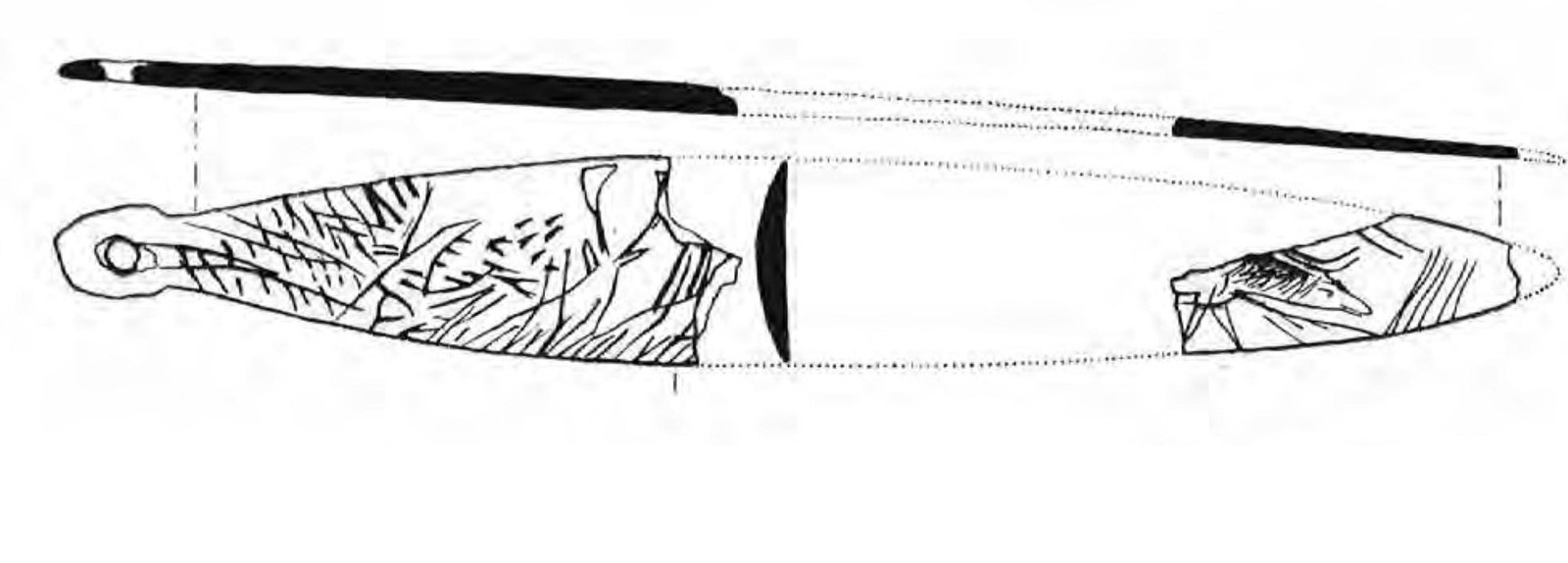
Two things about this object concern the atlas. The first is its shape. Ignacio Barandiarán Maestu, the cataloguer of the Magdalenian bone bullroarers — the bramaderas of El Pendo, Bourrouilla, Bolinkoba and their kin — groups the Raymonden piece with El Pendo and the two Bourrouilla roarers as the only pieces in the corpus that share the rarest hafting: the suspension hole cut through a raised ring-shaped head, notched out at the sides to seat the cord. He is blunt about where he thinks it belongs. The much-cited “pendants” of Raymonden and the Grotte des Eyzies, he writes, “seem to me fragmentary bullroarers”; and of the traditional label he is drier still — “the ‘hunting trophy’ (I think it is another bullroarer) of Raymonden-Chancelade.” On his reading, the most enigmatic engraved scene of the Magdalenian is carried on the blade of a sound instrument, and this atlas maps it accordingly.
The second is its subject. A bison drawn as a head on a bare backbone is an animal shown from the inside: the Raymonden scene is, formally, the x-ray convention — the spine-and-ribs ladder of an Arnhem Land barramundi — applied to a bison stripped even of its ribs, twelve millennia and more before the ethnographic examples. The usual readings take the skeleton literally, as a carcass; but no other Magdalenian butchery scene exists to compare it to. Animals in this art are otherwise drawn whole, alive and unaccompanied. This one alone is drawn as bone, and this one alone has people standing at it — and it is cut into an object hafted for whirling. If one wanted a Paleolithic emblem of the compound Campbell described — the beast seen through to its skeleton, the congregation, the roarer that speaks for the dead — it would be hard to invent a better one than the one that was actually dug out of the ground at Chancelade.
Two trails, one object
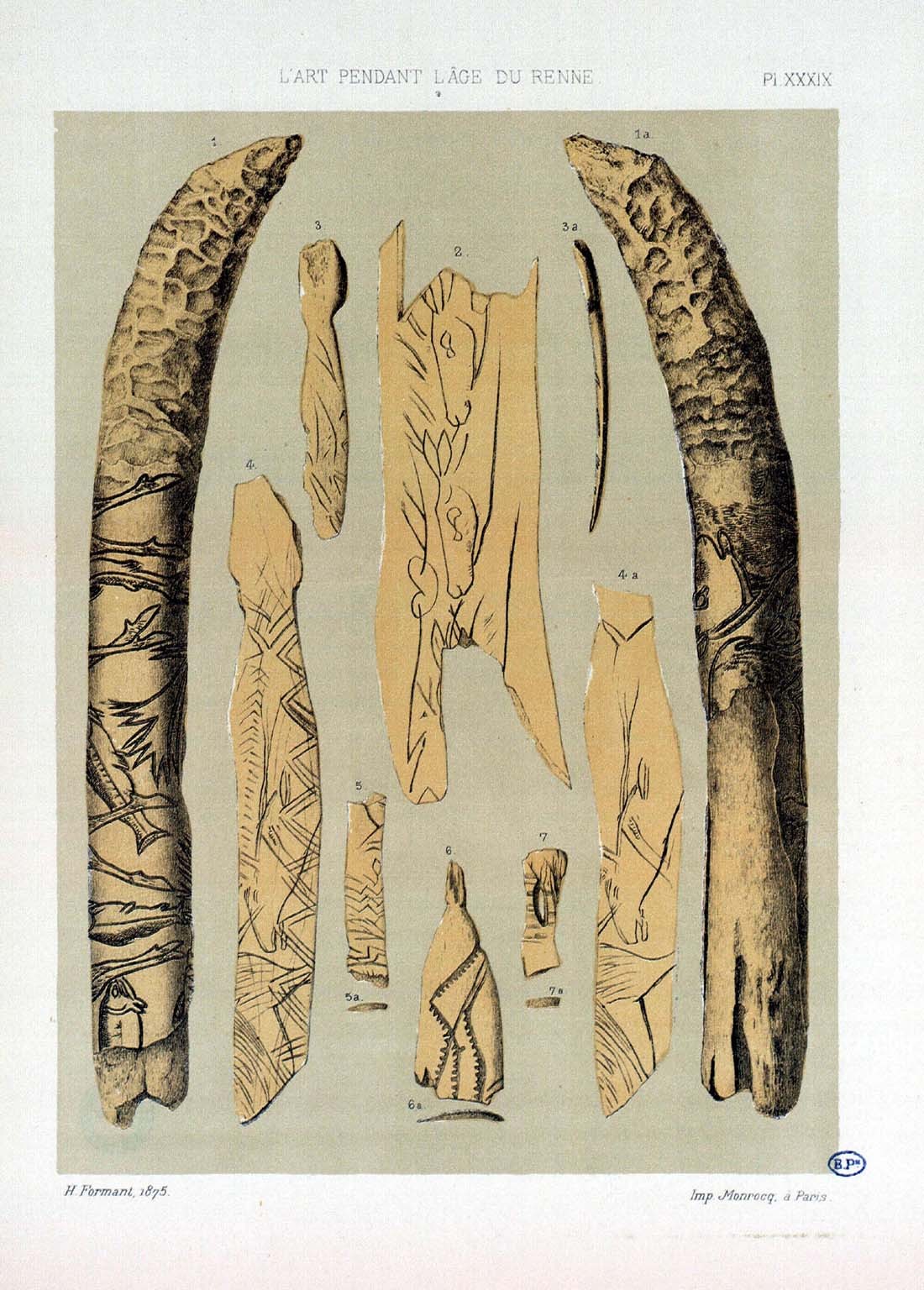
This atlas maps one instrument, and the x-ray style is not an instrument. It earns a page here because of what Campbell put in a single sentence: in the strongest statement of the diffusionist case, the bullroarer and the x-ray style are named in the same breath, two items in one travelling compound along with the atlatl and totemism. That claim is testable in a way most grand theories are not, because each element leaves its own trail — the roarer in this atlas’s thousand records, the style on the rock walls surveyed above — and the two trails can be laid over one another.
They match where it counts. In western Arnhem Land the x-ray painters and the roarer-swinging cults share one landscape and one body of initiated men. In the Arctic and Siberia the skeleton is worn on the coat and the whirled blade summons the weather. On the Northwest Coast the shaman’s opened-body bone blade hangs in the same kit as his charms. In India the interior-drawn animals of Bhimbetka sit in the country where the roarer is still swung. Wherever the skeleton shows, the sound is there too.
And at the European end of the Ice Age the two trails do not merely run alongside each other; they cross, in one object nine centimetres long. The Raymonden bone is hafted like a Magdalenian bullroarer, by the rarest method in that corpus, and engraved with an animal reduced to its frame and surrounded by its congregation. Barandiarán reached the first half of that on hafting alone, from a lifetime with the Spanish bramaderas; the second half is there for anyone willing to call a spine a spine. Put them together and the compound Campbell described — skeleton-vision, ceremony, roarer — is not an inference drawn across continents. It is a thing you can hold, and it is twelve thousand years older than any ethnography that describes it. Scroll back to the head of this page and look again at what the engraver left out, and at what he kept.
Key sources
- Hardy, M. 1891. La station quaternaire de Raymonden à Chancelade (Dordogne) et la sépulture d’un chasseur de rennes. Bulletin de la Société historique et archéologique du Périgord 16. Gallica.
- Capitan, L., Breuil, H. & Peyrony, D. 1924. Les Combarelles aux Eyzies (Dordogne). Paris: Masson. The Raymonden engraving is fig. 102(2), p. 111, reproduced at actual size, with Breuil’s reading of the scene: two files of figures ranged along a pectinate line issuing from a bison’s head — “Is this some kind of ceremony?” (“S’agit-il de quelque cérémonie?”) HathiTrust.
- Barandiarán Maestu, I. 2015. “La bramadera de hueso: análisis y discusión cronocultural.” Kobie, Serie BAI nº 6, 149–158. Open access PDF. Fig. 4 sets the Raymonden piece among the bramaderas of El Pendo, Aitzbitarte IV, Bourrouilla and Les Eyzies.
- Marshack, A. 1972. The Roots of Civilization, p. 207 (dating of the Raymonden piece to the Upper Magdalenian).
- Soubeyran, M. 1966. “Station de Raymonden à Chancelade,” BSHAP 93; and 1994, “Un reportage en direct: le défilé au bison,” BSHAP 121, 170–188.
- Cleyet-Merle, J.-J. & Rigaud, J.-P. 2022. Raymonden entry, Base Jean Clottes / Animal Représentation (CNRS). Online.
- Campbell, J. 1983. Historical Atlas of World Mythology, Vol. I: The Way of the Animal Powers. New York: Alfred van der Marck Editions; reprinted 1988 in two parts. The x-ray-style material is at pp. 132–133, in Part 2, Mythologies of the Great Hunt; the passage quoted is on p. 133.
- Lommel, A. 1967. Shamanism: The Beginnings of Art. New York: McGraw-Hill.
- Schuster, C. & Carpenter, E. 1996. Patterns That Connect: Social Symbolism in Ancient & Tribal Art. New York: Abrams.
- Eliade, M. 1964. Shamanism: Archaic Techniques of Ecstasy, trans. W. Trask. Bollingen/Princeton, pp. 62–63, 158–160, 503–504.
- Elkin, A. P. 1945 (2nd ed. 1977). Aboriginal Men of High Degree. Sydney: Australasian Publishing Co.
- Boas, F. 1927. Primitive Art. Oslo: Institutet for Sammenlignende Kulturforskning, pp. 224, 280.
- “X-ray Style in Arnhem Land Rock Art.” The Metropolitan Museum of Art, Heilbrunn Timeline of Art History. Online.
The identification of the Raymonden engraving as an instance of the x-ray style is, as far as we know, original to this page.