No. SHM2026-001
Birka chevron-cut bone blade
Sweden · Björkö, Lake Mälaren · Uppland · Northern Europe
Function not recorded Candidate only
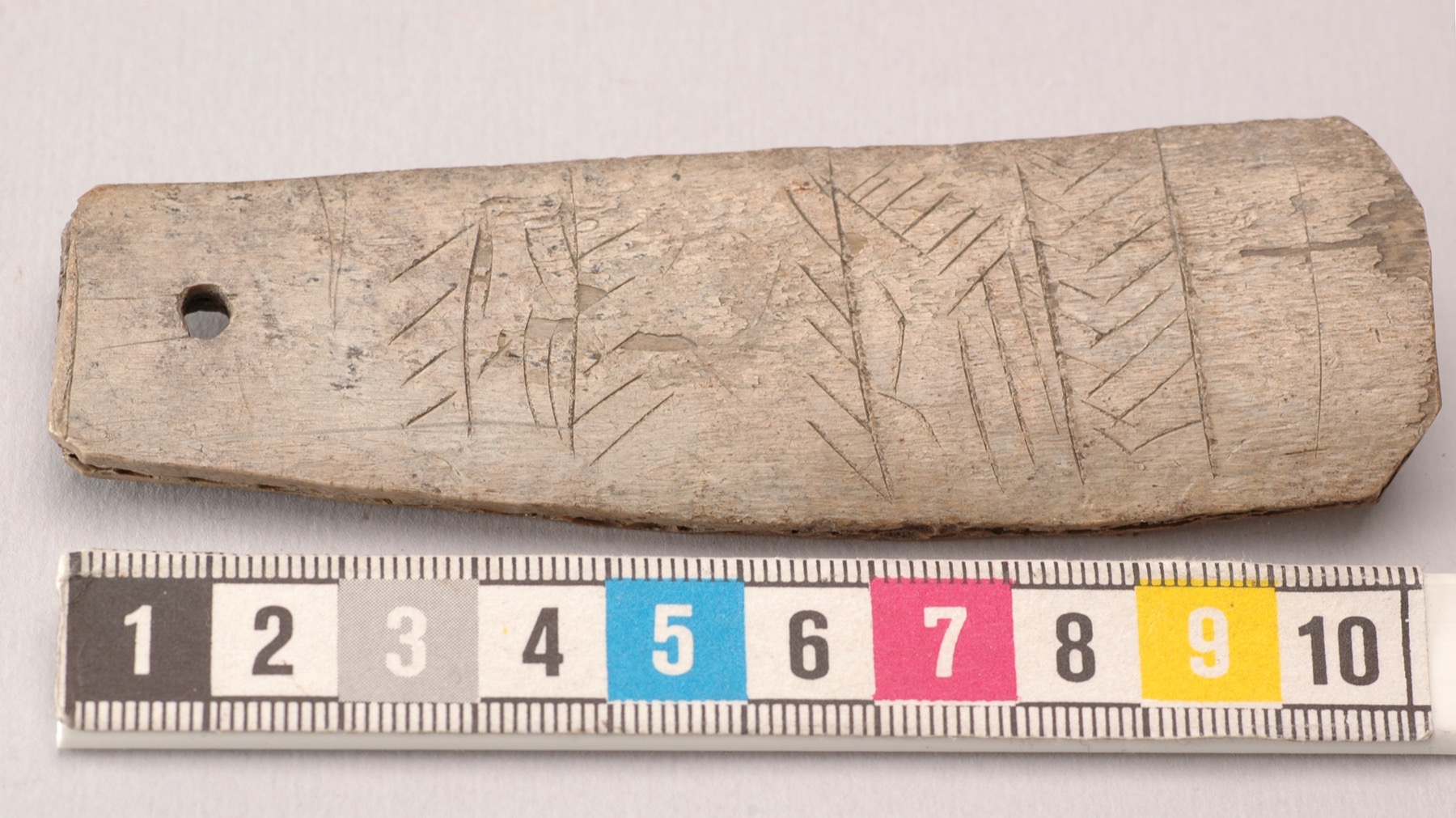
vinare
Source term: möjligen en vinare
vinare = Swedish, “whiner”: the museum term for a whirled sound-maker of bone or wood.
For two centuries the people of Birka, the Viking-age trading town on Björkö in Lake Mälaren, threw their ash, charcoal, kitchen bones and even their dung onto the ground around their houses, until the soil itself turned black. That midden became a preservative. The Black Earth is unusually alkaline, and bone and antler that would rot away in ordinary Swedish ground survive in it. This small bone blade came out of it with its rough bevelled edges intact, a single hole near one end, and rows of chevrons still cut sharp across its face.
Benplatta med grovt avfasade kanter och enklare ornamentik samt ett hål i ena kortsidan - möjligen en vinare.
Bone plaque with roughly bevelled edges and simple ornament, and a hole in one short side — possibly a vinare.
Historiska museet, Stockholm, object 419259_HST
Particulars
- Object
- Small flat bone plaque with roughly bevelled edges, bands of incised chevrons and transverse strokes across one face, and a single hole near one short end.
- Function
- Not recorded.