No. LOEB1932-004North America
Huchnom ghosts' string head tier
United States · South Fork Eel River country, Mendocino County, California · North America
Restricted
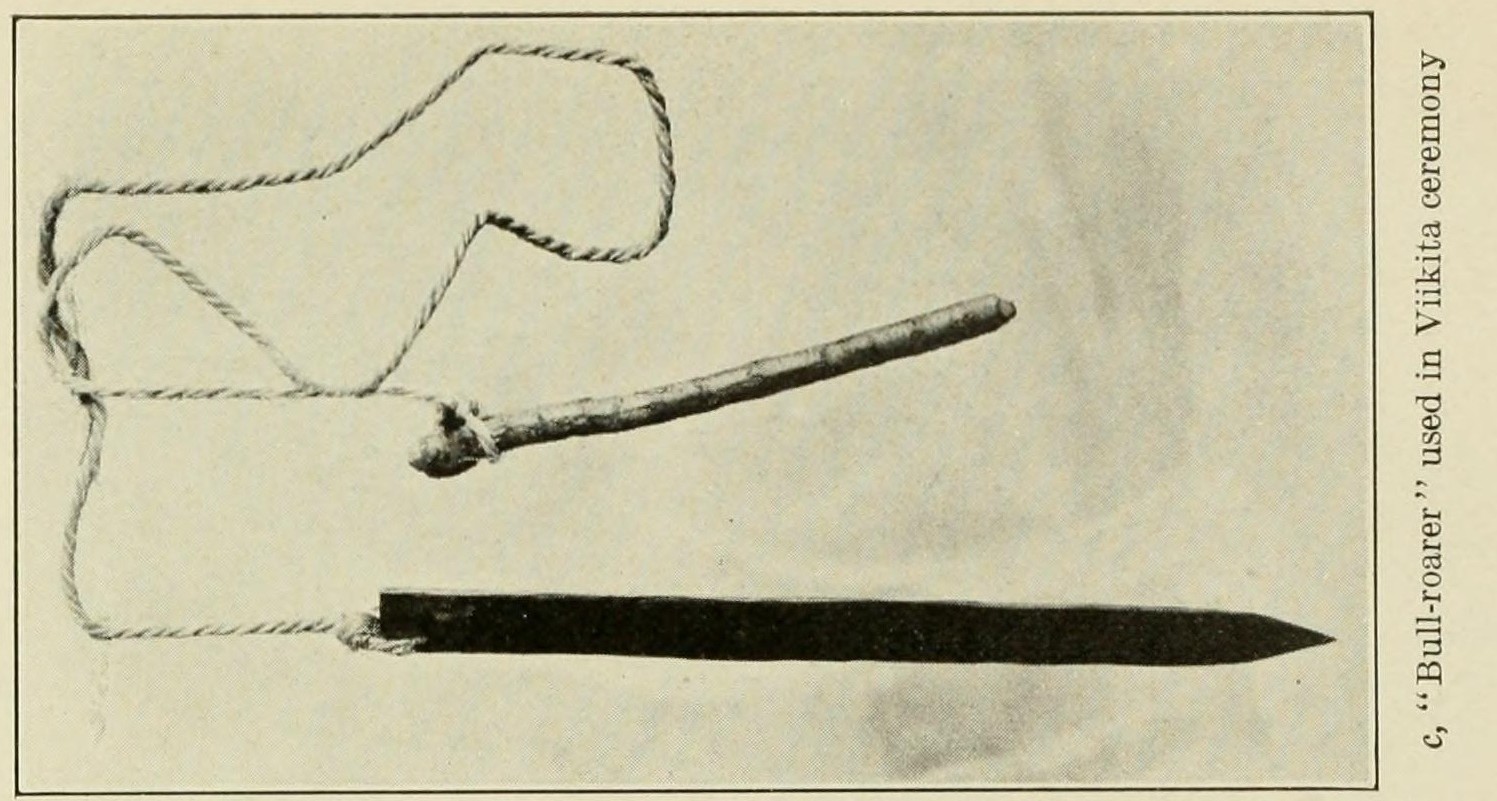
tet nun toyol
Source term: bullroarer
tet nun toyol: Loeb's gloss 'string head tier' (1932, p. 59). hulk'ilal woknam: the Huchnom winter ghost school (p. 58).
The ghosts came down from the hills in winter, striped black and white, with flowers in their hair and what looked like pitch burning in it. At hulk'ilal woknam, the Huchnom school for boys of about ten, they circled the fire four times each way and twirled the sacred bullroarer, tet nun toyol, the string head tier. The boys fasted four days without food or water, slept on straw and learned the story of creation from the chief. When the spring flowers came they were painted white with black stripes, their mouths and ears stuffed with straw, and thrown out through the smoke hole of the dance house. Their mothers and aunts caught them, washed them, and dressed them in deer or puma skins.
The bullroarer was sacred among the Huchnom
Edwin M. Loeb, The Western Kuksu Cult (1932), p. 59
Particulars
- Object
- A sacred bullroarer called tet nun toyol, 'string head tier'; its form and material are not described.
- Function
- Twirled by the ghost impersonators during their ceremony at hulk'ilal woknam, the Huchnom boys' winter initiation school.
Source
Edwin M. Loeb, 'The Western Kuksu Cult,' University of California Publications in American Archaeology and Ethnology 33(1) (1932), pp. 58–59