No. EA-ROKUTANDA-MINAMI-4
Rokutanda Minami jade-workshop pendant
Itoigawa, Niigata, Japan; Rokkanda Minami site · East Asia
Function not recorded Candidate only
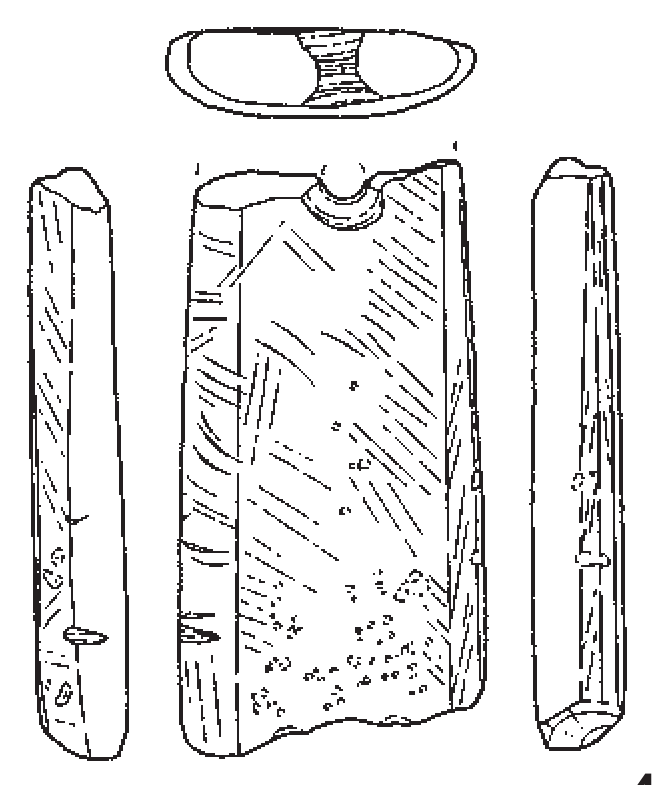
stone product
Source term: 石製品 (sekiseihin, 'stone product'); 玉 (ornament)
This piece never left the factory. It comes from the lower discard area of a jade-working site at Itoigawa — two hundred metres from the modern shoreline of the coast that supplied all of Jōmon Japan's jadeite — amid raw stone, flakes, and unfinished tremolite products. Broken at both ends, it keeps just enough to be counted a pendant — its upper hole — and was thrown away in the very place such objects were made for export. The value here is the vantage: whatever the finished form was for, this is where the form was made.
Particulars
- Object
- A flat stone slab, broken top and bottom, with a hole surviving at its upper edge.
- Function
- Published as a pendant, on the strength of its upper hole.
Source
Kobayashi Kiyotaka, Chiba Prefectural Foundation for Cultural Properties article (2021), p. 18 and fig. 4 no. 4