No. CNMAIN-003East Asia
Lanzhou wooden-plaque niuhou
China · Gansu · Lanzhou, upper Yellow River · East Asia
Play / practical
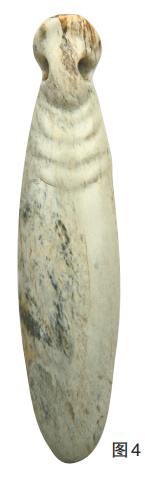
Source term: 木牌式的“牛吼” / wooden-plaque niuhou (ox-bellow)
牛吼 (niuhou), “ox-bellow”: the Chinese name for the bullroarer of the Aranda and Hopi, which Niu Longfei, writing as Long Fei, gave to the plaque of his childhood; its own Lanzhou name is not recorded.
A boy in Lanzhou in the 1950s swung a flat wooden plaque on a cord until it roared. He grew up to be the music historian Niu Longfei, and it was that plaything he reached for when he tried to explain the horned Thunder Duke painted in the Dunhuang caves, spinning a ring of linked drums around himself. Drums are struck, not spun, he reasoned; the whirling must be older than the drum. The god who ruled thunder in the earliest texts was an ox, and the ox-bellow, niuhou, was the voice of his spirit-tablet whirled on a cord. The plaque Niu had held as a child had lost its name and its story. It kept its voice into the 1960s.
我在幼时,也曾在兰州亲见并玩弄过木牌式的“牛吼”。看来,“牛吼”一器,直至本世纪五六十年代,仍存于中国西北之地。
In my childhood I too saw with my own eyes, and played with, a wooden-plaque “niuhou” in Lanzhou. It seems the niuhou survived in north-west China right down to the fifties and sixties of this century.
陇菲 [Long Fei], 《雷公电母考》, 中国文化研究集刊 3 (1986), pp. 237-249.
Particulars
- Object
- A flat wooden plaque whirled on a cord, remembered by the music historian Niu Longfei from his Lanzhou childhood; no dimensions, decoration or surviving specimen.
- Function
- A child’s plaything in mid-twentieth-century Lanzhou; no ritual use recorded, and the author says its name and lore were already lost.
Source
陇菲 (Long Fei / Niu Longfei), 《雷公电母考》, 中国文化研究集刊 3 (Shanghai: Fudan University Press, 1986), pp. 237-249