No. CNMAIN-004East Asia
Evenki rain-stopping wind slat
China · Greater Khingan forests, Hulunbuir, Inner Mongolia · East Asia
Weather / fertility magic
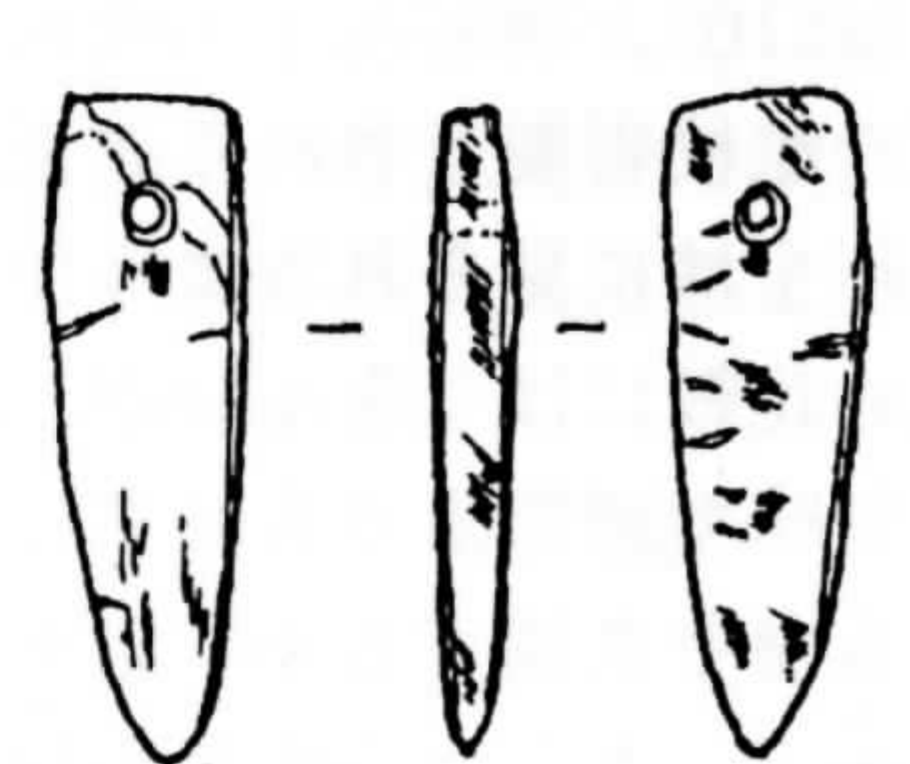
Source term: 薄木片 (thin wooden slip)
薄木片 (bo mupian) = 'thin wooden slip'; 风声 (fengsheng) = 'sound of wind'; 止雨放晴 = 'stop the rain and let it clear'.
When the rain would not stop, the Evenki of the Greater Khingan forests made wind. They bound pine tassels upside down on a thin pole, pierced a slip of wood at one end, tied it to a cord and swung it fast until it roared like a gale. That wind, they held, would scatter the dark clouds and bring back the sun. For the opposite need they floated a dead woodpecker on the water, beak open to the sky, then hung it in a tree to bring the rain.
再将薄木片一端穿孔系上绳线,用手快速摇转,发出风声,认为可以吹散乌云,止雨放晴。
Then they pierce one end of a thin slip of wood, tie it to a cord and whirl it fast by hand; it gives out a sound of wind, which they believe can blow away the dark clouds, stop the rain and bring fair skies.
中国大百科全书·宗教 (1988), shamanism entry
Particulars
- Object
- A thin slip of wood pierced at one end and tied to a cord, swung rapidly by hand so that it makes a sound of wind. It was used together with pine-twig tassels bound upside down on a thin wooden pole.
- Function
- Weather magic: in long spells of rain the slip was whirled to make a wind-sound that would blow the dark clouds away, stop the rain and bring fair weather.