Atlas Essay —
Buzzer vs. Bullroarer
Greece · Egypt · North America · Siberia · Amazonia · worldwide
A Sicilian girl stands at her door after dark with a fire, a laurel branch, a small wheel on a doubled string and a slab of bronze on a cord. She spins the wheel between her hands until it hums, and she swings the bronze around her head until it roars, and she does both for the same purpose: to drag a man back to her bed. Theocritus wrote her spell in the third century BC and put the two instruments twenty lines apart. They have been mistaken for each other ever since — because they were almost always in the same hands.
The bullroarer and the buzz disc are two different machines. One is a flat slat on a single cord, swung in a circle until it rolls on its own long axis and roars; the other is a plate or bone threaded on a twisted double cord, pumped between the hands so that it spins first one way and then the other and whirrs. And they travel together. From the love-magic of Greek Sicily to the kivas of the Hopi mesas, from the Dakota plains to the Taimyr tundra, the people who kept one kept the other — in the same spell, the same men’s house, the same secret, and frequently under the same name. The chronic confusion in the sources is not carelessness. It is the fossil of a partnership: one complex with two voices, carried across the world together.
In brief
- One cord and a swing gives a roar; two twisted cords and a pump give a whirr. The mechanisms are unmistakable at arm’s length — and the classification numbers that encode them, 412.22 and 412.21, sit one digit apart.
- Simaetha in Theocritus’ second Idyll works one spell with both: the iynx-wheel in the refrain, the bronze rhombos at line 30. By the time the scholiasts glossed her, they had already run the two words into one.
- Stewart Culin’s 1907 survey puts the bull-roarer and the buzz in adjacent sections — and the same peoples fill both: Hopi, Zuñi, Oglala Dakota, whose two instruments share the verb-root yuhmuŋ, to spin and hum.
- On the Siberian tundra the pair is named in a single breath: the Enets whirled wind-hummer beside the button buzzer, the Nivkh keeping both forms under the one word p’uvr, the Mansi wind-board and the two-hole toy buzzer expressly alongside it.
- Dynastic Egypt’s famous bullroarers were vertical harps read at the wrong angle. The real roarer arrives in Egypt with the Greeks — and arrives with a buzzer, in the same Fayum, in the same few centuries.
Every record named below is on the interactive map.
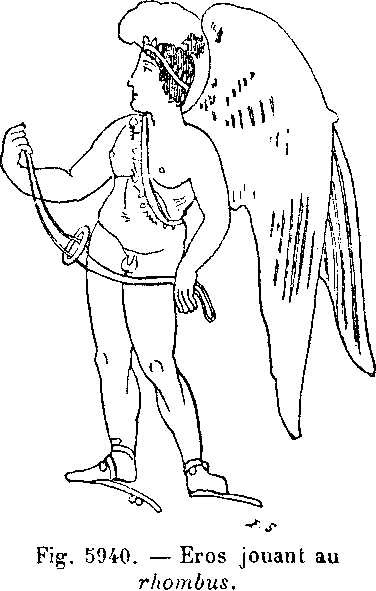
Two mechanisms, two voices
At a distance the two look alike: a small object, a cord, a whirling motion, a droning noise, and — over and over — a ritual instrument that has come down to the modern world as a child’s toy. Up close nobody could mix them up.
| Bullroarer | Buzz disc | |
|---|---|---|
| Cord | One cord, tied to one end of the slat | A double cord threaded through two central holes and looped |
| Motion | Swung bodily in a circle; the slat rolls about its long axis as it goes | Held taut between two hands; twisted, then pumped so it spins alternately each way |
| Form | An elongated blade of wood, bone or stone | A disc, plate or flat bone, round or hourglass-shaped |
| Sound | A low pulsating roar that rises in pitch with speed | A higher, steadier whirr |
| Hornbostel–Sachs | 412.22 — a whirling free aerophone, “the interruptive agent turns on its axis” | 412.21 — it “rotates in its own plane and does not turn on its axis” |
| Names | Eng. bullroarer, whizzer, turndun; Gk. rhombos; Ger. Schwirrholz | Ger. Surrscheibe; Ru. жужжалка; Gk. iynx; Eng. buzz, whirligig |
The scheme that separates them also sets them side by side. Erich von Hornbostel and Curt Sachs gave the bullroarer 412.22, among the whirling aerophones whose sounding element turns on its own axis, and gave the buzz disc — whose plate spins about an axis lying in its own plane — the number immediately before it. Two men trying to sort the world’s instruments by physics arrived at adjacent drawers, which is the classification’s own quiet verdict on how close these objects are.
They share a fate as well as a drawer. Both decay into toys. Across Eurasia the same object is a solemn wind-charm in one generation and a plaything in the next — the Dutch snorrebot, swung by farm boys; the Sakha ísiirär, a droning aerophone remembered as a toy and sitting in the collections among three twisted-cord buzzers. Whirled and spun, roarer and whirrer, they end up on the same shelf of the same toy cupboard, and it is there, stripped of the ceremony that once told them apart, that they get muddled.
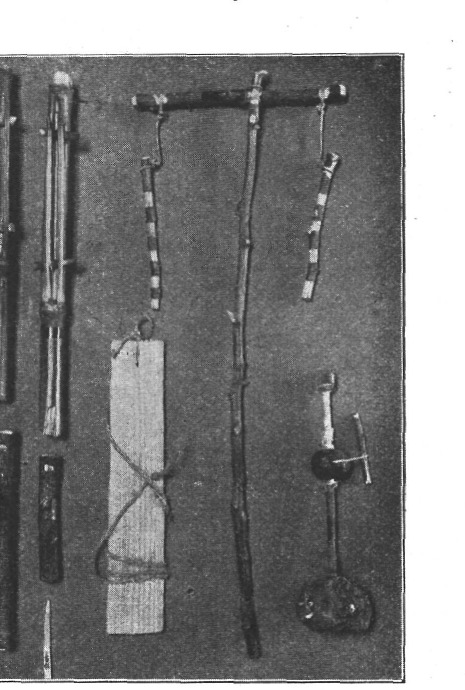
One spell, two instruments
Return to Simaetha. In Theocritus’ second Idyll the refrain belongs to the wheel — iynx, drag that man to my house — and at line 30 she takes up a bronze rhombos and swings it. Two instruments, one purpose, one night. A. S. F. Gow, who sorted the whole tangle out for the Journal of Hellenic Studies in 1934, put the relation in one line: “The purpose is the same, the method… different.”
Gow’s description of the iynx is the buzz disc to the letter:
It is a spoked wheel (sometimes it might be a disc) with two holes on either side of the centre. A cord is passed through one hole and back through the other; if the loop on one side of the instrument is held in one hand, the two ends… in the other, and the tension alternately increased and relaxed, the twisting and untwisting of the cords will cause the instrument to revolve rapidly, first in one direction and then in the other.
— A. S. F. Gow, “ΙΥΓΞ, ΡΟΜΒΟΣ, Rhombus, Turbo,” JHS 54 (1934)
It carries the name of the wryneck, the bird Aphrodite bound to a four-spoked wheel in Pindar’s fourth Pythian and handed to men as the first love-charm; and it is, Gow notes, “a common attribute of Eros, especially on Apulian vases” — which is exactly the scene engraved at the head of this page. The rhombos, by contrast, is “pretty plainly the turndun of Australian aboriginals, or bull-roarer of modern England… an oblong piece of wood to the point of which a cord is attached. The instrument is swung in a circle by the cord and emits a muttering roar which rises in pitch as the speed is increased.”
Different object, different motion, different noise — and the Greeks themselves let the names bleed. The scholia on Theocritus, Gow found, “have already… identified iynx and rhombos” and then “confound the confusion” further; the whole tradition of glosses that define a rhombos as a wheel is, he concludes, “in all probability due to that confusion.” That is a two-thousand-year-old slip, and it tells us something the philology alone cannot: the two things were so habitually used side by side, for the same ends, that the culture which used them stopped bothering to keep the words apart.
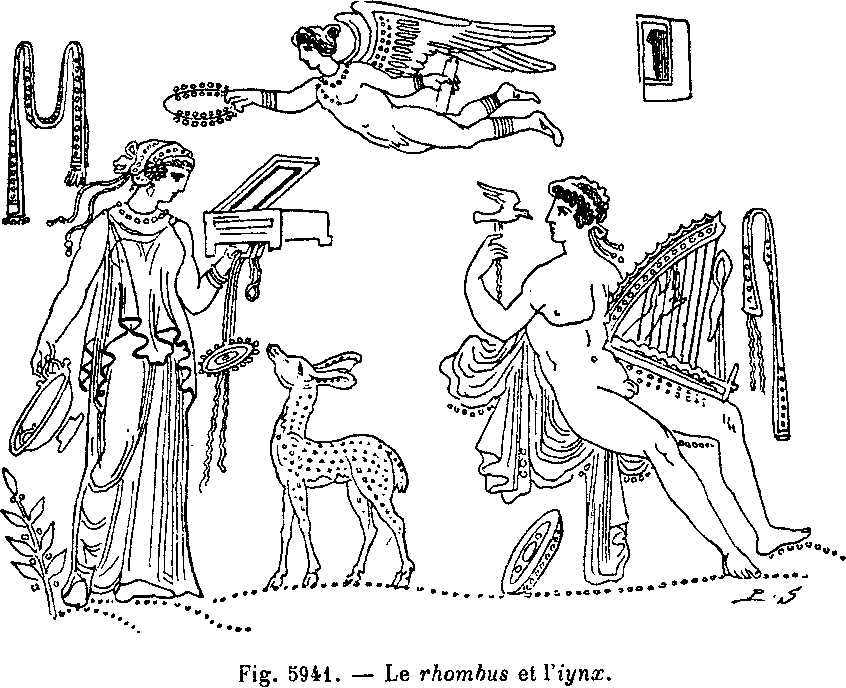
The pairing runs deeper into Greek cult than one spell. Clement of Alexandria, copying out of a lost Orphic poem the inventory of toys with which the Titans lured the infant Dionysus to his dismemberment, names in one breath “a cone and a rhombus and limb-bending toys,” and in his fuller list a spinning top, a ball, knucklebones and a mirror. The mystery’s sacred basket is a basket of whirled and spun things. The roarer is in it; so is the top; nobody ranked them. Whatever these objects did for an initiate, they did as a set.
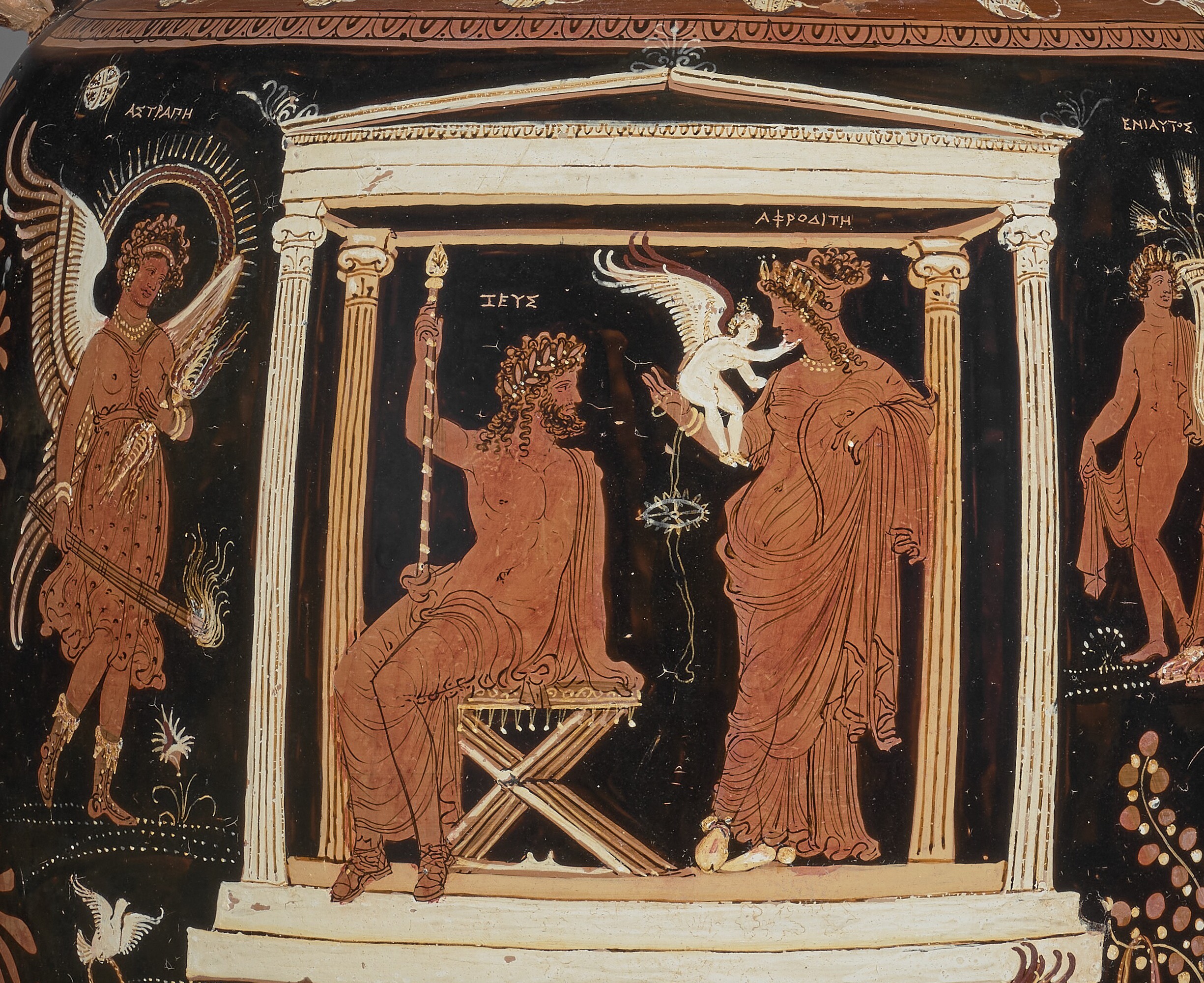
“The purpose is the same, the method… different.” — A. S. F. Gow on Simaetha’s two instruments, JHS 54 (1934)
Egypt: the pair arrives together
Open a mid-century survey of Egyptian music and you will find the bullroarer among the instruments of the pharaohs. That listing descends from one man: Hans Hickmann, the great cataloguer of Egyptian instruments, who in 1955 announced two unknown Egyptian sound-tools — the Schwirrholz and the Schwirrscheibe, roarer and whirring disc — and carried both into his standard volume of 1961, whence French summaries repeated the rhombes and disques ronfleurs for decades.
Marcelle Duchesne-Guillemin took the shape of the evidence apart in 1981 and found a harp inside it. The bullroarer, she wrote, “is totally absent from Egypt”; Hickmann had misinterpreted depictions of vertical harps — the long slanting silhouette under a player’s arm, read as a slat on a cord — and a supposed Egyptian specimen in the Ashmolean turned out to be Iranian. Three thousand years of dynastic art, sistra and clappers and trumpets in abundance, and the roarer is not among them. The famous roarer in Tutankhamun’s tomb is likewise a phantom of the popular literature: the tomb’s instruments are fully published — two sistra, a pair of ivory clappers, two trumpets — and the clappers are not a whirled instrument at all.
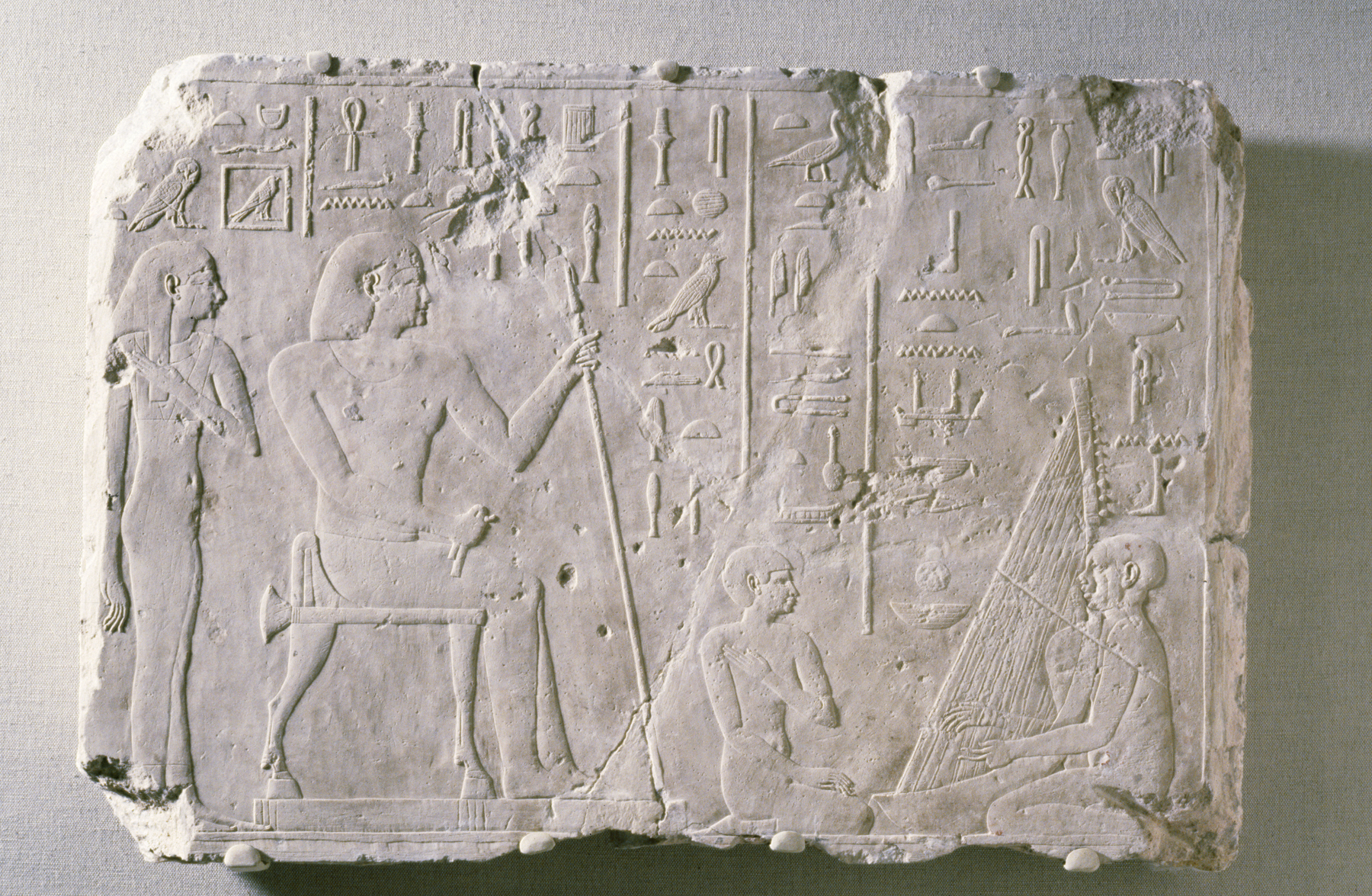
Which makes what Egypt does hold the more striking, because it arrives in pairs. The Roman-period town of Karanis in the Fayum yielded pierced discs of the classic buzz type, spun on a twisted cord: the physical reality behind Hickmann’s whirring-disc category, Greco-Roman and not pharaonic. And in precisely that horizon the true roarer enters Egypt as well. A torn third-century BC papyrus from Gurob, a few miles off, gives the earliest surviving list of the toys of Dionysus and names the rhombos among the sacred objects of the rite; a Ptolemaic terracotta from the same district shows a cult attendant swinging a reel-shaped object on a thong that the British Museum can only call “an incense-diffuser or a bull-roarer.” One on a cult papyrus, one from a house-mound, one district, a few centuries: the pair walks into the Nile valley the way it walks into everywhere else, side by side.
Named in one breath
Russian and Soviet organology has a gorgeous, loose vocabulary for whirled sound-tools — жужжалка (buzzer), гуделка (hummer), вертушка (spinner), фуркало, вьюшка — and it lays them over the classification numbers as the mood takes it, so that 412.21 and 412.22 change places from one author to the next. Read the described mechanism rather than the word and the Siberian material turns into the best co-occurrence list in the world.
- Enets. Both instruments are named in a single sentence: the whirled hummer — поси in the forest dialect, вырвыр in the tundra, “in the shape of a spindle or a feather,” whirled to summon the wind — standing beside the киука, the button buzzer. One people, one page, two mechanisms.
- Nivkh. Nadezhda Mamcheva records the whirling p’uvr of the lower Amur and Sakhalin as made “in two varieties under the one Nivkh name”: an elongated sharp-ended plaque and a large-buttoned form — a blade and a disc, one word. The Nivkh did not need two nouns, because to them it was one thing with two bodies.
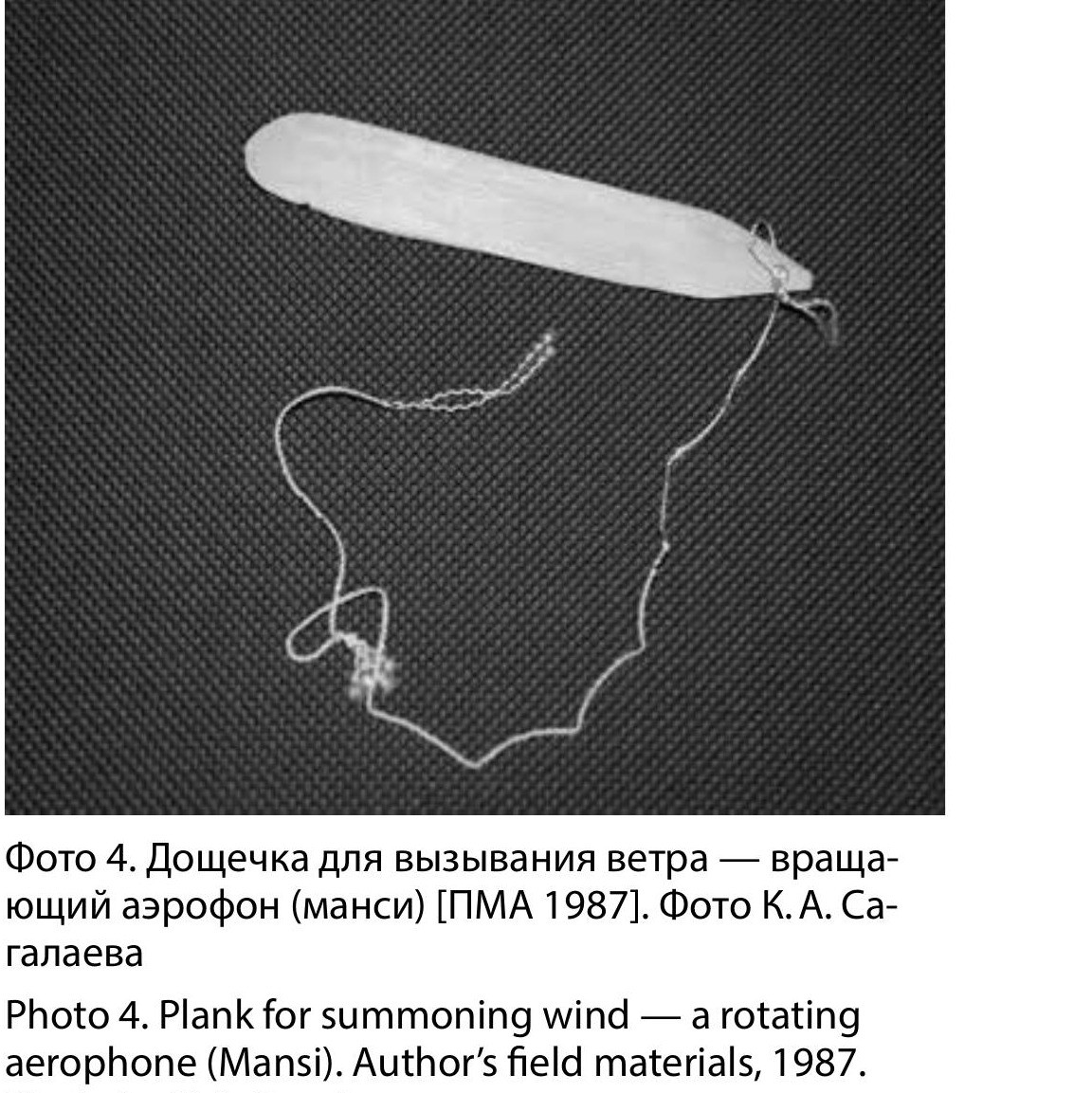
- Mansi. The wind-calling “flying board” is a thin plank swung on a cord, and the ethnographer is careful to hold it “distinct from the two-hole children’s toy buzzers it survived alongside” — the two mechanisms in one village, named apart by the people who used them, whatever number the catalogue then assigned.
- Chukchi. The vyutkunen is “shaped like a bird’s feather, with carved notches imitating the plumage,” swung to imitate the blizzard: a true roarer wearing a buzzer-flavoured name, filed at 412.22 in the 2019 survey and distinguished there from the disc buzzers in the same repertoire.
- Nganasan and Sakha. The Nganasan whirled howler биахеры is a wind-tool that survived as a toy, kept beside its own twisted-cord buzzer; among the Sakha the swung droning ísiirär sits in a single cluster of whirring toys with three жужжалки.
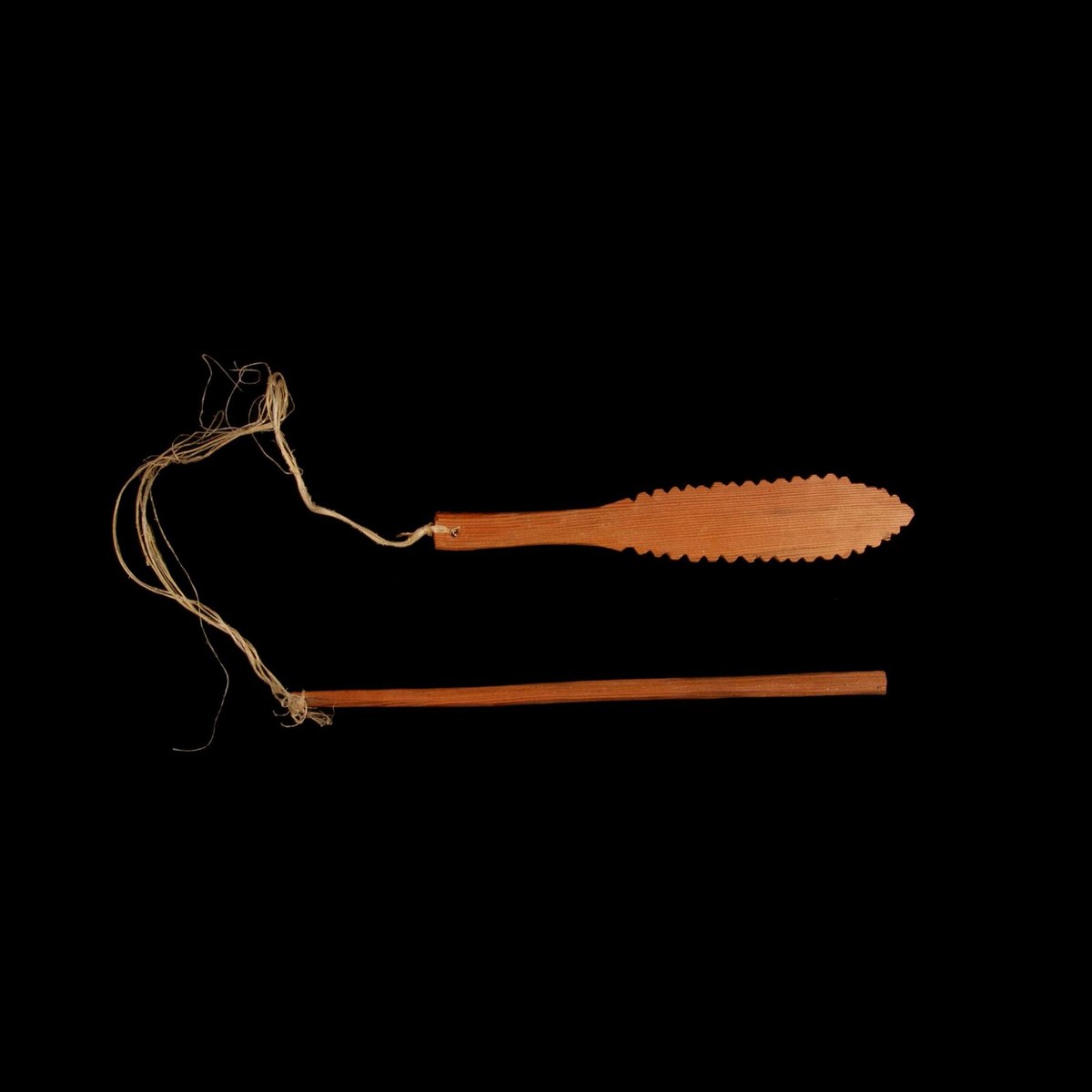
Read as a warning, the Siberian vocabulary says: never take a word for an object. Read as a witness — which is the more interesting reading — it says something better. In case after case, Enets, Nivkh, Mansi, the roarer and the buzzer live in the same house, under kindred names, doing kindred work on the weather. The names slid into one another because the instruments were never apart.
Culin’s two sections
Stewart Culin’s Games of the North American Indians (1907) treats the bull-roarer and the buzz in adjacent sections, and the same peoples keep walking from one into the other. He opens the bull-roarer section by naming its ceremonial users outright — “the bull-roarer, or whizzer, used ceremonially by the Hopi, Zuñi, Navaho, Apache, and other tribes” — and a few pages later the buzz section lists a gourd-shell disc, huwawananai, for the Zuñi, and clay-stone discs from Oraibi for the Hopi. The same mesas, the same men. The Navajo and the Zuñi keep both: bullroarer and related buzz.
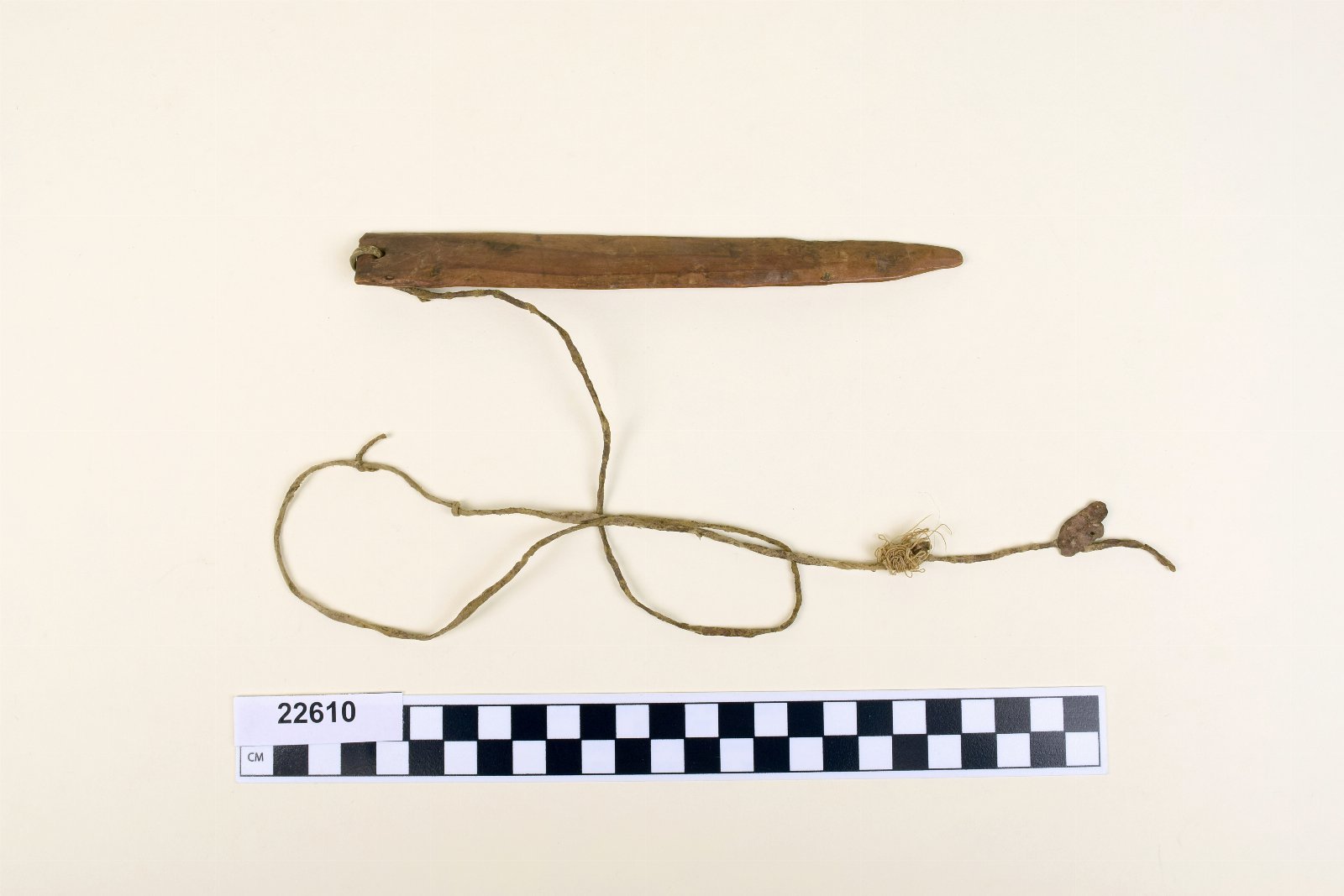
The Plains give the tidiest pairing on earth. Among the Teton Dakota, Culin records the bull-roarer chaŋ kabletuŋtuŋpi, “wood having edges,” whirled around the head with a whizzing noise; and in the buzz section a bone spun on a twisted cord, hohú yukhmuŋpi, “making the bone hum by twisting the cord.” The Oglala keep the same two, the roarer under the name tateka yuhmuŋpi and the bone buzz as hohouh yuhmuŋpi. Through both names runs the root yuhmuŋ, to spin, to hum. One idea of a humming spun thing, given two bodies and two sounds by the same language.
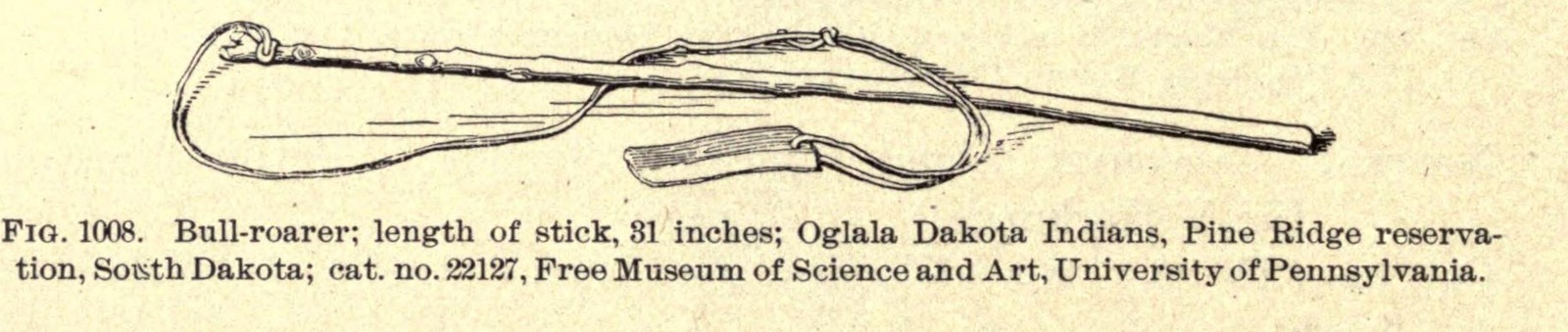
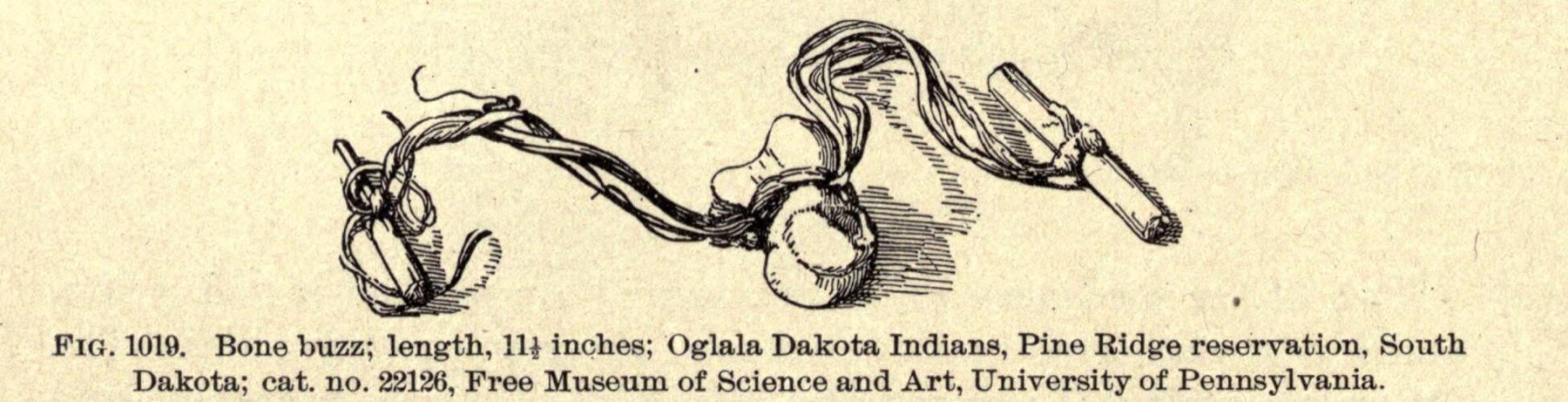
In the Arctic the pairing and the confusion fuse into one object. John Murdoch’s Point Barrow collection of 1892 supplies the Western Eskimo buzz — a painted pine board spun on a doubled sinew string — and buzzes are attested from Baffin Land to Cape York; the same communities swung true bullroarers, among them the St. Lawrence Island devil-chaser, whirled to drive off spirits. And at Smith Sound in Greenland, Culin reports a figure-of-eight bone buzz “described by Dr A. L. Kroeber under the name of hieqtaq, or bull-roarer.” A first-rate ethnographer, holding a disc buzzer, reached for the word bull-roarer — because in that culture both were his to reach for.
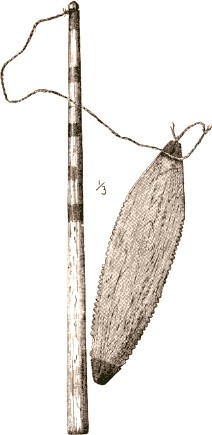
The Karajá men’s house
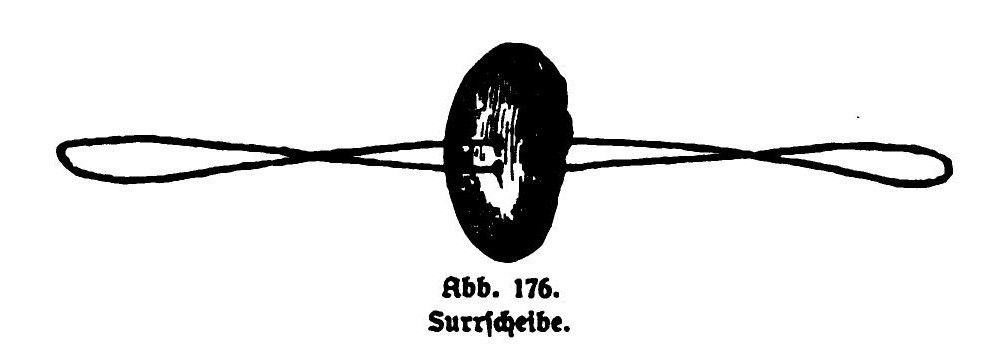
Central Brazil supplies the pairing in its purest form: not two instruments beside each other, but one office filled by either. When Fritz Krause travelled the Araguaia in 1908 and was admitted to the secret mask complex of the Karajá — the complex women may not enter on pain of death — the sound at its heart was the whirring disc, the Surrscheibe, threaded on a looped double cord and pumped between the hands. In the neighbouring peoples of the same river system that ritual slot holds a bullroarer, guarded by the same taboo and the same threat. Among the Karajá it is the buzz disc that was seen, drawn and published; that a roarer stood beside it in the same men’s house is Otto Zerries’ inference from the region, not Krause’s observation.
Which is the point, and Zerries saw it: surveying South American sound-instruments in 1953, he ran the buzz disc and the bullroarer together into the one women-taboo mask complex, because the ethnography kept handing him now one and now the other in the identical role. The secret is not the shape of the wood. It is the sound of something whirling in the dark that women must not see — and either machine will make it.
The same interchangeability shows at the far edge of the complex. In Yunnan a Yi Nisu ritual specialist whirls a thin pine slat that buzzes: a bullroarer by form, a buzzer by the name of its voice, and a blade against spirits by function. And in the scholarly literature the two have been siblings since the beginning — A. C. Haddon put the bullroarer and the buzz in successive chapters of The Study of Man in 1898, one family of whirled things with sacred pasts and toy futures.
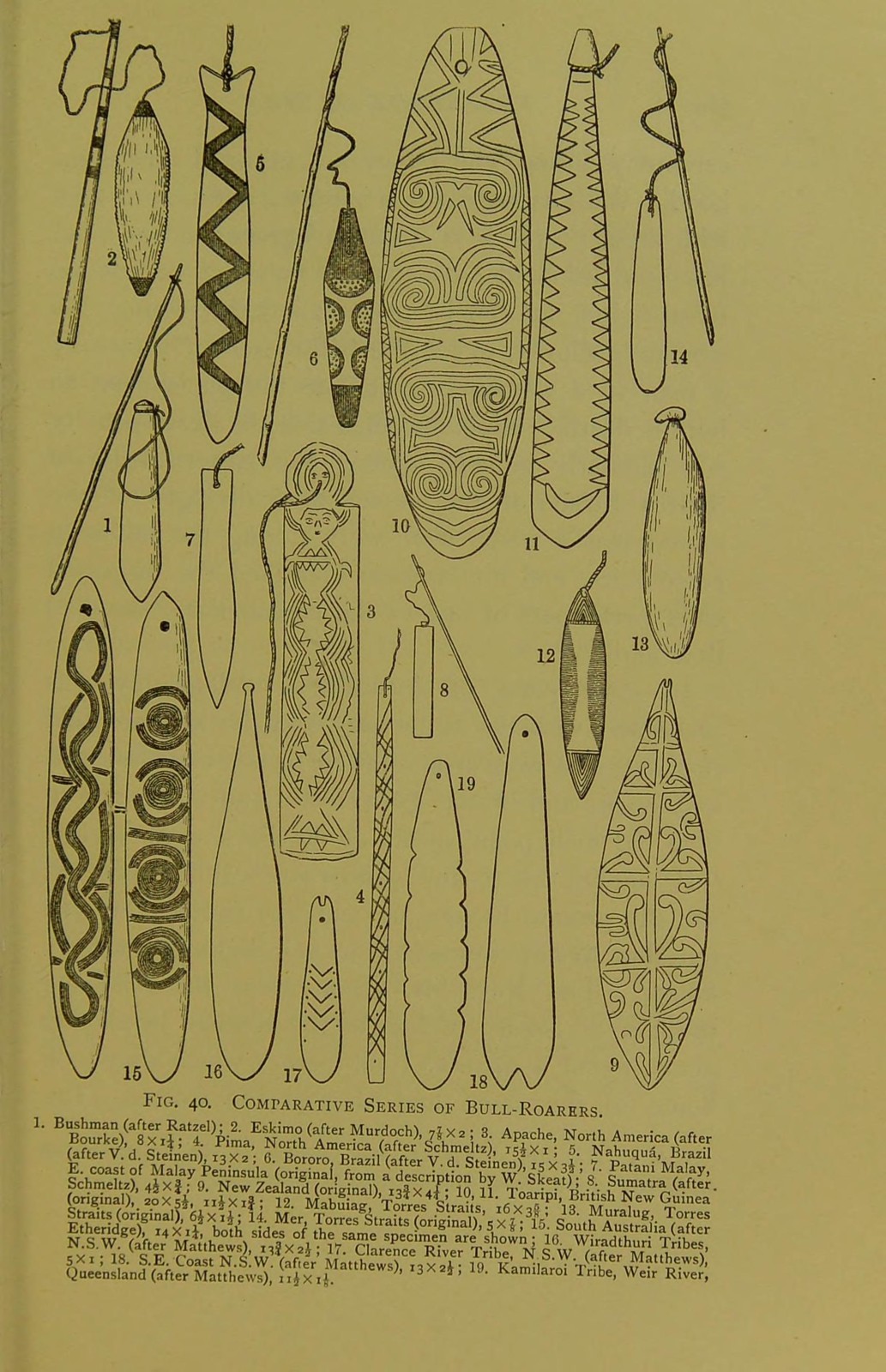
The pair at a glance
| Culture / context | Roarer | Buzzer | How they meet |
|---|---|---|---|
| Greek love-magic (Theocritus Idyll 2) | rhombos, swung in bronze | iynx, the spun wheel | Both in one spell, one night |
| Dionysiac mysteries (Clement) | rhombos in the toy-list | cone and spinning top beside it | One sacred basket of whirled things |
| Greco-Roman Fayum | rhombos on the Gurob papyrus | pierced spun discs from Karanis | Same district, same few centuries |
| Hopi | ceremonial whizzer | clay-stone discs, Oraibi | Both in Culin, both on the mesa |
| Zuñi | ceremonial whizzer | gourd-shell disc huwawananai | Both in one repertoire |
| Teton / Oglala Dakota | chaŋ kabletuŋtuŋpi, tateka yuhmuŋpi | hohú yukhmuŋpi, hohouh yuhmuŋpi, the bone buzz | Oglala pair share the verb-root yuhmuŋ, to hum |
| Inuit / Yupik | St. Lawrence I. devil-chaser | Point Barrow and Baffin buzzes | One vocabulary for both — Kroeber’s hieqtaq |
| Enets (Taimyr) | wind-hummer posi / vyrvyr | button buzzer kiuka | Named in a single sentence |
| Nivkh (Amur / Sakhalin) | plaque form of p’uvr | buttoned form of p’uvr | One name, two bodies |
| Mansi (Ob-Ugric) | wind-calling flying board | two-hole toy buzzer | Kept expressly alongside each other |
| Karajá (Araguaia) | the regional men’s-cult roarer | the Surrscheibe Krause saw | One secret office, either machine |
| Sakha (Lena) | the droning ísiirär | three twisted-cord жужжалки | One cluster of whirring toys |
The confusion is the evidence
Set the cases end to end and the distribution is not two maps but one. A wheel and a slat in a Sicilian doorway; a cone, a top and a roarer in the Orphic basket; a papyrus and a house-mound in the same corner of the Fayum; gourd discs and whizzers on the Hopi mesas; a bone and a board on the Dakota plains, sharing a verb; a spun button and a swung feather on the Taimyr, sharing a sentence; a disc and a roarer holding the same forbidden office on the Araguaia. Seven regions, five continents, one arrangement: something small, spinning on a string, making a voice with no throat — and, wherever the ethnography is thick enough to see it, made in both of the two ways a string can spin a thing.
That is why the sources blur. Kroeber wrote “bull-roarer” over a Greenlandic buzz, the Theocritan scholiasts glossed a rhombos as a wheel, and a Siberian ethnographer stamped a swung plank with the buzzer’s number, not because any of them were careless observers but because each stood in front of a culture that owned both and treated them as one kind of thing. The confusion is downstream of the practice. It is the shadow the pairing throws on the page.
A wheel and a slat in a Sicilian doorway; a disc and a roarer in the Araguaia men’s houses. The names blur because the instruments never parted.
So the bullroarer’s trail across the world is not a thin line of one object. It is the track of a complex — a pair of whirled voices, a secret, a wind, a taboo, a decline into toys — and the pair travels intact. Sort the mechanisms carefully, as Gow did with the Greek and as the Chukchi survey did with the vyutkunen, and you do not get two separate distributions that happen to overlap. You get one distribution, twice attested, from Attica to the Araguaia: the same idea, spun both ways, wherever it went.
Key sources
- Gow, A. S. F. 1934. “ΙΥΓΞ, ΡΟΜΒΟΣ, Rhombus, Turbo.” Journal of Hellenic Studies 54:1–13 — the description of the iynx, the rhombos as turndun, and the scholiasts’ confusion.
- Theocritus, Idyll 2 (Simaetha’s spell; the bronze rhombos at line 30); Pindar, Pythian 4.213–19 (Aphrodite and the wryneck-wheel).
- Clement of Alexandria, Protrepticus 2 (the toys of Dionysus, from a lost Orphic poem).
- Daremberg, C., and Saglio, E. Dictionnaire des Antiquités Grecques et Romaines, s.v. “Rhombus,” figs. 5940–41.
- Hickmann, H. 1955. “Unbekannte ägyptische Klangwerkzeuge (Aërophone). 1. Schwirrholz und Schwirrscheibe.” Die Musikforschung 8:151–57; and Musikgeschichte in Bildern: Ägypten (1961).
- Duchesne-Guillemin, M. 1981. “Music in Ancient Mesopotamia and Egypt.” World Archaeology 12(3):287–97 — the bullroarer “totally absent from Egypt,” the misread vertical harps, the Ashmolean piece.
- Wilfong, T. G. 2014. “The Sonic Landscape of Karanis,” in Karanis Revealed (Kelsey Museum); Hordern, J. 2000. “Notes on the Orphic Papyrus from Gurob,” ZPE 129:131–40; Manniche, L. 1976. Musical Instruments from the Tomb of Tut’ankhamūn (Griffith Institute).
- Culin, S. 1907. Games of the North American Indians, 24th Annual Report BAE — “Bull-roarer” and “Buzz” sections, pp. 750–57, with fig. 1008 (Oglala) and the Smith Sound hieqtaq.
- Murdoch, J. 1892. “Ethnological Results of the Point Barrow Expedition,” 9th Annual Report BAE.
- Krause, F. 1911. In den Wildnissen Brasiliens, Abb. 176 (the Karajá Surrscheibe); Zerries, O. 1953. “The Bull-roarer among South American Indians,” Revista do Museu Paulista n.s. 7:275–309.
- Sheikin, Yu. I., Dobzhanskaya, O. E., and Ignateva, T. I. 2019, on the Chukchi vyutkunen; Soldatova, G. E. 2019, on the Mansi wind-board; both in Traditional Culture 20:4. Mamcheva, N. 2008–2010, on the two forms of the Nivkh p’uvr.
- Haddon, A. C. 1898. The Study of Man, figs. 38 and 40, and the successive chapters on the bull-roarer and the buzz.
- Hornbostel, E. M. von, and Sachs, C. 1914. “Systematik der Musikinstrumente” — classes 412.21 and 412.22.
The co-occurrence table above is, as far as we know, assembled here for the first time; every row rests on the sources named.