No. CNMAIN-001
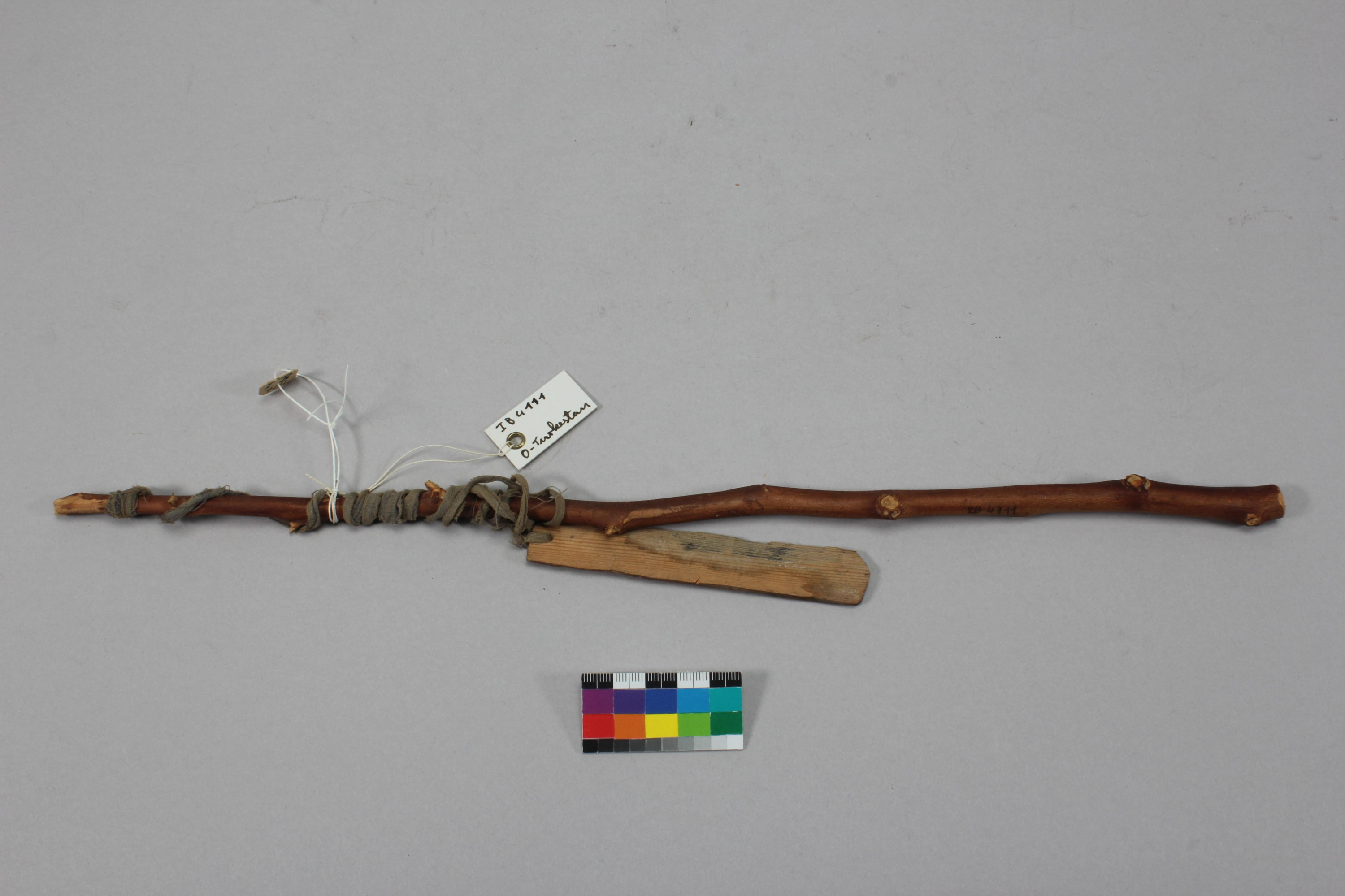
Yi Nisu Hechamo tatu pine ritual noisemaker
China · Yunnan · Ailao Mountains · Xinping · East Asia
Sacred / spirit
踏突 / ta tu
Source term: 松刀 / ritual buzzing pine slat
踏突 (tatu): the Nisu Yi name for the whirled pine slat; Li renders it "pine knife" (松刀).
Etymology. Nisu term for the exorcistic pine slat; its Chinese-character form is 踏突, glossed in the source via 松刀 ('pine knife').
In the Nisu Yi village of Hechamo, in the Ailao Mountains of Xinping county, Yunnan, the anthropologist Li Yongxiang sat in on a healing ritual against a sickness-bringing spirit called Ni, lodged in an oak tree behind the village. To cut off the spirit's retreat, the bimo, the Yi ritual priest, made what Li calls a "pine knife," tatu: a slat of pine shaved very thin and bound at the edges with sword-grass, which gave off a buzzing drone when whirled in the air. Chanting, he slashed about with the knife and then whirled it round and round, driving the Ni back up the oak it dwelt in. The ladder by which the spirit climbed back into the tree was made of mahonia wood and the same sword-grass rope.
还要做一把松刀,叫“踏突”。松木削得很薄,木刀用尖刀草栓起来,仪式中甩动时发出嗡嗡的声音。此刀用于砍断“尼”的退路。
They also make a pine knife, called "tatu." The pine is shaved very thin, and the wooden knife is tied at the edges with sword-grass; when it is whirled during the ritual it gives off a buzzing sound. This knife is used to cut off the retreat of the "Ni."
Li Yongxiang, "The Traditional Concept of the Illness and Treatments among the Yis" (彝族的疾病观念与传统疗法), Minzu Yanjiu 2009(4)
Particulars
- Object
- A slat of pine shaved very thin, bound at the edges with sword-grass and whirled by the bimo so that it buzzes; also used as a cutting blade.
- Function
- Cuts off the retreat of the harmful Ni spirit and drives it back to the tree.
Source
Li Yongxiang, 'The Traditional Concept of the Illness and Treatments among the Yis: A Case Study on Hechamo and Its Neighboring Villages of Yunnan' (彝族的疾病观念与传统疗法), Minzu Yanjiu 民族研究 2009(4):45-54