Atlas Essay —
The King Must Die First
Guinea-Bissau · Benin · Nigeria · Cameroon · Chad
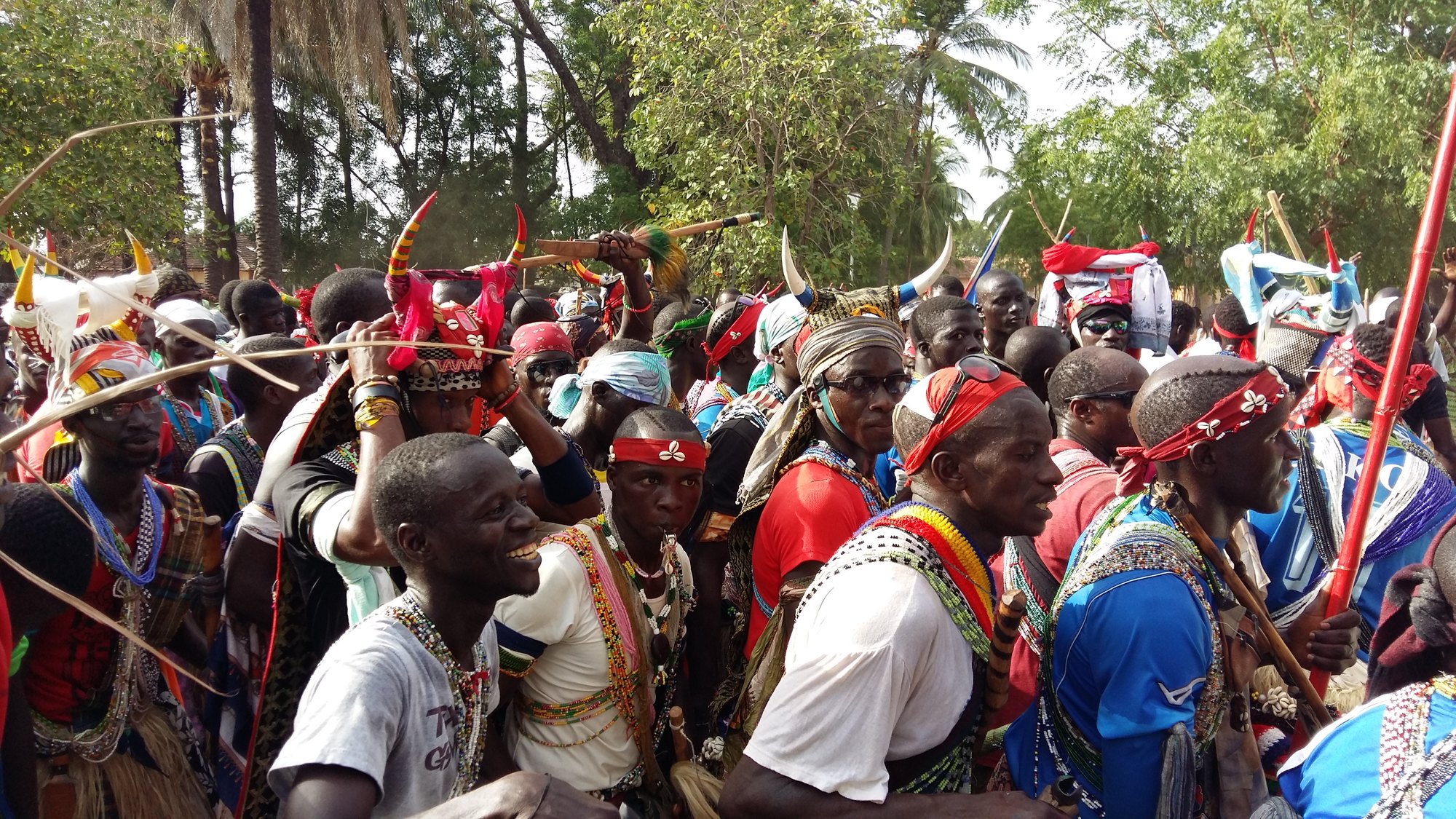
A king dies in secret. For three days an old man sits hunched in his place so that no one will notice. Then the death is announced, the people cry out, and that night the bullroarers drone over the villages. Only now can the boys be gathered and cut, and only after their blood has run can the new king be king. So it went among the Dakka of eastern Nigeria. From the mangroves of Guinea-Bissau to the plains of southern Chad, four other peoples hold their bullroarer rites to the same hard condition: someone must die first.
In five West and Central African peoples the bullroarer rite cannot open until a particular person is dead: the king among the Dakka and the Mundang, the chief among the Dii, the king again before Orò may enter Kétu, and the oldest initiate among the Jóola Kujamaat.
In brief
- The Dakka of eastern Nigeria told Leo Frobenius that the blood of circumcision kills kings, and that every king of old “died” a few days before the seven-year circumcision fell due. At the king’s death the bullroarers sounded at night, an honour no other mortal received.
- Among the Mundang of Léré in southern Chad there could be one circumcision to a reign and no more. A king who outlived his term was shown his predecessor’s skull and died that night; then messengers went out with sorghum stalks to call the boys, and the iron and wooden roarers sounded over the knife.
- Among the Dii of northern Cameroon, a boy must be circumcised the day a chief dies, led three times around the grave or stepped three times over the corpse, while rhombes cried like the panther in the bush.
- In Kétu, the Yoruba kingdom on the border of Benin and Nigeria, Orò was forbidden inside the walls. Its voice sounded in the streets only on the night of a king’s funeral.
- Among the Jóola Kujamaat of Guinea-Bissau, the oldest initiate, the man who declared that “the knife is ripe,” must die before the boys go into the forest, where the bullroarer called the “master of the forest” bellows through the nights.

The blood that kills kings
The Dakka, today counted among the Chamba, live in the hills of eastern Nigeria near the Cameroon border. Their sacred voices are the iron bells called Dosi and the wooden bullroarers called Langa, shut away all through the rains and brought out at the first-fruits and at circumcision. When Frobenius asked about circumcision, his informants began with the kings:
“In old, old times the Dakka held the circumcision every three years; but then the kings died too quickly, that is, also every three years; for the blood that flows at the circumcision kills the kings … To keep the kings from dying so often, they fixed the period of the circumcisions at seven years.”
Leo Frobenius, Dichten und Denken im Sudan (1925), p. 51; translated from the German.
A Dakka king could survive one circumcision; no king could survive two. When he died, his death was hidden. The smith and the priest, the Kameni, buried him by night, and for three days an old man sat hunched in the king’s hut, so that any visitor would think the king was only unwell. On the third day the funeral beer was ready, and the Kameni called the people together:
“He announces that the Gangi has died. Everyone cries out. Lamentation spreads over the villages and farmsteads. As far as the news reaches, men and women cut their hair, and at night the sacred bells and bullroarers drone through the air, which at a funeral happens only at the passing of the Gangi or the Kameni, and for no other mortal.”
Frobenius (1925), p. 52.
At the funeral feast the Kameni slipped a bitter leaf into the apron of the dead king’s eldest sister’s son, and the women shrieked: this was the election. But the new man was not yet king.
“After the old king has died and the new one has been chosen, a circumcision of the youths must take place before the new king is truly recognised. … The Dakka say outright that all the blood that flows at the circumcision flows to the king who died last. And therefore, they explain, the new king cannot yet be a true king until the circumcision feast for the dead king has taken place. If he were regarded as a true king beforehand, said one Dakka, he would probably die during the circumcision feast!”
Frobenius (1925), p. 53.
So the Kameni sent word to every village to bring in the boys. He cut them beside the water, painted red all over with a leopard skin on his head, and that evening the Langa and the Dosi sounded far into the night. The boys crouched in their huts, bent low in their leaf clothing so that no spirit of the air could see them. If one asked the next day what the noise had been, he was told: “That was the Koko, the old grandfathers, crying.” If a boy died in the bush, his mother was told that the Djubi, the sacred voices, had eaten him (Frobenius 1925, pp. 54–55).
One circumcision to a reign
Some 270 kilometres to the north-east, on the plains of the upper Mayo Kebbi at Léré in southern Chad, the Mundang kept a stricter version of the same law. Their king is the Gong, and Frobenius saw at once that the Dakka word for king, Gangi, was the same title. “Here as there,” he wrote, circumcision took place in connection with the death of the king (Frobenius 1925, p. 40). Among the Mundang the reign itself was measured by the rite. Alfred Adler, who spent many years among the Mundang, gives the principle as the Mundang stated it:
“There can be one initiation session, and one only, per reign, and the interval between two sessions must in no case exceed ten years, the best being to respect the rule of seven years.”
Alfred Adler, “Initiation, royauté et féminité en Afrique noire,” L’Homme 183 (2007), p. 100; translated from the French.
A king who would not die on time was helped. The task fell to the Pulian, the king’s mother’s brother:
“If the king does not die of himself eight years after his accession, the Pulian must drag the skull of the king’s late father, that is, of his predecessor, bound in a white cowhide, on a rope along the ground past the place where the present ‘overdue’ king is, so that he sees this memento mori. Once he has seen it, he will without fail die the following night.”
Frobenius (1925), p. 77.
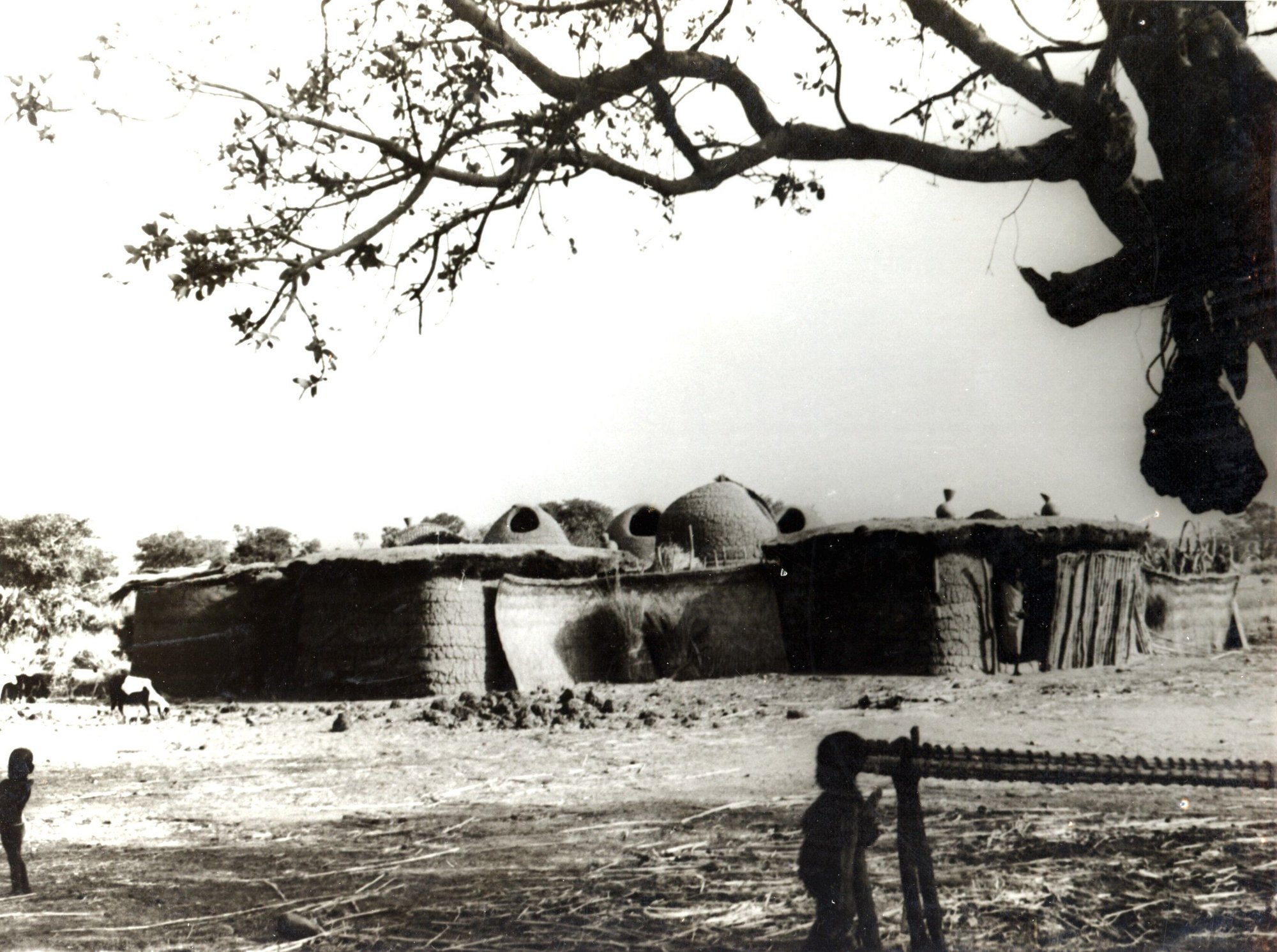
The king’s death opened the season. Under a living Gong, Frobenius was told, the country was all feud and raiding; at his death a peace came down at once.
“As soon as the king has died, a general peace sets in at once. Messengers are sent out in all directions bearing a stalk of sorghum or okra, the sign of a period of interim peace, and they announce everywhere that every settlement should now prepare for the coming time of circumcision.”
Frobenius (1925), p. 78.
Then everyone who would or must be cut went out to the cleared ground by the water, from grown men who had dodged earlier sessions “out of fear of the sacred roaring of the bullroarers” to infants still at the breast, brought by parents who wanted them cut before they learned to dread “the rushing of the ancestors’ voices.” The circumciser waited in the river, red with ochre, a knife in each corner of his mouth. Behind him the old men swung three registers of roarer: iron Mafalli that “whir mightily,” notched wooden Falliku for the middle voices, and sorghum-stem Mafalli-serre for the high notes (Frobenius 1925, pp. 78–79). The new reign had begun, and its one circumcision was already under way.
A boy for the dead chief
The Dii of the Adamawa plateau in northern Cameroon, east of Ngaoundéré, know the Mundang well. They never killed their chiefs; they wished them long lives. But a chief’s death opened the circumcision ground just the same, and at once. Jean-Claude Muller, who worked among them from 1990 to 1994, describes it:
“When a chief dies, as when the chief circumciser, the chief of the autochthones and the chief of the smiths attached to the chiefdom die, at least one child, or three, or more, must be circumcised immediately (never two, an even number that connotes the feminine). The circumcision serves to keep the spirit of the dead chief, his yoob, from sending panthers, fires, epidemics or other misfortunes on the village. It must take place as quickly as possible, ideally on the very day of the chief’s death or the day after.”
Jean-Claude Muller, “Circoncision et régicide,” L’Homme 141 (1997), p. 10; translated from the French.
The Dii call this boy the “sacrifice circumcised.” Before he is cut he is walked three times around the dead chief’s tomb or, if the chief is not yet buried, made to step three times over his body. Ideally the new chief, freshly cut a second time himself, strikes the boy with the bamboo bundle that hides the knives, and the circumciser does the rest. “It is this first circumcision that validates the chief’s installation, that makes him truly ‘enter the reign’” (Muller 1997, p. 12).
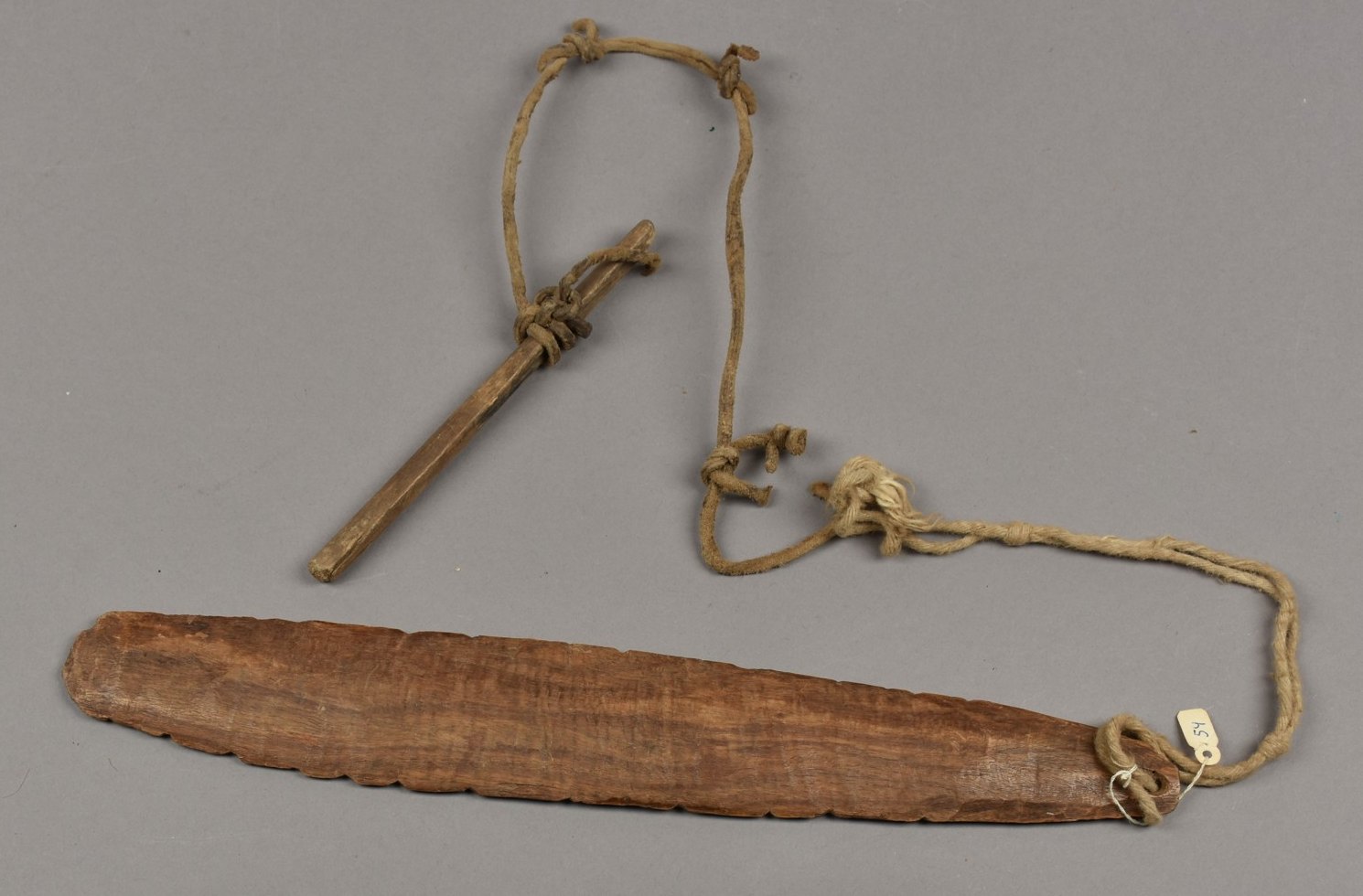
The voice over that ground was a panther. The knives were called zág, “panther,” and the women were told that the boys faced a panther in the bush. One of Tomas Drønen’s informants explained: “They fabricated the panther-rhombe, and they said that this thing lived in the bush.” Tied to a rope and turned fast in the air, the rhombes “made a noise that resembled the cry of the panther.” Knives and rhombes alike were seats of the ancestral spirits, kept in jars and given sacrifices (Drønen 2009, pp. 125 n. 27, 127–128). The panther the dead chief might send against the village, and the panther that roared at the circumcision held for him, carry one name.
Orò comes into the town
Kétu is an old Yoruba kingdom in south-eastern Benin, on the Nigerian border, ruled by the Alákétu. Across Yoruba country the bullroarer is the voice of Orò, the night god whom no woman may see. Kétu kept Orò outside its walls. The Orò cult belonged to the Egba to the east, and the town would not hold it, with one exception. Montserrat Palau Marti gathered the royal rites:
“At the announcement of the king’s death all the fires in Kétu must be put out. … The funeral ritual takes place during the night and in secret; on this occasion the ordinary rules are suspended and public order is no longer guaranteed by the authorities; it falls to each person to avoid troublemakers. Orò, normally forbidden within the walls of the town, sounds at this moment in the streets of Kétu.”
Montserrat Palau Marti, Le roi-dieu au Bénin (1964), p. 51; translated from the French.
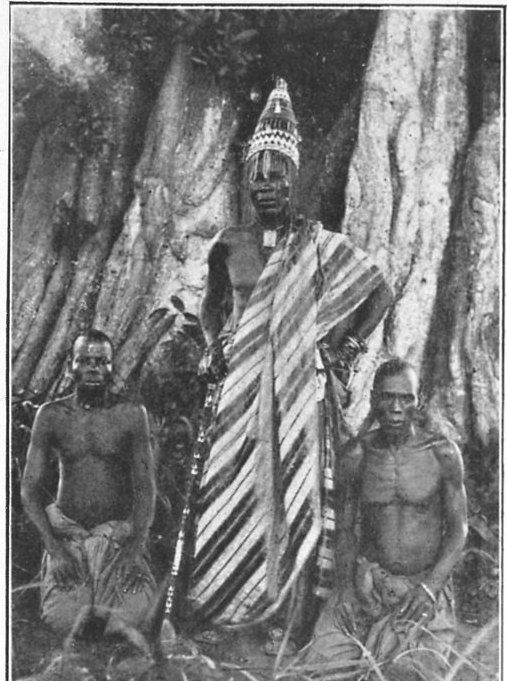
The roar that a living king never heard in his own streets was the sound of his own funeral. His successor met Orò on the road. Before he could enter Kétu as king, the king-elect retraced the path of Edé, the kingdom’s founder, to Meko, thirty kilometres away in what is now Nigeria. There, on the second evening, after sacrifices to the god Baba Yaki, “the voice of Orò makes itself heard in the village” (Palau Marti 1964, p. 53). Then he came home through Idéna, the gate in the walls, where three goats were sacrificed and their blood sprinkled on the wooden door.
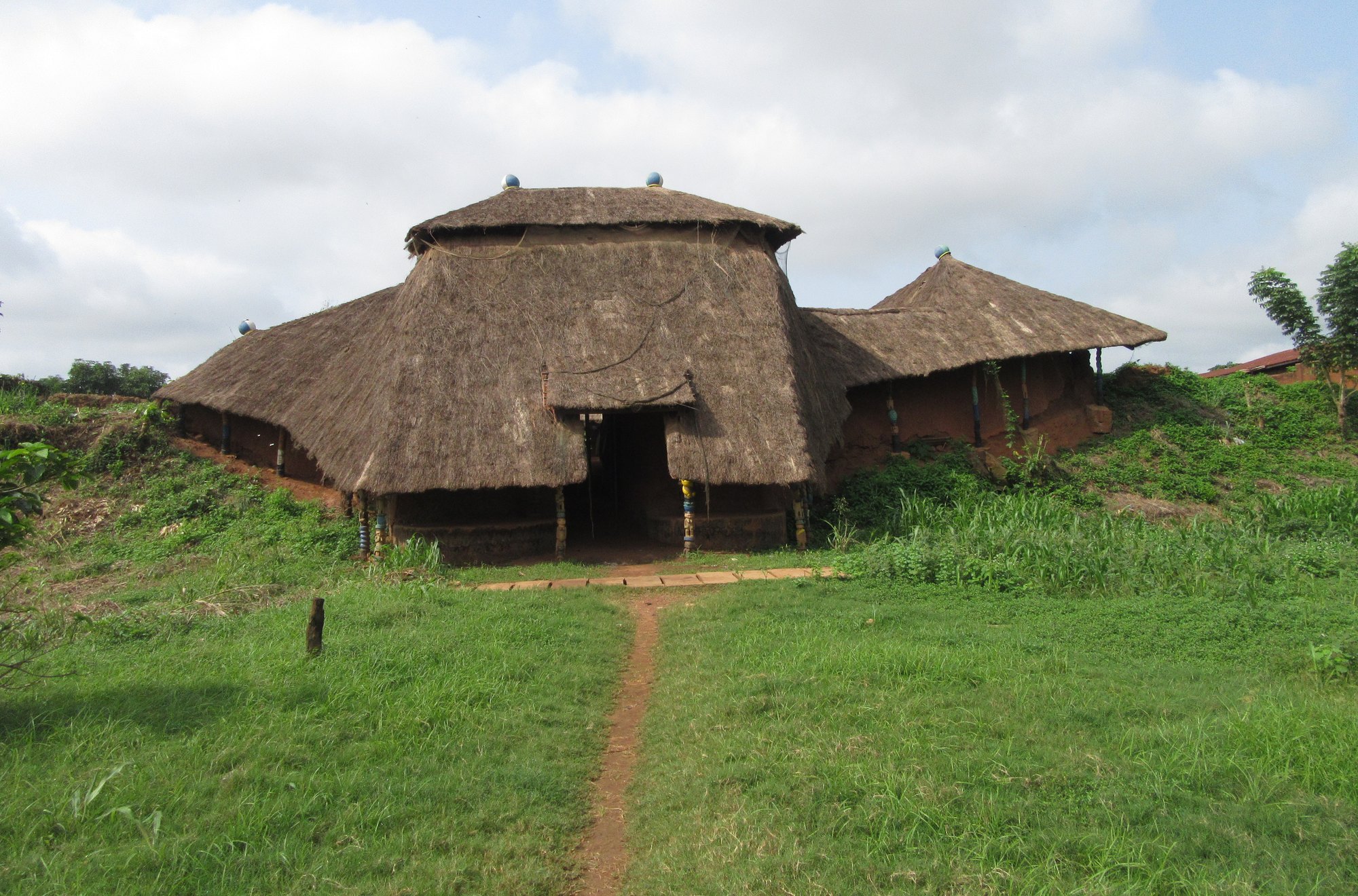
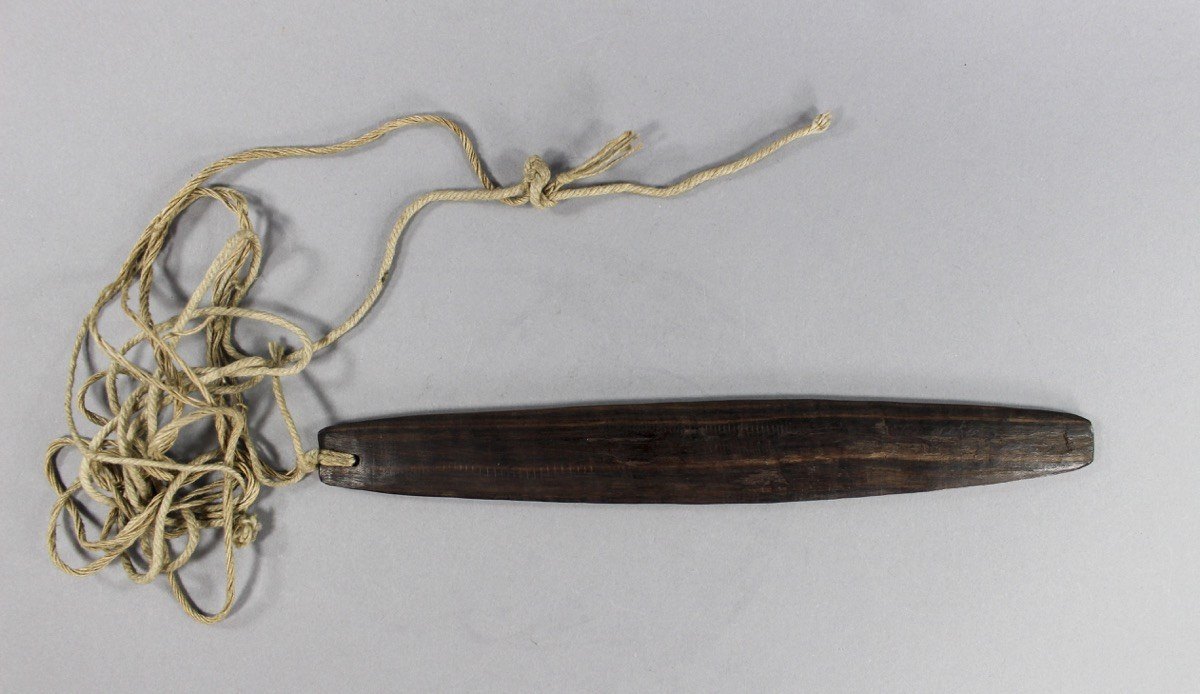
Women who had seen Orò in Kétu were beheaded, and their heads taken to Idéna (Palau Marti 1964, p. 44). The Kétu record keeps the rest of the royal cycle.
The knife is ripe
The rule reaches the Atlantic. The Jóola Kujamaat live north of the Cacheu River in Guinea-Bissau, among the rice paddies and mangroves next to the Casamance of Senegal. Their initiation, the bukut, comes once in about thirty years, and even its calendar is counted in deaths: it is reckoned by the rites that fill the shrines of men’s initiation “left vacant by the death of their holder,” six of them, six years apart, between one initiation and the next. At Esana in 1998 more than a thousand boys and young men went into the forest. Odile Journet-Diallo, who worked there from 1990 to 2016, gives the condition:
“The bukut also marks the renewal of the generations: the oldest initiate, the one who will have announced that ‘the knife is ripe,’ must die before the departure of the children and young men for the forest. A child cannot go to initiation at the same time as his father.”
Odile Journet-Diallo, “En être ou pas,” L’Homme 239–240 (2021), §15, p. 137; translated from the French.
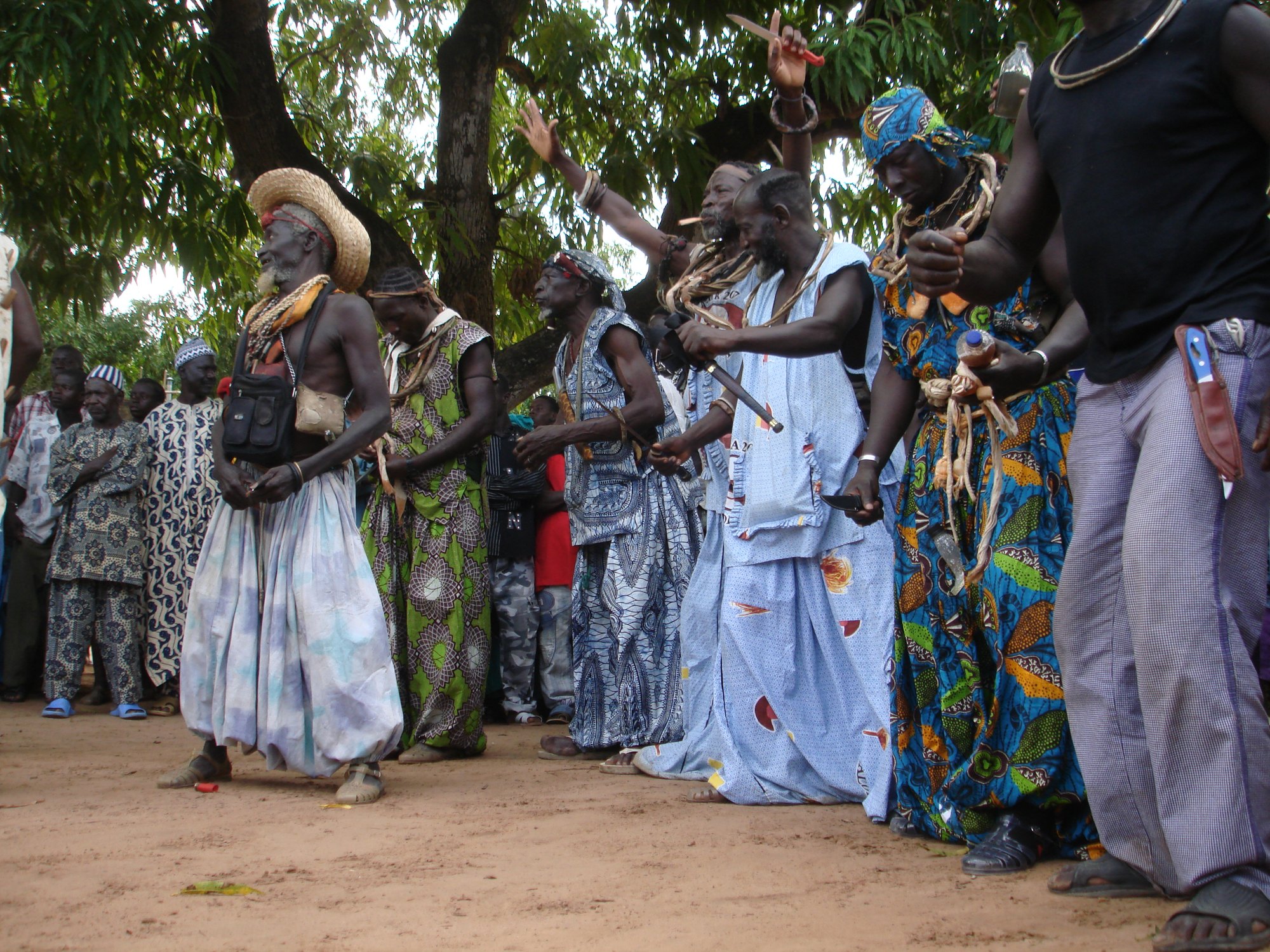
The man who calls the initiation into being does not see it. Once he is gone the boys enter the forest of kareñ for three months, and the village freezes: no sacrifice may be made and no funeral held.
“At night one hears, far off, the drums resounding and the bellowing of the ‘master of the forest,’ a sound-mask made of a bullroarer played only on this occasion, whose nature the neophytes will discover only when they take part in a later initiation in another village.”
Journet-Diallo (2021), §49, p. 151.
The voices of the dead
Set side by side, the five rites keep one order. Someone who holds the rite dies. His death is hidden or announced, and the ordinary law of the place lapses: fires go out in Kétu, feuding stops among the Mundang, the Dakka sit a dummy king in the dead king’s hut, the Jóola village can neither sacrifice nor bury. Then the bullroarers sound, and the boys are cut.
| People | Who must die | What it opens | The voice |
|---|---|---|---|
| Dakka, Nigeria | The king, days before the seven years are out | The circumcision, whose blood flows to the dead king | Langa: “the old grandfathers, crying” |
| Mundang, Chad | The king, when his term is out | The next circumcision, called by sorghum stalks | Mafalli and Falliku: “the ancestors’ voices” |
| Dii, Cameroon | The chief, whenever he dies | The “sacrifice circumcision,” that day or the next | The panther-rhombe |
| Kétu Yoruba, Benin | The king | Orò inside the town walls | Orò |
| Jóola Kujamaat, Guinea-Bissau | The oldest initiate, who declared the knife ripe | The departure for the forest | The “master of the forest” |
The voices explain the order. The Mundang hear the roarers as the ancestors; the Dakka say the old grandfathers are crying; the Dii keep the rhombes as seats of the ancestral spirits. When the holder of the rite joins the dead, the dead take up their voices, and the rite he could only promise can begin. The Dakka king never sees a circumcision; he goes ahead of the boys, and their blood follows him. The Jóola elder who proclaimed the knife ripe is the first to leave for the other side of the forest.
Frobenius set the Dakka beside the Mundang in 1925, and Muller set the Dii beside the Chamba and the Mundang in 1997, as a question about kingship. The rule is wider than kingship. It reaches a Yoruba town that never killed its kings and a Jóola village where the one who must die is no king at all, and it holds wherever the bullroarer speaks for the dead. In this whole belt of West and Central Africa the roar of initiation is the voice of those who have gone before, and it does not sound for the boys until one more has gone.
Key sources
- Leo Frobenius, Dichten und Denken im Sudan, Atlantis 5 (Jena: Diederichs, 1925), p. 40 (Dakka and Mundang compared), pp. 51–55 (Dakka: royal death, bullroarers at the king’s funeral, circumcision as offering to the dead king), pp. 77–79 (Mundang: the overdue king, the peace, the call to circumcision, the three roarers).
- Alfred Adler, “Initiation, royauté et féminité en Afrique noire,” L’Homme 183 (2007): 77–115, pp. 96–97 (Dii, Chamba and Mundang compared), p. 100 (one session per reign).
- Jean-Claude Muller, “Circoncision et régicide: thème et variations chez les Dìì, les Chamba et les Moundang des confins de la Bénoué et du Tchad,” L’Homme 141 (1997): 7–24, pp. 9–12 (the Dii chief’s death and the sacrifice circumcision), pp. 18–19 (comparison).
- Tomas Sundnes Drønen, Communication and Conversion in Northern Cameroon: The Dii People and Norwegian Missionaries, 1934–1960 (Leiden: Brill, 2009), p. 125 n. 27 (knives and rhombes kept in jars), pp. 127–128 (the panther-rhombe and the knives called zág).
- Montserrat Palau Marti, Le roi-dieu au Bénin: Sud Togo, Dahomey, Nigeria occidentale (Paris: Berger-Levrault, 1964), p. 44 (women who saw Orò), p. 51 (Orò in Kétu at the king’s death), p. 53 and n. 3 (Orò at Meko).
- Odile Journet-Diallo, “En être ou pas: à propos de trois rites initiatiques en pays jóola,” L’Homme 239–240 (2021): 129–168, §§14–15, p. 137 (the bukut calendar; the oldest initiate must die), §49, p. 151 (the “master of the forest”).
- As far as we know, setting the Jóola and Kétu rules beside the royal deaths of the Dakka, Mundang and Dii, as one condition of the bullroarer rite, is original to this page.