SA-Z1953-022 - ethnographic attestation
Kampa jaguar-warning bullroarer
Northeastern Peru - Montana - South America
Play / practical
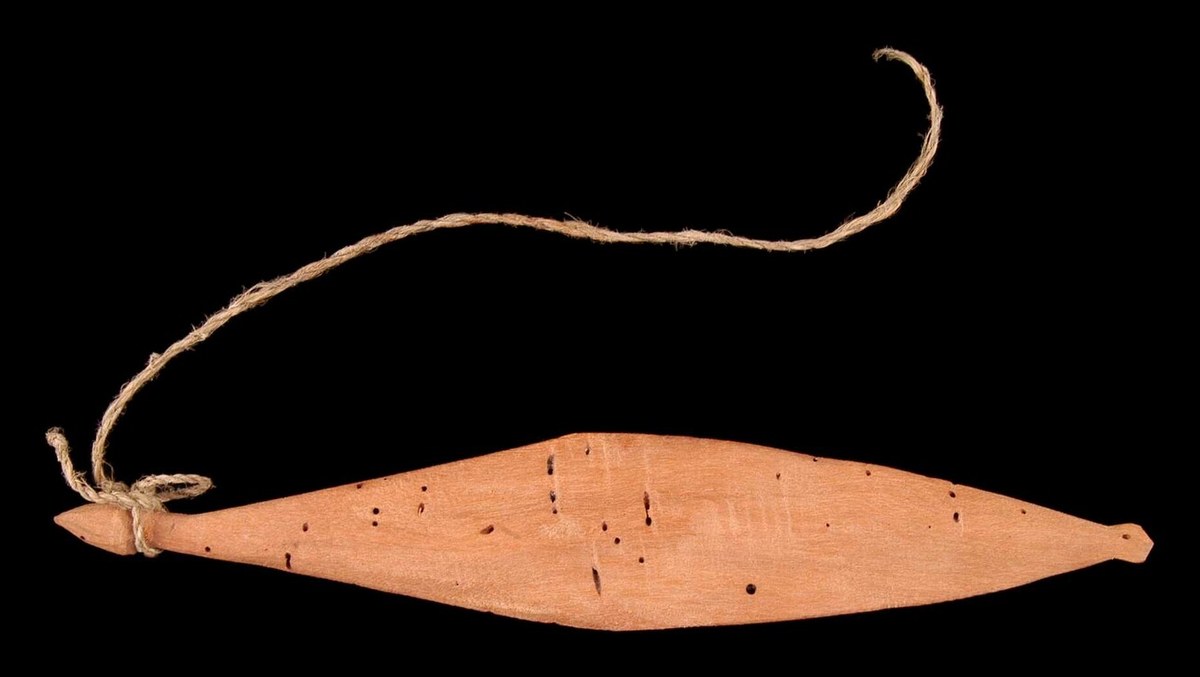
mēromēro Kampa (Asháninka; Arawakan), northeastern Peru / Montaña
Source term: mēromēro (Zerries: "mero mero")
Among the Kampa of the eastern Peruvian montaña, the bullroarer — called mēromēro — was a toy of half-grown children and a means of disciplining smaller ones. Adults would whirl it and warn the naughty child, that the jaguar was coming — "der Jaguar käme." Günter Tessmann, who recorded the device in his 1930 survey of northeastern Peru's Indians, noted the same jaguar threat among neighboring Tshamikuro and Ikito, where masks were used to frighten children as well. Otto Zerries read the bullroarer here as a "survival": with jaguar-shaped bush-demons believed to mislead travelers and steal children, and with masks and bullroarers paired elsewhere in the region, he inferred an older cult of initiation in which the instrument had voiced such spirits. That deeper ritual reading is his inference; what Tessmann documented directly is a child's noisemaker and a bogey's voice.
Sind die Kinder klein, so werden sie mit dem Schwirrholz (das auch Spielzeug ist) erschreckt. Dabei sagt man ihnen, der Jaguar käme.
When the children are small, they are frightened with the bullroarer (which is also a toy). As it sounds, they are told the jaguar is coming.
Tessmann 1930:99-100 (Kampa, rubric 71)
- Function
- Toy and child-frightening use; warning that jaguar will come; Zerries links to older bush-spirit/initiation survival
- Map confidence
- medium - regional_anchor: Older cultic reading is Zerries inference; safe use is toy-decay with jaguar/bogy voice
- Source location
Page references
Tessmann 1930:92, 99-100 (via Zerries 1953:287,296; corroborated Izikowitz 1935:212-213)
- Initiation rite
- Toy / secular survival