MUS2026-067 - museum specimen
Hesquiaht (Nuu-chah-nulth) bull-roarer (museum)
Canada - Nootka Sound, Vancouver Island - North America
Restricted
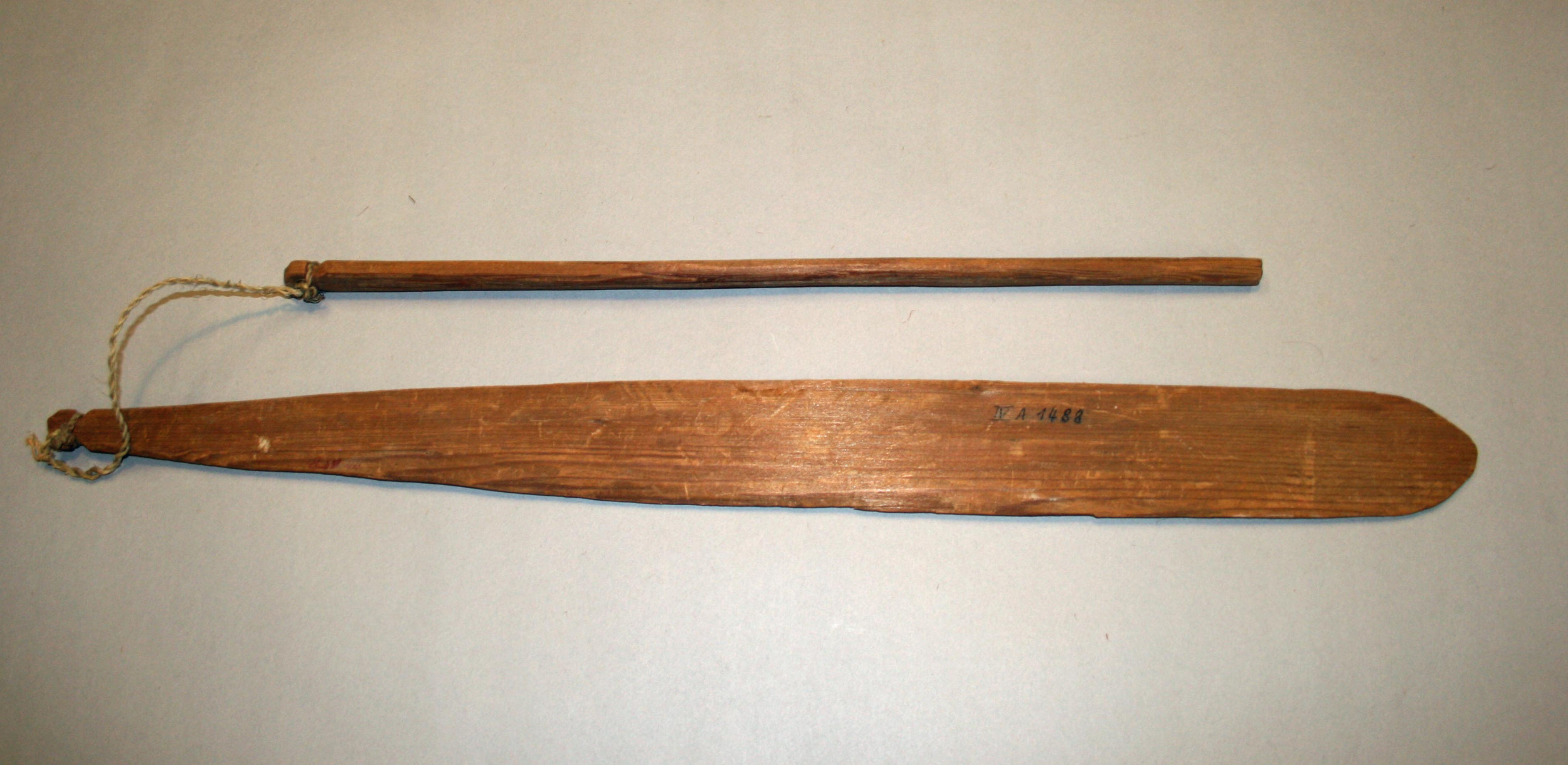
Source term: bull-roarer
Klokali (also Tlokwali, Tlukwana, Dukwally): the Nootkan/Nuu-chah-nulth Wolf Ritual, the central mid-winter initiation ceremonial, in which young men were ritually seized by the wolves and initiated into the society's dances.
A Nootkan bull-roarer of the kind sounded at the Klokali, the Nuu-chah-nulth Wolf Ritual that opened the winter ceremonial season. Frances Densmore, recording the Nootkan tradition in the 1920s, noted that "the instruments used at Klokali included four or five bull-roarers," and collected a specimen blade like this one. The Klokali initiated young men into its dances; the meeting that preceded the dancing was, in Densmore's words, "of a very serious character," with children kept indoors and laughter forbidden. The Berlin example survives without its cord or wooden handle, but the rite it belonged to is well attested.
The instruments used at Klokali included four or five bull-roarers. A specimen of the bull-roarer was obtained and consists of a blade but is without the cord and the handle of wood to which the cord is attached in this instrument.
Frances Densmore, Nootka and Quileute Music, BAE Bulletin 124 (1939), p. 103
- Object
- Hesquiaht / Nuu-chah-nulth bull-roarer, Ethnological Museum, Staatliche Museen zu Berlin, objectId 1313877.
- Function
- Sounded at the Klokali, the Nuu-chah-nulth Wolf Ritual that opened the winter ceremonial season and initiated young men into its dances (Densmore 1939).
- Map confidence
- high - approximate culture/locality centroid
- Source location
Page references
Densmore 1939, pp. 102-103, pl. 11d (bull-roarer specimen); object: SMB objectId 1313877
- Initiation rite