No. MAT1898-001
Adelaide kadnomarngutta and wimmarri
Adelaide region · South Australia
Restricted
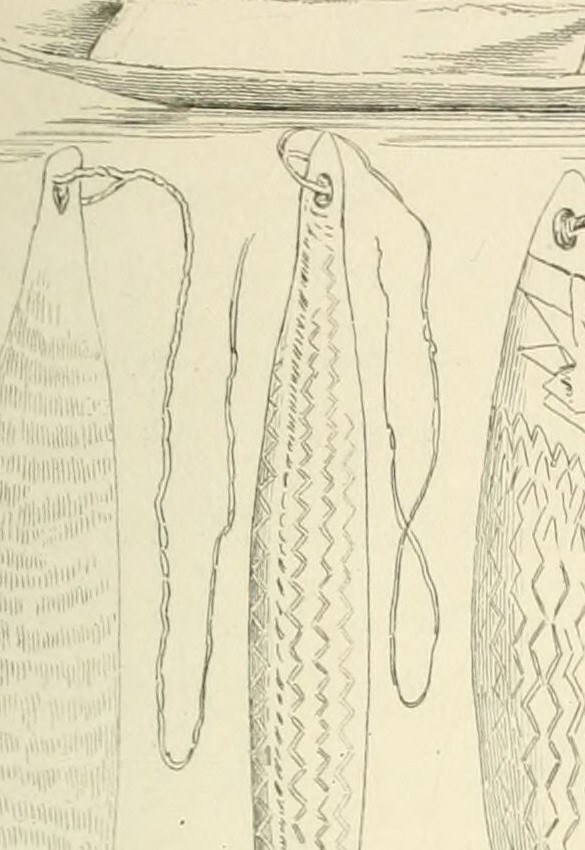
kadnomarngutta / wimmarri
Source term: bull-roarer
Adelaide-language (Kaurna) names: kadnomarngutta, the smaller secret bullroarer barred to women and children; wimmarri, the larger form used in hunting incantations and over youths during scarification.
Etymology. kadnomarngutta: the smaller secret Adelaide (Kaurna) bullroarer, barred to women and children.
The Adelaide tribes kept two of these instruments. The smaller, the kadnomarngutta, was a thin oval of wood about five inches long, tied to a string and swung to make a humming noise in the night; women and children were forbidden to see it, though the women, the Lutheran missionaries Teichelmann and Schürmann noted in 1840, knew well enough what it meant. The larger one, the wimmarri, was the same in shape but bigger, and was invoked in the incantations men made while out hunting. Its name was also repeated over the youths while their bodies were being scarred, in the belief that this would soothe the pain.
The earliest mention of the bull-roarer and its secret character among Australian tribes is found in Teichelmann and Schürmann's 'Grammar of the Language of the Natives of Adelaide,' published in 1840.
R. H. Mathews, "Notes on the Aborigines of New South Wales" (1907), p. 29
Particulars
- Function
- Mathews cites Teichelmann and Schürmann for Adelaide bullroarers, including a smaller secret form and a larger hunting/scarification form.