No. SIBER-004
Amur Evenki wind-summoning rotated aerophone
Russia · Amur basin (Priamurye), Russian Far East · Siberia
Weather / fertility magic
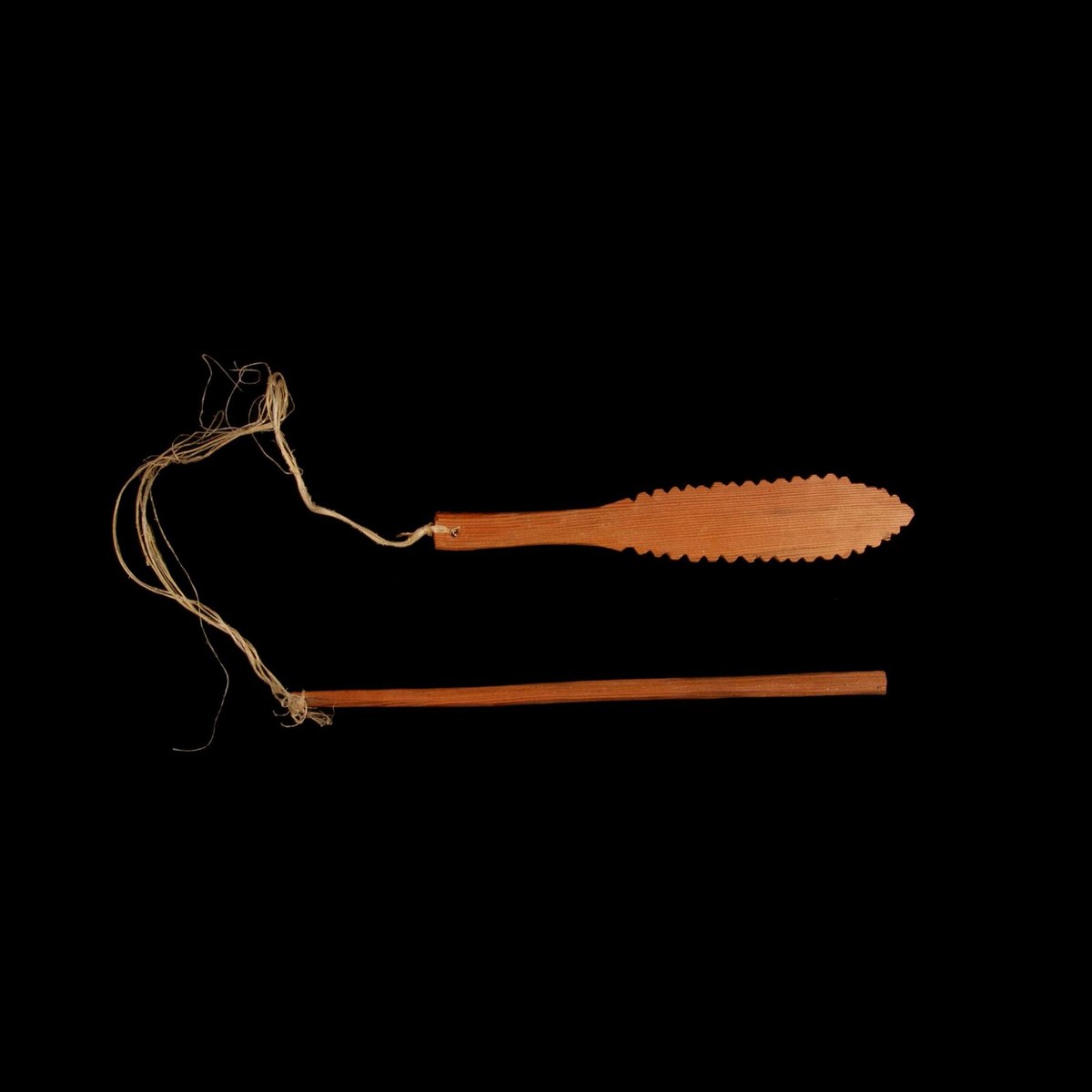
Source term: ветровой аэрофон / жужжалка
ветровой аэрофон (vetrovoy aerofon) = 'wind aerophone'; жужжалка (zhuzhzhalka) = generic buzzer/noisemaker in Vasilevich's wording.
For the Evenki, the wind was breath: the supreme being Sheveki blew it across the country to drive away the mosquitoes and midges. That breath could also be called up by magic, by twirling a zhuzhzhalka, a whirring noisemaker. Among the Amur Evenki, Podmaskin names the same device a “wind aerophone,” turned to make the wind come rather than wait for it.
Эвенки считали, что ветер можно вызвать магическим способом, вращая ветровой аэрофон.
The Evenki believed that wind could be summoned by magical means by rotating a wind aerophone.
Podmaskin, «Народные знания амурских эвенков», Россия и АТР, 2008, p. 88
Particulars
- Object
- A rotating sound-maker described by Podmaskin as a 'wind aerophone'; Vasilevich's underlying account calls it a zhuzhzhalka (buzzer/noisemaker). No surviving object or construction is identified.
- Function
- Wind magic: the Amur Evenki believed wind could be summoned by rotating or turning the sound-maker.