PNG79 - ethnographic attestation
Awalama
Papua New Guinea - Milne Bay - Oceania - Sahul
Sacred / spirit
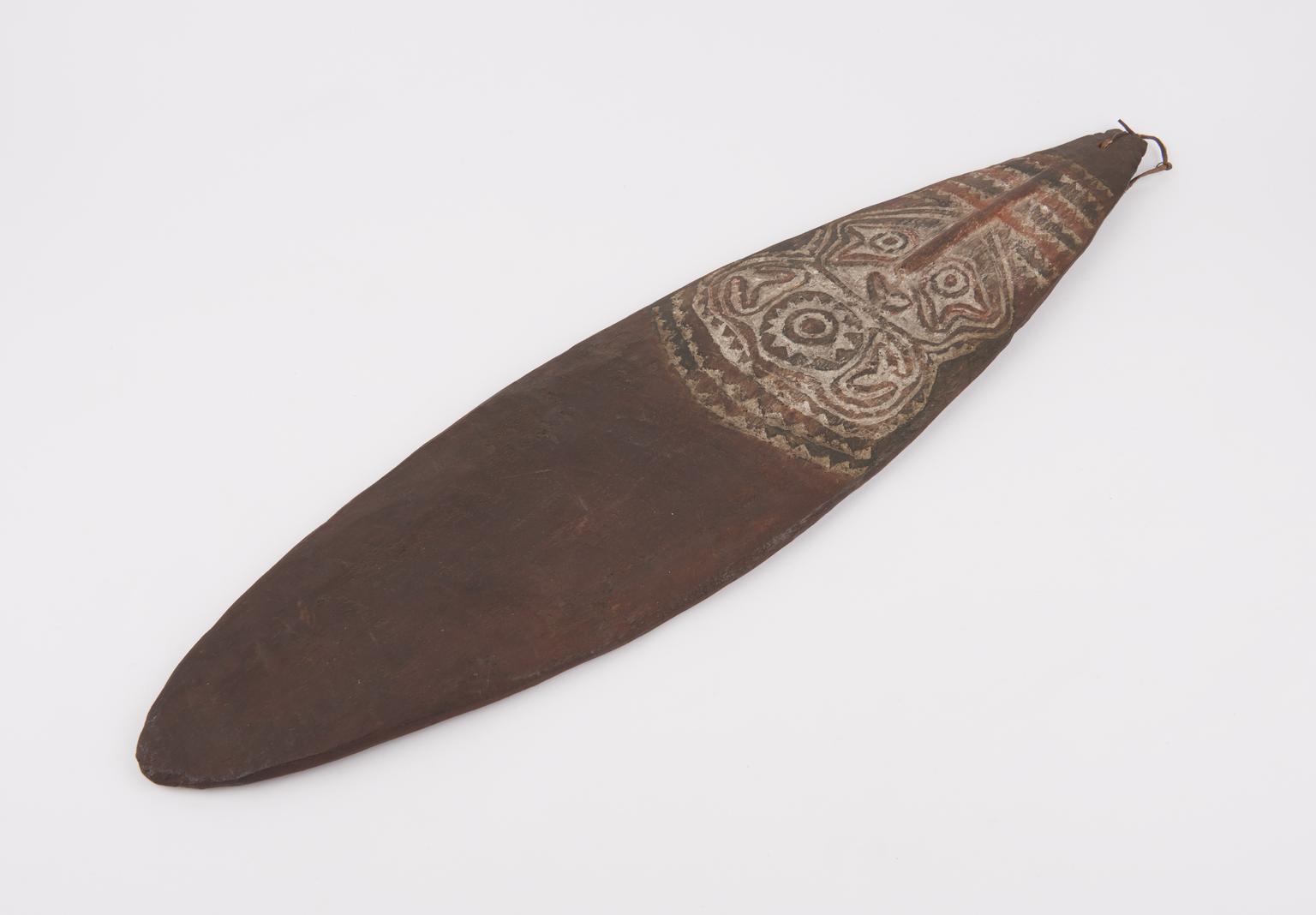
Source term: bullroarer flag only
walaga = the raised wooden platform or feast-house built for the great mango feast at Bartle Bay; gweri ravai = ritual practitioners who officiated at the stepping of its posts.
Among the Tawala-speaking people of Awaiama (Awalama), east of Bartle Bay near the eastern tip of mainland Papua New Guinea, the bullroarer surfaced on one occasion only. When the posts of the walaga, the raised platform built for a great feast, were being set into their holes, fasting men swung bullroarers the whole time the stepping was done. Seligmann's informants, whose account Mr Newton recorded in 1910, insisted the instrument was used at no other time, and could give no reason for sounding it at all. There is no men's secret cult here, no spirit named, no taboo declared: the roar simply accompanied the raising of the feast-house and then fell silent.
At Awaiama and Taupota, to the east of Bartle Bay, bull-roarers are said to be swung by the fasting men all the time that the posts are being stepped; they were said to be used at no other time and no reason for their use could be elicited on this particular occasion.
Seligmann 1910, The Melanesians of British New Guinea, p. 592
- Object
- bullroarer occurrence
- Function
- Bull-roarers swung by the consecrated fasting men throughout the stepping of the walaga dancing-platform posts, and at no other time; Seligman could elicit no reason for the practice.
- Map confidence
- medium - alias_area
- Source location
- Seligmann 1910, p. 592