NAMER-004 - ethnographic attestation
Yukon First Nations, upper Yukon borderlands
Canada - Scottie Creek-Titus upper Yukon region - North America - Subarctic
Sacred / spirit
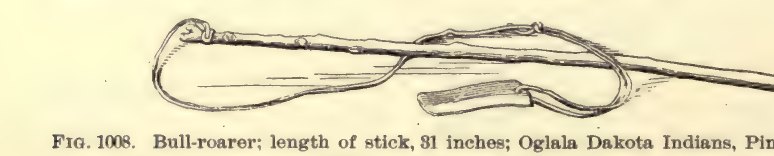
Source term: bull-roarer
Among the ritual and shamanic objects Ukjese van Kampen treats in his 2012 Leiden dissertation on early Yukon First Nations art is a shaman's medicine rod: a long stave carrying a bull-roarer attached at its end, so that the staff itself could be swung to sound. Van Kampen, himself a Northern Tutchone artist of the Champagne and Aishihik First Nations, describes the bull-roarer as painted on one face with a swastika and on the other with a moose, the owner's medicine animal. The man who carried it and the precise place it came from are not set down in the account.
- Object
- Medicine rod described as a six-foot stave with a bull-roarer attached; the bullroarer was painted with a swastika on one side and a moose, the owner's medicine animal, on the other.
- Function
- Recorded as a shaman's medicine rod, grouped with ritual and shamanic objects rather than as a child's toy.
- Map confidence
- medium - Representative Scottie Creek / upper Yukon-Alaska borderlands anchor; the source describes a Yukon First Nations art-history context, not a precise findspot.
- Source location
- Chapter 6, p. 248 in the Academia.edu text view