No. MUS2026-103
Otomi Holy Week whirling drum
Mexico · Texcatepec, Veracruz · North America
Play / practical
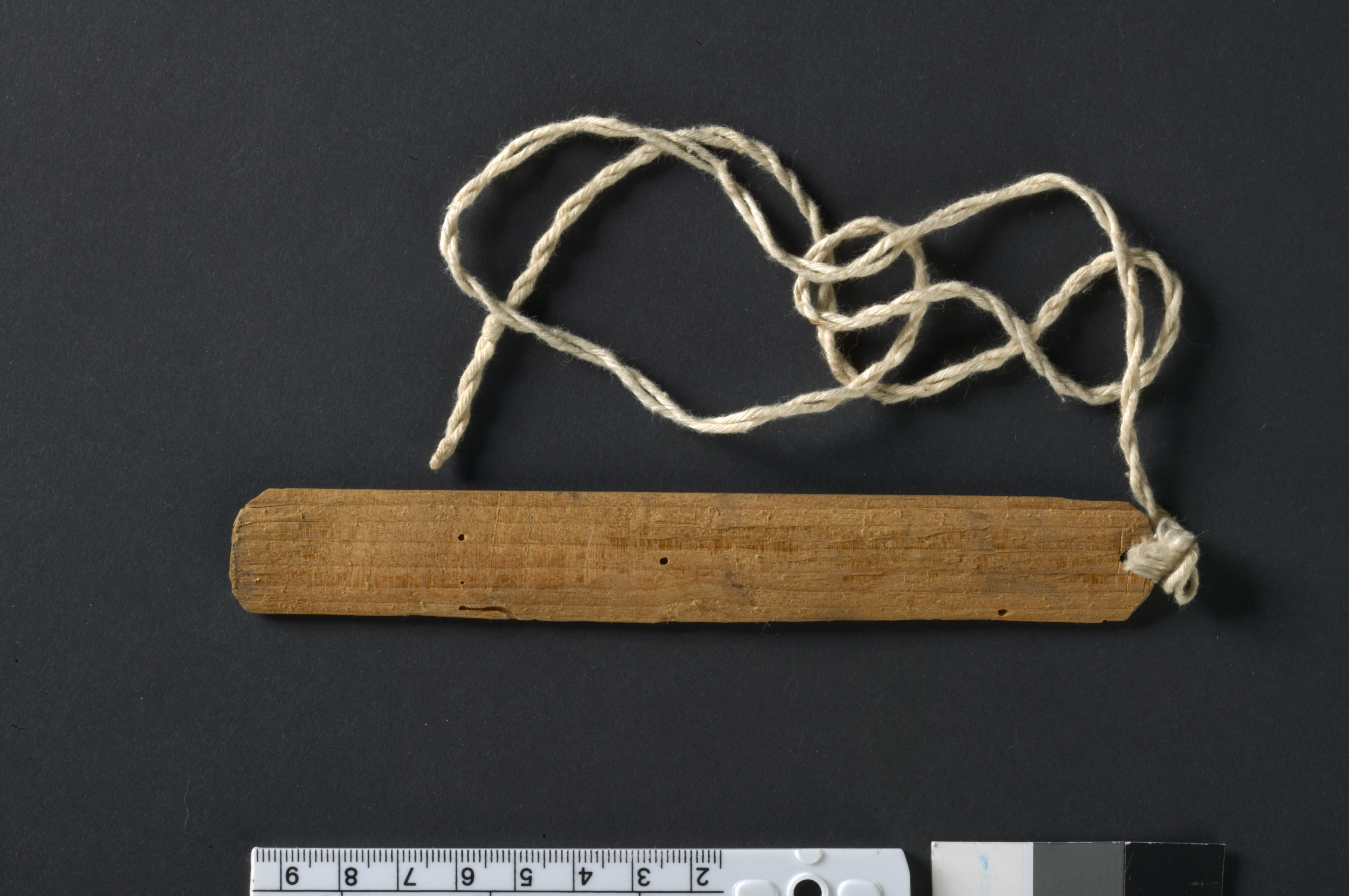
Source term: bull-roarer
tambour tournoyant: French museum term for a "whirling/spinning drum" -- here a single-membrane friction drum on a bamboo frame, sounded by spinning it on its string. The collectors note the result is a buzz "comme celle du rhombe" (like a bullroarer), rather than the roar of a flat wooden blade.
Among the Otomi of Texcatepec in the Veracruz sierra, this whirling drum belonged to Holy Week. During the Paschal Triduum, when the church bells of Mesoamerica fall silent, indigenous communities take up rustic noisemakers in their place; the Quai Branly's collectors recorded this skin-and-bamboo instrument, spun on its cord to give a vibration "like that of a bullroarer." It is a calendar-festival noise rite open to the community rather than a guarded cult.
Utilisé pendant la semaine Sainte.
Used during Holy Week.
Musée du quai Branly – Jacques Chirac, object record
Particulars
- Object
- A small whirling drum of skin, bamboo and plant fibre, 15 cm long and weighing 7 grams, spun at the end of its cord.
- Function
- Whirled as a Holy Week noisemaker.
Source
Musée du quai Branly – Jacques Chirac, Paris, inventory 71.1977.106.354.1-2; collected at Texcatepec, Veracruz, in 1977 by the Mission archéologique et ethnologique française au Mexique