No. MATHEWS1904-001
Yantamakaddya going, wambinggulli returning
Australia · Darling River, Bourke–Tilpa reach · Oceania · Sahul
Restricted
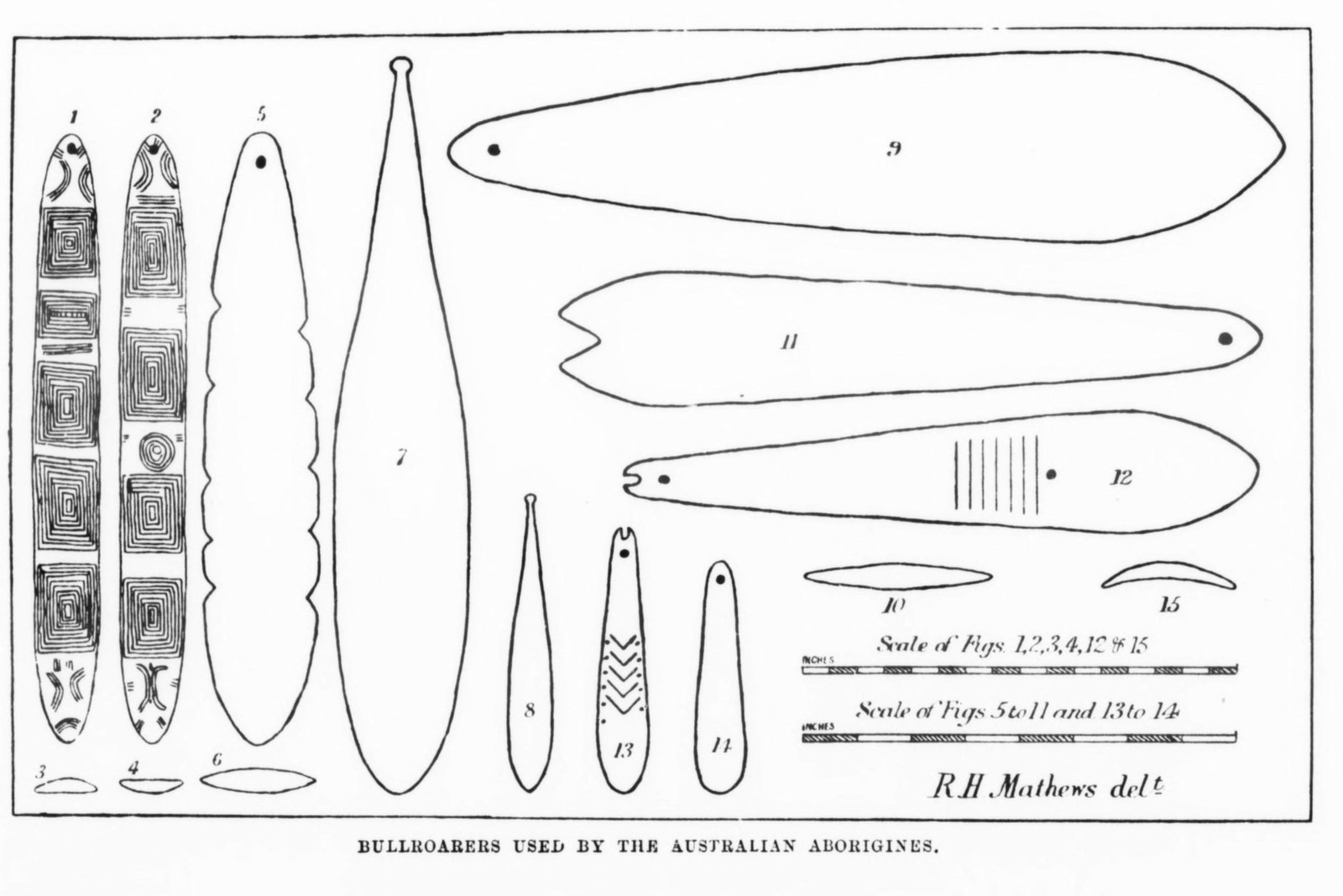
yantamakaddya / wambinggulli / nyugara
Source term: bullroarer
Three Kurnu phase-names for bullroarers.
The Kurnu lived on both banks of the Darling from Bourke down to near Tilpa. Messengers, the buruki, travelled in pairs with a young man already through the Mŭltyerra, carrying a fringed wallaby-skin mŭltyi tipped with feathers, a man's belt, and a bullroarer — the yantamakaddya — as their standing; elders walked them to the initiated men's private meeting place, where they set out the emblems and recited the message aloud. When the ceremony came, men close by let the yantamakaddya sound while others ran around the ground beating it with bark, the crowd banged weapons together, and the guardians took the novices by the arm and led them away. At twilight weeks later the procession came back toward the women's camp with bullroarers sounding at its rear — but under other names: wambinggulli, and the smaller nyugara with it.
The first ones are called yantamakaddya; the latter wambinggulli. In addition there is a smaller bullroarer called nyugara used in connection with the wambinggulli.
Mathews, The Mŭltyerra Initiation Ceremony, printed p. 205
Particulars
- Object
- Bullroarers of similar shape distinguished by name and ceremonial phase: yantamakaddya, carried by the messengers and sounded as the novices were led away; wambinggulli at their return, with a smaller companion instrument, nyugara.
- Function
- Credential carried by the messengers who summoned the tribes, and the sound that marked the novices' departure from the ceremonial ground and their return to the women's camp.
Source
R. H. Mathews, The Mŭltyerra Initiation Ceremony, in Culture in Translation, ANU Press edition